
CHINA UNICOM(00762)

Search documents
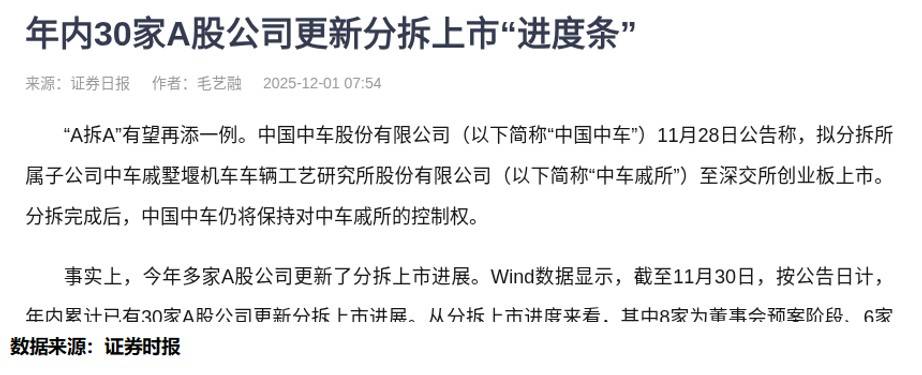
30家A股分拆上市,机构早已布局完毕!
Sou Hu Cai Jing· 2025-12-07 00:13
Group 1 - The core viewpoint of the article highlights the trend of companies in the A-share market pursuing spin-off listings, with 30 companies currently in line for this process, indicating a significant shift towards independent financing for subsidiaries [2][5] - Spin-offs allow parent companies to focus on their core business while providing subsidiaries with independent financing channels, which has attracted institutional investors who are quick to capitalize on policy changes [2][5] - The article emphasizes the information asymmetry in the market, where institutional investors have the advantage of early access to signals and trends, leaving retail investors at a disadvantage [2][3] Group 2 - The biggest risk in a bull market is not a downturn but missing out on opportunities, as many investors become overly cautious after experiencing bear markets [3][5] - Market consensus plays a crucial role in bull markets, where the value of assets is often driven by the collective agreement among institutional investors [5][6] - Understanding institutional behavior is essential for retail investors, as true market intentions are often hidden behind superficial trading patterns [6][8] Group 3 - The article provides examples of specific stocks, such as Cambrian and Tibet Tianlu, to illustrate how institutional activity can signal potential price movements and the importance of monitoring these trends [8][10] - Quantitative data can help retail investors visualize capital flows, providing insights that traditional technical analysis may miss [11][13] - The relationship between spin-off announcements and institutional accumulation of shares is highlighted, suggesting that retail investors can benefit from observing these patterns [13][14] Group 4 - Recommendations for retail investors include focusing on who is buying rather than what to buy, establishing a personal observation system, and maintaining patience and emotional control in investment decisions [14]





冷湖火星营地已基本实现联通无线网络连续覆盖
Zhong Guo Qing Nian Bao· 2025-12-06 11:08
Core Insights - China Unicom's subsidiary in Haixi Prefecture has invested 7.29 million yuan in the Cold Lake Mars Camp area, laying 129 kilometers of optical cable and establishing 12 4G base stations and 1 5G base station, achieving continuous wireless network coverage in the region [1][3] Group 1: Investment and Infrastructure Development - The investment of 7.29 million yuan has been directed towards enhancing communication infrastructure in a remote area known for its unique Martian-like landscape [1] - A total of 129 kilometers of optical cable has been laid, which supports the connectivity of the newly established base stations [1] - The construction of 12 4G base stations and 1 5G base station has been completed, significantly improving wireless network coverage [1][3] Group 2: Tourism and Scientific Research - The Cold Lake area is being developed as a "science fiction tourism" destination, leveraging its unique geological features to attract visitors [1] - The region has also seen the establishment of an astronomical observation base, with investments totaling 3 billion yuan since 2018, making it the largest optical astronomy observation base in Asia [1] - The ongoing development of scientific research facilities includes the construction of new 4G base stations to support the Tsinghua University Deep Space Technology Center and the Purple Mountain Observatory [3] Group 3: Future Network Requirements - As more astronomical observation stations are built, there will be an increasing demand for high-speed networks, massive data storage, and high-performance computing [3] - China Unicom plans to enhance wireless network coverage and improve network quality to meet future challenges related to data storage and computing power [3]


eSIM解禁一月真实体验:移动高冷、联通亲切,线下都很拉胯?
3 6 Ke· 2025-12-05 11:20
Core Insights - The introduction of eSIM technology in China marks a significant shift in the telecommunications industry, allowing for a "slot-free" mobile experience that has been long awaited [1][4][5] - The delay in eSIM adoption was primarily due to security concerns related to telecom fraud, which have now been addressed through advancements in identity verification technology [5][8] - The market demand for eSIM-compatible devices, such as the new iPhone Air, has pressured telecom operators to expedite the rollout of eSIM services [8] Industry Overview - eSIM, or embedded SIM, integrates the SIM card directly into the device, eliminating the need for a physical card slot [4] - The technology has been available in devices like smartwatches and tablets for years, but its implementation in smartphones has faced regulatory delays [4][5] - The recent approval from the Ministry of Industry and Information Technology (MIIT) allows major telecom operators in China to begin commercial trials of eSIM [1] Operator Experience - The user experience for eSIM activation varies significantly among the three major telecom operators: China Mobile, China Unicom, and China Telecom [9][12] - China Mobile's app is less user-friendly, requiring mandatory login and making it difficult for new users to access eSIM services [13][15] - In contrast, China Unicom offers a more accessible app experience, allowing users to find nearby service points without logging in [16][18] - China Telecom's app is somewhat balanced, providing visibility for eSIM services but still requiring login for full access [20][22] Activation Process - The eSIM activation process involves several steps, including scanning the device's IMEI code and downloading configuration files via Wi-Fi [29] - The overall time taken for activation ranges from 15 to 20 minutes, depending on the operator and the staff's familiarity with the eSIM process [31] - Users must visit physical stores to activate eSIM, which contradicts the technology's digital nature and highlights the current limitations in service delivery [45][50] Future Outlook - eSIM technology is expected to enhance device design by saving space, allowing for larger batteries or improved cooling systems in smartphones [46] - However, the current eSIM experience in China is still evolving, with significant room for improvement in terms of convenience and efficiency [48][50] - As technology and policies continue to develop, a more streamlined eSIM activation process is anticipated, aligning with global standards [51]



高盛:中国运营商资本开支转向AI,2025年电信网络支出将减少
傅里叶的猫· 2025-12-04 13:36
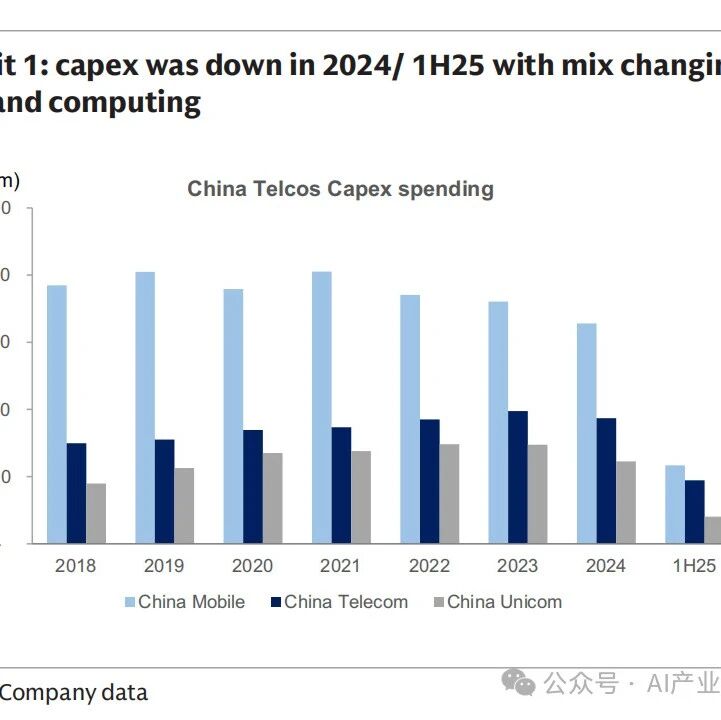
Core Insights - The report highlights a shift in capital expenditure by telecom operators towards computing infrastructure, driven by a reduction in traditional telecom network spending and an increasing demand for AI capabilities [3][4]. Capital Expenditure Trends - In 2024 and the first half of 2025, capital expenditure by Chinese telecom operators is expected to decline, primarily due to reduced spending on traditional telecom networks like 5G. However, there is a notable increase in investments in AI and computing infrastructure to meet growing market demands [4][8]. - Goldman Sachs projects that despite a further decrease in telecom network spending in 2025, the growth in capital expenditure related to intelligent computing capabilities will partially offset this decline, leading to an overall decrease in annual capital expenditure [8]. Specific Operator Projections - China Telecom is expected to have a capital expenditure of 84 billion RMB in 2025, down from 94 billion RMB in 2024, with an increase in investments related to computing platforms [8]. - China Unicom's capital expenditure is projected to be 55 billion RMB in 2025, down from 61 billion RMB in 2024, primarily due to reduced 5G-related capital expenditure, but with a simultaneous increase in AI infrastructure investments [8]. Competitive Advantage - Telecom operators possess their own Internet Data Center (IDC) resources, which reduces reliance on external IDC suppliers and helps lower overall operational costs [7].
Omdia:2025年第三季度,拉美智能手机市场同比增1%,创2015年以来单季出货量最高水平
Canalys· 2025-12-04 01:01
Core Insights - The Latin American smartphone market is projected to grow by 1% year-on-year in Q3 2025, reaching a shipment volume of 35.2 million units, the highest quarterly shipment level since Q4 2015 [2] - Major manufacturers have shown resilience in shipment volumes due to cautious inventory management and moderate consumer demand despite economic uncertainties [2] Market Performance - Samsung leads the market with 11.6 million units shipped, capturing 33% market share, with its low-end A series models accounting for 68% of its total shipments [2] - Xiaomi follows in second place with 6.3 million units (18% share), while Motorola ranks third but has seen a decline for six consecutive quarters, with a year-on-year drop of 11% [2] - Honor ranks fourth, achieving a new shipment high of 2.9 million units for the third consecutive quarter, driven by growth in the Caribbean, Colombia, and Ecuador, which now account for over 40% of its total shipments [2] Regional Insights - The recovery in the region is attributed to growth in key markets like Brazil and Central America, with Brazil holding a 29% share and a shipment volume of 10.3 million units (5% year-on-year growth) [4] - In contrast, Mexico, the second-largest market, saw a shipment volume of 7.4 million units (21% share), down 11% year-on-year, marking the fourth consecutive quarter of decline [4] - The demand for low-end devices remains strong in Brazil and other markets, while Colombia and Chile show signs of recovery due to improved economic conditions [4] Price Segment Analysis - Despite overall market growth, the segment below $300, which accounts for 71% of total shipments, declined by 2% due to ongoing inventory pressures and stagnant consumer demand [5] - This decline is offset by a robust 20% year-on-year growth in the high-end segment (above $500), leading to an 8% increase in average selling price (ASP) in Q3 2025 [6] - Brands like OPPO, Xiaomi, Honor, vivo, and realme are intensifying their efforts to solidify their positions in this high-margin segment [6] Strategic Insights - The increase in high-end market shipments reflects manufacturers' efforts to maintain market share and enhance brand positioning amid saturation in the low-end market [8] - Companies are focusing on improving ASP, enhancing ecosystem profitability, and strengthening customer loyalty as key strategies for sustained financial health [8] - Omdia forecasts that the Latin American smartphone market will remain stable in 2025, with an estimated annual shipment volume of approximately 137 million units, although pressures for 2026 are emerging due to rising costs of memory and storage [8]






智通港股通持股解析|12月4日
智通财经网· 2025-12-04 00:37
Core Insights - The top three companies by Hong Kong Stock Connect holding ratios are China Telecom (00728) at 72.68%, Green Power Environmental (01330) at 69.12%, and Da Zhong Public Utilities (01635) at 69.03% [1] - Alibaba-W (09988), Meituan-W (03690), and Pop Mart (09992) saw the largest increases in holding amounts over the last five trading days, with increases of +3.329 billion, +1.319 billion, and +1.060 billion respectively [1] - The largest decreases in holding amounts were observed in Zijin Mining (02899) at -861 million, SMIC (00981) at -815 million, and Lenovo Group (00992) at -430 million [1][2] Hong Kong Stock Connect Holding Ratios - China Telecom (00728): 100.87 billion shares, 72.68% holding ratio [1] - Green Power Environmental (01330): 2.80 billion shares, 69.12% holding ratio [1] - Da Zhong Public Utilities (01635): 3.68 billion shares, 69.03% holding ratio [1] - Other notable companies include Haotian International Construction Investment (01341) at 68.75% and China Shenhua (01088) at 67.00% [1] Recent Increases in Holdings (Last 5 Trading Days) - Alibaba-W (09988): +3.329 billion, +21.6752 million shares [1] - Meituan-W (03690): +1.319 billion, +13.7526 million shares [1] - Pop Mart (09992): +1.060 billion, +4.9058 million shares [1] - Other companies with significant increases include ZTE Corporation (00763) and China Merchants Bank (03968) [2] Recent Decreases in Holdings (Last 5 Trading Days) - Zijin Mining (02899): -861 million, -26.2640 million shares [2] - SMIC (00981): -815 million, -12.1252 million shares [2] - Lenovo Group (00992): -430 million, -43.6821 million shares [2] - Other companies with notable decreases include China Mobile (00941) and China Pacific Insurance (02328) [2]



China Unicom, HKT, Huawei, and EngageLab Unveil Joint Cross-Operator Authentication Solution to Power Secure Global Business Expansion
Globenewswire· 2025-12-03 10:00
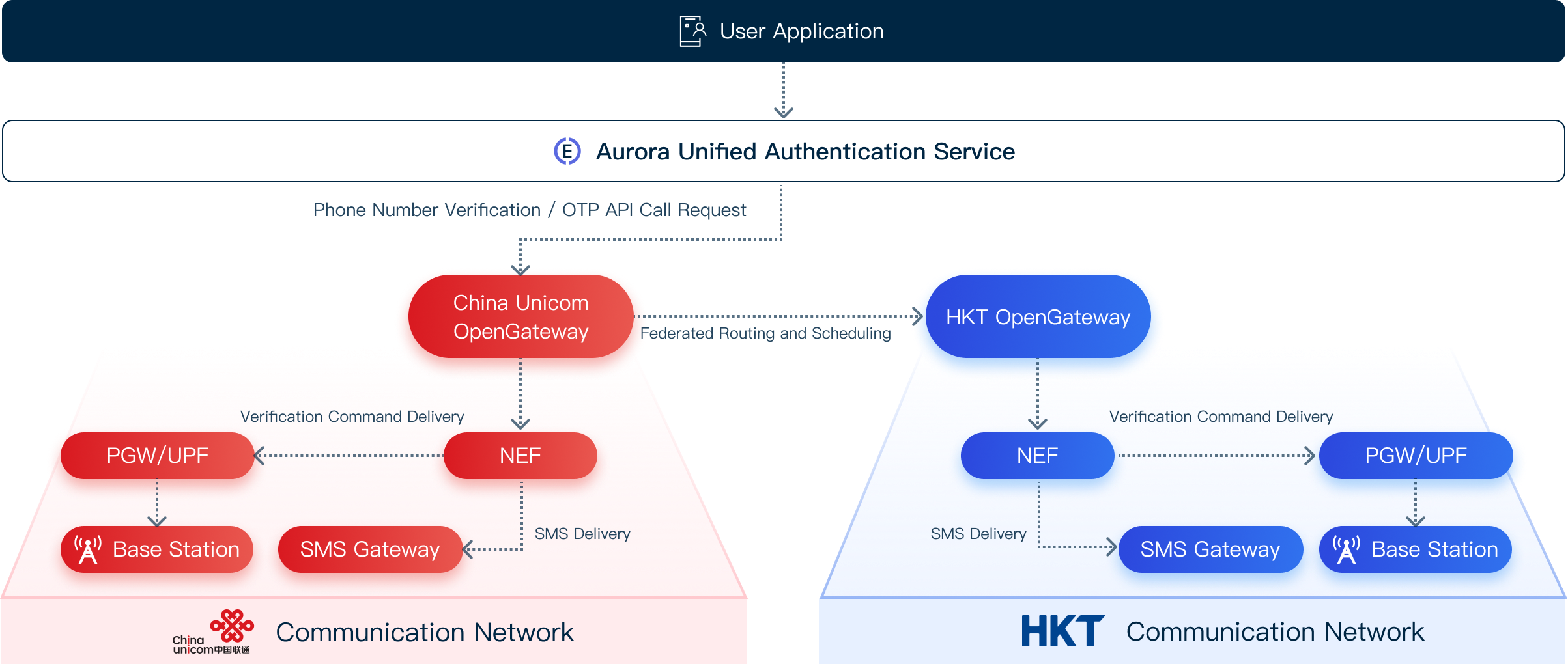
Core Insights - EngageLab, in collaboration with China Unicom Global, HKT, and Huawei, has launched the OpenGateway Cross-Operator Converged Authentication Solution, setting a new standard for secure and scalable user authentication across borders [1] Industry Challenges - The expansion of enterprises into international markets necessitates robust identity authentication, yet fragmented operator capabilities and inconsistent standards hinder seamless user verification [2] - Traditional SMS-based authentication methods are prone to fraud and inefficiencies, negatively impacting user experience and business security [2] Solution Overview - OpenGateway combines the strengths of its partners by integrating their number verification and OTP-SMS capabilities into a single API, allowing enterprises to access secure authentication services globally without region-specific adaptations [3] - The solution reduces integration cycles from months to weeks and lowers operational overhead, facilitating rapid deployment in new markets [4] Security and User Experience - OpenGateway employs a dual-layered authentication architecture, utilizing carrier-grade number verification primarily, with SMS verification as a fallback, ensuring high availability and stability [6] - This design effectively prevents fraudulent activities while providing a seamless experience for legitimate users, enhancing conversion and retention rates [6] Developer Benefits - The standardized encapsulation based on the CAMARA framework allows for quick and low-barrier integration, accommodating differences among operators [7] Proven Impact - OpenGateway is already operational in Mainland China and Hong Kong, processing over 20 million authentication requests daily and supporting hundreds of millions of users across various sectors [8] - In finance, fraudulent loan applications have decreased by 60%, while e-commerce has seen a 75% reduction in fake registrations and a 65% cut in marketing resource waste [8] - Social and gaming sectors report a 28% increase in new user retention and a significant drop in complaints, improving the overall digital experience [8] Cost Efficiency - Enterprises utilizing OpenGateway have reported over 50% reduction in long-term maintenance costs and a 40% decrease in anti-fraud expenses, allowing for resource reallocation towards core business innovation [9] Global Expansion - OpenGateway is expanding into Southeast Asia, including Singapore and Indonesia, and is positioned to become the global benchmark for cross-operator authentication, with a modular design that supports rapid rollout [10]

沙堆镇政企携手江门联通共探产业数字化转型新路径
Xin Lang Cai Jing· 2025-12-02 12:05
Core Insights - The collaboration between the government of Shadui Town and local entrepreneurs aims to accelerate the digital and intelligent transformation of local industries through the "Hundred Million Thousand Project" [2][7] - The event focused on how central enterprises' digital technology can empower high-quality local industrial development [2][7] Group 1: Event Overview - A delegation from Shadui Town visited Jiangmen Unicom for in-depth discussions and inspections, emphasizing the implementation of the "Hundred Million Thousand Project" [2][7] - The delegation toured Jiangmen Unicom's digital exhibition hall, gaining insights into innovations in the industrial internet sector, including the "Digital Government" platform and various AI and IoT applications [2][7] Group 2: Industry Needs and Solutions - Shadui Town's representatives highlighted the need for digital transformation in manufacturing, agriculture, and services [5][10] - Jiangmen Unicom presented customized solutions leveraging 5G and industrial internet to enhance production efficiency and reduce IT costs [5][10] - Specific recommendations included deploying 5G+AR remote quality inspection systems for manufacturing and implementing smart management platforms for traditional parks [5][10] Group 3: Future Collaboration - Entrepreneurs expressed high regard for Jiangmen Unicom's innovative practices in digital government and industrial AI, viewing them as well-suited to their digital transformation needs [5][10] - The delegation aims to convert collaboration intentions into concrete projects, fostering deep integration of digital technology with local industries [5][10][11] - The event established an efficient communication bridge among government, central enterprises, and businesses, accelerating the region's digital transformation [6][11]

高盛:维持三大中资电讯股“买入”评级 料派息比率可稳步提升
智通财经网· 2025-12-02 09:06
Core Viewpoint - Goldman Sachs believes that despite the weak revenue growth in traditional telecommunications, Chinese telecom companies can drive consumption by offering more value-added services, particularly in areas such as data centers, computing power, and AI solutions, positioning them as major beneficiaries of AI development [1] Group 1: Financial Metrics and Performance - Goldman Sachs analyzed ten key indicators including capital expenditure, dividends, user numbers, cash cycle, free cash flow margin, average revenue per user (ARPU), EBITDA margin, new business synergies, internet data center performance, and valuation [1] - The report indicates that capital expenditure budgets of major telecom companies are shifting towards computing infrastructure to capitalize on the growing demand for AI in China [1] Group 2: Investment Outlook - Goldman Sachs maintains a "Buy" rating for China Mobile (00941), China Unicom (00762), and China Telecom (00728), expecting an increase in the contribution from new businesses and a steady rise in dividend payout ratios, which will provide ongoing returns for investors [1]
大行评级丨高盛:维持三大中资电讯股“买入”评级 派息比率可望稳步提升
Ge Long Hui· 2025-12-02 08:04
Core Viewpoint - Goldman Sachs' research report indicates that despite weak revenue growth in traditional telecommunications, Chinese telecom companies can leverage value-added services to drive consumption, with new business areas such as data centers, computing power, and AI solutions becoming major beneficiaries of AI development [1] Group 1: Financial Metrics - The report examines ten key indicators including capital expenditure, dividends, user numbers, cash conversion cycles, free cash flow margins, average revenue per user (ARPU), EBITDA margins, new business synergies, internet data center performance, and valuations [1] - It is expected that the capital expenditure budgets of China Mobile, China Unicom, and China Telecom are shifting towards investments in computing infrastructure to capitalize on the growing demand for AI in China [1] Group 2: Investment Outlook - Goldman Sachs maintains a "Buy" rating on China Mobile, China Unicom, and China Telecom, anticipating an increase in the contribution from new businesses and a steady rise in dividend payout ratios, which will continue to provide returns for investors [1]