CHINA UNICOM(00762)

Search documents
中证沪港深500通信服务指数报2130.47点,前十大权重包含中际旭创等
Jin Rong Jie· 2025-08-13 07:57
Group 1 - The core index of the CSI Hong Kong-Shenzhen 500 Communication Services Index reported a value of 2130.47 points, with a monthly increase of 12.14%, a three-month increase of 18.91%, and a year-to-date increase of 24.37% [1] - The CSI Hong Kong-Shenzhen 500 Communication Services Index is categorized into 11 industries, reflecting the overall performance of different industry companies' securities [1] - The top ten weighted stocks in the index include Tencent Holdings (14.04%), China Mobile (13.1%), and Xinyi Technology (8.37%) among others [1] Group 2 - The industry composition of the CSI Hong Kong-Shenzhen 500 Communication Services Index shows that telecommunications services account for 36.87%, communication equipment for 27.08%, and digital media for 26.09% [2] - The index samples are adjusted biannually, with adjustments occurring on the next trading day after the second Friday of June and December [2] - Special circumstances may lead to temporary adjustments of the index samples, such as delisting or corporate actions like mergers and acquisitions [2]





里昂:升中国联通(00762)目标价至11港元 维持“跑赢大市”评级
智通财经网· 2025-08-13 07:38
该行指,联通管理层预期盈利将维持稳定增长,而资本支出将同比减少10%至2025年的550亿人民币, 同时宣派中期股息每股0.28元人民币,同比上升14.5%,派息率为60%,同比上升5基点。 智通财经APP获悉,里昂发布研报称,中国联通(00762)上半年业绩未达预期。总服务收入和净利同比分 别增长1.5%和5%各至1,784亿和1,455亿人民币,较该行预测低0.9%和3.5%。里昂维持对联通"跑赢大 市"评级,目标价由9.5上调至11港元,反映将10年资本支出预测调低20%,以配合管理层对稳定资本支 出计划的指引,并假设资本支出相对持平。 ...


山东联通客户日活动:打造服务集市 惠及百姓民生
Qi Lu Wan Bao· 2025-08-13 06:45
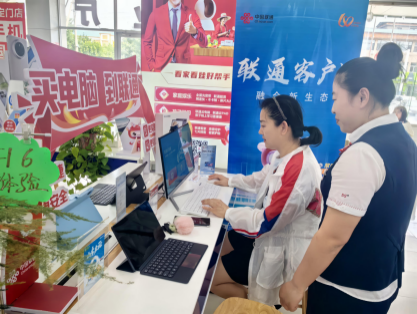
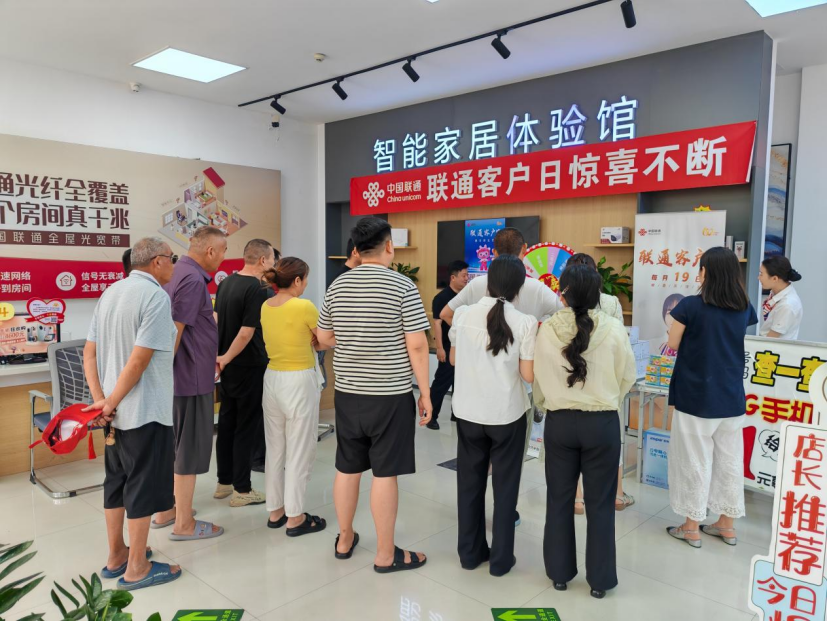
Core Viewpoint - Shandong Unicom emphasizes customer interaction through monthly "Unicom Customer Day" events, enhancing service quality and product offerings to meet customer needs [1][8] Group 1: Customer Engagement Activities - The "Unicom Customer Day" in July focused on "Integrating New Ecosystems," featuring local activities that highlight Unicom's services and products [1] - The summer promotion included a "National Subsidy + Unicom Subsidy for Mobile Phone Purchase" campaign, catering to increased demand from parents buying phones for their children [2] Group 2: Service Quality Improvement - The "General Manager's Practical Action" initiative aims to enhance network quality and customer service, addressing key areas such as network reliability and user-friendly services [4] - Customers reported improved call quality in specific locations, indicating successful implementation of network enhancements [4] Group 3: Community and Cross-Industry Collaboration - Shandong Unicom is expanding its service offerings through partnerships with local businesses, providing diverse services such as health check-ups and fraud prevention education [6] - The company is committed to creating a multi-faceted service ecosystem that extends beyond telecommunications to meet broader community needs [6] Group 4: Future Plans - The company plans to continue the "General Manager's Practical Action" initiative, focusing on innovative service models and quality improvements to align with customer expectations [8]

手把手教出“智”在生活 心贴心温暖银龄岁月——记山东联通巾帼文明岗枣庄联通林运路营业厅
Qi Lu Wan Bao· 2025-08-13 06:32
Core Viewpoint - The company emphasizes the importance of upgrading services for the elderly, aligning with its commitment to respond to public needs and uphold its mission of serving the people [1][3][5] Group 1: Service Upgrades for the Elderly - The company has implemented "love seats" to prioritize elderly customers, effectively reducing wait times [1] - A dedicated "love assistance area" is provided with comfortable seating, reading glasses, and emergency care items to create a welcoming environment for senior users [1] Group 2: Community Engagement and Education - The company conducts frequent "Elderly Assistance Micro-Classrooms" in community centers to teach seniors how to use technology, including the "large font version" of their app [3] - A specific instance highlighted a 72-year-old customer successfully connecting with her son via video call after receiving hands-on guidance from staff, showcasing the impact of their educational efforts [3] Group 3: Social Responsibility and Community Care - The company actively promotes "family culture" by encouraging employees to care for both their immediate families and the broader community, particularly focusing on the elderly and children [5] - Staff members have addressed issues such as a senior citizen's television signal problem and assisted with medication management, demonstrating a commitment to personal care [5] Group 4: Future Commitment - The company plans to continue enhancing elderly services, ensuring that interactions are both precise and compassionate, thereby empowering seniors to navigate the digital age confidently [7] - The team aims to strengthen its reputation as a "civilized post" by combining meticulous service with heartfelt care, thereby creating a more inclusive environment for the elderly [7]
服贸会倒计时:11个数字产品将全新亮相北京方案展
2 1 Shi Ji Jing Ji Bao Dao· 2025-08-13 04:44
Core Viewpoint - The 2025 China International Service Trade Fair will focus on digital service trade and high-end industry development, showcasing the latest technological achievements in the information and communication sector [1][2]. Group 1: Event Overview - The "Telecommunications, Computer and Information Services" exhibition will take place from September 10 to 14, 2025, at Shougang Park, featuring over 100 offline exhibitors and nearly 300 online participants [1]. - The theme of the exhibition is "Digital Intelligence Links the World," emphasizing the integration of digital service trade with advanced industries [1][2]. Group 2: Key Highlights - Two major highlights of the exhibition include the "Beijing Solution Exhibition" and the "5G Intelligent Global Connectivity" theme exhibition, showcasing significant digital service achievements in various sectors such as government, transportation, and healthcare [3]. - The Beijing Solution Exhibition will feature a 2,000 square meter immersive area, demonstrating replicable and promotable digital service solutions [3]. Group 3: International Participation - The exhibition will attract over 500 leading enterprises, including China Unicom, Alibaba, and international exhibitors from more than 10 countries and regions, such as Germany, the USA, and Canada [2][3]. - The event aims to leverage the platform to promote open cooperation in digital service trade and build a globally influential digital technology industry ecosystem [2]. Group 4: Professional Activities - Multiple professional activities will be held during the exhibition, including themed salons on digital economy, AI terminal devices, and digital infrastructure, facilitating in-depth connections between domestic companies and international buyers [5]. - High-end forums organized by various institutions will discuss topics related to the international digital economy and industry development trends [5].

倾听来自大山深处的声音,让通信服务没有壁垒
Xiao Fei Ri Bao Wang· 2025-08-13 04:25
Core Viewpoint - The company is committed to enhancing communication services in rural areas of Enshi, ensuring that villagers have access to modern communication technologies and addressing their specific needs through direct engagement and problem-solving initiatives [1][2][4]. Group 1: Commitment to Rural Communication - The company, led by General Manager Liu Xuefeng, emphasizes the importance of listening to villagers' communication needs and has initiated a series of field visits to understand their challenges [2][4]. - Liu Xuefeng has made it a priority to document villagers' issues and develop actionable solutions, ensuring that no problem is overlooked [4][6]. Group 2: Service and Network Upgrades - Since the second quarter, the company has launched a comprehensive upgrade of rural communication services, addressing issues such as slow internet speeds and connectivity problems [7]. - By June, the company achieved a 95% coverage rate for 5G in administrative villages and an 85% overall network coverage rate, demonstrating significant progress in expanding service reach [7]. Group 3: Future Initiatives - The company plans to continue its "民有所呼,我必有应" (People's needs will be met) initiative, regularly conducting surveys to transform feedback into actionable improvements [9]. - The leadership at both state and county levels will further promote and implement research findings to enhance network quality and service levels, contributing to the digital development and improvement of living standards in Enshi [9].

港股异动 | 中国联通(00762)涨超3% 上半年营收突破2000亿元 中期息同比增长14.5%
智通财经网· 2025-08-13 03:55
Core Insights - China Unicom's stock rose over 3%, reaching HKD 10.5 with a trading volume of HKD 568 million [1] Financial Performance - The company reported a revenue exceeding RMB 200 billion for the first half of 2025, marking a year-on-year growth of 1.5% [1] - Pre-tax profit reached RMB 17.8 billion, reflecting a year-on-year increase of 5.1% [1] - Profit attributable to equity holders was RMB 14.484 billion, up 5.01% year-on-year [1] - Earnings per share stood at RMB 0.47, with a proposed interim dividend of RMB 0.2841 per share, representing a 14.5% increase [1] Business Structure Optimization - Revenue from connected communication reached RMB 131.9 billion [1] - Smart computing revenue amounted to RMB 45.4 billion, accounting for 26% of total revenue [1] - International business revenue grew by 11% to RMB 6.8 billion [1] - Revenue from strategic emerging industries increased its share to 86%, becoming a new driver for high-quality development [1]
5G-A全覆盖+AI算力调度,“冰丝带”打造人形机器人竞技“毫秒级赛场”
Huan Qiu Wang· 2025-08-13 02:57
Group 1 - The 2025 World Humanoid Robot Games is approaching its opening, showcasing a venue that integrates 5G-A technology and embodied intelligence [1][6] - The competition venue, "Ice Ribbon," spans 12,000 square meters and features various realistic environments for robot simulations, including a football field and a hospital [1][6] - China Unicom is transitioning from traditional network support for large events to leveraging its technological advantages, focusing on ultra-low latency and efficient AI scheduling to create an intelligent event environment [1][2] Group 2 - The event presents a new service challenge for China Unicom as the official communication partner, emphasizing the need for intelligent, reliable, and secure network services [2] - The integration of 5G-A technology is crucial for the robots, which require high network performance for optimal operation during competitions [4][6] - China Unicom has deployed a comprehensive 5G-A network throughout the venue, ensuring robust connectivity for both spectators and robots, capable of handling extreme traffic demands [6][8] Group 3 - The event serves as a testing ground for the application of 5G-A and AI innovations, providing a platform for diverse wireless network experiences [6] - China Unicom's strategic upgrade to 5G-A has laid a solid foundation for mobile AI connectivity, fostering new industries and services [8] - The company aims to implement a fusion innovation strategy, focusing on enhancing computational and network capabilities to support the AI era [8]

探访2025世界人形机器人运动会:打造“人+具身智能共生”的通信底座
Zhong Guo Xin Wen Wang· 2025-08-13 02:27
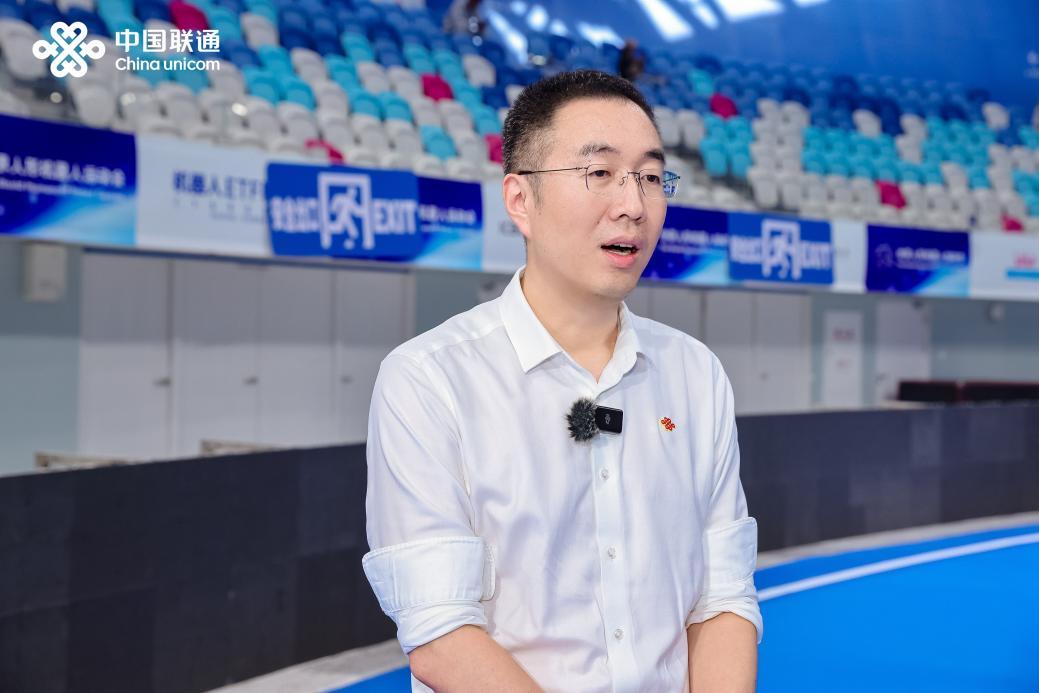
Group 1 - The 2025 World Humanoid Robot Games will open on August 14 at the National Speed Skating Stadium in Beijing, serving as a platform for the integration of 5G-A and embodied intelligence [1][3] - The event features various simulated environments, including a running track, football field, factory warehouse, hospital pharmacy, and hotel, covering an area of 12,000 square meters [1] - The competition involves teams from over a dozen countries participating in 5V5 football test matches, highlighting the unique demands of "human + robot" events on communication networks [3] Group 2 - The event presents new service challenges for China Unicom, the global official partner, which is leveraging its all-optical network's ultra-low latency and AI computing power to create an intelligent event environment [4] - The venue is equipped with a 5G-A network that offers low latency, high uplink capacity, reliability, and extensive connectivity, aimed at supporting the unique requirements of the competition [4] - The event serves as a testing ground for the innovative application of "5G-A x AI," with plans to further integrate 5G-A networks with robotics to foster new scenarios and applications [5]

运营商的“免费产品”里,藏着一笔你没看懂的贷款
2 1 Shi Ji Jing Ji Bao Dao· 2025-08-13 00:41
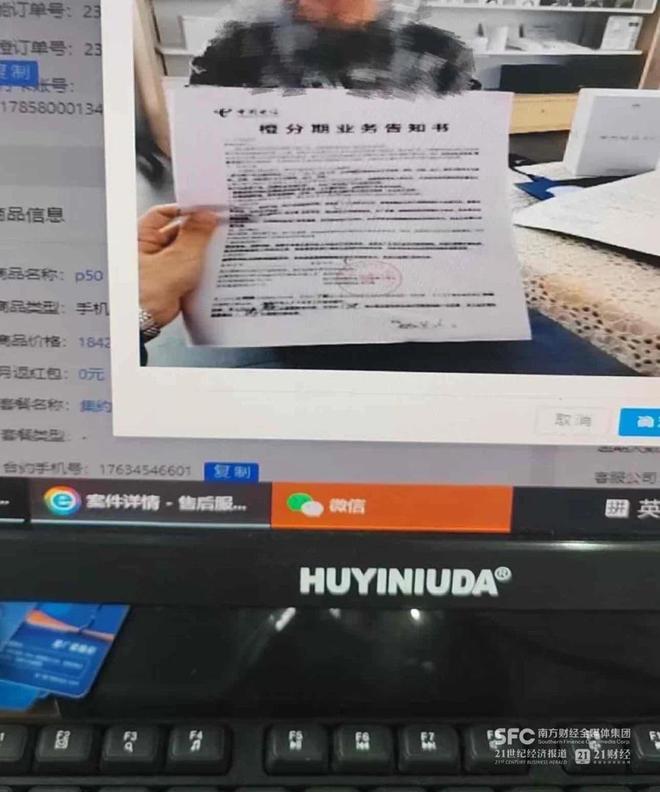
Core Viewpoint - The article highlights the issues surrounding the "Orange Installment" program by Chinese telecom operators, where consumers unknowingly sign up for installment loans disguised as promotional offers, leading to widespread complaints and potential financial risks for consumers [1][2][3]. Group 1: Consumer Experiences - Many consumers, including notable cases like Yang Xiaoru and Feng Wei, reported being misled into signing contracts that turned their monthly phone bills into long-term loans without clear communication from sales staff [2][4][6]. - A significant number of complaints have been filed against the "Orange Installment" program, with 5,850 complaints recorded by Black Cat Complaints as of August 5 [3]. - Consumers often receive electronic products as part of the promotion, which are tied to installment contracts, leading to confusion and unexpected financial obligations [2][3]. Group 2: Sales Practices and Regulatory Challenges - Sales staff often downplay the financial implications of the contracts, emphasizing that they are not loans, which contributes to consumer misunderstanding [8][9]. - The complexity of the financial arrangements and the lack of clear communication from sales representatives create a "gray area" in regulation, complicating oversight from different regulatory bodies [3][12]. - The operational model of the "Orange Installment" program involves telecom operators partnering with financial institutions, which adds layers of complexity to regulatory compliance [10][13]. Group 3: Recommendations for Improvement - Experts suggest that a collaborative approach between financial and market regulators is necessary to address the issues stemming from the partnership between telecom operators and financial institutions [12][13]. - There is a call for telecom operators to clarify their business practices and improve the transparency of their financial products to protect consumers [12][14]. - The need for stricter compliance with consumer protection laws and better training for sales staff is emphasized to prevent misleading sales tactics [14].