
CHINA UNICOM(00762)

Search documents
8月13日早餐 | 大消费再迎催化;美联储9月降息几率增加
Xuan Gu Bao· 2025-08-13 00:06
Group 1: Market Overview - Global trade optimism boosts investor confidence, with US July CPI data reinforcing expectations for a Fed rate cut in September. Risk assets see significant inflows, with the Nasdaq and S&P 500 both rising over 1% to reach all-time highs. The S&P 500 closes up 1.13%, the Dow up 1.10%, and the Nasdaq up 1.39% [1] - The Russell 2000 index surges by 3%, indicating strong performance in small-cap stocks [1] - The Nasdaq Golden Dragon China Index rises by 1.49%, with notable gains from companies like Zhengye Bio (+40%), Tencent Music (+12%), and Jiayin Technology (+9.35%). However, companies like Xiaoma Zhixing and NIO see declines of 3.49% and 8.96%, respectively [1] Group 2: Economic Indicators - US Treasury yields drop significantly following inflation data, although they recover slightly later. The 2-year yield ends down nearly 3 basis points [2] - The US dollar declines by 0.47%, while gold fluctuates around $3,350 [3] - Crude oil prices fall, with WTI oil dropping nearly 2% from its daily high [4] Group 3: Corporate Developments - AI company Perplexity proposes a $34.5 billion acquisition of Google's Chrome, indicating a competitive shift in the AI search market [5][13] - In the lithium battery sector, a closed-door meeting among key dry-process lithium battery separator manufacturers in Shenzhen results in agreements on price discipline, capacity management, and industry cooperation [14] - The insurance sector sees a strong performance in Hong Kong, with companies like China Pacific Insurance and China Taiping rising by 6.77% and 5.89%, respectively. Analysts suggest that the Chinese insurance industry has significant growth potential compared to international standards [15] Group 4: Financial Announcements - Notable financial results include Kweichow Moutai reporting a net profit of 45.403 billion yuan for the first half of the year, a year-on-year increase of 8.89%. China Unicom's net profit for the same period is 6.349 billion yuan, up 5.1% [23]





符合条件的个人消费贷款可享贴息;美国国债总额首次超过37万亿美元|南财早新闻
2 1 Shi Ji Jing Ji Bao Dao· 2025-08-12 23:37
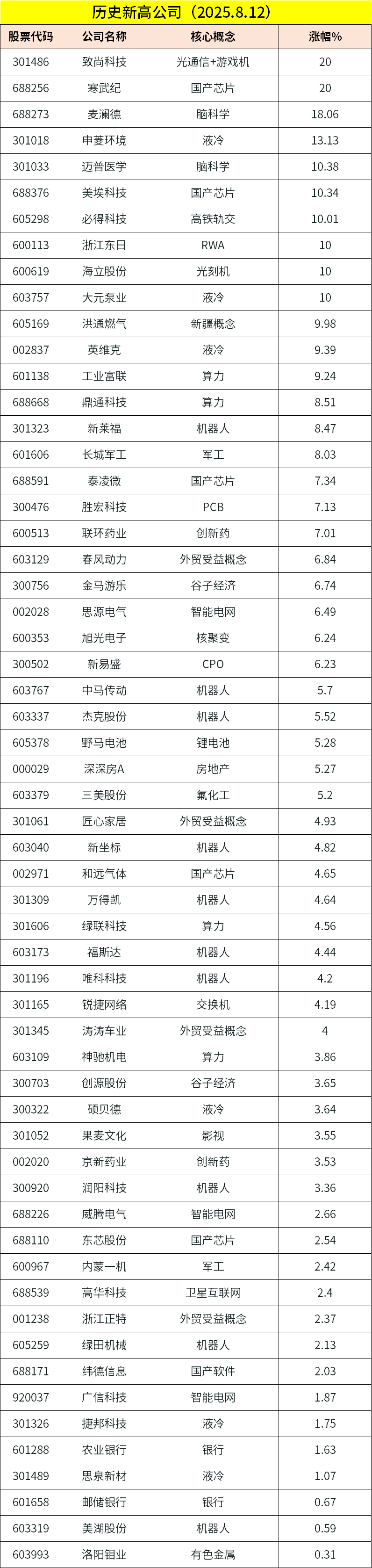
Economic Policy - The U.S. and China have agreed to suspend the implementation of 24% tariffs on each other's goods for 90 days starting August 12, 2023 [2] - The Chinese government has introduced a subsidy policy for personal consumption loans and service industry loans to stimulate consumer spending [2][5] Macro Economy - In the first half of the year, 13.278 million new business entities were established in China, showing stable growth across various types of businesses [4] - The National Development and Reform Commission reported that the recent round of fuel price adjustments will not change gasoline and diesel prices due to insufficient price changes [4] - The Ministry of Commerce has initiated anti-dumping investigations on Canadian canola and pea starch imports, indicating trade tensions [4] - The Yangtze River Delta region's economic data shows Shanghai leading with a GDP of 26,222.15 billion yuan, while Zhoushan recorded the highest growth rate at 6.9% [4] Investment News - The A-share financing balance has reached 2 trillion yuan, marking a significant increase and indicating a strong market sentiment [7] - Hong Kong's IPO market has seen robust growth, with 53 companies raising approximately 127 billion HKD in the first seven months of the year, a year-on-year increase of over 600% [7] - More than 50 listed companies in China have announced interim dividend plans, with total cash dividends exceeding 82 billion yuan [7] Company Developments - Cambricon Technologies' stock hit a historical high amid rumors of increased procurement, although the company advised against believing external speculation [8] - Kweichow Moutai reported a revenue of 89.389 billion yuan in the first half of the year, a year-on-year increase of 9.1% [8] - China Unicom's revenue surpassed 200 billion yuan in the first half, with a 1.5% year-on-year growth, and announced an interim dividend of 0.2841 yuan per share, up 14.5% [8] - Golden Dragon Fish achieved a revenue of 115.682 billion yuan, a 5.67% increase, and a net profit of 1.756 billion yuan, a 60.07% increase [8]



个人消费贷财政贴息来了:一年1个百分点;中国恒大被取消上市地位;特朗普希望中国将大豆订单增加3倍,外交部回应丨每经早参
Mei Ri Jing Ji Xin Wen· 2025-08-12 23:14
Group 1 - The Ministry of Finance, the People's Bank of China, and the Financial Regulatory Bureau issued a policy to provide a 1% annual interest subsidy for personal consumption loans under certain conditions, covering seven key areas including home appliances, automotive, and education, effective from September 1, 2025, to August 31, 2026 [8][9]. - China Evergrande announced that it received a letter from the Hong Kong Stock Exchange stating that its listing status would be canceled due to failure to meet the resumption requirements, with the last trading day set for August 22, 2025 [30][31]. - The U.S. Labor Department reported that the Consumer Price Index (CPI) increased by 0.2% month-on-month in July, with a year-on-year increase of 2.7%, while core CPI rose by 0.3% month-on-month and 3.1% year-on-year [3]. Group 2 - The U.S. and China agreed to extend the "truce period" on tariffs for an additional 90 days, with both sides suspending the implementation of 24% tariffs on each other's goods [5][6]. - Micron Technology announced it would cease the development of future mobile NAND products globally due to ongoing market weakness, while continuing to support other NAND solutions [21][22]. - China Unicom reported a revenue of over 200 billion yuan for the first half of the year, marking a 1.5% year-on-year increase, with a pre-tax profit of 17.8 billion yuan, up 5.1% [24][25]. Group 3 - The Chinese Nonferrous Metals Industry Association's lithium division called for a halt to "involutionary" competition in the lithium industry, urging companies to maintain fair competition and avoid market monopolization [10]. - Huawei announced the release of its AI inference innovation technology UCM, which will be open-sourced in September, aimed at enhancing AI performance [23]. - North University Pharmaceutical faced significant revenue loss after terminating its partnership with its largest client, Beijing University International Hospital, which accounted for 78.15% of its drug distribution revenue [32][33].



美俄元首将以一对一形式举行会晤;韩国前第一夫人金建希被捕;纳指与标普500再创新高;国家对个人消费贷贴息;中国恒大将取消上市地位丨每经早参
Mei Ri Jing Ji Xin Wen· 2025-08-12 21:53
Group 1 - US stock markets closed with all three major indices rising over 1%, with the Nasdaq up 1.39%, S&P 500 up 1.13%, and Dow Jones up 1.1%, marking historical highs for both Nasdaq and S&P 500 [3] - Major tech stocks saw significant gains, with Intel rising over 5%, Meta up over 3% nearing a market cap of $2 trillion, and Apple, Microsoft, and Google each rising over 1% [3] - The Nasdaq Golden Dragon China Index increased by 1.49%, with notable gains in Chinese stocks such as Tencent Music up nearly 12% and JD, Alibaba, and Weibo each rising over 3% [3] Group 2 - The US Labor Department reported a 0.2% month-on-month increase in the Consumer Price Index (CPI) for July, with a year-on-year increase of 2.7% [3] - Core CPI, excluding volatile food and energy prices, rose 0.3% month-on-month and 3.1% year-on-year [3] Group 3 - International oil prices declined, with West Texas Intermediate (WTI) crude oil down 1.38% to $63.08 per barrel and Brent crude down 0.78% to $66.11 per barrel [4] Group 4 - The Chinese Ministry of Finance and other departments issued a personal consumption loan interest subsidy policy, providing a 1% annual subsidy for eligible loans under 50,000 yuan, effective from September 1, 2025, to August 31, 2026 [10] - A similar subsidy policy for service industry loan interest was also announced, offering a 1% subsidy for eligible service sector loans, with a maximum subsidy of 10,000 yuan per entity [11] Group 5 - China Unicom reported a revenue exceeding 200 billion yuan for the first half of the year, marking a 1.5% year-on-year increase, with a pre-tax profit of 17.8 billion yuan, up 5.1% [25] - The company declared an interim dividend of 0.2841 yuan per share, a 14.5% increase from the previous year [25] Group 6 - Micron Technology announced it will cease the development of future mobile NAND products globally due to ongoing weak market performance, while continuing to support other NAND solutions [23] - This decision reflects the company's quick response to market changes and may impact the storage chip market landscape [23] Group 7 - China Evergrande Group announced it will lose its listing status on August 25 due to failure to meet the Hong Kong Stock Exchange's resumption requirements, with trading of its shares suspended since July 28 [28] - This marks a significant decline for the once-prominent real estate giant, raising concerns about investor confidence and the need for stability in the real estate sector [28] Group 8 - North China Pharmaceutical Company faces significant revenue loss after terminating its partnership with Beijing University International Hospital, which accounted for 78.15% of its drug distribution revenue [29] - The company anticipates a revenue drop of approximately 600 million yuan and a net profit decrease of around 40 million yuan for the remainder of the year [29]

11个数字产品全新亮相北京方案展
Bei Jing Qing Nian Bao· 2025-08-12 18:49
Core Points - The 2025 Service Trade Fair will be held at Shougang Park from September 10 to 14, featuring the ICT exhibition as a key highlight focusing on digital service trade and high-tech industries [1][2] - The ICT exhibition will cover approximately 10,000 square meters and attract over 100 offline exhibitors and nearly 300 online exhibitors, including major companies like China Unicom, Alibaba, and international exhibitors from over 10 countries [2][3] - The exhibition will showcase outstanding digital services through special exhibits, including 11 digital products from Beijing's digital economy, emphasizing the city's capabilities in digital technology and service solutions [3][4] Exhibition Details - The ICT exhibition will adopt a "2+5+N" layout, featuring two special exhibition areas, five forums on digital economy and AI, and multiple industry salons and international trade negotiation activities [2] - The "5G Smart Global · Beijing Colorful Travel Service" theme exhibition will create a full-chain experience for international visitors, showcasing 10 experience zones related to 5G applications in various aspects of life [5][6] Digital Economy Insights - In 2024, Beijing's digital economy is projected to exceed 2.2 trillion yuan, with the information software industry generating over 3 trillion yuan in revenue, leading the nation [3] - The exhibition will also highlight the Beijing Digital Economy Enterprise Outbound Innovation Service Base, which aims to support local enterprises in international markets [4]


港股公告掘金 | 中国联通上半年营收突破2000亿元 权益持有者应占溢利144.84亿元 同比增长5.01%




Zhi Tong Cai Jing· 2025-08-12 15:30
Major Events - Kangji Medical (09997) received a privatization offer at a premium of approximately 9.9% [1] - China Resources Pharmaceutical (03320) plans to participate in the establishment of a fund [1] - Ganfeng Lithium (01772) intends to jointly integrate a joint venture with LAR to develop the Pozuelos-Pastos Grandes salt lake basin in Argentina [1] - China Antibody-B (03681) signed a comprehensive strategic cooperation agreement with the Hong Kong Advanced Institute of Research at Sun Yat-sen University [1] - Mingyuan Cloud (00909) plans to acquire 100% equity of ASIOT Corporation for 700 million yen [1] - Weilu Group (01196) experienced unusual stock price and trading volume changes and is in preliminary discussions with an independent third party regarding a potential acquisition of mobile game rights [1] Operating Performance - China Unicom (00762) reported revenue exceeding 200 billion yuan in the first half of the year, with a profit attributable to equity holders of 14.484 billion yuan, a year-on-year increase of 5.01% [1] - China Unicom (00762) had approximately 1.208 billion cumulative "Ubiquitous Intelligent Connection" users in the second quarter [1] - Tencent Music (01698) achieved double growth in revenue and profit in the first half of the year, with a profit attributable to equity holders of 6.7 billion yuan, a year-on-year increase of 115.85% [1] - Galaxy Entertainment (00027) reported a mid-term profit attributable to shareholders of 5.24 billion HKD, a year-on-year increase of 19.44% [1] - WH Group (00288) reported a mid-term profit attributable to shareholders of 788 million USD, a year-on-year increase of 0.51%, with an interim dividend of 0.2 HKD per share [1] - Minmetals Resources (01208) reported a mid-term profit attributable to equity holders of 340 million USD, a year-on-year increase of 1511% [1] - China Literature Group (00772) reported a mid-term profit attributable to shareholders of 850 million yuan, a year-on-year increase of 68.5% [1] - Hong Kong Electric (02638) reported a mid-term profit attributable to unit holders of 1.001 billion HKD, a year-on-year increase of 5.7% [1] - 361 Degrees (01361) reported a mid-term profit attributable to equity holders of 858 million yuan, a year-on-year increase of 8.6% [1] - Eagle Precision (01286) reported a mid-term profit attributable to equity holders of 346 million HKD, a year-on-year increase of 13.7% [1] - China Everbright Water (01857) reported a mid-term profit attributable to equity holders of 564 million HKD, a year-on-year decrease of 2.99% [1] - FIT HON TENG (06088) reported a mid-term profit attributable to shareholders of 31.511 million USD, a year-on-year decrease of 3.11% [1] - China Lilang (01234) reported a mid-term profit attributable to equity holders of 243 million yuan, a year-on-year decrease of 13.4% [1] - Fudan Zhangjiang (01349) reported a mid-term profit attributable to shareholders of 5.715 million yuan, a year-on-year decrease of 91.89% [1] - Wharf Holdings (00004) reported a mid-term profit attributable to shareholders of 535 million HKD, returning to profitability [1] - China Resources Land (01109) reported a cumulative contract sales amount of approximately 123.6 billion yuan for the first seven months, a year-on-year decrease of 11.8% [1]
中国联通:拟每10股拟派发现金股利1.112元
Ge Long Hui A P P· 2025-08-12 10:47
Core Viewpoint - China Unicom announced a proposal to distribute cash dividends to shareholders, reflecting its financial performance and commitment to returning value to investors [1] Group 1: Dividend Distribution - The board of directors proposed a cash dividend of RMB 0.2841 per share for the first half of 2025 [1] - The company expects to receive approximately RMB 38.19 billion in dividends based on its shareholding proportion [1] - After deducting daily expenses, taxes, and statutory reserves, the distributable profit for shareholders is estimated to be around RMB 34.82 billion [1] Group 2: Shareholder Payout - The board recommends a cash dividend of RMB 1.112 per 10 shares (including tax), totaling approximately RMB 34.77 billion to be distributed to shareholders [1]
十年织网惠齐鲁 数字联通乡村路 济南联通“5G”赋能乡村振兴
Qi Lu Wan Bao· 2025-08-12 10:36
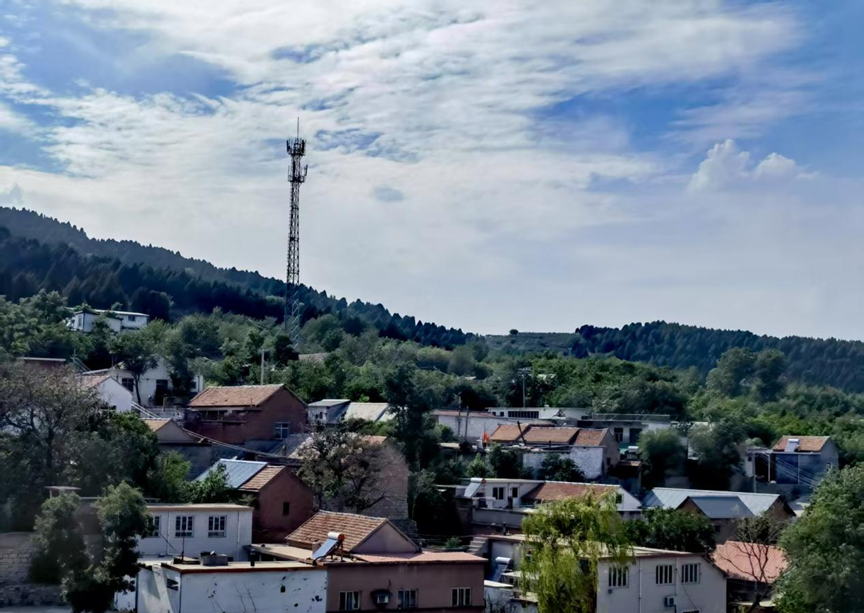
当数字时代的阳光照进齐鲁乡野,在电信普遍服务实施十周年之际,济南联通编织出一张看不见的惠民网络,诠释着"让信 息服务民心"的深刻内涵。 在济南联通打造的"智慧灌溉数字机井"系统赋能下,当地农业、农村和农人的生活正在发生巨变。这既是数字技术与农业 生产的深度融合,更是联通发挥行业优势助推乡村振兴的创新实践。 务工人员的可视"乡思" 千里之外的广州工地,来自章丘的钢筋工老张的午饭时间总伴随着特别的"加餐"——通过联通"沃家神眼" 查看家中实时画 面:水泥地铺满金黄的晾晒玉米;在院子里修补农具的父亲;带着孩子喂鸡的母亲;以及正把新摘豆角铺在晒席上的妻 子......"在工地午休时看看家里监控,就像每天回了趟家一样",小小的"沃家神眼"摄像头,连接起千里之外的牵挂,让老张 心里无比踏实,在外出务工劳动者心中架起一座温暖的"亲情桥"。 民宿经济的"网络破壁" 南部山区的民宿主王大姐仍清晰记得联通工程队2022年抬着设备上山的场景:"他们在栗子林里布光缆的样子,像在给山村 绣金线,让我们村顺利通上网"。 "我们的村子三面环山,离主路也比较远,从前以种水果、外出打工为主,很少有人到访。自从村里建了基站、通了网络, 村里开始 ...
中国联通(00762)上半年营收突破2000亿元 权益持有者应占溢利144.84亿元 同比增长5.01%
智通财经网· 2025-08-12 08:49
Core Insights - China Unicom reported a mid-year revenue exceeding RMB 200 billion, with a year-on-year growth of 1.5% [1] - The company's pre-tax profit reached RMB 17.8 billion, reflecting a 5.1% increase year-on-year [1] - Earnings attributable to equity holders amounted to RMB 14.484 billion, up 5.01% year-on-year, with earnings per share at RMB 0.47 and an interim dividend of RMB 0.2841 per share proposed [1] Financial Performance - Operating cash flow for the first half of 2025 was RMB 29 billion, while capital expenditure was RMB 20.22 billion [1] - As of June 30, 2025, the company's debt-to-asset ratio stood at 43.7% [1] Business Structure and Growth - The revenue from connected communications reached RMB 131.9 billion, while smart network revenue was RMB 45.4 billion, accounting for 26% of total revenue [1] - International business revenue grew by 11% to RMB 6.8 billion, and revenue from strategic emerging industries increased to 86%, becoming a new driver for high-quality development [1] User Growth and Network Development - The total number of connected users surpassed 1.2 billion, with net additions of over 11 million mobile and broadband users, marking a record high for the same period [1] - The number of IoT connections increased by over 60 million, totaling 690 million, with 86 million in the automotive IoT sector, reinforcing the company's leading position [1] Operational Efficiency - The company achieved significant results in precise network construction and intelligent network management, with capital expenditure decreasing by 15% year-on-year to RMB 20.2 billion [2] - The implementation of a simplified network is progressing, leading to an annual OPEX savings of nearly RMB 1 billion, and data center resource utilization exceeding 70% [2] - The company emphasizes high-standard construction and efficient operations, enhancing network layout, capability, and security [2]
中国联通(00762)二季度“泛在智联”连接用户累计到达数约12.08亿户
智通财经网· 2025-08-12 08:44
Core Insights - China Unicom (00762) announced that by the second quarter of 2025, the cumulative number of "Ubiquitous Intelligent Connection" users is expected to reach approximately 1.208 billion [1] - The cumulative number of 5G network users is projected to reach approximately 214 million [1] - The cumulative number of IoT terminal connections is expected to reach approximately 685 million [1] Service and Performance Metrics - The number of customers for 5G industry virtual private network services is reported to be 19,800 [1] - The problem resolution rate for smart customer service is 98.9% [1] - The proportion of intelligent services in smart customer service is 84.4% [1] Patent Information - The total number of authorized patents accumulated this year is 163 [1]