
CNOOC(00883)

Search documents
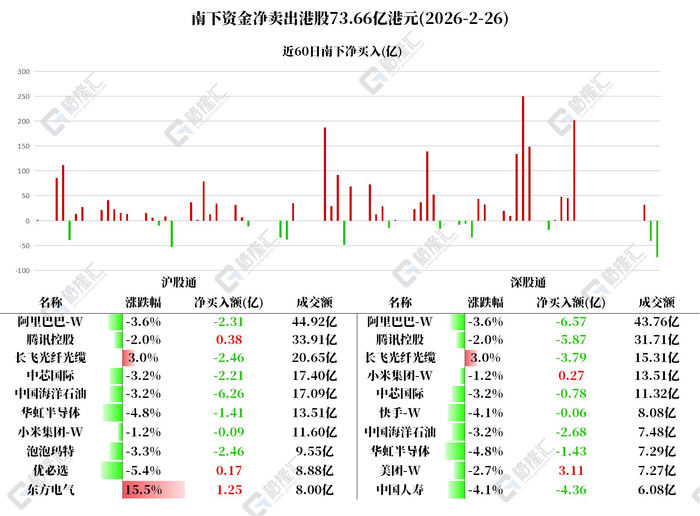
图解丨南下资金连续第2日净卖出港股,抛中海油、阿里




Ge Long Hui A P P· 2026-02-26 10:29
净卖出中国海洋石油8.93亿、阿里巴巴-W 8.88亿、长飞光纤光缆6.24亿、腾讯控股5.48亿、中国人寿 4.36亿、中芯国际2.98亿、华虹半导体2.84亿、泡泡玛特2.45亿。 据统计,南下资金已连续7日净买入美团,共计36.1242亿港元;连续5日净买入小米,共计32.2538亿港 元;连续4日净卖出中海油,共计12.2479亿港元。 格隆汇2月26日|南下资金今日净卖出港股73.66亿港元,为连续第2日净卖出。其中: 净买入美团-W 3.11亿、东方电气1.25亿; ...

港股26日跌1.44% 收报26381.02点
Xin Hua Wang· 2026-02-26 10:08
Market Performance - The Hang Seng Index fell by 384.7 points, a decrease of 1.44%, closing at 26,381.02 points [1] - The H-share Index dropped by 220.46 points, closing at 8,814.29 points, a decline of 2.44% [1] - The Hang Seng Tech Index decreased by 151.17 points, closing at 5,109.33 points, down by 2.87% [1] Blue Chip Stocks - Tencent Holdings decreased by 2.01%, closing at 512 HKD [1] - Hong Kong Exchanges and Clearing rose by 0.78%, closing at 415.4 HKD [1] - China Mobile fell by 0.88%, closing at 78.6 HKD [1] - HSBC Holdings increased by 1.61%, closing at 145 HKD [1] Local Hong Kong Stocks - Cheung Kong Holdings rose by 3.04%, closing at 48.06 HKD [1] - Sun Hung Kai Properties fell by 0.07%, closing at 136.3 HKD [1] - Henderson Land Development decreased by 0.4%, closing at 34.44 HKD [1] Chinese Financial Stocks - Bank of China fell by 0.64%, closing at 4.65 HKD [1] - China Construction Bank decreased by 1.6%, closing at 8 HKD [1] - Industrial and Commercial Bank of China fell by 0.62%, closing at 6.42 HKD [1] - Ping An Insurance dropped by 4.64%, closing at 67.85 HKD [1] - China Life Insurance decreased by 4.1%, closing at 31.38 HKD [1] Oil and Petrochemical Stocks - Sinopec fell by 1.63%, closing at 5.43 HKD [1] - PetroChina decreased by 1.46%, closing at 9.46 HKD [1] - CNOOC dropped by 3.22%, closing at 24.66 HKD [1]



北水动向|北水成交净卖出73.66亿 北水再度抛售芯片股 全天减持中海油(00883)近9亿港元
智通财经网· 2026-02-26 09:59
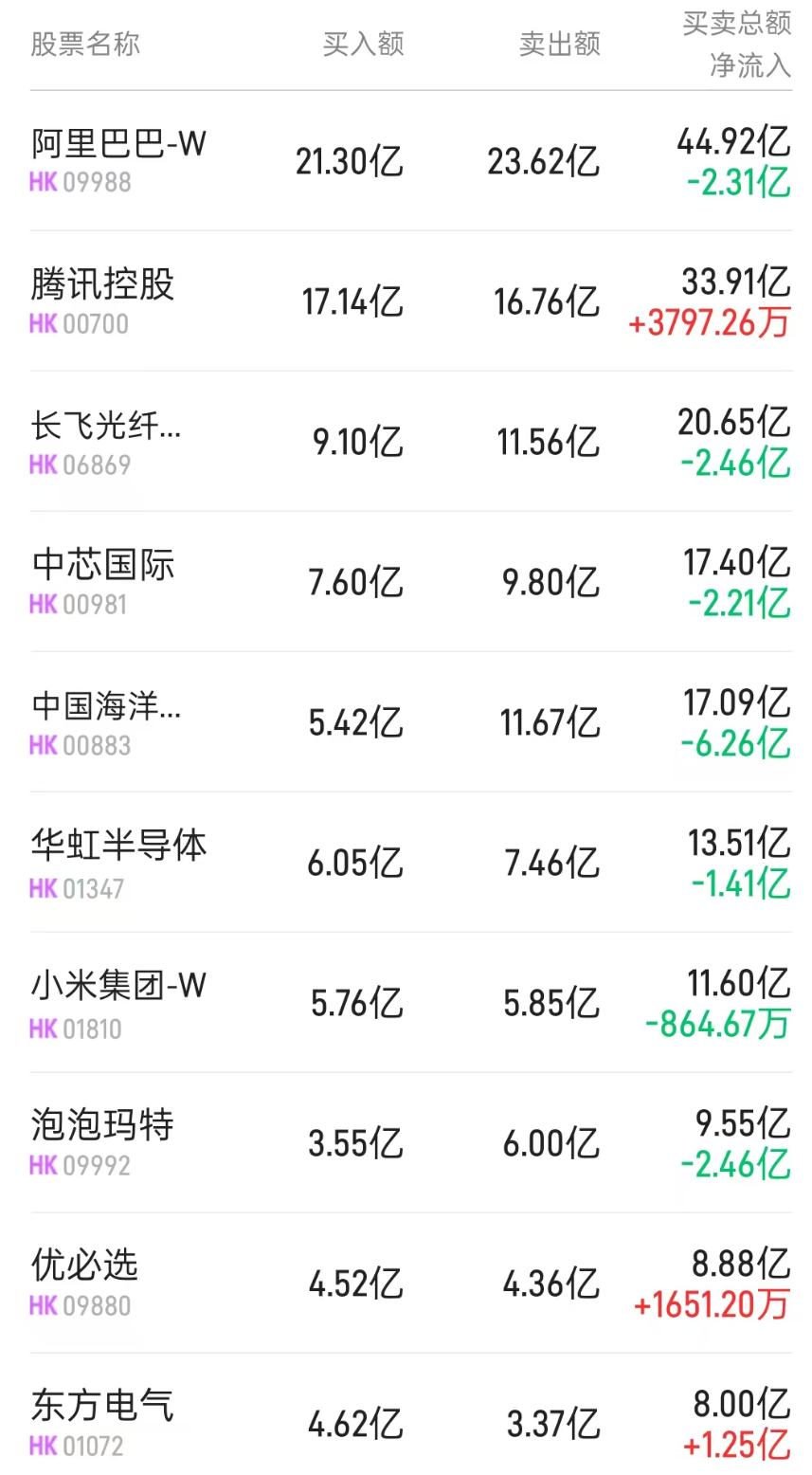
Core Viewpoint - The Hong Kong stock market experienced significant net selling from northbound capital, totaling HKD 73.66 billion, with notable net sell-offs in major stocks like Alibaba and CNOOC [1][2]. Group 1: Northbound Capital Flow - Northbound capital recorded a net sell of HKD 73.66 billion, with HKD 23.11 billion from the Shanghai Stock Connect and HKD 50.55 billion from the Shenzhen Stock Connect [1]. - The stocks with the highest net buying were Meituan (03690), Dongfang Electric (01072), and Xiaomi Group (01810) [1]. - The stocks with the highest net selling included CNOOC (00883), Alibaba (09988), and Changfei Optical Fiber (06869) [1]. Group 2: Individual Stock Performance - Alibaba (09988) had a buy amount of HKD 21.30 billion and a sell amount of HKD 23.62 billion, resulting in a net outflow of HKD 2.31 billion [2]. - CNOOC (00883) faced a net sell of HKD 8.93 billion, influenced by a drop in WTI crude oil prices below USD 65 per barrel and an increase in commercial crude oil inventory [6]. - Xiaomi Group (01810) saw a net buy of HKD 183.5 million, with the CEO emphasizing a focus on core technologies over the next five years [5]. Group 3: Market Reactions and Trends - The semiconductor sector is experiencing a divide due to AI demand, with upstream manufacturers benefiting while downstream PC and mobile manufacturers face cost pressures [5]. - Dongfang Electric (01072) received a net buy of HKD 1.25 billion, linked to the upcoming signing of a power supply commitment by major tech companies [4]. - Meituan (03690) had a net buy of HKD 3.11 billion, indicating strong investor interest [7].


港股高股息ETF(159302)跌0.73%,成交额1055.46万元
Xin Lang Cai Jing· 2026-02-26 09:54
Core Viewpoint - The Hong Kong High Dividend ETF (159302) has experienced a decline in both share count and total assets since the beginning of the year, indicating potential challenges in attracting investor interest [1][2]. Group 1: Fund Performance - As of February 26, the Hong Kong High Dividend ETF (159302) closed down 0.73% with a trading volume of 10.55 million yuan [1]. - The fund was established on August 23, 2024, with an annual management fee of 0.50% and a custody fee of 0.10% [1]. - The fund's performance benchmark is the China Securities Hong Kong Stock Connect High Dividend Investment Index, adjusted for valuation exchange rates [1]. Group 2: Fund Size and Liquidity - As of February 25, the latest share count for the fund was 10.5 million shares, with a total size of 145 million yuan [1]. - Compared to December 31, 2025, the fund's share count has decreased by 12.15% and total size has decreased by 5.36% this year [1]. - Over the last 20 trading days, the cumulative trading amount was 365 million yuan, with an average daily trading amount of 18.23 million yuan [1]. Group 3: Fund Management and Holdings - The current fund manager is Zhang Yichi, who has managed the fund since its inception, achieving a return of 34.80% during his tenure [2]. - The top holdings of the fund include COSCO Shipping Holdings, Far East Horizon, Minsheng Bank, and others, with the largest holding being COSCO Shipping Holdings at 5.67% [2].
港股红利低波ETF(159569)跌0.90%,成交额5613.60万元




Xin Lang Cai Jing· 2026-02-26 09:54
Core Viewpoint - The Invesco Great Wall Hong Kong Stock Connect Dividend Low Volatility ETF (159569) has shown a decrease in share count but an increase in total assets year-to-date, indicating a mixed performance in terms of investor interest and fund growth [1][2]. Group 1: Fund Performance - As of February 26, 2024, the ETF closed down 0.90% with a trading volume of 56.136 million yuan [1]. - The fund's management fee is 0.50% annually, and the custody fee is 0.08% annually [1]. - The latest share count is 331 million, with a total asset size of 485 million yuan, reflecting a 5.16% decrease in shares and a 4.00% increase in assets since December 31, 2025 [1]. Group 2: Trading Activity - Over the last 20 trading days, the ETF has accumulated a trading volume of 1.27 billion yuan, averaging 63.5013 million yuan per day [1]. - Year-to-date, in 33 trading days, the total trading volume reached 1.651 billion yuan, with an average daily trading volume of 50.028 million yuan [1]. Group 3: Fund Management - The current fund managers are Gong Lili and Wang Yang, with Gong managing since August 29, 2024, achieving a return of 48.54%, while Wang has managed since August 13, 2025, with a return of 5.74% [2]. Group 4: Top Holdings - The ETF's top holdings include: - COSCO Shipping Holdings (8.86% of holdings) - Orient Overseas International (7.48%) - Yanzhou Coal Mining (5.65%) - Seaspan Corporation (4.52%) - Yancoal Australia (4.46%) - WH Group (3.76%) - China Shenhua Energy (3.63%) - Far East Horizon (3.39%) - CNOOC (3.27%) - Sinopec (3.26%) [2][3].
南向资金丨中国海洋石油遭净卖出8.94亿港元
Di Yi Cai Jing· 2026-02-26 09:46
南向资金净卖出73.66亿港元,中国海洋石油、阿里巴巴-W、长飞光纤光缆分别遭净卖出8.94亿港元、 8.88亿港元、6.25亿港元。净买入方面,美团-W、东方电气、小米集团-W净买入额位列前三,分别获 净买入3.11亿港元、1.25亿港元、0.18亿港元。 (本文来自第一财经) ...
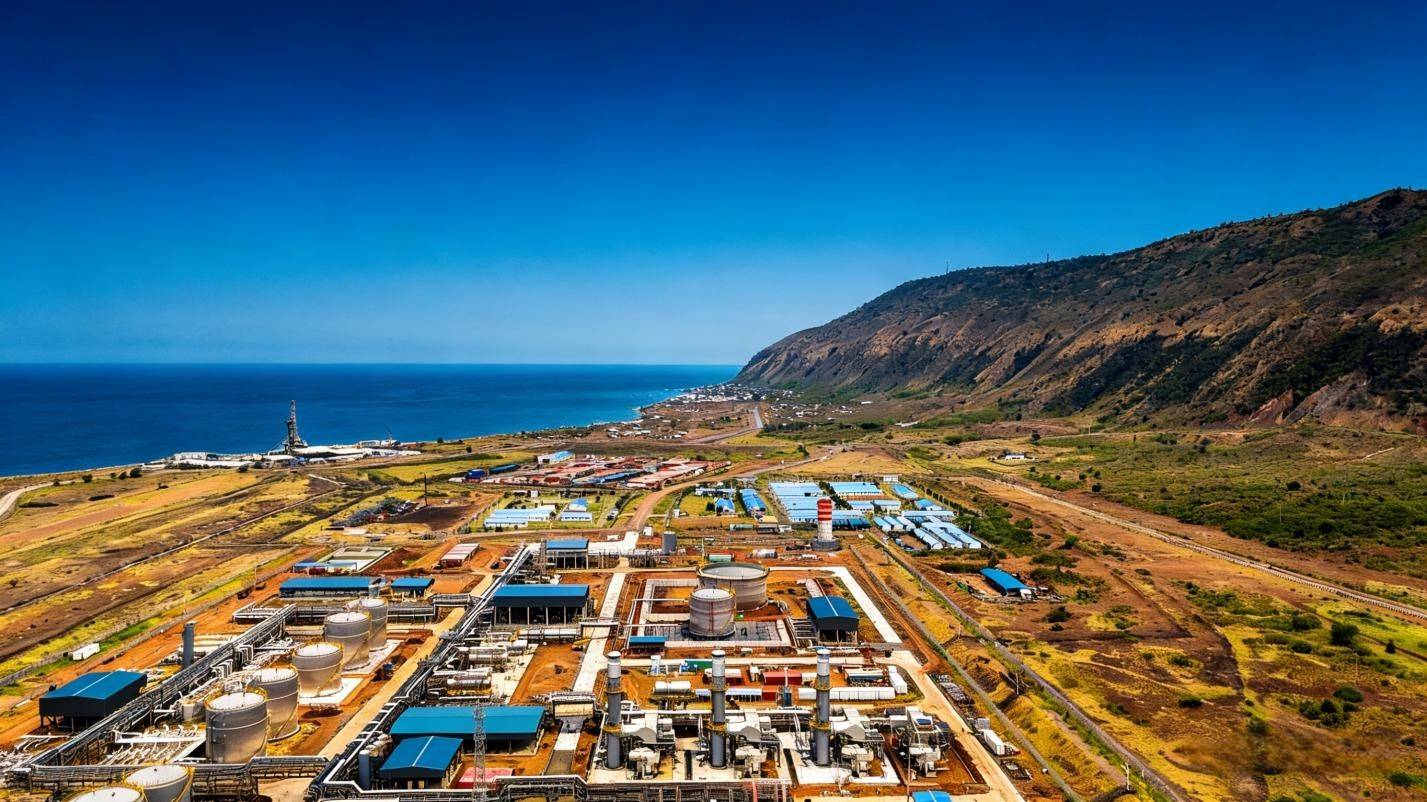
中国海油乌干达翠鸟油田项目中外员工共庆马年新春
Sou Hu Cai Jing· 2026-02-26 08:32
Core Viewpoint - The China National Offshore Oil Corporation (CNOOC) is actively advancing the development of the Kingfisher oil field project in Uganda, emphasizing cultural exchange and community engagement during the Chinese New Year celebrations [3][9]. Group 1: Project Development - The Kingfisher oil field project is located in the Albert Lake region of western Uganda and is a significant overseas oil and gas investment for CNOOC, with production expected to commence this year [3]. - Hundreds of employees from both China and Uganda are working on-site during the Chinese New Year to ensure all preparations for production are completed [3]. Group 2: Cultural Exchange Activities - To enrich employees' lives during the holiday, the company organized activities such as dumpling making, frisbee matches, and basketball tournaments, fostering camaraderie among Chinese and Ugandan staff [4]. - A cultural exchange event featuring Chinese paper-cutting was held, where employees learned about Chinese traditions and engaged in hands-on activities, enhancing cultural understanding [4]. Group 3: Community Engagement - CNOOC, in collaboration with Huawei Uganda, initiated a ten-day AI science popularization program at Buhuka Primary School, bringing technology education to rural children [7]. - The principal of Buhuka Primary School expressed gratitude for the initiative, highlighting its positive impact on students' perspectives and exposure to the wider world [7]. Group 4: Future Commitment - CNOOC's president, Liu Xiangdong, stated that the Kingfisher project is a vital platform for deepening China-Uganda energy cooperation and will continue to promote high-quality development and social responsibility [9].
菲律宾能源快断供!大亨急呼抱中国大腿,我国礼乐滩成救命稻草?
Sou Hu Cai Jing· 2026-02-26 07:57
Core Viewpoint - The Philippines is facing a severe energy crisis, primarily due to the depletion of the Malampaya gas field, which supplies about 40% of the electricity for Luzon Island. The country is urged to collaborate with China to develop the Recto Bank gas field as a potential solution to this crisis [1][3][10]. Group 1: Current Energy Situation - The Malampaya gas field is nearing depletion, leading to significant concerns about electricity supply and rising costs for both households and industries [6][10]. - The new gas field discovered, named "Malampaya East 1," is considered too small to fill the gap left by the Malampaya gas field's decline [15][17]. - The Philippines' energy demand continues to rise, making the situation increasingly urgent [17]. Group 2: Proposed Solutions - PXP Energy's chairman, Panfilo Lacson, advocates for collaboration with China to develop the Recto Bank gas field, emphasizing the need for experienced partners due to the high costs and technical requirements of such projects [19][21][31]. - The estimated cost to develop the Recto Bank gas field is around $6 billion, which PXP Energy cannot afford alone [29]. Group 3: Geopolitical Considerations - The potential collaboration with China is complicated by geopolitical issues, particularly regarding China's sovereignty claims over the South China Sea [45][49]. - The Philippines must recognize China's claims and approach the partnership with a genuine willingness to cooperate to move forward [51][58]. - Successful energy cooperation could lead to mutual benefits, including economic development and lower energy costs for the Philippines [54][60].
油气ETF汇添富(159309)开盘跌0.80%,重仓股中国石油跌0.64%,中国海油跌0.77%
Xin Lang Cai Jing· 2026-02-26 03:59
Group 1 - The oil and gas ETF Huatai Fuhua (159309) opened down 0.80%, priced at 1.484 yuan [1] - Major holdings in the ETF include China National Petroleum Corporation down 0.64%, China National Offshore Oil Corporation down 0.77%, and Sinopec down 0.31% [1] - The ETF's performance benchmark is the CSI Oil and Gas Resource Index return rate, managed by Huatai Fuhua Fund Management Co., Ltd. [1] Group 2 - Since its establishment on May 31, 2024, the ETF has returned 49.55%, with a one-month return of 16.14% [1]


石油ETF(561360)开盘跌0.58%,重仓股中国石油跌0.64%,中国海油跌0.77%
Xin Lang Cai Jing· 2026-02-26 01:39
Group 1 - The core viewpoint of the article highlights the performance of the Oil ETF (561360), which opened down by 0.58% at 1.550 yuan on February 26 [1] - Major holdings in the Oil ETF include China National Petroleum Corporation, which opened down by 0.64%, China National Offshore Oil Corporation down by 0.77%, and Sinopec down by 0.31% [1] - The Oil ETF's performance benchmark is the CSI Oil and Gas Industry Index return rate, managed by Guotai Fund Management Co., Ltd., with a return of 55.51% since its establishment on October 23, 2023, and a return of 13.58% over the past month [1] Group 2 - Other notable stock performances include Jereh Oilfield Services down by 0.57%, China Merchants Energy down by 0.75%, and Guanghui Energy down by 0.69%, while Zhongyuan Shipping increased by 0.35% [1] - Hengli Petrochemical decreased by 0.08%, Rongsheng Petrochemical by 0.40%, and Intercontinental Oil and Gas remained unchanged [1]

