
CCB(00939)

Search documents
中国建设银行取得数据交换方法专利
Sou Hu Cai Jing· 2025-12-26 00:37
建信金融科技有限责任公司,成立于2018年,位于上海市,是一家以从事软件和信息技术服务业为主的 企业。企业注册资本172972.9729万人民币。通过天眼查大数据分析,建信金融科技有限责任公司共对 外投资了6家企业,参与招投标项目4222次,财产线索方面有商标信息297条,专利信息5000条,此外企 业还拥有行政许可10个。 声明:市场有风险,投资需谨慎。本文为AI基于第三方数据生成,仅供参考,不构成个人投资建议。 来源:市场资讯 国家知识产权局信息显示,中国建设银行股份有限公司取得一项名为"一种数据交换方法、装置、设 备、程序产品及存储介质"的专利,授权公告号CN119420811B,申请日期为2024年8月。 天眼查资料显示,中国建设银行股份有限公司,成立于2004年,位于北京市,是一家以从事货币金融服 务为主的企业。企业注册资本26160038.1459万人民币。通过天眼查大数据分析,中国建设银行股份有 限公司共对外投资了36家企业,参与招投标项目5000次,财产线索方面有商标信息1908条,专利信息 5000条,此外企业还拥有行政许可149个。 ...

活跃度显著提升 今年以来A股市场定增融资超7800亿元
Zhong Guo Zheng Quan Bao· 2025-12-25 23:35
Core Viewpoint - The A-share market has seen significant activity in private placements this year, with a total of 148 companies completing placements, raising a total of 788.9 billion yuan, marking a year-on-year increase of 455.31% [1][2][3]. Group 1: Market Activity - As of December 24, 2023, 438 A-share companies announced private placement plans, with 148 successfully completed, raising 788.9 billion yuan compared to 142.1 billion yuan in the same period last year [2]. - Major banks such as China Bank, Postal Savings Bank, and others raised over 100 billion yuan each, primarily for liquidity support [2]. - The private placement market has transitioned from a simple financing tool to a crucial platform for industrial upgrades and integration [3]. Group 2: Industry Focus - The majority of companies engaging in private placements are from the technology sector, particularly electronics, power equipment, and communications [4]. - The electronics industry is highlighted as a key area of interest, driven by its strategic importance and the need for technological advancements [4][5]. - The demand for funds in the AI and semiconductor sectors is particularly strong, supported by favorable policies and market preferences [5]. Group 3: Future Outlook - The private placement market is expected to remain active in 2026, with a focus on mergers and acquisitions, and an increase in institutional participation [7][8]. - The market is anticipated to evolve towards higher quality developments, with a shift from discount-driven to profit-supported valuations [8]. - Continuous policy support is expected to enhance the role of private placements in resource integration and value discovery, making it a key capital market hub for fostering new productive forces [8].



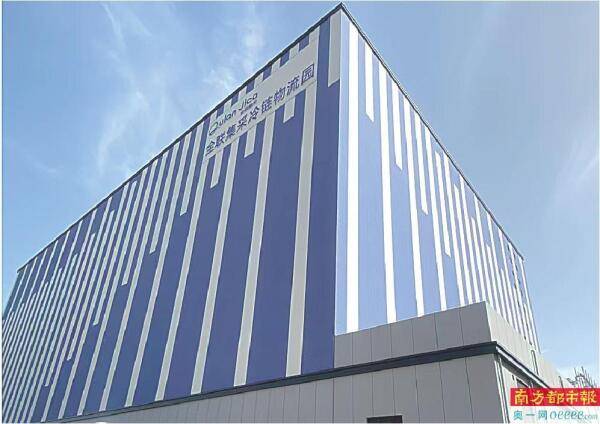
建行广东省分行:数智钥匙破解冷链产业融资“坚冰”
Sou Hu Cai Jing· 2025-12-25 23:11
Core Insights - The article discusses the launch of "Yuecang Cloud Loan" by China Construction Bank's Guangdong branch, aimed at addressing the financing challenges faced by small and micro traders in the cold chain industry, which is crucial for ensuring the quality and safety of food and pharmaceuticals [2][3]. Group 1: Product Overview - "Yuecang Cloud Loan" utilizes IoT and blockchain technology for comprehensive monitoring of goods throughout the supply chain, enabling dynamic risk assessment and significantly reducing the financing process to minutes [2][4]. - The product was successfully launched at the end of 2024, with the first loan disbursed, marking a significant step in facilitating financing for the cold chain industry [3][6]. Group 2: Innovation Highlights - The product features three main innovations: a digital monitoring system using IoT and blockchain, an intelligent risk control center that enhances credit approval efficiency by over 80%, and a fully online application process that can complete financing in as little as 30 minutes, improving efficiency by 90% compared to traditional methods [4][6]. - The integration of various data resources ensures the reliability of underlying data, effectively addressing valuation, regulation, and risk management challenges in the cold chain sector [4][6]. Group 3: Impact and Future Outlook - As of October 2025, the project has disbursed 180 million yuan in loans, supporting numerous cold chain traders and facilitating various corporate and retail banking services [6]. - The model is seen as a benchmark for innovative financing solutions in the cold chain industry, providing significant financial support and stimulating regional economic growth [6]. - The bank plans to continue expanding its services, leveraging advanced technologies like cloud computing and big data to enhance financial inclusivity and adapt to the needs of small and micro enterprises [6].

今年以来A股市场定增融资超7800亿元
Zhong Guo Zheng Quan Bao· 2025-12-25 21:11
Core Insights - The A-share market has seen significant activity in private placements this year, with 148 companies completing placements, raising a total of 788.9 billion yuan, a year-on-year increase of 455.31% [1][2] Group 1: Market Activity - As of December 24, 2023, 438 companies announced private placement plans, with 148 successfully completed, totaling 1,010.2 million shares issued [1][2] - In comparison to the same period in 2024, the number of companies completing placements increased by 20, and the total amount raised surged from 142.1 billion yuan to 788.9 billion yuan [1][2] Group 2: Sector Focus - The electronics, basic chemicals, and power equipment sectors led the number of companies engaging in private placements, with 23, 17, and 15 companies respectively [3] - The technology sector has been a major focus, with companies seeking funds to address urgent needs for technological upgrades and capacity expansion [3][4] Group 3: Institutional Participation - Major banks such as Bank of China, Postal Savings Bank, and others raised over 1 billion yuan each, primarily for liquidity support, while the majority of other companies raised less than 30 billion yuan for various purposes [2] - The active participation of institutional investors has been driven by favorable policies and the attractive pricing of private placements, enhancing the appeal of investments in the technology sector [4][5] Group 4: Future Outlook - The private placement market is expected to remain active in 2026, with a focus on mergers and acquisitions, and an increasing concentration in sectors like semiconductors, AI, and high-end manufacturing [5][6] - The market is anticipated to evolve towards a more institutionalized and long-term focus, with a potential narrowing of discount rates on popular projects due to high investor enthusiasm [5][6]
让冰雪运动“火热”升温,建行信用卡冰雪季热力启幕
Xin Lang Cai Jing· 2025-12-25 09:57
Group 1 - The core idea of the news is that China Construction Bank's credit card division is actively promoting the "Enjoy Fun Ice and Snow Season" campaign to stimulate the ice and snow economy, aligning with national sports development strategies [1][3] - The campaign utilizes a three-pronged approach: online promotion, offline interaction, and diverse discount activities, aiming to create an immersive ice and snow consumption experience for the public [1][2] - The online strategy includes leveraging popular platforms like Douyin to engage users through creative video challenges, resulting in over 100 million views and participation from 57,000 users within three days [1][2] Group 2 - Offline, the bank has set up brand booths at major ice and snow venues, such as Harbin and Chongli, to enhance consumer engagement through interactive activities and giveaways, bridging online enthusiasm with offline consumption [2] - The bank offers various discounts, such as up to 166 yuan off for purchases at ice skating rinks across multiple cities, and collaborates with leading OTA platforms for ticket discounts, enhancing accessibility to ice and snow activities [2] - The initiative aligns with national policies aimed at boosting domestic demand and enhancing consumer experience, with the bank committed to innovating financial products and services to support the development of the ice and snow economy [3]
深度丨商业银行“出海”验成色:中行领跑,谁在悄然发力?
2 1 Shi Ji Jing Ji Bao Dao· 2025-12-25 08:32
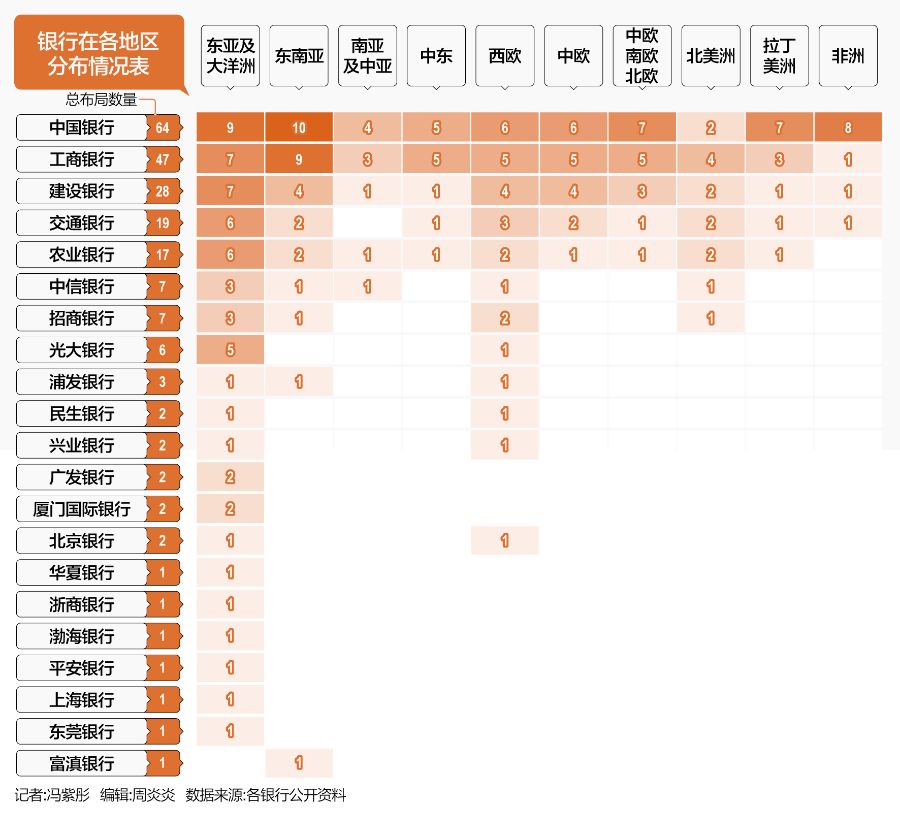
Core Insights - Chinese banks are expanding their overseas presence, establishing a comprehensive service network that covers major financial centers globally and key regions along the Belt and Road Initiative [1][2] - The internationalization strategy of Chinese banks has shifted from traditional markets in Europe and the US to emerging markets in Southeast Asia, the Middle East, Latin America, and countries involved in the Belt and Road Initiative [1][2] Group 1: Global Expansion Strategy - Chinese banks are utilizing representative offices, branches, and subsidiaries for overseas expansion, with larger banks often establishing branches in mature markets and starting with representative offices in emerging markets [2] - The distribution of overseas institutions shows that major state-owned banks are leading the expansion, with a focus on both traditional and emerging markets [2][4] Group 2: Performance Metrics - As of June 2025, Bank of China leads with 539 overseas branches in 64 countries, including 45 Belt and Road countries, showcasing its extensive global network [4] - Industrial and Commercial Bank of China follows with 413 overseas institutions in 49 countries, including 250 in Belt and Road countries, demonstrating a flexible international strategy [4] - Agricultural Bank of China has established 13 branches and 4 representative offices, focusing on supporting high-quality Belt and Road initiatives [4] Group 3: Revenue Growth and Market Dynamics - In the first half of 2025, Bank of China reported overseas revenue of 783.13 billion yuan, a 14.4% increase from the previous year, with overseas revenue accounting for 23.77% of total revenue [12] - Industrial and Commercial Bank of China's overseas revenue was 562.52 billion yuan, showing a slight decline of 1.88%, while Agricultural Bank of China experienced a 21.03% increase [12][11] - The growth of overseas revenue among joint-stock banks, such as Shanghai Pudong Development Bank, which saw a 119.37% increase, highlights the varying performance across banks [14] Group 4: Challenges and Future Directions - Chinese banks face regulatory challenges in overseas markets, including compliance with both domestic and foreign regulations, which can lead to significant penalties [15] - The demand for diversified financial services is evolving, with a shift from traditional trade financing to more complex needs such as global treasury management and cross-border mergers [16] - Future competitiveness will depend on enhancing global collaboration, local operational capabilities, compliance risk management, and financial technology innovation [18][19]

建设银行发布2026年节假日期间个人外汇买卖业务具体时间安排
Jin Tou Wang· 2025-12-25 03:53
Core Viewpoint - China Construction Bank (CCB) has announced the specific time arrangements for personal foreign exchange trading during the holiday periods in 2026, highlighting the importance of planning for clients [1] Group 1: Holiday Trading Schedule - New Year's Day: Trading will close at 16:00 on December 31, 2026, and reopen at 07:00 on January 2, 2027 [1] - Spring Festival: Trading will close at 04:00 on February 14, 2026, and reopen at 07:00 on February 16, 2026; it will close again at 04:00 on February 21, 2026, and reopen at 07:00 on February 23, 2026 [1] - Qingming Festival: Trading will close at 04:00 on April 4, 2026, and reopen at 07:00 on April 6, 2026 [1] - Labor Day: Trading will close at 04:00 on May 2, 2026, and reopen at 07:00 on May 4, 2026 [1] - Dragon Boat Festival: Trading will close at 04:00 on June 20, 2026, and reopen at 07:00 on June 22, 2026 [1] - Mid-Autumn Festival: Trading will close at 04:00 on September 26, 2026, and reopen at 07:00 on September 28, 2026 [1] - National Day: Trading will close at 04:00 on October 3, 2026, and reopen at 07:00 on October 5, 2026 [1] Group 2: Client Advisory - Clients are advised to pay attention to the changes in trading times and make arrangements in advance [1] - For any inquiries, clients can consult CCB branch staff or call the customer service number 95533 [1]
智通ADR统计 | 12月25日
智通财经网· 2025-12-24 22:22
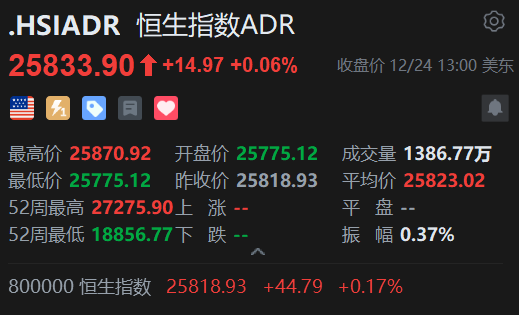
Market Overview - The Hang Seng Index (HSI) closed at 25,833.90, up by 14.97 points or 0.06% [1] - The index reached a high of 25,870.92 and a low of 25,775.12 during the trading session, with a trading volume of 13.8677 million [1] - The 52-week high for the index is 27,275.90, while the 52-week low is 18,856.77, indicating a fluctuation of 0.37% [1] Major Blue-Chip Stocks Performance - HSBC Holdings closed at 123.759 HKD, down 0.03% from the Hong Kong close [2] - Tencent Holdings closed at 602.001 HKD, down 0.17% from the Hong Kong close [2] - Alibaba Group (W) saw a decrease of 1.200 HKD, closing at 146.000 HKD, a drop of 0.82% [3] - China Construction Bank decreased by 0.050 HKD, closing at 7.560 HKD, a decline of 0.66% [3] - Xiaomi Group (W) increased slightly by 0.020 HKD, closing at 39.220 HKD, a rise of 0.05% [3] ADR Performance - Tencent's ADR closed at 602.001, down by 0.999 HKD or 0.17% compared to its Hong Kong stock price [3] - Alibaba's ADR closed at 145.796, down by 0.204 HKD or 0.14% compared to its Hong Kong stock price [3] - HSBC's ADR closed at 123.759, down by 0.041 HKD or 0.03% compared to its Hong Kong stock price [3] - AIA Group's ADR closed at 83.298, up by 0.048 HKD or 0.06% compared to its Hong Kong stock price [3]





国有大行火速响应信用修复新政
21世纪经济报道· 2025-12-24 14:10
Core Viewpoint - The article discusses the implementation of a new credit repair policy by the People's Bank of China, which allows for automatic credit repair for individuals with overdue debts, significantly lowering the barriers and costs associated with credit repair [1][3]. Group 1: Policy Overview - The new policy, effective from December 22, 2025, allows for the automatic removal of certain overdue information from credit reports without the need for individual applications, marking a shift towards a dual focus on both punishment and repair in the credit system [1][3]. - The policy covers various types of personal loans, including mortgages, consumer loans, and credit cards, and applies to all financial institutions connected to the central bank's credit system [6][3]. Group 2: Eligibility and Conditions - To qualify for the credit repair, overdue information must meet three criteria: it must have occurred between January 1, 2020, and December 31, 2025; the overdue amount must not exceed 10,000 RMB; and the debt must be fully repaid by March 31, 2026 [6][3]. - The automatic repair process is designed to be seamless, with the central bank's credit system identifying eligible overdue information without requiring any action from the individual [3][7]. Group 3: Implementation by Financial Institutions - Major banks, including Industrial and Commercial Bank of China, Agricultural Bank of China, and others, have quickly adapted to the new policy by enhancing their service channels and ensuring accurate data management to facilitate the policy's implementation [9][10]. - Banks have established various channels for customers to inquire about their credit status and have emphasized the importance of confirming repayment amounts to ensure eligibility for the credit repair [11][10]. Group 4: Balancing Rights and Risk Management - The new policy aims to balance individual rights protection with financial risk management, encouraging overdue borrowers to repay their debts while helping banks recover non-performing assets [14][15]. - The policy is expected to stimulate demand for personal loans, including consumer and mortgage loans, by releasing previously constrained financing needs, thus revitalizing the credit market [15][16].


中国建设银行:董事会会议同意聘任唐朔担任副行长
Bei Jing Ri Bao Ke Hu Duan· 2025-12-24 10:23
Group 1 - The core point of the article is the appointment of Tang Shuo as the Vice President of China Construction Bank, pending approval from the National Financial Regulatory Administration [1] - Tang Shuo has extensive experience in the banking sector, having held various positions at Bank of Communications, including Director of Business and Institutional Banking and Branch Manager in Guangdong and Beijing [1] - Tang Shuo holds a Bachelor's degree in Law from Xi'an Jiaotong University and a Master's degree in Engineering from Beijing Jiaotong University [1] Group 2 - As of September 30, 2025, China Construction Bank's total assets reached 45.37 trillion yuan, an increase of 11.83% from the previous year [2] - The total amount of loans and advances was 27.68 trillion yuan, reflecting a growth of 7.10% year-on-year [2] - The bank's non-performing loan ratio is 1.32%, which is a decrease of 0.02 percentage points from the end of the previous year, indicating stable asset quality [2]