
CCB(00939)

Search documents
港股通央企红利ETF(159266)跌1.64%,成交额1288.49万元
Xin Lang Cai Jing· 2026-02-13 07:14
Core Viewpoint - The Hong Kong Stock Connect Central State-Owned Enterprises Dividend ETF (159266) experienced a decline of 1.64% in its closing price on February 13, with a trading volume of 12.8849 million yuan [1]. Group 1: Fund Overview - The fund was established on July 23, 2025, and is officially named Yongying CSI Hong Kong Stock Connect Central State-Owned Enterprises Dividend ETF [1]. - The management fee is set at 0.50% per annum, while the custody fee is 0.10% per annum [1]. - The fund's performance benchmark is the CSI Hong Kong Stock Connect Central State-Owned Enterprises Dividend Index return (calculated based on valuation exchange rates) [1]. Group 2: Fund Size and Performance - As of February 12, 2025, the fund had a total of 539 million shares and a total size of 565 million yuan [1]. - Compared to December 31, 2025, the fund's shares decreased by 12.51% and its size decreased by 7.47% [1]. Group 3: Liquidity - Over the last 20 trading days, the cumulative trading amount for the fund was 265 million yuan, with an average daily trading amount of 13.2605 million yuan [1]. Group 4: Fund Management - The current fund managers are Liu Tingyu and Cai Leping, with Liu managing the fund since July 23, 2025, achieving a return of 3.01%, and Cai managing since November 5, 2025, with a return of 0.17% [2]. Group 5: Top Holdings - The fund's top holdings include: - COSCO Shipping Holdings (4.14% of holdings) - China Shenhua Energy (2.69%) - CNOOC (2.58%) - Sinopec Engineering (2.57%) - China National Offshore Oil Corporation (2.54%) - China Merchants Industry Holdings (2.46%) - CITIC International Communications (2.39%) - PetroChina (2.38%) - China Coal Energy (2.38%) - China Construction Bank (2.29%) [2][3].

中国建设银行取得风险检查方法及装置专利
Sou Hu Cai Jing· 2026-02-13 05:40
Core Viewpoint - China Construction Bank has obtained a patent for a "Risk Inspection Method and Device, Storage Medium, and Electronic Equipment," indicating its focus on innovation in financial services [1]. Group 1: Company Overview - China Construction Bank Corporation was established in 2004 and is headquartered in Beijing, primarily engaged in monetary financial services [1]. - The registered capital of China Construction Bank is approximately 26.16 billion RMB [1]. Group 2: Investment and Intellectual Property - The bank has invested in 37 companies and participated in 5,000 bidding projects [1]. - It holds 1,890 trademark registrations and 5,000 patent records, showcasing its commitment to intellectual property [1]. - Additionally, the bank possesses 149 administrative licenses, reflecting its regulatory compliance and operational scope [1].

南向1.41万亿“压舱” 韩国散户“点火”——港股迎来定价权分层时代
Zhi Tong Cai Jing· 2026-02-13 01:53
Core Insights - The Hong Kong stock market is experiencing two distinct but resonant waves of incremental capital from mainland China and South Korean retail investors, with mainland southbound funds achieving a record net purchase of 1.41 trillion HKD, establishing themselves as core builders of pricing power in the market [1][10] - Southbound funds are characterized by long-term value investment, while South Korean retail investors engage in high-frequency trading and narrative-driven investments, creating a diversified funding source and a layered pricing logic in the Hong Kong market [1][10] Funding Scale and Structure - Southbound funds have become the core incremental source and valuation system reshaper for the Hong Kong market, with a cumulative net inflow of 5.11 trillion HKD by the end of 2025, and a market value exceeding 6.3 trillion HKD, accounting for 12.7% of the total market [2] - South Korean retail investors, while having a smaller capital scale, exhibit concentrated trading behavior and significant leverage, particularly impacting specific sectors like new economy IPOs and the semiconductor industry [2][5] Industry Preferences - Southbound funds focus on financials and high-dividend utilities, with significant investments in major banks and state-owned enterprises driven by high dividend yields and low valuation levels, while South Korean investors show minimal interest in these sectors [3][5] - South Korean retail investors heavily invested in Xiaomi and MiniMax-WP, demonstrating a high turnover and narrative-driven trading approach, contrasting with the stable, long-term holdings of Southbound funds [5][8] Trading Behavior and Decision-Making - Southbound funds exhibit a decision-making anchor based on dividend yield, ROE stability, and free cash flow generation, characterized by continuous accumulation and stable holdings, as seen with significant net purchases in major banks [8][9] - South Korean retail investors, on the other hand, are driven by industry narrative strength and social media trends, with a high frequency of trading and a tendency to hold stocks for less than three months, reflecting a stark contrast to the long-term holding strategy of Southbound funds [9][10] Market Dynamics - The influx of South Korean retail investors into the Hong Kong market represents a diversification of the investor base, providing liquidity while also potentially increasing volatility during certain periods [9][10] - The interaction between Southbound funds and South Korean retail investors is creating a new normal in the Hong Kong market characterized by layered pricing and concurrent narratives, necessitating both stable investment strategies and agile trading approaches [10]







济南置业消费券细则发布 前5000名网签购房者可享1万元补贴
Feng Huang Wang Cai Jing· 2026-02-13 00:24
Core Points - The Jinan Housing and Urban-Rural Development Bureau announced the implementation rules for the "Home Purchase Consumption Voucher" activity from February 11 to March 31, 2026, offering a consumption voucher of 10,000 yuan for the first 5,000 consumers who sign online contracts for new residential properties [1][2] Group 1: Activity Overview - The consumption vouchers are applicable to various categories including supermarkets, home appliances, dining, and accommodation, and can be redeemed if the spending exceeds the voucher amount [1] - The vouchers are divided into two types: RMB voucher packages and digital RMB voucher packages, with specific requirements for using the digital RMB [1] - The consumption vouchers will be dynamically issued during the online signing public announcement period, with daily updates on completed contracts [2] Group 2: Consumer Guidelines - Consumers must select their voucher type by July 30, 2026, and can check their vouchers through the "Construction Bank Life" APP [3] - Vouchers cannot be withdrawn, refunded, or transferred, and any misuse will lead to penalties [3] - If a consumer cancels their purchase contract after receiving a voucher, they must return the used amount to the designated account [3] Group 3: Customer Support - For inquiries, consumers can contact the China Construction Bank's 24-hour customer service or use the "Construction Bank Life" APP for personalized consultation [4]
“五福”促消费“乐购”迎新春
Si Chuan Ri Bao· 2026-02-12 22:41
Core Viewpoint - The article discusses the initiatives taken by China Construction Bank (CCB) Sichuan Branch to stimulate consumer spending during the 2026 Spring Festival, aligning with the government's "2026 'Buy New Year'" special activity plan aimed at boosting holiday consumption and enriching cultural life [2][9]. Group 1: Consumer Loan Initiatives - CCB Sichuan Branch is implementing a "Home Life" event, offering personal consumption loans with financial subsidies, allowing customers to enjoy lower interest rates, such as a reduction from 3% to 2% for eligible borrowers [3][4]. - The bank has developed an automated recognition system for online processing of consumption recognition and subsidy deductions, enhancing customer experience and operational efficiency [3]. Group 2: Home Decoration and Appliance Promotions - During the Spring Festival, CCB Sichuan Branch launched a "Home Decoration Festival," providing discounts for home decoration services and special benefits for customers purchasing home appliances [4]. - Customers can receive a discount of 500 yuan for home decoration services when spending over 5000 yuan, along with additional rewards for those using the "Jianxin Fudai" loan [4]. Group 3: Automotive Financing for New Energy Vehicles - CCB Sichuan Branch is promoting the purchase of new energy vehicles through car exhibitions and financing options, offering flexible installment plans and zero-interest loans for certain models [5][6]. - The bank has organized over 20 car exhibition events in various commercial complexes, facilitating direct consumer engagement and providing comprehensive services including financing and insurance [6]. Group 4: Cultural and Tourism Consumption - CCB is participating in the "Follow the Movie to Taste Delicious Food" campaign, offering promotional activities such as buy-one-get-one-free movie ticket deals with their credit card [7][8]. - The bank is also running the "New Year Travel Luck" campaign, providing discounts and incentives for dining and tourism through partnerships with local merchants and platforms [8]. Group 5: Overall Strategy and Future Plans - CCB Sichuan Branch aims to leverage key consumption periods to create diverse consumption scenarios, linking government and enterprise resources to enhance financial services in the holiday economy [9].
“贷”动消费潮 共赴幸福年——建设银行山西省分行赋能经营主体激活消费动能
Sou Hu Cai Jing· 2026-02-12 20:03
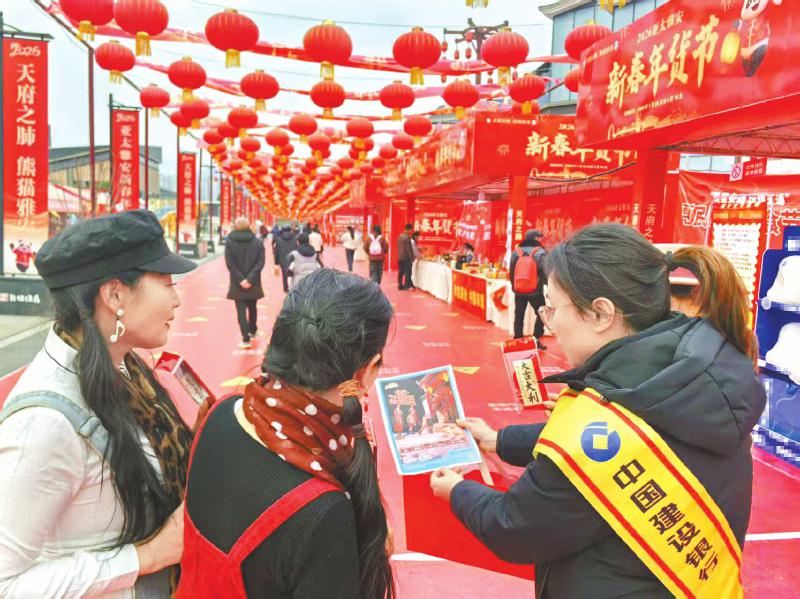
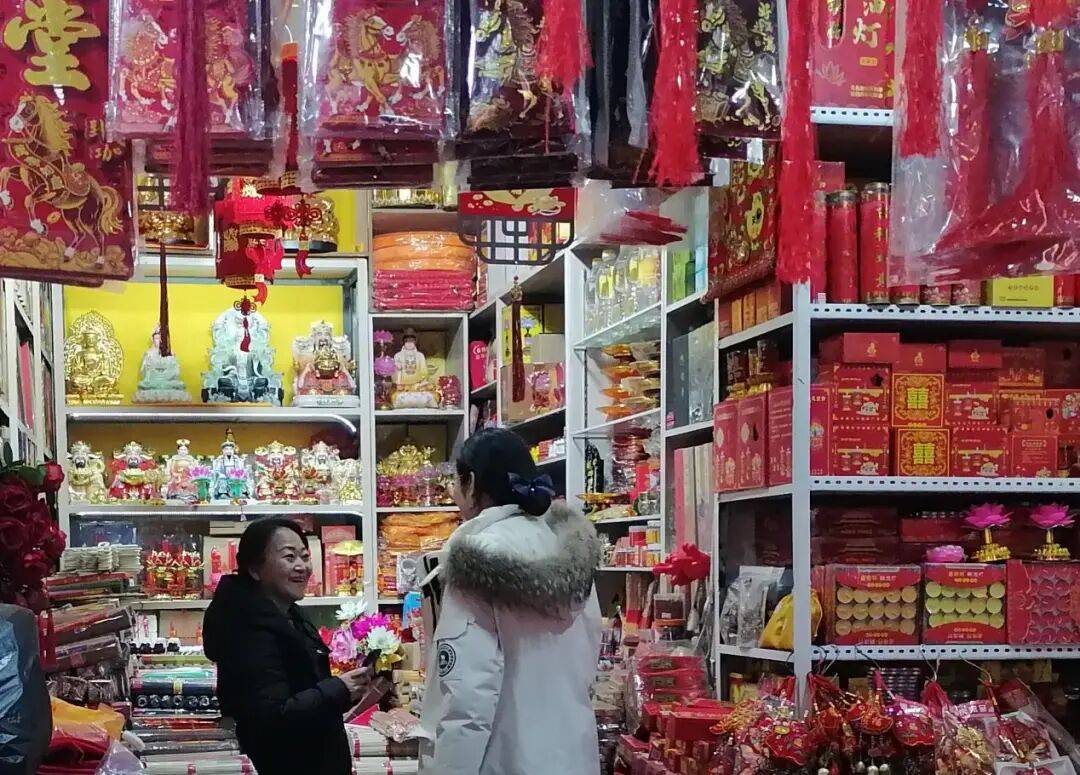
Group 1 - The article highlights the active consumer market during the Spring Festival, with China Construction Bank's Shanxi branch focusing on customized financial services to support the festive consumption economy, providing loans to 22,700 individual business entities totaling 2.923 billion yuan this year [1] - The bank's proactive approach includes visiting local markets and merchants to understand their financial needs, exemplified by a case where a merchant received a 400,000 yuan loan to stock up on Spring Festival goods [3][5] - Another case illustrates a clothing store owner who secured a 100,000 yuan loan in just two days, enabling her to place orders for winter clothing in time for the holiday shopping surge [6][8] Group 2 - The article emphasizes the bank's support for agricultural development, with a focus on local agricultural cooperatives, providing tailored financial products like the "cooperative quick loan" to meet seasonal funding needs [10] - The bank's efforts include conducting on-site research to understand the specific financial requirements of farmers, resulting in a total loan issuance of 20.38 million yuan to 175 farmers this year [12] - The timely financial support has allowed farmers to invest in better seeds and equipment, enhancing their production capabilities and increasing expectations for a fruitful harvest [12]
丈量地方性银行(3):川渝132家区域性银行全梳理-20260212
GF SECURITIES· 2026-02-12 14:21
Investment Rating - The industry investment rating is "Buy" [2] Core Insights - The report analyzes 132 regional banks in the Sichuan-Chongqing area, highlighting the growth and structural changes in the banking sector [6][27] - The asset growth rates of major city commercial banks in the region are higher than those of listed city commercial banks, indicating a robust expansion [38] - Profitability metrics show that city commercial banks in the region have lower ROE compared to listed banks, while rural commercial banks outperform them [6][27] - Asset quality is slightly weaker in regional banks compared to listed banks, with higher non-performing loan ratios [6][27] Summary by Sections Economic Structure Analysis - Sichuan province is positioned as a key driver for western development, with a focus on enhancing the Chengdu-Chongqing economic circle [13][14] - In 2025, Chengdu's GDP is projected to account for 38.7% of the province's total, with significant growth in various sectors [15] Banking Sector Overview - The Sichuan-Chongqing region has 132 commercial banks, including 14 city commercial banks, 65 rural banks, and 51 rural commercial banks [27] - The asset growth rates for major city commercial banks in the region are 15.6% and 18.2%, surpassing the 14.2% growth of listed city commercial banks [38] Asset and Liability Structure - The proportion of loans to total assets has been increasing since 2016, with city commercial banks in Sichuan projected to have a loan ratio of 56.1% by 2024 [38][40] - The financial investment ratio for city commercial banks is on a downward trend, with a slight recovery noted in the first half of 2025 [40][46] Profitability and Asset Quality - The average ROE for city commercial banks in the region is 10.97%, lower than the 11.99% average for listed city commercial banks [6][27] - Non-performing loan ratios for city commercial banks in the region are higher than those of listed banks, indicating potential asset quality concerns [6][27] Capital Adequacy - Capital adequacy ratios for regional banks are comparable to those of listed banks, providing a safety margin for operations [6][27]


金价高位波动能否持仓过节?业内提醒→
第一财经· 2026-02-12 11:34
Core Viewpoint - The article discusses the tightening of gold-related business by banks in response to recent volatility in gold prices and the upcoming Chinese New Year holiday, highlighting the need for investors to manage risks effectively during this period [3][4][6]. Group 1: Market Conditions - As of February 12, gold prices are experiencing high volatility, with London gold at $5063 per ounce and Shanghai gold at 1123 yuan per gram, while retail prices in major cities reach up to 1556 yuan per gram [3][4]. - The gold market has seen significant fluctuations, with prices peaking above $5600 per ounce at the end of January and then dropping below $4500, indicating a volatility of over 20% within three trading days [6]. Group 2: Bank Responses - Major banks, including China Construction Bank, Industrial Bank, and Bank of Communications, have raised margin requirements and implemented dynamic trading limits on gold transactions to mitigate risks associated with market volatility [4][5][6]. - The minimum investment amounts for gold accumulation products have been increased by several banks, with China Bank raising the threshold from 950 yuan to 1200 yuan, and Construction Bank increasing it to 1500 yuan [5][6]. Group 3: Investor Guidance - Analysts suggest that investors should be cautious about holding positions over the holiday, as the Shanghai Gold Exchange will be closed while international markets remain open, creating a "time difference risk" [6][9]. - For those considering gold as a long-term investment, a strategy of gradual buying and holding is recommended, with a suggested allocation of 5% to 10% of the investment portfolio to gold as a risk hedge [10].



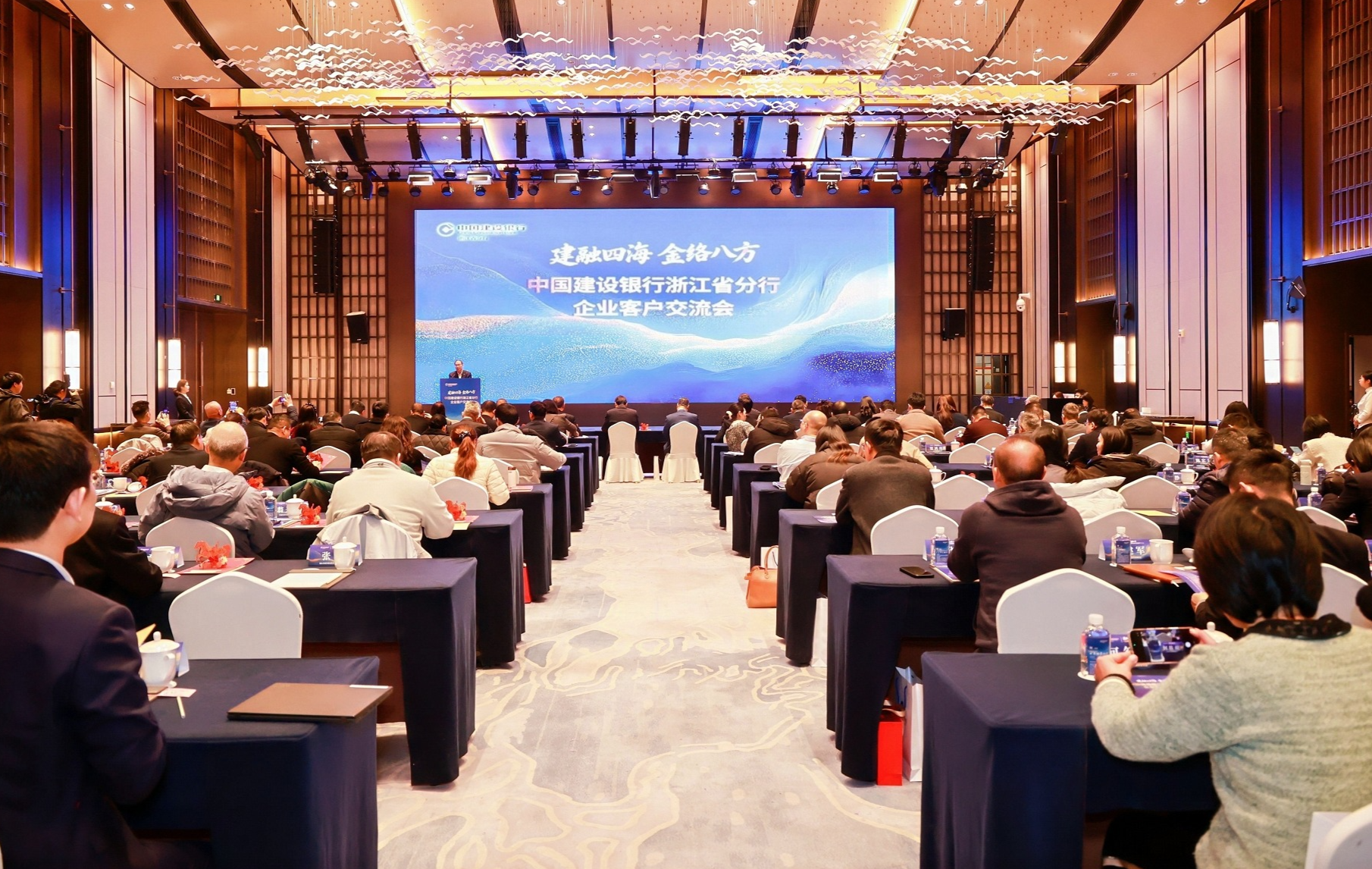
中国建设银行浙江省分行举办“建融四海·金络八方”企业客户交流会
Zhong Guo Jin Rong Xin Xi Wang· 2026-02-12 11:33
转自:新华财经 为更好服务于浙江开放型经济,为企业海外拓展提供坚实的金融支持,中国建设银行浙江省分行(以下简称"浙江建行")近日在浙江省绍兴市举办主题 为"建融四海·金络八方"的企业客户交流会。此次交流会旨在深化综合金融服务能力,推动境内外本外币一体化与商投行一体化的服务模式升级。 会上,中国建设银行浙江省分行党委书记、行长张伟煜表示,浙江建行将以更加开放的心态、更具创新精神的产品和服务,为企业全球化布局注入新的活 力。浙江省工商联副主席林建良、建银工程咨询有限责任公司党委书记兼董事长陈比伦先后发言,认可浙江建行在促进地方经济发展中的积极作用。国家信 息中心战略规划研究院副院长高辉清则带来了关于2026年全球经济形势与投资展望的专题分析,引发了与会者的思考。 活动期间还举行了海外机构"善建行远"跨境金融服务专场。中国建设银行国际业务部副总经理沈化雨致辞并深入解析了建行在全球金融市场上的战略布局与 竞争优势,中国建设银行结算与现金管理部企业司库处处长杨晴详细介绍建行全球现金管理业务体系。随后,多个建行海外分支机构代表带来全球重点市场 的前沿投资机遇与定制化金融服务方案,展现了建行作为国际化大行的综合实力与服务能 ...
2025年NPL市场回顾与展望:市场持续扩容,未来回收表现有待持续关注
Lian He Zi Xin· 2026-02-12 11:16
Market Overview - The NPL product market continued to expand in 2025, with a total issuance scale of 820.57 billion yuan, representing a year-on-year growth of 61.32%[4] - The cumulative issuance scale of NPL products from 2016 to 2025 reached 3285.88 billion yuan, indicating a sustained growth trend over six consecutive years[4] Asset Securitization - In 2025, commercial banks disposed of a total of 519.11 billion yuan of non-performing loans (NPLs) through asset securitization, with principal accounting for 90.53% of this amount, marking a 62.80% increase from 2024[5] - As of September 2025, the balance of non-performing loans in commercial banks was 3522.48 billion yuan, with 349.45 billion yuan disposed of through securitization, accounting for 10.28% of the median balance of non-performing loans[7] Issuance Characteristics - Large state-owned commercial banks remained the main issuers in the NPL market, with the top three institutions (Industrial and Commercial Bank of China, China Construction Bank, and Bank of China) accounting for 39.92% of the total issuance in 2025[9] - The types of NPL products issued have diversified, including personal housing mortgage NPLs and small micro-enterprise NPLs, reflecting a trend towards greater variety in product offerings[9] Recovery Rates and Valuation - The expected recovery rate for credit card NPL products ranged from 4.09% to 16.15%, with a weighted average recovery rate of 9.68%[22] - Personal housing mortgage NPL products had a higher expected recovery rate of 31.44% to 50.02%, with a weighted average recovery rate of 42.30%, although this represents a decline from 50.08% in 2024[31] Small Micro-Enterprise Loans - In 2025, 44 small micro-enterprise NPL products were issued, with a total issuance scale of 224.01 billion yuan, accounting for 27.03% of the total issuance[36] - The expected recovery rate for small micro-enterprise NPLs varied significantly, ranging from 11.58% to 57.20%, depending on the type of collateral involved[37]
