混合AI

Search documents
联想集团(0992.HK)&英伟达(NVDA.US):联合发布 Hybrid AI Advantage 混合AI解决方案,同步完善AI终端生态
Huaxin Securities· 2026-03-31 02:50
Investment Rating - The report maintains a "Recommended" investment rating for the industry, indicating a positive outlook for future performance relative to the market [11]. Core Insights - Lenovo and NVIDIA jointly launched the Hybrid AI Advantage solution, enhancing the AI terminal ecosystem and addressing the hybrid AI deployment needs of 84% of enterprises [9]. - The solution integrates NVIDIA's computing power with Lenovo's full-stack hardware, creating a comprehensive product system that spans from terminals to supercomputing and large-scale AI cloud deployments [6]. - Lenovo's AI Claw and the ED1000 battery enhance the consumer AI ecosystem, facilitating zero-cost deployment and usage for AI applications across various devices [7]. Summary by Sections Industry Performance - The computer industry has shown a relative performance decline of -13.7% over the past month, -5.3% over three months, but a slight increase of 2.7% over the past year compared to the CSI 300 index [3]. Market Performance - The market performance graph indicates a significant decline in the computer sector compared to the CSI 300 index, reflecting current market challenges [4]. Product Development - The Hybrid AI Advantage solution allows for rapid deployment and real-time inference across personal, enterprise, and cloud environments, enhancing operational efficiency and decision-making capabilities [5]. - Lenovo's workstation equipped with NVIDIA RTX Pro Blackwell GPUs supports AI models with up to 200 billion parameters, providing 1 Petaflop of AI computing power [6]. Ecosystem and Collaboration - The collaboration with partners like AiFi and RocketBoots aims to create customized real-time inference solutions for various sectors, including sports, retail, and smart cities [8]. - The AI Claw covers multiple consumer devices, creating a synergistic effect between enterprise and consumer-level AI solutions [8]. Investment Recommendations - The report suggests that the developments in hybrid AI and consumer AI will drive growth in hardware shipments and solution orders for both Lenovo and NVIDIA in the short term [9].

联想集团20260212
2026-02-13 02:17
Lenovo Group Conference Call Summary Company Overview - **Company**: Lenovo Group - **Date**: February 12, 2026 Key Points Industry and Company Performance - Lenovo Group reported a revenue increase of over 18% year-on-year, reaching $22 billion, with all business segments achieving double-digit growth [4] - The AI business emerged as a core growth engine, with related revenue surging over 70%, now accounting for nearly one-third of total revenue [4][10] - The Intelligent Devices Group (IDG) saw a revenue increase of 14% to nearly $16 billion, with PC shipments outperforming the market for 10 consecutive quarters, achieving a historic market share high [2][5] - The Infrastructure Solutions Group (ISG) generated $5.2 billion in revenue, growing over 30% year-on-year, benefiting from strategic restructuring to optimize cost structures [2][5] - The Solutions and Services Group (SSG) achieved an operating profit margin exceeding 22%, with revenue growth of 18%, driven by managed services and project solutions [2][6] AI Innovations and Developments - Lenovo introduced the AI Super Assistant "Kira," the X IQ platform, and the AI Super Factory project, deploying AI inference capabilities to local or edge environments [2][7] - The company showcased its AI-native devices, including the Razr Fold foldable smartphone, at CES, highlighting its capabilities in redefining the future of mixed AI in PCs and smartphones [2][8] Market Outlook and Strategic Initiatives - PC shipment volumes are expected to decline slightly in 2026, but this will be offset by rising average selling prices (ASP) and optimized product mix [3][13] - Lenovo plans to continue driving revenue growth and profitability through innovation and operational efficiency, leveraging its global supply chain and strong partnerships [9] - The company is focusing on expanding its non-PC business revenue, including high-margin services and accessories, to ensure stable profitability [14][15] Cost Pressures and Supply Chain Management - Rising component costs, particularly in memory chips, are expected to exert pressure on profit margins, but Lenovo is implementing cost control and price management strategies to mitigate these impacts [11][12] - The company is closely monitoring supply chain dynamics and employing diverse procurement strategies to ensure competitive pricing and stable component supply [11] Future Growth Projections - Lenovo anticipates moderate single-digit declines in PC shipments but expects ASP growth to maintain overall market value [13] - The company is optimistic about its True Scale business growth, driven by the increasing demand for scalable service capabilities [17] - The AI server market is projected to grow significantly, with Lenovo leading in enterprise AI inference solutions [16] AI's Impact on Business Segments - The shift from generative AI to general AI and from proof-of-concept projects to actual production applications is reshaping the SSG business [18] - Lenovo's mixed AI advantages are positioned to support clients in scaling generative AI adoption, enhancing operational efficiencies across various industries [18] Conclusion Lenovo Group is strategically positioned to leverage its innovations in AI and robust supply chain management to navigate market challenges and capitalize on growth opportunities in the evolving technology landscape. The company's focus on high-margin services and products, alongside its commitment to AI advancements, underscores its potential for sustained profitability and market leadership.
LENOVO GROUP(00992) - 2026 Q3 - Earnings Call Transcript
2026-02-12 08:02
Financial Data and Key Metrics Changes - Lenovo achieved record global revenue of $22 billion, growing over 18% year-over-year, with adjusted net income expanding 36% year-over-year, doubling the pace of revenue growth [2][10] - Adjusted operating income was $903 million, an increase of 28% year-over-year, with adjusted net margin expanding to 2.7% [10][11] - AI-related revenue surged more than 70% year-on-year, now representing nearly one-third of total group revenue [3][10] Business Line Data and Key Metrics Changes - The Intelligent Devices Group (IDG) reported revenue growth of 14% year-on-year to almost $16 billion, maintaining industry-leading profitability [3][11] - The Infrastructure Solutions Group (ISG) delivered record revenue of $5.2 billion, up more than 30% year-on-year, moving closer to profitable growth [4][15] - The Solutions and Services Group (SSG) achieved over 22% operating margin with 18% year-on-year revenue growth, marking the nineteenth consecutive quarter of double-digit growth [5][18] Market Data and Key Metrics Changes - Lenovo's global PC market share reached 25.3%, up one percentage point year-on-year, marking the highest in history [11][12] - The mobile business achieved record volume and activations, with above-market growth across major sales geographies [3][12] - The overall PC revenue market is expected to grow year-over-year despite high material costs, driven by a shift to premium segments [35][40] Company Strategy and Development Direction - Lenovo is focusing on hybrid AI, integrating personal AI and enterprise AI to capture growth opportunities [5][29] - A strategic restructure in ISG aims to optimize cost structure and enhance competitiveness, targeting over $200 million in annualized savings over the next three years [4][49] - The company is committed to driving innovation and operational excellence to navigate market cycles and enhance profitability [8][23] Management's Comments on Operating Environment and Future Outlook - Management expressed confidence in navigating supply shortages and rising costs, leveraging operational excellence and a resilient supply chain [32][34] - The shift from AI training on public cloud to AI inferencing on-prem and at the edge is seen as a significant market opportunity [4][46] - The company anticipates continued revenue growth and profitability enhancement despite market challenges [8][23] Other Important Information - Lenovo showcased innovations at CES, including the AI super agent Lenovo Kira and new AI-native devices [6][14] - The company received a Global Lighthouse Network Award from the World Economic Forum for its sustainability efforts [22] Q&A Session Summary Question: What are the significant opportunities in AI for Lenovo? - Lenovo is strategically positioned to capture AI opportunities through its hybrid AI strategy, with AI-related revenue growing over 70% [25][30] Question: How is Lenovo preparing for rising component costs? - Lenovo is monitoring supply shortages and has implemented a diversified sourcing strategy to mitigate impacts, expecting to maintain double-digit growth [31][34] Question: What is the outlook for PC and smartphone markets in 2026? - The PC market is expected to see a mid-single-digit decline in units but offset by higher ASPs, while the smartphone market anticipates a high single-digit decline [36][43] Question: How is ISG restructuring to capture AI inference market growth? - The restructuring aims to enhance AI-related product offerings and improve operational efficiency, with expectations of sustainable growth in ISG [45][49]

英特尔电话会:CPU需求激增却有单无货!CEO坦言库存耗尽且良率未达标,“我很失望无法满足需求”
硬AI· 2026-01-25 11:33
Core Insights - Intel's Q4 performance exceeded expectations, but the weak Q1 guidance led to a significant stock price drop of over 10% [3][11] - CEO Pat Gelsinger expressed disappointment over the inability to fully meet market demand, highlighting supply bottlenecks and low manufacturing yields [11][12] Q1 Guidance and Stock Impact - Q1 revenue guidance midpoint is only $12.2 billion, described by the CFO as at the low end of seasonal range, causing a post-market stock plunge [3][11] - The company is facing extreme supply constraints, with buffer inventory depleted and a "hand to mouth" operational state [12][14] Supply Chain and Inventory Issues - Intel acknowledged that buffer inventory has been exhausted, and wafer production capacity for server products will not ramp up until late Q1, making it the tightest supply quarter [4][14] - The transition of wafer production to server products began in Q3, but the output will not be available until later in Q1 [15] Yield and Manufacturing Challenges - CEO Gelsinger admitted that while yields are meeting internal plans, they are still below desired levels and not at industry-leading standards [5][12] - Yield improvement is seen as a critical lever for 2026, with monthly yield increases of 7-8% reported [12][14] Role of CPUs in AI - Management emphasized that the diverse AI workloads are creating significant capacity constraints, reinforcing the CPU's role as a "core commander" in AI applications [6][19] - The demand for CPUs is expected to drive a strong upgrade cycle in traditional servers, as AI workloads cannot solely rely on cloud-based GPU power [19] Data Center and AI Revenue Growth - DCAI (Data Center and AI) revenue increased by 15% quarter-over-quarter, but supply shortages prevented capturing "significantly higher" revenue [7][21] - Custom ASIC business is projected to grow over 50% in 2025, with a quarter-over-quarter increase of 26%, achieving an annualized revenue run rate exceeding $1 billion in Q4 [22][48] Foundry Business and Future Plans - Intel's foundry business is progressing, with 18A process technology already shipping, but external customer orders for 14A will not be finalized until late 2026 or early 2027 [8][23] - The company plans to focus capital expenditures on wafer manufacturing tools rather than facility construction, aiming to address immediate capacity shortages [9][26] Capital Expenditure Strategy - Capital expenditures for 2026 are expected to remain flat or slightly decrease, with a shift in spending towards manufacturing tools to alleviate supply constraints [9][26] - The company aims to balance capital efficiency with the need to respond to demand signals, indicating a strategic adjustment in capital allocation [53]



英特尔业绩电话会议实录:CEO陈立武坦言很失望!AI需求爆棚但英特尔产能告急!
Xin Lang Cai Jing· 2026-01-23 04:57
Core Insights - Intel's Q4 performance exceeded expectations, but weak Q1 guidance led to a significant stock drop, with CEO expressing disappointment over unmet market demand [1][6][8] - Despite strong AI demand, Intel faces severe supply bottlenecks, with depleted buffer inventory and manufacturing yields not meeting internal standards [1][3][8] Financial Performance - Q4 revenue reached $13.7 billion, with a non-GAAP gross margin of 37.9% and non-GAAP EPS of $0.15; Q1 revenue guidance is set at $11.7 to $12.7 billion, with a midpoint of $12.2 billion [16][34][41] - DCAI (Data Center and AI) revenue grew 15% quarter-over-quarter, but supply constraints prevented capturing higher potential revenue [4][12][38] Supply Chain and Inventory Issues - The company acknowledged that buffer inventory has been exhausted, leading to a "hand to mouth" operational state, particularly in Q1 [8][9][12] - Manufacturing yield improvements of 7%-8% per month are ongoing, but still below industry-leading levels, with a focus on optimizing yields by 2026 [3][9][19] Strategic Focus and Business Development - Intel is prioritizing high-margin data center business over client computing, with DCAI revenue showing the fastest growth in a decade [12][38] - The company is committed to enhancing its foundry business, with expectations for customer orders for the 14A process to materialize in late 2026 or early 2027 [14][15][40] AI and CPU Role - Management emphasized the underestimated role of CPUs in the AI era, highlighting their critical function in workload orchestration and control [11][12][29] - The shift towards "mixed AI" architectures necessitates robust CPU capabilities, driving demand for traditional server upgrades [11][12][29] Capital Expenditure and Future Outlook - Capital expenditures for 2026 are expected to remain flat or slightly decrease, with a shift towards spending on manufacturing tools rather than facility construction [15][44] - The company anticipates gradual supply improvements starting in Q2 2026, with a focus on meeting the strong demand in the data center and AI sectors [22][42]
联想与阿里十余年合作启示,硬件巨头成为关键先生
Ge Long Hui· 2026-01-16 07:17
Core Insights - Alibaba has officially launched the latest version of Tongyi Qianwen, integrating over 400 AI functionalities into its core applications, marking a significant transition from a conversational model to a super AI capable of executing real-world tasks [1] - Lenovo plays a crucial role as a long-term partner, providing essential server infrastructure and AI terminal devices, which has led to significant growth in Lenovo's server business [1][3] - The collaboration between Alibaba and Lenovo has evolved from basic hardware supply to a deep integration of customized engineering capabilities for large-scale AI clusters, highlighting Lenovo's importance in Alibaba's AI ambitions [4] Alibaba's AI Development - The new version of Tongyi Qianwen demonstrates remarkable accuracy in complex financial data analysis and legal document generation, showcasing its advanced capabilities [1] - The deployment of AI is shifting from cloud-based solutions to edge devices, indicating a readiness for AI to be integrated into everyday technology [1] Lenovo's Role and Business Impact - Lenovo's ISG (Infrastructure Solutions Group) has become vital in supporting Alibaba's AI infrastructure, particularly through innovations like liquid cooling technology, which enhances energy efficiency in data centers [4] - Lenovo's global supply chain resilience has provided Alibaba with a buffer against geopolitical uncertainties, ensuring the continuity of critical computing power delivery [4] Financial Performance and Market Position - Lenovo's non-PC business revenue has reached 46%, with ISG revenue surging by 65%, driven by strong demand for AI computing infrastructure from cloud service providers [7] - The high demand for AI servers, which have significantly higher average prices and profit margins compared to traditional servers, has improved Lenovo's profitability structure [7] - Lenovo is leveraging its operational capabilities gained from supporting Alibaba to create solutions for traditional industries, enhancing its service business and overall profitability [8] Industry Collaboration and Future Outlook - The partnership between Alibaba and Lenovo reflects a maturation of the Chinese tech industry, moving from competition to deep collaboration [8] - As the AI landscape evolves, the integration of software and hardware becomes essential, positioning Lenovo as a key supplier in the AI era [8]

一口气集齐老黄苏妈英特尔,还得是AI,还得是联想
量子位· 2026-01-09 04:09
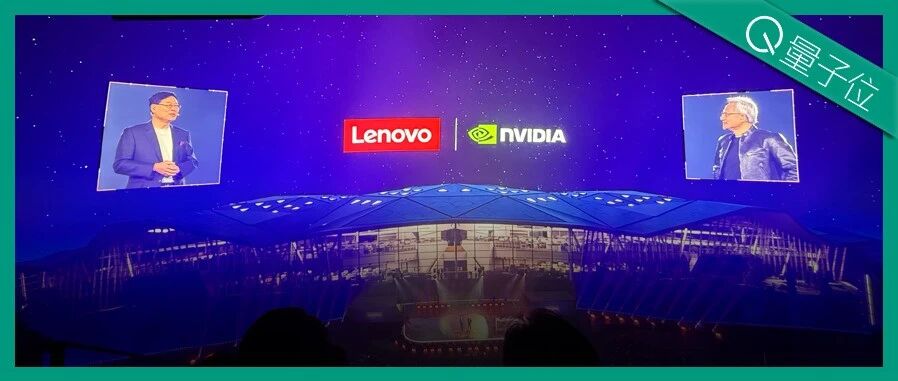
Core Viewpoint - The article discusses the emerging trend of AI hardware and the concept of "super entrance" in the tech industry, emphasizing that all devices will evolve into AI devices, marking a significant shift in technology at CES 2026 [1][6]. Group 1: AI Hardware Evolution - The CES 2026 showcased a consensus among manufacturers that all devices, including traditional smartphones and PCs, will adopt more intelligent forms [1]. - The emergence of new intelligent hardware species is increasingly diverse, indicating a shift in how AI is integrated into everyday devices [3]. Group 2: Super Entrance Concept - The "super entrance" concept refers to platforms that aggregate user traffic and connect various digital scenarios, similar to the role of super apps in the mobile internet era [7]. - The competition for "super entrance" is shifting from foundational technology to application layers and broader ecosystems, as seen in the AI landscape [9]. Group 3: Hybrid AI as the Ultimate Path - Lenovo's CEO proposed that integrating personal, enterprise, and public intelligence into a hybrid AI model is essential for creating personalized and diverse AI solutions [14][17]. - The hybrid AI model emphasizes the deep integration of cloud-based large models with localized customized small models to better meet user needs [18]. Group 4: Lenovo's Innovations - Lenovo introduced the world's first personal AI super intelligent agent, Lenovo Qira, which connects various devices and enhances task execution through cross-platform capabilities [20]. - The Qira agent can remember user preferences and interact in a personalized manner while ensuring privacy protection [22]. Group 5: Enterprise AI Solutions - Lenovo launched a series of AI inference servers aimed at improving efficiency and reducing operational costs for enterprises, adapting to diverse AI deployment needs [24]. - The collaboration with NVIDIA to establish an AI cloud super factory aims to expedite AI deployment for cloud service providers [25]. Group 6: Market Position and Future Outlook - Lenovo's AI-related business accounted for 30% of its total revenue, showing a 13% year-on-year growth, indicating a strong market position in both consumer and enterprise segments [34][35]. - The company aims to quadruple its business cooperation scale with NVIDIA over the next 3-4 years, highlighting its commitment to expanding its AI ecosystem [38].
芯片巨头集体站台联想 中国机器人军团出海
Xin Lang Ke Ji· 2026-01-09 03:36
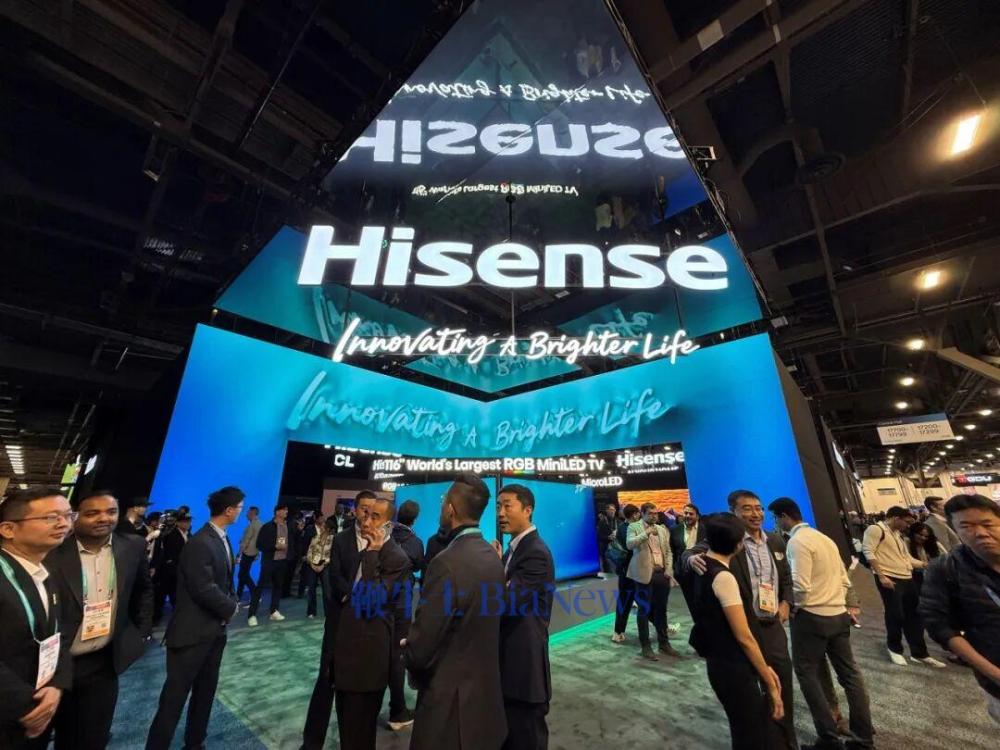
Group 1: CES Overview and Trends - Las Vegas hosts over 22,000 commercial events annually, contributing more than $10 billion in revenue, with CES being the most significant event [1] - CES has evolved through various technology trends over the past 15 years, including the rise of drones, smart home devices, and AI [2] - The focus of CES 2026 shifted to embodied AI and humanoid robots, indicating a transition from novelty to serious commercial discussions [2] Group 2: Rise of Chinese Companies - Chinese exhibitors have significantly increased in presence and quality at CES, moving from peripheral displays to central exhibition halls [3][4] - In 2019, Chinese exhibitors peaked at approximately 30% of total participants, and over 1,300 Chinese companies participated in the latest CES, reaffirming their dominance as the largest foreign presence [3] - Chinese companies have transitioned from low-cost manufacturing to showcasing core technologies, with over 40% of CES 2026 Innovation Awards going to Chinese firms [4][5] Group 3: Lenovo and Hisense's Strategic Moves - Lenovo hosted its Tech World conference at the Sphere, marking a significant event for the company and showcasing its industry position [6] - The presence of major tech leaders at Lenovo's event highlighted its status as a leading consumer electronics company [6] - Lenovo became the official technology partner for the FIFA World Cup 2026 and 2027, emphasizing its commitment to global sports marketing [7][9] Group 4: Robotics and AI Developments - Humanoid robots emerged as a key focus at CES 2026, showcasing advancements in AI and commercial viability with costs reaching around $20,000 [10] - The competition in the robotics sector is intensifying among China, the U.S., and South Korea, with each region adopting different strategies for ecosystem integration [11] - Chinese robotics companies are increasingly entering the global market with a focus on commercial applications, moving beyond mere technology demonstrations [12][13] Group 5: Market Dynamics and Future Outlook - The robotics industry is shifting from feasibility to long-term deployment, with Chinese firms leveraging their manufacturing capabilities for sustained operations [13][14] - Companies like UBTECH and Yush Robot are achieving significant milestones in production and government contracts, indicating a stable demand in the early market [14] - The evolution of Chinese companies from supporting roles to industry leaders reflects a broader trend of defining industry standards and enhancing brand recognition [14]

芯片巨头集体站台联想,苏妈亲自彩排!FIFA主席为中企赴会,中国机器人军团出海
Xin Lang Ke Ji· 2026-01-09 03:19
Core Insights - Las Vegas serves as a significant hub for global exhibitions, hosting over 22,000 commercial events annually, contributing to more than $10 billion in revenue [1] - The Consumer Electronics Show (CES) has evolved over the years, showcasing major technological trends and innovations, with a notable shift towards embodied AI and humanoid robots in recent years [2][3] Industry Trends - The 2010s saw a clear focus on PCs and smartphones at CES, with major players like Intel and Samsung dominating the scene [2] - The rise of consumer drones and smart home technology marked significant trends from 2013 to 2018, although many faced market corrections due to regulatory and practical challenges [2] - The current CES highlights a transition from novelty to serious commercial applications in embodied AI and humanoid robotics, indicating a maturation of market expectations [3][18] Chinese Companies' Growth - Chinese exhibitors have significantly increased their presence at CES, with over 1,300 companies participating this year, making China the largest foreign contingent [5][7] - The quality of Chinese products has improved, with over 40% of the CES 2026 Innovation Awards going to Chinese companies, reflecting a shift from assembly to core technology output [7] - Major Chinese firms like Lenovo and Hisense are now competing at the forefront of technology, showcasing advanced products and securing partnerships in global events like the FIFA World Cup [13][16] Robotics Industry Developments - Humanoid robots are becoming commercially viable, with costs dropping to around $20,000, indicating readiness for market deployment [18] - Chinese robotics companies are increasingly showcasing their products at CES, with 21 out of 38 exhibitors being from China, demonstrating a shift towards commercial readiness and market integration [21][22] - The focus of the robotics industry is shifting from mere functionality to long-term operational stability, with Chinese firms emphasizing their comprehensive self-research capabilities [24]
最新:专访丨CES凸显端侧与物理AI成为人工智能重要突破方向——访美国高通公司中国区董事长孟樸
Xin Hua She· 2026-01-07 08:17
Core Insights - AI has transitioned from a conceptual phase to a fully realized stage, with edge AI and physical AI emerging as significant technological breakthroughs [2][3] - The latest CES highlights AI evolving from a mere function to the foundational basis of all experiences, indicating a shift in human-computer interaction [2] Group 1: Personal AI Developments - Personal AI is advancing through wearable devices, personal terminals, and computers, evolving into intelligent assistants for users [3] - Diverse hardware forms, including AI glasses, home appliances, jewelry, and cameras, are emerging to meet specific needs in areas like visual impairment assistance and outdoor activities [3] Group 2: Physical AI Advancements - Physical AI is rapidly integrating into automobiles, robots, and smart homes, enabling machines to perceive environments, understand intentions, and act in real-time [3] - The development of embodied intelligence is crucial for connecting AI with the physical world, transforming intelligence into executable productivity [3] - Robots are increasingly taking on high-intensity or repetitive tasks in logistics, manufacturing, and retail, potentially enhancing production efficiency [3] Group 3: Automotive AI Integration - The acceleration of AI capabilities in the automotive sector is a key trend, with human-vehicle interaction evolving from clicks to understanding [4] - Qualcomm and Google are deepening their collaboration in the automotive field to support the deployment of next-generation AI in vehicle scenarios [4] Group 4: Future AI Trends - Future AI will operate in a hybrid model across cloud, edge cloud, and endpoint, with edge AI being the mainstream form due to its advantages in real-time performance, reliability, privacy, and energy efficiency [4] - 6G technology is expected to play a vital role in connecting cloud and edge, facilitating the development of intelligent networks with perceptual capabilities [4] Group 5: Key Focus Areas for Edge AI - Future breakthroughs in edge AI are likely to concentrate on robotics and wearable devices, while smartphones, AI personal computers, and smart connected vehicles will remain significant platforms for edge AI [5]