CNCB(00998)

Search documents
中信银行大跌2.37%!易方达基金旗下1只基金持有
Sou Hu Cai Jing· 2025-07-24 09:47
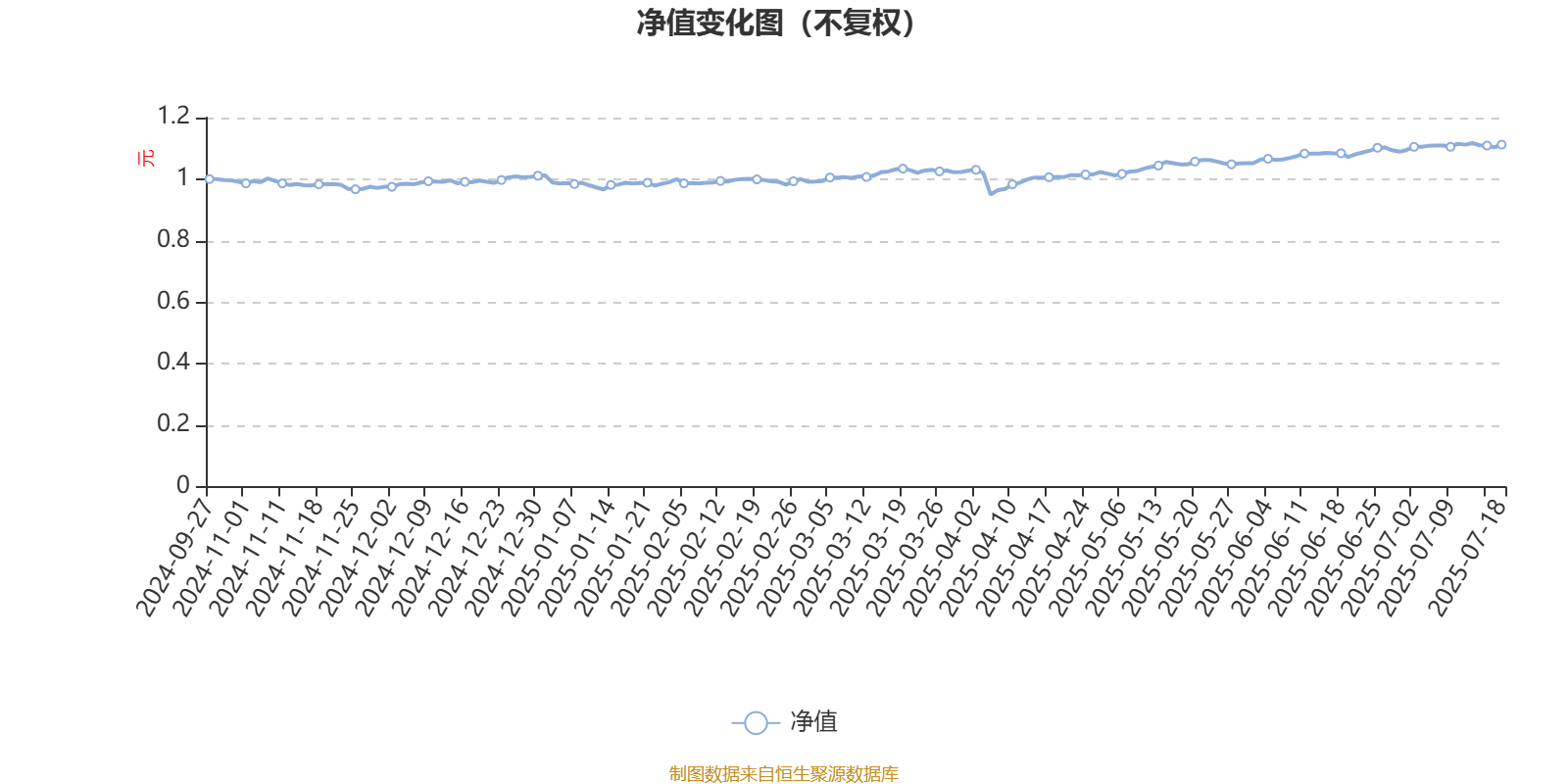
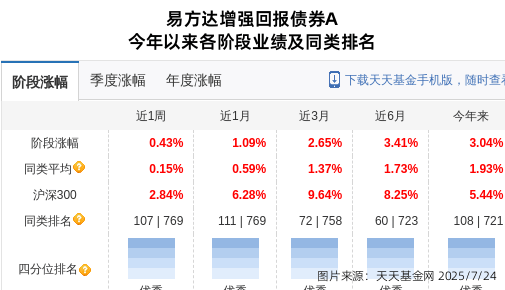
Core Viewpoint - CITIC Bank's stock closed down 2.37% on July 24, 2023, amid changes in its shareholder structure, with E Fund's Enhanced Return Bond A entering the top ten shareholders for the second quarter of this year [1]. Group 1: Company Overview - CITIC Bank was established in 1987 and is headquartered in Beijing, primarily engaged in monetary financial services [1]. - The registered capital of CITIC Bank is approximately 48.93 billion RMB [1]. Group 2: Shareholder Changes - E Fund's Enhanced Return Bond A has newly entered CITIC Bank's top ten shareholders in the second quarter of this year [1]. - The fund has achieved a year-to-date return of 3.04%, ranking 108 out of 721 in its category [1]. Group 3: Fund Performance - The fund's performance over various periods includes a 0.43% increase over the past week, 1.09% over the past month, and 3.04% year-to-date [2]. - The average return for similar funds is lower, with year-to-date performance at 1.93% [2]. Group 4: Fund Manager Profile - The fund manager of E Fund's Enhanced Return Bond A is Wang Xiaocheng, who has extensive experience in fixed income investment [4][5]. - Wang has been managing the fund since August 15, 2011, and has held various positions within E Fund Management Company [4][5].

中信银行广州分行率先落地“南沙金融 30条”金融租赁公司外币直贷业务
Zhong Guo Jin Rong Xin Xi Wang· 2025-07-24 07:56
Group 1 - The core viewpoint of the articles highlights the successful implementation of foreign currency direct lending by CITIC Bank's Guangzhou branch, which aligns with the "Nansha Financial 30 Measures" policy [1][2] - CITIC Bank Guangzhou branch established a dedicated service team to support the ship leasing business of CITIC Financial Leasing in Nansha, providing comprehensive assistance from policy interpretation to foreign exchange account setup [1] - The bank facilitated a direct loan of $8.9 million to the project company, addressing previous challenges such as complex processes and slow fund turnover, thereby enhancing funding efficiency and reducing financing costs [1] Group 2 - CITIC Bank Guangzhou branch aims to leverage the strategic positioning of the Nansha Free Trade Zone as a pilot for financial reform and opening up, focusing on collaborative efforts within CITIC Group and policy application [2] - The bank is committed to building a leading foreign exchange service bank and contributing to the development of the Nansha Free Trade Zone as a demonstration window for financial openness and innovation [2] - The initiative is expected to inject "CITIC strength" into the construction of the Guangdong-Hong Kong-Macao Greater Bay Area [2]
“反内卷”如何影响信贷脉冲?
NORTHEAST SECURITIES· 2025-07-24 06:14
Investment Rating - The report maintains an "Outperform" rating for the banking sector, consistent with the previous rating [6]. Core Insights - The impact of the current "anti-involution" trend on credit is expected to be small overall, but slightly greater than the effects observed during the supply-side reform period from 2015 to 2017 [11][12]. - Credit management is a crucial tool for banks in responding to supply-side reforms, primarily through reducing credit exposure to overcapacity industries and refining client lists to limit loan amounts [12][13]. - The report suggests that the current banking environment is facing a credit slowdown, which may amplify the impact of "anti-involution" on credit growth [13]. Summary by Sections Investment Suggestions - The report recommends focusing on banks such as Xiamen Bank, Chongqing Bank, Yucheng Rural Commercial Bank, Shanghai Bank, and Shanghai Agricultural Bank, as well as major state-owned banks [2][57]. Historical Context and Data Analysis - During the supply-side reform period, the year-on-year growth rates of RMB credit were 14%, 13.5%, and 13.5% from 2015 to 2017, with social financing growth rates of 12.5%, 12.6%, and 14.8% respectively, indicating limited impact on credit pulses [12][13]. - The analysis shows that the impact of supply-side reform on credit was less than 1%, with a more significant effect on joint-stock banks compared to state-owned banks [18][22]. Credit Management and Asset Quality - Credit management during the supply-side reform led to a notable increase in non-performing loan (NPL) ratios in overcapacity industries, with a significant rise in overall NPL ratios for listed banks in the second half of 2016 [13][32]. - The report indicates that the "anti-involution" trend may lead to a similar, albeit slightly larger, impact on credit quality compared to the previous reforms, particularly affecting private enterprises more than state-owned ones [11][45]. Industry Trends and Projections - The report highlights that the proportion of private enterprises in the affected industries has increased compared to the supply-side reform period, suggesting that credit control measures may disproportionately impact these firms [45]. - It notes that the current banking sector is experiencing a degree of asset scarcity, which could further exacerbate the effects of credit management policies [45][46].


7月23日信用债异常成交跟踪
SINOLINK SECURITIES· 2025-07-23 15:39
1. Report Industry Investment Rating - No relevant content provided 2. Core Viewpoints of the Report - Among bonds with discounted transactions, "20 Huainan Jianfa MTN003" had a relatively large deviation in bond valuation price. Among bonds with rising net - price transactions, "25 Changde Jingjian MTN002" ranked high in terms of valuation price deviation. Among secondary and perpetual bonds with rising net - price transactions, "20 CITIC Bank Secondary" had a relatively large deviation in valuation price; among commercial financial bonds with rising net - price transactions, "22 Industrial Bank 04" ranked high in terms of valuation price deviation. Among individual bonds with a transaction yield higher than 6%, real - estate bonds ranked high. Credit bond valuation yield changes were mainly distributed in the (0,5] interval. Non - financial credit bond transaction terms were mainly distributed between 2 and 3 years, with the 3 - 4 - year - term variety having the highest proportion of discounted transactions; secondary and perpetual bond transaction terms were mainly distributed between 4 and 5 years. By industry, bonds in the communication industry had the largest average valuation price deviation [2]. 3. Summaries According to Relevant Catalogs 3.1 Discounted Transaction Tracking - Bonds such as "20 Huainan Jianfa MTN003" had discounted transactions, with different remaining terms, valuation price deviations, and transaction scales. For example, "20 Huainan Jianfa MTN003" had a remaining term of 0.28 years, a valuation price deviation of - 0.59%, and a transaction scale of 8,053 yuan [4]. 3.2 Tracking of Bonds with Rising Net - Price Transactions - Bonds like "25 Changde Jingjian MTN002" had rising net - price transactions, with different remaining terms, valuation price deviations, and transaction scales. For instance, "25 Changde Jingjian MTN002" had a remaining term of 4.96 years, a valuation price deviation of 0.16%, and a transaction scale of 5,000 yuan [5]. 3.3 Tracking of Secondary and Perpetual Bond Transactions - Secondary and perpetual bonds such as "20 CITIC Bank Secondary" were tracked. "20 CITIC Bank Secondary" had a remaining term of 0.06 years, a valuation price deviation of - 0.01%, and a transaction scale of 35,046 yuan [6]. 3.4 Tracking of Commercial Financial Bond Transactions - Commercial financial bonds like "22 Industrial Bank 04" were tracked. "22 Industrial Bank 04" had a remaining term of 0.03 years, a valuation price deviation of 0.00%, and a transaction scale of 16,004 yuan [7]. 3.5 Tracking of Individual Bonds with a Transaction Yield Higher than 6% - Real - estate bonds such as "23 Vanke MTN002" had a transaction yield higher than 6%. "23 Vanke MTN002" had a remaining term of 0.80 years, a valuation price deviation of 0.07%, and a transaction scale of 7,781 yuan [8]. 3.6 Distribution of Credit Bond Transaction Valuation Deviations on the Day - Credit bond valuation yield changes were mainly distributed in the (0,5] interval [2][10]. 3.7 Distribution of Non - Financial Credit Bond Transaction Terms on the Day - Non - financial credit bond transaction terms were mainly distributed between 2 and 3 years, with the 3 - 4 - year - term variety having the highest proportion of discounted transactions [2][12]. 3.8 Distribution of Secondary and Perpetual Bond Transaction Terms on the Day - Secondary and perpetual bond transaction terms were mainly distributed between 4 and 5 years [2][15]. 3.9 Discounted Transaction Proportion and Transaction Scale of Non - Financial Credit Bonds in Each Industry - Bonds in the communication industry had the largest average valuation price deviation, and different industries had different transaction scales [2][17].

24.6万亿私人银行进入存量时代
3 6 Ke· 2025-07-23 05:47
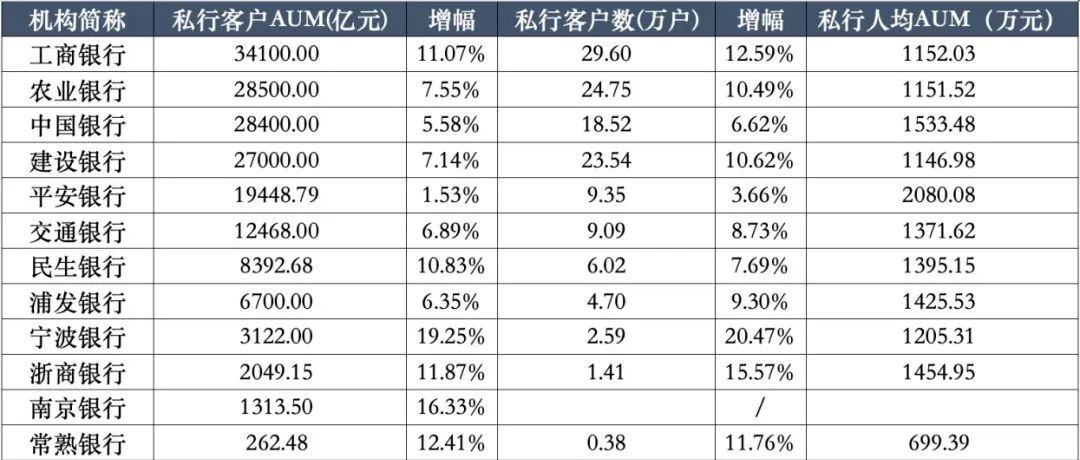
Core Insights - The private banking sector is experiencing intense competition among major banks, with a focus on high-net-worth clients and asset management growth [2][19] - Recent developments, including the "internship monetization" controversy involving Industrial Bank, have sparked discussions about the boundaries of value-added services in private banking [1][7] Group 1: Private Banking Market Overview - The total Assets Under Management (AUM) in the private banking sector has reached 24.6 trillion yuan, with many banks reporting double-digit growth in client numbers and AUM [2][6] - Major banks like Industrial Bank, Agricultural Bank, and Bank of China have surpassed 3 trillion yuan in AUM, with significant year-on-year growth rates of 18.87% and 16.73% respectively [6][12] Group 2: Client Growth and Performance - As of the end of 2024, Industrial Bank had 289,000 private banking clients, an increase of 9.9% from the previous year, while Agricultural Bank and Bank of China also reported substantial client growth [4][6] - The average AUM per private banking client varies, with Industrial Bank at 11.52 million yuan and Agricultural Bank at 11.51 million yuan [3][6] Group 3: Competitive Strategies - Banks are adopting differentiated strategies to attract high-net-worth clients, with a focus on comprehensive services that include financial and non-financial resources [9][12] - The competition is not only about asset size but also about the quality of services offered, with banks like Industrial Bank and Construction Bank emphasizing tailored solutions for entrepreneurs [14][18] Group 4: Challenges and Future Directions - The private banking sector faces challenges such as product homogenization and intense competition, which may impact the effectiveness of non-interest income growth [4][19] - Moving forward, the industry is expected to shift from a scale-oriented approach to one focused on the health of client assets, aiming for a transformation from "scale competition" to "value management" [20]




中证香港上市可交易内地银行指数报1245.77点,前十大权重包含工商银行等
Jin Rong Jie· 2025-07-22 14:28
Group 1 - The core index of the China Securities Index for Hong Kong-listed tradable mainland banks (HKT Mainland Banks, H11145) opened high and rose, reporting 1245.77 points [1] - The HKT Mainland Banks index has increased by 1.56% in the past month, 16.29% in the past three months, and 22.87% year-to-date [1] - The index series includes three indices: HKT Hong Kong Real Estate, HKT Mainland Consumption, and HKT Mainland Banks, reflecting the overall performance of related theme securities in the Hong Kong securities market [1] Group 2 - The top ten weights in the HKT Mainland Banks index are: China Construction Bank (31.83%), Industrial and Commercial Bank of China (23.51%), Bank of China (17.4%), China Merchants Bank (10.52%), Agricultural Bank of China (7.24%), CITIC Bank (3.48%), Postal Savings Bank of China (2.55%), Minsheng Bank (1.52%), Chongqing Rural Commercial Bank (0.75%), and China Everbright Bank (0.66%) [1] - The market segment of the HKT Mainland Banks index is entirely represented by the Hong Kong Stock Exchange, with a 100.00% share [1] Group 3 - The financial sector accounts for 100.00% of the industry represented in the HKT Mainland Banks index sample [2] - The index sample is adjusted every six months, with adjustments implemented on the next trading day after the second Friday of June and December [2] - Weight factors are generally fixed until the next scheduled adjustment, with temporary adjustments made under special circumstances [2]

银行股变奏,普涨格局下减持暗涌
2 1 Shi Ji Jing Ji Bao Dao· 2025-07-22 11:39
Core Viewpoint - The banking sector has shown strong performance in 2023, with the China Securities Banking Index rising by up to 25%, and many bank stocks reaching historical highs, prompting some shareholders to consider profit-taking through share reductions [1][2][3] Summary by Sections Bank Stock Performance - The banking sector's stocks have experienced significant gains, with 42 stocks achieving positive growth and 18 reaching new historical highs this year [1] - Qingdao Bank has seen the largest increase, with intraday gains exceeding 40% [1] Shareholder Reduction Announcements - Six banks have announced share reduction plans since May, coinciding with the peak prices of bank stocks [2][3] - China Life intends to reduce its stake in Hangzhou Bank by up to 50.79 million shares, representing 0.7% of the total shares, marking the end of its 16-year investment in the bank [2] - Other banks, such as Qilu Bank and Changsha Bank, have also announced share reductions, with Qilu Bank's major shareholder planning to sell up to 60.44 million shares [3][5] Reasons for Share Reductions - Market analysts suggest that the reductions are primarily due to shareholders seeking to lock in profits after substantial price increases [8][9] - Factors influencing these decisions include the need for asset reallocation, the high valuation of bank stocks, and potential concerns about future growth prospects [9] Ongoing Investment Interest - Despite the reductions, there is still strong interest in bank stocks, with eight banks receiving shareholder increases this year, indicating a net positive sentiment towards the sector [9][10] - Insurance companies have also been actively acquiring bank shares, further demonstrating ongoing confidence in the banking sector [10]


中信银行(601998) - 中信银行股份有限公司关于发布50亿美元中期票据发售通函的公告
2025-07-22 09:15
证券代码:601998 证券简称:中信银行 公告编号:临2025-056 中信银行股份有限公司 关于发布 50 亿美元中期票据发售通函的公告 本行董事会及全体董事保证本公告内容不存在任何虚假记载、误导性陈述 或者重大遗漏,并对其内容的真实性、准确性和完整性承担法律责任。 中信银行股份有限公司(以下简称本行)已向香港联合交易所有限公司( 以下简称联交所)提交50亿美元中期票据计划(以下简称计划)上市申请,并 于2025年7月22日上市。根据计划,拟发行的票据仅供专业投资者1购买。发售 通函的详情请参考本行2025年7月22日刊载于联交所披露易网站(www.hkexne ws.hk)的相关公告。 特此公告。 中信银行股份有限公司董事会 2025年7月22日 1 根据联交所上市规则第37章定义,专业投资者指(a)如属香港人士,按《证券及期货条例》附表1第1部所 界定的专业投资者(包括按该条例第397条所制定的规则所指的人士);或(b)如属非香港人士,根据有关 司法权区对公开发售的相关豁免可向其出售证券的人士。 ...
中信银行: H股公告-有关于香港联合交易所有限公司上市的通知 - 中信银行股份有限公司5000000000美元中期票据计划
Zheng Quan Zhi Xing· 2025-07-21 16:14
生、王 化 成 先 生 及 宋 芳 秀 女 士。 香 港 交 易 及 結 算 所 有 限 公 司 及 香 港 聯 合 交 易 所 有 限 公 司 對 本 公 告 的 內 容 概 不 負 責, 對 其 準 確 性 或 完 整 性 亦 不 發 表 任 何 聲 明,並 明 確 表 示,概 不 就 因 本 公 告 全 部 或 任 何 部 分 內 容 而 產 生 或 因 依 賴 該 等 內 容 而 引 致 的 任 何 損 失 承 擔 任 何 責 任。 本 公 告 僅 供 參 考,並 不 構 成 收 購、購 買 或 認 購 證 券 之 邀 請 或 要 約。本 公 告 並 不 構 成 或 組 成 在 美 國 境 內 提 呈 發 售 或 招 攬 購 買 或 認 購 任 何 證 券 之 建 議。本 公 告 所 述 證 券 概 無 且 不 會 根 據 經 修 訂 的 1933 年《美 國 證 券 法》 (「證 券 法」)或 美 國 任 何 州 的 證 券 法 登 記。除 根 據 證 券 法 獲 豁 免 或 屬 不 受 該 等 登 記 規 定 所 規 限 之 外,證 券 不 可 在 美 國 境 內 提 呈 發 售 或 出 售。本 ...
汇添富红利智选混合发起式A:2025年第二季度利润67.55万元 净值增长率6.4%
Sou Hu Cai Jing· 2025-07-21 10:09
Core Insights - The AI Fund Huatai-PineBridge Dividend Smart Selection Mixed Fund A (021515) reported a profit of 675,500 yuan for Q2 2025, with a weighted average profit per fund share of 0.0654 yuan [3] - The fund's net asset value (NAV) growth rate for the reporting period was 6.4%, and as of the end of Q2, the fund size was 11.4554 million yuan [3] - The fund manager indicated a high position operation throughout the reporting period, with a focus on high-dividend Hong Kong stocks and low-volatility sectors like banking and transportation [3] Fund Performance - As of July 18, the fund's three-month cumulative NAV growth rate was 10.38%, ranking 325 out of 615 comparable funds [4] - The six-month cumulative NAV growth rate was 12.76%, ranking 235 out of 615 comparable funds [4] - The fund's Sharpe ratio since inception was 0.1788 as of June 27 [8] Risk Metrics - The maximum drawdown since inception was 8.18%, with the largest quarterly drawdown occurring in Q2 2025 at 7.8% [9] - The average stock position since inception was 81.35%, compared to the peer average of 83.26%, with a peak stock position of 93.31% at the end of H1 2025 [12] Portfolio Composition - As of the end of Q2 2025, the fund's top holdings included Agricultural Bank of China, China Merchants Bank, China Construction Bank, Bank of China, Gree Electric Appliances, Industrial and Commercial Bank of China, China Mobile, Anhui Wanan Highway, Chongqing Rural Commercial Bank, and Citic Bank [16]