
SINO BIOPHARM(01177)

Search documents
中国生物制药(01177) - 自愿公告 - TQF3250胶囊「GLP-1受体激动剂」临床试验申请...
2025-09-22 08:34
香港交易及結算所有限公司及香港聯合交易所有限公司對本公告的內容概不負責,對其準確性或完 整性亦不發表任何聲明,並明確表示,概不對因本公告全部或任何部份內容而產生或因倚賴該等內 容而引致的任何損失承擔任何責任。 (於開曼群島註冊成立之有限公司) 網站:www.sinobiopharm.com (股份編號:1177) 自願公告 TQF3250膠囊「GLP-1受體激動劑」臨床試驗申請獲NMPA受理 中國生物製藥有限公司(「本公司」,連同其附屬公司統稱「本集團」)董事會(「董事會」)宣佈,本集團自 主研發的國家1類創新藥TQF3250膠囊「GLP-1受體激動劑(GLP-1RA)」的新藥臨床試驗申請(IND)已獲 得中國國家藥品監督管理局(NMPA)受理,擬用於治療2型糖尿病。 TQF3250是一款口服小分子偏向型GLP-1RA,通過選擇性激活cAMP偏向的GLP-1R信號通路,高效 促進胰島素分泌,同時減少β-抑制蛋白募集和受體內吞,從而延長藥效持續時間。 臨床前研究顯示,在小鼠模型中,TQF3250在低至1 mg/kg的劑量下即可顯著改善糖耐量,其活性 與同類藥物Orforglipron相當,展現出高效降糖作用。在 ...
港股创新药ETF(159567)跌1.27%,成交额12.58亿元
Xin Lang Cai Jing· 2025-09-19 12:24
Core Viewpoint - The Hong Kong Innovative Drug ETF (159567) has shown significant growth in both share volume and fund size since its inception, indicating strong investor interest in the innovative drug sector [1][2]. Fund Performance - As of September 18, 2024, the fund's share volume reached 8.17 billion shares, with a total size of 7.839 billion yuan, reflecting an increase of 1966.38% in share volume and 1974.81% in size compared to its initial figures on December 31, 2023 [1]. - The fund manager, Ma Jun, has achieved a return of 90.14% since taking over management on January 3, 2024 [2]. Trading Activity - The ETF recorded a trading volume of 12.58 billion yuan on September 19, 2024, with an average daily trading amount of 18.71 billion yuan over the last 20 trading days [1]. - Year-to-date, the ETF has accumulated a total trading amount of 206.404 billion yuan over 176 trading days, averaging 11.73 billion yuan per day [1]. Top Holdings - The ETF's major holdings include: - Innovent Biologics (9.52% holding, 263 million yuan market value) - WuXi Biologics (9.47% holding, 258 million yuan market value) - BeiGene (8.73% holding, 238 million yuan market value) - CanSino Biologics (7.62% holding, 208 million yuan market value) - China National Pharmaceutical Group (7.17% holding, 196 million yuan market value) [2].

华创医药2025年重点研究成果与会议合集
华创医药组公众平台· 2025-09-19 12:00
Core Viewpoint - The Chinese innovative drug industry is gradually catching up with Europe and the United States in terms of technology, with some targets and technical pathways already leading globally. The number and value of new drugs authorized for overseas markets continue to increase, leading to world-class pricing and non-linear investment elasticity. The domestic market is experiencing strong growth in demand, with domestic new drug sales continuing to rise, and several innovative pharmaceutical companies have turned losses into profits, entering a stable growth phase [2]. Group 1: Innovative Drugs - The innovative drug sector is witnessing a significant increase in sales driven by strong domestic demand, with a number of innovative companies achieving profitability [2]. - The trend of domestic innovative drugs going overseas is accelerating, with increasing numbers and values of new drug authorizations [2]. - The pricing power of innovative drugs is improving, reflecting the global competitiveness of Chinese pharmaceutical companies [2]. Group 2: High-Value Medical Consumables - The orthopedic sector is expected to see mild price reductions due to continued domestic substitution and accelerated overseas business progress [2]. - The neurosurgery and neurointervention fields are experiencing stable growth post-collection, with new products being launched [2]. - The high-value consumables market is expected to benefit from ongoing domestic replacement and the introduction of new products [2]. Group 3: Medical Devices - The medical device sector is seeing a recovery in bidding prices, with ongoing high-speed growth in bidding data this year [2]. - Companies are entering a phase of inventory reduction, with performance expected to improve in the second half of the year [2]. - The low-value consumables sector is experiencing product upgrades and accelerated expansion into overseas markets [2]. Group 4: Blood Products - The supply side of the blood products industry is concentrating on central state-owned enterprises, gradually clearing the competitive landscape [2]. - The demand side is expected to see continuous upgrades to new products, with industry sentiment gradually improving [2]. Group 5: API (Active Pharmaceutical Ingredients) - The API sector is benefiting from the end of a capital expenditure peak, with three growth logic points driving upward trends: new high-end market products, integrated consolidation and overseas expansion, and cost-leading CDMO [2]. - Leading companies in the API sector are expected to see explosive growth in revenue and profits [2]. Group 6: CXO (Contract Research Organization) - The CXO sector is witnessing a recovery in A+H financing activity, with multiple significant business developments enhancing market confidence [2]. - The focus is on optimizing the supply-side landscape and increasing market share for leading CRO companies [2]. Group 7: Traditional Chinese Medicine and Retail Pharmacy - The traditional Chinese medicine sector is showing signs of recovery, with friendly pricing for new drugs and ongoing observation of collection progress [2]. - The retail pharmacy sector is influenced by the pace of supply-side clearing and business model upgrades, with expectations of increased store closures in the second half of 2025 [2]. Group 8: Research and Development Services - The domestic innovative drug business development is heating up, likely driving downstream demand recovery [2]. - The overseas market presents significant growth opportunities for domestic companies, leveraging cost-effectiveness and service differentiation [2].





中国创新药企“闯美”,如何预防政策风险?
Hu Xiu· 2025-09-18 06:03
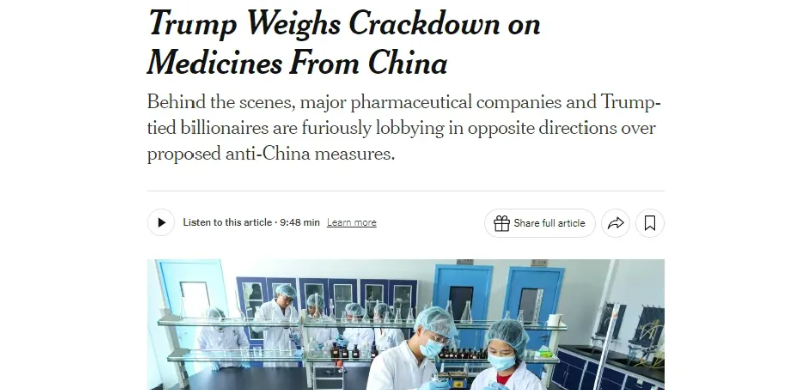
Core Viewpoint - The Trump administration is drafting an executive order that will impose three major restrictions on commercial transactions involving Chinese innovative drug patents or rights, focusing on national security reviews by the Committee on Foreign Investment in the United States (CFIUS) [1][2]. Summary by Sections Executive Order Details - The draft includes three main provisions: 1. Inclusion of Chinese innovative drug BD transactions in the CFIUS mandatory review list, ending the previous "low-risk automatic exemption" practice [2]. 2. FDA will implement "racial sensitivity supplementary reviews" for drugs relying on Chinese clinical data, requiring at least 20% comparative data from non-Asian populations [2]. 3. Establishment of a "key drug domestic production fund" to provide production subsidies for 15 categories of drugs, including antibiotics and acetaminophen, while implementing a "domestic priority" principle in federal procurement [2]. Market Reaction - The market reacted swiftly to the policy risks, with the Hong Kong innovative drug index (HK1105) dropping 3.82% on September 11, 2025, and the A-share innovative drug sector (BK1106) declining 2.17%, with over 80% of stocks in the sector experiencing pullbacks [3]. - The following day, the indices showed signs of recovery, indicating investors' responses to policy uncertainties and rational corrections [3]. Globalization Trends - Despite the geopolitical risks, the trend of Chinese innovative drugs going global remains intact, with total license-out transactions to Europe and the U.S. reaching $9.43 billion as of September 2025 [3]. - Major transactions include a $950 million licensing deal between BeiGene and Royalty Pharma, and a $6 billion global licensing agreement between 3SBio and Pfizer, highlighting a shift towards milestone payments and regional licensing [3]. Industry Challenges - The domestic market faces challenges, with annual growth in medical insurance fund spending (approximately 12%) lagging behind the growth in innovative drug R&D investment (approximately 25%) [4]. - The average reduction in medical negotiations remains high at 54%, and commercial health insurance coverage for innovative drugs is below 15%, creating a supply-demand imbalance that necessitates going global [4]. Risk Resilience Assessment - Goldman Sachs has categorized Chinese innovative drug companies into three risk resilience tiers based on their sensitivity to policy changes and operational capabilities [4][5]. - Companies with mature global layouts exhibit the strongest resilience, while those heavily reliant on domestic markets show the weakest resilience [5][10]. Strategic Defense Framework - A three-dimensional defense system is proposed to address risks associated with the executive order, focusing on transaction review, data compliance, and supply chain security [13]. - Strategies include conducting national security risk pre-assessments for transactions over $50 million and establishing partnerships with U.S. law firms to navigate regulatory challenges [14][15]. Conclusion - The construction of a quantifiable "risk resilience index" is essential for Chinese innovative drugs in the global 2.0 era, emphasizing the need for companies to embed policy hedging clauses in transaction structures and consider racial diversity data in clinical stages [23].

华创医药 | 2025年我们做了什么
华创医药组公众平台· 2025-09-18 03:41
Core Viewpoint - The Chinese innovative drug industry is gradually catching up with Europe and the United States in terms of technology, with some targets and technical pathways already leading globally. The number and value of new drugs authorized for overseas markets continue to increase, leading to world-class pricing and non-linear investment elasticity. The domestic market is experiencing strong growth in demand, with domestic new drug sales continuing to rise, and several innovative pharmaceutical companies have turned losses into profits, entering a stable growth phase [2]. Group 1: Innovative Drugs - The innovative drug sector is witnessing a significant increase in sales driven by strong domestic demand, with a number of innovative companies achieving profitability [2]. - The trend of domestic innovative drugs going overseas is accelerating, with increasing numbers and values of new drug authorizations [2]. - The industry is positioned for a "Davis double" effect, where both performance and valuation are expected to improve [2]. Group 2: High-Value Medical Consumables - The orthopedic sector is expected to see mild price reductions, while domestic replacements continue to grow, and overseas business progresses rapidly [2]. - The neurosurgery and neurointervention fields are stabilizing after centralized procurement, with new products expected to contribute to growth [2]. Group 3: Medical Devices - The medical device sector is experiencing a high-speed growth in bidding data, with companies entering a destocking phase, which is expected to improve performance in the second half of the year [2]. - The low-value consumables sector is seeing continuous product upgrades and accelerated expansion into overseas markets [2]. Group 4: Blood Products - The supply side of the blood products industry is increasingly concentrated among state-owned enterprises, leading to a clearer competitive landscape [2]. - The demand side is expected to upgrade towards new products, gradually improving the industry's overall health [2]. Group 5: API (Active Pharmaceutical Ingredients) - The industry is at an upward turning point due to the end of a capital expenditure peak, combined with three growth drivers: new high-end market products, integrated consolidation and overseas expansion, and cost-leading CDMO [2]. - Leading companies are expected to see explosive growth in revenue and profits in the medium term [2]. Group 6: CXO (Contract Research Organization) - The CXO sector is seeing a revival in A+H financing activity, with multiple significant business developments enhancing market confidence [2]. - The focus is on optimizing the supply-side landscape and increasing market share for leading CRO companies [2]. Group 7: Traditional Chinese Medicine and Retail Pharmacy - The traditional Chinese medicine sector is showing signs of recovery, with friendly pricing for new drugs, while the retail pharmacy sector is influenced by supply-side adjustments and business model upgrades [2]. - The performance of offline pharmacies is expected to improve in the second half of 2025, with leading chains like YaoXingTang making progress in store upgrades [2]. Group 8: Research Reports - A series of in-depth research reports on various companies and sectors within the pharmaceutical and medical device industries have been published, highlighting their growth potential and market positioning [3][4].


智通港股通资金流向统计(T+2)|9月18日
智通财经网· 2025-09-17 23:34
Key Points - The top three stocks with net inflow of southbound funds are Alibaba-W (09988) with 5.278 billion, Yingfu Fund (02800) with 2.782 billion, and Hang Seng China Enterprises (02828) with 1.566 billion [1] - The top three stocks with net outflow of southbound funds are Xiaomi Group-W (01810) with -0.721 billion, Innovent Biologics (01801) with -0.466 billion, and Pop Mart (09992) with -0.458 billion [1] - In terms of net inflow ratio, Yuexiu Transportation Infrastructure (01052) leads with 63.76%, followed by Crystal International (02232) with 56.34%, and China Resources Gas (01193) with 53.63% [1] - The stocks with the highest net outflow ratio include QuanFeng Holdings (02285) at -59.36%, Yadea Group (01585) at -54.53%, and TCL Electronics (01070) at -54.28% [1] Net Inflow Rankings - The top ten stocks by net inflow include Alibaba-W (09988) with 5.278 billion, Yingfu Fund (02800) with 2.782 billion, and Hang Seng China Enterprises (02828) with 1.566 billion [2] - Other notable stocks in the net inflow list are Meituan-W (03690) with 0.670 billion and Southern Hang Seng Technology (03033) with 0.620 billion [2] Net Outflow Rankings - The top ten stocks by net outflow include Xiaomi Group-W (01810) with -0.721 billion, Innovent Biologics (01801) with -0.466 billion, and Pop Mart (09992) with -0.458 billion [2] - Other significant stocks in the net outflow list are Li Auto-W (02015) with -0.298 billion and China Construction Bank (00939) with -0.254 billion [2] Net Inflow Ratio Rankings - The top three stocks by net inflow ratio are Yuexiu Transportation Infrastructure (01052) at 63.76%, Crystal International (02232) at 56.34%, and China Resources Gas (01193) at 53.63% [3] - Additional stocks with high net inflow ratios include China Ship Leasing (03877) at 49.13% and Jiangsu Ninghu Expressway at 45.49% [3] Net Outflow Ratio Rankings - The stocks with the highest net outflow ratios include QuanFeng Holdings (02285) at -59.36%, Yadea Group (01585) at -54.53%, and TCL Electronics (01070) at -54.28% [3] - Other notable stocks with significant net outflow ratios are Kangji Medical (09997) at -53.77% and QiuTai Technology (01478) at -47.17% [3]




大和:升中国生物制药目标价至10港元 维持“买入”评级
Zhi Tong Cai Jing· 2025-09-17 06:18
Core Viewpoint - Daiwa maintains a "Buy" rating for China Biologic Products (01177) and raises the target price from HKD 5.6 to HKD 10, reflecting an upward revision in revenue and earnings forecasts due to improved sales of innovative drugs and expected dividend income from Sinovac Biotech [1] Group 1: Financial Projections - Revenue forecasts for China Biologic Products for 2025 to 2027 have been adjusted upward by 1% to 6% [1] - Earnings per share estimates have been increased by 56% to 106% [1] Group 2: Product Development - The sales of innovative drugs are progressing as expected, with a 27% year-on-year increase in revenue for innovative drug products, reaching RMB 7.8 billion in the first half of the year [1] - The company anticipates launching a total of 21, 26, and over 35 innovative products in 2025, 2026, and 2027, respectively [1] Group 3: New Drug Launches - The report highlights three new drugs expected to be launched by 2027: TQC3721 (PDE3/4), LM-302 (Claudin18.2 ADC), and TQC2731 (TSLP mAb) [1] - The authorization deal for TQC3721 (PDE3/4 inhibitor) is expected to be completed within 2025, as the company is revising terms with potential partners [1]
大行评级|大和:上调中生制药目标价至10港元 上调2025至27年收入及盈利预测
Ge Long Hui· 2025-09-17 04:01
Core Viewpoint - Daiwa's research report indicates that China National Pharmaceutical Group's innovative drug sales are progressing as expected, with an upward revision of the three-year product launch plan, projecting a total of 21, 26, and over 35 innovative products by 2025, 2026, and 2027 respectively [1] Group 1: Product Launch and Projections - The main change for China National Pharmaceutical Group is the addition of three new drugs in 2027: TQC3721 (PDE3/4), LM-302 (Claudin 18.2 ADC), and TQC2731 (TSLP mAb) [1] - The company anticipates that the licensing deal for TQC3721 (PDE3/4 inhibitor) will be completed within 2025, as it is currently revising terms with potential partners [1] Group 2: Financial Outlook - Daiwa maintains a "Buy" rating for China National Pharmaceutical Group, raising the target price from HKD 5.6 to HKD 10 based on discounted cash flow [1] - Revenue forecasts for the company from 2025 to 2027 have been increased by 1% to 6%, with earnings per share estimates raised by 56% to 106%, reflecting the upward revision in innovative drug sales and other income projections due to expected continued dividend income from Sinovac Biotech [1]
港股创新药概念股震荡下挫,中国生物制药、维亚生物、复星医药跌超4%
Mei Ri Jing Ji Xin Wen· 2025-09-17 02:13
Group 1 - The Hong Kong innovative drug concept stocks experienced a significant decline on September 17, with major companies like China Biologic Products, Weiya Bio, and Fosun Pharma dropping over 4% [1] - Other companies such as Junshi Biosciences, Rongchang Biopharma, and Innovent Biologics also saw declines exceeding 3% [1]
港股创新药概念股震荡下挫,中国生物制药等跌超4%
Xin Lang Cai Jing· 2025-09-17 01:55
港股创新药概念股震荡下挫,中国生物制药、维亚生物、复星医药跌超4%,君实生物、荣昌生物、信 达生物多股跌超3%。 ...