BYD(01211)

Search documents
绿色资产证券化 2025 年度运营报告与 2026 年度展望要点:绿色 ABS 产品发行规模下降,基础资产类型进一步扩充;清洁能源国央企与新能源汽车金融机构为核心发行主体;政策持续赋能绿色金融高质量发展
Zhong Cheng Xin Guo Ji· 2026-02-13 06:33
1. Report Industry Investment Rating - No information provided about the industry investment rating 2. Core Viewpoints of the Report - In 2025, the issuance scale of green ABS products declined, with the structure of underlying asset types adjusted. Green financial leasing ABS rose to the top in issuance scale. Green REITs, renewable energy price subsidy ABS, and new - energy vehicle loan ABS still dominated the issuance, while new underlying assets like held real estate and consumer finance loans were added [5][35]. - Multiple departments coordinated to deepen the financial supply - side reform, continuously improving the green finance standard system and basic institutions, and promoting the high - quality development of green finance. The green ABS market is moving towards higher - quality and diversified development [5][30][35]. 3. Summary by Relevant Catalogs 3.1 Issuance - In 2025, 136 green ABS products were issued in China, a 7.48% year - on - year decrease, with a total issuance scale of 185.326 billion yuan, a 16.59% year - on - year decline. Green enterprise ABS, green ABN, and green credit ABS accounted for 50.72%, 38.01%, and 11.27% respectively [5][6]. - By underlying asset types, green financial leasing ABS ranked first with an issuance scale of 58.484 billion yuan (31.56% of the total). Green REITs, renewable energy price subsidy ABS, and new - energy vehicle loan ABS decreased but remained major issuers. Held real estate and consumer finance loans expanded the types of green underlying assets [5][14]. - In 2025, 53 carbon - neutral ABS products were issued, with a scale of 70.393 billion yuan, a 32.02% year - on - year decline, accounting for 37.98% of green ABS [5]. 3.2 Issuance Interest Rate - The issuance spread of green ABS products showed a narrowing trend. In 2025, the average spreads of AAAsf - rated green credit ABS, ABN, and enterprise ABS products to the benchmark rate were 16BP, 46BP, and 64BP respectively. The spread of green credit ABS was significantly lower than other credit ABS, while the difference between green ABN/enterprise ABS and non - green ABS was small [5][26]. 3.3 Policy - In 2025, multiple departments issued policies to deepen the financial supply - side reform, improve the green finance standard system, and promote the development of green asset securitization. Key policies included those from the China Securities Regulatory Commission, the National Administration of Financial Regulation and the People's Bank of China, etc [30][31]. 3.4 Conclusion - In 2025, the green ABS market saw a decline in issuance scale and an adjustment of underlying asset types. With policy support, the market is moving towards high - quality and diversified development. Emerging fields such as green consumer credit, carbon sink revenue rights, and held real estate may become new growth drivers [35]. 3.5 Schedule - The schedule lists the detailed issuance information of green asset - backed securitization products in 2025, including green credit ABS, green ABN, and green enterprise ABS [37][38][39].


比亚迪王朝首款B级纯电SUV宋Ultra EV亮相:全新紫色涂装 配悬浮式车顶
Feng Huang Wang· 2026-02-13 05:33
Core Viewpoint - BYD has unveiled the official images of its first B-class pure electric SUV, the Song Ultra EV, featuring a new purple paint job and a design that blends Eastern aesthetics with contemporary design language [1] Group 1: Vehicle Specifications - The dimensions of the Song Ultra EV are 4850 mm in length, 1910 mm in width, and 1670 mm in height, with a wheelbase of 2840 mm [1] - Compared to the Song L DM, which measures 4780 mm in length, 1898 mm in width, and 1670 mm in height with a wheelbase of 2782 mm, the Song Ultra EV shows significant increases in length, width, and wheelbase, making it the largest model in the Song family [1] Group 2: Design Features - The exterior design of the Song Ultra EV continues to utilize BYD's classic "Dragon Face" aesthetic [1] - The front features a closed grille design that complements the continuous light strip, while the size of the air ducts on both sides of the lower bumper has been significantly increased to enhance aerodynamic performance [1]


观察|1月车市三把“王座”全部易主
Guang Zhou Ri Bao· 2026-02-13 03:15
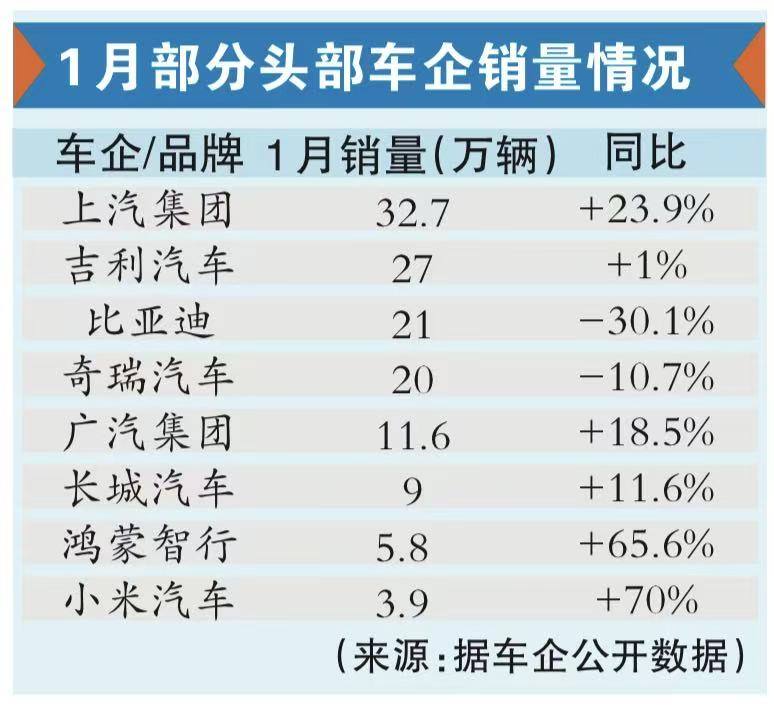
Core Insights - The January sales figures indicate a significant shift in the competitive landscape of the Chinese automotive market, with traditional giants like SAIC and Geely reclaiming leadership positions, while BYD's dominance is challenged [1][3][4] Group 1: Sales Performance - SAIC Group achieved sales of 327,000 vehicles in January, marking a year-on-year increase of 23.9% [2][4] - Geely Automotive sold 270,100 vehicles, a year-on-year growth of 1%, surpassing BYD to become the top-selling domestic brand [2][4] - BYD's sales fell to 210,000 vehicles, experiencing a significant year-on-year decline of 30.1% [2][4] - New energy vehicle sales for SAIC reached 85,000 units, growing by 39.7% [4] - The overall automotive production and sales in January were 2.45 million and 2.346 million units, respectively, with a slight year-on-year production increase of 0.01% [7] Group 2: New Players and Market Dynamics - The new energy vehicle segment saw a reshuffling, with Hongmeng Zhixing leading the new force with 57,915 units sold, a remarkable year-on-year increase of 65.6% [6] - Xiaomi Automotive followed closely with over 39,000 units sold, achieving a year-on-year growth of approximately 70% [6] - The previous leaders in the new force segment, such as Leap Motor, have seen a decline, with their sales dropping to 32,059 units [6] Group 3: International Market Growth - The overseas market is identified as a key growth area for automotive companies, with January exports reaching 681,000 vehicles, a year-on-year increase of 44.9% [7] - Exports of new energy vehicles doubled to 302,000 units, highlighting the importance of global expansion for competitive advantage [7]


比亚迪未放弃布局墨西哥,有意收购日产当地工厂
日经中文网· 2026-02-13 02:46
Core Viewpoint - BYD and Geely are among the final candidates to acquire Nissan's COMPAS factory in Mexico, following Nissan's decision to exit the Mexican market. This shift indicates BYD's strategy to leverage existing production bases rather than building new facilities in Mexico [1][5]. Group 1: Acquisition Intentions - BYD and Geely have expressed interest in acquiring Nissan's COMPAS factory, which is a joint venture with Mercedes-Benz, located in Aguascalientes, Mexico [1]. - The two Chinese automakers are competing with other large Chinese companies and Vietnamese EV manufacturers for the acquisition [1]. Group 2: Previous Plans and Changes - BYD had initially planned to establish a new factory in Mexico starting in 2023, with site selection nearing finalization by 2024 [3]. - The company had previously shown strong intentions to build a factory in Mexico, highlighted by a new car launch event in Mexico City in May 2024 [4]. Group 3: Government Influence and Market Dynamics - The Mexican government's sudden refusal to approve BYD's factory plans was influenced by the Trump administration's concerns over Chinese exports through Mexico, leading to a halt in the new factory project [5]. - The USMCA agreement provides certain advantages for automakers, allowing them to benefit from compliance even under Trump's tariff policies, although there remains a heightened vigilance regarding Chinese companies using Mexican production as a backdoor to the US market [7]. Group 4: Market Performance - Chinese automotive sales in Central and South America, particularly in Mexico, have been rapidly increasing, with BYD frequently sending large shipments of vehicles from China [7]. - The Mexican government has imposed tariffs of up to 50% on imports from countries without a free trade agreement, which could impact pricing strategies for competitive companies like BYD aiming to enter the US market [7].

中国车企打响第一枪!比亚迪正式起诉美国政府,要求退还关税
Sou Hu Cai Jing· 2026-02-13 02:34
Core Viewpoint - BYD has officially filed a lawsuit against the U.S. government, becoming the first Chinese automotive company to directly challenge U.S. tariff policies, which has sparked global discussion [1][3]. Group 1: Lawsuit Details - The lawsuit was initiated by four U.S. subsidiaries of BYD and was submitted to the U.S. International Trade Court on January 26, 2026 [3]. - BYD claims that the U.S. government's tariff policies, based on the International Emergency Economic Powers Act, lack legal foundation and constitute an overreach of authority [3]. - The company requests the court to declare the relevant tariff orders invalid, halt unreasonable measures, and demand full reimbursement of tariffs paid since April 2025, along with interest and litigation costs [3]. Group 2: Legal Basis and Industry Context - The legal basis used by the U.S. government is criticized as flawed, as the International Emergency Economic Powers Act does not authorize tariff imposition and does not even mention "tariffs" [3]. - Over 1,000 companies globally, including well-known firms like Toyota and Costco, have previously raised concerns about U.S. unilateral tariff measures, which they believe increase operational pressures and ultimately raise consumer costs in the U.S. [4]. - BYD's lawsuit represents a significant stance for the Chinese automotive industry on the global stage, marking a shift from passive adaptation to active defense of fair competition [5]. Group 3: Implications for Chinese Companies - The lawsuit signifies a transition for Chinese automotive brands from merely exporting products to engaging in rule-making and defending their rights [5]. - BYD's legal action could set a precedent for other Chinese companies facing trade barriers, potentially influencing the global automotive industry and international trade towards a more open and fair environment [5]. - The outcome of this lawsuit will not only impact BYD's overseas development but also serve as a reference for many Chinese enterprises in navigating trade barriers [5].
未知机构:国海汽车1月乘用车上险数解读及后续展望畅谈汽车第49期1-20260213
未知机构· 2026-02-13 02:05
国海汽车|1月乘用车上险数解读及后续展望 – 畅谈汽车第49期 1、1月乘用车市场结构与车企表现 ·2月乘用车销量预测分析:国内购车补贴政策于2026年1月1日实施,但因细则及渠道等方面较2025年1月有变化, 存在落地时间窗口或延迟,导致1月销量处于低位。 2月起各地政策加速落地,北京、上海2月上旬已启动,其他省市预计2月全面推进。 ·1月上险数据结构特征分析:1月国内乘用车上险和零售总量约155万辆,同环比均呈两位数下滑。 不同级别车型走势分化显著:2025年1月A00级小车销量约6万辆,2026年1月降至1.6万辆,同比下降超70%,主要 因新能源车购置税政策切换(2026年起加征5%购置税,2028年恢复至10%)导致2025年 国海汽车|1月乘用车上险数解读及后续展望 – 畅谈汽车第49期 1、1月乘用车市场结构与车企表现 ·1月上险数据结构特征分析:1月国内乘用车上险和零售总量约155万辆,同环比均呈两位数下滑。 不同级别车型走势分化显著:2025年1月A00级小车销量约6万辆,2026年1月降至1.6万辆,同比下降超70%,主要 因新能源车购置税政策切换(2026年起加征5%购置税,2028年恢 ...
“墨西哥官员想在跟美国谈妥前,暂缓中国投资”
Guan Cha Zhe Wang· 2026-02-13 02:03
Group 1 - The core issue is the impact of US tariffs on Mexico's automotive industry, leading to factory closures and job losses, while Chinese investments are seen as a potential solution [1][5] - Chinese automakers BYD and Geely are reportedly in the final bidding for the Nissan-Benz factory in Mexico, with VinFast also in the running, indicating a strategic move by Chinese companies to establish manufacturing bases in Mexico [1][2] - The Mexican government faces a dilemma between the need for job creation through Chinese investments and the risk of angering the US, which could jeopardize trade negotiations [1][7] Group 2 - Mexico's automotive industry has been significantly affected by US tariffs, with a reported loss of approximately 60,000 jobs due to the impact of tariffs since last year [5][6] - The Nissan-Benz factory in Aguascalientes, which has an annual capacity of 230,000 vehicles, is a key asset that could reshape the local industry landscape if acquired by Chinese firms [4][6] - The Mexican Congress has imposed tariffs of up to 50% on around 1,400 products from China, which has been criticized by Chinese officials as detrimental to bilateral trade relations [2][7] Group 3 - The market share of Chinese automakers in Mexico has grown from zero in 2020 to approximately 10% last year, with BYD and Geely both exceeding 4 million units in sales [2][5] - The Mexican automotive industry is heavily reliant on exports to the US, with projections indicating a decline in exports by nearly 3% in 2025 due to ongoing tariff pressures [5][6] - The Mexican government has been urged to reconsider its tariff policies, as they may lead to increased inflation on consumer goods and negatively impact local industries [7][8]
早报|影石CEO回应年会送房送车/12306新增「低人一等座」提醒/OpenAI发布新模型,用英伟达对手芯片
Sou Hu Cai Jing· 2026-02-13 01:43
Group 1 - The State Administration for Market Regulation opposes manufacturers engaging in "involution" and selling cars at a loss, aiming to promote healthy competition in the automotive market [3] - The newly released guidelines clarify the boundaries of pricing behavior in the automotive industry, encouraging compliance and fair competition among manufacturers and sellers [3] - The guidelines specify that automotive manufacturers must not engage in pricing behaviors that aim to eliminate competitors or monopolize the market, which poses significant legal risks [3] Group 2 - OpenAI announced the release of a new real-time programming model, GPT-5.3-Codex-Spark, which is a more compact version of GPT-5.3-Codex, optimized for low-latency hardware [5][7] - The Codex-Spark model can generate over 1000 tokens per second and is currently available as a research preview for ChatGPT Pro users [5][7] - The model operates on Cerebras' Wafer Scale Engine 3, which features 40 trillion transistors and 900,000 AI cores, providing extremely low latency [7] Group 3 - Multiple automotive companies, including Geely, Chery, and BYD, have disclosed their plans for solid-state battery technology, with Geely aiming for small-scale production by 2027 and a long-term goal of mass production by 2030 [18][19][20] - Chery plans to start pilot production of solid-state batteries by 2026 and aims to validate the technology in real vehicles by 2027 [20] - BYD is focusing on sulfide solid-state batteries, expecting to achieve small-scale production by 2027 [23] Group 4 - Meizu's smartphone business is reportedly facing dissolution, with the Meizu 23 project allegedly halted [25][26] - The company has not officially responded to the rumors, and customer service has stated that no notifications regarding the business's status have been received [26] Group 5 - ByteDance is set to release the upgraded Doubao model on February 14, 2026, which will include significant enhancements to its foundational model capabilities [34][35] - The Doubao 2.0 model is expected to be a multimodal model with 1 trillion parameters, marking a substantial advancement in the company's AI capabilities [35] Group 6 - Xiaomi has launched its first-generation robot VLA model, which features 4.7 billion parameters and excels in visual language understanding and real-time execution capabilities [39][42] - The model has achieved state-of-the-art results in various benchmarks and is designed for high efficiency in real-world tasks [42] Group 7 - Lenovo reported a 72% year-on-year increase in AI-related revenue, which now accounts for 32% of the company's total revenue, driven by growth in AI PCs, smartphones, and servers [32][36] - The company has successfully navigated challenges in the global AI supply chain, maintaining its commitment to double-digit revenue growth and profitability [32]




财经观察:中国车企出海加拿大,机遇还是险滩?
Huan Qiu Shi Bao· 2026-02-12 22:56
Core Viewpoint - Canada is actively pursuing a joint venture with Chinese automakers to establish an electric vehicle (EV) manufacturing plant aimed at global exports, reflecting a significant policy shift to reduce reliance on the U.S. automotive market and strengthen its domestic industry [1][4][5]. Group 1: Joint Venture and Collaboration - The Canadian government is in "active dialogue" with Chinese automakers to explore the establishment of an EV assembly plant in Canada, leveraging a joint venture model that combines Chinese vehicle platforms with Canadian labor and technology [2][4]. - Canadian companies like Magna International and Linamar are already engaged in business in China and are expected to participate in the joint venture, enhancing collaboration between local and Chinese firms [2][4]. Group 2: Policy Changes and Market Dynamics - The Canadian government has made significant adjustments to its EV import policy, allowing for an annual quota of 49,000 Chinese electric vehicles with a reduced tariff of 6.1%, a major shift from the previous 100% tariff [5][9]. - A recent survey indicates that 78% of Canadians support the new EV agreement with China, highlighting a broad public backing for diversifying trade away from the U.S. [5][6]. Group 3: Market Opportunities and Consumer Sentiment - The agreement is expected to lead to over 50% of imported Chinese EVs being priced below CAD 35,000, making them more accessible to Canadian consumers [7]. - Despite concerns about the impact on domestic industries and geopolitical implications, 62% of Canadians support allowing more Chinese EVs into the market, with many believing it will increase competition and lower prices [6][7]. Group 4: Infrastructure and Challenges - Current charging infrastructure in Canada, with 14,500 stations and 38,700 charging points, is deemed sufficient for the anticipated increase in EVs, but expansion is necessary to meet future demand [8]. - Concerns remain regarding after-sales service and the adequacy of infrastructure in remote areas, which could hinder the adoption of electric vehicles [7][8]. Group 5: Strategic Implications - The collaboration with Chinese automakers is seen as a pragmatic step for Canada to diversify its trade relationships and reduce dependency on the U.S. market, with experts suggesting that about 10% of Canada's EV sales could shift to Chinese manufacturers [9][10]. - The investment environment in Canada is under scrutiny, with experts advising caution regarding the sustainability of policies and the real market response to these changes [10].
2月11日【港股Podcast】恆指、小米集團、比亞迪股份、中國平安、中海油田服務、攜程
Ge Long Hui· 2026-02-12 20:50
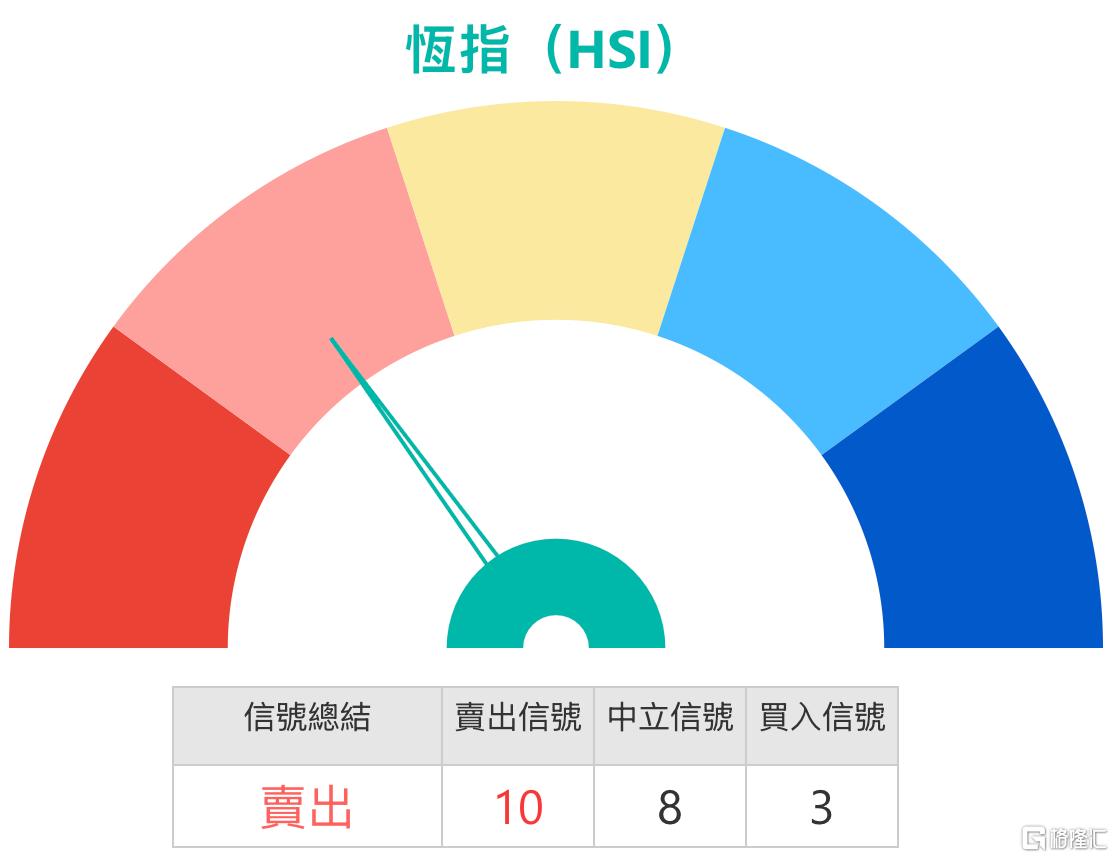
Group 1: Hang Seng Index - The Hang Seng Index showed a slight increase, closing at 27,274 points with a gain of 0.31%, but trading volume continued to decline, raising concerns about market sustainability [1] - Investors exhibit a clear divergence in sentiment post-Lunar New Year, with bullish investors optimistic about reaching 28,500 points, while bearish investors worry about the sustainability of the current upward trend due to shrinking trading volume [1] - Technical analysis indicates a sell signal predominates, with a sell-to-buy signal ratio of 10:3, and key support at 26,700 points, with a potential drop to 26,100 points if breached [2] Group 2: Xiaomi Group - Xiaomi Group's stock price rebounded significantly, closing at 37.1 HKD, with intraday prices nearing the upper Bollinger Band, and trading volume increased [8] - To reach the target of 40 HKD, Xiaomi must break through two key resistance levels: 38.8 HKD and 39.7 HKD [8] - Some investors opted for put options as the stock price rose, indicating concerns about potential short-term pullbacks [9] Group 3: BYD Company - BYD's stock price performed well, reaching 99.15 HKD, with investors focused on whether it can stabilize above the 100 HKD mark and challenge the 110 HKD target [15] - Technical signals are neutral, with key resistance at 103.1 HKD, and a breakthrough could lead to further gains towards 110 HKD [15] - Investors are favoring long-dated call options with a strike price of around 106 HKD, which have a favorable selection in the market [16] Group 4: Ping An Insurance - Ping An's stock price has been fluctuating within a narrow range, closing at 72.5 HKD, with trading volume hitting a recent low [22] - There is a growing bearish sentiment, with some investors believing the stock needs to drop to 69 HKD before a new upward trend can begin [22] - The key support level is at 70.1 HKD, and if breached, the stock may drop to 67.5 HKD, with a sell signal dominating the market [22] Group 5: CNOOC Services - CNOOC Services' stock price reached a new high of 9.57 HKD, but trading volume slightly decreased, indicating a divergence between price and volume [28] - Despite the price breakout, technical signals remain bearish, suggesting caution regarding short-term optimism [28] - The key resistance level is at 9.83 HKD, and a breakthrough could lead to a rise above 10 HKD [28] Group 6: Trip.com Group - Trip.com Group's stock price has been hovering at low levels, closing at 446.2 HKD, with expectations for upcoming Spring Festival travel data [35] - The stock is near the lower Bollinger Band, with a slight buy signal prevailing, but the key support level is at 431 HKD, below which a drop to 395 HKD is likely [35] - Investors are advised to wait for stabilization before considering bottom-fishing strategies, with some opting for call options with a strike price of 400 HKD [35]