AGRICULTURAL BANK OF CHINA(01288)

Search documents
农业银行:存金通黄金积存业务增加风险承受能力测评要求
2 1 Shi Ji Jing Ji Bao Dao· 2026-01-26 06:04
Core Viewpoint - The Agricultural Bank of China announced that starting from January 30, 2026, personal customers must complete a risk assessment questionnaire to engage in gold accumulation services, requiring at least a cautious risk tolerance rating [1] Group 1: New Policy Implementation - From January 30, 2026, customers must undergo a risk assessment to sign up for gold accumulation services, including three types of transactions: signing, purchasing, and regular investment [1] - Customers who already have a valid risk assessment result do not need to retake the assessment [1] Group 2: Existing Customer Operations - Existing customers are not subject to the new risk assessment requirements for selling, picking up, executing or terminating regular investment plans, and contract cancellations [1]

金融赋能新农人 年宵花开别样红
Xin Lang Cai Jing· 2026-01-25 20:20
Core Viewpoint - Agricultural Bank of China is actively supporting modern agriculture through precise financial services, exemplified by its collaboration with Changzhou Zhu Garden Art Co., which is enhancing its operations with smart agricultural technology [1][2]. Group 1: Company Overview - Zhu Garden Art Co. operates a 60,000 square meter smart greenhouse, producing 1.6 million pots of flowers annually with a quality rate exceeding 95% [2]. - The company, founded in 2008 by a "new farmer" from the post-80s generation, has won 38 national patents and received multiple accolades, including "Key Leading Enterprise in Agricultural Industrialization of Jiangsu Province" [2]. Group 2: Market Trends - The family gardening market is experiencing growth, particularly for large and small orchids, which are favored for their aesthetic appeal, long flowering period, and ease of care [2]. - Zhu Garden Art plans to expand its planting scale and upgrade its smart greenhouse's flowering control system in anticipation of a strong market in 2026 [2]. Group 3: Financial Support - Agricultural Bank of China provided a timely loan of 3 million yuan to Zhu Garden Art, facilitating the purchase of new seedlings and the upgrade of smart control equipment [2][3]. - The loan process was expedited, taking only three working days from documentation to disbursement, demonstrating the bank's commitment to supporting agricultural enterprises [2]. Group 4: Technological Advancements - The upgraded smart greenhouse is transitioning into a high-efficiency "smart factory," with real-time temperature control systems enhancing production capabilities [3]. - The integration of finance, agriculture, and consumer markets is fostering sustainable growth and innovation within the agricultural sector [3].
黄金跌价,金条跌价,26年1月21日,各大金店黄金、金条最新价格
Sou Hu Cai Jing· 2026-01-25 16:51
Group 1: Gold Market Dynamics - International gold prices are experiencing fluctuations, leading to adjustments in domestic high-end jewelry brand prices, with Chow Tai Fook quoting 1455 CNY/gram, Lao Feng Xiang at 1456 CNY/gram, and others around 1453 CNY/gram for gold [1] - Platinum prices remain high at around 940 CNY/gram, while discounts on gold jewelry are increasing, reflecting a cautious consumer sentiment and a relatively quiet market [1] Group 2: RMB Gold Prices - The Shanghai Gold Exchange reports the RMB-denominated gold spot price at 1047.60 CNY/gram, a slight increase of 2.33 CNY or 0.223% from the previous day, with a trading range between 1042.74 CNY and 1048.50 CNY [6] - Retail prices for gold jewelry or bars are higher than the exchange prices due to additional costs such as design and processing, influenced by international market fluctuations, exchange rates, and domestic supply and demand [6] Group 3: Financial Institutions Gold Bar Prices - Various financial institutions have set their gold bar prices, with China Construction Bank at 1050.74 CNY/gram, Industrial and Commercial Bank at 1050.58 CNY/gram, and others ranging from 1049.2 CNY to 1096.5 CNY per gram [7][8][9][10][11][12][13] Group 4: Wholesale and Retail Price Differences - The wholesale price for gold in Shui Bei is approximately 1203 CNY/gram, with significant price differences compared to retail prices, which can be attributed to store rent, operational costs, and brand premiums [14] - The pricing structure for jewelry includes "gold value + processing fee + brand premium," indicating a need for consumers to be aware of the price alignment with base gold prices when investing [14] Group 5: Domestic Gold Price Trends and Market Analysis - Current gold prices are reported at 1047.00 CNY/gram, with a slight increase of 0.11%, while platinum prices are at 606.79 CNY/gram, reflecting a 0.72% increase [15] - Despite rising gold prices, consumer purchasing enthusiasm is declining, with a reported 7.95% year-on-year decrease in gold consumption and a 32.50% drop in gold jewelry consumption in the first three quarters of 2025 [15] Group 6: Retail Strategies and Market Outlook - Brands are adopting strategies like trade-in programs to lower consumer purchase barriers, while research indicates that retailers need to enhance profit margins per gram of gold jewelry and optimize product offerings [16] - The technical structure of gold prices remains in an upward channel, but with weakening momentum, influenced by a strong dollar and rising real interest rates, which increase the opportunity cost of holding gold [17]





二级资本债周度数据跟踪-20260125
Soochow Securities· 2026-01-25 07:11
1. Report Industry Investment Rating There is no information about the industry investment rating in the provided content. 2. Core Viewpoints of the Report - This week (January 19 - January 23, 2026), there were no new secondary capital bonds issued in the inter - bank market and the exchange market [1]. - This week, the total trading volume of secondary capital bonds was approximately 334.2 billion yuan, an increase of 69.1 billion yuan compared to last week. The top three bonds in terms of trading volume were 25 Bank of China Secondary Capital Bond 02BC (44.352 billion yuan), 25 China Guangfa Bank Secondary Capital Bond 01BC (21.98 billion yuan), and 25 Bank of China Secondary Capital Bond 03A(BC) (7.753 billion yuan) [2]. - In terms of the issuing regions, the top three regions in terms of trading volume were Guangdong Province, Shanxi Province, and Shandong Province, with trading volumes of approximately 252.1 billion yuan, 29.9 billion yuan, and 14.7 billion yuan respectively [2]. - As of January 23, the changes in the yields to maturity of 5Y secondary capital bonds with ratings of AAA -, AA +, and AA compared to last week were - 2.18BP, - 2.84BP, and - 3.84BP respectively; for 7Y secondary capital bonds, the changes were - 2.72BP for all ratings of AAA -, AA +, and AA; for 10Y secondary capital bonds, the changes were - 4.60BP, - 5.09BP, and - 5.09BP respectively [2]. - This week, the overall deviation of the average trading price valuation of secondary capital bonds was not significant. The proportion of discount transactions was greater than that of premium transactions, and the discount amplitude was greater than the premium amplitude [3]. 3. Summary by Related Catalogs 3.1 Primary Market Issuance - This week (January 19 - January 23, 2026), there were no new secondary capital bonds issued in the inter - bank market and the exchange market [1]. 3.2 Secondary Market Transactions - **Trading Volume**: The total trading volume of secondary capital bonds this week was approximately 334.2 billion yuan, an increase of 69.1 billion yuan compared to last week. The top three bonds in terms of trading volume were 25 Bank of China Secondary Capital Bond 02BC (44.352 billion yuan), 25 China Guangfa Bank Secondary Capital Bond 01BC (21.98 billion yuan), and 25 Bank of China Secondary Capital Bond 03A(BC) (7.753 billion yuan) [2]. - **Regional Distribution**: In terms of the issuing regions, the top three regions in terms of trading volume were Guangdong Province, Shanxi Province, and Shandong Province, with trading volumes of approximately 252.1 billion yuan, 29.9 billion yuan, and 14.7 billion yuan respectively [2]. - **Yield to Maturity**: As of January 23, the changes in the yields to maturity of 5Y secondary capital bonds with ratings of AAA -, AA +, and AA compared to last week were - 2.18BP, - 2.84BP, and - 3.84BP respectively; for 7Y secondary capital bonds, the changes were - 2.72BP for all ratings of AAA -, AA +, and AA; for 10Y secondary capital bonds, the changes were - 4.60BP, - 5.09BP, and - 5.09BP respectively [2][10]. 3.3 Top Thirty Bonds with Valuation Deviation - **Discount Bonds**: The top three discount bonds were 23 Kecheng Rural Commercial Secondary Capital Bond 01 (- 1.7012%), 22 Xinchang Rural Commercial Bank Secondary Capital Bond 01 (- 1.6229%), and 25 Ninghai Rural Commercial Secondary Capital Bond 01 (- 1.6108%). The Zhongzhai implicit ratings were mainly AAA -, AA +, and AA -, and the bonds were mainly distributed in Beijing, Zhejiang, and Guangdong [3][13]. - **Premium Bonds**: The top three premium bonds were 25 Jilin Bank Secondary Capital Bond 02 (0.6619%), 22 Shengjing Bank Secondary Capital Bond 01 (0.1965%), and 24 Shengjing Bank Secondary Capital Bond 01 (0.1959%). The Zhongzhai implicit ratings were mainly AAA -, AA, and AA +, and the bonds were mainly distributed in Beijing, Zhejiang, and Liaoning [3][14].


抢疯了!金饰克价突破1500元,银行保管箱业务火爆,预约排到两三个月后,网友:这都要抢?
Mei Ri Jing Ji Xin Wen· 2026-01-25 03:50
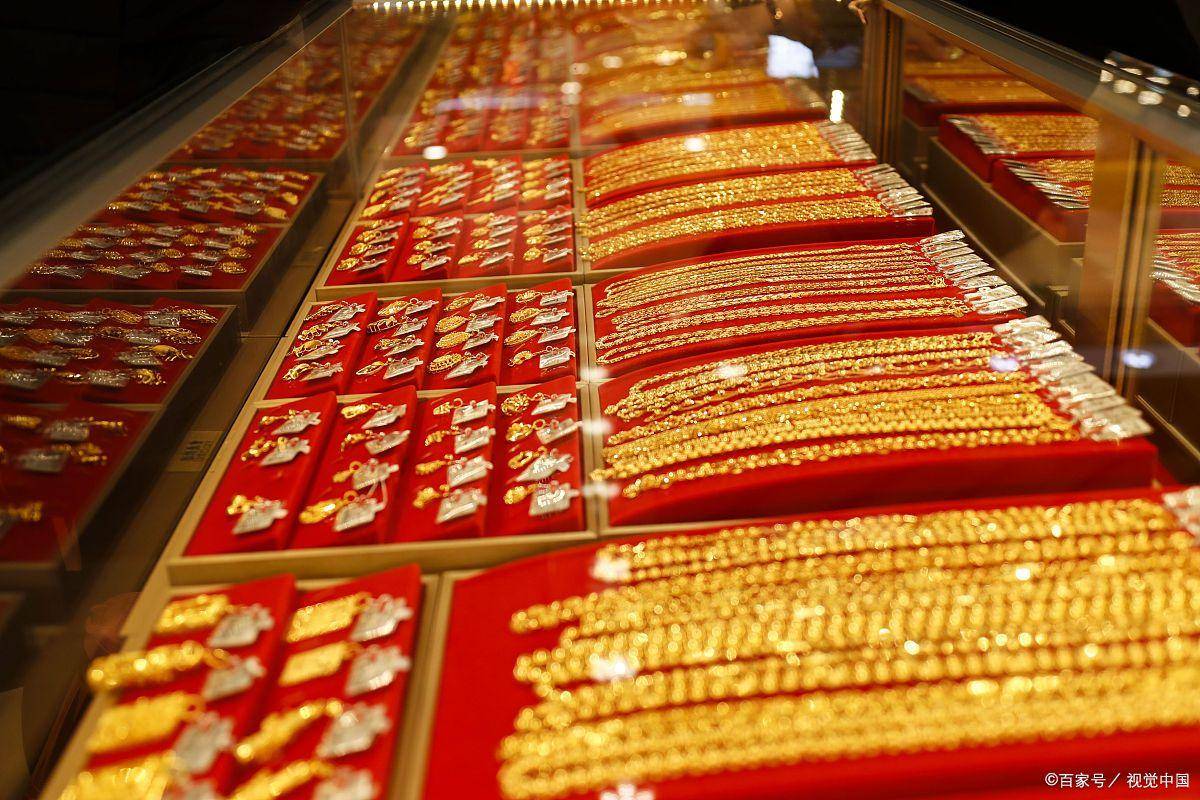
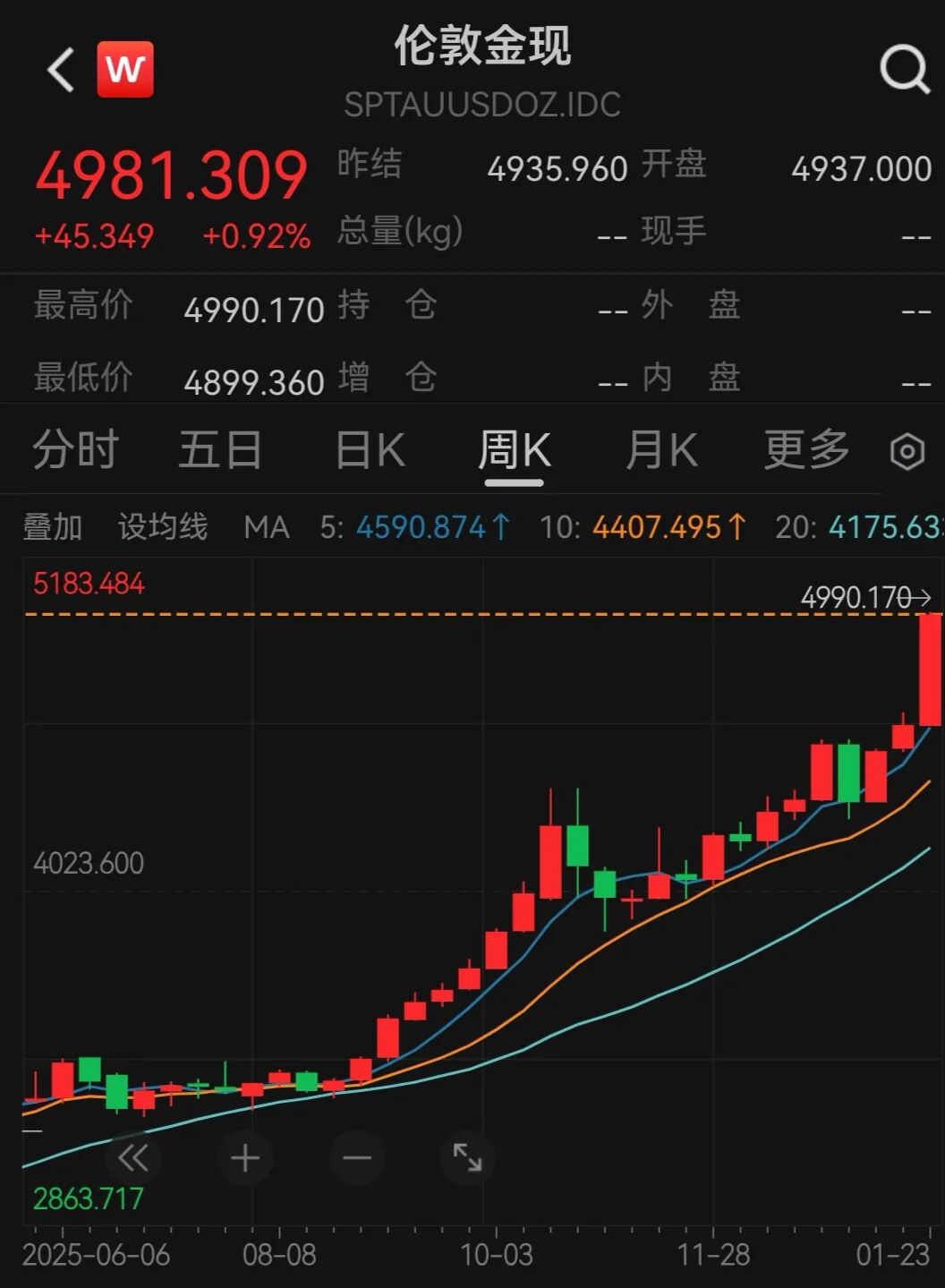
Group 1: Gold Price Surge - The price of gold has surged significantly, with spot gold reaching $4981.309 per ounce, approaching the $5000 mark [1] - Domestic gold prices have also increased, with several brands of gold jewelry exceeding 1500 yuan per gram, and some reaching 1548 yuan, marking a daily increase of over 50 yuan [3] Group 2: Demand for Bank Safe Deposit Boxes - The demand for bank safe deposit boxes has skyrocketed, with many banks reporting that all available boxes are rented out, leading to waiting lists for new customers [7][9] - In Hangzhou, major banks have completely rented out their safe deposit boxes, and new customers must wait for existing customers to return their boxes before they can rent one [8] - The surge in demand for safe deposit boxes is attributed to the increasing need for secure storage of high-value items like gold bars, particularly among high-net-worth individuals in major cities [9]


财知道|广州加大数字经济支持 农行数智经济创新金融实验室揭牌
2 1 Shi Ji Jing Ji Bao Dao· 2026-01-25 03:33
财知道|广州加大数字经济金融支持农行数智经济创新金融实验室揭牌 (文章来源:21世纪经济报道) ...
金融行研系列:17 中国私人银行业2025发展报告
Xin Lang Cai Jing· 2026-01-24 23:03
Core Insights - The Chinese private banking industry is undergoing a historic shift from "scale expansion" to "value cultivation," with high-quality growth expected by 2025 [3][4] - The number of high-net-worth individuals (HNWIs) in China has surpassed 3 million, with assets under management (AUM) reaching 24.6 trillion yuan, projected to grow to 42 trillion yuan by 2030, reflecting a compound annual growth rate (CAGR) of 9.5% [3][6] - The market is characterized by a dual trend of "head concentration and distinctive breakthroughs," with major state-owned banks dominating the sector [3][8] Industry Overview - The private banking sector in China continues to show steady growth, with AUM reaching 18.8 trillion yuan by mid-2025, a 9.3% increase from the end of 2024 [5][6] - The number of clients served by 16 banks reached 1.649 million, a year-on-year growth of 13.17% [5] - The market is highly concentrated, with the top four state-owned banks holding nearly 70% of the total AUM among the 12 major private banks [8][7] Market Dynamics - Business innovation is becoming a new driving force for industry development, with family trusts and insurance trusts experiencing rapid growth [4][19] - By Q3 2025, the total scale of family trusts exceeded 950 billion yuan, while insurance trusts reached 420 billion yuan, reflecting growth rates of 5.6% and 19.1% respectively [4][19] - The industry faces challenges such as stricter regulations, talent shortages, and intensified competition [4][29] Client Demographics - The number of high-net-worth families in China reached 2.066 million by 2025, with the total wealth of billionaires growing to 1.8 trillion USD, a 22.2% increase [12][6] - The average age of high-net-worth individuals is 35, with a significant portion being young entrepreneurs [13][12] - The income sources of high-net-worth individuals are diverse, with business income being the primary source [13][16] Business Model Innovations - Family office services are rapidly developing, with over 85% of private banking departments establishing independent family office service systems by the end of 2023 [22] - The demand for family office services is expected to grow, with annual expenditures on tax planning projected to reach 2.8 million yuan by 2025 [23] - ESG investments are becoming a key focus, with ESG-themed financial products seeing significant growth [24][25] Digital Transformation - The digital transformation of the private banking sector is entering a deepening phase, with at least 60% of institutions expected to adopt AI-driven advisory systems by 2025 [26][27] - Technology investments are projected to exceed 4.8 billion yuan, with a CAGR of 27.3% [26] - The integration of digital services is crucial for enhancing customer experience and operational efficiency [28] Regulatory Environment - The regulatory environment is becoming stricter, leading to increased compliance costs, which are expected to rise by 23 percentage points of operating income [29][30] - The implementation of new asset management regulations is reshaping product design and increasing the entry barriers for new players [29][30] Talent Shortage - The private banking industry faces a significant talent shortage, with a demand gap of approximately 24,000 professional bankers by 2025 [33][34] - The ratio of talent supply to demand is 1:8, indicating a critical need for skilled professionals [33] - The industry is increasingly focusing on talent training and recruitment to address this gap [34]

你的信用卡账单分期,国家要贴息啦
2 1 Shi Ji Jing Ji Bao Dao· 2026-01-24 02:33
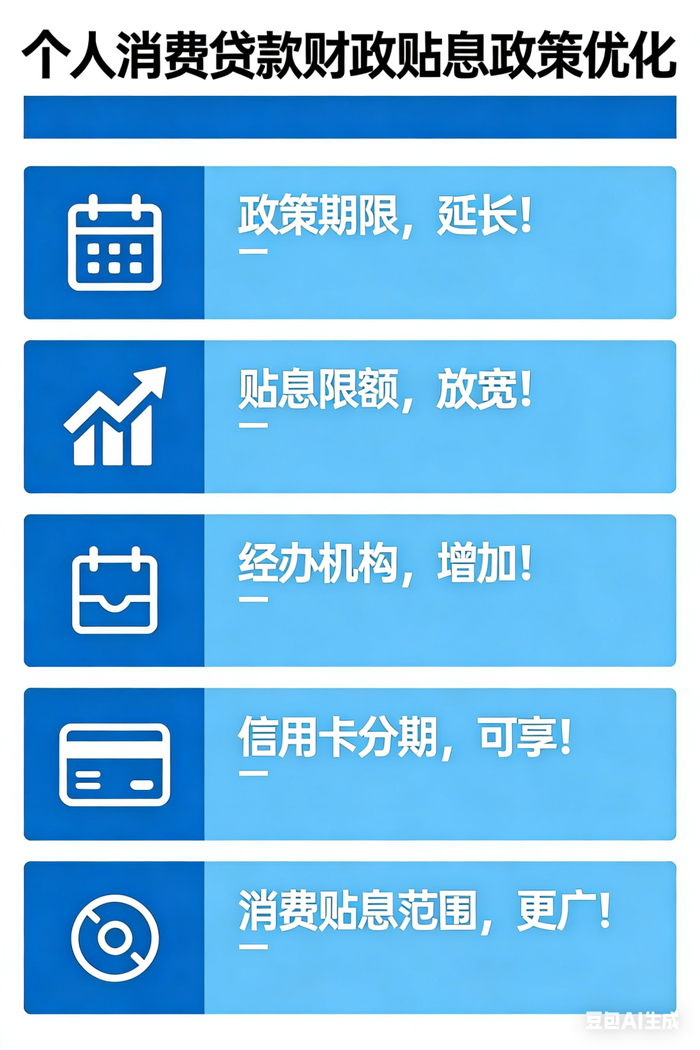
Group 1 - The core viewpoint of the news is the optimization of the personal consumption loan interest subsidy policy, which aims to stimulate consumer spending by extending the policy duration and expanding its coverage [1][2][4] - The new policy extends the implementation period until the end of this year and includes credit card installment payments in the subsidy scope, thereby broadening the areas eligible for interest subsidies [1][3] - Financial institutions, including major banks, are quickly responding to the policy by optimizing their services to ensure consumers can benefit from the subsidies seamlessly, enhancing the overall consumer experience [4][6] Group 2 - The collaboration between financial institutions and e-commerce platforms is highlighted, with initiatives like interest-free installment products being offered to consumers, which have led to significant increases in sales for participating brands [6] - The policy is part of a broader strategy to boost domestic demand and consumer confidence, aligning with the central economic work conference's focus on enhancing the domestic market [7] - The implementation of the policy is expected to improve consumer sentiment and market vitality, contributing to a stable economic outlook and encouraging higher quality consumption [7]
中国农业银行深圳市分行原副行长王国彪被双开 2025年5月被查
Xi Niu Cai Jing· 2026-01-24 01:10
1月21日,据中央纪委国家监委驻中国农业银行纪检监察组、山东省纪委监委消息,日前,经中央纪委国家监委批准,中央纪委国家监委驻中国农业银行纪 检监察组、山东省菏泽市监委对中国农业银行深圳市分行原党委副书记、副行长王国彪严重违纪违法问题进行了立案审查调查。 经查,王国彪丧失理想信念,背弃初心使命,履行全面从严治党主体责任不力,对抗组织审查,串供,转移、隐匿证据,搞迷信活动;无视中央八项规定精 神,接受可能影响公正执行公务的宴请;违反组织原则,不按规定报告个人有关事项,利用职权和职务上的影响违规为他人谋取人事利益;廉洁底线失守, 收受可能影响公正执行公务的礼品、礼金、消费卡,违规借用管理对象钱款,违规收受他人大额钱款;利用职务上的便利,在招标采购、工程承揽方面为他 人谋取利益并非法收受巨额财物。 经中国农业银行党委研究,决定给予王国彪开除党籍处分;经中央纪委国家监委驻中国农业银行纪检监察组研究,决定给予其开除公职处分;收缴其违纪违 法所得;山东省菏泽市监委将其涉嫌犯罪问题移送检察机关依法审查起诉,所涉财物一并移送。 2025年5月,据中央纪委国家监委网站消息,中国农业银行深圳市分行原党委副书记、副行长王国彪涉嫌严重 ...
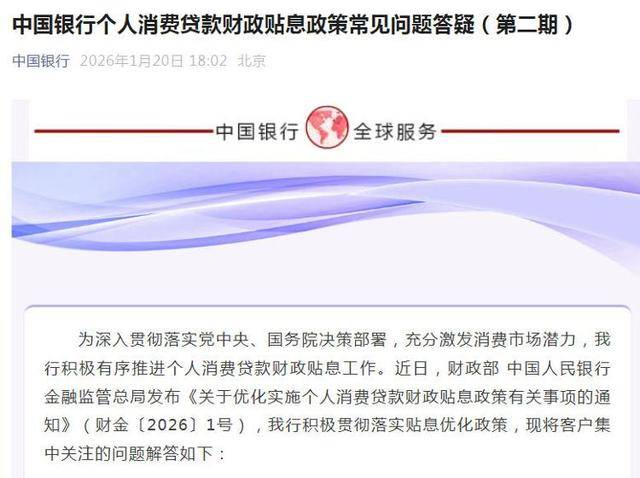
多家银行公告!落实个人消费贷款最新财政贴息政策
Sou Hu Cai Jing· 2026-01-23 19:43
Core Viewpoint - The implementation of the latest fiscal interest subsidy policy for personal consumption loans aims to boost consumption and expand domestic demand, with several major banks actively participating in this initiative [1][6][7][8][9]. Group 1: Policy Implementation - The fiscal interest subsidy policy for personal consumption loans has been extended until December 31, 2026, covering the period from September 1, 2025, to December 31, 2026 [6][10]. - The credit card installment payment subsidy policy will be effective from January 1, 2026, to December 31, 2026 [6]. Group 2: Policy Optimization - The policy has been optimized to include credit card installment payments, expanding the support range [9][11]. - The subsidy criteria have been broadened by removing the restriction on single transactions of 50,000 yuan and above [9][12]. - The subsidy standards have been improved by eliminating the 500 yuan cap on single transaction subsidies and the 1,000 yuan cap for individual borrowers at the same financial institution [9][12]. - Customers who have previously signed the personal consumption loan subsidy agreement will automatically benefit from the new subsidy policy starting January 1, 2026, without needing to re-sign the agreement [12].