PSBC(01658)

Search documents
“土特产” 新气象 荔枝今天如何到“长安”?看金融如何让荔枝跑赢时光
Zhong Guo Xin Wen Wang· 2025-07-25 05:33
Core Insights - The article highlights the transformation of lychee from a royal delicacy to a common fruit enjoyed by the public, facilitated by modern logistics and financial support from Postal Savings Bank [1][10][15] - Postal Savings Bank leverages its integrated resources in logistics, finance, and e-commerce to support the lychee industry, enhancing its supply chain and financial accessibility for farmers [1][6][9] Group 1: Industry Overview - Lychee, a traditional product of Guangdong, has a cultivation history of over 2,300 years, with Maoming being a major production area, accounting for one in five lychees globally [1][4] - The current lychee harvest season sees significant sales, with local companies like Bojian Agriculture selling approximately 75,000 pounds daily [4] Group 2: Financial Support and Innovations - Postal Savings Bank has established a special team to understand the financial needs of lychee farmers, providing tailored financial solutions and support [6][14] - The bank has issued loans totaling 863 million yuan to the lychee industry by June 2025, facilitating the growth and operational needs of local businesses [6][14] Group 3: Logistics and Supply Chain - The bank's support includes enhancing cold chain logistics, which is crucial for maintaining the freshness of lychees during transportation [7][12] - Postal Savings Bank collaborates with local postal services to streamline the sales process, ensuring that lychees reach markets quickly and efficiently [9][12] Group 4: Market Impact - The integration of financial services has allowed farmers and distributors to increase their production and sales, with some reporting significant income growth due to improved logistics and financing [7][12] - The demand for lychee has surged, with some vendors selling 10-15 tons daily, reflecting a robust market response to the enhanced supply chain [12][14]



年内74家上市公司完成定增 募资总额达6590亿元
Zheng Quan Ri Bao· 2025-07-24 16:12
Group 1 - The A-share private placement market has significantly rebounded this year, with 74 listed companies completing private placement projects and raising a total of 659 billion yuan, far exceeding the same period last year [1] - Among the 74 companies, 38 raised over 1 billion yuan, accounting for 51% of the total [1] - Key industries involved in private placements include capital goods, technology hardware and equipment, automotive, and banking [1] Group 2 - Major banks such as Bank of China, Postal Savings Bank of China, Bank of Communications, and China Construction Bank have led in private placement scale, collectively raising 520 billion yuan [1] - The funds raised by these banks are primarily used to increase core tier one capital, driven by the need for capital support in business expansion and risk management [1] - The active participation of banks in private placements indicates a strengthening support of the capital market for the real economy [1] Group 3 - There are numerous cases of listed companies using private placements for asset acquisitions, such as AVIC Chengfei's private placement of approximately 20.86 million shares, raising 17.44 billion yuan for acquiring 100% equity of AVIC Chengfei [1] - Another example is Seres Group, which raised approximately 8.16 billion yuan through private placement for purchasing a super factory in Chongqing and supplementing operational funds [1] Group 4 - In 2024, 132 listed companies completed private placements, raising a total of 206.65 billion yuan, indicating that the total amount raised this year has far exceeded the entire amount raised last year [2] - The recovery of the private placement market is believed to be related to policy support and the urgent need for funding to support R&D and capacity expansion amid industrial upgrades [2] - The market's ample liquidity has created a favorable funding environment for private placements, with a trend of larger financing projects and more flexible pricing observed this year [2]


为城市更新注入金融活水
Jing Ji Ri Bao· 2025-07-23 22:10
Core Viewpoint - The article emphasizes the importance of financial support in driving urban renewal initiatives, highlighting the role of various financial institutions in providing tailored financial services for urban infrastructure improvement and cultural heritage preservation [1][2][3]. Group 1: Urban Renewal Initiatives - Urban renewal actions aim to optimize city structure, enhance functionality, preserve cultural heritage, and improve quality of life, which are crucial for high-quality urban development and economic growth [1]. - The Central Government has issued guidelines to enhance financial support for urban renewal, including increasing central budget investments and encouraging financial institutions to participate in a compliant and sustainable manner [1]. Group 2: Financial Institutions' Role - Financial institutions are focusing on diverse funding mechanisms to support large-scale urban renewal projects, which require sustainable financial solutions due to their significant investment scale and long construction periods [2]. - Postal Savings Bank of China has developed a dual-driven model combining external development and precise cultivation to innovate and integrate financial service products for the real estate sector [2]. Group 3: Specific Projects and Funding - The Kaifeng Railway Station urban renewal project has received a total credit support of 2.15 billion yuan, aimed at improving living conditions for over a thousand households and revitalizing local commerce [2]. - For the preservation of Chaozhou Ancient City, Postal Savings Bank has provided 480 million yuan in funding and developed a comprehensive management platform to enhance tourism services [3]. Group 4: Regulatory Support - The National Financial Supervision Administration is committed to guiding financial institutions in understanding the urban renewal action's logic and requirements, ensuring the development of tailored financial products and services [3].

邮储银行:“贷”出乡村振兴新蓝图
Zhong Guo Jin Rong Xin Xi Wang· 2025-07-23 12:35
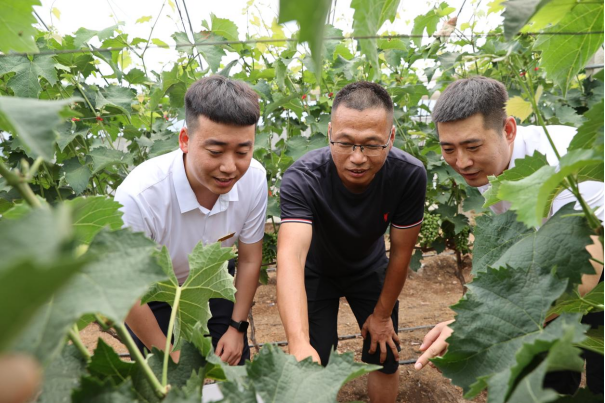
Group 1 - The core viewpoint of the articles highlights the significant role of China Postal Savings Bank in providing financial support to rural revitalization efforts, enabling agricultural entrepreneurs to expand their operations and improve their livelihoods [1][5][8] - The transformation of agricultural operations is illustrated through the experiences of various entrepreneurs, such as Yan Zengsheng, who expanded from 4 to 23 grape greenhouses with the help of a 300,000 yuan loan, increasing his annual income from 50,000 yuan to over 500,000 yuan [3][7] - Zhang Yanqin's company benefited from a 23 million yuan loan, allowing it to increase grain storage capacity from 50,000 tons to 150,000 tons, with projected sales exceeding 300 million yuan by 2025, tripling its revenue since 2016 [5][8] Group 2 - Zhao Qingfeng's agricultural business received a 500,000 yuan quick loan, which facilitated the recovery and expansion of his operations to 70 greenhouses, including a new 200-hectare medicinal herb base, with expected yields exceeding 20,000 yuan per acre in three years [7][8] - The bank's commitment to rural credit system construction is evident, having established 1,071 credit villages and disbursed 3.618 billion yuan in loans, effectively supporting various agricultural sectors [8] - The bank's tailored financial products, such as "industry loans" and "quick loans," have led to an annual average of over 150 million yuan in agricultural loans, supporting 43 new agricultural entities in the past three years [7][8]
邮储银行呼玛县支行:践行金融为民初心 筑牢粮食安全“压舱石”
Zhong Guo Jin Rong Xin Xi Wang· 2025-07-23 08:17
Core Viewpoint - The article highlights the role of Postal Savings Bank in supporting agricultural production and ensuring food security through financial assistance to local farmers and cooperatives [1][2][3]. Group 1: Agricultural Development - The cooperative led by Dong Wei has transformed nearly 8000 acres of land into a significant contributor to food supply, focusing on the cultivation of soybeans, corn, and wheat [1]. - The cooperative has achieved national recognition as a key support demonstration base for green organic agriculture, with all produced crops certified as green organic [1]. Group 2: Financial Support - Dong Wei received a total loan of 4.5 million yuan from Postal Savings Bank, which includes 3 million yuan in agricultural loans and 1.5 million yuan in small business loans, facilitating land transfer, agricultural input purchases, and daily operations [2]. - The bank's timely financial support has enabled the cooperative to invest in necessary infrastructure, such as grain storage and drying facilities, ensuring efficient agricultural practices [2]. Group 3: Commitment to Food Security - Postal Savings Bank has actively increased its credit investment in agriculture, optimizing financial services for large-scale farmers and cooperatives, simplifying loan processes, and ensuring timely funding during critical agricultural periods [3].
24.6万亿私人银行进入存量时代
3 6 Ke· 2025-07-23 05:47
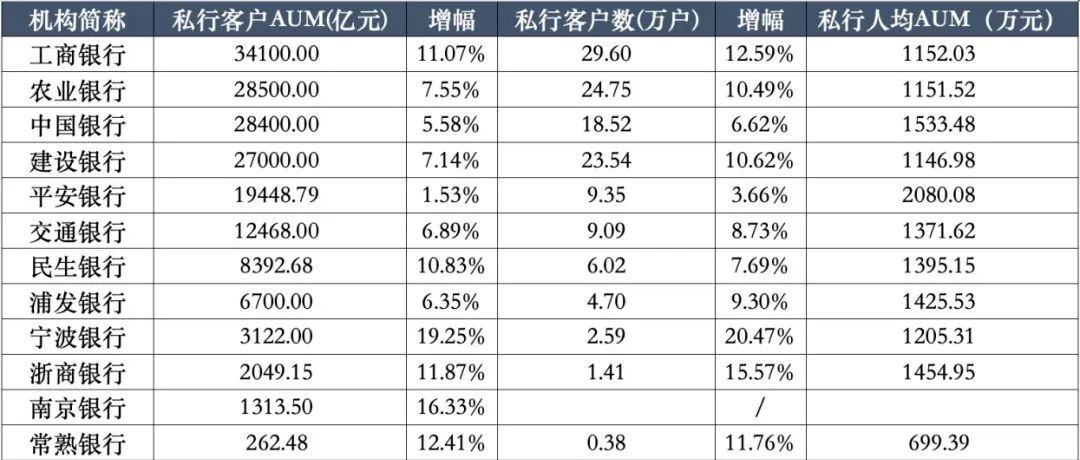
Core Insights - The private banking sector is experiencing intense competition among major banks, with a focus on high-net-worth clients and asset management growth [2][19] - Recent developments, including the "internship monetization" controversy involving Industrial Bank, have sparked discussions about the boundaries of value-added services in private banking [1][7] Group 1: Private Banking Market Overview - The total Assets Under Management (AUM) in the private banking sector has reached 24.6 trillion yuan, with many banks reporting double-digit growth in client numbers and AUM [2][6] - Major banks like Industrial Bank, Agricultural Bank, and Bank of China have surpassed 3 trillion yuan in AUM, with significant year-on-year growth rates of 18.87% and 16.73% respectively [6][12] Group 2: Client Growth and Performance - As of the end of 2024, Industrial Bank had 289,000 private banking clients, an increase of 9.9% from the previous year, while Agricultural Bank and Bank of China also reported substantial client growth [4][6] - The average AUM per private banking client varies, with Industrial Bank at 11.52 million yuan and Agricultural Bank at 11.51 million yuan [3][6] Group 3: Competitive Strategies - Banks are adopting differentiated strategies to attract high-net-worth clients, with a focus on comprehensive services that include financial and non-financial resources [9][12] - The competition is not only about asset size but also about the quality of services offered, with banks like Industrial Bank and Construction Bank emphasizing tailored solutions for entrepreneurs [14][18] Group 4: Challenges and Future Directions - The private banking sector faces challenges such as product homogenization and intense competition, which may impact the effectiveness of non-interest income growth [4][19] - Moving forward, the industry is expected to shift from a scale-oriented approach to one focused on the health of client assets, aiming for a transformation from "scale competition" to "value management" [20]




“鑫心惠邻‘携手银行’宣传”被近20家银行辟谣,监管警示贷款中介乱象风险
Hua Xia Shi Bao· 2025-07-23 04:20
Core Viewpoint - A newly established loan intermediary, Xin Xin Hui Lin, has sparked collective statements from nearly 20 banks in Shenzhen, indicating potential disruption to financial order and consumer rights due to misleading advertising practices [2][3]. Company Summary - Xin Xin Hui Lin (Shenzhen) Consulting Service Co., Ltd. was founded in November 2024 and has quickly established nine subsidiaries, focusing on community-based financing solutions [3][4]. - The company promotes its services through community-centric slogans, aiming to assist local residents in overcoming financing challenges [4]. Industry Summary - The shift of loan intermediaries towards residential communities reflects a transformation in the industry, driven by rising online customer acquisition costs and intensified market competition [4]. - This "community financing" model poses risks such as information asymmetry, lack of service transparency, and potential for excessive debt among consumers [5]. - Banks are encouraged to enhance financial education within communities and establish transparent service channels to mitigate the risks posed by unscrupulous intermediaries [5][6]. - Regulatory bodies are increasingly vigilant against illegal loan intermediary activities, emphasizing the need for clear boundaries in intermediary services and the establishment of transparent fee structures [6][7]. - Collaboration among regulatory agencies, industry associations, banks, and intermediaries is essential for standardizing practices and ensuring consumer protection [7].


中证香港上市可交易内地银行指数报1245.77点,前十大权重包含工商银行等
Jin Rong Jie· 2025-07-22 14:28
Group 1 - The core index of the China Securities Index for Hong Kong-listed tradable mainland banks (HKT Mainland Banks, H11145) opened high and rose, reporting 1245.77 points [1] - The HKT Mainland Banks index has increased by 1.56% in the past month, 16.29% in the past three months, and 22.87% year-to-date [1] - The index series includes three indices: HKT Hong Kong Real Estate, HKT Mainland Consumption, and HKT Mainland Banks, reflecting the overall performance of related theme securities in the Hong Kong securities market [1] Group 2 - The top ten weights in the HKT Mainland Banks index are: China Construction Bank (31.83%), Industrial and Commercial Bank of China (23.51%), Bank of China (17.4%), China Merchants Bank (10.52%), Agricultural Bank of China (7.24%), CITIC Bank (3.48%), Postal Savings Bank of China (2.55%), Minsheng Bank (1.52%), Chongqing Rural Commercial Bank (0.75%), and China Everbright Bank (0.66%) [1] - The market segment of the HKT Mainland Banks index is entirely represented by the Hong Kong Stock Exchange, with a 100.00% share [1] Group 3 - The financial sector accounts for 100.00% of the industry represented in the HKT Mainland Banks index sample [2] - The index sample is adjusted every six months, with adjustments implemented on the next trading day after the second Friday of June and December [2] - Weight factors are generally fixed until the next scheduled adjustment, with temporary adjustments made under special circumstances [2]

银行股变奏,普涨格局下减持暗涌
2 1 Shi Ji Jing Ji Bao Dao· 2025-07-22 11:39
Core Viewpoint - The banking sector has shown strong performance in 2023, with the China Securities Banking Index rising by up to 25%, and many bank stocks reaching historical highs, prompting some shareholders to consider profit-taking through share reductions [1][2][3] Summary by Sections Bank Stock Performance - The banking sector's stocks have experienced significant gains, with 42 stocks achieving positive growth and 18 reaching new historical highs this year [1] - Qingdao Bank has seen the largest increase, with intraday gains exceeding 40% [1] Shareholder Reduction Announcements - Six banks have announced share reduction plans since May, coinciding with the peak prices of bank stocks [2][3] - China Life intends to reduce its stake in Hangzhou Bank by up to 50.79 million shares, representing 0.7% of the total shares, marking the end of its 16-year investment in the bank [2] - Other banks, such as Qilu Bank and Changsha Bank, have also announced share reductions, with Qilu Bank's major shareholder planning to sell up to 60.44 million shares [3][5] Reasons for Share Reductions - Market analysts suggest that the reductions are primarily due to shareholders seeking to lock in profits after substantial price increases [8][9] - Factors influencing these decisions include the need for asset reallocation, the high valuation of bank stocks, and potential concerns about future growth prospects [9] Ongoing Investment Interest - Despite the reductions, there is still strong interest in bank stocks, with eight banks receiving shareholder increases this year, indicating a net positive sentiment towards the sector [9][10] - Insurance companies have also been actively acquiring bank shares, further demonstrating ongoing confidence in the banking sector [10]



行情短期调整不改长期向好逻辑
Tianfeng Securities· 2025-07-22 10:13
Industry Investment Rating - The industry investment rating is maintained at "Outperform the Market" [1][27]. Core Viewpoints - Despite a recent pullback in bank stock prices, the long-term positive outlook for the banking sector remains intact due to several factors, including expected marginal improvements in fundamentals and ongoing valuation recovery driven by increased capital inflows [2][21]. Summary by Relevant Sections Recent Market Performance - Since July 11, bank stock prices have experienced a notable decline, with the banking index down 3.41% as of July 18. This pullback is attributed to strong prior gains, profit-taking by investors, and short-term selling pressure from dividend-related strategies [2][12]. Fundamental Improvements - The first half of 2025 is expected to reflect some marginal improvements in bank performance, driven by stabilized net interest margins, improved non-interest income, and a favorable asset quality outlook [2][13][14]. - Net interest margins are projected to stabilize due to easing credit supply-demand imbalances and the expiration of high-interest deposits [17]. - Non-interest income is anticipated to improve as the decline in management fees narrows and the bond market recovers [17]. Valuation Recovery - The banking sector's valuation recovery is expected to continue, supported by low interest rates and a scarcity of attractive assets, making bank stocks appealing due to their high dividend yields [18][20]. - As of July 18, the banking sector's dividend yield stands at 4.47%, with a price-to-book (PB) ratio of 0.73, indicating a low valuation compared to other sectors [20]. - The influx of incremental capital, including long-term funds and public fund reforms, is likely to sustain the valuation recovery trend in the banking sector [20][21]. Investment Recommendations - The report recommends focusing on quality regional small banks such as Chengdu Bank and Changshu Bank, as well as major state-owned banks including Industrial and Commercial Bank of China, Agricultural Bank of China, Bank of China, and Postal Savings Bank of China [21].