
PSBC(01658)

Search documents
25Q2 基金港股持仓点评:加仓创新药新消费,减仓互联网
Haitong Securities International· 2025-07-22 09:42
Core Insights - Public funds continued to increase their holdings in Hong Kong stocks in Q2 2025, with the market value of Hong Kong stocks in the sample of actively managed equity funds rising to 20.0%, up from 19.2% in Q1 2025 [6][10] - The increase in holdings was primarily in small and medium-sized Hong Kong stocks, with the Hang Seng Small Cap Index's component stocks' market value share in the total Hong Kong stock holdings of funds increasing by 5.6 percentage points [6][10] - Sector-wise, public funds mainly increased their positions in the pharmaceutical, light manufacturing, non-bank financials, and banking sectors, corresponding to themes of innovative drugs, new consumption, and dividends [6][10] Fund Holdings Analysis - The report indicates a significant shift in fund holdings, with a reduction in the technology sector, particularly in internet and automotive stocks, which had previously seen substantial gains [6][10] - The technology sector's market value share in fund holdings decreased by 3.7 percentage points, while the media and retail sectors also saw declines [10][12] - Conversely, the consumer sector saw an increase of 3.8 percentage points in market value share, indicating a strategic pivot towards consumer-related investments [10][12] Specific Stock Movements - Notable changes in specific stock holdings include Tencent Holdings decreasing from 21.5% to 17.8%, while Alibaba's share dropped from 10.6% to 6.3% [12] - In contrast, stocks like Kuaishou and Pop Mart saw increases in their holdings, reflecting a shift towards emerging consumer brands [12] - The report highlights a significant increase in holdings for companies like Xinda Biopharmaceuticals, which rose from 1.2% to 3.5%, indicating a growing interest in innovative healthcare solutions [12]





中金-银行:国有大行基本面分析手册
中金· 2025-07-21 14:26
Investment Rating - The report maintains an "Outperform" rating for major state-owned banks, including China Postal Savings Bank, Agricultural Bank of China, and China Bank [3][7][10]. Core Insights - The report emphasizes that state-owned banks exhibit strong asset return rates despite lower ROE, with a RORWA of 1.43%, outperforming joint-stock and regional banks [4][14]. - It highlights the stability of credit demand due to a higher proportion of safe assets, with over 60% of loans in infrastructure and mortgages [5][4]. - The report suggests that the valuation of banks is expected to recover, with a potential upside of 30%-50% from current levels [10]. Summary by Sections Profitability - State-owned banks have a lower leverage ratio, with an average ROE of 11.34% and an average ROA of 0.84%, comparable to the industry average [14]. - The average RORWA for state-owned banks is 1.43%, higher than joint-stock banks (1.16%) and regional banks (1.26%) [4][14]. - The net interest margin is expected to stabilize as deposit rates decrease, benefiting from a high proportion of deposits in liabilities [9][10]. Performance - The net profit growth of state-owned banks is slightly lower than peers due to cautious provisioning [12]. - Non-interest income accounts for 23% of total revenue, which is below the industry average of 25% [12][9]. - The asset composition is heavily weighted towards loans, particularly mortgages, which have lower risk weights [16]. Asset Quality - The report notes that state-owned banks have a stricter risk recognition standard, with a non-performing loan ratio close to the industry average but a higher ratio of overdue loans [5][12]. - The average provision coverage ratio exceeds 250%, indicating potential for profit release [5][12]. Capital Adequacy - State-owned banks maintain a higher core Tier 1 capital adequacy ratio, averaging 11.69%, which is significantly above the regulatory minimum [14][16]. - The new capital regulations are expected to further benefit these banks, potentially increasing their capital ratios by about 1 percentage point [9][10]. Valuation - The report anticipates a long-term recovery in bank valuations, with forward P/B ratios expected to stabilize around 0.7-0.8x, compared to the current 0.5x [10]. - Catalysts for this recovery include macroeconomic recovery, lower deposit costs, and supportive fiscal policies [10].



【财经分析】如何更好撑企业?——金融支持民营经济生态一线观察
Xin Hua Cai Jing· 2025-07-21 14:17
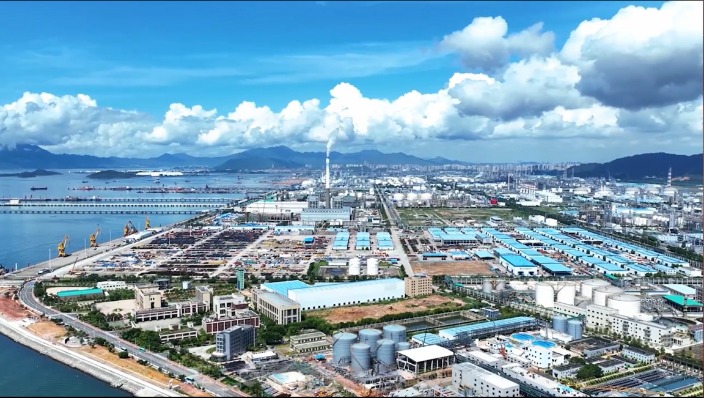
Group 1 - The implementation of the "Private Economy Promotion Law" has provided strong support for the development of the private economy, highlighting the crucial role of financial resources in innovation and upgrading [1] - Financial institutions are actively providing tailored financial solutions to address the long-term capital needs of industries, particularly in the chemical sector [2][3] - Huizhou Postal Savings Bank has developed a comprehensive financial service plan that includes short-term loans and supply chain financial services, significantly supporting the growth of Huazhong Energy Technology Co., Ltd. [3][4] Group 2 - SIRUI Optical, a company specializing in optical equipment, has expanded into high-precision optical components, facing increased financial pressure due to rapid growth and market expansion [4][5] - Postal Savings Bank has introduced "Science and Technology Credit Loans" tailored for specialized and innovative enterprises, allowing SIRUI Optical to secure funding for raw material procurement and R&D [5][7] - The collaboration between Postal Savings Bank and SIRUI Optical exemplifies the integration of financial capital and technological innovation, driving regional industrial upgrades [7] Group 3 - Guangdong Longyu New Materials Co., Ltd. focuses on the research and production of copper-clad laminates and has shown strong growth since its establishment [8][13] - The company faces challenges related to high R&D costs and the need for rapid capital turnover to support its expansion into high-end product lines [13][14] - Postal Savings Bank has provided a customized financing solution of 30 million yuan to support Longyu New Materials' R&D efforts, enabling the company to advance its technology and production capabilities [14][15]

邮储银行以“行业智付通”为引领拓展封闭结算市场新领域
Zheng Quan Ri Bao· 2025-07-21 07:11
Core Insights - Postal Savings Bank is leveraging its unique advantages in rural areas to innovate the "Industry Smart Payment" tool, enhancing financial services for agriculture and related sectors [2] - The "Industry Smart Payment" tool addresses traditional transaction inefficiencies, improving fund circulation and customer experience through features like payment order management and batch payments [2] - In three months since the launch of the closed settlement market, Postal Savings Bank has reached over 160 cities, serving more than 20,000 clients with a total transaction amount exceeding 4.3 billion [2] Group 1 - The bank's strategy includes a tailored service approach, "one circle, one policy," to meet the specific needs of different regions and industries [2] - The successful implementation of the closed settlement market in Gansu province demonstrates the bank's commitment to enhancing local agricultural financial services [3] - The bank aims to continue supporting the "three rural issues," urban residents, and small and medium enterprises by developing industry-specific payment services [4]
工银添祥一年定开债券: 工银瑞信添祥一年定期开放债券型证券投资基金2025年第2季度报告
Zheng Quan Zhi Xing· 2025-07-21 05:18
Group 1 - The fund aims for long-term stable appreciation of assets while strictly controlling risks through reasonable allocation of equity and debt [2][3] - The fund's investment strategy involves dynamic asset allocation based on macroeconomic analysis and market conditions, focusing on high liquidity investments during the open period [2][3] - The fund's performance benchmark is set at 90% of the China Bond Credit Bond Total Wealth Index return and 10% of the CSI 300 Index return [4] Group 2 - As of the end of the reporting period, the total fund shares amounted to 1,536,261,029.89 shares [2][6] - The fund's net value growth rate for the past three months was 1.20%, while the benchmark return was 1.08% [12] - The fund's asset allocation included 88.32% in bonds and 11.12% in asset-backed securities, with no holdings in stocks [13][14] Group 3 - The fund manager has been managing the fund since November 3, 2023, with a focus on fixed income [8] - The fund has maintained compliance with relevant laws and regulations, ensuring fair treatment of all investors [10][11] - The fund's investment decisions are based on a thorough analysis of the financial and operational status of the issuers of the securities held [15]
东方恒瑞短债债券型证券投资基金2025年第2季度报告
Zheng Quan Zhi Xing· 2025-07-21 05:10
东方恒瑞短债债券型证券投资基金 基金管理人:东方基金管理股份有限公司 基金托管人:中国邮政储蓄银行股份有限公司 报告送出日期:2025 年 7 月 21 日 东方恒瑞短债债券 2025 年第 2 季度报告 §1 重要提示 基金管理人的董事会及董事保证本报告所载资料不存在虚假记载、误导性陈述或重大遗漏, 并对其内容的真实性、准确性和完整性承担个别及连带责任。 基金托管人中国邮政储蓄银行股份有限公司根据本基金合同规定,于 2025 年 7 月 18 日复核 了本报告中的财务指标、净值表现和投资组合报告等内容,保证复核内容不存在虚假记载、误导 性陈述或者重大遗漏。 基金管理人承诺以诚实信用、勤勉尽责的原则管理和运用基金资产,但不保证基金一定盈利。 基金的过往业绩并不代表其未来表现。投资有风险,投资者在作出投资决策前应仔细阅读本 基金的招募说明书。 本报告中财务资料未经审计。 | 日止。 | | --- | | 本报告期自 2025 年 4 月 1 日起至 6 月 30 | | §2 | 基金产品概况 | | | | | | | --- | --- | --- | --- | --- | --- | --- | | ...
为什么联名信用卡越来越少?
3 6 Ke· 2025-07-21 04:38
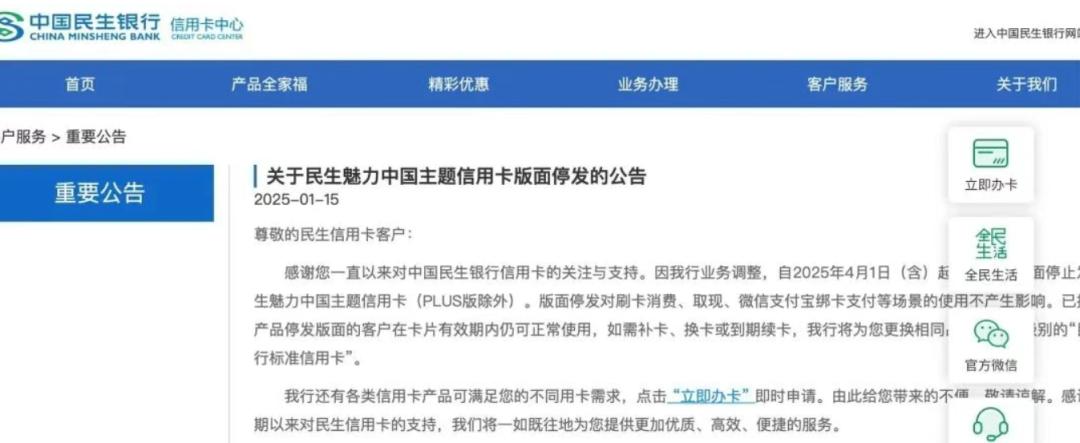
Core Viewpoint - The credit card industry in China is experiencing a significant transformation, shifting from expansion to a focus on quality and efficiency, as evidenced by the increasing number of banks discontinuing co-branded credit card products [12][19]. Group 1: Market Trends - Since January 1, 2025, at least seven major banks have announced the discontinuation of at least 22 co-branded credit card products, indicating a trend of product adjustments in the credit card market [2][6]. - Major banks, including China Bank and Citic Bank, have stopped issuing various co-branded credit cards, with reasons primarily cited as "business adjustments" or "contract expiration" [4][6]. Group 2: Product Adjustments - Co-branded credit cards, which are partnerships between banks and profit-oriented institutions, are being phased out due to their unsustainable cooperation models and imbalanced overall returns [9][10]. - Banks are transitioning to standard credit cards for existing co-branded cardholders, with changes in reward structures and benefits [4][6]. Group 3: Regulatory Environment - The regulatory framework has tightened, with new guidelines from the former CBIRC and the People's Bank of China mandating banks to focus on quality over quantity in credit card issuance [10][12]. - The new regulations require banks to limit the ratio of dormant credit cards to no more than 20%, prompting a reevaluation of credit card strategies [10][12]. Group 4: Consumer Behavior - The credit card market is increasingly catering to younger consumers, who have diverse interests and consumption needs, necessitating banks to innovate and tailor products accordingly [18][19]. - The decline in credit card issuance and usage reflects a broader trend of market saturation and the need for banks to refine their customer engagement strategies [12][13]. Group 5: Future Outlook - The discontinuation of co-branded credit cards is seen as a necessary step towards a more refined and efficient credit card business model, focusing on high-value customer segments and innovative product offerings [15][19]. - The industry is expected to evolve towards precision marketing and enhanced customer experiences, leveraging digital technologies and data analytics [7][19].



南方中债0-3年农发行债券指数A,南方中债0-3年农发行债券指数C: 南方中债0-3年农发行债券指数证券投资基金2025年第2季度报告
Zheng Quan Zhi Xing· 2025-07-21 02:19
南方中债 0-3 年农发行债券指数证券 投资基金 2025 年第 2 季度报告 基金管理人:南方基金管理股份有限公司 基金托管人:中国邮政储蓄银行股份有限公司 送出日期:2025 年 7 月 21 日 南方中债 0-3 年农发行债券指数证券投资基金 2025 年第 2 季度报告 §1 重要提示 基金管理人的董事会及董事保证本报告所载资料不存在虚假记载、误导性陈述或重大遗 漏,并对其内容的真实性、准确性和完整性承担个别及连带责任。 基金托管人中国邮政储蓄银行股份有限公司根据本基金合同规定,于 2025 年 7 月 17 日 复核了本报告中的财务指标、净值表现和投资组合报告等内容,保证复核内容不存在虚假记 载、误导性陈述或者重大遗漏。 基金管理人承诺以诚实信用、勤勉尽责的原则管理和运用基金资产,但不保证基金一定 盈利。 基金的过往业绩并不代表其未来表现。投资有风险,投资者在作出投资决策前应仔细阅 读本基金的招募说明书。 本报告中财务资料未经审计。 本报告期自 2025 年 4 月 1 日起至 6 月 30 日止。 §2 基金产品概况 基金简称 南方中债 0-3 年农发行债券指数 | | | 交易代码 021565 ...
邮储银行北京分行“邮企同行 创引未来” 新质创富大赛决赛圆满收官
Zhong Guo Jin Rong Xin Xi Wang· 2025-07-21 01:57
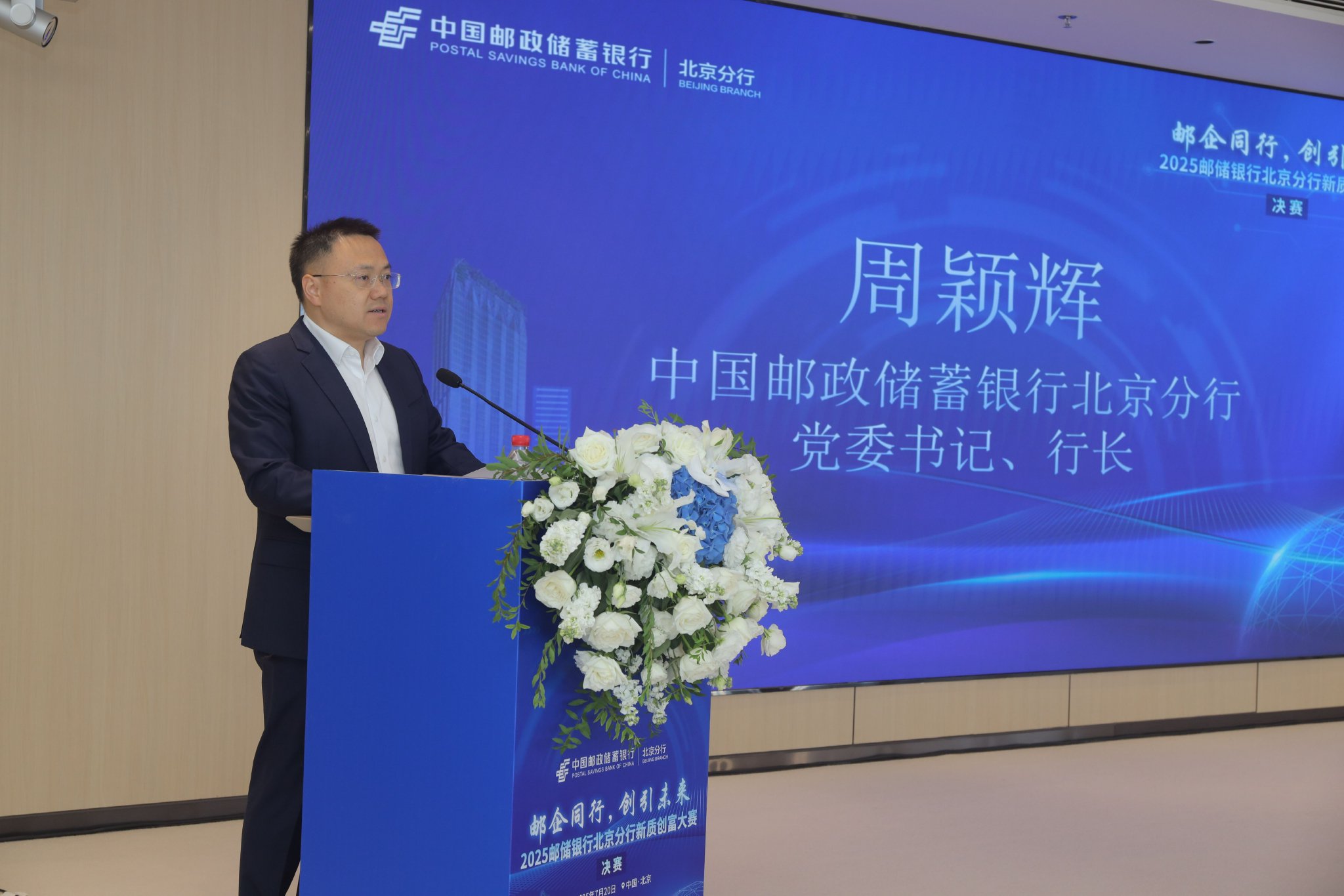
Group 1 - The core objective of the "New Quality Wealth Creation Competition" is to establish a deep cooperation platform among government, banks, and enterprises, providing comprehensive financial support to innovative enterprises and driving high-quality economic development in the capital [1][6] - The competition has attracted significant participation from numerous innovative enterprises, with 12 outstanding companies advancing to the finals after competing in six preliminary rounds across various districts [2][6] - The event showcased a variety of innovative technologies and products with independent intellectual property rights, highlighting the vibrant innovation and development potential of the participating companies [2][6] Group 2 - The establishment of the Technology Finance Division by Postal Savings Bank's Beijing branch marks a significant step in providing systematic and professional financial services to technology innovation [4] - The successful hosting of the competition reflects the bank's proactive response to national strategies and its role in empowering the real economy through collaboration among government, banks, and enterprises [6] - The bank aims to continue serving national strategies and empowering the real economy by integrating finance with technology, thereby contributing to the development of new quality productivity in the capital [10]
邮储银行安福县支行 粮食“产业贷”助力夏粮收购
Zheng Quan Ri Bao Zhi Sheng· 2025-07-20 10:29
Core Insights - Postal Savings Bank of China is leveraging its "grain industry loan" to support rice procurement, providing high limits, low interest rates, and excellent service to enhance liquidity for rice purchasing entities [1][2] - The bank has issued loans up to 3 million yuan per entity, significantly aiding various cooperatives and small processing enterprises in securing funds for rice acquisition [1] - The bank's efforts have resulted in a total loan issuance of 30 million yuan, facilitating the procurement of over 20 million jin (10 million kg) of rice [2] Group 1 - The bank's "grain industry loan" has a maximum limit of 3 million yuan, allowing purchasing entities to confidently acquire high-quality rice [1] - Interest savings from the loans can lead to increased rice procurement, with one borrower noting a savings of over 10,000 yuan in interest, enabling the purchase of an additional 1,000 jin (500 kg) of rice [1] - The bank has simplified the loan approval process, allowing funds to be disbursed within two days, which is crucial during the peak rice procurement season [2] Group 2 - The bank has already provided loans to 13 cooperatives and processing enterprises, resulting in over 300,000 yuan in interest savings, which are reinvested into upgrading equipment and increasing purchase prices for farmers [1] - Future plans include extending services to the rice processing and sales sectors, aiming to optimize loan services and enhance the entire industry chain [2]