PSBC(01658)

Search documents
超6300亿元!A股上市银行大派“红包”
21世纪经济报道· 2025-07-12 15:01
Core Viewpoint - The banking sector in A-shares is experiencing a significant dividend distribution period, with total dividends exceeding 630 billion yuan for 2024, marking an increase of 20 billion yuan compared to the previous year, and setting a new historical high [1][7]. Dividend Distribution Peak - As of July 11, 2024, A-share listed banks are in a peak dividend distribution phase, with both China Merchants Bank and Xi'an Bank distributing cash dividends on the same day [3]. - China Merchants Bank announced a cash dividend of 2.000 yuan per share, totaling approximately 50.44 billion yuan, with a dividend yield of about 5.7% based on a hypothetical stock price of 35 yuan [3]. - Xi'an Bank distributed 1 yuan for every 10 shares, amounting to 444 million yuan, which represents 17.37% of its net profit [4]. - On July 10, Beijing Bank and CITIC Bank also executed dividend distributions, with Beijing Bank distributing 0.2 yuan per share, totaling 4.23 billion yuan, and CITIC Bank distributing 0.1722 yuan per share, totaling 9.582 billion yuan [4][5]. Acceleration of Dividend Distribution - A total of 33 A-share listed banks have completed their 2024 annual dividend distributions, with five more having announced their dividend plans [6]. - Major state-owned banks like Industrial and Commercial Bank of China and Agricultural Bank of China have also announced their dividend distributions, with ICBC distributing 0.1646 yuan per share and ABC distributing 0.1255 yuan per share [6]. - The trend of earlier dividend distributions among major state-owned banks indicates a proactive approach to enhancing shareholder returns [6]. Mid-term Dividend Layout - In addition to the ongoing annual dividends, banks are also planning mid-term dividends for 2025, with several banks expressing intentions to enhance shareholder returns through mid-term distributions [9]. - Changsha Bank and Su Nong Bank have indicated plans to implement mid-term dividends based on their net profits, aiming to improve investor satisfaction [9]. - The trend towards mid-term dividends is expected to provide more stable cash flows for investors, supporting sustained stock price growth [13]. Market Outlook - Analysts predict that the decline in net profit and revenue for listed banks is expected to stabilize, with a projected year-on-year revenue decline of 0.9% and a net profit decline of 0.5% [14]. - The current market environment is viewed as the beginning of a long-term trend, with low interest rates and the revaluation of RMB assets serving as underlying logic for the ongoing market rally [15]. - The banking sector's stable profitability and dividend distribution are expected to attract long-term capital, reinforcing the investment value of banks with high dividend yields and solid asset quality [16].




姜壹盛被查!曾执掌工银澳门逾5年
券商中国· 2025-07-12 05:00
近期,还有多家国有大行地方分支机构原行长、管理层反腐消息陆续传出。7月9日消息,工商银行山东德州分 行原行长赵忠江被查;7月8日消息,农业银行漳州万达支行原行长何龙昌被查;7月2日消息,邮储银行湖北省 分行原党委书记、行长张雪松被开除党籍和公职。股份行方面,近日中信银行财富管理部副总经理袁东宁接受 调查。 姜壹盛曾执掌工银澳门5年 7月11日,据中央纪委国家监委驻工商银行纪检监察组、广东省纪委监委消息,工银澳门原董事长姜壹盛涉嫌 严重违纪违法,目前正接受驻工行纪检监察组纪律审查和广东省珠海市监察委员会监察调查。 7月份以来金融反腐力度不减,又有一批国有大行干部被查! 7月11日,据中央纪委国家监委网站消息,中国工商银行(澳门)(下称"工银澳门")原董事长姜壹盛涉嫌严 重违纪违法目前正接受纪律审查和监察调查。公开资料显示,姜壹盛于2023年6月卸任工银澳门董事长等职 务。 除了国有大行,股份行方面也有反腐消息传出。7月10日,贵州省纪委监委发布通报, 中信银行股份有限公司 财富管理部副总经理袁东宁 涉嫌严重违纪违法,目前正在接受中信银行股份有限公司纪委纪律审查和六盘水 市监委监察调查。 公开信息显示,袁东宁曾在 ...



邮储银行App热推ESG产品吸引超5万人购买
2 1 Shi Ji Jing Ji Bao Dao· 2025-07-11 10:15
Core Viewpoint - The recent fluctuations in the bond market and the stock market surpassing 3500 points have led to increased attention on the short-term yields of certain "fixed income + equity" products, particularly the "YouSheng·HongJin Short-term Holding 7 Days No.3 ESG Preferred A" product from Postal Savings Bank, which has seen significant sales and performance metrics [1][4]. Group 1: Product Performance - The product achieved an annualized yield of 7.92% over the past month, with a notable increase in net value around June 25, coinciding with a strong performance in the stock market [4][10]. - In the first half of the year, the average net value growth rate of the "YouSheng·HongJin Short-term Holding 7 Days" series was 1.66%, translating to an annualized rate of approximately 3.32% [7]. - The product scored 64 points for yield performance and 99 points for risk control, ranking 43rd, 653rd, 208th, and 357th in various categories among 786 similar products, achieving an overall score of 66, outperforming 92.62% of its peers [7][10]. Group 2: Investment Strategy - This product is characterized as an ESG-focused financial product, primarily investing at least 80% of its total assets in fixed income assets, with a maximum of 20% in equity assets, including mixed funds [10][18]. - The investment strategy emphasizes a cautious approach, with a significant allocation of 52.32% in cash and bank deposits, and 35.56% in bonds, indicating a conservative investment stance [15][16]. - The product also employs market-neutral strategies to hedge against market risks while favoring preferred stocks in its equity investments [15][18]. Group 3: Market Context - The overall management scale of Zhongyou Wealth Management reached approximately 999.24 billion yuan, with fixed income products dominating the portfolio, accounting for 92.83% of the total number of products and 95.94% of the total scale [16]. - The average yield for fixed income products in 2024 was reported at 3.55%, ranking 9th among 30 wealth management companies, while mixed products had a lower average yield of 2.42% [16].

邮储银行广西百色市分行创新普惠金融模式 赋能特色产业振兴
Zheng Quan Ri Bao Zhi Sheng· 2025-07-11 04:44
Core Insights - Postal Savings Bank of China (PSBC) in Baise City, Guangxi, has formed a financial service team to address the financing challenges faced by agricultural businesses in key product areas such as star anise and ginger [1][2] - The initiative aims to enhance financial service coverage, accessibility, and satisfaction, thereby injecting strong financial momentum into local specialty industries and rural revitalization [1][2] Group 1: Financial Services and Products - The PSBC team has developed a tailored "Industry Loan" product to address the common issue of insufficient collateral among agricultural entities, leveraging a tripartite mechanism involving bank credit, agricultural guarantee company support, and industry association collaboration [2] - The "Industry Loan" offers flexible credit, inclusive interest rates, and efficient approval processes, breaking traditional credit models' rigid collateral requirements [2] - Initial statistics indicate that two major star anise buyers have expressed interest in loans totaling 6 million yuan, with potential financing needs exceeding 10 million yuan across various industry chain segments [2] Group 2: Industry Collaboration and Future Plans - The head of the ginger industry association in Tianlin County has expressed strong support for the tripartite collaboration model, planning to host promotional events to deepen the "bank + guarantee + association" service mechanism [2][3] - The PSBC aims to continue innovating its service model by developing more inclusive financial products tailored to county-level industry development needs and optimizing credit processes to support agricultural efficiency and farmer income growth [3]
暖心护航 守护银发群体幸福晚年
Sou Hu Cai Jing· 2025-07-11 02:55
Core Insights - Postal Savings Bank of China Wuxi Branch actively implements the national pension strategy, focusing on the "U Enjoy Future" personal pension brand to create a comprehensive pension financial service system covering the entire life cycle [1] Group 1: Personal Pension Products - Since the launch of personal pension services, the bank has introduced over 100 products, including pension savings deposits, pension Y-share funds, pension L-share wealth management, and pension insurance, catering to various risk preferences and retirement needs [2] - As of June 2025, the cumulative balance of personal pension accounts at the Wuxi Branch reached 59,333 accounts, meeting diverse financial needs of the elderly [2] Group 2: Social Security Card Services - The Wuxi Branch promotes convenient social security card services, achieving a one-stop service for social security and financial business at 143 outlets, with a coverage rate of 89.94% [3] - Through community activation activities, the bank extends services to residents' doorsteps and provides on-site card issuance for new citizens in construction payroll projects [3] - As of June 2025, the cumulative balance of the third-generation social security cards reached 91,495 accounts, benefiting numerous families [3] Group 3: Age-Friendly Initiatives - To bridge the digital divide, the bank has upgraded its mobile banking with a large font version and simplified operational processes, benefiting over 29,900 elderly customers [4] - The bank has established an "online + offline" anti-fraud education network, conducting over 40 anti-fraud education activities throughout the year to protect the financial security of elderly clients [4] - In the next phase, the Wuxi Branch will continue to leverage its network advantages to deepen the integration of pension finance scenarios and introduce more financial products and services tailored for the elderly [4]
平安基金管理有限公司关于 平安惠嘉纯债债券型证券投资基金 基金份额持有人大会会议情况的公告
Zhong Guo Zheng Quan Bao - Zhong Zheng Wang· 2025-07-10 23:39
Group 1 - The core point of the announcement is the convening of the fund holders' meeting for the Ping An Huijia Pure Bond Fund, which did not meet the required quorum for decision-making [1][2] - The meeting was held via communication method, with the record date set for June 12, 2025, and voting period from June 12 to July 9, 2025 [1] - The costs associated with the meeting, including notarization and legal fees, amounted to 35,000 yuan, which will be borne by the fund's assets [2] Group 2 - The company announced the addition of Ping An Bank as a sales institution for its funds, effective July 11, 2025, allowing investors to perform various transactions through the bank [4] - The announcement includes details on systematic investment plans (SIPs) and fund conversion processes, emphasizing that minimum investment amounts will be determined by the fund's announcements [5][6] - Investors can enjoy fee discounts when purchasing or converting funds through Ping An Bank, with the specifics of the discounts being at the bank's discretion [6] Group 3 - The company also announced the addition of China Postal Savings Bank as a sales institution for its funds, effective July 11, 2025, enabling similar transactions as with Ping An Bank [9][10] - Similar to the previous announcement, it outlines the SIP and fund conversion processes, with minimum amounts set by the fund's announcements [11][12] - Fee discounts are also applicable for transactions through Postal Savings Bank, with the bank holding the authority to determine the discount rates [12]

邮储银行浙江省分行绘就乡村振兴金融服务新篇章
Zhong Guo Jin Rong Xin Xi Wang· 2025-07-10 14:04
Core Viewpoint - Postal Savings Bank of China (PSBC) Zhejiang Branch focuses on enhancing financial services for rural revitalization, prioritizing agricultural and rural development through innovative financial products and services [1][4]. Group 1: Financial Services and Innovations - PSBC Zhejiang Branch has seen a continuous increase in agricultural loans, with a total balance exceeding 230 billion yuan as of June, ranking among the top in the system [1]. - The bank has established 974 rural outlets, with over 70% located in rural areas, enhancing financial accessibility [1]. - The "Tea Aroma Quick Loan" product was introduced to support the tea industry, providing quick credit with a maximum limit of 3 million yuan [2]. - The bank has developed specialized loans for various agricultural sectors, including "Mushroom Loan" and "Mussel Loan," with a total balance of 13.6 billion yuan in specialized industry loans [3]. Group 2: Community Engagement and Support - PSBC has integrated party-building activities with rural revitalization efforts, conducting nearly 300 themed events to assist local farmers [4]. - The bank has provided significant credit support to agricultural innovation groups, with 530 million yuan granted to a local association and 1 billion yuan to a city-level association [4]. Group 3: Digital Transformation and Future Plans - The bank is advancing a rural big data platform to enhance credit evaluation and loan approval processes, with over 130 billion yuan in personal loans issued to farmers [6]. - A new closed settlement system for the tea industry has been implemented to improve transaction efficiency and security, expected to mobilize over 100 million yuan in funds [6]. - Future plans include focusing on coordinated urban-rural development, modern agricultural practices, and supporting new agricultural entrepreneurs [6].
金融大模型迈向价值创造,智能体如何突破“最后一公里”
Di Yi Cai Jing· 2025-07-09 12:41
应对数据安全、算法可靠性等关键挑战。 在近日举办的"大模型金融应用及创新论坛"上,来自金融机构、科技企业和监管机构的众多专家齐聚一 堂,共同探讨了人工智能(AI)和大模型技术在金融领域的应用现状与未来发展方向。 在外资银行方面,东亚银行资讯科技架构平台部总经理张方昌指出,外资银行在AI应用中面临着投入 有限、市场竞争激烈等挑战。然而,通过与全球集团方案的结合和本地化创新,东亚银行在跨境审单等 场景中实现了智能化应用,提升了业务效率和客户体验。 数据、安全与技术难题 尽管应用广泛,金融大模型的深度落地仍面临多重障碍。数据安全与算法可靠性构成首要掣肘。 北京国家金融科技认证中心认证二部负责人段力畑在论坛上发布了《大模型金融应用安全风险测评结 果》。他指出,大模型在金融场景中的应用存在安全能力不足、推理能力与数理计算能力不匹配、幻觉 现象等问题。 中国金融电子化集团党委委员、副总经理潘润红指出,现阶段大模型在金融领域的应用面临数据安全和 算法可靠性等风险、实施路径不明晰、功能边界有待验证、核心场景中的渗透率不足等问题。 论坛聚焦于AI技术如何从降本增效迈向价值创造,以及如何应对数据安全、算法可靠性等关键挑战。 与会 ...

大金融股持续活跃 大智慧2连板
news flash· 2025-07-09 01:46
Group 1 - Major financial stocks, including securities, banks, and diversified financials, are experiencing a collective surge [1] - Dazhihui has achieved two consecutive trading limits, indicating strong market interest [1] - Yuexiu Capital has reached its daily limit, while Industrial and Commercial Bank of China and Postal Savings Bank have set new highs [1] Group 2 - First Capital and Yong'an Futures have increased by over 5%, reflecting positive market sentiment [1] - Other companies such as Nanhua Futures, Xiangcai Shares, and GF Securities are also seeing gains [1]


A股,新信号!
Zheng Quan Shi Bao· 2025-07-08 11:39
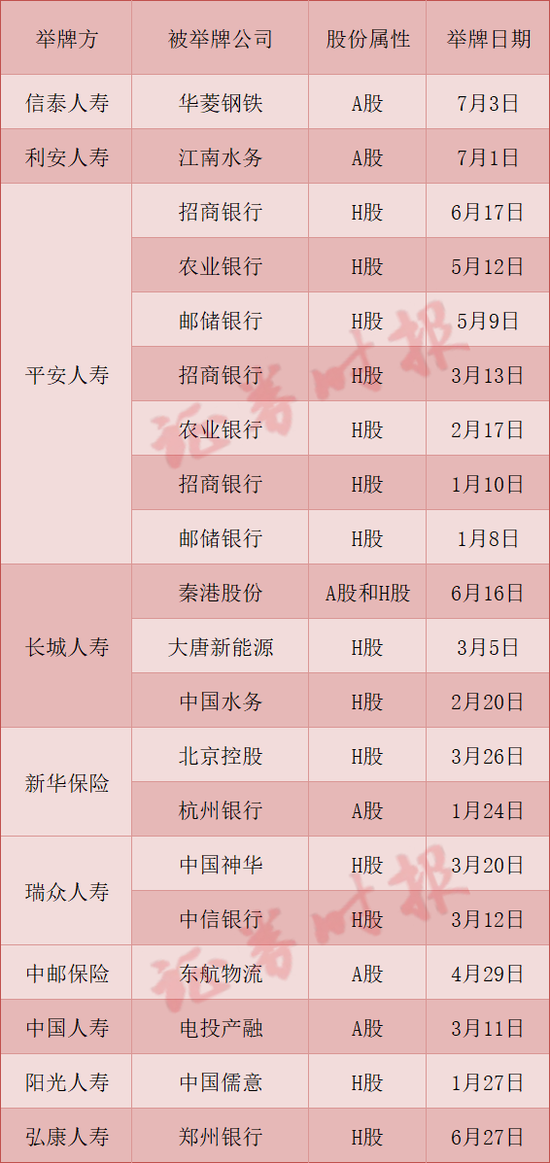
Group 1 - Insurance capital has become a significant force in the capital market, with at least 20 instances of shareholding increases in A-shares and H-shares this year, primarily targeting stable dividend-paying assets like banks and public utilities [1][2] - Recent announcements indicate that Li'an Life and Xintai Life have increased their holdings in Jiangnan Water and Hualing Steel, respectively, with Li'an Life acquiring 46.99 million shares (5.03% of total shares) and Xintai Life acquiring 343 million shares (5.00% of total shares) [2][3] - The trend of insurance capital actively participating in shareholding increases is attributed to a low interest rate environment, leading to a search for stable cash flow and strong performance companies [1][6] Group 2 - The increase in shareholding by insurance capital is seen as a response to "asset scarcity," with a focus on high-dividend equities to enhance returns and offset the pressure from low fixed-income asset yields [6][7] - Regulatory changes, such as adjustments to the equity asset ratio for insurance funds, have facilitated greater participation of insurance capital in the equity market, creating favorable conditions for shareholding increases [6][7] - The rise in shareholding activities is viewed as a positive signal for the long-term development of the capital market, potentially enhancing investor confidence and attracting more capital [7][8] Group 3 - The participation of various capital types, including financial capital, industrial capital, and private equity, in shareholding increases reflects a positive outlook on the long-term performance of the companies involved [7][8] - The concentration of insurance capital in high-dividend sectors, particularly banks, raises concerns about potential systemic risks due to high industry concentration [7][8] - Future strategies for insurance capital may involve diversifying into less cyclical and more diversified high-dividend sectors to balance returns and risks [8]