
PSBC(01658)

Search documents
邮储银行前三季度净利润768亿元,利息净收入逐季改善
Nan Fang Du Shi Bao· 2025-10-30 12:49
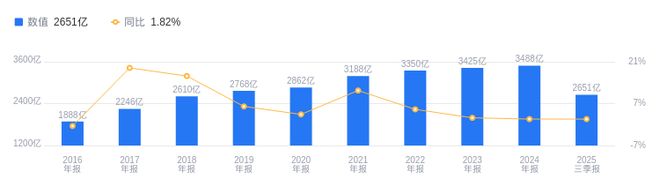
Core Insights - Postal Savings Bank of China reported a total asset of 18.61 trillion yuan as of September 30, 2025, representing an 8.9% increase from the end of the previous year [2][3] - The bank achieved a revenue of 265.08 billion yuan and a net profit of 76.794 billion yuan for the first three quarters, with year-on-year growth of 1.82% and 1.07% respectively, continuing the "double increase" trend from the first half of the year [2][3] - The non-performing loan ratio rose to 0.94%, an increase of 0.04 percentage points from the end of last year, but remains below 1% [2][7] Financial Performance - The bank's total assets increased by 1.5 trillion yuan compared to the end of last year, with a growth rate of 8.9% [3] - Loan growth for the first three quarters was 742.69 billion yuan, with a loan-to-deposit ratio increasing by 1.24 percentage points from the end of last year [3] - Interest income for the first three quarters was 210.51 billion yuan, a decrease of 2.07% year-on-year, while the net interest income for the third quarter was 71.447 billion yuan, showing a sequential increase [3] Non-Interest Income - The bank's non-interest income from fees and commissions reached 23.094 billion yuan, a year-on-year increase of 11.48%, accounting for 8.71% of total revenue [3] - Investment income for the first three quarters was 31.651 billion yuan, a significant increase of 76.7% year-on-year, primarily due to gains from the termination of financial assets measured at amortized cost [4] Retail Banking Growth - The bank aims to establish itself as a leading large retail bank, with retail AUM (Assets Under Management) reaching 17.89 trillion yuan, a growth of over 7% from the end of last year [5] - The number of high-net-worth clients (assets over 500,000 yuan) exceeded 6.5485 million, marking a growth of 12.16% [6] Loan Quality and Risk Management - The non-performing loan balance reached 91.009 billion yuan, an increase of 10.69 billion yuan from the end of last year, with a non-performing loan ratio of 0.94% [7] - The bank has actively responded to the stage pressure on retail loan asset quality by adjusting risk control strategies and increasing provisions for credit impairment losses by 22.97% year-on-year to 23.283 billion yuan [7]



邮储银行的前世今生:2025年三季度营收2650.8亿行业第五,净利润767.94亿排第五
Xin Lang Cai Jing· 2025-10-30 12:16
Core Insights - Postal Savings Bank of China (PSBC) is a leading large retail commercial bank in China, focusing on retail finance with a vast network and large customer base [1] Financial Performance - For Q3 2025, PSBC reported revenue of 265.08 billion yuan, ranking fifth among six companies in the industry, with the top performer, Industrial and Commercial Bank of China (ICBC), generating 640.03 billion yuan [2] - The bank's net profit for the same period was 76.79 billion yuan, also placing it fifth in the industry, with ICBC leading at 271.88 billion yuan [2] Financial Ratios - As of Q3 2025, PSBC's debt-to-asset ratio was 93.73%, slightly down from 93.83% year-on-year, exceeding the industry average of 92.36% [3] - The gross profit margin for PSBC was 32.97%, up from 31.90% year-on-year, but still below the industry average of 43.66% [3] Leadership - The chairman of PSBC, Zheng Guoyu, has extensive experience in the banking sector, having held various senior positions in Bank of China and Industrial and Commercial Bank of China [4] Shareholder Information - As of September 30, 2025, the number of A-share shareholders decreased by 13.27% to 140,300, while the average number of circulating A-shares held per shareholder increased by 15.29% to 478,600 [5] Business Highlights - In the first half of 2025, PSBC achieved revenue of 179.45 billion yuan and a net profit of 49.23 billion yuan, with significant growth in corporate credit and non-interest income [6] - The bank's non-interest income grew by 19.1%, driven by investment banking and wealth management services [7] - The cost-to-income ratio improved significantly, leading to a 14.9% increase in profit before provisions [7]
国有六大行,三季报出炉
财联社· 2025-10-30 12:09
Core Insights - The six major state-owned banks in China, including Industrial and Commercial Bank of China (ICBC), Agricultural Bank of China, Bank of China, China Construction Bank, Postal Savings Bank of China, and Bank of Communications, have released their third-quarter financial reports, showing varied performance in revenue and net profit growth [1][2]. Group 1: Financial Performance - ICBC reported a third-quarter revenue of 201.886 billion yuan, a year-on-year increase of 2.42%, and a net profit of 101.805 billion yuan, up 3.29%. For the first three quarters, revenue reached 610.968 billion yuan, growing by 1.98%, with a net profit of 269.908 billion yuan, an increase of 0.33% [1]. - Agricultural Bank of China achieved third-quarter revenue of 180.981 billion yuan, a 4.30% year-on-year increase, and a net profit of 81.349 billion yuan, up 3.66%. For the first three quarters, revenue was 550.774 billion yuan, growing by 1.87%, with a net profit of 220.859 billion yuan, an increase of 3.03% [1]. - Bank of China reported third-quarter revenue of 162.201 billion yuan, a 0.58% increase year-on-year, and a net profit of 60.069 billion yuan, up 5.09%. For the first three quarters, revenue was 491.204 billion yuan, growing by 2.69%, with a net profit of 177.66 billion yuan, an increase of 1.08% [1]. - China Construction Bank's third-quarter revenue was 179.429 billion yuan, a decline of 1.98%, while net profit increased by 4.06% to 95.808 billion yuan. For the first three quarters, revenue was 573.702 billion yuan, growing by 0.82%, with a net profit of 258.446 billion yuan, an increase of 0.52% [2]. - Bank of Communications reported third-quarter net operating income of 66.561 billion yuan, a year-on-year increase of 4.23%, and a net profit of 23.978 billion yuan, up 2.46%. For the first three quarters, net operating income was 200.059 billion yuan, growing by 1.86%, with a net profit of 69.994 billion yuan, an increase of 1.9% [2]. - Postal Savings Bank of China achieved third-quarter revenue of 85.634 billion yuan, a 2.48% year-on-year increase, and a net profit of 27.334 billion yuan, up 1.23%. For the first three quarters, revenue was 265.08 billion yuan, growing by 1.82%, with a net profit of 76.562 billion yuan, an increase of 0.98% [2].




加快中收跨越式发展 邮储银行前三季度中收同比增长11.48%
Zheng Quan Ri Bao Zhi Sheng· 2025-10-30 11:36
Core Insights - Postal Savings Bank of China (PSBC) reported a year-on-year revenue growth of 1.82% for the first three quarters of 2025, achieving total operating income of 265.08 billion yuan, while net profit increased by 1.07% to 76.794 billion yuan [1][2] Revenue Performance - The bank's net interest margin stood at 1.68%, maintaining an excellent industry level, with net interest income showing quarterly improvement [1] - Non-interest income grew significantly, with a year-on-year increase of 27.52%, contributing to a 2.40 percentage point rise in its share of total revenue [1] - The bank's total operating income for the first three quarters was 2650.80 billion yuan, with a year-on-year increase of 1.82% [1] Cost Management - PSBC implemented refined cost management strategies, resulting in a 2.66% decrease in business and management expenses year-on-year [1] - The cost-to-income ratio improved to 57.40%, down 2.65 percentage points from the previous year [1] Risk Management - As of the end of September, the non-performing loan ratio was 0.94%, continuing a long-standing trend of low levels [2] - The core Tier 1 capital adequacy ratio improved to 10.65%, up 1.09 percentage points from the end of the previous year, providing a solid foundation for stable operations [2] Strategic Initiatives - The bank is accelerating the implementation of its "Five Major Actions" and "Seven Major Reforms" to optimize regional layout, channel efficiency, and business structure [2] - PSBC is focusing on enhancing its service capabilities in both rural and urban areas, aiming to create a new model of high-level urban-rural integrated operations [3] Digital Transformation - The bank is advancing its digital transformation by promoting remote services and digital technologies, enhancing operational efficiency and customer experience [4] - The mobile banking platform is being developed to meet both financial and non-financial customer needs, positioning it as a preferred ecosystem [3]
邮储银行三季度末贷款总额较上年末增长8.33% 同比多增1,122.09亿元
Zhong Guo Jing Ji Wang· 2025-10-30 11:29
Core Viewpoint - Postal Savings Bank of China (PSBC) has demonstrated strong growth in both assets and liabilities, with a focus on enhancing its balance sheet stability and profitability through diversified revenue streams and effective risk management [1][2][3] Group 1: Asset Management - As of the end of Q3, PSBC's total loans increased by CNY 742.69 billion, an 8.33% growth compared to the end of last year, with a year-on-year increase of CNY 112.21 billion [1] - The bank's corporate loans rose by CNY 653.54 billion, a 17.91% increase, contributing to a more stable dual-driven model of retail and corporate lending [1] - Investment income from non-credit businesses grew by 76.70% year-on-year, reflecting proactive market positioning and asset allocation [1] Group 2: Liability Management - PSBC's deposits increased by CNY 928.90 billion, a 6.08% growth, with corporate deposits rising by CNY 201.81 billion, a 12.19% increase [2] - The average interest rate on interest-bearing liabilities decreased to 1.22%, down 25 basis points from the previous year, maintaining a competitive edge among listed banks [2] - The bank is focusing on a lightweight transformation to create a more resilient and sustainable growth model [2] Group 3: Revenue and Profitability - For the first three quarters, PSBC achieved operating income of CNY 265.08 billion, a year-on-year increase of 1.82%, with net interest margin at 1.68% [3] - Non-interest income grew by 11.48%, with other non-interest income increasing by 27.52%, enhancing its contribution to total revenue [3] - The bank's net profit reached CNY 76.79 billion, a 1.07% increase year-on-year, supported by effective cost management and a decrease in business and management expenses by 2.66% [3] Group 4: Risk Management - As of the end of September, PSBC maintained a non-performing loan ratio of 0.94%, continuing its long-standing low level [3] - The core Tier 1 capital adequacy ratio improved to 10.65%, up 1.09 percentage points from the end of last year, ensuring robust operational stability [3] - The bank's "Look Forward" technology application led to a 37.24% increase in approved clients and a 170.30% rise in approved amounts, with a lower non-performing loan rate for these clients compared to the overall average [3]
邮储银行:韩文博辞任非执行董事
Zhi Tong Cai Jing· 2025-10-30 11:16
邮储银行(601658)(01658)发布公告,2025年10月30日,该行董事会于2025年第十次会议后收到韩文 博先生的辞职报告。韩文博先生因工作调动,辞去该行非执行董事、董事会风险管理委员会主席及委 员、董事会战略规划委员会委员职务。韩文博先生的辞任自辞职报告送达董事会时生效。 ...
邮储银行前三季度实现净利润767.94亿元,同比增长1.07%
Bei Jing Shang Bao· 2025-10-30 11:15
截至2025年9月末,邮储银行不良贷款余额910.09亿元,较上年末增加106.90亿元;不良贷款率0.94%, 较上年末上升0.04个百分点。拨备覆盖率240.21%,较上年末下降45.94个百分点。2025年1—9月,年化 不良贷款生成率0.93%。 北京商报讯(记者 孟凡霞 周义力)10月30日,邮储银行发布2025年三季度报告。2025年1—9月,该行 实现营业收入2650.80亿元,同比增加47.31亿元,增长1.82%;实现净利润767.94亿元,同比增加8.11亿 元,增长1.07%。年化平均总资产回报率为0.58%,年化加权平均净资产收益率为10.67%。 截至报告期末,邮储银行资产总额18.61万亿元,较上年末增加1.52万亿元,增长8.90%。客户贷款总额 9.66万亿元,较上年末增加7426.89亿元,增长8.33%,同比多增1122.09亿元,其中个人贷款4.86万亿 元,较上年末增加907.54亿元,增长1.90%;公司贷款4.30万亿元,较上年末增加6535.42亿元,增长 17.91%。 资本充足率方面,邮储银行核心一级资本充足率10.65%,较上年末上升1.09个百分点;一级资 ...
加快“看未来”技术应用 邮储银行前三季度使用“看未来”技术批复金额4.62万亿元 同比增长170.30%
Jing Ji Guan Cha Wang· 2025-10-30 10:37
Core Insights - Postal Savings Bank of China (PSBC) reported a stable performance in risk control with a non-performing loan ratio of 0.94% as of September [2] - The bank accelerated its "Look Forward" technology application, with customer approvals increasing by 37.24% year-on-year and the approval amount reaching 4.62 trillion yuan, a 170.30% increase [2] - PSBC achieved double growth in revenue and net profit in the first three quarters, enhancing its risk management capabilities [2] Revenue Performance - PSBC's operating income for the first three quarters was 265.08 billion yuan, a year-on-year increase of 1.82% [3] - The net interest margin stood at 1.68%, maintaining an excellent industry level, with interest income improving quarterly [3] - Non-interest income grew by 27.52% year-on-year, contributing to an increase in its share of total revenue by 2.40 percentage points [3] - The bank's net profit reached 76.79 billion yuan, reflecting a year-on-year growth of 1.07% [3] Cost Management - PSBC implemented refined cost management, resulting in a 2.66% decrease in business and management expenses year-on-year [3] - The cost-to-income ratio improved to 57.40%, down 2.65 percentage points from the previous year [3] Asset Management - The bank's loans increased by 742.69 billion yuan, with a year-on-year increase of 112.21 billion yuan [4] - Corporate loans rose by 653.54 billion yuan, a growth of 17.91%, enhancing the stability of its retail and corporate loan structure [4] - Investment income saw a significant increase of 76.70% year-on-year [4] Liability Management - PSBC's deposits increased by 928.90 billion yuan, a growth of 6.08%, with corporate deposits rising by 201.81 billion yuan, a 12.19% increase [4] - The average interest rate on interest-bearing liabilities decreased to 1.22%, down 25 basis points from the previous year, maintaining a strong position among listed banks [4]

邮储银行平凉市分行:金融支持秋茬蔬菜鼓起群众致富“钱袋子”
Xin Lang Cai Jing· 2025-10-30 10:35
Core Insights - The article highlights the successful implementation of agricultural practices in Pingliang City, particularly in Jinchuan County, where farmers are experiencing a bountiful harvest of autumn vegetables due to financial support from Postal Savings Bank [1][2]. Group 1: Agricultural Development - Farmers in Yudu Town are actively harvesting autumn vegetables, including water radishes and cabbages, indicating a productive season [1]. - The shift from idle greenhouses post-pepper harvest to cultivating autumn crops has improved land utilization and increased income for farmers [2]. - The introduction of financial products by Postal Savings Bank has enabled farmers to expand their planting scale, addressing previous funding shortages [2][3]. Group 2: Financial Support and Impact - Postal Savings Bank's initiatives align with the national rural revitalization strategy, focusing on the needs of the planting industry and enhancing financial services [3]. - The bank's "loan delivery to the countryside" campaign has provided essential financial backing for farmers like Yang, facilitating the expansion of their operations [3][4]. - The expected sales revenue from autumn vegetables is projected to double this year, reflecting the positive impact of improved agricultural practices and financial support [3]. Group 3: Market Dynamics - The favorable climate and mature management techniques have resulted in high-quality autumn vegetables that are in demand in the market [3]. - The cooperative model involving banks, government, enterprises, and farmers has led to significant income generation, with average greenhouse income expected to reach 5,000 yuan [4]. - The collaboration with various sales channels ensures a steady market for the produce, enhancing the economic viability for local farmers [4].
邮储银行(01658):韩文博辞任非执行董事
智通财经网· 2025-10-30 10:25
Core Points - Postal Savings Bank of China announced the resignation of Mr. Han Wenbo from his positions as non-executive director, chairman of the Board Risk Management Committee, and member of the Board Strategic Planning Committee due to job relocation [1] Summary by Categories - **Resignation Details** - Mr. Han Wenbo submitted his resignation report to the board after the tenth meeting of the board in 2025, effective immediately upon receipt of the resignation report [1]