FOSUN TOURISM(01992)

Search documents
复星国际联席CEO徐晓亮:旅游业正从“观光游”迈向“度假游”
Zhong Guo Jing Ying Bao· 2025-10-16 08:27
Core Insights - The tourism industry is transitioning from "sightseeing" to "vacationing," emphasizing the need for high-quality tourism products to meet personalized and high-quality consumer demands [2] - The "14th Five-Year Plan" period is crucial for China to advance from a tourism power to a tourism strong nation, focusing on enhancing the quality of tourism offerings [2] - Fosun Tourism Group aims to create world-class vacation products and align with national tourism development goals [2] Company Overview - Fosun Tourism Group operates nearly 70 resorts and hotels across over 40 countries and regions, generating annual revenue exceeding 19 billion yuan and hosting over 8.6 million guests each year [3] - The company has developed four main product lines: Club Med Global, Club Med China, Super Vacation Zones, and Super Cultural Tourism Malls [3]


一周文商旅速报(10.06—10.11)
Cai Jing Wang· 2025-10-11 07:16
Group 1: Domestic Travel Trends - During the National Day and Mid-Autumn Festival holiday, domestic travel reached 888 million trips, an increase of 123 million trips compared to the 2024 holiday [1] - Total spending on domestic travel amounted to 809 billion yuan, up by 108.19 billion yuan from the previous year [1] - The overall inter-regional mobility during the holiday is expected to reach 2.432 billion trips, averaging over 300 million trips per day, marking a year-on-year growth of 6.2% [1] Group 2: Tourism Performance in Beijing - Beijing received a total of 25.094 million visitors during the holiday, with tourism spending reaching 31.65 billion yuan, reflecting year-on-year growth of 3.6% and 4.7% respectively [1] - The top ten tourist attractions in Beijing included Tiananmen Square, Wangfujing, and the Summer Palace [1] Group 3: Club Med Performance - Club Med reported a 36% year-on-year increase in total revenue from its all-inclusive resorts in the Chinese market during the holiday period [1] - The overall guest count at Club Med resorts increased by 35% [1] - For the first half of 2025, Club Med's global revenue exceeded 9 billion yuan, with a 4% year-on-year increase, and resort operating income grew by 17% [1] Group 4: Retail Performance of Hang Lung Properties - Hang Lung Properties reported a 15% year-on-year increase in total tenant sales for its mainland properties during the first four days of the National Day holiday [2] - On National Day itself, tenant sales in mainland properties grew by over 20%, with 70% of the operational malls recording double-digit growth [2] Group 5: Harbin Ice and Snow World - The ticket price for the 27th Harbin Ice and Snow World remains unchanged at 328 yuan per adult [3] - The event will feature an expanded area and an increased number of ice and snow sculptures compared to previous years [3]


布局“黄金周”,文旅企业动作频频
Shang Hai Zheng Quan Bao· 2025-09-30 12:34
Core Insights - The upcoming holiday period is expected to see a significant increase in travel, with an estimated 2.36 billion trips anticipated during the 8-day Mid-Autumn and National Day holidays, reflecting a daily average of approximately 295 million trips, a 3.2% increase from the previous year [1] Group 1: Industry Trends - Travel and tourism companies are actively preparing for the holiday season, with various cultural and tourism activities planned across key scenic areas [2] - The demand for both domestic and international travel is strong, with outbound travel bookings increasing by over 30% year-on-year and inbound travel bookings doubling [2] - Short-distance travel options are also being enhanced, with new offerings such as the first international snow sculpture exhibition and various cultural events planned for the holiday period [3] Group 2: Technological Integration - The integration of technology in the tourism sector is becoming increasingly prominent, with initiatives such as the launch of the "AI Travel Guizhou" and various smart tourism development plans in different provinces [4] - Companies are introducing innovative AI tools and immersive technologies to enhance the travel experience, such as the AI G.O. smart assistant and the "Travel Truth Finder" tool [5] - The use of digital guides and immersive storytelling is being emphasized in red tourism initiatives, aiming to educate visitors about historical events [5] Group 3: New Market Entrants - New players are entering the tourism market, with Alibaba's Amap launching the "Amap Street Ranking" and JD Travel initiating the "Treasure City" plan to promote local tourism [6] - The involvement of major internet companies in the tourism sector is expected to drive digital transformation and integration within the industry, leveraging their extensive user bases and resources [6]

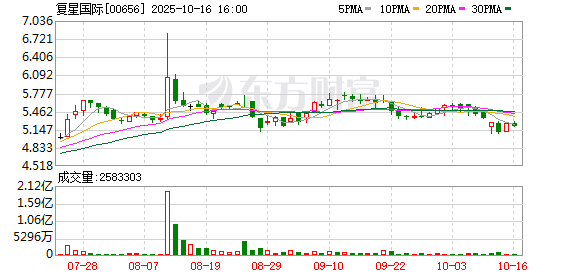
复星国际(0656.HK):核心产业稳健经营 RWA生态布局稳步推进
Ge Long Hui· 2025-09-04 04:00
Core Viewpoint - Fosun International reported a total revenue of 87.3 billion yuan for the first half of 2025, a year-on-year decrease of 10.8% [1] - The group's net profit attributable to shareholders was 660 million yuan, down 8.2% year-on-year [1] Revenue Breakdown - The revenue from the Happiness, Abundance, Health, and Intelligent Manufacturing segments decreased by 21.9%, increased by 3.3%, decreased by 3.0%, and decreased by 24.6%, respectively, totaling 33.72 billion, 27.83 billion, 22.57 billion, and 4.02 billion yuan [1] Insurance Sector Performance - Fosun Portugal Insurance achieved total premium income of 3.27 billion euros, up 16.5% year-on-year, with a market share of 29.3% [1] - The international business premium income was 920 million euros, up 4.3%, accounting for 28.2% of total premium income [2] - The net profit for Fosun Portugal Insurance was 133 million euros, an increase of 27.6% [1] Reinsurance and Health Insurance - Dingrui Reinsurance reported total premiums of 1.06 billion USD, a year-on-year increase of 25.1%, with a net profit of 90 million USD and a ROE of 13.4% [2] - Fosun United Health Insurance achieved total premium income of 3.64 billion yuan, up 31.1% year-on-year, with a net profit of 33 million yuan [2] Wealth Management and Technology - Fosun Wealth Holdings launched the FinRWA Platform, focusing on real-world asset technology and tokenization projects [3] - The team for Star Road Technology consists of professionals from major tech companies, enhancing operational efficiency and development quality [3] Pharmaceutical Sector - Fosun Pharma reported revenue of 19.426 billion yuan, with innovative drug revenue growing by 14.26% to over 4.3 billion yuan [4] - The net profit attributable to shareholders was 1.702 billion yuan, an increase of 38.94% [4] Subsidiary Performance - Yuyuan's revenue decreased by 30.68% to 19.112 billion yuan, with a net profit decline of 94.50% to 63 million yuan [4] - Fosun Tourism's revenue reached a historical high of 9.535 billion yuan, up 1.3% year-on-year, with an operating profit of 1.269 billion yuan, up 22.4% [4] Future Outlook - The company adjusted its revenue forecasts for 2025-2026 to 96 billion and 103.4 billion yuan, respectively, with net profit estimates of 730 million and 930 million yuan [5] - The EPS estimates for 2025-2026 are adjusted to 0.02 and 0.03 yuan, respectively [5]

复星国际上半年收入872.8亿元 郭广昌:致力实现优势赛道全球登顶
Zhong Guo Jing Ying Bao· 2025-09-02 04:56
Core Insights - Fosun International has achieved significant breakthroughs across multiple business segments in the first half of 2025, focusing on deepening its industry advantages and accelerating global market penetration [1] - The company's total revenue reached 87.28 billion yuan, with overseas revenue accounting for 53% at 46.67 billion yuan [1][3] - The core businesses of healthcare, cultural tourism, and financial insurance have shown steady growth, contributing to the overall performance [1][2] Financial Performance - Fosun International's four core subsidiaries generated a total revenue of 63.61 billion yuan, representing 73% of the group's total revenue [2] - Fosun Pharma reported a net profit of 1.7 billion yuan, a year-on-year increase of 38.96% [2] - The cultural tourism segment achieved a record revenue of 9.53 billion yuan, with an adjusted net profit growth of 42% [2] Strategic Focus - The company is committed to a strategy of streamlining operations and focusing on high-growth core industries while divesting non-core assets [2] - Innovation remains a core capability, with R&D investments reaching 3.6 billion yuan, supporting a global innovation ecosystem [2][3] - The financial strategy emphasizes resource concentration on potential industry leaders and aims to reduce interest-bearing debt to below 60 billion yuan [3] Global Expansion - Fosun International's overseas business revenue has increased, with international operations contributing significantly to overall income [3][4] - The company is expanding its global footprint through various projects, including lithium mining and energy initiatives in Africa and Southeast Asia [4][5] - Club Med's global performance reached a new high, with revenue of 9.25 billion yuan, reflecting strong demand for vacation services [5] Technological Integration - The company is embracing AI technology to enhance business innovation and operational efficiency, particularly in the cultural tourism sector [6] - A partnership with Alibaba Cloud aims to develop an AI-driven tourism assistant, expected to launch in late September 2025 [6]
复星旅文2025年上半年收入达95.3亿元,创历史新高
Bei Jing Shang Bao· 2025-08-27 13:57
Core Insights - Fosun Tourism Group reported a record high revenue of 9.53 billion yuan for the first half of 2025, marking a year-on-year increase of 1.3% [1] - The operating profit for the same period reached 1.27 billion yuan, reflecting a significant year-on-year growth of 22.4% [1] Financial Performance - The tourism operation revenue for Fosun Tourism reached 10.23 billion yuan, with a year-on-year growth of 1.6% [1] - Club Med's global revenue hit 9.25 billion yuan, up 3.8% year-on-year, with an average daily room rate of 2,021 yuan, increasing by 5.1% [1] - Adjusted net profit for the first half of 2025 was 460 million yuan, showing a substantial year-on-year increase of 42% [1] Domestic Business Highlights - The Atlantis Sanya reported a revenue of 760 million yuan, with an average occupancy rate of 88.4% and approximately 3.08 million visitors [1] - The number of international visitors to the resort increased by 71% year-on-year, driven by enhanced overseas marketing efforts [1] Expansion Initiatives - The second phase of the Taicang Alps International Resort project commenced in June 2025, featuring a world-class indoor ski resort and multiple international theme hotels, expected to open in June 2029 [2] - A collaboration with the Chongqing municipal government has been established for the Chongqing Cultural Tourism Mall project, aiming to integrate global resources with local culture [2]
复星旅文发布业务公告 前三季营业额同比下降约4.4%
Bei Jing Shang Bao· 2025-08-13 23:12
Core Insights - Fosun Tourism Group reported a revenue decline of approximately 4.4% for the nine months ending September 30, 2021, with total revenue around 55.83 billion yuan compared to approximately 58.38 billion yuan for the same period in 2020 [1] Group 1: Club Med Performance - In Q3 2021, Club Med achieved a revenue of approximately 25.77 billion yuan, representing a growth of about 119.7% year-on-year and recovering to about 75.5% of the revenue from Q3 2019 [3] - The capacity of reopened Club Med resorts reached approximately 71.9% of the levels seen in 2019, with an average occupancy rate of about 64.8%, showing a slight decrease of 2.3 percentage points compared to 2019 [3] - The average daily room rate for Club Med was approximately 1386.9 yuan, which is an increase of about 17.0% compared to the same period in 2019 [3] - Club Med's net profit in Q3 2021 exceeded the levels recorded in Q3 2019 [3] Group 2: Atlantis Sanya Performance - In July 2021, Atlantis Sanya achieved its highest monthly revenue since opening, with a year-on-year growth of approximately 57.6% and a room occupancy rate of about 96.0% [3] - However, due to the impact of the pandemic at the end of July 2021, Atlantis Sanya's revenue in Q3 2021 decreased by approximately 24.6% compared to the same period in 2020 [3] - In Q3 2021, Atlantis Sanya welcomed approximately 1.2 million visitors, a decline of about 34.6% year-on-year, with an average daily room rate of approximately 2689.8 yuan and an average occupancy rate of about 63.8% [3]

复星旅文与阿里云达成全栈AI合作
Bei Jing Shang Bao· 2025-08-05 14:17
Core Viewpoint - Fosun Tourism Culture Group has entered into a comprehensive AI collaboration with Alibaba Cloud to develop an intelligent agent named "AI G.O" aimed at enhancing the smart upgrade of the cultural tourism industry [1] Group 1: AI Collaboration - The partnership will utilize the Tongyi Qianwen 3 series model to create a tourism AI intelligent agent [1] - The AI agent will optimize the entire vacation experience for tourists, covering aspects from pre-trip planning to post-trip sharing [1] Group 2: Features of the AI Agent - The AI will assist in travel planning, room selection, activity arrangements, in-village guidance, childcare services, and dining recommendations during the trip [1] - It will provide personalized recommendations and real-time system scheduling to address every need of tourists during their vacation [1]
复星旅文8亿欧元银团贷款落地
Xin Lang Cai Jing· 2025-07-31 12:41
Group 1 - The core point of the article is that Fosun Tourism Group has signed a syndicate loan agreement worth 800 million euros with several major banks [1] Group 2 - The participating banks in the syndicate loan include French Foreign Trade Bank, Banque Populaire, Deutsche Bank, Standard Chartered Bank, HSBC, BNP Paribas, and Société Générale [1]
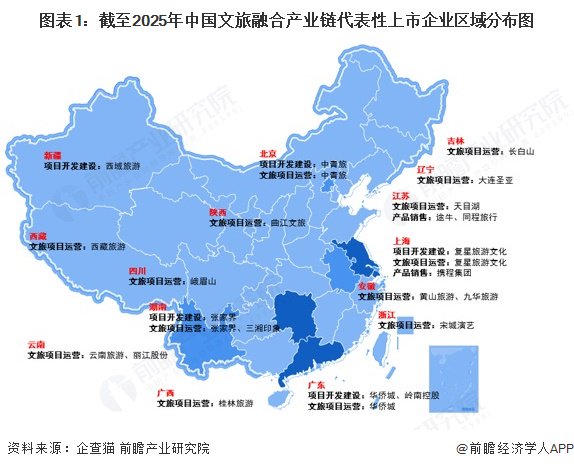
【行业深度】洞察2025:中国文旅融合行业竞争格局及市场份额(附市场集中度、企业竞争力等)
Qian Zhan Wang· 2025-07-26 03:10
Group 1: Regional Competitive Landscape - The cultural tourism integration industry in China is predominantly concentrated in Guangdong, Anhui, Jiangsu, and Shanghai, with Guangdong having notable listed companies such as Overseas Chinese Town and Lingnan Holdings [1] Group 2: Brand Rankings - The "2024 China Cultural Tourism Group Brand Communication Power Top 100" list includes Ctrip Group, China Youth Travel Service, Haichang Ocean Park, China Duty Free Group, Qujiang Cultural Tourism, and Overseas Chinese Town Group in the top ten [4][6] Group 3: Market Share and Revenue - In 2024, the total revenue of listed companies in China's cultural tourism integration industry reached 351.306 billion yuan, with the top three companies being China Duty Free Group, Overseas Chinese Town, and Tongcheng Travel, collectively accounting for over 45% of the market [7] Group 4: Market Concentration - The market concentration in the cultural tourism integration industry is high, with the top ten companies accounting for 82.93% of the market share, CR3 at 46.73%, and CR5 at 66.89% [9] Group 5: Competitive Dynamics - The cultural tourism market is becoming increasingly competitive, with many companies entering the sector. Government policies are supporting the development of cultural tourism integration, indicating significant growth potential. The threat of new entrants is high, while the threat of substitutes is low. The bargaining power of suppliers is weak, and consumer bargaining power is also limited due to fixed pricing of products like tickets and accommodations [12]