PING AN OF CHINA(02318)

Search documents
保险公司密集发债 规模超千亿元
Jin Rong Shi Bao· 2025-12-18 08:43
Core Viewpoint - The insurance industry is increasingly utilizing capital supplement tools, with significant bond issuances observed in 2023, indicating a trend towards optimizing financing structures to enhance solvency and support business development [1][2][3]. Group 1: Capital Supplement Bonds Issuance - Ping An Life successfully issued 20 billion yuan in 10-year redeemable capital supplement bonds, while Dongwu Life issued 3 billion yuan in capital supplement bonds [1]. - As of December 17, 2023, the total amount of capital supplement bonds and perpetual bonds issued or approved for issuance in the insurance sector reached 102.87 billion yuan [1]. - A total of 13 insurance companies have issued perpetual bonds amounting to 52.97 billion yuan this year, with interest rates ranging from 2.2% to 2.95% [2]. Group 2: Purpose and Impact of Perpetual Bonds - Perpetual bonds are designed to meet solvency regulatory requirements and can absorb losses during ongoing operations or bankruptcy [2]. - The implementation of stricter core capital recognition standards since the introduction of the "Solvency II" Phase II rules has led to a general decline in the solvency of the industry, making perpetual bonds a crucial tool for enhancing capital adequacy [2]. - The extension of the transition period for the "Solvency II" Phase II rules until the end of 2025 is expected to lead to more insurance companies issuing bonds to alleviate capital pressure [2]. Group 3: Capital Supplement Bonds Overview - In addition to perpetual bonds, capital supplement bonds have also become a significant means for insurance companies to enhance their capital [3]. - As of December 17, 2023, 13 insurance companies issued capital supplement bonds totaling 49.9 billion yuan, with interest rates between 2.15% and 2.8% [3]. - Ping An Life's issuance of 20 billion yuan in capital supplement bonds is the largest single issuance this year, aimed at improving solvency and supporting stable business growth [3]. Group 4: Financing Structure Optimization - The choice of capital supplement tools by insurance companies is influenced by the nature and purpose of the capital, with capital supplement bonds primarily used for supplementary capital and meeting solvency requirements [4]. - Perpetual bonds, while alleviating repayment pressure due to their lack of a fixed maturity date, typically come with higher interest rates, increasing financial costs [4]. - The trend of optimizing capital structures through the issuance of both perpetual bonds and capital supplement bonds is expected to continue, driven by regulatory policies and market conditions [4].
张掖监管分局同意平安产险民乐支公司变更营业场所
Jin Tou Wang· 2025-12-18 04:27
一、同意中国平安财产保险股份有限公司民乐支公司将营业场所变更为:甘肃省张掖市民乐县凯旋名门 二期建设项目1#住宅楼1层102号商铺。 二、请中国平安财产保险股份有限公司甘肃分公司持批复文件及相关资料于10日内至国家金融监督管理 总局张掖监管分局换领《保险许可证》,并按相关规定及时办理公告事宜。 2025年12月10日,国家金融监督管理总局张掖监管分局发布批复称,《中国平安财产保险股份有限公司 甘肃分公司关于变更中国平安财产保险股份有限公司民乐支公司营业场所的请示》(平保产甘分发 〔2025〕134号)收悉。经审核,现批复如下: ...

张掖监管分局同意平安产险高台支公司变更营业场所
Jin Tou Wang· 2025-12-18 04:05
二、请中国平安财产保险股份有限公司甘肃分公司持批复文件及相关资料于10日内至国家金融监督管理 总局张掖监管分局换领《保险许可证》,并按相关规定及时办理公告事宜。 一、同意中国平安财产保险股份有限公司高台支公司将营业场所变更为:甘肃省张掖市高台县城关镇奇 正嘉苑3号商住楼102铺。 2025年12月11日,国家金融监督管理总局张掖监管分局发布批复称,《中国平安财产保险股份有限公司 甘肃分公司关于变更中国平安财产保险股份有限公司高台支公司营业场所的请示》(平保产甘分发 〔2025〕140号)收悉。经审核,现批复如下: ...
All in AI,重构金融、医疗健康业务,中国平安加速推动价值升维
Sou Hu Cai Jing· 2025-12-18 00:32
Core Viewpoint - China Ping An's stock price has reached a new high this year, with a growth of over 30% and a market capitalization exceeding 1.2 trillion yuan, driven by performance recovery and accelerated AI transformation [1][2]. Group 1: Financial Performance - In the first three quarters of this year, China Ping An achieved a net profit of 132.9 billion yuan, representing a year-on-year increase of 11.47% [1]. - The company's strategic focus on AI has significantly contributed to its stock price increase, indicating a strong correlation between AI initiatives and financial performance [1][2]. Group 2: AI Transformation Strategy - China Ping An's co-CEO emphasized the commitment to fully integrate AI across the financial and healthcare value chains, showcasing a strategic shift towards comprehensive AI and intelligent operations [2]. - The term "AI" was mentioned 67 times in the recent half-year report, reflecting its growing importance in the company's strategy [2]. - The company has transitioned from digitalization phases to a 3.0 intelligent stage, leveraging AI to empower its core business [2]. Group 3: Healthcare Business Evolution - The AI-driven transformation has led to a qualitative change in the healthcare business, moving from a supportive role to a core component of the dual-driven strategy of "comprehensive finance + healthcare" [5][7]. - AI technologies are being utilized to enhance customer engagement and create financial value through precise health interventions and risk management [7]. Group 4: Insurance Business Impact - AI has significantly transformed the insurance sector, enhancing efficiency across the entire process from marketing to claims [9][10]. - The introduction of AI assistants has improved decision-making and operational efficiency, leading to substantial growth in non-auto insurance premiums [9]. - AI has reduced underwriting times to seconds and improved claims processing speed dramatically, enhancing customer experience [10]. Group 5: Business Synergy and Ecosystem - AI acts as a digital nerve center, connecting previously isolated business units and facilitating resource sharing and collaboration [11]. - The integration of AI has created a "flywheel effect," enhancing the value cycle between financial services and healthcare, thereby increasing customer retention and product attractiveness [12]. - Customers benefiting from the healthcare ecosystem contribute nearly 70% to the new business value of life insurance, highlighting the effectiveness of AI-driven ecosystem collaboration [12].

智通港股沽空统计|12月18日
智通财经网· 2025-12-18 00:21
Core Viewpoint - The report highlights the top short-selling stocks in the Hong Kong market, indicating significant investor sentiment and potential market movements for these companies [1][2]. Group 1: Top Short-Selling Ratios - Sun Hung Kai Properties (80016), BYD Company (81211), and JD Health (86618) have the highest short-selling ratios at 100.00% [1][2]. - SenseTime (80020) follows with a short-selling ratio of 87.67%, while Xiaomi Group (81810) has a ratio of 84.37% [2]. Group 2: Top Short-Selling Amounts - Xiaomi Group leads in short-selling amount with HKD 1.43 billion, followed by Alibaba (09988) at HKD 1.368 billion and Tencent Holdings (00700) at HKD 1.251 billion [1][2]. - China Ping An (02318) and Meituan (03690) also feature prominently with short-selling amounts of HKD 1.115 billion and HKD 956 million, respectively [2]. Group 3: Top Short-Selling Deviation Values - Xiaomi Group (81810) has the highest deviation value at 41.14%, indicating a significant difference from its average short-selling ratio [1][2]. - BYD Company (81211) follows closely with a deviation value of 40.41%, while Far East Consortium (00035) has a deviation of 33.08% [2].

智通港股通资金流向统计(T+2)|12月18日
智通财经网· 2025-12-17 23:33
Key Points - Xiaomi Group-W (01810), Ping An of China (02318), and Meituan-W (03690) ranked the top three in net inflow of southbound funds, with net inflows of 1.382 billion, 1.188 billion, and 710 million respectively [1] - Tencent Holdings (00700), Hua Hong Semiconductor (01347), and China Mobile (00941) ranked the top three in net outflow of southbound funds, with net outflows of -776 million, -556 million, and -550 million respectively [1] - In terms of net inflow ratio, ICBC South China (03167), Shanghai Industrial Holdings (00363), and Aux Electric (02580) led the market with ratios of 100.00%, 74.08%, and 73.00% respectively [1] - In terms of net outflow ratio, China Galaxy (06881), 361 Degrees (01361), and CITIC Securities (06030) had the highest ratios at -57.12%, -55.99%, and -54.85% respectively [1] Top 10 Net Inflow Stocks - Xiaomi Group-W (01810) had a net inflow of 1.382 billion, representing a 24.81% increase, with a closing price of 41.840 (down 2.61%) [2] - Ping An of China (02318) saw a net inflow of 1.188 billion, with a 21.72% increase, closing at 65.250 (up 2.35%) [2] - Meituan-W (03690) recorded a net inflow of 710 million, with an 18.14% increase, closing at 100.900 (down 1.46%) [2] - China Life (02628) had a net inflow of 479 million, with a 20.27% increase, closing at 28.560 (up 0.92%) [2] - Kangfang Biologics (09926) had a net inflow of 329 million, with a 24.22% increase, closing at 116.200 (down 6.67%) [2] Top 10 Net Outflow Stocks - Tencent Holdings (00700) experienced a net outflow of -776 million, with a -8.45% decrease, closing at 603.000 (down 2.11%) [2] - Hua Hong Semiconductor (01347) had a net outflow of -556 million, with a -20.09% decrease, closing at 67.300 (down 6.40%) [2] - China Mobile (00941) recorded a net outflow of -550 million, with a -25.32% decrease, closing at 85.100 (down 1.62%) [2] - Agricultural Bank of China (01288) saw a net outflow of -446 million, with a -43.42% decrease, closing at 5.470 (down 1.44%) [2] - SMIC (00981) had a net outflow of -437 million, with a -9.92% decrease, closing at 64.700 (down 4.43%) [2] Net Inflow Ratio Leaders - ICBC South China (03167) achieved a net inflow ratio of 100.00%, with a net inflow of 10,400, closing at 68.820 (down 0.75%) [3] - Shanghai Industrial Holdings (00363) had a net inflow ratio of 74.08%, with a net inflow of 19.9997 million, closing at 15.330 (up 2.82%) [3] - Aux Electric (02580) recorded a net inflow ratio of 73.00%, with a net inflow of 23.4055 million, closing at 14.630 (down 0.95%) [3] - Xinhua Wenhui (00811) achieved a net inflow ratio of 67.57%, with a net inflow of 10.2323 million, closing at 10.490 (up 1.75%) [3]




大盘股引领A股放量走强 跨年行情可期
Zhong Guo Zheng Quan Bao· 2025-12-17 20:17
Market Performance - The A-share market showed strong performance on December 17, with all three major indices rising, including the Shenzhen Component Index up over 2% and the ChiNext Index up over 3% [1][2] - The total trading volume in the A-share market reached 1.83 trillion yuan, an increase of 863 billion yuan compared to the previous trading day [2] - The Shanghai Composite Index, Shenzhen Component Index, ChiNext Index, and STAR Market Index rose by 1.19%, 2.40%, 3.39%, and 2.47% respectively, while the North Shenzhen 50 Index fell by 0.04% [1] Sector Performance - Active sectors included optical modules, lithium mining, lithium battery electrolytes, and optical chips, while sectors like Hainan Free Trade Port and satellite internet saw adjustments [3] - Among the 31 primary industries, the communication, non-ferrous metals, and electronics sectors had the highest gains, increasing by 5.07%, 3.03%, and 2.48% respectively [3] - The non-bank financial sector saw significant gains in the afternoon, with Huatai Securities rising over 6% and China Pacific Insurance rising over 4% [3] Fund Flow and Sentiment - As of December 16, the A-share market's financing balance increased by over 310 billion yuan in December, indicating a positive fund flow [4][6] - On December 17, over 2,100 stocks in the Shanghai and Shenzhen markets experienced net inflows from main funds, with the Shanghai and Shenzhen 300 index seeing a net inflow of over 50 billion yuan [4][6] - The overall market sentiment is optimistic, with significant inflows into various sectors, particularly communication, non-ferrous metals, and electronics [5][6] Individual Stock Contributions - Major contributors to the Shenzhen Component Index included stocks like NewEase, Zhongji Xuchuang, and Ningde Times, which collectively contributed nearly 30% of the index's rise [2] - In the ChiNext Index, the same stocks contributed nearly 60% of the index's increase, highlighting their significant impact on market performance [2] Future Outlook - Analysts suggest that the A-share market is likely to see a cross-year rally as domestic and international policy directions become clearer [7][8] - The combination of a supportive domestic policy and a loose global liquidity environment is expected to create favorable conditions for risk assets [8]




聚焦资产证券化,我们组了一个“朋友圈”
Sou Hu Cai Jing· 2025-12-17 15:55
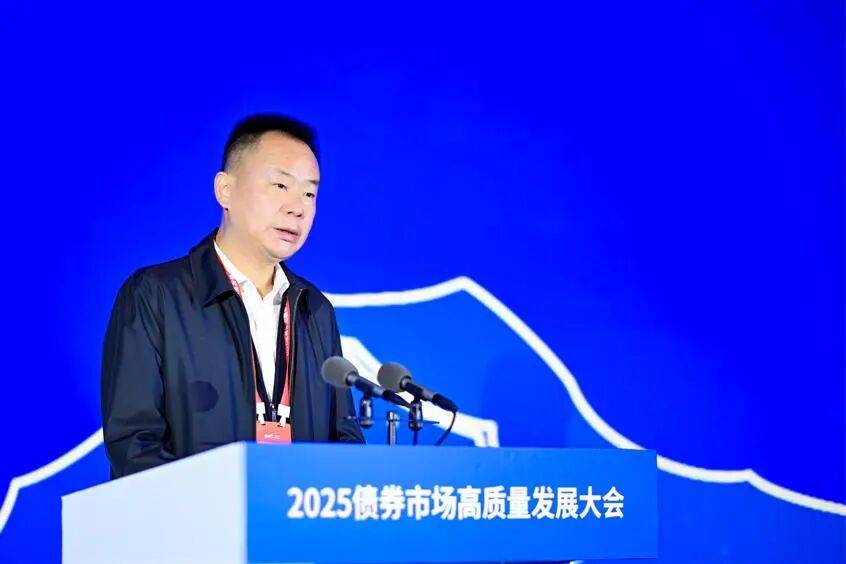
Core Viewpoint - Asset securitization plays a crucial role in connecting the real economy with capital markets, vital for revitalizing existing resources, diversifying financial risks, and broadening financing channels [1][2]. Group 1: Importance of Asset Securitization - The asset securitization conference held on December 17 is part of the 2025 Bond Market High-Quality Development Conference, emphasizing its importance in serving the real economy and optimizing financing structures [1][2]. - The conference gathered representatives from various sectors to discuss the implementation paths of asset securitization [1][2]. Group 2: Regional Focus and Development - The Henan bond issuance scale ranks among the top in Central China, with a diverse range of products and an optimized term structure, becoming a key engine for regional economic development [8]. - The "Asset Securitization Ecological Partner Cooperation Plan" was launched, involving nine companies and institutions to foster collaboration in the asset securitization sector [10][12]. Group 3: Financial Performance and Innovations - In the first three quarters of the year, Ping An Group achieved an operating profit of 116.26 billion yuan, a year-on-year increase of 7.2%, with a focus on providing debt financing exceeding 390 billion yuan [6]. - Ping An Securities has facilitated over 159 billion yuan in asset securitization financing, ranking second in the market, and has initiated several innovative projects [6][19]. Group 4: Future Outlook and Challenges - The 2025 Central Economic Work Conference indicates a continuation of proactive macro policies, with expectations for increased fiscal policy efforts in 2026 [15]. - The transition from "incremental drive" to "stock revitalization" in the domestic financing system presents both challenges and opportunities for enterprises to efficiently revitalize existing assets through asset securitization [22][24].
大摩闭门会:金融、原材料、交运行业更新 _纪要
2025-12-17 15:50
Summary of Key Points from Conference Call Records Industry Overview - The conference call primarily discusses the **financial, raw materials, and transportation industries** [1][3][4]. Core Insights and Arguments Financial Industry - Current low interest rates may lead to financial mismatches, prompting central banks and banks to shift towards reasonable interest rate pricing [1][3]. - Social financing and M2 no longer have quantitative guidance, with loan growth stabilizing around **6%** [1][3]. - Personal loan growth is not significantly impacted by previous bad asset digestion [1][3]. - As of November, medium to long-term loans show signs of stabilization, while manufacturing investment has slowed to **1.7%**, below overall demand growth of **4%** [1][3]. - A balanced supply-demand relationship is expected to alleviate financial system risk concerns and industrial product price pressures, with a potential rebound in PPI by **2027** [1][3]. - Loan interest rates are stabilizing, which may gradually improve interest margins, and insurance yields are performing well [1][4]. - The financial sector is expected to benefit from government bond rates slightly rising, supporting fiscal policies to stabilize and enhance financial returns [1][4]. Manufacturing and Credit Demand - In **2026**, manufacturing credit demand is anticipated to weaken, while consumer loan growth is expected to decline due to high-interest consumer loan clean-up [5]. - The initiation of the "14th Five-Year Plan" and increased local special bonds will support infrastructure loan demand, stabilizing overall financing needs [5]. - Strict management of hidden debts and real estate risks will continue, leading to a reduction in overall financial risks [5]. Insurance Industry - The insurance sector has significant growth potential, with household financial assets growing at **12%** [6]. - Insurance products are competitive, providing guaranteed rates along with retirement and health services, with growth expected to exceed household financial asset growth [6]. - China Ping An anticipates its BNB growth to exceed **20%**, indicating substantial upside potential [6]. - The insurance sector is viewed as an important investment target due to its long-term double-digit growth potential and the increasing interest from U.S. investors in the Chinese insurance market [6]. Raw Materials Industry - The macro environment for **2026** suggests a weak dollar in the first half, potentially rebounding in the second half, with ample liquidity in both China and the U.S. supporting commodity prices [7]. - Strong demand for energy storage and supply disruptions are expected to drive prices of copper, aluminum, and cobalt higher [7]. - Significant mining accidents have led to a tight supply situation for copper, with global copper supply expected to remain flat [7]. - Recommended stocks include those related to aluminum, copper, gold, lithium, and cobalt, such as Zijin Mining and China Aluminum [7]. Aluminum Supply and Demand - Global aluminum supply is projected to decrease by **700,000 tons** due to factory shutdowns, while new supply is expected to be **1.4 million tons** [2][8]. - Overall demand is forecasted to grow by over **2%**, but demand in the photovoltaic sector is expected to decline by **30%** [9]. Congo Fund's New Quota System - The new quota system from the Congo Fund has led to a significant reduction in supply, with expected output only **40%** of previous levels, resulting in market tightness [10]. Anti-Overcapacity Policies - Recent government meetings have emphasized anti-overcapacity policies, potentially limiting new capacity in coal, steel, and cement industries [11]. Other Important Insights - The Thai market for J&T Express has shown significant success, becoming the largest express company in Thailand, with a market share exceeding that of the second to fourth competitors combined [12]. - The competitive landscape in Thailand's express delivery market is intense, with low costs due to favorable geographic conditions and balanced regional economic development [14]. - Long-term growth potential for J&T Express is viewed positively, but uncertainties in Southeast Asia's e-commerce landscape may affect valuation [15]. - The aviation industry has shown positive performance, with significant growth in passenger traffic and improved pricing power for airlines [16].

国寿平安太保泰康太平人保等八家寿险巨头投资收益率比拼,哪家公司更厉害?
Xin Lang Cai Jing· 2025-12-17 14:19
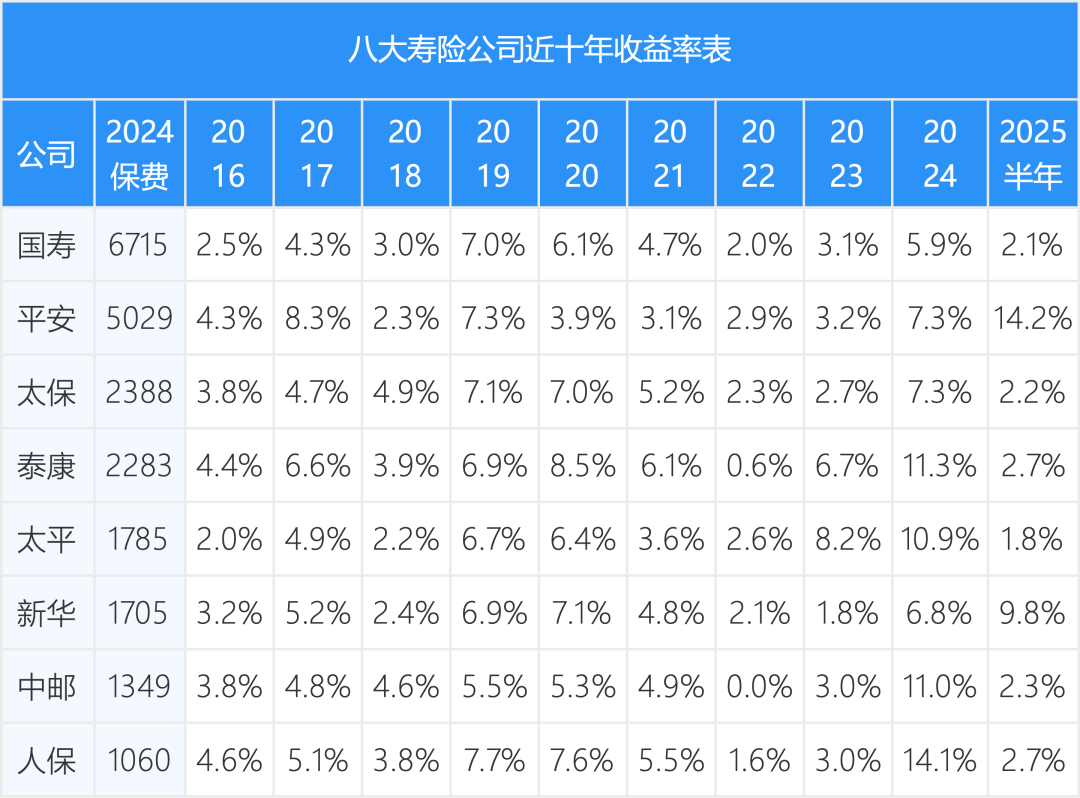
Core Insights - Investment is a core capability for life insurance companies, especially in the era of participating insurance [1][16] - There are significant differences in investment capabilities among major life insurance companies [1][16] - The analysis focuses on eight major life insurance giants with over 100 billion in premiums, which have consistently reported their investment returns for the past ten years [1][16] Investment Returns Overview - The eight major life insurance companies have shown varying investment returns over the past decade, with data presented for each company from 2014 to 2025 [1][16] - The companies included are: China Life, Ping An, Taikang, China Pacific, Taiping, Xinhua, Zhongrong, and PICC [1][16] - The investment returns for these companies are calculated as actual investment returns from 2014-2021 and comprehensive investment returns from 2022-2025 [1][16] Ten-Year Investment Yield Rankings - The top three companies in terms of cumulative investment returns over nine and a half years are Taikang Life (74.5%), Ping An Life (72.6%), and PICC (71.0%) [5][20] - The annualized returns for these companies are 6.0%, 5.9%, and 5.8% respectively [5][20] - There is a notable difference of over 20 percentage points in cumulative investment returns among the companies [20] Performance Consistency - Over the past decade, no company has consistently ranked first or last; five companies have ranked first at some point, and five have ranked last [6][21] - Ping An and PICC have each ranked first three times, while Taikang has ranked first twice [6][21] - The average rankings indicate that Taikang, PICC, and Ping An generally perform better [7][24] Head-to-Head Comparisons - In one-on-one comparisons, Taikang and PICC have the highest win rates against other companies [10][25] - The win-loss records show Taikang winning against Ping An 6:4, and against PICC 7:3, among others [10][25] - China Life has the lowest win rate, winning only 20 out of 100 matchups against the other companies [10][25] Investment Scale Impact - There is a significant difference in investment returns between PICC and China Life, which may be attributed to China Life's larger investment scale [14][29] - PICC has outperformed China Life in eight out of ten years [14][29]