GTHT(02611)

Search documents
中兴通讯股价涨5.52%,国泰海通资管旗下1只基金重仓,持有66.29万股浮盈赚取190.25万元
Xin Lang Cai Jing· 2025-10-13 03:05
Group 1 - ZTE Corporation's stock price increased by 5.52% on October 13, reaching 54.87 CNY per share, with a trading volume of 11.158 billion CNY and a turnover rate of 5.30%, resulting in a total market capitalization of 262.473 billion CNY [1] - The stock has risen for four consecutive days, accumulating a total increase of 16.93% during this period [1] - ZTE Corporation, established on November 11, 1997, and listed on November 18, 1997, is headquartered in Shenzhen, Guangdong Province, and its main business includes investment in industrial projects and sales of electronic and communication equipment components [1] Group 2 - ZTE Corporation is primarily composed of three business segments: operator networks (49.00%), government and enterprise business (26.91%), and consumer business (24.09%) [1] - According to data from the top ten holdings of funds, one fund under Guotai Haitong Asset Management holds a significant position in ZTE Corporation, with 662,900 shares, accounting for 1.23% of the fund's net value, ranking as the ninth largest holding [2] - The fund, Guotai Junan CSI 300 Index Enhanced Initiation A (018257), has generated a floating profit of approximately 1.9025 million CNY today and a total floating profit of 4.9916 million CNY during the four-day increase [2] Group 3 - The fund manager of Guotai Junan CSI 300 Index Enhanced Initiation A is Hu Chonghai, who has been in the position for 3 years and 304 days, managing a total asset size of 8.512 billion CNY [3] - During Hu Chonghai's tenure, the fund achieved its best return of 76.05% and its worst return of 2.01% [3]


云南铜业股价跌5.01%,国泰海通资管旗下1只基金重仓,持有185.15万股浮亏损失181.45万元
Xin Lang Cai Jing· 2025-10-13 02:21
Core Viewpoint - Yunnan Copper experienced a decline of 5.01% on October 13, with a stock price of 18.60 CNY per share and a total market capitalization of 37.267 billion CNY [1] Group 1: Company Overview - Yunnan Copper Co., Ltd. is located at No. 1 Huayun Road, Panlong District, Kunming, Yunnan Province, established on May 15, 1998, and listed on June 2, 1998 [1] - The company's main business includes copper exploration, mining, smelting, precious and rare metal extraction and processing, sulfur chemical products, and trading [1] - The revenue composition of the company is as follows: cathode copper 74.00%, other products 12.42%, precious metals 12.24%, and sulfuric acid 1.33% [1] Group 2: Fund Holdings - According to data from the top ten holdings of funds, one fund under Guotai Haitong Asset Management has a significant position in Yunnan Copper [2] - Guotai Junan CSI 500 Index Enhanced A (014155) held 1.8515 million shares in the second quarter, accounting for 1.15% of the fund's net value, ranking as the fourth-largest holding [2] - The estimated floating loss for the fund today is approximately 1.8145 million CNY [2] Group 3: Fund Manager Performance - The fund manager of Guotai Junan CSI 500 Index Enhanced A (014155) is Hu Chonghai and Deng Yakun [3] - As of the report, Hu Chonghai has a tenure of 3 years and 304 days, with a total fund asset size of 8.512 billion CNY, achieving a best return of 76.05% during his tenure [3] - Deng Yakun has a tenure of 1 year and 151 days, managing a fund asset size of 2.132 billion CNY, with a best return of 44.99% during his tenure [3]
股市必读:国泰海通(601211)10月10日主力资金净流出4225.67万元,占总成交额0.86%
Sou Hu Cai Jing· 2025-10-12 17:31
以上内容为证券之星据公开信息整理,由AI算法生成(网信算备310104345710301240019号),不构成 投资建议。 截至2025年10月10日收盘,国泰海通(601211)报收于18.94元,上涨1.34%,换手率1.91%,成交量257.38 万手,成交额49.11亿元。 来自交易信息汇总:10月10日主力资金净流出4225.67万元,占总成交额0.86%。 来自公司公告汇总:国泰海通证券截至2025年9月30日H股与A股法定/注册股本均无变动,已发行 股份情况清晰列示。 当日关注点 公司公告汇总国泰海通证券股份有限公司H股公告(2025年9月证券变动月报表) 国泰海通证券股份有限公司截至2025年9月30日的证券变动月报表显示,公司普通股H股和A股的法定/ 注册股本均无变动。H股上月底结存及本月底结存均为3,505,759,848股,每股面值人民币1元;A股上月 底结存及本月底结存均为14,123,165,981股,每股面值人民币1元。本月底法定/注册股本总额为人民币 17,628,925,829元。已发行股份方面,H股已发行股份(不包括库存股)为3,505,759,848股,库存股为 0;A股 ...
国泰君安:外部冲击造成的资产下跌 是增持中国市场的良机
Zheng Quan Shi Bao Wang· 2025-10-12 15:01
Core Viewpoint - External shocks leading to asset declines present a good opportunity to increase holdings in the Chinese market [1] Group 1: Market Analysis - The recent escalation in the US-China trade dispute has caused investor anxiety, reminiscent of the situation in April, resulting in panic selling [1] - In April, investors had a vague understanding of the risks associated with "reciprocal tariffs," leading to valuation contraction and diminished confidence [1] - Current trade risks are clearer compared to April, and domestic financial stability conditions are more defined, suggesting that external shocks are disturbances rather than trend-ending events [1] Group 2: Investment Opportunities - There is a strong and ongoing demand among Chinese society and investors for quality assets, particularly those with solid development logic [1] - The current external conflicts and disturbances causing asset declines are viewed as buying opportunities [1] - Geopolitical shocks and adjustments are inevitable, but they are expected to be short-lived and manageable, marking a favorable time to increase investments in China [1]
国泰海通海外:南向流入港股提速 外资偏好科技
智通财经网· 2025-10-12 09:08
Core Viewpoint - Southbound capital inflow into Hong Kong stocks has accelerated, with a cumulative net inflow of HKD 395.2 billion in Q3, an increase compared to Q2 [1][2] Flow Perspective - In Q3, southbound funds continued to flow into Hong Kong stocks, with a cumulative net inflow of HKD 395.2 billion, which is an increase from Q2 [2] - The outflow of foreign capital has slowed down, with a cumulative net outflow of HKD 66.4 billion in Q3, marking a decrease in outflow for three consecutive quarters [2] - The proportion of southbound holdings in Hong Kong stocks has reached a new high, with the Hong Kong Stock Connect holding amount rising from 20.7% at the end of Q2 to 21.8% at the end of Q3 [2] Industry Perspective - In Q3, the main inflows from southbound funds were into consumer discretionary, non-bank financials, and pharmaceuticals, while software and hardware saw net outflows in Q2 [3] - Foreign capital dominates most sub-sectors in Hong Kong stocks, particularly in the internet, finance, and most consumer sectors [3] - Southbound funds have gained significant pricing power in sectors such as semiconductors, general consumption, and general dividends over the past two years [3]
国泰海通宏观:本次关税摩擦对市场的影响预计会相对可控
Ge Long Hui· 2025-10-12 06:52
Core Viewpoint - The article emphasizes that while external factors such as tariff disputes may create short-term uncertainties, the real determinants of China's asset performance are its internal economic and policy developments [1][5]. Group 1: Impact of Tariff Disputes - The recent tariff disputes initiated by the Trump administration have raised market concerns, but the impact is expected to be manageable due to lessons learned from previous tariff experiences [1][4]. - In April, the U.S. imposed tariffs on major economies, leading to a significant drop in global risk assets, but a quick policy softening by the Trump administration resulted in a rapid recovery of asset prices [1][2]. Group 2: U.S. Economic Constraints - The U.S. government faces challenges in maintaining high tariffs due to the inherent economic pressures that arise from such policies, which can lead to domestic issues [2][3]. - Despite a decrease in direct trade reliance on China since 2018, the U.S. still requires indirect trade connections through third-party countries, indicating a complex trade landscape [2][3]. Group 3: Market Experience and Response - The market has gained experience from the April tariff episode, which may lead to a more measured response to current tariff announcements, as investors recall the quick recovery following initial declines [4]. - China's response strategies have become more refined, with stronger policy support and effective measures adopted by export-oriented enterprises to mitigate tariff impacts [4][5]. Group 4: Domestic Economic Factors - The article suggests that the marginal impact of external factors on the domestic economy is limited, and the focus should be on internal economic and policy changes [5]. - Confidence in the domestic economy has strengthened due to supportive policies and the resilience of the supply side, contrasting with earlier concerns during the April tariff episode [4][5].

国泰海通宏观:房价如何稳住?
智通财经网· 2025-10-11 07:37
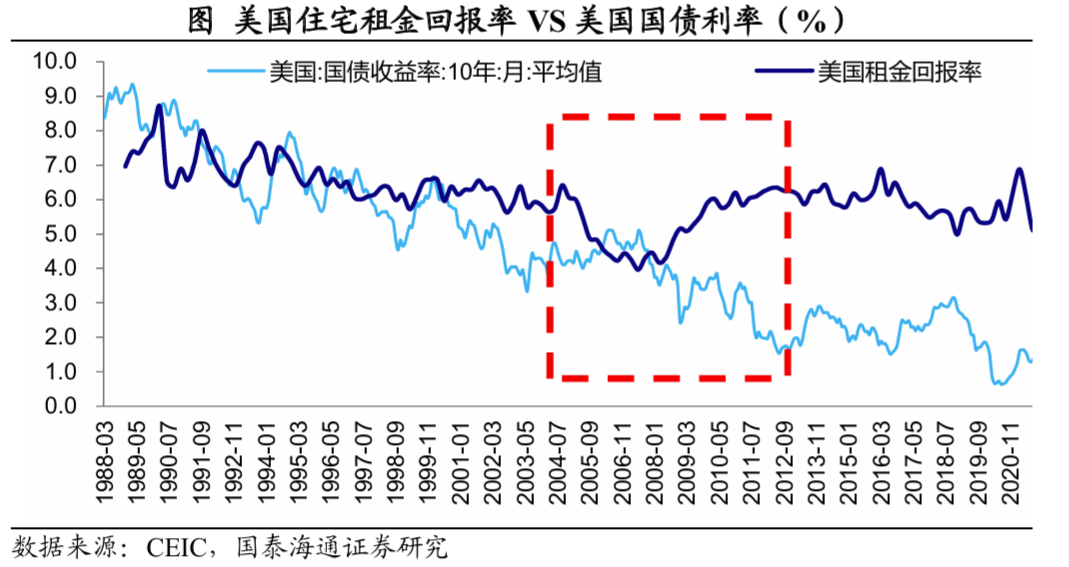
Group 1 - China's GDP growth in the first half of the year exceeded expectations at over 5.3%, indicating strong long-term growth potential despite short-term structural disparities in the economy [1] - The real estate sector remains a significant drag on domestic demand, as it holds a high share in residents' wealth allocation, impacting consumption sources [1] - The article emphasizes the need to stabilize housing prices and explores variables that could indicate when housing prices are stabilized [1] Group 2 - The concepts of rental yield and price-to-rent ratio are introduced, with rental yield measuring the annual rental income relative to the property's sale price [2] - A common belief is that if rental yields exceed government bond rates, properties become more attractive, but historical examples from the U.S. and Japan show this logic may not hold true [2][5] - The article argues that housing is akin to "credit bonds," where price fluctuations affect perceived value, unlike stable government bonds [5] Group 3 - The return on investment in real estate comes from both rental income and capital gains, with expectations of price increases diminishing the importance of rental yields [6] - When housing price expectations are low, rental yields must be significantly higher to compensate for potential price declines and associated costs [6] - The article draws parallels between real estate and stock market behaviors, noting that both markets react similarly to investor expectations [7] Group 4 - The analysis of 13 economies reveals that once housing prices enter a downward cycle, valuations tend to revert to historical lows, similar to stock market trends [7] - Stabilizing housing prices requires more than just increasing rental yields; it necessitates managing price expectations, which are influenced by macroeconomic inflation expectations [7][8] - Recent macroeconomic policies in China have focused on boosting expectations and inflation, which could positively impact housing price stability in the future [8]

融资节奏加快 今年以来券商发债规模同比增逾七成
Zhong Guo Zheng Quan Bao· 2025-10-10 22:03
Core Viewpoint - The brokerage firms in China have significantly increased their bond issuance this year, with a total of 1.26 trillion yuan, marking a year-on-year growth of 75.42% [1][2][3] Group 1: Bond Issuance Details - As of October 10, 2023, several brokerages, including China International Capital Corporation (CICC), Industrial Securities, and Zhongyuan Securities, have announced progress in bond approvals or listings [1][2] - CICC plans to issue up to 10 billion yuan in corporate bonds, while Industrial Securities has received approval for a public issuance of up to 20 billion yuan [1][2] - China Galaxy Securities leads the bond issuance with 107.9 billion yuan, followed by Huatai Securities with 98.1 billion yuan, and Guotai Junan with 87 billion yuan [2] Group 2: Factors Driving Bond Issuance - The increase in bond issuance is attributed to a recovering market, rising capital-intensive businesses like margin trading and derivatives, and a slowdown in equity financing [3][4] - Company bonds have become the preferred method for brokerages, reflecting their long-term funding needs and the advantages of lower costs compared to equity financing [3][4] - Regulatory changes have also influenced the shift towards bond financing, as the pace of equity financing has slowed down due to new regulations promoting capital-efficient and high-quality development [4]




融资节奏加快今年以来券商发债规模同比增逾七成
Zhong Guo Zheng Quan Bao· 2025-10-10 20:57
Core Viewpoint - The bond issuance by securities firms in China has surged significantly in 2023, reflecting a strong demand for capital amid a recovering market environment [1][3]. Group 1: Bond Issuance Data - As of October 10, 2023, the total bond issuance by securities firms in China reached 1.26 trillion yuan, representing a year-on-year increase of 75.42% [1][3]. - China Galaxy Securities leads the market with a bond issuance of 107.9 billion yuan, followed by Huatai Securities at 98.1 billion yuan and Guotai Junan at 87 billion yuan [3]. Group 2: Factors Driving Bond Issuance - The increase in bond issuance is attributed to a recovering market, heightened capital needs for margin trading and derivatives, and a slowdown in equity financing [3][4]. - Company bonds have become the preferred method for financing, with a notable shift away from short-term financing bonds and perpetual subordinated bonds [3]. Group 3: Purpose of Bond Financing - The primary uses of the funds raised through bond issuance include repaying maturing debts, supplementing working capital, and supporting daily operations and business development [4]. - The low interest rate environment has made bond financing more attractive compared to equity financing, allowing firms to manage financial expenditures effectively [4]. Group 4: Regulatory Environment - The regulatory environment has also influenced the shift towards bond financing, as the pace of equity financing through private placements and rights issues has slowed down [4].
实朴检测连亏3年半 2022上市超募1.2亿国泰海通保荐
Zhong Guo Jing Ji Wang· 2025-10-10 07:52
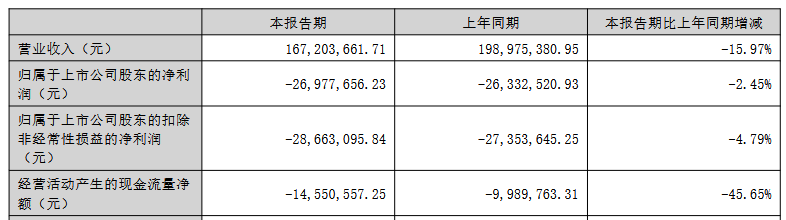
Core Viewpoint - The company, Shibu Testing (301228.SZ), reported a decline in revenue and continued net losses for the first half of 2025, indicating ongoing financial challenges [1][2]. Financial Performance - For the first half of 2025, the company achieved operating revenue of 167.20 million yuan, a year-on-year decrease of 15.97% compared to 198.98 million yuan in the same period last year [2]. - The net profit attributable to shareholders was -26.98 million yuan, slightly worsening from -26.33 million yuan in the previous year, reflecting a decrease of 2.45% [2]. - The net profit attributable to shareholders after deducting non-recurring gains and losses was -28.66 million yuan, compared to -27.35 million yuan in the same period last year, marking a decline of 4.79% [2]. - The net cash flow from operating activities was -14.55 million yuan, a significant drop from -9.99 million yuan in the previous year, representing a decrease of 45.65% [2]. Historical Financial Data - From 2022 to 2024, the company's operating revenue was 351.47 million yuan, 373.83 million yuan, and 442.11 million yuan, respectively, showing a growth trend [3]. - The net profit attributable to shareholders for the same years was -17.96 million yuan, -93.54 million yuan, and -65.79 million yuan, indicating a gradual improvement in losses [3]. - The net profit after deducting non-recurring gains and losses for the same years was -31.35 million yuan, -97.71 million yuan, and -67.02 million yuan, also showing a trend of reduced losses [3]. - The net cash flow from operating activities for these years was 782.06 thousand yuan, -1.36 million yuan, and 24.35 million yuan, indicating a significant recovery in cash flow in 2024 [3]. Initial Public Offering (IPO) Details - Shibu Testing was listed on the Shenzhen Stock Exchange's Growth Enterprise Market on January 28, 2022, with a public offering of 30 million shares, accounting for 25% of the total share capital post-issue, at a price of 20.08 yuan per share [4]. - The total amount raised from the IPO was 602.40 million yuan, with a net amount of 526.33 million yuan after deducting issuance costs, exceeding the original plan by 124.23 million yuan [4]. - The funds raised are intended for the construction of a new laboratory project, the establishment of a research and development information center, and to supplement working capital [4].