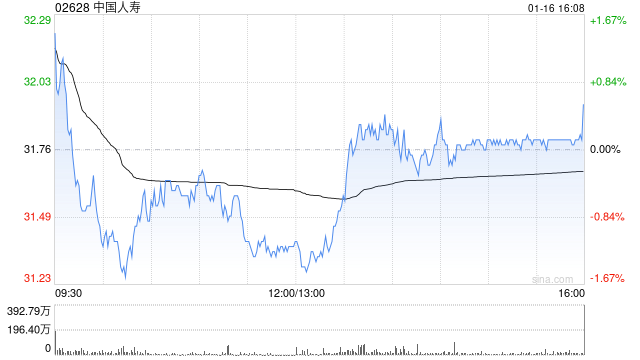
China Life(02628)

Search documents
中国人寿荣获“金理财”“金龙 金融力量”系列奖项
Qi Lu Wan Bao· 2026-01-19 05:59
Core Insights - China Life Insurance Company has received multiple industry awards, including the "Annual Insurance Protection Brand Award" and the "Annual Insurance Corporate Social Responsibility Award," reflecting its commitment to professional service, social responsibility, cultural cohesion, and technological innovation [1][2]. Group 1: Business Performance - In the first three quarters of 2025, the company achieved total premiums of 669.645 billion yuan, a year-on-year increase of 10.1%, with new premiums reaching 218.034 billion yuan, up 10.4% [2]. - The company expects total premiums to exceed 700 billion yuan by the end of 2025, demonstrating strong growth resilience [2]. Group 2: Product and Service Innovation - China Life is focusing on high-quality business development by diversifying product offerings and optimizing costs, with significant growth in new premiums across life, annuity, and health insurance [3]. - The company has improved the proportion of floating income-type business in first-year premiums by over 45 percentage points compared to the previous year, while reducing the rigid costs of new business liabilities [3]. Group 3: Social Responsibility - China Life has established a comprehensive insurance service system that reaches rural areas, with 1,020 village support staff deployed to assist 1,085 support points, covering 227 million rural residents with insurance [5]. - The company has provided approximately 11.2 trillion yuan in risk protection for small and micro enterprises and individual businesses, benefiting over 32 million people [4][5]. Group 4: Cultural Development - The company has initiated a project to renew its corporate culture, focusing on the core values of "people-oriented, serving the country, seeking truth, maintaining bottom lines, and innovation" [7]. - Various cultural dissemination activities have been launched to enhance employee recognition and practice of the corporate culture, including the creation of an IP and storytelling initiatives [8]. Group 5: Digital Transformation - China Life has developed a "one-stop" online insurance digital space, significantly improving service efficiency, with over 58,000 online claims processed and a 50% improvement in service handling time [9]. - The company is leveraging big data technology to support operational innovation and enhance customer experience, aiming to become a trusted insurance health manager for the public [9]. Group 6: Future Commitment - The recognition from awards serves as both motivation and responsibility for China Life to continue refining its core competencies and deepen its main business, contributing to national development and the well-being of the public [10].

雅安监管分局同意中国人寿芦山县支公司营业场所变更
Jin Tou Wang· 2026-01-19 03:31
Group 1 - The National Financial Supervision Administration approved the change of business location for China Life Insurance Company Limited's Lushan Branch from 157 Yingbin Avenue, Luyang Street, Lushan County, Ya'an City, Sichuan Province to 11 Aimin Road, Building 8, Unit 2, 101, 201, 202, Lushan County, Ya'an City, Sichuan Province [1] - China Life Insurance Company Limited is required to handle the change and reissue of licenses in accordance with the relevant regulations of the "Administrative Measures for the Licenses of Banking and Insurance Institutions" [1] - The company must take effective measures to ensure subsequent service work and protect the legitimate rights and interests of consumers [1]
青岛监管局同意中国人寿青岛市即墨区支公司兰村营销服务部变更营业场所
Jin Tou Wang· 2026-01-19 03:31
Core Viewpoint - The National Financial Supervision Administration of Qingdao has approved the relocation of China Life Insurance Company's marketing service department in the Jimo District, indicating regulatory support for the company's operational adjustments [1] Group 1 - China Life Insurance Company has received approval to change the location of its marketing service department to a new address in Qingdao [1] - The new address for the marketing service department is specified as 62 Zhiyuan Road, Danbolan Town, Jimo District, Qingdao [1] - The company is required to complete the necessary procedures for the change and obtain a new license as per relevant regulations [1]
非银金融行业周报:稳字当头,逆周期调节促健康发展
GOLDEN SUN SECURITIES· 2026-01-19 03:24
Investment Rating - The report maintains an "Accumulate" rating for the non-bank financial sector [4]. Core Insights - The report emphasizes a stable approach to prevent significant fluctuations in the market, with a focus on long-term investments and reforms to attract capital [2]. - The insurance sector is expected to benefit from an upward cycle in both liabilities and assets, driven by trends such as the migration of bank deposits and stable long-term interest rates [27]. - The securities sector is experiencing heightened market risk appetite and active trading, benefiting from favorable valuations and performance [27]. Summary by Sections 1. Industry Dynamics - The non-bank financial sector, including securities and insurance, showed positive movements with indices increasing by 1.34% and 1.00% respectively, while the insurance sector faced a decline of 2.63% [9]. - The China Securities Regulatory Commission (CSRC) is implementing measures to regulate the derivatives market and promote healthy development through counter-cyclical adjustments [1]. 2. Insurance - The insurance industry is entering an upward cycle, with a reported 14.89% year-on-year increase in premium income for New China Life, totaling CNY 195.9 billion [12]. - The Financial Regulatory Bureau's 2026 work meeting highlighted the importance of risk management and the need for non-bank institutions to focus on their core businesses [12]. 3. Securities - The report notes an increase in the financing margin ratio from 80% to 100%, aimed at reducing leverage and protecting investor rights [16]. - CITIC Securities reported a 28.75% increase in revenue for 2025, amounting to CNY 74.83 billion, with a net profit increase of 38.46% [18]. - The average daily trading volume for stock funds reached CNY 40,908.27 billion, reflecting a 21.22% week-on-week increase [19].



非银金融行业周报:行业周报稳字当头,逆周期调节促健康发展-20260119
GOLDEN SUN SECURITIES· 2026-01-19 02:59
Investment Rating - The report maintains an "Accumulate" rating for the non-bank financial sector [4]. Core Insights - The report emphasizes a focus on stability and counter-cyclical adjustments to promote healthy development in the non-bank financial sector. It highlights the need for regulatory measures in the derivatives market and the importance of risk management to support the real economy [1][2]. Summary by Sections 1. Industry Dynamics - The non-bank financial sector, including securities and insurance, showed varied performance with indices changing by +1.34% for non-bank financials and -2.63% for insurance during the week of January 12-16, 2026. The overall market indices, such as the Shanghai Composite Index, decreased by -0.57% [9][11]. 2. Insurance - The insurance sector is entering an upward cycle in both liabilities and assets. The long-term benefits from the trend of bank deposit migration and the stabilization of long-term interest rates are noted. The report remains optimistic about the insurance sector, particularly due to the "reporting and operation integration" strategy that enhances industry concentration [12][27]. 3. Securities - The securities sector is experiencing heightened market risk appetite and trading activity. The report indicates that securities firms and IT companies are benefiting from this environment, with a recommendation to focus on companies like China Ping An and Huatai Securities. Recent adjustments in financing margin requirements are aimed at stabilizing market leverage and protecting investor rights [16][19][27]. 4. Investment Recommendations - The report suggests a positive outlook for the insurance sector, driven by favorable trends in both the liability and asset sides. It also highlights the securities sector's potential for growth due to increased trading activity and market confidence. Specific companies to watch include China Ping An, China Life, and Guotai Junan [27].


温州监管分局同意中国人寿温州分公司鹿城区第八营销服务部变更营业场所
Jin Tou Wang· 2026-01-19 01:29
Core Viewpoint - The National Financial Supervision Administration's Wenzhou Regulatory Bureau has approved the change of business location for China Life Insurance Co., Ltd.'s Wenzhou branch marketing service department [1] Group 1 - The business location of the Eighth Marketing Service Department of China Life Insurance Co., Ltd. in Wenzhou has been officially changed to Room 701, Huifu Building, 666 Huimin Road, Lucheng District, Wenzhou City, Zhejiang Province [1] - China Life Insurance Co., Ltd. is required to handle the change and obtain the necessary permits in accordance with relevant regulations [1]
中国人寿(02628.HK)获贝莱德增持2157.08万股
Ge Long Hui· 2026-01-18 23:26
Group 1 - The core point of the article is that BlackRock, Inc. has increased its stake in China Life Insurance Company Limited (stock code: 02628.HK) by purchasing 21,570,794 shares at an average price of HKD 31.6582 per share, totaling approximately HKD 683 million [1] - Following this acquisition, BlackRock's total holdings in China Life have risen to 523,982,871 shares, increasing its ownership percentage from 6.75% to 7.04% [1][2]


重疾出险最小仅2岁 赔付最高超2100万
Nan Fang Du Shi Bao· 2026-01-18 23:13
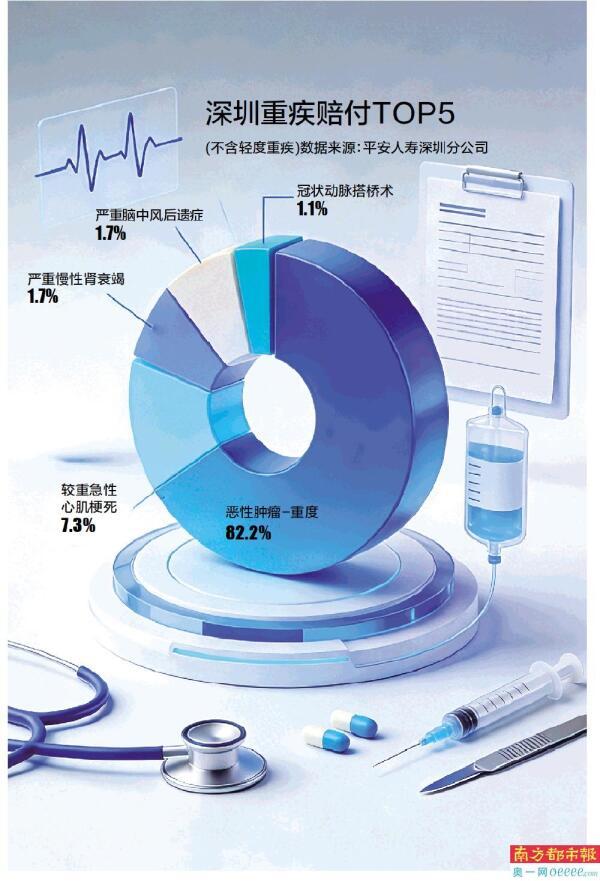
Core Insights - The annual claims reports from leading insurance institutions in Shenzhen reveal significant health trends among residents, particularly highlighting the prevalence of critical illnesses and the demographic most affected [2][3][4] Group 1: Health Trends and Critical Illnesses - The primary demographic for critical illness claims in Shenzhen is individuals aged 30-50, with a notable increase in cases of thyroid, lung, and breast cancers, indicating a trend towards younger patients [2][3] - Malignant tumors account for over 80% of critical illness claims, making them the leading health threat to residents, with leukemia being the most common critical illness among children [3][4] - The total number of claims in Shenzhen reached approximately 150,000 last year, with a growth rate of about 10%, and the total payout amounting to approximately 1.17 billion yuan, nearly half of which was attributed to critical illnesses [3] Group 2: Claims and Payouts - The highest claim in Shenzhen's life insurance sector last year was related to cancer, with a payout exceeding 21.25 million yuan for a policyholder who succumbed to breast cancer [5][6] - Tencent's micro-insurance platform reported a total claim amount of 8.4 billion yuan in 2025, with over 25.7 million claims processed, indicating a significant volume of insurance activity [4][6] - The average claim processing time has improved significantly, with some claims being settled in as little as 8 seconds due to advancements in AI and digital processing [7][8] Group 3: Technological Advancements in Claims Processing - The integration of AI in the claims process has led to faster and more efficient claim settlements, with some claims being processed in seconds, enhancing customer experience [7][8] - The introduction of a "one-stop settlement" service allows for simultaneous completion of medical insurance reimbursements and commercial insurance claims, significantly reducing the time required for claim processing [8]

衍生品新规释放积极信号,关注板块发布业绩预增机遇
GF SECURITIES· 2026-01-18 10:26
Core Insights - The report highlights that new regulations in derivatives are expected to release positive signals for the non-bank financial sector, with a focus on companies likely to announce performance increases [1][5]. Group 1: Market Performance - As of January 16, 2026, the Shanghai Composite Index closed at 4101.91, down 0.45%, while the Shenzhen Component Index rose by 1.14% to 14281.08 [10]. - The average daily trading volume in the Shanghai and Shenzhen markets reached 3.47 trillion yuan, an increase of 21.50% month-on-month [5]. Group 2: Industry Dynamics and Weekly Commentary Insurance Sector - Listed insurance companies are expected to continue high growth, with improvements in long-term interest rate spreads anticipated [12][16]. - As of January 12, 2026, the total scale of private equity securities investment funds by insurance capital reached 184.5 billion yuan, with 11 funds established [16]. - The report suggests focusing on companies such as China Ping An, China Life, and New China Life for potential investment opportunities [16]. Securities Sector - The China Securities Regulatory Commission (CSRC) emphasized stability and quality improvement in its 2026 work meeting, aiming to prevent market volatility and enhance internal stability [17][18]. - The CSRC's new derivatives regulations aim to standardize the market, encourage risk management, and improve the income structure of brokerage firms [25][26]. - The report indicates that the derivatives market is expected to grow significantly, with the scale of over-the-counter derivatives increasing from 0.32 trillion yuan in 2015 to 2.38 trillion yuan in 2023, reflecting a compound annual growth rate of 29% [26]. Group 3: Key Company Valuations and Financial Analysis - China Ping An (601318.SH) has a current price of 66.33 yuan, with a target value of 85.17 yuan, indicating a buy rating [6]. - New China Life (601336.SH) is rated as a buy with a current price of 82.09 yuan and a target value of 94.21 yuan [6]. - China Life (601628.SH) is also rated as a buy, with a current price of 47.52 yuan and a target value of 55.47 yuan [6].
中国人寿获贝莱德增持约2157.08万股 每股作价约31.66港元
Xin Lang Cai Jing· 2026-01-18 08:52
香港联交所最新资料显示,1月12日,贝莱德增持中国人寿(02628)2157.0794万股,每股作价31.6582 港元,总金额约为6.83亿港元。增持后最新持股数目约为5.24亿股,最新持股比例为7.04%。 责任编辑:卢昱君 热点栏目 自选股 数据中心 行情中心 资金流向 模拟交易 客户端 热点栏目 自选股 数据中心 行情中心 资金流向 模拟交易 客户端 责任编辑:卢昱君 香港联交所最新资料显示,1月12日,贝莱德增持中国人寿(02628)2157.0794万股,每股作价31.6582 港元,总金额约为6.83亿港元。增持后最新持股数目约为5.24亿股,最新持股比例为7.04%。 ...