
BANK COMM(03328)

Search documents
中国人民银行、国家金融监督管理总局发布我国系统重要性银行名单 共计21家
Mei Ri Jing Ji Xin Wen· 2026-02-13 10:05
每经AI快讯,2月13日,为构建覆盖全面的宏观审慎管理体系,强化系统重要性金融机构监管,根据 《系统重要性银行评估办法》,近期中国人民银行、国家金融监督管理总局开展了2025年度我国系统重 要性银行评估,认定21家国内系统重要性银行,其中国有商业银行6家,股份制商业银行10家,城市商 业银行5家。按系统重要性得分从低到高分为五组:第一组11家,包括中国民生银行、中国光大银行、 平安银行、华夏银行、宁波银行、江苏银行、北京银行、南京银行、广发银行、浙商银行、上海银行; 第二组4家,包括兴业银行、中信银行、浦发银行、中国邮政储蓄银行;第三组2家,包括交通银行、招 商银行;第四组4家,包括中国工商银行、中国银行、中国建设银行、中国农业银行;第五组暂无银行 进入。下一步,中国人民银行、国家金融监督管理总局将按照《系统重要性银行附加监管规定(试 行)》要求,发挥好宏观审慎管理与微观审慎监管合力,持续夯实系统重要性银行附加监管,促进系统 重要性银行安全稳健经营和健康发展,更好服务实体经济高质量发展。 (文章来源:每日经济新闻) ...




央行、国家金融监管总局:认定21家国内系统重要性银行
智通财经网· 2026-02-13 09:57
近期,中国人民银行、国家金融监督管理总局开展了2025年度我国系统重要性银行评估,认定21家国内 系统重要性银行,其中国有商业银行6家,股份制商业银行10家,城市商业银行5家。按系统重要性得分 从低到高分为五组。其中第一组11家,包括中国民生银行、中国光大银行、平安银行、华夏银行、宁波 银行、江苏银行、北京银行、南京银行、广发银行、浙商银行、上海银行;第二组4家,包括兴业银 行、中信银行、浦发银行、中国邮政储蓄银行;第三组2家,包括交通银行、招商银行;第四组4家,包 括中国工商银行、中国银行、中国建设银行、中国农业银行;第五组暂无银行进入。 为构建覆盖全面的宏观审慎管理体系,强化系统重要性金融机构监管,根据《系统重要性银行评估办 法》,近期中国人民银行、国家金融监督管理总局开展了2025年度我国系统重要性银行评估,认定21家 国内系统重要性银行,其中国有商业银行6家,股份制商业银行10家,城市商业银行5家。按系统重要性 得分从低到高分为五组:第一组11家,包括中国民生银行、中国光大银行、平安银行、华夏银行、宁波 银行、江苏银行、北京银行、南京银行、广发银行、浙商银行、上海银行;第二组4家,包括兴业银 行、中信 ...
我国系统重要性银行名单公布
财联社· 2026-02-13 09:52
Core Viewpoint - The People's Bank of China and the National Financial Regulatory Administration have conducted the 2025 assessment of systemically important banks, identifying 21 domestic banks that are crucial to the financial system [1][2]. Group 1: Identification of Systemically Important Banks - A total of 21 domestic banks have been recognized as systemically important, including 6 state-owned commercial banks, 10 joint-stock commercial banks, and 5 city commercial banks [1]. - The banks are categorized into five groups based on their systemic importance scores, with the first group containing 11 banks, the second group 4 banks, the third group 2 banks, the fourth group 4 banks, and the fifth group having no banks [2]. Group 2: Regulatory Framework and Future Actions - The People's Bank of China and the National Financial Regulatory Administration will implement additional regulatory measures according to the "Regulations on Additional Supervision of Systemically Important Banks (Trial)" to enhance macro-prudential management and micro-prudential supervision [2]. - The aim is to ensure the safe and sound operation of systemically important banks and to better serve the high-quality development of the real economy [2].







交通银行:2025年前三季度交行营收及净利润均实现正增长
Zheng Quan Ri Bao Zhi Sheng· 2026-02-13 09:48
(编辑 楚丽君) 证券日报网讯 2月13日,交通银行在互动平台回答投资者提问时表示,2025年前三季度交行营收及净利 润均实现正增长,增幅较上半年进一步提升。主要驱动因素包括:一是作为营收"基本盘"的利息净收入 保持稳定增长,公司加大服务实体经济支持力度,同时强化大类资产负债配置,优化存贷款业务结构, 利息净收入同比增长1.46%,增幅较上半年提升0.26个百分点。二是非利息净收入表现整体向好。前三 季度集团手续费及佣金净收入、投资估值及汇兑损益收入均实现增长,趋势优于上半年水平。三是资产 质量继续保持稳健。近年来公司持续夯实资产质量,同时坚持合理计提拨备,具有充分的风险抵御和损 失吸收能力。9月末,集团不良贷款率(1.26%)较上年末下降0.05个百分点,拨备覆盖率(209.97%) 较上年末上升8.03个百分点。 ...
中国人民银行、国家金融监督管理总局发布我国系统重要性银行名单 认定21家国内系统重要性银行
Xin Lang Cai Jing· 2026-02-13 09:46
炒股就看金麒麟分析师研报,权威,专业,及时,全面,助您挖掘潜力主题机会! 为构建覆盖全面的宏观审慎管理体系,强化系统重要性金融机构监管,根据《系统重要性银行评估办 法》,近期中国人民银行、国家金融监督管理总局开展了2025年度我国系统重要性银行评估,认定21家 国内系统重要性银行,其中国有商业银行6家,股份制商业银行10家,城市商业银行5家。按系统重要性 得分从低到高分为五组:第一组11家,包括中国民生银行、中国光大银行、平安银行、华夏银行、宁波 银行、江苏银行、北京银行、南京银行、广发银行、浙商银行、上海银行;第二组4家,包括兴业银 行、中信银行、浦发银行、中国邮政储蓄银行;第三组2家,包括交通银行、招商银行;第四组4家,包 括中国工商银行、中国银行、中国建设银行、中国农业银行;第五组暂无银行进入。 下一步,中国人民银行、国家金融监督管理总局将按照《系统重要性银行附加监管规定(试行)》要 求,发挥好宏观审慎管理与微观审慎监管合力,持续夯实系统重要性银行附加监管,促进系统重要性银 行安全稳健经营和健康发展,更好服务实体经济高质量发展。 新浪声明:此消息系转载自新浪合作媒体,新浪网登载此文出于传递更多信息之目的 ...
一周银行速览(2.6—2.13)
Cai Jing Wang· 2026-02-13 09:05
Corporate Dynamics - Huaxia Bank reported a net profit attributable to shareholders of 27.2 billion yuan for 2025, a slight decrease of 1.72% year-on-year [1] - The bank's operating income for 2025 was 91.914 billion yuan, down 5.39% compared to the previous year [1] - Total assets reached 4.737619 trillion yuan, reflecting an 8.25% increase from the end of the previous year [1] Financial Adjustments - Bank of China raised the minimum purchase amount for its accumulation gold products from 950 yuan to 1,200 yuan [2] - Bank of Communications announced an increase in the margin ratio for personal clients trading gold contracts from 60% to 80% due to heightened market risks [3] - China Construction Bank will implement dynamic trading limit management for its gold products and suspend physical repurchase services from February 14 to February 23 [4] Capital Increases - Jiujiang Bank plans to increase its capital and has received support from two major shareholders, including Industrial Bank, which will subscribe to the bank's domestic shares [5] Personnel Changes - Bank of China appointed Huang Xueling as a new executive, expected to serve as vice president after completing relevant procedures [6] - Beijing Bank elected Guan Wenjie as the new chairman and appointed Wei Yu as vice president, pending regulatory approval [7] - China Everbright Bank appointed Yang Wenhua as vice president and chief compliance officer, and Wang Yongqi as vice president, effective upon regulatory approval [8] Legal and Regulatory Issues - Lin Jingzhen, former vice president of Bank of China, was expelled from the party for serious violations, along with several other senior officials from major banks [9] - Xu Yiding, vice president of Agricultural Development Bank, is under investigation for serious violations [10]


交通银行多举措提升外籍人士金融服务 推动支付不见“外”消费无障碍
Xin Hua Wang· 2026-02-13 08:35
Group 1 - The inbound consumption market is heating up ahead of the Spring Festival, prompting the Bank of Communications to enhance financial services and payment channels to unlock consumption potential [1] - The Qingdao branch of the Bank of Communications set up a service booth at the "International Friends @ Qingdao" event, offering the "Qingdao Pass" digital RMB wallet for tourists, facilitating payments across various scenarios such as public transport and shopping [1] - Foreign tourists have expressed satisfaction with the simplicity of using the digital RMB, eliminating concerns about account binding and internet connectivity [1] Group 2 - The Shanghai branch of the Bank of Communications focuses on providing convenient foreign currency exchange services to meet the payment needs of foreign tourists, strategically placing currency exchange machines in high-frequency consumption areas [2] - A case was highlighted where a German tourist successfully used the bank's currency exchange machine to convert euros to RMB when facing payment issues at a hotel [2] - The Bank of Communications has made it easier for foreign visitors to open accounts at all branches, enhancing personal account service levels to meet the needs of short-term visitors [2]
重庆市分行被罚190万 交通银行开年已累计13度收罚单
Zhong Guo Jing Ji Wang· 2026-02-13 06:50
Core Viewpoint - The China Banking and Insurance Regulatory Commission has imposed multiple fines on the Bank of Communications for various violations, indicating ongoing regulatory scrutiny and compliance issues within the bank's operations across different regions in China [1][2][3][4][5][6]. Summary by Document - **Document 1**: The Chongqing Regulatory Bureau fined the Bank of Communications Chongqing Branch 1.9 million yuan for imprudent management of loan and related business practices, with warnings issued to responsible individuals [1]. - **Document 2**: The Shandong Provincial Branch of the People's Bank of China fined the Bank of Communications Shandong Branch 1.742 million yuan for multiple violations, including failure to conduct customer due diligence and report suspicious transactions [2]. - **Document 3**: The Shaanxi Regulatory Bureau fined the Bank of Communications Shaanxi Branch 2.53 million yuan for imprudent loan issuance and inadequate management of credit facilities, with warnings issued to several responsible personnel [3]. - **Document 4**: The Jinhua Branch of the People's Bank of China fined the Bank of Communications Jinhua Branch 1.0425 million yuan for various regulatory violations, including failure to perform customer identity verification [4]. - **Document 5**: The Shanghai Regulatory Bureau imposed fines totaling approximately 6.12 million yuan on the Bank of Communications Shanghai Branch for severe violations of prudent management rules in loan issuance and classification [5]. - **Document 6**: The Fujian Regulatory Bureau fined the Bank of Communications Fujian Branch 750,000 yuan for inadequate management of operating loans and insufficient due diligence in loan processes [6]. - **Document 7**: Since January, the Bank of Communications has received a total of 13 fines, highlighting a pattern of regulatory non-compliance across its branches [6].
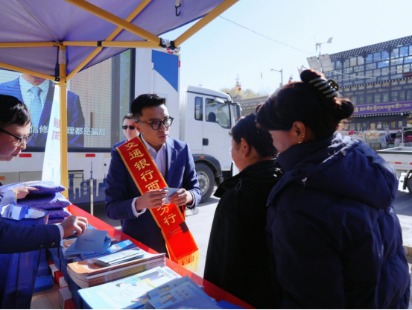
交通银行高原“移动服务车” 打通金融便民“最后一公里”
Xin Hua Wang· 2026-02-13 02:48
"高原上的移动银行"的暖心举措,正是交通银行新春走基层惠民服务的生动缩影。交行始终心系群众需 求,用实打实的行动践行金融担当,让专业的金融服务满含民生温度。 (文章来源:新华网) 新春的脚步临近,年味愈发浓郁。 近日,拉萨市堆龙德庆区万达广场暖阳普照,交通银行西藏分行的 移动金融服务车上悬挂"迎马年、换新钱"红色横幅,营造出吉祥喜庆的节日氛围。服务车旁,工作人员 忙而有序,为前来的群众贴心办理新钞兑换业务,从热情引导排队、细致清点钞券到耐心解答疑问,每 个环节都细致周到。 "我们藏族群众过年都喜欢用崭新的钞票,图个吉祥,以前要专门跑银行网点,现在在家门口就能换, 太方便了。"家住附近的藏族居民卓玛女士手里攥着刚兑换的新钞,脸上满是笑意,她说,自己换了不 同面额的新钞,准备给家里的孩子发压岁钱,"交行的服务太贴心了,真正想到了我们老百姓的需求。" 交行西藏分行营运部工作人员王佳晖表示:"西藏地区群众对新春新钞有较大的需求,我们这次联合营 业部组建服务小队,把移动金融服务车开进商圈,就是想让服务多跑路,让群众少跑腿。"王佳晖还介 绍,未来西藏分行将继续依托移动金融服务车这一载体,深入社区、农牧区,把惠民金融服务延 ...
金融活水向“智”逐“绿”
Xin Lang Cai Jing· 2026-02-12 23:43
Group 1 - The core viewpoint of the articles highlights the rapid growth of financial services in Huzhou, particularly in supporting green and technological initiatives, with a notable increase in bank loans and innovative financing solutions [1][2][3] - Huzhou's bank loan balance is projected to reach 1.3387 trillion yuan by 2025, reflecting a year-on-year growth of 10.85%, ranking second in the province [1] - Financial institutions are increasingly connecting with the real economy, with loans in key areas such as technology and green projects growing faster than the overall loan balance [1] Group 2 - The introduction of innovative financing solutions, such as the first green external debt registration for Zhejiang Kaisi Technology Development Co., which secured $1.5 million for energy-saving equipment upgrades, demonstrates the responsiveness of financial services to corporate needs [2] - The collaboration between financial institutions and industry departments has improved, allowing for timely information sharing and early intervention in project financing [2] - Huzhou has maintained the best credit asset quality in the province for 46 consecutive months, indicating a strong focus on financial risk management alongside support for the real economy [2]

