CICC(03908)

Search documents
并购重组风起云涌,2025券商十大事件,万亿赛道谁执牛耳
Nan Fang Du Shi Bao· 2025-12-31 03:48
Core Insights - The Chinese capital market is at a historical intersection of deepening reform and high-quality development in 2025, with significant transformations in the brokerage industry driven by resource integration, technological empowerment, and ecological restructuring [2] - The brokerage industry is experiencing a year of both challenges and breakthroughs, marked by major events that symbolize the ongoing transformation and the journey towards becoming a first-class investment bank [2] Group 1: Major Mergers and Acquisitions - The merger of Guotai Junan and Haitong Securities marks the largest A+H dual-market merger in China's capital market history, establishing a new "giant" in the brokerage industry, Guotai Haitong [2][3] - In 2025, both CITIC Securities and Guotai Haitong achieved over 20 billion yuan in net profit, solidifying a "dual leader" position in the industry [3] Group 2: Innovative Integrations - The planned merger of China International Capital Corporation (CICC) with Dongxing Securities and Xinda Securities represents the first "three-in-one" integration in the brokerage industry, potentially creating a new "trillion-yuan brokerage" [5] - The combined assets of the three firms reached 1,009.58 billion yuan, positioning them among the top in the industry [5] Group 3: Market Developments - The margin trading market reached a historical high of 25,517.34 billion yuan by December 29, 2025, accounting for 2.59% of the A-share market's circulating value [7] - The number of new margin trading accounts surged by 288% year-on-year in September, indicating increased investor activity [7] Group 4: Regulatory Changes - The China Securities Regulatory Commission revised the classification regulations for securities companies, emphasizing the need for firms to enhance their professional capabilities and better serve the real economy [9] - The new regulations focus on improving return on equity (ROE) and reducing the emphasis on total revenue rankings [9] Group 5: Technological Advancements - The brokerage industry is rapidly adopting AI technologies, with significant advancements showcased at the 2025 World Artificial Intelligence Conference [11] - CITIC Securities introduced a "digital employee" system to enhance operational efficiency, reflecting a broader trend of digital transformation in the industry [11] Group 6: Leadership Changes - Over 50 brokerages experienced changes in their core management teams in 2025, indicating a significant reshuffling of leadership within the industry [15] - The changes are driven by factors such as retirement and the impact of mergers, with a notable shift towards younger leadership [15] Group 7: Competitive Landscape - A price war has emerged in the brokerage industry, with commission rates dropping significantly, reflecting the competitive pressures and the industry's response to market conditions [17] - The average commission rate in Shanghai decreased by 8.2% year-on-year, with some firms offering financing rates below 4% [17] Group 8: New Financial Instruments - Securities companies were included as issuers of sci-tech bonds for the first time in 2025, with over 80 billion yuan in bonds issued since May [19] - This expansion aims to enhance the industry's ability to support technological innovation and align with national strategies [19] Group 9: Market Trends - The enthusiasm for public fund business among brokerages has waned, with several firms withdrawing their applications for public fund licenses [21] - The industry is shifting towards alternative models such as equity participation in public funds, indicating a strategic pivot in business operations [21] Conclusion - The brokerage industry in China is navigating a transformative landscape characterized by mergers, technological advancements, regulatory changes, and evolving market dynamics, all while striving to enhance its competitive edge and service capabilities [23]




中金公司首席经济学家彭文生:加强财政政策和货币政策协调
Zhong Guo Jin Rong Xin Xi Wang· 2025-12-31 03:25
Core Viewpoint - The speech emphasizes the need for coordination between fiscal and monetary policies to address medium-term economic fluctuations and ensure sustainable growth [3][4][7]. Group 1: Economic Theories and Adjustments - The traditional New Keynesian theory suggests that the economy can achieve macro balance in the medium to long term, but short-term frictions can lead to welfare losses, necessitating counter-cyclical monetary policy [3]. - There is a call for reflection and adjustment of this framework, particularly emphasizing the importance of medium-term fluctuations and the need for cross-cycle adjustments, which may require greater intensity than counter-cyclical adjustments [4]. Group 2: Medium-term Influencing Factors - Financial cycles are identified as a medium-term force, with the current phase being a downward trend, leading to a relative demand shortage compared to supply [5]. - Economies of scale are highlighted as another medium-term influencing factor, with the green industry and AI being significant contributors. The green industry benefits from economies of scale, while fossil energy typically does not [5][6]. - AI's impact on economic growth is debated, with estimates suggesting it could contribute an additional 0.8-1.3 percentage points to annual growth over the next decade, while other analyses predict a more modest increase of 0.07 percentage points [6]. Group 3: Geoeconomic Issues - The shift in China's trade partners towards the "Belt and Road" initiative and the increasing share of direct investment in these countries are noted as significant geoeconomic trends [7]. - Both economies of scale and geoeconomic factors contribute to the relative demand shortage, necessitating coordinated fiscal and monetary policies to boost domestic demand and ensure sustainable medium-term growth [7].

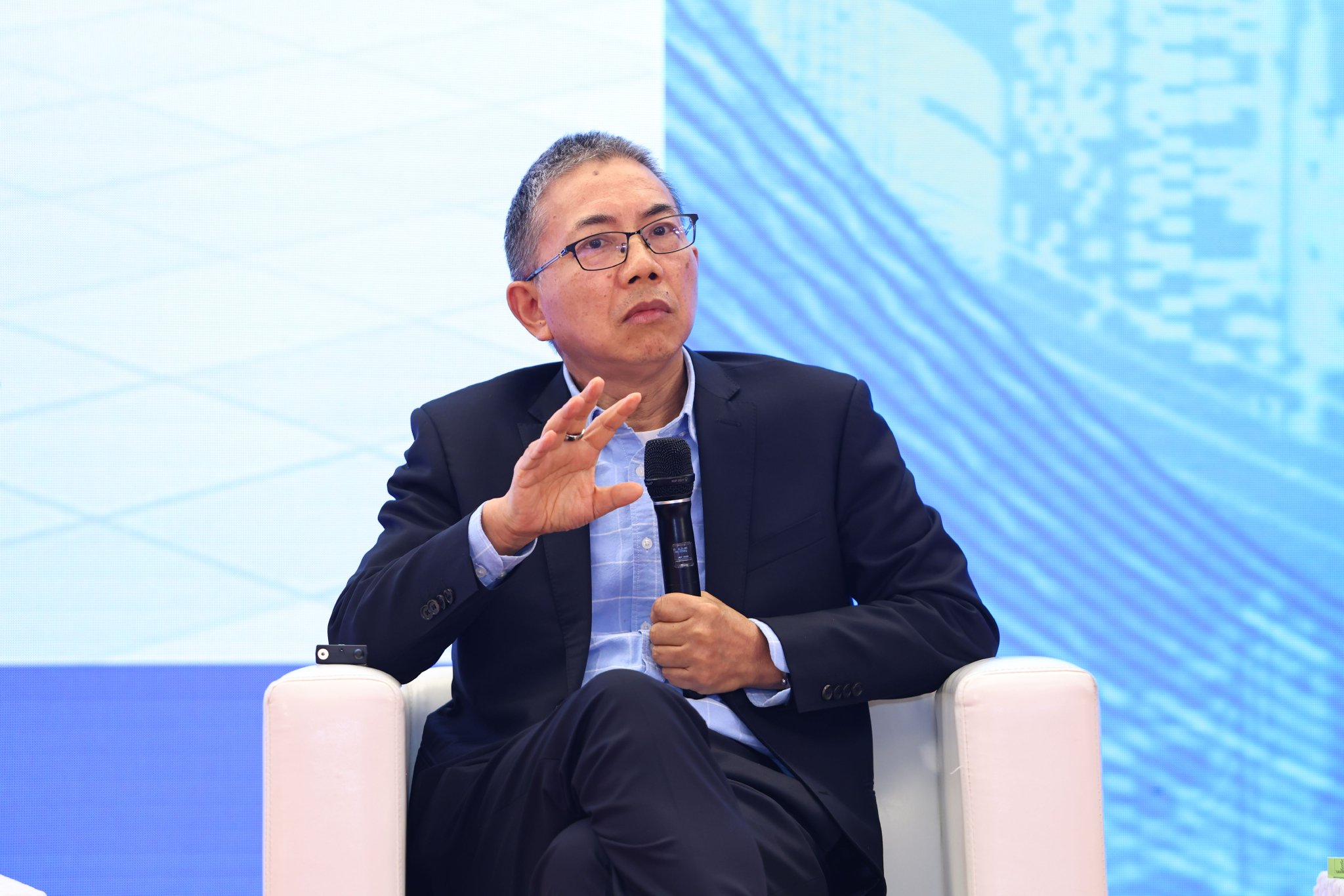
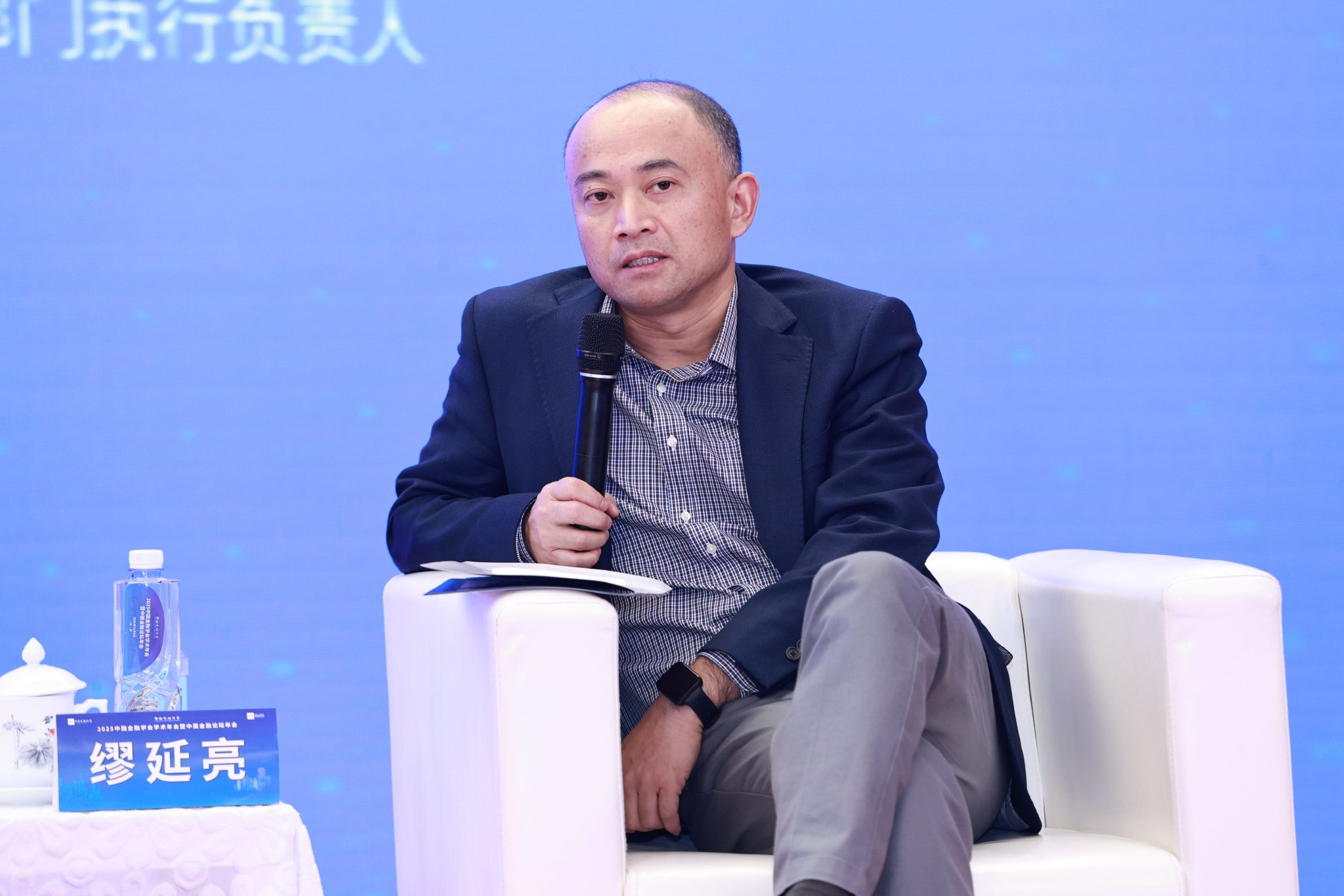
中金公司研究部首席策略分析师、部门执行负责人缪延亮在2025中国金融学会学术年会暨中国金融论坛年会上的演讲
Zhong Guo Jin Rong Xin Xi Wang· 2025-12-31 03:06
Core Viewpoint - The presentation by the chief strategist of CICC highlights the evolution of the international monetary system and the potential for the renminbi to become a central currency, driven by various economic and institutional forces [3][4][8]. Group 1: Historical Context of Currency - Currency exhibits a natural order characterized by a "center-periphery" structure, with the US dollar currently in a central position following the breakdown of the Bretton Woods system [3]. - The stability of this order is evident, as historical central currencies like the pound and dollar have maintained their status for over a century [4]. - The transition of central currencies is not fixed, with historical shifts from the Spanish dollar to the Dutch guilder, then to the pound, and finally to the dollar [4]. Group 2: Forces Driving Currency Evolution - The first force is economic strength, where a larger economy with significant trade volume is more likely to become a central currency [5]. - The second force is the robustness of financial markets, which are essential for establishing trust in a currency on the international stage [5]. - The third force is institutional credibility, such as property rights protection, which underpins trust in a central currency [6]. - The fourth force is technological advancement, which has historically transformed currency forms and payment systems [6]. - A debated fifth force is military power, which some argue can protect but not create currency credibility [6]. Group 3: Stability of Central Currencies - The strong network effects of these forces create inertia, making established currencies difficult to displace [7]. - These forces are interrelated, enhancing each other and raising barriers to entry for new central currencies [7]. - Existing central currencies can leverage their influence through institutional arrangements to maintain their status [7]. Group 4: Current Context for Renminbi - The current economic conditions suggest a potential shift, as China has surpassed the US in purchasing power parity (PPP) and has the largest trade volume [9]. - The US dollar's status as a safe asset is showing signs of strain, with changes in asset correlations indicating a weakening of its traditional role [9]. - The need for the renminbi to float more freely is emphasized, as this would facilitate its use in international trade and finance [10]. Group 5: Recommendations for Renminbi Internationalization - The development of both onshore and offshore financial markets is crucial, focusing on liquidity coordination and cross-border financial product innovation [10]. - Increasing the openness of China's capital account is necessary to enhance investor confidence and facilitate international transactions [11].
科技焕新 超越增长
2 1 Shi Ji Jing Ji Bao Dao· 2025-12-31 00:18
Group 1 - The article discusses the new global positioning of China, emphasizing the competitive landscape and the opportunities for Chinese companies to expand internationally [1] - Key leaders from various industries, such as TCL and GCL Group, highlight the importance of leveraging China's manufacturing advantages to break through domestic competition and achieve global influence [1] - The article also mentions the awakening of consumer demand in China, with experts suggesting measures to stabilize income growth and boost consumption [1] Group 2 - The article outlines the transformation of traditional and emerging industries in China, with leaders from companies like UBTECH and CloudWalk discussing advancements in robotics and technology [1] - It highlights the anticipated growth in commercial aerospace and the automotive market, indicating a shift away from previous trends [1] - The focus on innovation in the pharmaceutical sector is noted, with a transition from explosive growth to sustained development in authorized drug transactions [2]

50家券商主承销绿色债券1674亿 头部机构双核驱动领跑绿色金融
Chang Jiang Shang Bao· 2025-12-30 23:22
Core Viewpoint - Securities companies play a dual core role in the development of ESG, both as enterprises that need to practice ESG and as gatekeepers and guides in the capital market, significantly contributing to the ESG transformation of the entire economic system [1][3]. Group 1: ESG Role of Securities Companies - Leading securities firms such as CITIC Securities, CICC, Huatai Securities, Guotai Junan, and China Merchants Securities are at the forefront of ESG strategy, business integration, and report quality, having established dedicated ESG functional departments [1]. - In 2024, 50 securities companies acted as main underwriters for green bonds, managing a total of 148 bonds/products worth 167.405 billion yuan, with 69 asset securitization products amounting to 96.164 billion yuan [1]. Group 2: Performance of Leading Firms - In 2024, CITIC Securities, CITIC Jiantou, and CICC were particularly active in underwriting green bonds, with scales of 39.199 billion yuan, 26.372 billion yuan, and 8.956 billion yuan respectively [1]. - CITIC Securities underwrote green bonds (including carbon-neutral) totaling 51.7 billion yuan and 13.99 million USD in overseas ESG bonds, facilitating several pioneering projects in the green finance sector [2]. Group 3: Low-Carbon Transition Bonds - In 2024, 18 securities companies served as main underwriters for low-carbon transition bonds, underwriting 24 bonds with a total value of 26.79 billion yuan [2]. - CICC assisted in transactions exceeding 450 billion yuan in green-related fields and established funds covering green investment worth approximately 37 billion yuan [2]. Group 4: Future Outlook - The securities industry is expected to enhance its innovative leadership and resource allocation functions in the ESG field as the policy framework continues to improve and market demand deepens [3].
专访中金公司总裁王曙光:中国投行何以竞逐全球定价权
2 1 Shi Ji Jing Ji Bao Dao· 2025-12-30 23:13
导读:中国投行跻身国际一流投行的当务之急在于"锻内功、转思维",转向价值创造。 当前,我国正加速迈向"金融强国"的新征程。作为资本市场的核心中介与关键枢纽,证券行业被赋予更 高期望:不仅要更高效地服务实体经济,还要在全球金融舞台上争取更大话语权。如何平衡"立足本 土"与"竞逐全球"这双重使命,成为券业发展的重要议题。 近日,21世纪经济报道记者专访了中金公司党委副书记、副董事长、总裁王曙光。他明确指出,服务国 内实体经济与争夺全球金融定价权是"双向赋能"、协同共进的关系。唯有深耕本土,才能锻造国际竞争 的核心能力;同时,只有争取全球定价权,才能反哺国内高质量发展。 面向更宏伟的全球愿景,王曙光认为,中国投行跻身国际一流投行的当务之急在于"锻内功、转思维", 转向价值创造,全力弥补在深度研究、协同服务、全球风控与高端人才等方面的关键短板。 尤为值得关注的是,在王曙光看来,中国投行对全球金融秩序更深层次的贡献,并非简单的定价权争 夺,而在于将中国市场实践中形成的、强调金融与实体经济深度融合的"赋能型"发展范式,以开放合作 的姿态贡献于世界,推动全球金融治理体系朝着更加包容、均衡和可持续的方向演进。这一系列判断, ...
六大案例看2025券商并购大年: 强强合并重塑行业格局
Sou Hu Cai Jing· 2025-12-30 17:20
Core Viewpoint - The article discusses the ongoing trend of mergers and acquisitions in the Chinese securities industry, highlighting significant cases and the regulatory environment that encourages the formation of influential financial institutions by 2025 [1]. Group 1: Major Mergers and Acquisitions - Guolian Minsheng Securities officially rebranded after merging, reporting a revenue of 4.011 billion yuan and a net profit of 1.127 billion yuan for the first half of the year, marking a year-on-year growth of 269.4% and 1185.19% respectively [2]. - The merger of Guotai Junan and Haitong Securities, which became Guotai Haitong, is noted as the largest A+H market merger in Chinese capital market history, with Guotai Haitong achieving a net profit of 15.737 billion yuan in the first half of the year, surpassing CITIC Securities [4]. - The merger between Zhejiang Securities and Guodu Securities is progressing, with Zhejiang Securities establishing control over Guodu Securities through a series of share acquisitions [5][6]. Group 2: Regulatory Approvals and Market Impact - The merger of Xibu Securities and Guorong Securities received regulatory approval, with Xibu Securities planning to acquire a 64.5961% stake for 3.3217 yuan per share, totaling 3.825 billion yuan [8]. - The acquisition of Wanhe Securities by Guosen Securities was approved, with Guosen Securities aiming to gain control over Wanhe Securities, which has significantly smaller assets and profits compared to Guosen [9][10]. - Central Huijin's stake in CICC will increase to 1.936 billion shares post-merger with Dongxing Securities and Xinda Securities, maintaining its status as the controlling shareholder [13].


最新投行评价结果出炉,A类12家
第一财经· 2025-12-30 13:38
Core Viewpoint - The Securities Association of China released the performance evaluation results for investment banking, bond underwriting, and financial advisory services for the year 2024, indicating a total of 93 securities firms engaged in investment banking, with 12 classified as A-level, 66 as B-level, and 15 as C-level [1][10]. Investment Banking - Among the 93 securities firms involved in investment banking, 12 firms received an A classification, including Dongwu Securities, Guojin Securities, Guotai Junan, and CITIC Securities [1][3]. - The majority of firms, 66, were classified as B, while 15 firms were rated C [1][10]. Bond Underwriting - For the bond underwriting and entrusted management business, 95 securities firms were evaluated, with 14 classified as A, 62 as B, and 19 as C [5][7]. - A-level firms in this category include Caixin Securities, Dongwu Securities, and Guotai Junan [5][7]. Financial Advisory - In the financial advisory sector, 30 securities firms were evaluated, with 5 classified as A, 19 as B, and 6 as C [5][10]. - A-level firms in financial advisory include Huatai United and Galaxy Securities [8][9]. Overall Evaluation - The evaluation results reflect the overall quality of practice among the firms and align with market expectations, promoting improvements in operational quality, internal control, and service capabilities [10].






每日投行/机构观点梳理(2025-12-30)
Xin Lang Cai Jing· 2025-12-30 11:24
Group 1: Gold and Silver Market - UBS raised its gold price forecast to $5,000 per ounce by the first three quarters of 2026, expecting a decline to $4,800 by the end of 2026, driven by low real yields and ongoing global economic concerns [1] - HDFC Securities noted that gold and silver are in an overbought territory, indicating potential for further price corrections as traders take profits after record highs [1] - UBS suggested that if political or financial risks increase, gold prices could rise to $5,400 per ounce, up from a previous forecast of $4,900 [1] Group 2: Lithium Iron Phosphate Industry - CITIC Securities reported that the lithium iron phosphate industry is expected to reach a cyclical turning point in profitability, with global shipments projected to reach 5.25 million tons by 2026, a year-on-year increase of 36% [1] - The report highlighted that demand is driven by increased penetration in the power sector and high demand for energy storage, while supply growth is expected to be limited [1] Group 3: Commercial Aerospace and Graphite Fiber - CITIC Securities indicated that the commercial aerospace sector is experiencing high prosperity, driven by policies, technology, and market demand [2] - The demand for lightweight rocket and satellite structures is increasing, leading to higher requirements for graphite fiber, which is expected to see further penetration in the market [2] Group 4: Collagen Industry - CITIC Securities stated that the natural and recombinant collagen industry is still in a period of dividends, with ongoing advancements in technology and applications [3][4] - The increasing number of approved collagen products is expected to expand the market, providing opportunities for companies to capture market share [3][4] Group 5: Chinese Securities Industry - CICC reported that the Chinese securities industry is poised for growth, benefiting from economic development and capital market reforms, with leading firms expected to enhance their capabilities [5] - The report forecasts a 12% year-on-year increase in profitability for the industry by 2026, with varying growth rates across different business lines [5] Group 6: Wind Power Equipment Industry - CICC projected optimistic growth for the wind power equipment industry, with domestic and overseas demand expected to rise [5] - The report estimates that domestic wind power installations could reach 130-140 GW in 2026, continuing growth from a high base in 2025 [5]
张宁:券商出海迎来机遇窗口期,叩开新增长的希望之门
Xin Lang Cai Jing· 2025-12-30 09:50
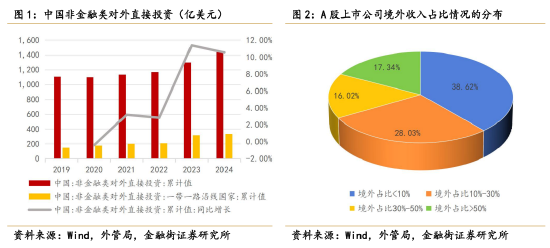
Core Viewpoint - The globalization of China's industrial chain and the increasing demand for cross-border asset allocation by domestic institutions and residents, along with the deepening of China's capital market opening policies, provide favorable opportunities and strong momentum for the development of international business by domestic securities firms [1] Group 1: Historical Development Opportunities for Securities Firms - The internationalization of China's industrial chain has significantly increased the demand for cross-border financial services, with non-financial direct investment by domestic investors abroad expected to reach USD 143.9 billion in 2024, a year-on-year growth of 10.54% [2] - Over 50% of A-share companies have disclosed overseas business income, indicating that going global is now a common phenomenon, with 33.36% of listed companies having over 30% of their income from overseas [2] Group 2: Growth in Cross-Border Investment Demand - The cross-border investment demand from institutions and residents has been strong, with foreign securities investment assets increasing from USD 1019.6 billion to USD 1694.1 billion from mid-2022 to mid-2025, reflecting an annual compound growth rate of 18.44% [6] - Foreign institutions' investment in domestic securities has also grown, with the market value of foreign holdings in domestic stocks and securities rising from USD 737.5 billion to USD 1071.8 billion from mid-2020 to mid-2025, with a compound annual growth rate of 7.76% [6] Group 3: Capital Market Opening and Securities Firms' Internationalization - China's accelerated financial market opening has created a favorable policy environment for the internationalization of securities firms, with various mutual recognition and cross-border financial policies being implemented [7] - The trading volume of the Hong Kong Stock Connect has increased from CNY 620.4 billion in 2015 to CNY 16.27 trillion by the end of 2025, reflecting a compound annual growth rate of 38.64% [7] Group 4: Market Landscape and Development Prospects of Securities Firms' International Business - Securities firms' international business encompasses various lines, including cross-border brokerage, wealth management, asset management, proprietary trading, and emerging digital asset businesses, with significant growth potential [9] Group 5: Cross-Border Brokerage and Trading Business - Chinese securities firms provide cross-border trading channels for clients, utilizing overseas subsidiaries to offer access to foreign stocks, bonds, and derivatives [10] Group 6: Cross-Border Wealth Management Business - The cross-border wealth management business is becoming a key development direction for securities firms, driven by the increasing demand for diversified asset allocation among Chinese residents [15] - The cross-border wealth management products of leading firms like CITIC Securities have seen rapid growth, with overseas product sales reaching USD 8.7 billion in 2024, a year-on-year increase of 151% [17] Group 7: Cross-Border Asset Management Business - The global asset management industry is increasingly focusing on cross-border asset management to capture growth cycles and interest rate differentials across different economies [19] Group 8: Overseas Investment Banking Business - Hong Kong serves as a critical hub for domestic securities firms' overseas investment banking activities, with supportive policies for mainland companies listing in Hong Kong [24] - The scale of equity financing in Hong Kong has significantly increased, with the total equity financing amount reaching HKD 590.6 billion in 2025, 3.26 times that of 2024 [25] Group 9: Overseas Proprietary Business - The overseas proprietary business has become a core profit source for leading securities firms, with a significant portion of their fixed-income investments being allocated to overseas markets [29] Group 10: Second Growth Curve for Securities Firms' International Business - The international business of securities firms is becoming an important revenue component, with firms like Huatai Securities and CITIC Securities showing strong growth in overseas business income [32] - The return on equity (ROE) for international subsidiaries of firms like CITIC Securities is significantly higher than their overall ROE, indicating better profit generation capabilities [34]