CM BANK(03968)

Search documents
招行信用卡新户专享,至高50000元额度,还有热门视频会员、HelloKitty定制包等礼品送,点击申请>>
招商银行App· 2025-05-13 10:33
Core Viewpoint - The article promotes various credit card offerings with attractive benefits for new users, including fee waivers and gift incentives. Group 1: Credit Card Benefits - First-year annual fee waiver for new users, and waiving the next year's fee after making six transactions [2] - New users can receive 1,000 points or a gift package upon meeting certain criteria [3] - Special promotions such as 50% off dining vouchers available every Wednesday [3] Group 2: Specific Card Promotions - Zodiac Guardian Card offers a brand luggage for new users who meet the criteria [6] - Hello Kitty Pink Graffiti Card provides a custom exquisite bag for new users [8] - Pokémon Fan Card rewards new users with a creative Pokémon ice cream cup [10] - Starbucks co-branded card offers six cups of Starbucks coffee or a custom cup [12] Group 3: Referral and Additional Offers - Users can earn rewards by successfully referring friends to apply for a card [15] - Successful referrals allow users to purchase an air fryer for 10 yuan or receive an 88 yuan repayment bonus [16] - Existing cardholders can apply for additional credit cards with shared limits but without new user gifts [20]



又创新高!600亿神秘资金入市了?
Ge Long Hui· 2025-05-13 09:11
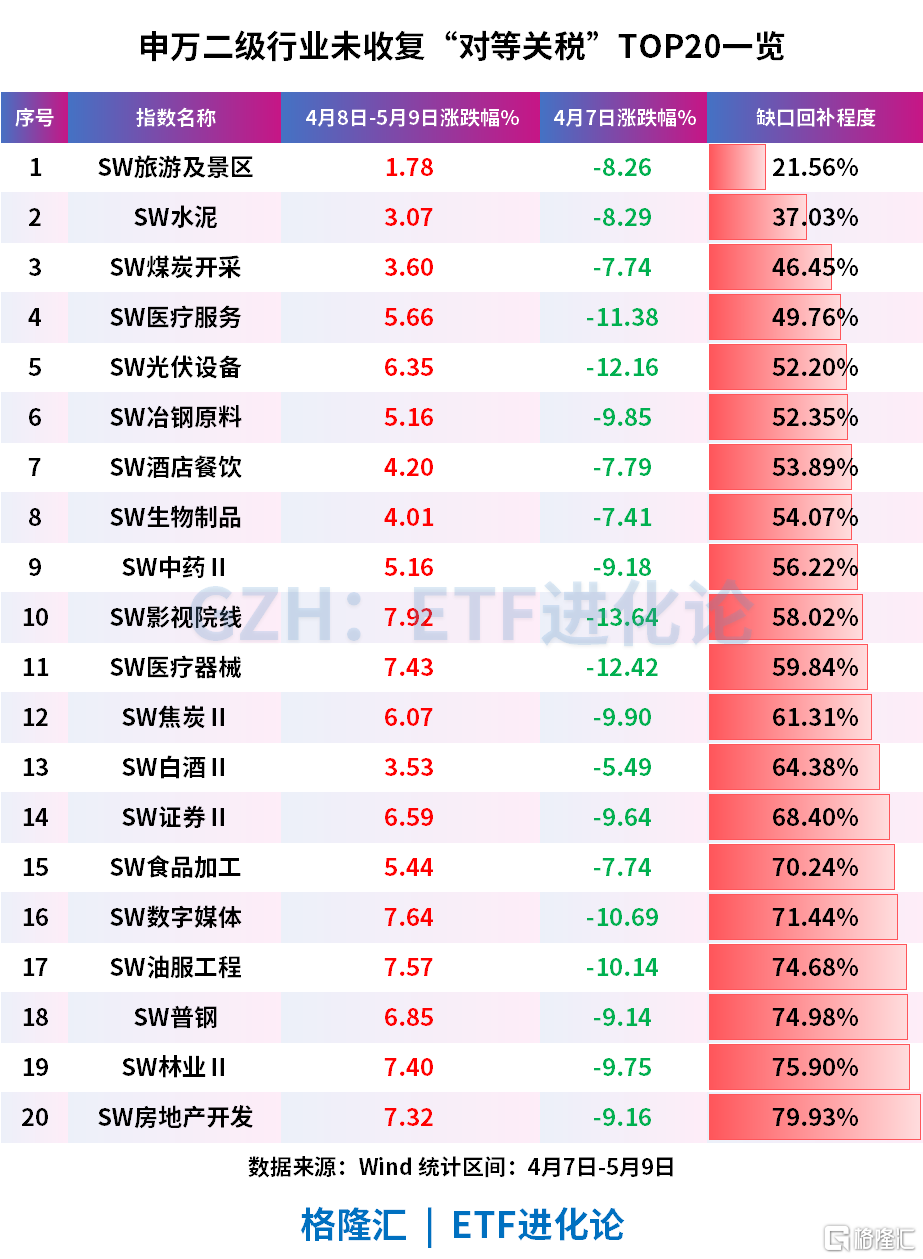
今天各位心理路程应该是这样式的: "哇!→诶?→……" "不敢睁开眼,希望是我的幻觉~" 隔夜全球股市大涨,纳指涨超4%重返牛市,在港股昨日尾盘飙涨5%的情况下,中概指数同样暴拉5.4%,阿里涨近6%。 对昨日刚刚好掐着重磅利好的收盘A股而言,今日可谓是承受着万众期待。 然而今日这个结果只能说,我大A每一次都不按套路出牌。 而申万二级行业中依然未收复"对等关税"失地的有:旅游、水泥、煤炭、医疗服务、光伏设备等,其中光伏设备行业截至5月9日的缺口修复程度刚过半。 A股领涨的板块也很出乎意料,光伏、银行,其中中信银行、光大银行等多股创历史新高。 市场究竟在搞什么? 1 光伏板块突发大涨 看似出其不意的背后,往往有迹可循。 截至上周五,中美股市都触及已经摸到4.2"对等关税"的水平:A股、港股都在刚好接近4月2日水平之前出现回落。 | 序号 | 指数名称 | 4月8日-5月9日涨跌幅% | 4月7日涨跌幅% | 缺口回补程度 | | --- | --- | --- | --- | --- | | 1 | SW旅游及景区 | 1.78 | -8.26 | 21.56% | | 2 | SW水泥 | 3.07 | -8 ...



银行业周报:降准降息落地,稳定市场预期-20250513
Bank of China Securities· 2025-05-13 08:15
Investment Rating - The report rates the banking industry as "Outperform" [1] Core Insights - Recent monetary policy adjustments, including a 0.5 percentage point reduction in the reserve requirement ratio and a 0.1 percentage point decrease in policy interest rates, are expected to stabilize market expectations and provide approximately 1 trillion yuan in long-term liquidity [2][3] - The establishment of financial asset investment companies by three joint-stock banks aims to enhance their ability to serve the real economy, although it may put pressure on their capital and asset quality [4][5] - The banking sector is viewed positively, with a focus on high dividend investment opportunities, particularly in undervalued banks such as China Merchants Bank and Agricultural Bank of China [1] Summary by Sections Monetary Policy - The People's Bank of China has implemented a series of policies to support market stability, including lowering the reserve requirement ratio and interest rates [2][3] - Specific measures include reducing the LPR by approximately 0.1 percentage points and adjusting various structural monetary policy tool rates [2] Financial Asset Investment Companies - Three joint-stock banks are in the process of establishing financial asset investment companies to enhance their service capabilities for the real economy [4] - This move is seen as a response to the slowing credit growth among joint-stock banks and aims to optimize corporate capital structures [5] Market Performance - The banking sector index increased by 1.88% this week, while the overall A-share index rose by 2.74%, indicating a slight underperformance of the banking sector [12] - Among different types of banks, joint-stock banks showed a notable increase of 3.79%, while state-owned banks experienced a decline of 0.89% [12][19] Individual Bank Performance - All A-share banks saw an increase in stock prices, with joint-stock banks leading the gains, particularly Shanghai Pudong Development Bank and China Merchants Bank [19][21] - The average price-to-book (P/B) ratio for state-owned banks is 0.67X, while joint-stock banks have a lower average P/B of 0.54X [21] Bond Market and Financing - The bond market saw a total financing of 1.749 trillion yuan this week, with net financing increasing significantly compared to the previous week [44] - The issuance of interbank certificates of deposit reached 857.9 billion yuan, reflecting a substantial increase in issuance volume [59]



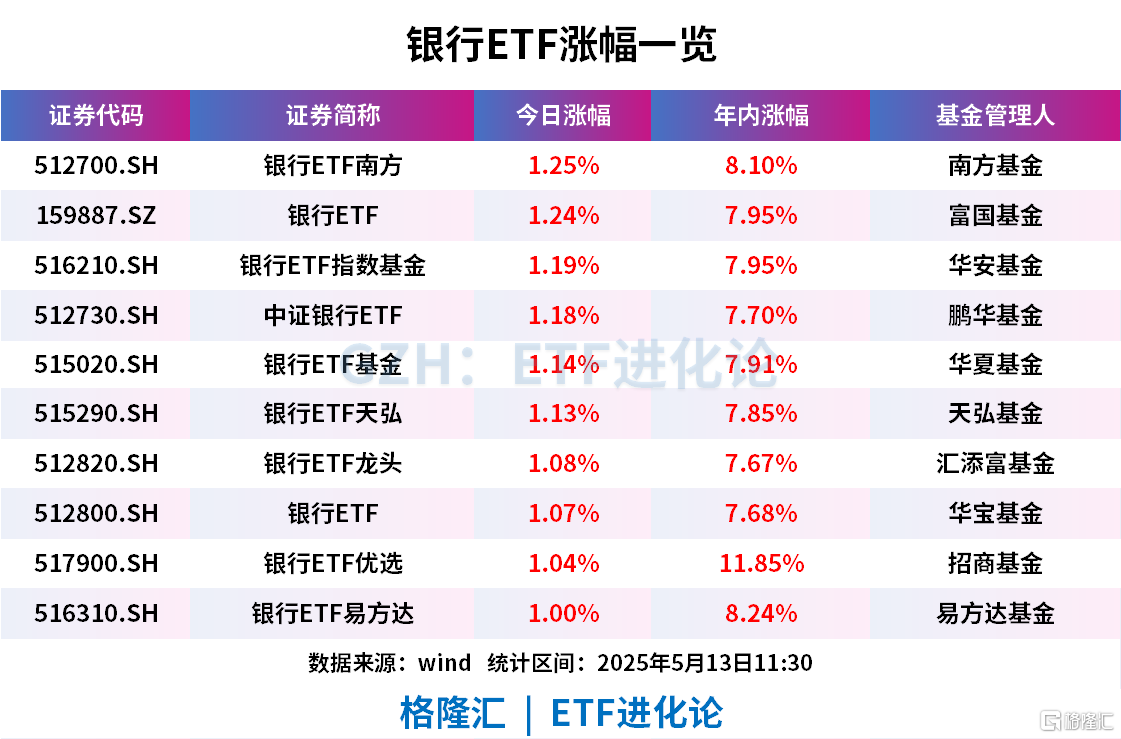
险资“爆买”银行股,银行ETF南方、银行ETF、中证银行ETF上涨
Ge Long Hui A P P· 2025-05-13 03:54
Market Overview - The A-share market showed mixed performance with the Shanghai Composite Index up by 0.08% at 3371.86 points, while the Shenzhen Component Index and the ChiNext Index fell by 0.24% and 0.23% respectively, and the North Star 50 Index decreased by 0.37% [1] - The total trading volume for the market reached 907.2 billion yuan, an increase of 43.4 billion yuan compared to the previous day, with over 3400 stocks declining [1] Banking Sector Performance - Bank stocks collectively strengthened, with several banks such as Shanghai Pudong Development Bank, Shanghai Bank, Jiangsu Bank, and Chengdu Bank reaching historical highs [1] - Various bank ETFs, including Southern Bank ETF, Fortune Bank ETF, and Huaxia Bank ETF, experienced increases in their indices [1] Insurance Investment in Banking Stocks - Insurance capital has made at least 13 significant investments in banking stocks this year, with six of these being direct investments in banks, including Agricultural Bank of China and Postal Savings Bank [5] - As of May 8, 2025, insurance capital held bank stocks valued at 0.69 trillion yuan, an increase of 0.16 trillion yuan from the end of 2023, indicating a strategic shift towards banking stocks due to their dividend yields and regulatory advantages [6] Future Outlook for Banking Sector - The banking sector is expected to benefit from intensified fiscal policies and a supportive monetary environment, which will positively impact credit growth and economic expectations [7] - The year 2025 is anticipated to be crucial for improving asset quality in banks, with expectations of reduced risks in real estate and local investment properties [7]

招商银行20年老将或“转战”招商证券 风控专家有何新考题
Nan Fang Du Shi Bao· 2025-05-12 14:41
Core Viewpoint - The potential appointment of Zhu Jiangtao, the current Vice President of China Merchants Bank, as the new President of China Merchants Securities following the retirement of Wu Zongmin is a significant development in the financial sector, highlighting the trend of cross-industry transitions among banking professionals [2][3]. Group 1: Leadership Changes - Wu Zongmin has retired as the President of China Merchants Securities, with Chairman Huo Da temporarily taking over the role [2]. - Zhu Jiangtao, currently the Vice President of China Merchants Bank, is speculated to be the successor for the President position at China Merchants Securities [2][3]. - Zhu Jiangtao has a long history in banking, having joined China Merchants Bank in 2003 and held various senior positions, including Chief Risk Officer and Vice President [3][4]. Group 2: Zhu Jiangtao's Background - Zhu Jiangtao, born in December 1972, has nearly 30 years of banking experience, with a strong focus on risk management [3]. - Under Zhu's leadership as Chief Risk Officer from 2021 to 2024, the bank maintained a non-performing loan ratio below 1% [3]. - Zhu's recent focus has been on corporate business, as indicated by his resignation from the Chief Risk Officer role to prepare for a potential transition to securities [3][4]. Group 3: Financial Performance of China Merchants Bank - In the first quarter of 2025, China Merchants Bank reported a revenue of 83.751 billion yuan, a decrease of 3.09% year-on-year, and a net profit of 37.286 billion yuan, down 2.08% [6]. - The bank's net interest margin and net interest yield both saw declines, with net interest margin at 1.82% and net interest yield at 1.91%, down 8 and 11 basis points respectively [6]. - Non-interest income also fell by 10.64%, with significant declines in other net income due to rising market interest rates affecting bond and fund investments [6]. Group 4: Industry Trends and Adjustments - The recent changes in leadership within the "China Merchants" system indicate a trend of frequent adjustments, with multiple mid-level management changes reported [7]. - The establishment of financial asset investment companies by China Merchants Bank and CITIC Bank marks a new phase in the banking sector, allowing for greater diversification of services [6].

险资“爆买”银行股
21世纪经济报道· 2025-05-12 13:09
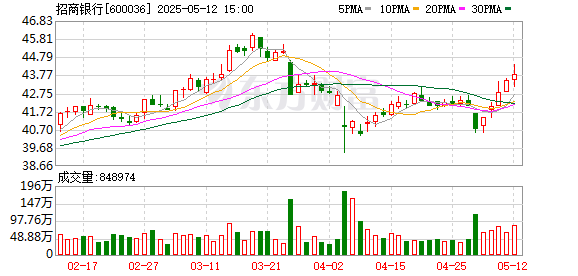
Core Viewpoint - Insurance capital has been actively increasing stakes in bank stocks, particularly state-owned banks, due to their stable performance, low valuations, and high dividend yields, amidst a backdrop of asset scarcity and increasing investment pressure [1][2]. Group 1: Insurance Capital Activity - As of May 9, insurance capital has made 13 stake increases this year, with 6 of these involving bank stocks, including significant investments by Ping An Life in Agricultural Bank, Postal Savings Bank, and China Merchants Bank [1]. - Ping An Life has notably increased its holdings in China Merchants Bank, surpassing the 5% threshold and reaching a 12% stake by May 9, with an average share price of 44.7757 HKD [1]. - The total book value of stocks held by Ping An is reported at 437.379 billion CNY, reflecting a nearly 50% year-on-year increase [1]. Group 2: Investment Preferences and Strategies - The preference for state-owned banks is attributed to their strong operational fundamentals, low volatility, and attractive dividend yields, with major banks offering average dividend yields above 5% [2]. - Ping An's management has indicated that the average dividend yield of over 5% provides a significant spread compared to the current insurance product guarantee rates of 2%-2.5%, making core bank stocks ideal investment targets [2]. - Insurance companies face challenges in investment decisions due to new financial instrument regulations, leading to a focus on long-term stock investments and high-dividend strategies to mitigate profit volatility [2]. Group 3: Market Dynamics and Future Outlook - Current statistics show that listed insurance companies have a low allocation to FVOCI equity assets, with only about 11% in equity allocation and 5% in OCI equity assets, indicating substantial room for growth [3]. - Recent government policies aimed at encouraging long-term insurance capital market participation are expected to inject significant funds into the market, with estimates suggesting an additional 1.66 trillion CNY could enter the market if equity asset limits are fully utilized [3]. - Projections indicate that insurance capital could contribute an incremental 600-800 billion CNY to the market over the next three years, with high-dividend stocks being a key focus area for future allocations [3].

年内举牌至少13次,险资“爆买”银行股
2 1 Shi Ji Jing Ji Bao Dao· 2025-05-12 11:21
Group 1 - Insurance capital has frequently increased stakes in bank stocks, with 13 instances of stake increases this year, 6 of which are in bank stocks [1] - Ping An Life has notably increased its holdings in China Merchants Bank, with its stake rising to 12% as of May 9, 2023, after multiple purchases [1] - As of the end of 2024, the book value of stocks invested by Ping An is reported to be 437.379 billion yuan, reflecting a nearly 50% increase from 2023 [1] Group 2 - The trend of insurance capital increasing stakes in bank stocks is driven by the "asset shortage" context, with banks, especially state-owned banks, being favored for their stable performance, low valuations, and high dividends [2] - The average dividend yield of the six major state-owned banks' H-shares is above 5%, with Industrial and Commercial Bank of China at 6.05% [2] - Ping An's CEO highlighted the advantages of investing in state-owned banks due to their stable fundamentals and attractive dividend yields compared to current insurance product guaranteed rates [2] Group 3 - Current listed insurance companies have a low proportion of FVOCI equity assets, with only about 11% in equity allocation and 5% in OCI equity assets, indicating significant room for increase [3] - Recent policies encouraging long-term insurance capital investment are expected to boost market participation, including a proposed 600 billion yuan injection into the market [3] - If insurance companies fully utilize the upper limit of equity asset allocation, it could lead to an additional 1.66 trillion yuan in market funds, with high dividends being a key focus for future allocations [3]
深度|从 “债性思维” 到 “股权逻辑” AIC扩容与挑战
2 1 Shi Ji Jing Ji Bao Dao· 2025-05-12 11:17
Core Viewpoint - The expansion of the AIC (Asset Investment Company) license marks a significant step in increasing investment in technology innovation enterprises, with major banks committing substantial funds to establish AICs, thereby enhancing financial support for the development of innovative companies [1][2][3]. Group 1: AIC Development and Expansion - The AIC's development began in 2016 with the initiation of market-oriented debt-to-equity swaps, allowing banks to establish specialized institutions for related business [2]. - The shift from debt restructuring to direct equity investment was catalyzed by pilot programs in Shanghai, laying the groundwork for future AIC growth [2][3]. - As of May 7, 2024, the total signed intention amount for AIC investments has exceeded 380 billion, with pilot programs successfully launched in 18 cities [3]. Group 2: Financial Institutions' Involvement - Major banks like China Merchants Bank, CITIC Bank, and Industrial Bank have announced plans to establish AICs with significant capital contributions, indicating a strong response to regulatory encouragement [1][9]. - The establishment of AICs allows banks to enhance their service capabilities in equity investment, complementing traditional lending practices [6][9]. Group 3: Challenges and Opportunities - Despite the promising outlook, AICs face challenges such as insufficient investment research capabilities, high risk weights, and outdated assessment mechanisms [1][13]. - The transition from a debt-oriented mindset to an equity-focused approach presents five key challenges, including talent shortages and capital consumption pressures [13][15]. - The unique advantages of AICs, such as stable funding sources and the ability to act as patient capital, position them favorably in the investment landscape [10][11]. Group 4: Strategic Collaborations and Models - AIC funds often adopt collaborative models involving government, industry, and financial institutions, which help to mitigate risks and enhance resource integration [4]. - The establishment of AICs is seen as a strategic move to support the growth of technology-driven enterprises and improve the overall financial ecosystem [9][12]. Group 5: Future Directions - The regulatory framework is evolving to support the expansion of AICs, with a focus on enhancing their role in financing technology innovation and supporting small and medium-sized enterprises [2][10]. - The need for banks to adapt their risk management and investment strategies to align with the dynamics of equity investment is emphasized, highlighting the importance of developing a robust investment culture [15][16].

招行、中信银行拟设金融资产投资公司
Nan Fang Du Shi Bao· 2025-05-11 23:11
Core Viewpoint - Several commercial banks in China are establishing financial asset investment companies (AIC) to enhance their service capabilities and support the economy, following regulatory encouragement to expand the pilot program for AICs [1][4]. Group 1: Company Announcements - China Merchants Bank announced on May 8 that it plans to invest 15 billion yuan to establish a wholly-owned financial asset investment company, which will become a first-level subsidiary upon successful establishment [2]. - CITIC Bank also announced on the same day its intention to invest 10 billion yuan to set up a wholly-owned subsidiary named CITIC Financial Asset Investment Co., Ltd. [2]. - Both banks emphasized that these investments align with their business development needs and will not significantly impact their financial status or operational results [2][3]. Group 2: Regulatory Context - On March 5, the National Financial Regulatory Administration issued a notice expanding the pilot program for AICs from 18 cities to 14 provinces, supporting commercial banks in establishing AICs [1][4]. - Prior to this, five state-owned banks had already established AICs in 2017, which have been exploring important models for financial support of technological innovation [4]. Group 3: Market Implications - The establishment of AICs marks a significant development in the market, as it allows banks to engage in equity investments, thereby helping companies reduce leverage and mitigate financial risks [6][7]. - AICs are evolving from a single debt-to-equity tool to a comprehensive investment platform, expanding their business scope to include mergers and acquisitions and mezzanine financing [6][7]. - The backing of banks provides AICs with stronger resource allocation capabilities, enabling them to offer diversified financial services to technology innovation enterprises throughout their lifecycle [7].
银行业本周聚焦:2024年末,42家上市银行的债券投资对业绩贡献度如何?
GOLDEN SUN SECURITIES· 2025-05-11 10:23
Investment Rating - The report maintains an "Increase" rating for the banking sector [5] Core Insights - The report highlights that by the end of 2024, the bond investments of 42 listed banks significantly contributed to their performance, particularly due to the continuous decline in bond market interest rates, with a cumulative drop of 88 basis points in the 10-year government bond yield [1] - The report emphasizes the substantial floating profits accumulated in the FV-OCI financial assets due to fair value changes, which banks have utilized to support their performance through timely disposals of financial assets [1][4] - The report identifies that the floating profits from FV-OCI assets are particularly significant for certain city commercial banks and rural commercial banks, with some banks showing floating profit to profit ratios exceeding 100% [2][3] Summary by Sections 1. FV-OCI Floating Profit Situation - State-owned banks dominate the floating profit scale, with China Construction Bank and Agricultural Bank of China exceeding 50 billion yuan in floating profits by the end of 2024 [1] - City and rural commercial banks show high ratios of FV-OCI floating profits to profits, with Lanzhou Bank reaching 126.9% [2] - The contribution of FV-OCI floating profits to core Tier 1 capital is significant for several city and rural commercial banks, with notable increases year-on-year [3] 2. Financial Asset Disposal Income Situation - In 2024, listed banks disposed of AC financial assets generating a total income of 50.29 billion yuan, an increase of 82.5% year-on-year, and FV-OCI financial assets generating 85.36 billion yuan, an increase of 134.4% year-on-year, leading to a total disposal income of 135.6 billion yuan [4][8] - The report notes that while the disposal income is significant, it does not imply a substantial increase in the scale of asset disposals, as the gains are influenced by the declining interest rates in the bond market [4] 3. Sector Outlook - The report suggests that while short-term impacts from tariff policies may affect exports, long-term domestic policies aimed at stabilizing real estate, promoting consumption, and enhancing social welfare are expected to support economic growth [9] - The banking sector is anticipated to benefit from policy catalysts, with specific banks like Ningbo Bank, Postal Savings Bank, and China Merchants Bank highlighted as potential investment opportunities [9]