
BANK OF CHINA(03988)

Search documents
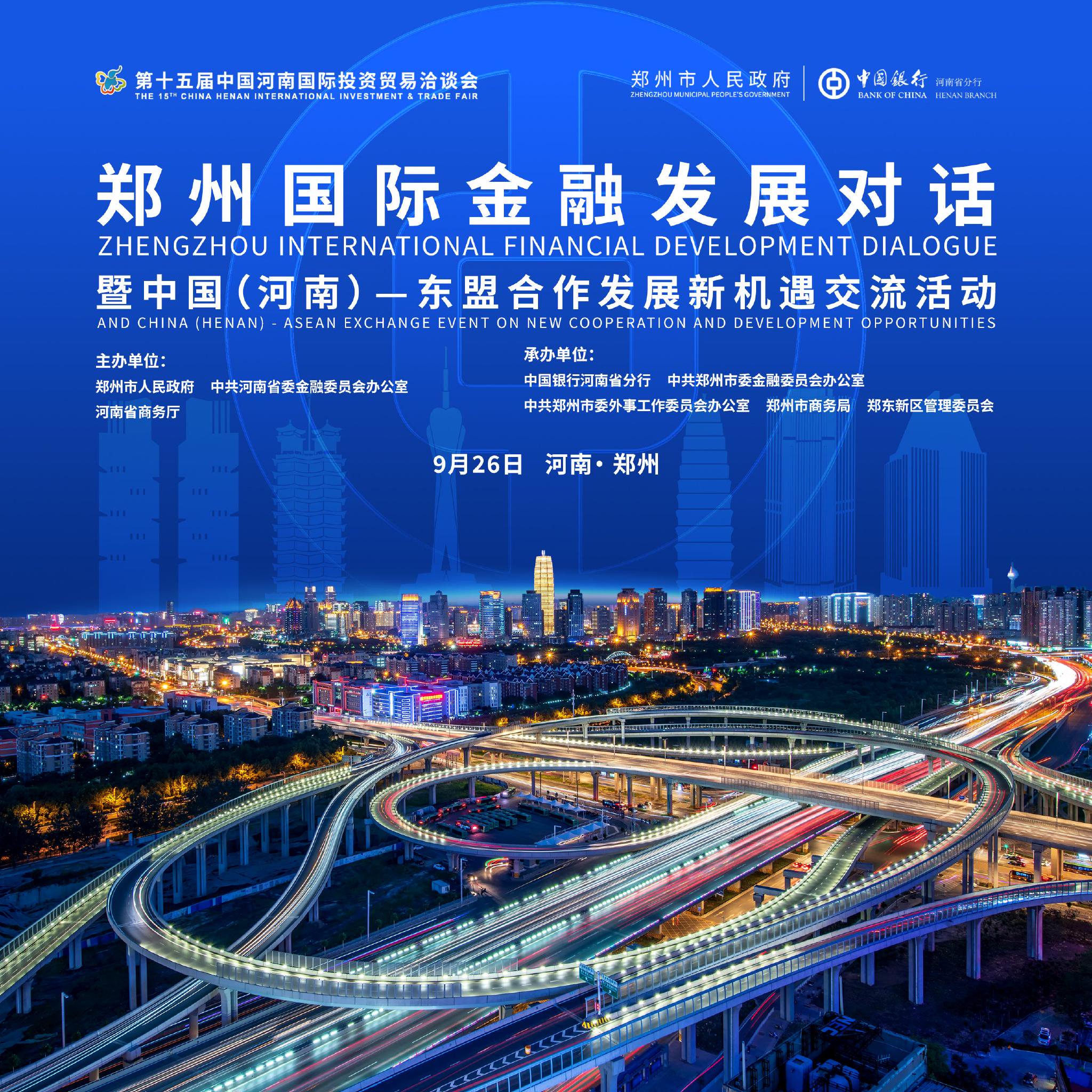
以金融力量赋能“河南-东盟”合作发展——郑州国际金融发展对话暨中国(河南)-东盟合作发展新机遇交流活动在郑州举办
Zhong Guo Jin Rong Xin Xi Wang· 2025-09-27 07:05
Core Insights - The event held in Zhengzhou focused on financial innovation and cross-border finance to enhance the high-level opening-up of the Henan-ASEAN regional market [3][4] - Henan's trade with ASEAN has surpassed 100 billion in 2024, with an 8.8% growth in the first eight months of this year, making ASEAN Henan's largest trading partner [3] - Financial institutions are encouraged to leverage their market strengths to support industrial upgrades and promote cross-border financial advantages [3][4] Group 1: Event Overview - The event was organized by the Zhengzhou municipal government and various financial institutions, including the Bank of China Henan branch, as part of the 15th China Henan International Investment and Trade Fair series [5] - Over 300 financial experts, scholars, and representatives from government and enterprises participated in discussions [3] Group 2: Financial Cooperation and Innovation - Financial institutions in Henan are expected to reduce financing costs and currency risks while enhancing trade predictability through innovative financial services [4] - The Bank of China Henan branch aims to continue innovating financial products and services to support Henan's development as a new inland open highland [4][5] Group 3: Future Cooperation Opportunities - There is significant potential for deepening cooperation between Henan and ASEAN in various sectors, including logistics, culture, tourism, education, and technology [3] - The integration of logistics channels and supply chains is seen as a key area for future collaboration [3]

北京监管局一日开出五张罚单 银行贷款“三查”失职问题集中曝光
Jing Ji Guan Cha Bao· 2025-09-27 04:28
Core Viewpoint - The recent administrative penalties imposed on five banks in Beijing highlight the ongoing regulatory focus on compliance in credit operations, particularly regarding the "three checks" system in loan management [1][2][5]. Group 1: Regulatory Actions - Five banks, including major state-owned banks and joint-stock banks, were fined 350,000 yuan each for violations related to loan management, specifically the "three checks" system [1][2][4]. - The "three checks" system, which includes pre-loan investigation, in-process review, and post-loan inspection, is crucial for managing loan risks and ensuring asset quality [2][3]. Group 2: Systemic Risks and Challenges - Inadequate management of working capital loans can lead to misuse of funds and potential systemic financial risks if multiple banks face similar issues [3][4]. - The penalties reflect a broader industry challenge, indicating that loan management problems are not isolated incidents but rather a common issue across the banking sector [4]. Group 3: Regulatory Environment and Future Directions - The regulatory authority has emphasized the importance of compliance and risk management in credit operations, with a focus on enhancing internal controls within banks [5][6]. - Future regulatory measures are expected to diversify, incorporating tools like window guidance and stress testing to create a multi-layered regulatory framework [5]. Group 4: Cultural and Mechanism Reforms - The penalties serve as a catalyst for banks to rethink their internal assessment criteria, ensuring that compliance and asset quality are prioritized alongside growth metrics [6]. - The adoption of advanced technologies such as big data and artificial intelligence is necessary to improve the efficiency and effectiveness of the "three checks" system [6].



中国银行全球经济金融展望报告(2025年第4季度):全球经济增长显现韧性
Sou Hu Cai Jing· 2025-09-27 02:14
Economic Overview - The global economy showed signs of recovery in Q3 2025, with total demand slightly rebounding and total supply remaining stable. However, the growth outlook for Q4 is mixed, with increasing uncertainties and structural characteristics becoming more pronounced [1][10][11] - Major economies exhibited divergent performances: the US economy improved, Europe showed weak recovery, Japan faced growth pressures, and India exceeded expectations [10][11][12] Inflation and Trade - Global inflation is decreasing, but the pace of decline is slowing and becoming more differentiated. In August, the US CPI rose to 2.9% year-on-year, while the Eurozone HICP increased by 2.1% [1][22][23] - Trade policies have seen a reduction in their disruptive impact, with the WTO raising its 2025 goods trade growth forecast to 0.9% [1][26][27] Financial Market Adjustments - The financial markets have undergone significant adjustments, with the Federal Reserve adopting a dovish stance and cutting interest rates by 25 basis points in September. This led to a net inflow of $82.98 billion into emerging market securities in July and August [2][3][10] - The dollar index has been fluctuating at low levels, and global stock markets have generally trended upward, with the MSCI global index rising over 10% [2][3][10] Capital Flows and Investment Trends - International capital is returning to emerging markets, with foreign direct investment (FDI) in Southeast Asia and Mexico expected to continue growing. Emerging market securities are increasingly favored by investors seeking resilient economies [2][11][12] - The report highlights potential areas for deepening cooperation between China and Europe in trade, green transformation, investment agreements, and multilateral governance under the backdrop of Trump's second term [2][11] Fiscal Policies - Major economies are maintaining an expansionary fiscal stance, but fiscal pressures are becoming more pronounced. The US fiscal deficit for FY 2025 is projected to grow by 7.7% year-on-year [2][33][36] - The Eurozone's debt-to-GDP ratio has risen to 78.1%, indicating increasing fiscal challenges [2][33][36]

华夏基金管理有限公司关于以通讯方式召开华夏中证沪港深500交易型 开放式指数证券投资基金基金份额持有人大会的第二次提示性公告
Zhong Guo Zheng Quan Bao - Zhong Zheng Wang· 2025-09-27 00:45
Group 1 - The core point of the announcement is the decision by Huaxia Fund Management Co., Ltd. to hold a communication-based meeting for the fund holders of the Huaxia CSI Hong Kong-Shenzhen 500 ETF to discuss the proposal for the fund's continued operation [1][5][36] - The meeting will be held via communication methods, with voting open from September 30, 2025, to October 27, 2025, at 17:00 [2][10] - The rights registration date for participating in the meeting is set for September 29, 2025, allowing all registered fund holders to vote [6][29] Group 2 - Fund holders can submit their votes through direct delivery, mail, or online methods, with specific addresses and contact information provided for submissions [3][17][18] - The voting process allows for both direct voting and proxy voting, with detailed requirements for documentation and identification for both individual and institutional holders [8][11][12] - The proposal for the fund's continued operation is based on the fund's net asset value being below 50 million yuan for 60 consecutive working days, necessitating this meeting [37]
智通ADR统计|9月27日





智通财经网· 2025-09-27 00:06
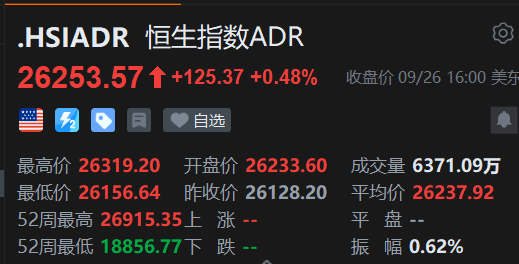
Market Overview - The Hang Seng Index (HSI) closed at 26,253.57, up by 125.37 points or 0.48% as of September 26, 16:00 [1] - The index reached a high of 26,319.20 and a low of 26,156.64 during the trading session, with a trading volume of 63.71 million [1] Major Blue-Chip Stocks Performance - HSBC Holdings closed at HKD 108.633, an increase of 1.081% from the previous close [2] - Tencent Holdings closed at HKD 648.733, up by 0.73% compared to the last trading session [2] ADR Performance Summary - Tencent Holdings (ADR: TCEHY) increased by HKD 4.733, or 0.73% [3] - Alibaba Group (ADR: BABA) rose by HKD 0.672, or 0.40% [3] - HSBC Holdings (ADR: HSBC) saw an increase of HKD 1.933, or 1.81% [3] - Xiaomi Group (ADR: XIACY) gained HKD 0.584, or 1.07% [3] - AIA Group (ADR: AAGIY) increased by HKD 0.222, or 0.31% [3] - Meituan (ADR: MPNGY) rose by HKD 0.534, or 0.53% [3] - Ctrip Group (ADR: TCOM) increased by HKD 8.120, or 1.39% [3] - JD.com (ADR: ID) rose by HKD 1.696, or 1.28% [3]
五大行同日官宣!银行监事会“谢幕”
Guo Ji Jin Rong Bao· 2025-09-26 13:10
Core Viewpoint - The major state-owned banks in China are abolishing their supervisory boards, transitioning to a governance structure led by audit committees, which is expected to enhance management professionalism and independence [1][2][3]. Group 1: Announcement of Supervisory Board Abolishment - On September 25, five major state-owned banks, including Industrial and Commercial Bank of China, China Construction Bank, Agricultural Bank of China, Bank of China, and Bank of Communications, announced the receipt of regulatory approval to abolish their supervisory boards [2]. - This decision has been in the works for some time, with proposals to eliminate supervisory boards appearing in board resolutions as early as April 29 [2]. - Other banks, such as Shanghai Rural Commercial Bank and China Merchants Bank, are also expected to follow suit, with nearly 20 institutions planning to abolish their supervisory boards this year [1][3]. Group 2: Legal and Regulatory Framework - The new Company Law allows limited liability companies to establish audit committees within the board of directors to exercise the functions of supervisory boards, providing a legal basis for banks to abolish their supervisory boards [3]. - The National Financial Regulatory Administration has indicated that financial institutions can choose to replace supervisory boards with audit committees, aligning regulatory policies with legal revisions [3][4]. Group 3: Internal Governance Structure Post-Abolishment - The banks will adopt a single-tier governance structure led by audit committees, which will be composed mainly of independent directors, enhancing supervisory efficiency through professional division of labor [4]. - The transition to audit committees is expected to improve the professionalism and independence of oversight functions, although it will depend on the effective operation of these committees [5].

【江北嘴发布】中国人民银行重庆市分行:全力保障2025年世界智能产业博览会“便捷支付 畅行无阻”
Zhong Guo Jin Rong Xin Xi Wang· 2025-09-26 12:25
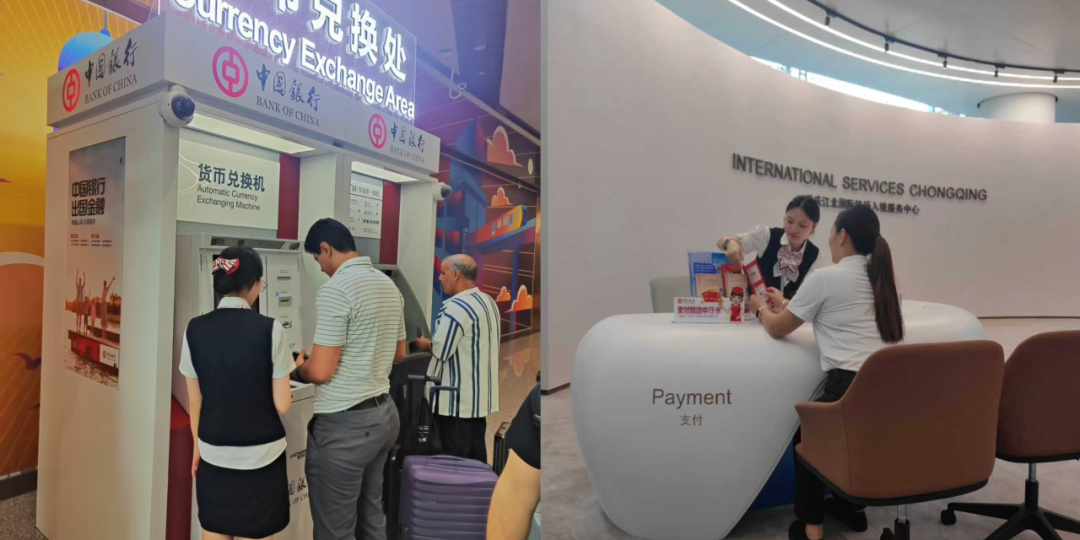
Core Insights - The 2025 World Intelligent Industry Expo was held in Chongqing, with the People's Bank of China (PBOC) implementing various measures to enhance payment experiences for international attendees [1] Payment Services at the Airport - The PBOC guided the establishment of a payment service counter at Jiangbei Airport to assist foreign visitors with currency exchange and payment services, including mobile payment setup and ATM access [2] - Since the trial operation began in May 2025, over 20,000 foreign visitors have been served at the airport's service center [2] Transportation and Accommodation Payment Solutions - All subway stations in Chongqing now accept foreign card payments, ensuring ease of public transport for international visitors [3] - During the expo, 22 hotels and nearby merchants were designated as key foreign card-accepting businesses, with training and support provided to ensure smooth transactions [3] - As of 2025, the total amount of foreign card transactions reached 255 million yuan, marking a 60% year-on-year increase [3] Mobile Payment Acceptance - The PBOC has encouraged payment platforms like Alipay and WeChat Pay to enhance the usability of mobile payments for foreign visitors by optimizing card binding processes and offering transaction fee waivers [6] - The number of mobile payment transactions and amounts for foreign visitors increased by 210% and 180% respectively since 2025 [6]
中国银行黑龙江省分行将金融知识送进校园
Zhong Guo Jin Rong Xin Xi Wang· 2025-09-26 12:25
Core Viewpoint - The article highlights the initiative by the Bank of China Heilongjiang Branch to promote financial education among students, focusing on safeguarding financial rights and enhancing financial literacy in a fun and engaging manner [1][2]. Group 1: Financial Education Activities - The Bank of China Heilongjiang Branch organized a financial knowledge dissemination event at a primary school in Harbin, incorporating a "Little Banker" simulation to make learning about finance interactive and enjoyable [1]. - Bank staff introduced basic knowledge about the Renminbi and mobile payment concepts, emphasizing security measures such as protecting payment passwords and avoiding scams [1]. Group 2: Student Engagement and Learning - The interactive Q&A session sparked lively discussions among students about "online game recharge scams," allowing them to share personal experiences and learn about prevention methods in a relaxed environment [1]. - A role-playing activity was conducted where students acted out scenarios involving telecom fraud, helping them recognize scam tactics and understand the importance of protecting family finances [1]. Group 3: Future Initiatives - The financial education initiative received positive feedback from schools, parents, and students, with the Bank of China Heilongjiang Branch committing to continue promoting financial literacy and innovating educational activities for broader community impact [2].
核准!国有大行,集体公告!
证券时报· 2025-09-26 10:14
国有大行集体公告 日前,中国银行、工商银行、农业银行、建设银行和交通银行均公告宣布,其公司章程修订已获得国家金 融监督管理总局核准,并据此正式不再设立监事会,转由董事会下设的审计委员会承接原属监事会的法定 职责。 9月25日,中国银行、农业银行、工商银行、建设银行、交通银行均发布关于不再设立监事会的公告 称,公司章程修订已获监管核准,不再设立监事会。 日前,邮储银行发布关于召开2025年第二次临时股东大会的通知显示,将于10月9日上午召开的股东大会 上审议关于该行不再设立监事会的议案。 这意味着,六大国有行全部取消监事会。 具体来看,各家银行的改革步骤高度一致。中国银行、工商银行、农业银行、建设银行和交通银行均于 2025年6月27日召开的2024年度股东大会上,审议批准了关于修订公司章程以及不再设立监事会的相关 议案。各家银行表示,陆续于近日收到了国家金融监督管理总局同意章程修订的批复文件。 随着新章程获得监管核准,相关调整正式生效。中国银行、农业银行在章程核准之日起即不再设立监事 会;建设银行和交通银行则明确了具体的生效日期,分别为2025年9月23日和9月25日。改革的核心内容 是,原由监事会行使的、依 ...
金融助力扣好大学“第一粒扣子” 中行上海市分行守护莘莘学子青春启航
Zhong Guo Jin Rong Xin Xi Wang· 2025-09-26 09:48
Group 1 - The core viewpoint of the articles emphasizes the commitment of the Bank of China Shanghai Branch to support education through comprehensive financial services for students, particularly during the new school year [1][2][3] Group 2 - The Bank of China Shanghai Branch has developed a financial service system that covers all stakeholders in education, including families, teachers, students, and schools, aiming to support over 100,000 new students [1] - The bank has introduced a "financial service welcome package" and a "consumption package" to meet the diverse needs of new students, providing essential services such as health insurance policy explanations and social security card applications [1] - The bank has organized financial consumer protection knowledge activities in universities to enhance students' awareness of financial safety and good consumption habits, focusing on preventing telecom and online fraud [2] - The bank collaborates with universities to implement a "financial talent cultivation action plan," which includes a comprehensive career planning training system to help students develop their potential and prepare for their careers [3] - The bank aims to strengthen cooperation with educational institutions and innovate financial products and services to contribute to the high-quality development of education [3]