
MICROSOFT(04338)

Search documents
英伟达、微软、亚马逊正洽谈向OpenAI投资高达600亿美元
Xin Lang Cai Jing· 2026-01-29 03:07
据报道,OpenAI 正从其一些最大的科技合作伙伴那里筹集巨额资金,力图筹集至高达 1000 亿美元,以 支持其 AI 日益增长的需求。据一位知情人士透露,英伟达是一家现有投资者,其芯片为 OpenAI 的人 工智能模型提供动力,目前正洽谈投资高达 300 亿美元。微软作为长期支持者,拥有向云客户销售 OpenAI 模型的独家权利,目前正洽谈投资金额不足 100 亿美元。而亚马逊作为新投资者,也正在洽谈 投资远超 100 亿美元,甚至可能超过 200 亿美元。两位知情人士表示,这些投资将是现有投资者软银的 补充,软银也在洽谈投资最高达300亿美元。如果这轮非凡融资成行,将能缓解对公司现金消耗的投资 者的担忧。公开市场投资者最近对 OpenAI 履行对甲骨文和微软的支出承诺的能力持怀疑态度。新一轮 融资前的公司估值可能达到 7300 亿美元。 责任编辑:王永生 据报道,OpenAI 正从其一些最大的科技合作伙伴那里筹集巨额资金,力图筹集至高达 1000 亿美元,以 支持其 AI 日益增长的需求。据一位知情人士透露,英伟达是一家现有投资者,其芯片为 OpenAI 的人 工智能模型提供动力,目前正洽谈投资高达 30 ...
微软:2026 财年第二季度初步解读
2026-01-29 02:42
28 January 2026 | 4:58PM EST Equity Research Microsoft Corp. (MSFT): 2QFY26 First Take MSFT is indicated down 4% after market after reporting 2Q26 results: We believe Callie Valenti +1(212)357-2790 | callie.valenti@gs.com Goldman Sachs & Co. LLC Selina Zhang +1(212)357-9979 | selina.zhang@gs.com Goldman Sachs & Co. LLC Praachi Arora +1(332)245-7970 | praachi.arora@gs.com Goldman Sachs India SPL c45a43530f604d12bcb9a82b5aa6b9f6 Key results: Other details Key commentary we're watching for on the call: Goldman ...

押注AI微软资本支出再创新高,盘后跌幅超6%
Di Yi Cai Jing· 2026-01-29 02:36
当地时间1月28日,微软公布了截至2025年12月31日的2026财年第二财季业绩。 尽管营收和净利润双双增长,但资本支出的大幅增长让微软股价在盘后下跌超6%。 财报显示,微软第二财季营收为813亿美元,同比增长17%。按美国通用会计准则计算,净利润为385亿美元,增长60%。按非美国通用会计准则,净利润为 309亿美元,增长23%。 该财季微软的资本支出达到375亿美元,同比增长66%,同时微软连续两个季度的资本支出创下新高。财报电话会议上,微软执行副总裁兼首席财务官艾米· 胡德(Amy Hood)表示,调整OpenAI影响后,第二财季微软其他收入和支出略呈负值,低于预期,主要由投资净亏损驱动。 第二财季大约三分之二的资本支出用于短期资产,主要是GPU和CPU,以支持不断增长的Azure平台需求、增加研发团队的资源以加速产品创新,以及在持 续更换已报废的服务器和网络设备之间取得平衡。剩余支出用于长期资产,以支持未来 15 年及更长时间内的盈利,其中包括67亿美元的融资租赁,主要用 于大型数据中心。 微软连续两个季度的资本支出创下新高。 在该季度,微软也面临着诉讼挑战。去年10月27日,澳大利亚竞争与消费者委 ...

微软Q2业绩会实录:大部分投入资本周期已通过合同锁定
Xin Lang Ke Ji· 2026-01-29 02:08
财报发布后,微软CEO萨提亚·纳德拉(Satya Nadella)和执行副总裁兼CFO艾米·胡德(Amy Hood)等公司高管出席了随后举行的财报电话会议,解读财报要点,并回答分析师提问。 以下是电话会议实录: 摩根士丹利分析师基思·维斯(Keith Weiss):从财报数据来看, 微软本季度每股摊薄收益增 长了24%( non-GAAP),这一结果非常出色,充分体现了团队的执行力。营收增长稳健,利润 率也在提升,但盘后交易中股价却出现下跌。我认为,投资者担忧的核心问题之一是资本支出增 速过快,甚至超出预期,这引发了市场对长期资本支出投资回报率(ROI)的担忧。因此,希望 各位能帮助我们厘清几个问题:如何看待产能扩张及其对未来Azure增长的推动作用?更重要的 是,该如何看待这一投资在未来实现时的回报率? 艾米·胡德:谢谢基思。我先回答,萨提亚之后会补充更宏观的观点。我认为你提出的问题非常直 接,也是很多投资者关心的,即资本支出与Azure营收之间的关联。其实上季度和本季度,我们 都在更具体地说明资本支出(尤其是CPU和GPU等短期资产的支出)的去向。有时,或许可以 将我们给出的Azure指引理解为"分配产能 ...
微软第二财季净利润384.58亿美元,同比增长60%
Sou Hu Cai Jing· 2026-01-29 01:57
Core Viewpoint - Microsoft reported strong financial results for Q2 of FY2026, with significant revenue and profit growth, but faced a decline in stock price due to slowing cloud business growth [1][2]. Financial Performance - Total revenue for Q2 was $81.273 billion, a 17% increase from $69.632 billion year-over-year, with a 15% increase when adjusted for constant currency [1][5]. - Net profit reached $38.458 billion, up 60% from $24.108 billion year-over-year, with a 57% increase on a constant currency basis [1][5]. - Diluted earnings per share were $5.16, a 60% increase from $3.23 year-over-year, with a 58% increase when adjusted for constant currency [5]. Segment Performance - Cloud revenue amounted to $51.5 billion, a 26% year-over-year increase, with a 24% increase on a constant currency basis [5]. - Productivity and Business Processes revenue was $34.1 billion, up 16% year-over-year, with LinkedIn revenue growing 11% [5]. - Intelligent Cloud revenue reached $32.9 billion, a 29% increase year-over-year, with Azure and other cloud services growing 39% [5]. - More Personal Computing revenue was $14.3 billion, a 3% decline year-over-year, although Windows OEM and devices revenue grew by 1% [5]. Shareholder Returns - Microsoft returned $12.7 billion to shareholders through dividends and stock buybacks, a 32% increase year-over-year [5].
全文|微软Q2业绩会实录:大部分投入资本周期已通过合同锁定
Xin Lang Cai Jing· 2026-01-29 01:55
专题:聚焦美股2025年第四季度财报 摩根士丹利分析师基思·维斯(Keith Weiss):从财报数据来看, 微软本季度每股摊薄收益增长了24% ( non-GAAP),这一结果非常出色,充分体现了团队的执行力。营收增长稳健,利润率也在提升,但 盘后交易中股价却出现下跌。我认为,投资者担忧的核心问题之一是资本支出增速过快,甚至超出预 期,这引发了市场对长期资本支出投资回报率(ROI)的担忧。因此,希望各位能帮助我们厘清几个问 题:如何看待产能扩张及其对未来Azure增长的推动作用?更重要的是,该如何看待这一投资在未来实 现时的回报率? 艾米·胡德:谢谢基思。我先回答,萨提亚之后会补充更宏观的观点。我认为你提出的问题非常直接, 也是很多投资者关心的,即资本支出与Azure营收之间的关联。其实上季度和本季度,我们都在更具体 地说明资本支出(尤其是CPU和GPU等短期资产的支出)的去向。有时,或许可以将我们给出的Azure 指引理解为"分配产能指引",即我们能实现的Azure营收规模,因为当我们投入资金、将GPU(重中之 重)部署到集群中时,实际上是在做长期决策。 我们首先要满足的是自研应用的使用增长需求,比如Mi ...
10票赞成2票反对,美联储宣布不降息!鲍威尔向继任者提议:与美国政治“划清界限”;微软、特斯拉公布“成绩单”,黄金突破5500美元关口
Mei Ri Jing Ji Xin Wen· 2026-01-29 01:26
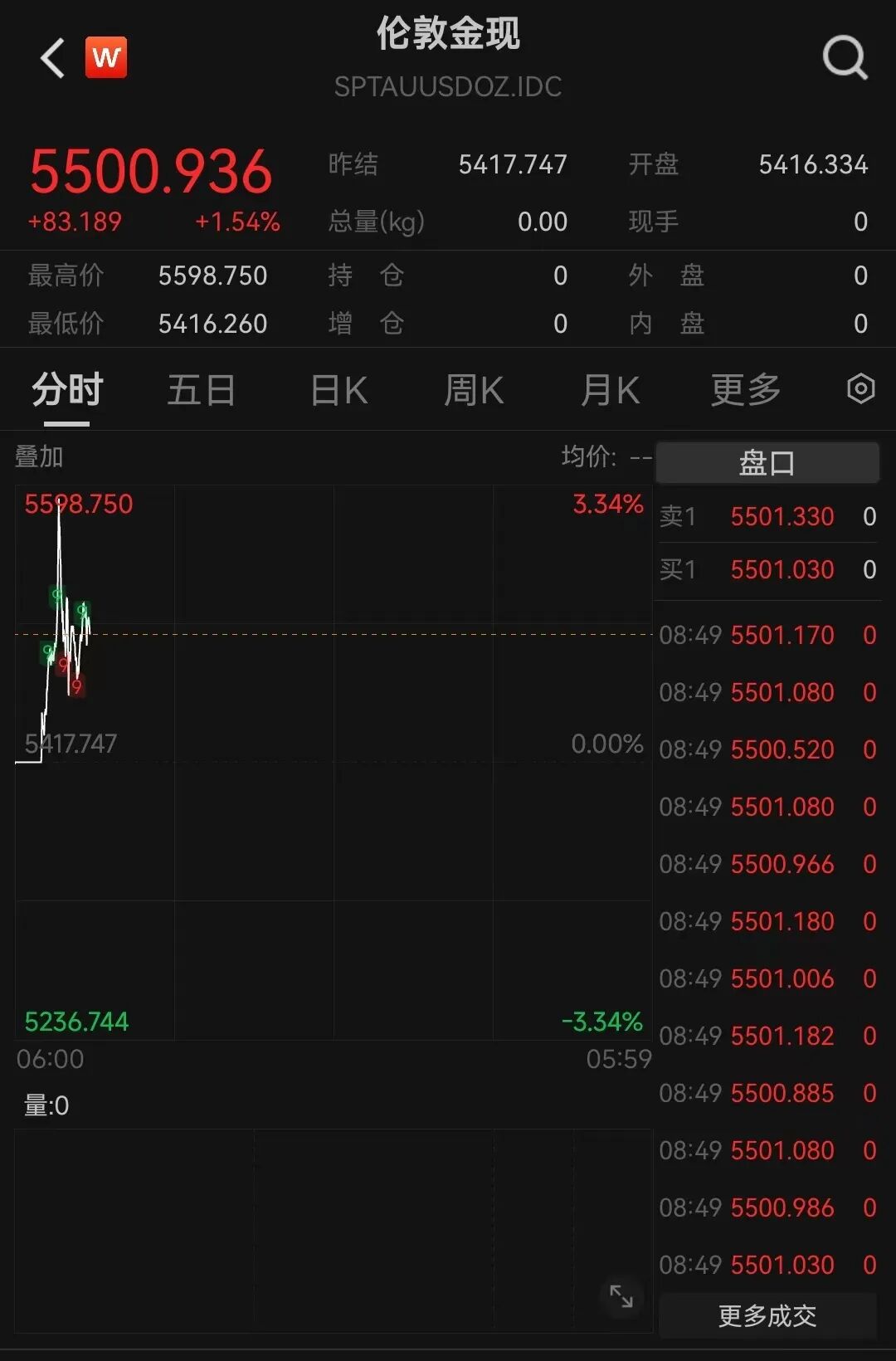
当地时间1月28日,美联储主席鲍威尔表示,建议下一届美联储主席与美国政治"划清界限"。 当天早些时候,美联储公布最新一期货币政策会议纪要,宣布将联邦基金利率目标区间维持在3.5%至3.75%之间不变。随后,美联储主席鲍威尔就该决定 举行发布会,并就美国当前经济状况及美联储下任主席等问题接受记者提问。 会议纪要显示,现有指标表明,就业增长仍处于低位,失业率已显现出趋于稳定的迹象。通胀水平仍处于较高水平。委员会致力于实现最大就业和长期通 胀率达到2%的目标。经济前景的不确定性仍然很高。委员会密切关注其双重使命面临的风险。为支持其目标,美联储决定将联邦基金利率目标区间继续 维持在3.5%至3.75%之间。 具体表决细节显示,美联储以10票赞成、2票反对的结果,决定将基准利率维持在3.5%至3.75%区间。美联储理事沃勒以及米兰投下反对票,主张降息25 个基点。 在此次利率政策出台前,市场普遍预期美联储将在本周政策会议上维持利率不变,此前该机构已在2025下半年连续三次降息。 美联储主席鲍威尔在发布会表示,美国失业率已出现一些企稳迹象,劳动力市场在逐渐走软后可能正在趋于稳定,招聘、职位空缺和工资增长几乎没有变 化;消 ...
微软财报亮眼却遭市场“用脚投票”:云业务增速微降 AI“狂烧钱”吓坏投资者
Jin Rong Jie· 2026-01-29 00:33
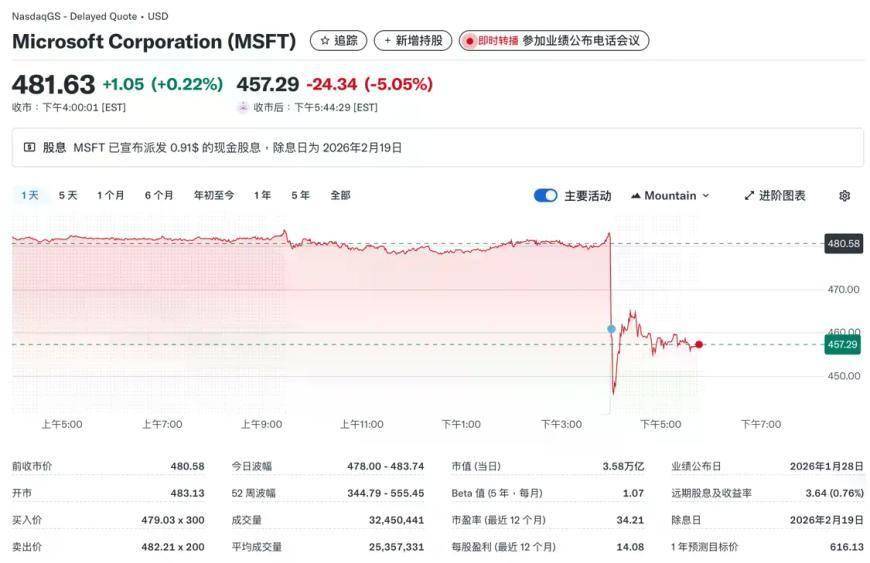
Core Viewpoint - Microsoft reported strong financial results for Q2 FY2026, exceeding Wall Street expectations, but concerns over slowing Azure growth and record capital expenditures led to a significant drop in stock price after hours [1][2]. Financial Performance - For the second quarter ending December 31, Microsoft achieved revenue of $81.27 billion, a year-over-year increase of approximately 17%, surpassing the market expectation of $80.3 billion [2]. - Net profit reached $38.46 billion, translating to earnings per share of $5.16, significantly above the expected $3.92 [2]. - Adjusted earnings per share were $4.14, also exceeding forecasts [2]. - A notable portion of the profit increase was attributed to changes in accounting treatment for the investment in OpenAI, contributing an additional $1.02 to earnings per share [2]. Cloud Business Performance - Microsoft's "Intelligent Cloud" segment, including Azure, generated revenue of $32.91 billion, a nearly 29% year-over-year increase, slightly above expectations [3]. - Azure and other cloud services revenue grew by 38% year-over-year at constant currency, matching analyst predictions, but the growth rate slowed by one percentage point compared to the previous quarter [3]. - Despite the overall cloud revenue surpassing $50 billion for the first time at $51.5 billion, the deceleration in Azure's growth raised concerns about the sustainability of AI-driven cloud growth [3]. Capital Expenditures and AI Investment - Capital expenditures surged to $37.5 billion, a 66% year-over-year increase, exceeding analyst expectations of $36.2 billion [4]. - Approximately two-thirds of this expenditure was allocated to computing chips for data centers to meet AI demand [4]. - CEO Satya Nadella noted an increase of nearly 1 gigawatt in computing capacity during the quarter, but the significant investment raised questions about the return on AI investments [4]. - The "remaining performance obligations" (RPO), indicating future revenue from signed contracts, reached a record $625 billion, more than doubling year-over-year, with 45% of this amount linked to agreements with OpenAI [4][5]. Competitive Landscape and Stock Performance - Microsoft is the first among major cloud service companies to report quarterly financial results, serving as a key indicator of the efficiency of AI investments among tech giants [7]. - In contrast to Microsoft's stock decline, Meta's stock rose significantly after announcing increased AI spending, highlighting differing market perceptions of AI strategies [7]. - The emergence of competitors like Google's Gemini model and Anthropic is intensifying pressure on Microsoft's AI and traditional software businesses [7]. - As of the close on Wednesday, Microsoft's stock was priced at $481.63, experiencing a drop of over 7% in after-hours trading, and a decline of approximately 11% over the past three months, underperforming the S&P 500 index, which rose by 1% during the same period [7].
微软股价盘后大跌,支出创纪录新高且云业务增长放缓
Sou Hu Cai Jing· 2026-01-29 00:31
钛媒体App 1月29日消息, 微软股价大幅下跌,该公司支出飙升至历史新高,而云业务销售额增长放 缓,投资者担心其人工智能投资可能需要比预期更长的时间才能获得回报。第二财季资本支出达到375 亿美元,比上年同期增长66%,超过分析师预期的362亿美元。经汇率波动调整后,Azure云计算部门当 季营收增长38%,勉强符合分析师预期。但这一增速较上一季度放缓。该公司预计当前财季Azure销售 额将增长37%至38%。微软股价在盘后交易中下跌约7%,纽约常规交易时段收于481.63美元。(广角观 察) ...