
HTSC(06886)

Search documents
华泰证券:港股斜率放缓,空间仍在
Jin Rong Jie· 2026-01-19 00:44
Market Overview - The Hong Kong stock market experienced fluctuations last week, rebounding significantly in the first half due to expectations around AI applications, easing overseas monetary policy, and short covering, but cooling down in the latter half, showing relative resilience [1] - Key factors driving the market rebound in Q1 remain unchanged, including overall loose financial conditions, foreign capital and southbound capital returning, upward revisions in profit expectations, and the attractiveness of Hong Kong stocks compared to A-shares [1] - The market sentiment has improved, with fear indicators moving out of panic zones and a notable decline in short positions, indicating a potential right-side harvesting period for the market [1] Earnings and Revenue Forecasts - Non-financial earnings and revenue forecasts have been revised upwards, with the most significant increases seen in the metals and electric new energy sectors [2] - Over the past four weeks, the consensus forecast for non-financial earnings has been revised up by 0.2%, while revenue forecasts have been slightly adjusted down by 0.1% [2] - The sectors with the largest upward revisions in earnings forecasts include metals (5.5%), electric new energy (2.8%), and light industry (2.1%) [2] Capital Flow and Liquidity - There has been a significant inflow of foreign capital, with net inflows into Hong Kong stocks reaching $2.82 billion, compared to $1.54 billion the previous week [3] - Active foreign capital has turned into net inflows, with the largest weekly net inflow since September 2024, while passive foreign capital inflows have also increased [3] - Southbound capital inflows have slowed, with approximately HKD 10.05 billion net inflow last week, primarily into media, computing, and retail sectors [3] Market Sentiment - The sentiment index for Hong Kong stocks has improved, reaching a reading of 33.7, indicating a recovery from panic levels [3] - Historical data suggests that entering the "panic zone" has led to a 100% success rate for Hong Kong stocks over the following month since the end of 2023 [3] - The current market environment is seen as a favorable time for positioning, with reduced short selling pressure and a shift towards a right-side harvesting phase [3] Investment Recommendations - Short-term focus should be on sectors related to the AI chain (semiconductors, software) and innovative pharmaceuticals, with a gradual accumulation strategy for high-quality new consumer stocks [4] - Mid-term recommendations include overweighting upstream sectors in the power chain (electric equipment and metals like copper and aluminum), insurance, and local real estate in Hong Kong [4] - Upcoming economic indicators to watch include GDP, industrial output, and retail sales figures [4]


华泰证券:通胀+“耗材型”资本开支周期中商品配置价值结构性上升
Sou Hu Cai Jing· 2026-01-19 00:34
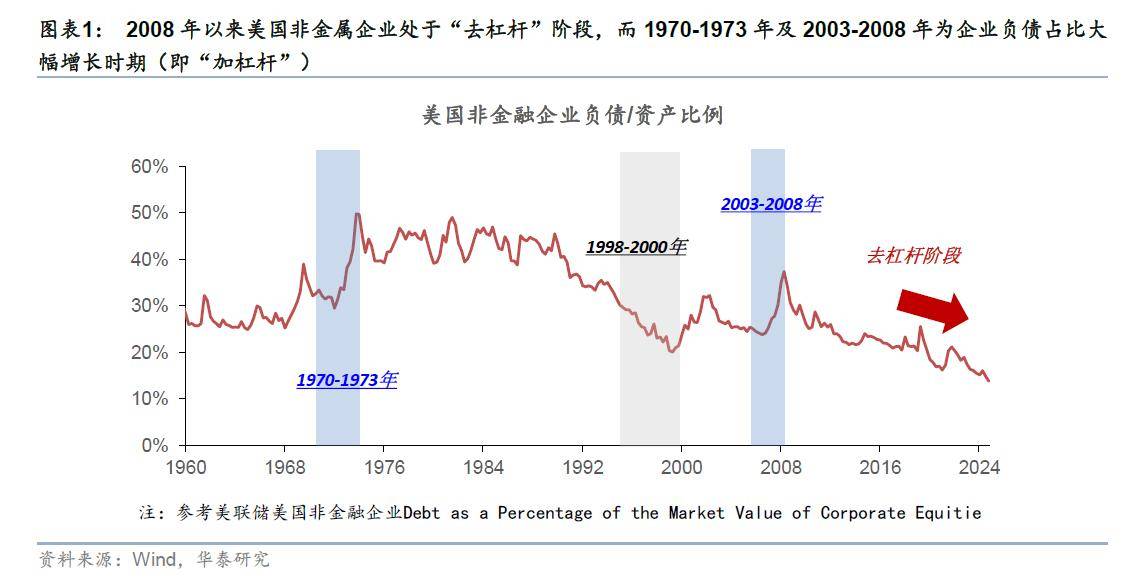
Core Viewpoint - After the 2008 financial crisis, despite a significant decline in interest rates, global capital expenditure remained relatively restrained, with rising corporate cash reserves and commodity prices lagging behind equity assets. The acceleration of China's real estate deleveraging cycle has further integrated and cleared global commodity supply. The outbreak of the Russia-Ukraine conflict in 2022 and the rise in precious metal prices, along with accelerated AI-related investments in 2024, are expected to push certain industrial products beyond the supply-demand balance threshold. The recent price increases in cyclical goods indicate a trend of diffusion. It is anticipated that global capital expenditure will accelerate by 2026, with "consumables" growth potentially surpassing the previous "startup phase" of AI investments. Additionally, investment demand in global defense, trade, and traditional manufacturing may resonate upward, significantly boosting the "consumables" volume. This marks the first global large-scale capital expenditure cycle post-2008, emphasizing the sustained value of resource and cyclical goods from a long-term perspective [1]. Group 1 - Compared to 2024-25, the absolute volume of AI investment consumables is expected to rise significantly. The current AI investment cycle is larger and denser than the internet-related investments of the late 1990s, with a projected exponential increase in demand for bulk commodities by 2026, particularly in data centers and power infrastructure [2][8]. - The global fiscal policy is expected to synchronize in 2026, with increased defense and public investment spending. This round of fiscal expansion focuses on defense autonomy and supply chain security, leading to a significant rise in "consumables" [3][35]. - The global manufacturing cycle is anticipated to improve in 2026, closely related to the trends in industrial products. Factors such as the implementation of capital expenditure deductions from the "Big and Beautiful" Act and potential stabilization in real estate investment are expected to support manufacturing recovery [4][43]. Group 2 - China's investment and commodity demand are entering the second half of "de-real estate" dynamics. The decline in real estate-related demand has provided a buffer for global demand, but this buffer is expected to diminish as the real estate "consumables" volume approaches its decline's end [5][64]. - The inflationary environment and the "consumable" capital expenditure cycle are structurally increasing the value of commodity allocations. The rising physical demand for industrial products is expected to support the prices of cyclical goods, even amid slowing demand growth [6][5].
华泰证券:大宗化学品正处于产能及库存周期双拐点 有望进入上行期
Zheng Quan Shi Bao Wang· 2026-01-19 00:12
Core Viewpoint - The report from Huatai Securities indicates that the profitability of bulk chemicals is expected to reach a ten-year low in the second half of 2025 due to weak demand and the end of supply-side increments [1] Group 1: Industry Outlook - The current downturn in the chemical raw materials and products industry is characterized by a fixed asset completion growth rate turning negative starting June 2025 after three years of profit stagnation [1] - The new capacity for bulk chemicals is projected to be limited in 2026-2027, indicating a challenging environment for the industry [1] - The textile, clothing, and rubber-plastic products sectors are experiencing a continuous decline in inventory, marking a transition from active destocking to passive restocking for chemical raw materials and products [1] Group 2: Future Projections - Huatai Securities believes that the bulk chemicals sector is at a dual inflection point concerning capacity and inventory cycles, with a potential recovery expected as domestic and international demand rebounds in 2026 [1] - The sales volume of Chinese chemicals accounts for over half of the global market, suggesting that future capital expenditure intensity for companies will significantly decrease compared to the period from 2015 to 2025, while dividend payout ratios are expected to rise [1]

华泰证券:供给约束性强+需求步入景气周期 铜价或持续走强
Di Yi Cai Jing· 2026-01-19 00:08
Core Viewpoint - The report from Huatai Securities indicates that by 2026, the global supply of electrolytic copper will remain limited, with an expected year-on-year increase of 660,000 tons, representing a growth rate of 2.4%. In contrast, global demand for electrolytic copper, driven by U.S. stockpiling and grid construction, is projected to increase by 930,000 tons, with a growth rate of 3.3%. This shift may lead to a transition from oversupply to shortage, and combined with factors such as overseas inflation and marginal liquidity easing, the average copper price is expected to rise significantly year-on-year. In the medium to long term, technological advancements and a recovery in overseas manufacturing are anticipated to sustain high demand for electrolytic copper from 2026 to 2028, while supply constraints remain strong due to frequent disruptions in copper mining, resource scarcity, and delayed price responses. The forecast suggests that global supply and demand will remain in shortage during this period, with copper prices potentially exceeding $15,000 per ton [1]. Supply and Demand Summary - By 2026, global electrolytic copper supply is expected to increase by 660,000 tons, a growth rate of 2.4% [1] - Global electrolytic copper demand is projected to rise by 930,000 tons, with a growth rate of 3.3% [1] - The transition from oversupply to shortage is anticipated due to increased demand driven by U.S. stockpiling and grid construction [1] Price Outlook - The average copper price is expected to rise significantly year-on-year due to supply-demand dynamics and external economic factors [1] - Forecasts indicate that copper prices could potentially exceed $15,000 per ton during the 2026-2028 period [1]
股市必读:华泰证券(601688)1月16日主力资金净流入1.13亿元,占总成交额4.72%
Sou Hu Cai Jing· 2026-01-18 16:46
截至2026年1月16日收盘,华泰证券(601688)报收于23.06元,下跌1.28%,换手率1.41%,成交量103.27 万手,成交额23.95亿元。 当日关注点 交易信息汇总资金流向 公司公告汇总 华泰证券股份有限公司公告其间接全资子公司华泰国际财务有限公司在境外中期票据计划下发行三笔中 期票据,总金额为1.38亿美元,由全资子公司华泰国际提供担保。本次担保金额折合人民币9.70亿元, 担保余额累计为20.33亿美元。被担保人华泰国际财务为特殊目的公司,注册资本1美元,注册地为英属 维京群岛。公司对外担保总额为人民币481.56亿元,占最近一期经审计净资产的25.12%,全部为对子公 司提供的担保,无逾期担保。 华泰证券股份有限公司公告,其境外全资子公司华泰国际金融控股有限公司的附属公司华泰国际财务有 限公司于2020年10月27日设立最高本金总额30亿美元的境外中期票据计划,由华泰国际提供担保。2026 年1月16日,华泰国际财务在该计划下发行三笔中期票据,金额分别为人民币1.00亿元、0.15亿美元及 0.20亿美元,合计担保金额折合人民币3.46亿元。本次担保后,实际担保余额为20.82亿美元。 ...
【十大券商一周策略】回归业绩!主题轮动加快,聚焦这些板块
券商中国· 2026-01-18 15:07
Group 1 - The core viewpoint emphasizes a shift from narrative-driven trends to performance-based evaluations as the market enters the earnings forecast period, with a focus on sectors like chemicals, non-ferrous metals, and power equipment [2][5] - The adjustment of financing margins is seen as a part of counter-cyclical regulation, which does not affect the overall upward market trend but influences market structure [2][6] - The article suggests that a good investment combination should be based on "resources + traditional manufacturing pricing weight estimation," with recommendations to increase allocations in non-bank sectors and high-growth areas like semiconductors [2][6] Group 2 - The article discusses the acceleration of thematic rotation in the market, particularly focusing on domestic semiconductor and power sectors, driven by regulatory actions and increased demand for domestic computing power [3][4] - It highlights the importance of monitoring investor sentiment and market stability, suggesting that the current market may enter a period of volatility with potential for structural differentiation in investments [4][8] - The focus on performance-driven investment strategies is expected to intensify as companies begin to disclose earnings, with a recommendation to prioritize sectors that are likely to benefit from cyclical recovery and technological advancements [5][11] Group 3 - The article notes that the recent increase in financing margins reflects a policy signal aimed at guiding rational investment and maintaining market stability, which is crucial for the long-term bullish outlook [7][10] - It emphasizes that while the market may face short-term pressures, the underlying fundamentals and supportive policies are expected to sustain a gradual upward trend in the market [8][9] - The discussion includes the potential for new growth drivers post-holiday, with a focus on sectors like electronics, power equipment, and non-ferrous metals, as well as the ongoing interest in commercial aerospace [9][12] Group 4 - The article indicates that the AI industry chain is becoming a focal point for investment, with a notable shift in capital towards sectors related to AI applications and computing power [12] - It suggests that despite some funds exiting high-flying sectors, liquidity remains strong, allowing for continued investment in less leveraged sectors like chemicals and home appliances [12] - The overall sentiment is that the market is transitioning from rapid growth to a more stable and sustainable pace, with a focus on sectors that can provide solid returns amidst changing market dynamics [10][11]



金融行业周报(2026、01、18):央行宣布结构性降息,衍生品交易监管更规范-20260118
Western Securities· 2026-01-18 11:43
Investment Rating - The report does not explicitly state an overall investment rating for the financial industry, but it provides specific recommendations for various sectors and companies within the industry [3][21]. Core Insights - The financial industry experienced a decline this week, with the non-bank financial index down by 2.63%, underperforming the CSI 300 index by 2.06 percentage points. The banking sector saw a decline of 3.03%, also underperforming the CSI 300 index by 2.46 percentage points [1][9]. - The report highlights a structural interest rate cut by the central bank, which is expected to impact various financial sectors, particularly banks and insurance companies. The insurance sector is viewed as being in a critical window for performance and valuation recovery [3][21]. - Regulatory measures have been introduced to stabilize the derivatives market, which is expected to benefit well-capitalized and compliant brokerage firms [2][17]. Summary by Sections 1. Weekly Performance and Sector Insights - The non-bank financial index decreased by 2.63%, with the securities, insurance, and diversified financial indices down by 2.21%, 3.59%, and 1.83% respectively [1][9]. - The banking sector's performance was notably poor, with state-owned banks, joint-stock banks, city commercial banks, and rural commercial banks experiencing declines of 2.20%, 4.08%, 2.40%, and 2.20% respectively [1][9]. 2. Insurance Sector Insights - The insurance sector's index fell by 3.59%, underperforming the CSI 300 index by 3.02 percentage points. The report indicates that regulatory cooling measures have created short-term pressure on the insurance sector, but the long-term outlook remains positive due to asset growth and interest margin recovery [1][13][15]. - Key companies such as China Pacific Insurance, China Life, and New China Life are recommended for investment due to their strong fundamentals and recovery potential [3][16]. 3. Brokerage Sector Insights - The brokerage sector saw a decline of 2.21%, with the report emphasizing the potential benefits of new regulatory measures aimed at enhancing the derivatives market. The focus is on larger, well-capitalized firms that can navigate the evolving regulatory landscape [2][17]. - Recommendations include major brokerages like Guotai Junan and Huatai Securities, which are expected to benefit from the anticipated recovery in profitability and valuation [2][18]. 4. Banking Sector Insights - The banking sector's index fell by 3.03%, with the central bank's recent interest rate cut expected to support the sector's performance in the long run. The report suggests that banks may see a gradual recovery in net interest income and profitability [3][21][22]. - Specific banks such as Hangzhou Bank and Ningbo Bank are highlighted as potential investment opportunities, particularly those with previously undervalued positions [3][22].




衍生品新规释放积极信号,关注板块发布业绩预增机遇
GF SECURITIES· 2026-01-18 10:26
Core Insights - The report highlights that new regulations in derivatives are expected to release positive signals for the non-bank financial sector, with a focus on companies likely to announce performance increases [1][5]. Group 1: Market Performance - As of January 16, 2026, the Shanghai Composite Index closed at 4101.91, down 0.45%, while the Shenzhen Component Index rose by 1.14% to 14281.08 [10]. - The average daily trading volume in the Shanghai and Shenzhen markets reached 3.47 trillion yuan, an increase of 21.50% month-on-month [5]. Group 2: Industry Dynamics and Weekly Commentary Insurance Sector - Listed insurance companies are expected to continue high growth, with improvements in long-term interest rate spreads anticipated [12][16]. - As of January 12, 2026, the total scale of private equity securities investment funds by insurance capital reached 184.5 billion yuan, with 11 funds established [16]. - The report suggests focusing on companies such as China Ping An, China Life, and New China Life for potential investment opportunities [16]. Securities Sector - The China Securities Regulatory Commission (CSRC) emphasized stability and quality improvement in its 2026 work meeting, aiming to prevent market volatility and enhance internal stability [17][18]. - The CSRC's new derivatives regulations aim to standardize the market, encourage risk management, and improve the income structure of brokerage firms [25][26]. - The report indicates that the derivatives market is expected to grow significantly, with the scale of over-the-counter derivatives increasing from 0.32 trillion yuan in 2015 to 2.38 trillion yuan in 2023, reflecting a compound annual growth rate of 29% [26]. Group 3: Key Company Valuations and Financial Analysis - China Ping An (601318.SH) has a current price of 66.33 yuan, with a target value of 85.17 yuan, indicating a buy rating [6]. - New China Life (601336.SH) is rated as a buy with a current price of 82.09 yuan and a target value of 94.21 yuan [6]. - China Life (601628.SH) is also rated as a buy, with a current price of 47.52 yuan and a target value of 55.47 yuan [6].


首部衍生品规章出台,打开券商杠杆提升空间
GF SECURITIES· 2026-01-18 09:06
Investment Rating - The industry investment rating is "Buy" [3] Core Insights - The introduction of the first derivative trading regulations by the China Securities Regulatory Commission (CSRC) is expected to enhance the leverage capacity of brokerage firms, supporting the steady development of the derivatives market and encouraging risk management activities [7][10]. - The derivatives business is projected to optimize revenue structures and enhance the anti-cyclical capabilities of brokerage firms, as it is driven by client needs and capital intermediation rather than relying on directional market returns [7][10]. - The report highlights that the derivatives market in China has significant room for growth compared to overseas markets, with the scale of over-the-counter derivatives increasing from 0.32 trillion CNY in 2015 to 2.38 trillion CNY in 2023, reflecting a compound annual growth rate (CAGR) of 29% [7][10]. Summary by Sections Regulatory Developments - On January 16, 2026, the CSRC released the "Interim Measures for the Supervision and Administration of Derivative Trading (Draft for Comments)," which aims to regulate derivative trading venues and institutions, and implement counter-cyclical management [7][10]. - The regulations encourage the use of derivatives for hedging and resource allocation while limiting excessive speculation [10]. Market Opportunities - The derivatives business is expected to create a "stronger stronger" moat for brokerage firms that can provide high-level services, including trading pricing, hedging, and risk control capabilities [7][10]. - The report suggests that leading institutions have significant room to increase leverage, especially in the context of continuous inflows of new capital and favorable industry policies [7][10]. Investment Recommendations - The report recommends focusing on brokerage firms with strong balance sheets, outstanding trading capabilities, and extensive coverage of domestic and international institutional clients, such as Guotai Junan, Huatai Securities, CICC, and CITIC Securities [7][10].

沪深两市单日成交额近4万亿 机构看好中资券商配置机会(附概念股)
Zhi Tong Cai Jing· 2026-01-16 12:46
Group 1 - The core viewpoint of the news is the adjustment of the minimum margin requirement for margin trading in the Shanghai and Shenzhen stock exchanges, increasing it from 80% to 100% for new margin contracts, which reflects a regulatory approach to stabilize the market and manage leverage [2][3] - The adjustment is expected to lead to a slowdown in the growth of margin financing in the short term, but it will create a more stable overall business environment for the securities industry [3] - The securities sector is anticipated to benefit from the migration of household deposits and the reconstruction of the stock market mechanism, which will support the growth of wealth management, investment banking, and institutional business [2][3] Group 2 - The adjustment of the margin requirement is seen as a measure to guide the market towards a healthier and more sustainable medium to long-term trend, similar to adjustments made in 2015 [2] - Companies in the securities industry, particularly those with strong capital and risk management capabilities, are recommended for investment opportunities [3] - The news highlights several Chinese securities firms listed in Hong Kong, including Huatai Securities, GF Securities, and China Galaxy, among others, indicating a broad interest in the sector [4]

