
SMIC(688981)

Search documents
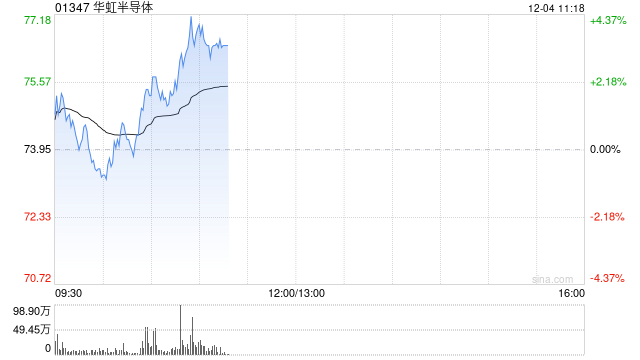
港股异动 芯片股涨幅居前 华虹半导体(01347)盘中涨超4% 中芯国际(00981)涨近3%
Jin Rong Jie· 2025-12-04 04:04
上海证券发布研报称,2025 年全球晶圆代工产业营收有望同比增长 22.1%,AI 和电动汽车或将持续助 力 2026 年市场增长。中信证券则表示,预计2030年的中国AI芯片市场规模将在2025年350-400亿美元基 础上,增至原来的7-9倍,增幅高于全球。中国AI芯片国产化率有望从2025年30~40%提升至2030年的 60~70%水平。 本文源自:智通财经网 智通财经获悉,芯片股涨幅居前,截至发稿,华虹半导体(01347)涨3.45%,报76.5港元;上海复旦 (01385)涨2.63%,报39.78港元;中芯国际(00981)涨1.86%,报68.45港元。 消息面上,12月3日晚间,摩尔线程发布公告称,公司股票将于2025年12月5日(周五)在上海证券交易 所科创板上市。同日,沐曦股份发布公告称,其在科创板IPO上市的询价结果出炉,并确定发行价格为 104.66元/股,按照此次初步发行价格与发行后总股本计算,沐曦股份市值达418亿元。 ...
势银观察 | AI需求引领,2025年Q3全球晶圆代工产值增长27%,产能稼动率提升6个百分点
势银芯链· 2025-12-04 03:22
Core Insights - The article emphasizes that the artificial intelligence industry will continue to be a key focus in the hard technology sector in 2025, with significant growth in the global wafer foundry market, which reached $47.119 billion in Q3, a year-on-year increase of 27% [3][4]. Industry Overview - In Q3, TSMC accounted for 70% of the wafer foundry market share, an increase of 7 percentage points compared to the same period last year, positioning it as the leader in growth within the industry [3]. - The growth drivers in the wafer foundry sector are identified as data centers, industrial and automotive applications, and smartphones, with TSMC's advanced process and packaging orders contributing to a nearly 41% year-on-year growth in its foundry business [4]. Performance Metrics - The average capacity utilization rate for global wafer foundry businesses was 71% in Q3 2023, showing a recovery trend as it is expected to rise to 80% by Q3 2024 and reach 86% in 2025, indicating a return to a healthy operational phase [6]. - The semiconductor industry is projected to experience sustained high-quality growth through 2026, with a significant industry correction anticipated in Q2 2027 [6].




港股异动 | 芯片股涨幅居前 华虹半导体(01347)盘中涨超4% 中芯国际(00981)涨近3%
Zhi Tong Cai Jing· 2025-12-04 03:21
Group 1 - Semiconductor stocks are performing well, with Huahong Semiconductor rising by 3.45% to HKD 76.5, Shanghai Fudan increasing by 2.63% to HKD 39.78, and SMIC up by 1.86% to HKD 68.45 [1] - Moore Threads announced that its stock will be listed on the Shanghai Stock Exchange's Sci-Tech Innovation Board on December 5, 2025 [1] - Muxi Co., Ltd. revealed its IPO pricing at CNY 104.66 per share, resulting in a market capitalization of CNY 41.8 billion [1] Group 2 - Shanghai Securities reported that the global wafer foundry industry revenue is expected to grow by 22.1% year-on-year in 2025, driven by AI and electric vehicles [1] - CITIC Securities forecasts that the Chinese AI chip market size will increase from USD 35-40 billion in 2025 to 7-9 times that amount by 2030, with growth rates surpassing the global average [1] - The domestic production rate of AI chips in China is projected to rise from 30-40% in 2025 to 60-70% by 2030 [1]
芯片股涨幅居前 华虹半导体盘中涨超4% 中芯国际涨近3%
Zhi Tong Cai Jing· 2025-12-04 03:20
Group 1 - Semiconductor stocks are performing well, with Huahong Semiconductor rising by 3.45% to HKD 76.5, Shanghai Fudan increasing by 2.63% to HKD 39.78, and SMIC up by 1.86% to HKD 68.45 [1] - Moore Threads announced that its stock will be listed on the Shanghai Stock Exchange's Sci-Tech Innovation Board on December 5, 2025 [1] - Muxi Co., Ltd. confirmed its IPO pricing at CNY 104.66 per share, resulting in a market capitalization of CNY 41.8 billion [1] Group 2 - Shanghai Securities reported that the global wafer foundry industry revenue is expected to grow by 22.1% year-on-year in 2025, driven by AI and electric vehicles [1] - CITIC Securities projected that the Chinese AI chip market size will increase from USD 35-40 billion in 2025 to 7-9 times that amount by 2030, with growth rates surpassing the global average [1] - The domestic production rate of AI chips in China is anticipated to rise from 30-40% in 2025 to 60-70% by 2030 [1]
芯片股早盘涨幅居前 华虹半导体及中芯国际均涨逾3%
Xin Lang Cai Jing· 2025-12-04 03:19
Core Viewpoint - Semiconductor stocks are experiencing significant gains in early trading, indicating positive market sentiment towards the sector [1][2]. Group 1: Stock Performance - Hua Hong Semiconductor (01347) has risen by 3.45%, trading at HKD 76.50 [1][2]. - Shanghai Fudan (01385) has increased by 2.79%, with a current price of HKD 39.84 [1][2]. - SMIC (00981) has seen a rise of 1.86%, currently priced at HKD 68.45 [1][2].
中芯国际12月3日获融资买入3.60亿元,融资余额131.77亿元
Xin Lang Cai Jing· 2025-12-04 02:22
Core Insights - SMIC's stock price decreased by 1.22% on December 3, with a trading volume of 2.757 billion yuan [1] - The company reported a net financing outflow of 35.25 million yuan on the same day, with a total financing balance of 13.2 billion yuan [1] Financing Overview - On December 3, SMIC had a financing buy-in of 360 million yuan, with a financing balance of 13.177 billion yuan, representing 5.90% of its market capitalization [1] - The financing balance is above the 80th percentile of the past year, indicating a high level of financing activity [1] Short Selling Overview - On December 3, SMIC repaid 10,100 shares in short selling and sold 10,400 shares, amounting to 1.1621 million yuan at the closing price [1] - The short selling balance stood at 2.236 million yuan, which is below the 50th percentile of the past year, indicating a lower level of short selling activity [1] Company Profile - SMIC, established on April 3, 2000, is located in Shanghai and specializes in integrated circuit wafer foundry services across various technology nodes from 0.35 microns to 14 nanometers [1] - The company's revenue composition is primarily from integrated circuit wafer foundry services (93.83%) and other services (6.17%) [1] Shareholder Information - As of September 30, 2025, SMIC had 336,200 shareholders, an increase of 33.27% from the previous period, while the average number of circulating shares per shareholder decreased by 25.41% [2] - The top ten circulating shareholders include several ETFs, with notable reductions in holdings from major shareholders [2]
资金动向 | 北水抢筹港股超22亿港元,连续10日出逃中芯国际!
Ge Long Hui· 2025-12-03 10:59
Group 1 - Southbound funds net bought Hong Kong stocks worth 2.279 billion HKD on December 3, with notable purchases including Xiaomi Group-W (870 million HKD), Alibaba-W (427 million HKD), and Meituan-W (297 million HKD) [1] - Southbound funds have continuously net bought Alibaba for 15 days, totaling 28.64961 billion HKD; Meituan for 5 days, totaling 2.2804 billion HKD; and Xiaomi for 4 days, totaling 1.82091 billion HKD [3] - Southbound funds have continuously net sold SMIC for 10 days, totaling 2.9912 billion HKD [3] Group 2 - Xiaomi Group-W announced the launch of a vehicle selection feature on its app, available to all users starting December 3 [5] - Alibaba-W's charity foundation released a report on December 3, indicating that over 18,000 disabled individuals have gained income through AI technology and its business ecosystem [5] - Meituan-W initiated a new safety incentive program for delivery riders across nearly 200 cities, rewarding those who do not run red lights with cash bonuses [5] Group 3 - XPeng Motors reported November sales of 36,728 vehicles, a year-on-year increase of 19%, but a month-on-month decrease of 12% [5] - From January to November 2025, XPeng Motors' cumulative delivery reached 391,937 vehicles, a year-on-year increase of 156% [5] - XPeng Motors' overseas deliveries reached 39,773 vehicles from January to November, marking a year-on-year increase of 95% [6] Group 4 - Longpan Technology announced a long-term procurement agreement for lithium iron phosphate cathode materials with a sales value estimated between 4.5 billion to 5.5 billion CNY [6]

图解丨南下资金连续15日净买入阿里,连续10日净卖出中芯国际
Ge Long Hui A P P· 2025-12-03 09:57
| | 沖股通 | | | | | --- | --- | --- | --- | --- | | 名称 | 涨跌幅 | 净买入额(亿) | 成交额 | 名称 | | 阿里巴巴-W | -2.2% | 2.60 | 32.55 Z | 阿里巴巴-W | | 腾讯控股 | -1.0% | -7.26 | 20.92亿 | 小米集团-W | | 中芯国际 | -2.1% | -2.31 | 13.12亿 | 腾讯控股 | | 小米集团-W | -1.2% | -0.76 | 11.45亿 | 中芯国际 | | 美团-W | -0.6% | 1.29 | 9.30 Z | 美团-W | | 前乘控股 | -6.1% | -0.65 | 7.43 Z | 快手-W | | 小鹏汽车-W | -4.3% | 0.47 | 6.90亿 | 中兴通讯 | | 中兴通讯 | -3.6% | -0.52 | 6.81亿 | 华虹半导体 | | 龙婚科技 | 12.2% | 0.12 | 6.34亿 | 晶泰控股 | | 华虹非昌体 | 1.6% | -1.64 | 6.01亿 | 小鹏汽车-W | 格隆汇12月3日|南下资金今 ...

半导体强势领跑2025年A股市场:行业指数大涨36%,十强亮相
和讯· 2025-12-03 09:10
Core Viewpoint - The semiconductor sector has emerged as one of the most dynamic segments in the A-share market since 2025, driven by surging AI computing demand, accelerated domestic supply chain autonomy, and a global semiconductor cycle recovery, marking a critical window for high-quality development in China's semiconductor industry [2]. Group 1: Market Performance - The semiconductor sector's structure in 2025 shows that the midstream and upstream segments are leading, with the Semiconductor Equipment Index rising approximately 47% and the National Gold Semiconductor Equipment 20 Index increasing by about 62%, reflecting strong market expectations for domestic semiconductor equipment replacement [3]. - The digital chip design sector also performed well, with the Shenwan Digital Chip Design Index increasing by around 56%, serving as a core driver for the sector's upward movement [3]. Group 2: Individual Company Performance - Companies focusing on core technology breakthroughs, such as Saiwei Electronics and Chipone Technology, achieved over 180% growth, indicating sustained market optimism in areas like analog chips, IP licensing, and consumer-grade storage [4]. - In terms of trading activity, companies like Cambrian-U, SMIC, and Haiguang Information dominated the market with a combined trading volume exceeding 4.1 trillion yuan, highlighting institutional and market interest in domestic AI chips and advanced manufacturing processes [4]. Group 3: Semiconductor Company Value Rankings - The "2025 China Semiconductor Listed Company Value List" was released, ranking companies based on a comprehensive study of 181 listed firms, focusing on research innovation, financial health, growth potential, and market performance [5]. - The report indicates that companies like Haiguang Information, Cambrian, and others are leading in investment value, showcasing the sector's potential [5]. Group 4: Detailed Analysis of Semiconductor Companies - The analysis of 181 listed semiconductor companies revealed that firms like Haiguang Information, Zhongwei Company, and Guoli Microelectronics are in the high-scoring group for research innovation, indicating significant breakthroughs in key technology areas such as CPU/GPU, EDA, and etching equipment [10]. - Financial health scores for companies like SMIC and Cambrian reflect stable business models and strong cash flow, essential for maintaining strategic resilience amid increasing industry competition [11]. - Companies such as Cambrian and Guoli Microelectronics show strong growth potential, indicating that sectors like AI chips and EDA are becoming focal points for capital and capacity deployment [11]. Group 5: Sector Performance Comparison - The semiconductor sector has demonstrated the strongest overall competitiveness, with an average score leading all segments, while the hardware equipment sector follows closely due to China's robust supply chain and production capabilities [16]. - The semiconductor industry, supported by policy and capital, exhibits the highest comprehensive value creation potential among various sectors [17].





中芯国际(688981) - 港股公告:证券变动月报表
2025-12-03 08:45
股份發行人及根據《上市規則》第十九B章上市的香港預託證券發行人的證券變動月報表 截至月份: 2025年11月30日 狀態: 新提交 致:香港交易及結算所有限公司 公司名稱: 中芯國際集成電路製造有限公司 呈交日期: 2025年12月3日 I. 法定/註冊股本變動 FF301 II. 已發行股份及/或庫存股份變動 | 1. 股份分類 | 普通股 | 股份類別 | 不適用 | 於香港聯交所上市 (註1) | 是 | | | --- | --- | --- | --- | --- | --- | --- | | 證券代號 (如上市) | 00981 | 說明 | 港股 | | | | | | | 已發行股份(不包括庫存股份)數目 | | 庫存股份數目 | 已發行股份總數 | | | 上月底結存 | | | 6,000,530,387 | 0 | | 6,000,530,387 | | 增加 / 減少 (-) | | | 83,973 | 0 | | | | 本月底結存 | | | 6,000,614,360 | 0 | | 6,000,614,360 | | 1. 股份分類 | 普通股 | 股份類別 | 不適用 | ...