
SMIC(688981)

Search documents
未知机构:国联民生电子中芯国际25Q4悲观预期下的诸多亮点领导好今-20260211
未知机构· 2026-02-11 01:55
【国联民生电子】中芯国际25Q4:悲观预期下的诸多亮点 【国联民生电子】中芯国际25Q4:悲观预期下的诸多亮点 相较于此前市场的悲观预期,公司在收入等方面仍取得了超预期增长,同时后续仍迎来成熟制程涨价+先进制 程扩产多重催化,公司作为国产算力中军,较此前高点已回撤22%,当前港股PB仅3.46x,当下建议积极布局 领导好,今日中芯公告25Q4业绩,此前市场对于Q4预期较为悲观,我们在preview中前瞻提示有望优于指引,整体 来看在收入、稼动率等方面存在诸多亮点,梳理核心要点如下: 25Q4 ➠营收:24.89亿美元,yoy+12.8%,qoq+4.5%大超此前指引0-2% ➠归母净利润:1.73亿美元,yoy+60.7%,qoq-9.9% ➠毛利率:19.2%,环比-2.8pct,同比-3.4pct 虽有环比下滑、但符合指引 ➠产能利用率:95.7%,环比减少0.1pct,同比+10.2pct ➠资本开支:24.1亿美元 领导好,今日中芯公告25Q4业绩,此前市场对于Q4预期较为悲观,我们在preview中前瞻提示有望优于指引,整体 来看在收入、稼动率等方面存在诸多亮点,梳理核心要点如下: 26Q1 25Q ...

未知机构:中泰电子丨中芯国际多维度超预期25Q4营收2-20260211
未知机构· 2026-02-11 01:55
【中泰电子丨中芯国际】多维度超预期! ——25Q4营收24.89亿美元,同比+12.8%,环比+4.5%,此前指引环比持平到增长2%,超指引上限;归母净利1.73 亿美元,同比+60.7%,环比-9.9%;毛利率19.2%,同比-3.4pct,环比-2.8pct,此前指引18%~20%,高于指引中 值。 ——25Q4少数股东权益0.31亿美元,同比-81.3%,环比-75.3%;占净利润比例 【中泰电子丨中芯国际】多维度超预期! ——25Q4智能手机占公司晶圆收入比重21.5%,环比Q3占比持平;此前市场担忧存储涨价挤压公司下游相关业 务,但Q4稼动率以及对Q1营收端的乐观指引超出市场预期。 ——25Q4营收24.89亿美元,同比+12.8%,环比+4.5%,此前指引环比持平到增长2%,超指引上限;归母净利1.73 亿美元,同比+60.7%,环比-9.9%;毛利率19.2%,同比-3.4pct,环比-2.8pct,此前指引18%~20%,高于指引中 值。 ——公司认为25年半导体产业链向本土化切换带来的重组效应贯穿全年,26年产业链回流的机遇与存储大周期带 来的挑战并存。 ——25Q4少数股东权益0.31亿美 ...
港股异动 | ASMPT(00522)早盘涨超8% 获主要客户订购超细间距TCB AOR芯片对晶圆设备
智通财经网· 2026-02-11 01:53
消息面上,ASMPT近日宣布,成功获得某主要客户的新订单,将提供两台搭载专有等离子主动氧化物 去除(AOR)技术的超细间距热压接(TCB)设备,用于芯片到晶圆(C2W)应用。这项成果进一步巩固了 ASMPT于先进封装市场的技术领导地位。 值得注意的是,中芯国际高管在业绩说明会上表示,2025年公司资本开支为81亿美元,高于年初预期, 主要是因为应对客户强劲需求、外部环境变化以及设备交付时间加长。在外部环境无重大变化的前提 下,中芯国际给出的2026年指引为:销售收入增幅高于可比同业的平均值,资本开支与2025年相比大致 持平。 智通财经APP获悉,ASMPT(00522)早盘涨超8%,截至发稿,涨7.14%,报108.1港元,成交额1.51亿港 元。 ...


未知机构:华泰全球科技中芯国际4Q25Q4业绩符合预期Q1收入指引环平毛利率中值-20260211
未知机构· 2026-02-11 01:50
Summary of Semiconductor Manufacturing International Corporation (SMIC) 4Q25 Earnings Call Company Overview - **Company**: Semiconductor Manufacturing International Corporation (SMIC) - **Quarter**: 4Q25 Key Financial Metrics - **Revenue**: Achieved revenue of $2.489 billion, a quarter-over-quarter increase of 4.5%, aligning with previous guidance [1] - **Capacity Utilization Rate**: Maintained at 95.7%, with a slight decrease of 0.1 percentage points [2] - **Wafer Shipment**: Increased by 0.6% to 2.515 million wafers (approximately 8-inch) [2] - **Gross Margin**: Reported at 19.2%, a decrease of 2.8 percentage points, primarily due to increased depreciation [2] - **General and Administrative Expenses**: Increased significantly by 244% to $146 million, mainly due to startup costs [2] - **Minority Interest Loss**: Decreased by 75.3% to $31 million [2] Guidance and Outlook - **Q1 2026 Revenue Guidance**: Expected to remain flat quarter-over-quarter, with a gross margin guidance of 18% to 20% [2] - **2026 Full-Year Outlook**: Anticipates revenue growth exceeding the average of comparable peers, with capital expenditures expected to remain roughly flat compared to 2025 [3] Market Segment Insights - **Consumer Electronics**: Revenue share increased by 3.9 percentage points to 47.3%, becoming the primary revenue driver [3] - **Industrial and Automotive**: Slight increase in revenue share by 0.3 percentage points to 12.2% [3] - **Smartphones**: Revenue share remained stable at 21.5% [3] - **Computers and Tablets**: Revenue share decreased to 11.8% [3] - **Internet and Wearables**: Revenue share decreased to 7.2% [3] Additional Insights - The increase in general and administrative expenses may indicate strategic investments or operational challenges that could impact future profitability [2] - The stability in smartphone revenue share suggests a mature market, while the growth in consumer electronics indicates a shift in demand dynamics [3]
超3100只个股下跌
第一财经· 2026-02-11 01:49
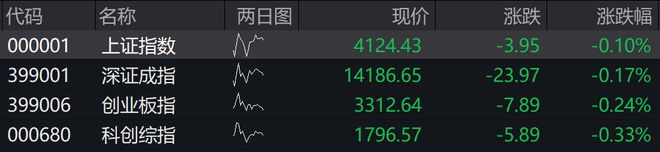
Market Overview - The A-share market opened slightly lower, with the Shanghai Composite Index down 0.1%, Shenzhen Component down 0.17%, ChiNext down 0.24%, and the Sci-Tech Innovation Index down 0.33% [2][3] - Over 3,100 stocks in the market experienced declines [2] Stock Performance - *ST Lifan resumed trading with a low opening, down 2.88% [5] - The stock has faced significant price volatility, triggering multiple alerts from the Shenzhen Stock Exchange regarding abnormal trading behavior [5] - Semiconductor company SMIC opened nearly 2% lower, with a projected net profit of 1.223 billion yuan for Q4 2025, representing a year-on-year increase of 23.2% [6] Sector Movements - The market saw adjustments in sectors such as CPO, space photovoltaic, AI computing power, deep-sea technology, consumer electronics, and semiconductor concept stocks [5] - AI application themes showed localized activity despite the overall market decline [5] Hong Kong Market - The Hang Seng Index opened up 0.23%, with the Hang Seng Tech Index rising 0.21% [8] - Notable gainers included Tencent Music and WuXi Biologics, both up over 3%, while SMIC fell over 2% [8]



科创价值ETF华夏(589550)开盘跌0.45%,重仓股中芯国际跌1.89%,寒武纪跌1.09%
Xin Lang Cai Jing· 2026-02-11 01:43
来源:新浪基金∞工作室 声明:市场有风险,投资需谨慎。本文基于第三方数据库自动发布,不代表新浪财经观点,任何在本文 出现的信息均只作为参考,不构成个人投资建议。如有出入请以实际公告为准。如有疑问,请联系 biz@staff.sina.com.cn。 2月11日,科创价值ETF华夏(589550)开盘跌0.45%,报1.322元。科创价值ETF华夏(589550)重仓股 方面,中芯国际开盘跌1.89%,寒武纪跌1.09%,海光信息跌1.54%,时代电气涨0.32%,澜起科技跌 1.46%,天能股份涨0.40%,中微公司跌0.71%,华润微跌0.34%,威胜信息跌0.10%,奥特维涨0.67%。 科创价值ETF华夏(589550)业绩比较基准为上证智选科创板价值50策略指数收益率,管理人为华夏基 金管理有限公司,基金经理为杨斯琪,成立(2025-07-16)以来回报为32.87%,近一个月回报为 2.15%。 ...



滚动更新丨A股三大指数小幅低开,中芯国际AH股均跌超1%
Di Yi Cai Jing Zi Xun· 2026-02-11 01:40
中芯国际低开近2%,公司公告,2025年第四季度净利润12.23亿元,同比增长23.2%。 09:25 A股开盘丨三大指数小幅低开 沪指低开0.1%,深证成指低开0.17%,创业板指低开0.24%,科创综指低开0.33%。 | 代码 | 名称 | 两日图 | 现价 | 涨跌 | 涨跌幅 | | --- | --- | --- | --- | --- | --- | | 000001 | 上证指数 | N | 4124.43 | -3.95 | -0.10% | | 399001 | 深证成指 | M | 14186.65 | -23.97 | -0.17% | | 399006 | 创业板指 | Mm | 3312.64 | -7.89 | -0.24% | | 000680 | 科创综指 | Man | 1796.57 | -5.89 | -0.33% | 盘面上,CPO、太空光伏、AI算力、深海科技、消费电子、半导体概念股调整;AI应用题材局部活 跃。 个股方面,*ST立方复牌低开2.88%,2月10日晚间,深交所发布关于*ST立方股票交易的风险提示:近 期,*ST立方股价大幅波动,已多次触发股价异动标准 ...
数字经济ETF工银(561220)开盘跌0.26%,重仓股中芯国际跌1.89%,海光信息跌1.54%
Xin Lang Cai Jing· 2026-02-11 01:37
Group 1 - The Digital Economy ETF ICBC (561220) opened at a decline of 0.26%, priced at 1.535 yuan [1] - Major holdings in the Digital Economy ETF include companies like SMIC, which fell by 1.89%, and Haiguang Information, which dropped by 1.54% [1] - The fund's performance benchmark is the China Securities Index for State-Owned Enterprises in the Digital Economy, managed by ICBC Credit Suisse Asset Management [1] Group 2 - Since its inception on May 21, 2025, the fund has achieved a return of 54.05%, while its return over the past month has been -0.65% [1] - The fund manager is Shi Baojiao, indicating a specific leadership in managing the ETF [1]



芯片ETF东财(159599)开盘跌0.35%,重仓股寒武纪跌1.09%,中芯国际跌1.89%
Xin Lang Cai Jing· 2026-02-11 01:37
Group 1 - The core point of the article highlights the performance of the Chip ETF Dongcai (159599), which opened with a slight decline of 0.35% at 2.269 yuan [1] - The major holdings of the Chip ETF Dongcai include companies such as Cambrian, SMIC, and Haiguang Information, all of which experienced declines in their stock prices, with SMIC down by 1.89% and Cambrian down by 1.09% [1] - The performance benchmark for the Chip ETF Dongcai is the CSI Chip Industry Index return, managed by Dongcai Fund Management Co., with a return of 127.89% since its establishment on April 19, 2024, and a monthly return of 0.62% [1]

半导体ETF南方(159325)开盘跌0.30%,重仓股寒武纪跌1.09%,中芯国际跌1.89%
Xin Lang Cai Jing· 2026-02-11 01:37
Group 1 - The semiconductor ETF Southern (159325) opened down 0.30% at 1.641 yuan [1] - Major holdings in the semiconductor ETF showed mixed performance, with notable declines in stocks such as Cambrian (-1.09%), SMIC (-1.89%), and GigaDevice (-1.69%), while Tuojing Technology saw a slight increase of 0.02% [1] - The performance benchmark for the semiconductor ETF is the CSI Semiconductor Industry Select Index return, managed by Southern Fund Management Co., Ltd. [1] Group 2 - Since its establishment on October 31, 2024, the fund has achieved a return of 64.93%, but has experienced a decline of 0.24% over the past month [1]