
SPD BANK(600000)

Search documents
提振消费再升级!财政贴息政策如何影响银行业?
Guo Ji Jin Rong Bao· 2025-08-13 15:45
Core Viewpoint - The recent announcement of personal consumption loan interest subsidy policies aims to stimulate consumer spending and support the service industry, with a focus on broad coverage and low thresholds for access [3][6]. Policy Overview - Two significant subsidy policies were introduced: the "Service Industry Operating Entity Loan Interest Subsidy Policy" and the "Personal Consumption Loan Interest Subsidy Policy," both designed to enhance consumer spending [3][4]. - The subsidy rate for both types of loans is set at 1 percentage point, with the central and provincial finances covering 90% and 10% of the subsidy, respectively [6]. Bank Response - Over ten banks, including major state-owned banks and others like Shanghai Pudong Development Bank and China Merchants Bank, have announced their commitment to implement these policies [4]. - Agricultural Bank of China plans to start implementing the subsidy for personal consumption loans from September 1, 2025, while other banks are preparing specific operational guidelines [4]. Economic Impact - The policies are expected to increase the scale and profitability of consumer loans for banks, potentially reducing non-performing loan rates [7]. - The interest cost for enterprises receiving loans could decrease to approximately 2.26% after considering the subsidy, compared to a weighted average interest rate of 3.26% [6]. Recommendations for Financial Institutions - Financial institutions are advised to focus on sustainable business practices rather than merely scaling up, ensuring loan rates remain reasonable to prevent excessive compression of net interest margins [7]. - Utilizing financial technology to enhance risk assessment models and accurately gauge consumer repayment capabilities is recommended to improve risk management [7].



9月起,这些个人消费贷款可享受财政贴息!操作指南来了→
Sou Hu Cai Jing· 2025-08-13 13:12
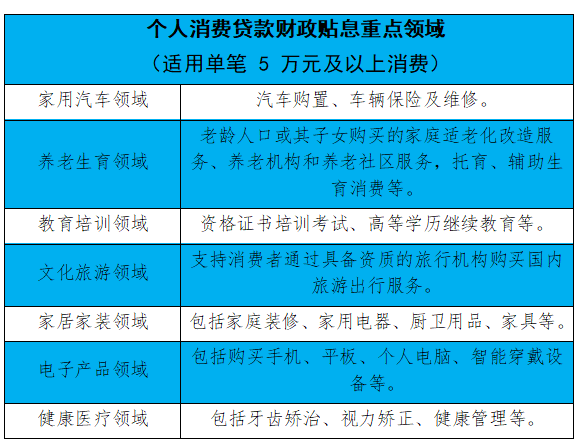
Core Viewpoint - The Ministry of Finance, the People's Bank of China, and the Financial Regulatory Administration have issued a policy implementation plan for personal consumption loan interest subsidies, aimed at stimulating consumer spending in key sectors. Summary by Relevant Sections Support Scope - The subsidy policy applies to personal consumption loans under two categories: loans below 50,000 yuan and loans of 50,000 yuan or more in key areas such as home appliances, automotive, healthcare, and education [2]. Loan Issuing Institutions - The policy includes six major state-owned commercial banks and twelve nationwide joint-stock commercial banks, along with five other personal consumption loan issuing institutions [4]. Subsidy Standards - The annual subsidy rate is set at 1% of the actual loan principal used for consumption, capped at 50% of the loan contract interest rate. The central and provincial finances will cover 90% and 10% of the subsidy funds, respectively [6][7]. Key Areas for Subsidy - The key areas eligible for subsidies for loans of 50,000 yuan or more include: - Automotive: vehicle purchase, insurance, and maintenance [9] - Elderly care and childbirth: services for elderly home modifications and childcare [9] - Education and training: qualification training and continuing education [10] - Cultural tourism: domestic travel services through qualified agencies [11] - Home improvement: renovation and household appliances [12] - Electronics: purchase of mobile phones, tablets, and computers [13] - Healthcare: dental correction and health management [14] Implementation Process - For existing loans, lending institutions can obtain borrower authorization through supplementary agreements to calculate the subsidy amount based on actual consumption. Borrowers will be informed of the subsidy details via SMS or mobile apps [17]. Example of Subsidy Impact - A consumer using a personal consumption loan of 200,000 yuan for home renovation at a 3% interest rate would save up to 2,000 yuan in interest payments due to the 1% subsidy, effectively reducing their interest burden by one-third [17].




国家对个人消费贷贴息
盐财经· 2025-08-13 10:18
本文转载自每日经济新闻 值班编辑 | 江江 视觉 | 顾芗 财政部、中国人民银行、金融监管总局印发《个人消费贷款财政贴息政策实施方案》,明确2025年9月1 日至2026年8月31日期间,居民个人使用贷款经办机构发放的个人消费贷款(不含信用卡业务)中实际 用于消费,且贷款经办机构可通过贷款发放账户等识别借款人相关消费交易信息的部分,可按规定享受 贴息政策。 全文如下: 关于印发《个人消费贷款财政贴息政策实施方案》的通知 财金〔2025〕80 号 各省、自治区、直辖市、计划单列市财政厅(局),新疆生产建设兵团财政局,中国人民银行上海总 部,各省、自治区、直辖市及计划单列市分行,金融监管总局各监管局,有关金融机构: (三)贷款经办机构。一是6家国有大型商业银行,包括中国工商银行股份有限公司、中国农业银行股 份有限公司、中国银行股份有限公司、中国建设银行股份有限公司、交通银行股份有限公司、中国邮政 为贯彻落实党中央、国务院关于大力提振消费、全方位扩大国内需求的决策部署,我们研究制定了《个 人消费贷款财政贴息政策实施方案》,现印发给你们,请遵照执行。 财政部 中国人民银行 金融监管总局 2025年8月4日 个人消费贷 ...

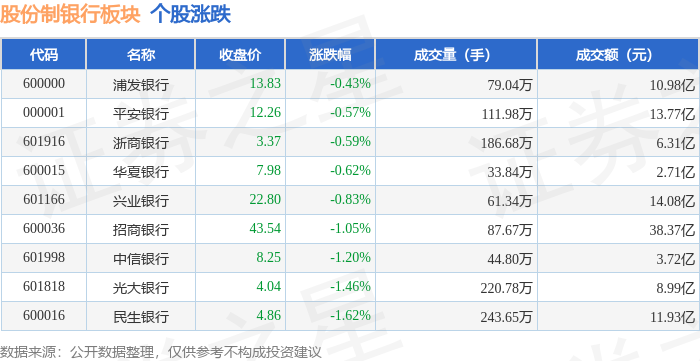
股份制银行板块8月13日跌0.93%,民生银行领跌,主力资金净流出4.62亿元
Zheng Xing Xing Ye Ri Bao· 2025-08-13 08:41
| 代码 | 名称 | 收盘价 | 涨跌幅 | 成交量(手) | 成交额(元) | | --- | --- | --- | --- | --- | --- | | 600000 | 浦发银行 | 13.83 | -0.43% | 79.04万 | 10.98亿 | | 000001 | 平安银行 | 12.26 | -0.57% | 111.98万 | 13.77 亿 | | 601916 | 浙商银行 | 3.37 | -0.59% | 186.68万 | 6.31亿 | | 600015 | 华夏银行 | 7.98 | -0.62% | - 33.84万 | 2.71亿 | | 601166 | 兴业银行 | 22.80 | -0.83% | 61.34万 | 14.08亿 | | 600036 | 招商银行 | 43.54 | -1.05% | 87.67万 | 38.37亿 | | 601998 | 中信银行 | 8.25 | -1.20% | 44.80万 | 3.72亿 | | 601818 | 光大银行 | 4.04 | -1.46% | 220.78万 | 26668 | | 600016 | ...


多家银行公告,明确贴息→
证券时报· 2025-08-13 08:23
Core Viewpoint - The article discusses the implementation of financial policies aimed at boosting domestic consumption and demand, specifically through interest subsidies for personal consumption loans and service industry operating entities [1]. Group 1: Policy Implementation - On August 12, the Ministry of Finance and eight other departments released the "Implementation Plan for Loan Interest Subsidies for Service Industry Operating Entities" to enhance consumption and expand domestic demand [1]. - Concurrently, a joint announcement was made regarding the "Personal Consumption Loan Interest Subsidy Policy Implementation Plan" to support consumer spending [1]. Group 2: Bank Responses - Several major banks, including Industrial and Commercial Bank of China (ICBC), Agricultural Bank of China, and Bank of China, announced plans to implement interest subsidies for personal consumption loans starting from September 1, 2025, to lower consumer credit costs and stimulate market activity [2][3]. - ICBC emphasized that it would not charge any service fees for processing these loans and would not use any unofficial channels for applications [2]. - Other banks, such as China Construction Bank and Postal Savings Bank, also committed to simplifying processes and ensuring the effective implementation of these policies [3].




两项贷款贴息政策出台 对市场有何影响?
Xin Hua Cai Jing· 2025-08-13 07:34
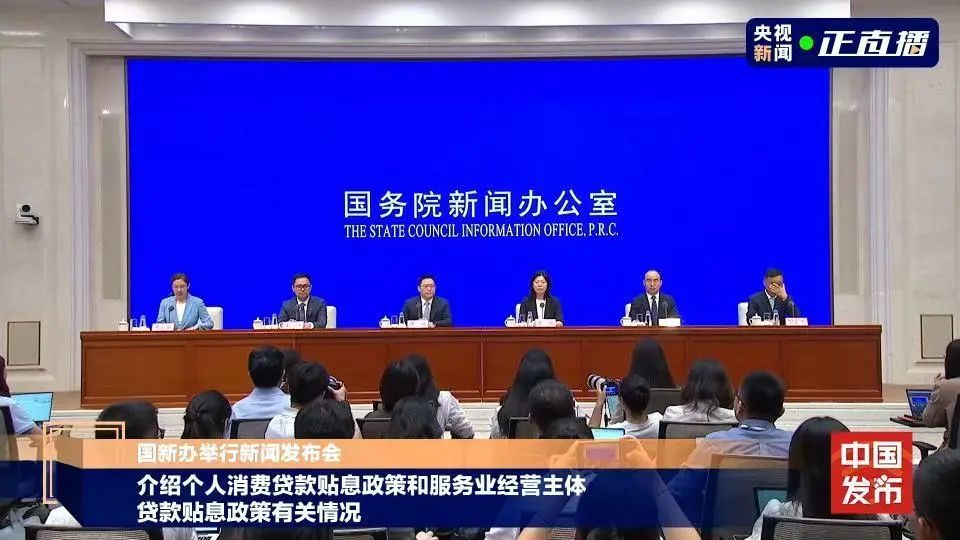
SHMET 网讯:金融促消费再迎政策利好。8月12日,服务业经营主体和个人消费贷款迎贴息"红 包"同步落地。 二级市场上,受利好消息影响,零售板块高开,合百集团2连板,国光连锁一度触及涨停,通程控 股、友好集团、武商集团、国芳集团、杭州解百跟涨。 同时,沪指突破3674.40点,创去年"924"行情以来新高。 两大贴息"礼包"同步落地 8月12日,财政部、民政部、人力资源社会保障部、商务部等九部门联合发布《服务业经营主体贷 款贴息政策实施方案》;同日财政部、中国人民银行、金融监管总局三部门亦同步印发《个人消费贷款 财政贴息政策实施方案》。 具体来看,服务业经营主体贷款贴息政策聚焦餐饮、养老、托育等8类消费领域;而个人消费贷款 财政贴息政策则为中央层面首次实施,直接面向消费者个人,通过降低消费信贷成本激活需求端潜力。 两项政策在贴息比例设定上保持一致:年贴息比例均为1个百分点,且贴息资金由中央财政承担90%、 省级财政承担10%,既体现政策力度,又兼顾央地协同。 财政部有关负责人表示,通过实施个人消费贷款财政贴息政策,进一步强化财政金融协同联动, 以"真金白银"支持居民消费,降低居民消费信贷成本,在激发居民消费 ...
最高3000元!这些消费贷即将享受贴息
Sou Hu Cai Jing· 2025-08-13 07:08
Group 1 - The scope of interest subsidies for personal consumption loans includes single loans below 50,000 yuan and those above 50,000 yuan in key areas such as home automobiles, elderly care, education, cultural tourism, home decoration, electronics, and healthcare [1] - For single consumption amounts above 50,000 yuan, the interest subsidy is capped at the consumption amount of 50,000 yuan [1] Group 2 - The interest subsidy standard is set at an annual rate of 1%, calculated on the actual principal used for eligible personal consumption loans, with a maximum not exceeding 50% of the loan contract interest rate [3] - During the policy execution period, the total interest subsidy limit for each borrower at one lending institution is 3,000 yuan (corresponding to a cumulative consumption amount of 300,000 yuan), with a limit of 1,000 yuan for loans below 50,000 yuan [3] Group 3 - The lending institutions include six major state-owned commercial banks: Industrial and Commercial Bank of China, Agricultural Bank of China, Bank of China, China Construction Bank, Bank of Communications, and China Postal Savings Bank [4] - Additionally, there are twelve national joint-stock commercial banks such as CITIC Bank, China Everbright Bank, Huaxia Bank, China Minsheng Bank, and others [5] - Other personal consumption loan issuing institutions include Shenzhen Qianhai WeBank, Chongqing Ant Consumer Finance, and several others [6]
果真“白衣骑士”!这家央企借道可转债,跻身浦发银行前十大股东!
Zheng Quan Shi Bao Wang· 2025-08-13 05:51
Core Viewpoint - The rapid conversion of convertible bonds into common stock by Cinda Investment in Shanghai Pudong Development Bank (SPDB) highlights a new trend in managing convertible bond maturity pressures, reminiscent of the "Everbright model" [1][4]. Group 1: Convertible Bond Conversion - On June 27, Cinda Investment converted nearly 118 million SPDB convertible bonds into approximately 912 million shares of common stock, increasing SPDB's total share capital to about 30.264 billion shares [1][2]. - Prior to the conversion, SPDB had only seen a minimal conversion of its convertible bonds, with 99.9971% remaining unconverted as of March 2023 [2]. - Following the conversion, Cinda Investment holds about 912 million shares, representing 3.01% of SPDB's total share capital, placing it among the top ten shareholders [2]. Group 2: Background on Cinda Investment - Cinda Investment, established in August 2000, is a wholly-owned subsidiary of China Cinda, a central financial enterprise with total assets exceeding 1.6 trillion yuan as of the end of last year [2][3]. - The core business of China Cinda includes non-performing asset management and financial services [2]. Group 3: Market Context and Trends - The trend of converting convertible bonds into equity is seen as a strategy to alleviate maturity repayment pressures, especially when the underlying stock performs poorly [4][5]. - The case of Everbright Bank, where China Huarong converted a significant amount of its convertible bonds before maturity, serves as a precedent for this approach [4][5]. - As of June 30, SPDB's stock price was 13.88 yuan, which is 20% above the latest conversion price of 12.91 yuan, indicating potential challenges in achieving widespread conversion [6]. Group 4: Broader Market Dynamics - The banking sector has seen a rise in convertible bond conversions, with several banks triggering strong redemption clauses due to rising stock prices [7]. - Demand for bank convertible bonds remains high due to their strong credit quality and risk resistance, despite a stagnation in new issuances since 2023 [8].

国家给你的消费贷贴息,贷30万可省3000元,六大行火速响应
Mei Ri Jing Ji Xin Wen· 2025-08-13 05:33
Core Viewpoint - The introduction of personal consumption loan interest subsidy policies and service industry operating entity loan interest subsidy policies marks a significant move by the central government to stimulate consumption and support economic recovery [1][5][7]. Summary by Relevant Sections Personal Consumption Loan Subsidy - The policy provides a 1% interest subsidy on eligible personal consumption loans, with a maximum subsidy of 3,000 yuan for each borrower, corresponding to a total consumption amount of 300,000 yuan [1][19]. - The subsidy is applicable to loans for purchasing cars, home appliances, and other personal consumption items, with a specific cap of 1,000 yuan for single loans under 50,000 yuan [1][19]. Service Industry Loan Subsidy - The policy extends to eight categories of service industries, including catering, accommodation, health, and elderly care, allowing these entities to benefit from a 1% interest subsidy on their loans [1][14]. - This initiative aims to significantly reduce financing costs for businesses, with an example showing a reduction from a 3% loan interest rate to 2% [1][14]. Implementation and Impact - Major state-owned banks, including ICBC, BOC, ABC, and CCB, have committed to implementing these subsidy policies starting from September 1, 2025 [2][25][29]. - The Ministry of Finance estimates that for every 1 yuan of subsidy, it could potentially mobilize 100 yuan in loan funds, enhancing the overall impact of the policy [4][8]. Policy Coordination and Goals - The policies are designed to work in tandem with existing consumption incentives, such as the "old-for-new" subsidy program, to create a comprehensive support system for consumer demand [9][11]. - The focus is on ensuring that the financial policies effectively support the livelihoods of citizens and stimulate consumption, thereby promoting economic circulation [6][11]. Regulatory Oversight - Financial regulatory authorities will monitor the implementation of these subsidy policies to ensure compliance and protect consumer rights [13][14]. - The policies emphasize a market-oriented and legal framework, aiming to simplify the application process for borrowers [12][14].

9月起,个人消费贷款可享受财政贴息!
Sou Hu Cai Jing· 2025-08-13 04:25
Group 1 - The policy provides interest subsidies for personal consumption loans of 50,000 yuan and above in key areas such as home automotive, elderly care, education, cultural tourism, home decoration, electronic products, and healthcare [1][3]. - The subsidy rate is set at 1% per annum, covering up to 50% of the loan contract interest rate, with the central and provincial finances bearing 90% and 10% of the subsidy costs respectively [4]. - Each borrower can receive a maximum subsidy of 3,000 yuan for total personal consumption loans of up to 300,000 yuan, with a specific cap of 1,000 yuan for loans below 50,000 yuan [4]. Group 2 - The policy aims to stimulate consumer spending in various sectors by providing financial support through interest subsidies [3]. - The implementation of the policy may be extended or expanded based on its effectiveness after the initial period [3]. - The program includes a wide range of financial institutions, including six major state-owned banks and twelve national joint-stock commercial banks, as well as other consumer loan providers [4].