Sinopec Corp.(600028)

Search documents
炼化及贸易板块10月9日涨2.19%,岳阳兴长领涨,主力资金净流入3.35亿元



Zheng Xing Xing Ye Ri Bao· 2025-10-09 09:00
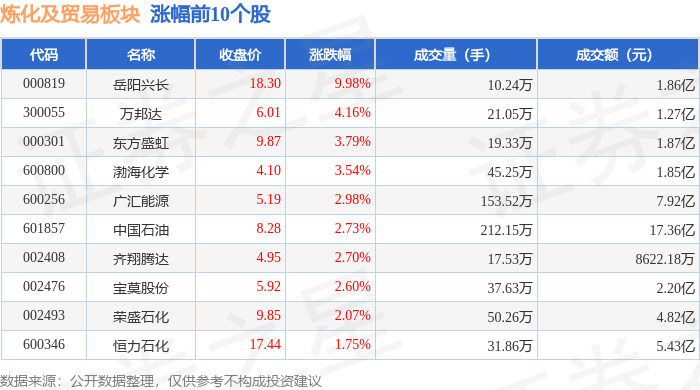
Market Performance - The refining and trading sector increased by 2.19% on October 9, with Yueyang Xinchang leading the gains [1] - The Shanghai Composite Index closed at 3933.97, up 1.32%, while the Shenzhen Component Index closed at 13725.56, up 1.47% [1] Stock Highlights - Yueyang Xinchang (code: 618000) closed at 18.30, rising by 9.98% with a trading volume of 102,400 shares and a turnover of 186 million yuan [1] - Wanbangda (code: 300055) saw a 4.16% increase, closing at 6.01 with a trading volume of 210,500 shares [1] - Other notable stocks include Dongfang Shenghong (code: 000301) up 3.79%, Guanghui Energy (code: 600256) up 2.98%, and China Petroleum (code: 601857) up 2.73% [1] Capital Flow - The refining and trading sector experienced a net inflow of 335 million yuan from institutional investors, while retail investors saw a net outflow of 244 million yuan [2] - The main capital inflow was observed in China Petroleum, which had a net inflow of 113 million yuan, accounting for 6.51% of its total trading volume [3] - Other companies with significant net inflows include Guanghui Energy and China Sinopec, with net inflows of 86.59 million yuan and 68.75 million yuan, respectively [3]

中国石油化工股份(00386) - 翌日披露报表
2025-10-09 08:41
FF305 翌日披露報表 (股份發行人 ── 已發行股份或庫存股份變動、股份購回及/或在場内出售庫存股份) 表格類別: 股票 狀態: 新提交 公司名稱: 中國石油化工股份有限公司 呈交日期: 2025年10月9日 如上市發行人的已發行股份或庫存股份出現變動而須根據《香港聯合交易所有限公司(「香港聯交所」)證券上市規則》(「《主板上市規則》」)第13.25A條 / 《香港聯合交易所有限公司GEM證券 上市規則》(「《GEM上市規則》」)第17.27A條作出披露,必須填妥第一章節 。 | 第一章節 | | | | | | | | | --- | --- | --- | --- | --- | --- | --- | --- | | 1. 股份分類 | 普通股 | 股份類別 H | | | 於香港聯交所上市 | 是 | | | 證券代號 (如上市) | 00386 | 說明 | | | | | | | A. 已發行股份或庫存股份變動 | | | | | | | | | | 事件 | | 已發行股份(不包括庫存股份)變動 | | 庫存股份變動 | 每股發行/出售價 (註4) | 已發行股份總數 | | | | 已發行 ...
“顶流”央企联合出手,布局私募
Shang Hai Zheng Quan Bao· 2025-10-09 08:07
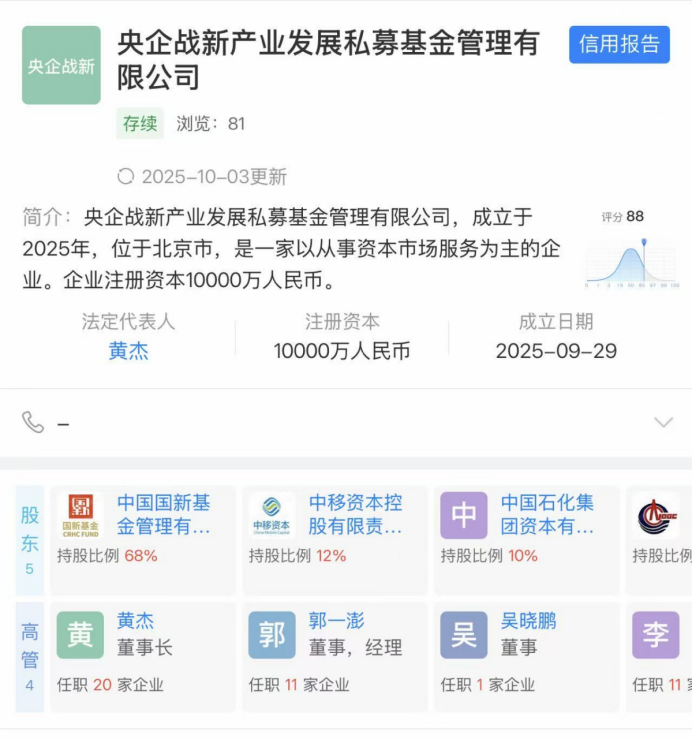
Core Points - A new private equity fund management company, Central Enterprise War New Industry Development Private Fund Management Co., Ltd., has been established in Beijing with a registered capital of 100 million yuan [1][3] - The founding shareholders include five major state-owned enterprises: China National New, China Mobile, China Petroleum, China Petrochemical, and China National Offshore Oil, each contributing through their respective capital investment platforms [1][3] Shareholder Structure - The company is primarily owned by China National New Fund Management Co., Ltd. (68%), followed by China Mobile Capital Holdings Co., Ltd. (12%), China Petrochemical Group Capital Co., Ltd. (10%), China National Offshore Oil Investment Holdings Co., Ltd. (6%), and China Petroleum Kunlun (Beijing) Private Fund Management Co., Ltd. (4%) [3][4] - The total subscribed capital contributions from the shareholders amount to 100 million yuan, with specific contributions being 68 million yuan from China National New, 12 million yuan from China Mobile, 10 million yuan from China Petrochemical, 6 million yuan from China National Offshore Oil, and 4 million yuan from China Petroleum [4] Management Team - The legal representative and chairman of the new fund management company is Huang Jie, who is also the chairman of China National Capital Venture Capital Co., Ltd. and Guofeng Investment Innovation Fund Co., Ltd. [4][5] - Other executives include Wu Xiaopeng, Li Yanan, and Guo Yipeng [5] Industry Trends - Multiple large-scale state-owned enterprise venture capital funds have been established this year, with significant capital commitments, such as the 10 billion yuan Guoxin Venture Capital Fund established in Hangzhou [6][7] - The total scale of venture capital funds established by central enterprises is approaching 100 billion yuan, focusing on technology-driven sectors and long-term investments [8]


“反内卷”政策成效显著,石化ETF(159731)涨超2.4%,和邦生物、杭氧股份涨停


Sou Hu Cai Jing· 2025-10-09 06:23
Core Viewpoint - The Shanghai Composite Index has surpassed the 3900-point mark, indicating a bullish trend in the market, particularly in the chemical sector, driven by the elimination of outdated production capacity and improved industrial profits [1] Group 1: Market Performance - The Shanghai Composite Index continued its upward trend in the afternoon session, breaking the 3900-point threshold [1] - The China Securities Index for the petrochemical industry rose approximately 2.4%, with significant gains in constituent stocks such as Hangzhou Oxygen Plant, Hebang Biotechnology, and Yilong Lake [1] - The Petrochemical ETF (159731) followed the index's upward movement [1] Group 2: Industry Insights - Guosen Securities anticipates that the implementation of outdated capacity elimination will optimize the supply side of the chemical industry, enhancing overall competitiveness [1] - In August, the total profit of industrial enterprises above designated size increased by 20.4% year-on-year, a significant turnaround from July's -1.5%, signaling stabilization in the industrial economy [1] - The growth in profits is attributed to a low base from the previous year and effective macroeconomic policies, particularly the "anti-involution" measures that have regulated competition and stabilized industrial prices [1] Group 3: ETF and Sector Composition - The Petrochemical ETF (159731) and its linked funds (017855/017856) closely track the China Securities Index for the petrochemical industry [1] - The basic chemical industry accounts for 61.93% of the sector distribution, while the oil and petrochemical industry represents 30.84% [1] - The top ten weighted stocks in the index include Wanhua Chemical, China Petroleum, and Yilong Lake, collectively accounting for 55.12% of the total weight [1]
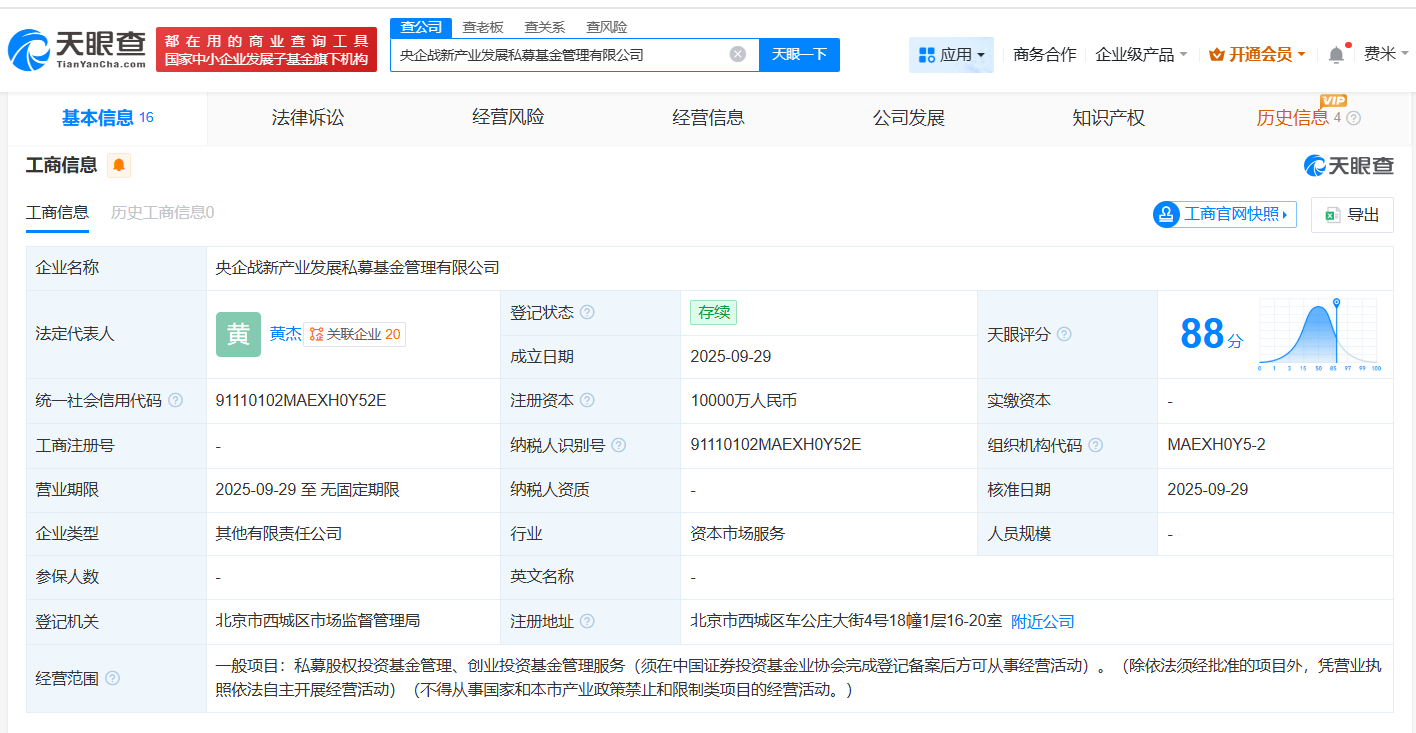
中国国新、中国移动等成立央企战新产业发展私募基金管理公司
Mei Ri Jing Ji Xin Wen· 2025-10-09 03:33
Core Points - The establishment of the Central Enterprise War New Industry Development Private Equity Fund Management Co., Ltd. has been announced, with a registered capital of 100 million RMB [1] - The company is co-owned by several state-owned enterprises, including China Guoxin Fund Management Co., Ltd., China Mobile Capital Holdings Co., Ltd., Sinopec Group Capital Co., Ltd., China National Offshore Oil Corporation Investment Holdings Co., Ltd., and China Oil Kunlun (Beijing) Private Fund Management Co., Ltd. [1] Company Information - The legal representative of the company is Huang Jie [2] - The company was established on September 29, 2025, and is registered in Beijing [2] - The business scope includes private equity investment fund management and venture capital fund management services, which require registration with the Asset Management Association of China before operations can commence [2] Shareholding Structure - China Guoxin Fund Management Co., Ltd. holds a 68% stake, making it the controlling shareholder [2] - China Mobile Capital Holdings Co., Ltd. owns 12% of the shares [2] - Sinopec Group Capital Co., Ltd. holds 10%, while China National Offshore Oil Corporation Investment Holdings Co., Ltd. has 6%, and China Oil Kunlun (Beijing) Private Fund Management Co., Ltd. owns 4% [2]

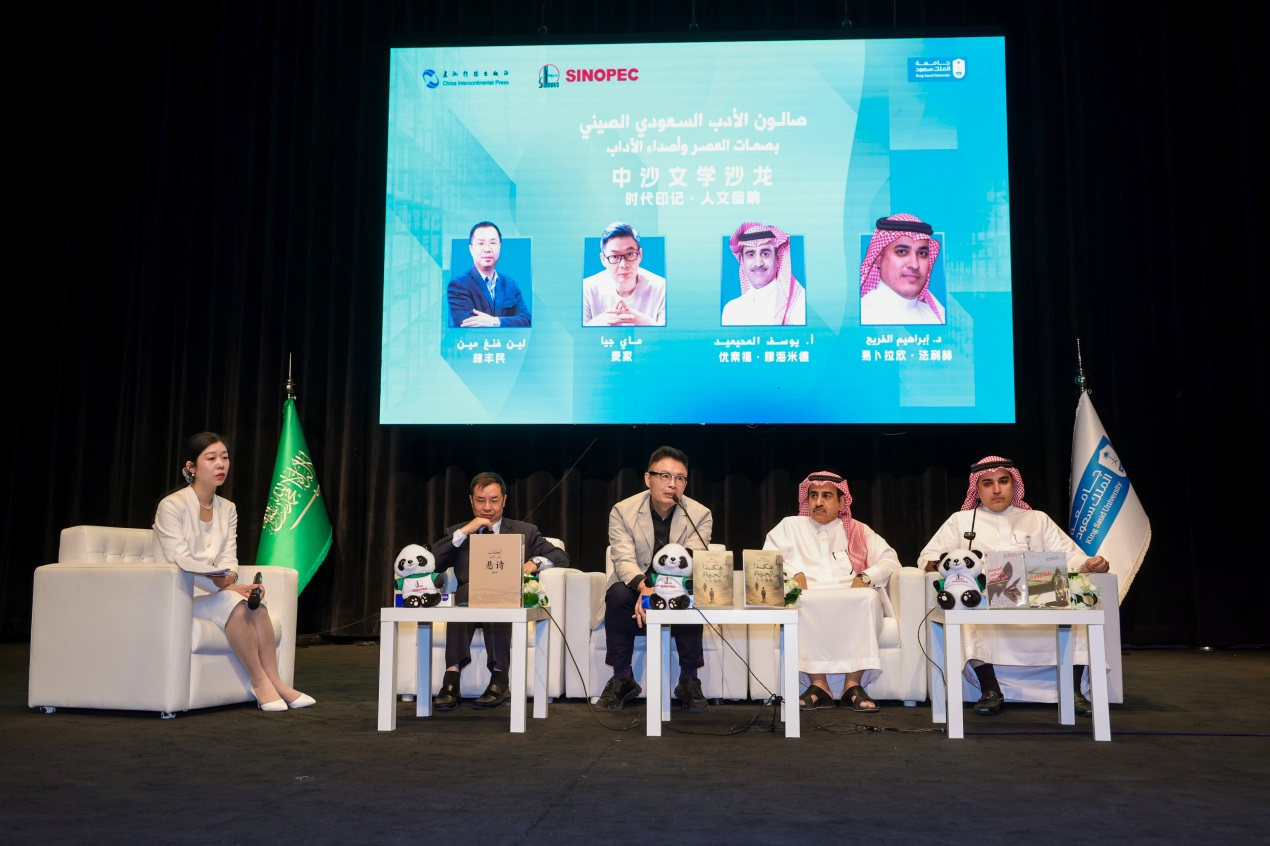
“时代印记·人文回响”中沙文学沙龙在沙特举行
人民网-国际频道 原创稿· 2025-10-09 03:32
Group 1 - The event "Cultural Echoes of the Times" was held in Riyadh, focusing on the exchange of literary and cultural values between China and Saudi Arabia [1][2] - The collaboration between Chinese publishing institutions and Saudi universities has led to the translation of over 10 themes, including literature and cultural heritage, promoting mutual understanding [1] - The Chinese government supports cultural exchanges and translation projects between China and Saudi Arabia, aiming to contribute to the mutual learning of Asian civilizations [1] Group 2 - China Petroleum & Chemical Corporation (Sinopec) emphasizes its role not only as an economic participant but also as a cultural communicator in Saudi Arabia [2] - Sinopec plans to collaborate with universities, publishing, and cultural institutions in both countries to enrich the spiritual lives of their peoples [2] - Notable authors and scholars from both countries participated in discussions on literary creation and cultural exchange during the event [2]
在大漠戈壁书写能源报国青春答卷
Zhong Guo Qing Nian Bao· 2025-10-08 22:58
Core Viewpoint - The articles highlight the dedication and resilience of young professionals in China's oil and gas industry, particularly in the Xinjiang region, as they contribute to energy security and green development initiatives in challenging environments [2][10]. Group 1: Youth Engagement in Oil and Gas - A new generation of young professionals is actively involved in oil and gas exploration and production in the Taklamakan Desert, transforming the harsh environment into a thriving energy hub [2]. - The spirit of dedication is exemplified by the historical connection between past and present oil workers, showcasing a legacy of bravery and commitment to energy production [3][4]. - The establishment of the Shasan No. 2 well marked a significant achievement in China's oil exploration, leading to the development of the Tarim Basin as a major energy source [4]. Group 2: Technological Innovation - Young engineers are leveraging digital technologies to enhance oil field development, such as the implementation of artificial intelligence for production forecasting [7][8]. - The development of intelligent systems aims to redefine traditional oil extraction methods, integrating modern technology with historical practices [8][9]. Group 3: Green Energy Initiatives - The Xinjiang Kucha Green Hydrogen Demonstration Project represents a significant step towards energy transition, with young professionals leading the charge in developing hydrogen technology [10][11]. - The project has been operational for over 800 days, demonstrating the importance of standardized management and attention to detail in ensuring safety and efficiency [12].

石油化工行业周报:自然递减率呈现一定分化,油气供应未来或将更加集中-20251008
Shenwan Hongyuan Securities· 2025-10-08 13:12
Investment Rating - The report maintains a positive outlook on the oil and petrochemical industry, indicating a "Look Favorably" investment rating [4]. Core Insights - The global natural decline rates of oil and gas fields show significant differentiation, leading to a more concentrated future supply of oil and gas [4]. - The International Energy Agency (IEA) reports that the average annual decline rate for conventional oil is 5.6%, while for natural gas it is 6.8%. Without new investments, oil production is expected to decline by 8% annually over the next decade, and natural gas by 9% [5][12]. - The report highlights that nearly 90% of upstream investments are currently aimed at offsetting declines rather than meeting growth, indicating a need for substantial new investments to maintain current production levels [14]. Summary by Sections Upstream Sector - Brent crude oil futures closed at $64.53 per barrel, down 7.99% week-on-week, while WTI futures closed at $60.88 per barrel, down 7.36% [24]. - The number of active oil rigs in the U.S. increased by 7 to 549, although this is a decrease of 38 compared to the previous year [37]. - The report anticipates a widening supply-demand trend for crude oil, with expectations of downward pressure on prices, but a medium to high price range due to OPEC cuts and shale oil cost support [4]. Refining Sector - The comprehensive price spread for major refined products in Singapore rose to $21.72 per barrel, an increase of $8.14 from the previous week [59]. - The report suggests that refining profitability is expected to improve as oil prices adjust, with a gradual recovery anticipated as economic conditions stabilize [4]. Polyester Sector - The report indicates a recovery expectation for the polyester sector, with potential upward movement in profit margins as supply-demand dynamics improve [17]. - Key companies to watch include Tongkun Co., Ltd. and Wankai New Materials, which are expected to benefit from this recovery [17]. Investment Recommendations - The report recommends focusing on leading companies in the polyester sector, such as Tongkun Co., Ltd. and Wankai New Materials, as well as high-quality refining companies like Hengli Petrochemical and Sinopec [17]. - It also highlights the resilience of upstream exploration and development companies, particularly offshore service companies, which are expected to see performance improvements [17].


能源局推进,14家央企加入,“AI+光伏”大有可为!
Sou Hu Cai Jing· 2025-10-08 03:26
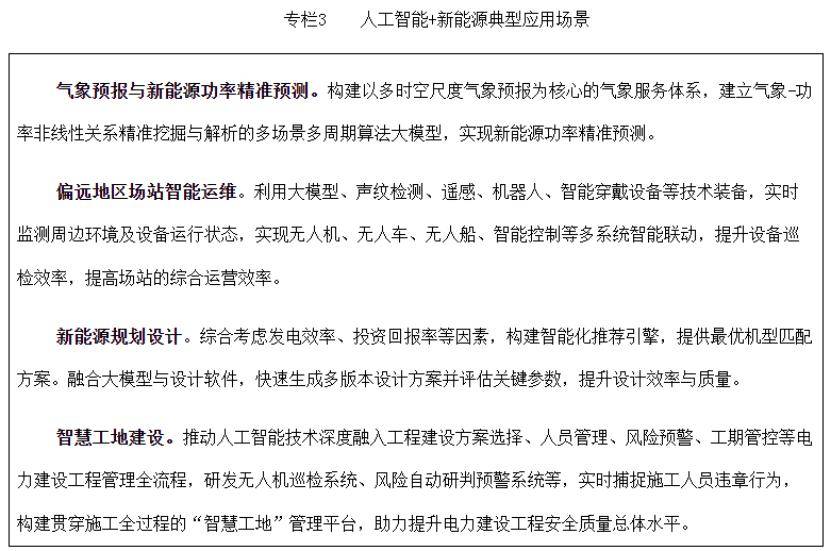
Core Insights - The Chinese government is promoting the integration of artificial intelligence (AI) with renewable energy to enhance the quality of energy development, focusing on applications like power prediction and smart operations [1][2]. Group 1: Government Initiatives - The National Development and Reform Commission and the National Energy Administration issued guidelines to advance "AI + Energy" applications, emphasizing the need for high-precision power forecasting and smart operations in renewable energy [1]. - The government aims to support the stable supply of renewable energy through an integrated model combining weather forecasting, power prediction, smart trading, and intelligent operations [1]. Group 2: Corporate Adoption of AI - Major state-owned energy companies, including State Grid, China Southern Power Grid, and China Energy Group, have begun integrating the DeepSeek AI model into their operations [2][3]. - China Huaneng and China Datang have localized the DeepSeek model to enhance their AI capabilities in various business applications, including financial systems and operational management [3][4][9]. Group 3: Specific Implementations - Longyuan Power has deployed the DeepSeek-R1 model on its digital platform, enabling efficient AI services for its subsidiaries and enhancing decision-making in renewable energy operations [5][6]. - China Huaneng launched the "Smart Little Energy" AI assistant and integrated it with its mobile portal, marking a significant step in its AI application efforts [9]. - China Huadian's "Huadian Ruisi" digital platform has integrated DeepSeek to improve intelligent Q&A and document analysis capabilities [12]. Group 4: Technological Advancements - The DeepSeek-R1 model features multi-modal processing and dynamic attention mechanisms, allowing it to efficiently integrate various data types for enhanced operational support [5]. - China Energy Construction has completed the full integration of DeepSeek models, significantly boosting its digital transformation efforts [17]. Group 5: Future Directions - Longyuan Power plans to deepen the integration of its digital platform with the DeepSeek model across six key business areas, aiming for a comprehensive AI development platform [6]. - China National Nuclear Corporation is set to enhance its AI capabilities by integrating DeepSeek with its existing models, focusing on sustainable development and intelligent upgrades [19][20].

韩国SK将出售与中石化合资企业全部股份
Sou Hu Cai Jing· 2025-10-07 13:56
Core Viewpoint - SK Group is selling its entire 35% stake in Sinopec-SK (Wuhan) Petrochemical Company, marking a retreat from the commodity chemicals sector amid industry challenges such as oversupply and declining profit margins [1][4]. Group 1: Transaction Details - The sale is expected to occur at a book value of approximately 819.3 billion KRW (around 594 million USD) [3]. - The Wuhan plant, established in 2013, had a total investment of 3.3 trillion KRW and was a symbol of SK's "China Insider" strategy, with an annual production capacity of 3.2 million tons of general chemicals, including 1.1 million tons of ethylene [3][4]. - The joint venture had generated nearly 2 trillion KRW in operating profit during its first eight years, benefiting from a shortage of ethylene [4]. Group 2: Industry Context - Since 2021, the plant has incurred losses exceeding 1 trillion KRW due to a surge in Chinese production capacity and stagnant domestic demand, with China's ethylene output nearly doubling from 2020 to 2023, reaching 60 million tons [4][6]. - SK Group's restructuring is not limited to South Korea but is extending to its overseas assets, indicating a broader shift in strategy [6]. Group 3: Strategic Shift - SK Group is pivoting towards its "ABC" strategy, focusing on artificial intelligence (AI), batteries, and chips, while reducing its involvement in businesses without a clear future [6][11]. - The proceeds from the sale are expected to be reinvested into growth areas, with a commitment to invest 8.2 trillion KRW in AI and semiconductor sectors by 2030 [11]. Group 4: Potential Buyers - Sinopec is considered the most likely buyer for the stake, as it is the world's largest refining company and could streamline decision-making by fully owning the Wuhan facility [9][10].