
GYLS(600059)

Search documents
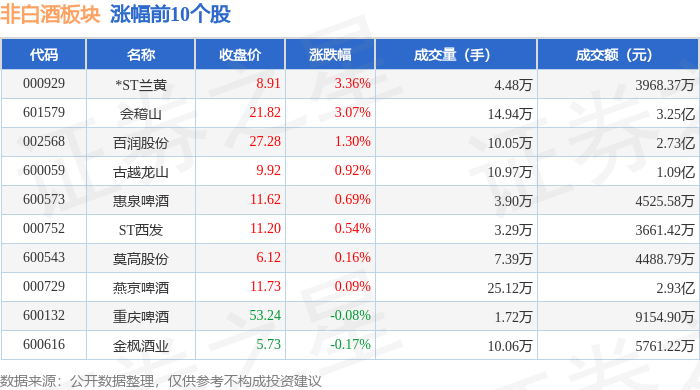
非白酒板块10月27日涨0.09%,*ST兰黄领涨,主力资金净流出79.71万元
Zheng Xing Xing Ye Ri Bao· 2025-10-27 08:25
Market Performance - The non-liquor sector increased by 0.09% compared to the previous trading day, with *ST Lanhua leading the gains [1] - The Shanghai Composite Index closed at 3996.94, up 1.18%, while the Shenzhen Component Index closed at 13489.4, up 1.51% [1] Stock Highlights - *ST Lanhua closed at 8.91, with a rise of 3.36% and a trading volume of 44,800 shares, totaling a transaction value of 39.68 million yuan [1] - Huaiqian Beer (惠泉啤酒) and ST Xifa (ST西发) also showed modest gains of 0.69% and 0.54%, respectively [1] - Zhangyu A (张裕A) experienced a decline of 1.51%, closing at 21.53 with a trading volume of 33,500 shares [2] Capital Flow Analysis - The non-liquor sector saw a net outflow of 797,100 yuan from institutional investors, while retail investors experienced a net outflow of 6,544,780 yuan [2] - Speculative funds had a net inflow of 66,245,000 yuan, indicating a shift in investor sentiment [2] Individual Stock Capital Flow - Kuaijishan (会稽山) had a net outflow of 27,921,000 yuan from institutional investors, while it saw a net inflow of 12,754,600 yuan from speculative funds [3] - Qingdao Beer (青岛啤酒) recorded a net inflow of 20,624,600 yuan from institutional investors, with a significant net outflow of 40,225,200 yuan from retail investors [3]


酒香也怕巷子深?酿新篇:中国酒业的三味“新曲”
Sou Hu Cai Jing· 2025-10-26 03:03
Core Insights - The 23rd China International Wine Expo showcased a comprehensive display of the entire industry chain, moving beyond just finished products to include raw materials, smart equipment, and digital marketing [4][10] - The industry is undergoing significant transformations characterized by three main themes: youthfulness, digitalization, and internationalization, which are essential for the industry's evolution [2][12] Youthfulness - Wine companies are actively adapting to attract younger consumers, with products like "no high-low" yellow wine targeting health-conscious youth, and innovative offerings such as wine-infused chocolates and face masks [6][7] - The shift towards youthfulness is driven by the emergence of Generation Z as a new consumer force, emphasizing personalized experiences and health-conscious choices [7][9] Digitalization - The digital transformation in the wine industry is evident through automation in production processes and the integration of technologies like blockchain for transparency and AR/VR for immersive experiences [9][10] - However, the digitalization efforts are primarily benefiting larger enterprises, raising concerns about the potential widening gap between large and small companies in the industry [9][12] Internationalization - Chinese wine companies are increasingly engaging with global markets, supported by China's growing international influence and proactive industry reforms [10][12] - The internationalization of Chinese wine faces challenges, including the need to meet international quality standards and cultural recognition in foreign markets [12][13] Conclusion - The wine expo reflects a broader trend of transformation in traditional industries, where youthfulness, digitalization, and internationalization are interconnected and mutually reinforcing [13][15] - The industry must embrace change with an open mindset and innovative spirit to navigate the complexities of modern market dynamics [15]





黄酒“不服老”:混饮、触网、跨界,谁能妙手回春?
Xin Lang Cai Jing· 2025-10-23 02:37
Core Insights - The yellow wine industry is facing challenges such as aging brand image and a disconnect with younger consumers, prompting brands to seek innovative solutions to break through these barriers [1][3] - Cross-industry collaboration is emerging as a significant strategy, exemplified by the partnership between Guyue Longshan and China Resources Beer to develop a new "yellow wine + beer" product [1][4] Product Innovation - Product innovation is a fundamental aspect of the yellow wine industry's efforts to revitalize itself, focusing on appealing to younger consumers through flavor, packaging, and functional value [4][5] - The collaboration between Guyue Longshan and China Resources Beer aims to combine brewing techniques and traditional yellow wine heritage to create a "yellow wine craft beer" that meets contemporary consumer preferences for lower alcohol content and enjoyable drinking experiences [4][5] - Guyue Longshan's previous launch of "craft yellow beer" achieved significant success, with 25,000 boxes ordered and over 10 million yuan in sales within the first month [4][5] - Other brands are also innovating, such as Kuaijishan's "daily smoked refreshing wine" and various herbal-infused products targeting health-conscious young consumers [7][8] Channel Innovation - The yellow wine industry is undergoing channel innovation to reach younger demographics, moving away from traditional sales methods to embrace e-commerce and modern retail strategies [8][9] - Kuaijishan has established an e-commerce company to explore digital sales strategies, achieving over 10 million yuan in sales within 72 hours during the 618 shopping festival [9][12] - Guyue Longshan is also expanding its online presence through major e-commerce platforms and is actively seeking new offline sales channels, including convenience stores and high-end restaurants [9][12] Regional Expansion - The yellow wine industry is heavily concentrated in the Jiangsu, Zhejiang, and Shanghai regions, which account for over 75% of national sales, necessitating efforts to expand beyond these areas [12][13] - The partnership between Guyue Longshan and China Resources Beer represents an attempt to penetrate new markets, leveraging China Resources' established distribution network [13][14] - Marketing initiatives, such as the "Cheers to New Yellow Wine" campaign, aim to increase brand visibility and engage younger consumers, with significant social media reach [13][16]

老“CP”有新思路 黄酒场景消费如何激活
Bei Jing Shang Bao· 2025-10-21 13:44
Core Insights - The consumption of yellow wine is experiencing a surge alongside the peak season for hairy crabs, with traditional products being complemented by younger, innovative offerings [1][2] - The market is characterized by intense competition among brands, both traditional and new entrants, as they seek to capitalize on the growing demand for yellow wine during the crab season [1][6] Market Trends - The introduction of youthful yellow wine products by leading brands such as Kuaijishan and Guyuelongshan is reshaping the traditional pairing of yellow wine with hairy crabs [2][11] - Sales data indicates that Kuaijishan's 8-degree sparkling yellow wine has surpassed 6,000 sales, while Guyuelongshan's similar product has exceeded 400 sales, highlighting a shift in consumer preferences towards innovative products [2][11] Industry Growth - The hairy crab market has shown significant growth, with production reaching a historical high of over 7 billion crabs in 2023, indicating a robust demand that supports the yellow wine market [7][11] - The yellow wine industry is projected to grow, with sales revenue reaching 21 billion yuan in 2023, a 2.1% increase year-on-year, and expected to exceed 30 billion yuan by 2025, maintaining a compound annual growth rate of over 5% [11][12] Consumer Behavior - The younger demographic is increasingly drawn to low-alcohol beverages, making yellow wine appealing due to its lower alcohol content and palatable taste [11][12] - Brands are focusing on expanding consumption scenarios beyond traditional dining, aiming to position yellow wine as a cultural lifestyle product through innovative venues like "slow wine bars" [12][13] Strategic Initiatives - Companies are encouraged to enhance their brand's appeal to younger consumers through innovative marketing strategies, including social media engagement and collaborations with influencers [13][14] - The establishment of experiential consumption spaces, such as slow wine bars, allows brands to gather consumer data and preferences, facilitating a deeper connection with the target audience [12][13]
古越龙山携手华润,“黄酒一哥”借年轻化突围
Xin Lang Cai Jing· 2025-10-21 12:16
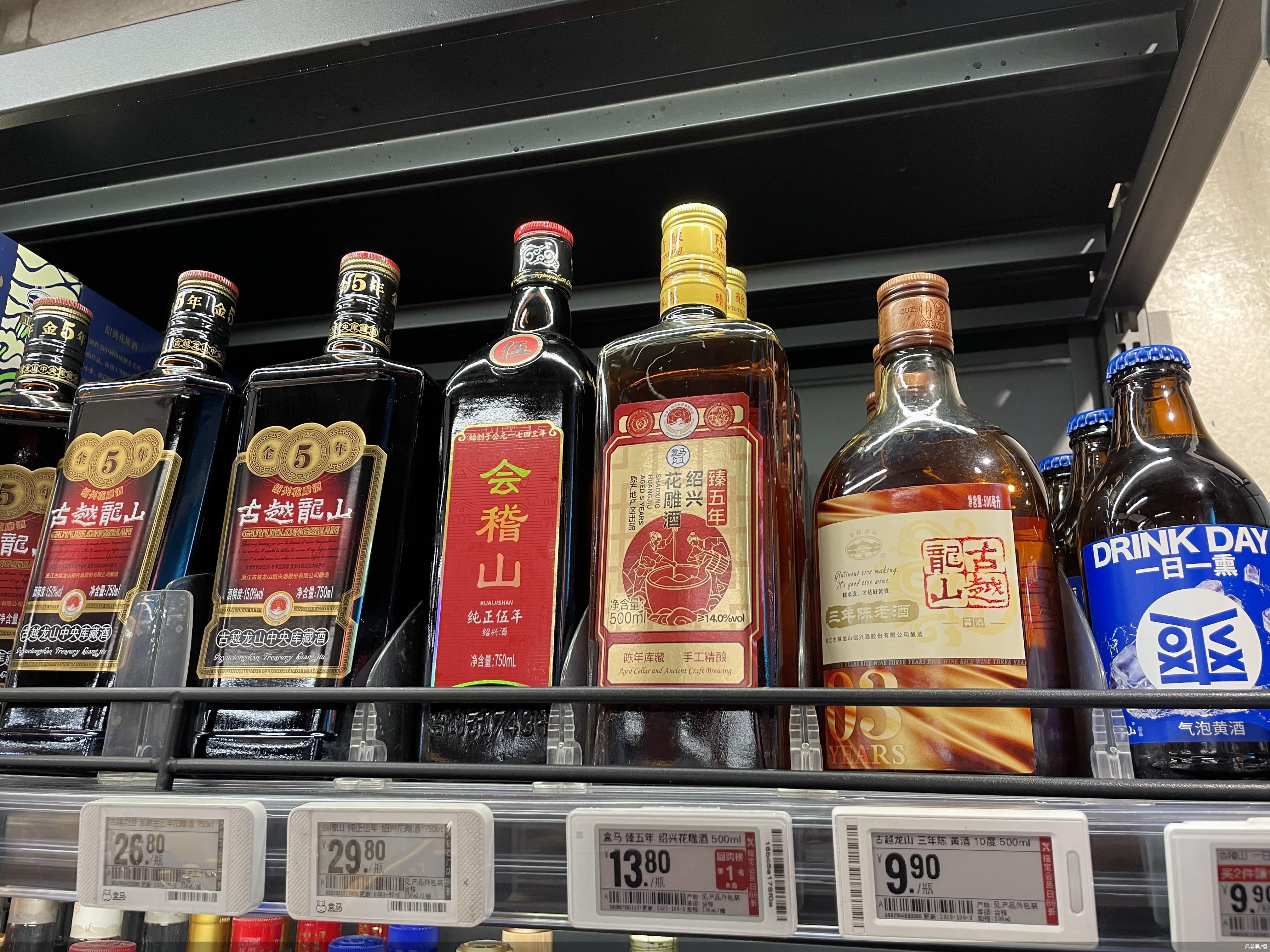
Core Viewpoint - Gu Yue Long Shan is accelerating its youth-oriented transformation by collaborating with China Resources Beer to launch a cross-border product combining yellow wine and beer, aiming to capture the younger consumer market [3][4]. Company Performance - In the first half of the year, Gu Yue Long Shan reported a liquor sales revenue of 879 million yuan, a year-on-year increase of 0.86%, while net profit attributable to shareholders decreased by 4.72% to 90.31 million yuan [3]. - The company's revenue growth and market capitalization have been surpassed by its competitor Kuaiji Mountain, posing a risk to its title as the "King of Yellow Wine" [3]. Industry Challenges - The yellow wine industry is facing overall pressure due to aging consumers and regional consumption barriers, with the notion that "yellow wine cannot leave Jiangsu, Zhejiang, and Shanghai" becoming a prevalent challenge [3]. - Even in regions with a rich yellow wine culture, the acceptance of yellow wine among younger consumers is declining, necessitating strategies to break regional limitations and attract younger demographics [3]. Product Innovation and Market Strategy - Gu Yue Long Shan has been exploring youth-oriented strategies, including the launch of a craft yellow wine that garnered over 10 million yuan in orders within its first month [4]. - The company has introduced various innovative products, such as coffee yellow wine and flavored yellow wines, to cater to the preferences of younger consumers [4][5]. - The establishment of "slow wine bars" and the hosting of events like "trendy drinking music festivals" reflect the company's efforts to create drinking scenarios appealing to younger audiences [5]. Management Changes - Recent high-level personnel changes include the appointment of Hu Feng as the new deputy general manager, with a total of nine changes in the board and management over the past year, indicating adjustments during the company's transformation phase [7].

黄酒、红酒也不好卖了?“黄酒一哥”改卖啤酒求生
Shen Zhen Shang Bao· 2025-10-19 12:53
Core Insights - The traditional liquor market in China is facing significant challenges, with high-end liquor experiencing inventory issues and price discrepancies, while other categories like yellow wine and red wine are also struggling to sell [1][6] Group 1: Yellow Wine Market - "Yellow wine king" Guyue Longshan is collaborating with "beer king" China Resources Beer to develop a cross-border product combining yellow wine and beer, expected to launch within the year [2] - Guyue Longshan's performance has deteriorated, with a 48.17% year-on-year decline in net profit for 2024 and nearly a 5% drop in the first half of the year [4] - The company has failed to meet its sales and profit growth targets set for 2021, 2022, and 2023, indicating a struggle to maintain its market position [4][5] Group 2: Red Wine Market - The red wine market is also experiencing a downturn, with domestic leader Zhangyu A reporting a 3.4% decline in revenue and a 16.09% drop in net profit for the first half of 2025 [8] - Zhangyu A's wine sales fell by 10.28% year-on-year, while the company is diversifying into brandy, which has shown growth [8] - Imported wine volumes have decreased, with a 12.67% drop in imports during the first half of 2025 [8] Group 3: Changing Consumer Trends - The consumption landscape for alcoholic beverages in China is shifting from large banquets to smaller, lifestyle-oriented gatherings, with younger consumers redefining drinking occasions [9] - New consumption scenarios include casual settings like late-night snacks and camping, as well as intimate gatherings, posing a challenge for traditional liquor brands [9]



华润啤酒牵手古越龙山 啤酒+黄酒寻求突围
Zhong Guo Jing Ying Bao· 2025-10-17 08:52
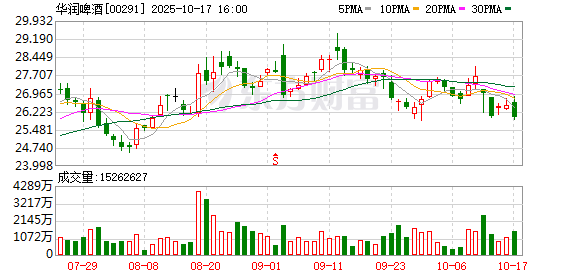
Core Viewpoint - The collaboration between Guyue Longshan and China Resources Beer aims to create a new product that combines yellow wine and beer, responding to changing consumer trends and targeting the younger demographic seeking low-alcohol beverages [2][3][4]. Group 1: Strategic Collaboration - Guyue Longshan has become the exclusive partner of China Resources Beer in the "yellow wine + beer" crossover product area, focusing on creating a "yellow wine craft beer" [3]. - The partnership is seen as a strategic move to innovate product offerings and break traditional perceptions of yellow wine, leveraging the strengths of both companies [4][8]. - The new product is set to launch in the East China region before expanding nationwide, aiming to reach a broader and younger consumer base [3][4]. Group 2: Market Trends and Consumer Behavior - The collaboration is driven by the trend of younger consumers preferring low-alcohol beverages, with yellow wine typically having an alcohol content of 14%-20% and beer at 3%-5% [3][4]. - The combination of the rich flavor of yellow wine and the refreshing taste of beer is expected to create a unique drinking experience that aligns with modern social drinking preferences [3][4]. Group 3: Industry Context and Challenges - The yellow wine industry faces challenges such as limited market size, regional concentration, and a consumer base primarily consisting of older males, which hinders the growth potential among younger consumers [6][7]. - Competitors in the yellow wine sector, such as Kuaijishan and Jinfeng Wine Industry, are experiencing varied financial performances, indicating a competitive and evolving market landscape [5][6]. - The collaboration may help overcome regional limitations and enhance brand appeal, but it also faces challenges related to integrating different product categories and consumer habits [8][9].
中经酒业周报∣9月酒类价格同比下降1.3%,《陈年白酒流通鉴定规范》等五项团标12月实施,五粮液斩获2025年EFQM全球奖(七钻),古越龙山与华润推出“黄酒+啤酒”联名产品
Xin Hua Cai Jing· 2025-10-17 02:52
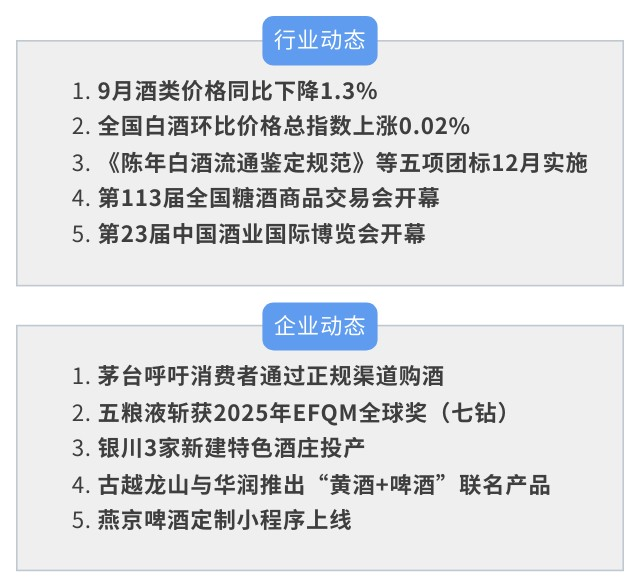
Industry Dynamics - In September, the price of alcoholic beverages decreased by 1.3% year-on-year and 0.3% month-on-month, with a cumulative decline of 1.9% from January to September [4] - The national white liquor price index increased by 0.02% month-on-month in early October, with famous liquor rising by 0.05% and local liquor decreasing by 0.05%. The base index for white liquor wholesale prices rose by 7.61% [4] - Five new industry standards, including the "Identification Standards for Aged Liquor," will be implemented starting December 1 [4] Event Highlights - The 113th National Sugar and Wine Products Trade Fair is being held from October 16 to 18 in Nanjing, focusing on the integration of exhibition economy and urban development [5] - The 23rd China International Wine Expo is taking place from October 17 to 19 in Wuhan, promoting consumer engagement and showcasing quality products [5] Company Updates - Moutai has urged consumers to purchase its products through official channels to protect their rights [8] - Wuliangye won the 2025 EFQM Global Award (Seven Stars) for its outstanding performance in management and sustainability [8] - Three new wineries in Yinchuan have commenced production, contributing to the development of the Ningxia wine region [8] - Guyue Longshan and China Resources Beer are launching a co-branded product that combines yellow wine and beer, targeting a younger consumer base [8] - Yanjing Beer has launched a custom mini-program allowing users to create personalized beer bottles [9]
古越龙山又跨界联名了!这次华润渠道会给力吗?
Nan Fang Du Shi Bao· 2025-10-17 00:21
Core Viewpoint - The collaboration between Guyue Longshan and China Resources Beer aims to create a new product that combines yellow wine and beer, addressing the growing demand for low-alcohol beverages among younger consumers [2][3][5] Group 1: Strategic Collaboration - Guyue Longshan has signed a strategic cooperation agreement with China Resources Beer to jointly develop a "yellow wine + beer" product, leveraging both companies' strengths in production and market channels [2][3] - This partnership is exclusive, making Guyue Longshan the sole partner of China Resources Beer in the "yellow wine + beer" crossover market, which could provide a competitive edge [3] - The collaboration is seen as a key move for Guyue Longshan to pursue its strategy of "youthfulness and premiumization" amid increasing market competition and performance pressures [2][8] Group 2: Market Potential and Consumer Trends - The low-alcohol beverage market is experiencing structural opportunities, with young consumers increasingly influencing consumption patterns, as evidenced by a 34% share of young people in liquor consumption [6] - The product will initially be piloted in East China, a traditional market for yellow wine, before expanding nationwide, supported by China Resources Beer's extensive distribution network [4][9] - The marketing strategy will target modern social scenarios like camping and music festivals, aiming to reshape the perception of yellow wine as a traditional drink [4][7] Group 3: Financial Performance and Future Outlook - Guyue Longshan reported a revenue of 893 million yuan in the first half of the year, a slight increase of 0.4%, but net profit decreased by 4.72%, indicating ongoing performance challenges [9] - The company aims for a sales growth of over 6% and profit growth of over 3% by 2025, focusing on product optimization and market positioning [8][9] - The collaboration with China Resources Beer is part of a broader strategy to enhance brand image and attract younger consumers, potentially leading to new revenue streams [9]
古越龙山:公司近年来积极推动黄酒文化传播和消费场景创新
Zheng Quan Ri Bao Zhi Sheng· 2025-10-16 13:13
Core Viewpoint - The company is actively promoting the culture of Huangjiu (yellow wine) and innovating consumption scenarios, with a focus on engaging younger consumers through various initiatives [1] Group 1: Cultural Promotion and Consumer Engagement - The company has established 65 tasting and slow wine houses globally to serve as important venues for spreading Huangjiu culture and connecting deeply with consumers [1] - The company participates in events such as the "7·9" festival, music festivals, and sports events, as well as conducting online live broadcasts to closely engage with younger consumer groups [1] Group 2: Product Development and Market Recognition - High-end products like "Guo Niang 1959" and "Qing Hua Zui" have received positive market recognition, contributing to the overall value recovery of Huangjiu [1] - The company plans to continue optimizing its product structure and enhancing brand value in the future [1]