YTO(600233)

Search documents
圆通速递(600233) - 2025 Q2 - 季度财报
2025-08-27 10:15
Financial Performance - The company's operating revenue for the first half of 2025 reached RMB 3,588,325.11 million, representing a 10.19% increase compared to RMB 3,256,452.32 million in the same period last year[26]. - The total profit for the period was RMB 223,121.95 million, a decrease of 11.49% from RMB 252,079.71 million year-on-year[26]. - The net profit attributable to shareholders was RMB 183,063.26 million, down 7.90% from RMB 198,762.74 million in the previous year[26]. - The net cash flow from operating activities increased by 13.99% to RMB 263,424.88 million, compared to RMB 231,095.41 million in the same period last year[26]. - Basic earnings per share decreased by 8.00% to RMB 0.5311 from RMB 0.5773 in the same period last year[27]. - The weighted average return on net assets was 5.62%, down 1.05 percentage points from 6.67% in the previous year[27]. - The company reported non-recurring gains and losses totaling RMB 65,148,496.22, after accounting for tax effects and minority interests[28]. Assets and Liabilities - The total assets at the end of the reporting period were RMB 4,934,220.31 million, reflecting a 2.17% increase from RMB 4,829,406.39 million at the end of the previous year[26]. - The net assets attributable to shareholders increased by 1.90% to RMB 3,227,315.61 million from RMB 3,167,233.80 million at the end of the previous year[26]. - The operating cost was RMB 3,279,676.34 million, reflecting a 12.24% increase year-on-year, primarily due to the growth in express delivery volume[75]. - Total liabilities increased to CNY 16,561.41 million, compared to CNY 16,085.98 million at the end of the previous year[160]. Operational Efficiency - The company operates a comprehensive express logistics service network covering all 31 provinces, autonomous regions, and municipalities in China, with a county-level coverage rate of 99.93%[32]. - The company has a fleet of nearly 8,300 line-haul transport vehicles, including 6,733 owned vehicles and a self-owned airline fleet of 13 aircraft[32]. - The company achieved a 12.81% year-on-year decrease in single ticket transportation costs, which amounted to 0.37 yuan, down 0.06 yuan from the previous year[61]. - The average efficiency of the company's centers improved by over 13% due to enhanced management and technology applications[61]. - The company has implemented real-time monitoring of franchisees' performance, focusing on key metrics such as order resolution rate and timely delivery rates[50]. Market and Industry Trends - In the first half of 2025, the company's express delivery volume reached 14.863 billion pieces, a year-on-year increase of 21.79%, exceeding the industry average growth rate by 2.5 percentage points[54]. - The express delivery industry in China saw a total business volume of 95.64 billion pieces in the first half of 2025, a year-on-year increase of 19.3%, and total revenue of 718.78 billion yuan, up 10.1%[52]. - The company is focusing on expanding its terminal store network to improve last-mile delivery capabilities and enhance customer engagement[43]. Digital Transformation and Innovation - The company is advancing its digital transformation by integrating AI technologies into its operations, enhancing decision-making efficiency and optimizing logistics routes[55]. - The company has developed digital systems to provide delivery path suggestions to couriers, improving delivery efficiency and tracking capabilities[40]. - The company has invested in digital transformation, leading to the development of a comprehensive management system that monitors the entire lifecycle of parcels, improving service quality and operational efficiency[71]. Strategic Initiatives - The company is enhancing its international development strategy, optimizing its cross-border logistics product matrix, and improving its global comprehensive service capabilities[32]. - The company is committed to international expansion, enhancing its cross-border logistics capabilities and integrating domestic and international services[53]. - The company has opened over 150 cargo flight routes, enhancing its international logistics capabilities[67]. Social Responsibility and Community Engagement - The company donated 400,000 yuan to support rural drinking water projects in Chaoyang Cave Village, benefiting 68 households and over 200 villagers[120]. - The company is actively exploring "agriculture + commerce" projects to support the rural revitalization strategy, enhancing the distribution channels for agricultural products[120]. - The "Dream Action" project has helped 20,000 disabled employees and their families achieve employment and entrepreneurship opportunities[121]. Risks and Challenges - The company faces risks from macroeconomic fluctuations, market competition, and changes in customer demand[105]. - Labor costs are rising, leading to a decline in gross margin due to increased wages and benefits, alongside potential fluctuations in fuel prices[109]. - The company faces risks related to service timeliness, especially during peak e-commerce promotional periods, which may affect service quality[109]. Governance and Compliance - The company has maintained a good integrity status during the reporting period, with no significant legal or financial issues reported[127]. - The company is committed to maintaining transparency and compliance with regulatory requirements in its financial disclosures[130]. - The company has not reported any significant losses exceeding 10% of net assets in the consolidated financial statements, indicating sound financial health[153].

圆通速递:2025年上半年净利润18.31亿元,同比下降7.90%
Xin Lang Cai Jing· 2025-08-27 10:01
圆通速递公告,2025年上半年营业收入358.83亿元,同比增长10.19%。净利润18.31亿元,同比下降 7.90%。 ...
谋求新突破 快递企业加速布局全球市场
Sou Hu Cai Jing· 2025-08-27 07:48
Core Viewpoint - The express delivery industry in China is experiencing a "volume increase and price drop" trend, prompting companies to focus on international markets for higher profits amid intensified domestic competition [1][4]. Industry Overview - The express delivery sector is a crucial part of the modern circulation system, connecting various industries and integrating online and offline services [3]. - In the first seven months of this year, China's express delivery volume reached 1,120.5 billion pieces, marking an 18.7% year-on-year increase [4]. Market Dynamics - The industry is projected to exceed 2.5 trillion pieces by 2030, with a compound annual growth rate of 8%-10%, leading to a market size surpassing 2.8 trillion yuan [4]. - Despite revenue growth, express delivery companies face declining per-package income, indicating a significant challenge in the industry [5][6]. Company Performance - In July, SF Express reported revenue of 24.847 billion yuan, a 9.95% increase, but with a 14.02% drop in per-package income [5]. - YTO Express, Yunda, and Shentong also reported revenue growth, but with continued declines in per-package income, highlighting the "volume increase and price drop" issue [5]. Competitive Landscape - The industry is shifting from a "low-price competition" model to a focus on service quality and efficiency, as companies aim to break the cycle of negative profit margins and declining service quality [6][7]. - Regulatory bodies are actively promoting measures to combat "involution" in competition, encouraging companies to enhance service quality rather than engage in price wars [6][7]. International Expansion - The global cross-border logistics market is expected to grow from 13.3 trillion yuan in 2020 to 18.6 trillion yuan by 2024, with a compound annual growth rate of 8.75% [8]. - Chinese express companies are accelerating their international expansion, with significant increases in their international development index [8][9]. - Companies like Cainiao and JD Logistics are enhancing their international logistics capabilities, establishing new routes and partnerships to improve service efficiency [9][10]. Future Outlook - The express delivery industry is expected to continue its internationalization, driven by the growth of cross-border e-commerce and international trade [10].




再无“8毛包邮全国”,小商家月增万元成本,快递员收入暂未上涨
3 6 Ke· 2025-08-26 11:41
Core Insights - Recent price increases in express delivery fees have caused significant concern among e-commerce operators, particularly small businesses that rely on low-cost shipping to maintain profitability [1][2][3] - The price adjustments, particularly in Guangdong and Zhejiang, range from 0.3 to 0.7 yuan per package, which can severely impact the already thin profit margins of small e-commerce vendors [1][2] - The rise in delivery costs is forcing small merchants to reconsider their pricing strategies and operational costs, with some opting to cut expenses in packaging and promotions rather than passing costs onto consumers [3][8] Delivery Fee Increases - In Guangdong, the average increase in delivery fees is reported at 0.4 yuan, which translates to a profit reduction of approximately 3% for small businesses selling low-cost items [2] - For example, a small business selling handmade products at 9.99 yuan experiences a significant profit squeeze due to the increased shipping costs, which now average around 2 yuan per package [2] - Another e-commerce operator in Dongguan reported a 0.7 yuan increase, leading to an additional monthly cost exceeding 12,000 yuan, effectively halving her monthly profit [3] Market Dynamics - The express delivery sector in Guangdong accounted for 425 billion packages last year, representing 24% of the national total, with revenues of 304 billion yuan [5] - Despite the price hikes, many delivery personnel have not seen an increase in their compensation, as their earnings are still tied to the volume of packages delivered and service commissions [9][8] - The current trend of rising delivery fees is seen as a response to the long-standing issue of "internal competition" within the industry, which has led to unsustainable pricing practices [11][13] Industry Response - Major express delivery companies are responding to regulatory calls to combat "internal competition" by raising prices, aiming to improve service quality and profitability [11][14] - Experts suggest that the industry is experiencing a "volume-price inversion," where low prices are leading to operational inefficiencies and increased pressure on delivery networks [14] - The anticipated shift from a low-price competition model to a quality-focused approach may lead to further price increases and industry consolidation in the future [14]


电商洗牌,1元运费成历史?
Hu Xiu· 2025-08-26 08:58
Core Viewpoint - Recent price increases in express delivery services in Guangdong and Zhejiang are primarily targeting e-commerce clients with low shipping costs, with adjustments ranging from 0.3 to 0.7 yuan per order and a minimum price set at 1.4 yuan per order [1][4]. Group 1: Price Increase Details - Multiple express delivery companies in Guangdong and Zhejiang have raised prices for e-commerce clients, with Guangdong being a key area for these adjustments [4]. - The price increase has been in effect since early August, with variations depending on the individual company's circumstances [4]. - Affected e-commerce businesses are those with previously low shipping costs, particularly in regions like Guangzhou, Shenzhen, and Dongguan [2][4]. Group 2: Industry Reactions and Implications - Industry experts predict that more regions will follow suit in adjusting e-commerce delivery prices, which may improve the performance of express delivery companies in the short term [3][8]. - However, there is skepticism among industry insiders regarding whether the price increase will lead to a corresponding rise in courier wages, with many calling for a minimum wage for couriers instead [5][6]. Group 3: Long-term Industry Trends - The ongoing price war in the express delivery sector has led to significant pressure on companies, particularly those operating under a franchise model, resulting in declining revenue per shipment [7]. - Experts foresee potential mergers and acquisitions in the industry as a response to the current challenges, with a shift towards a more concentrated market [8][9]. - The recent price adjustments are viewed as a potential starting point for broader improvements in the industry, including better capital expenditure, technology development, and labor conditions [9].
多地快递费涨价!有商家一天增加几千元成本?快递公司回应
Bei Jing Shang Bao· 2025-08-26 05:20
Core Viewpoint - The recent increase in express delivery fees in key e-commerce regions like Guangdong and Zhejiang is attributed to a response to "internal competition," leading to higher costs for businesses, particularly those with high shipping volumes [3][5][7]. Group 1: Price Increases and Impact on Businesses - Many express delivery companies have raised prices for e-commerce clients, with increases ranging from 0.3 to 0.7 yuan per package in Guangdong, which is a significant area for e-commerce logistics [3][5]. - For businesses like Mr. Su's, which ships over 100,000 packages monthly, a 0.3 yuan increase translates to an additional cost of 30,000 yuan per month [3][5]. - Smaller businesses may not feel the impact of a few cents per package, but for larger shippers, even a one-cent increase can lead to substantial cost increases [7]. Group 2: Industry Trends and Historical Context - The express delivery industry has been experiencing "internal competition" for years, with major companies like "Three Links and One Reach" (YTO, Shentong, Zhongtong, and Yunda) engaging in price wars to attract customers [7]. - The average price per package in the express delivery industry has decreased from 13.40 yuan in 2015 to 8.02 yuan in 2024, indicating a significant decline in revenue per package [7]. - In July, the average revenue per package for Shentong, YTO, and Yunda was reported at 1.97 yuan, 2.08 yuan, and 1.91 yuan respectively, showing year-on-year declines of 1.50%, 7.20%, and 3.54% [7]. Group 3: Regulatory Responses - The National Development and Reform Commission and the State Administration for Market Regulation have proposed amendments to the Price Law to address unfair pricing practices and regulate "internal competition" in the market [8]. - A meeting held by the State Post Bureau aimed to discuss the legal governance of "internal competition," which is expected to stabilize the market and protect the rights of delivery personnel, potentially benefiting company profits [9].

安徽滁州圆通申通快递停滞,客服称网点异常恢复时间未定
Xin Lang Ke Ji· 2025-08-26 05:07
Core Viewpoint - Recent disruptions in express delivery services by YTO Express and Shentong Express in Chuzhou, Anhui, have led to complaints from local residents regarding undelivered packages and return requests from merchants due to the inability to send parcels [1] Group 1: Incident Overview - Many residents in Chuzhou, particularly from Nanchao District, Langya District, and Lai'an County, reported issues with receiving their packages [1] - As of August 26, both YTO and Shentong were still unable to provide normal delivery services in the Chuzhou area [1] Group 2: Company Responses - Official responses from YTO and Shentong regarding the situation were not available at the time of reporting [1] - Shentong's customer service indicated that the Chuzhou outlet is experiencing issues, but the recovery timeline is currently uncertain [1] - YTO's customer service provided contact information for local outlets, but there was no response from the staff [1] Group 3: Underlying Issues - Reports from multiple users on social media suggest that the delivery disruptions are linked to local couriers not receiving their wages [1]
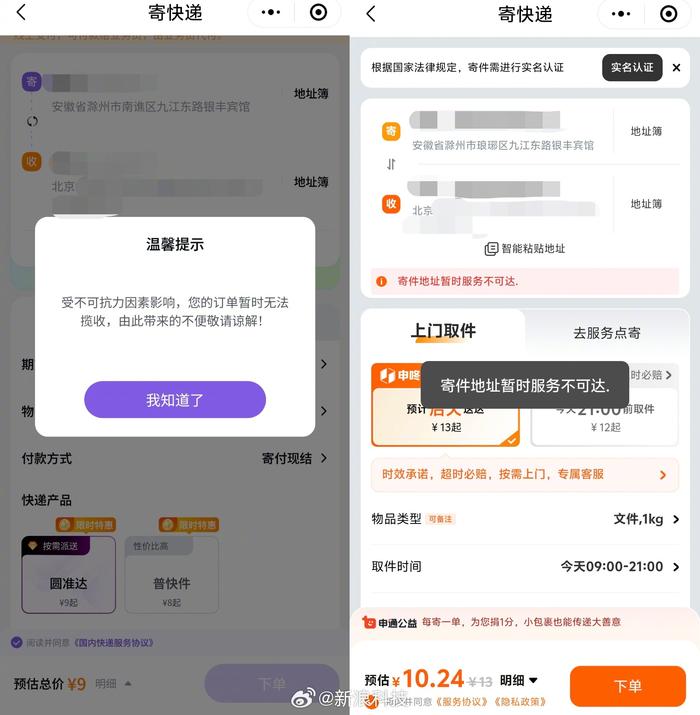
圆通、申通安徽滁州网点无法寄快递!官方回应:网点出现异常,恢复时间暂时无法确定
Xin Lang Cai Jing· 2025-08-26 03:39
Core Viewpoint - Recent disruptions in courier services in Chuzhou, Anhui, have led to complaints from local residents regarding undelivered packages and return requests due to address issues, primarily affecting YTO Express and Shentong Express [1] Group 1: Courier Service Disruptions - Many residents in Chuzhou reported that they are unable to receive their packages, with some merchants requesting returns due to the delivery address being in Chuzhou [1] - The affected areas include Nanchao District, Langya District, and Laian County, with ongoing service interruptions for YTO and Shentong as of August 26 [1] - Official responses from YTO and Shentong have not been provided, with Shentong's customer service indicating an unspecified recovery time for the Chuzhou network [1] Group 2: Underlying Issues - Reports suggest that the disruptions may be linked to local couriers not receiving their wages, which has led to the service interruptions [1] - YTO's customer service provided contact information for local outlets, but there was no response when contacted [1]
圆通速递(600233)8月25日主力资金净流出6065.35万元
Sou Hu Cai Jing· 2025-08-25 16:04
Core Viewpoint - YTO Express reported a decline in net profit despite a revenue increase, indicating potential challenges in profitability management [1] Financial Performance - As of Q1 2025, YTO Express achieved total revenue of 17.06 billion yuan, a year-on-year increase of 10.58% [1] - The net profit attributable to shareholders was 857 million yuan, reflecting a year-on-year decrease of 9.16% [1] - The non-recurring net profit was 810 million yuan, down 10.29% year-on-year [1] - The current ratio was 1.166, and the quick ratio was 1.151, indicating a stable liquidity position [1] - The debt-to-asset ratio stood at 31.68%, suggesting a moderate level of financial leverage [1] Stock Performance - As of August 25, 2025, YTO Express's stock closed at 17.57 yuan, down 0.96% [1] - The turnover rate was 0.97%, with a trading volume of 332,900 lots and a transaction amount of 585 million yuan [1] - There was a net outflow of main funds amounting to 60.65 million yuan, accounting for 10.37% of the transaction amount [1] Investment and Business Activities - YTO Express has made investments in 13 companies and participated in 16 bidding projects [2] - The company holds 13 patents and has obtained 3 administrative licenses [2] - Established in 1992 and headquartered in Dalian, YTO Express primarily engages in postal services [1]
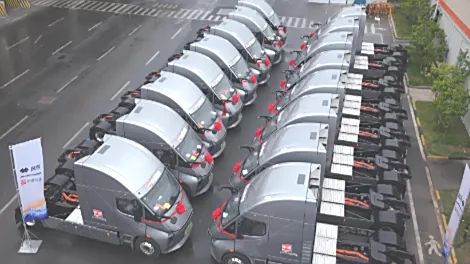
续航600公里将淘汰油车?申通圆通们加快这一探索
3 6 Ke· 2025-08-25 11:51
今年4月,申通首批36台新能源重卡正式投入江浙沪23条核心干线运营,成为全国首家规模化应用新能 源重卡的快递品牌。 申通在引入电动重卡短短两个月后,运营数据出炉:以上海到淮安单向375公里线路为例,该线路车辆 月均行驶里程约11000公里,600度电量的电动重卡单公里电耗可控制在1.2度以内,单公里电费低至0.8 元,相较于传统油车1.8元的单公里能耗成本,每公里直接节省1元,单辆车每月便能节省1.1万元。 亿豹网按此测算,若利用夜间谷电充电,1.5-2年即可弥补与燃油重卡的购车差价。在车辆8年使用周期 内,剩余6年可为快递公司节省能耗成本57万元。这对精打细算的快递企业而言,降本效应极为明显。 数据显示,我国物流行业82%的运量依靠公路运输,但在成本与环保的双重夹击下,干线物流企业利润 率已经被压缩到极其敏感的程度。 快递行业降本增效的大环境下,加快干线车辆智能化与电动化进程,成为快递企业不二的选择。2025年 4月,申通购入首批36辆新能源重卡,并很快尝到了其带来的甜头。圆通则相继投入100台智能重卡,跑 出"智驾接龙"模式提升时效。 前7个月,新能源重卡累计销售8.22万辆,同比大增191%。对快递企业 ...