ZTT(600522)

Search documents
摩尔线程即将上会 直接或间接参股公司曝光
Zheng Quan Shi Bao Wang· 2025-09-21 12:17
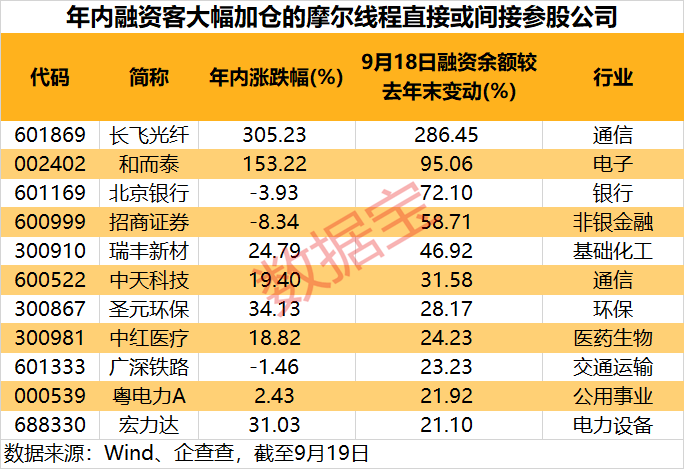
Core Viewpoint - The Shanghai Stock Exchange will review the initial public offering (IPO) of Moore Threads on September 26, aiming to raise 8 billion yuan [1] Group 1: Company Overview - Moore Threads plans to list on the Sci-Tech Innovation Board and seeks to raise 8 billion yuan through its IPO [1] - The company has direct and indirect stakes in various sectors, including electronics, computers, and communications [1] - Directly invested companies include Heertai (002402) and Yingqu Technology (002925), while indirectly invested companies include Honglida, Chuling Information (300250), and Changfei Fiber (601869) [1] Group 2: Market Performance - As of September 19, the average annual increase for the directly or indirectly invested companies is nearly 35%, with Changfei Fiber and Heertai exceeding 100% [1] - Financing data shows that as of September 18, these companies have seen an overall increase of nearly 30% in financing from investors this year [1] - Six companies, including Changfei Fiber, Heertai, and Ruifeng New Materials (300910), have received over 30% increase in financing from investors [1] Group 3: Investment Backers - In addition to A-share companies, notable investors in Moore Threads include Tencent, Lenovo, Sequoia Capital, and Houshu Capital [1]


风电行业反内卷取得了阶段性成效,资金抢筹股出炉(附名单)
Zheng Quan Shi Bao Wang· 2025-09-18 10:43
Group 1 - The wind power industry has achieved preliminary results in countering internal competition, with significant stock price increases among key players such as Tongyu Heavy Industry and Chuanrun Co., Ltd. [1] - The average bidding prices for wind turbine models have rebounded in the first half of this year, alleviating pressure across the industry chain. For instance, the minimum bidding price for 5 MW units rose from 1157 RMB/kW in 2024 to approximately 1700 RMB/kW in the first half of this year [1]. - All turbine models' bidding prices in the first half of this year are now above their minimum cost prices, effectively curbing the trend of vicious low-price competition in the industry [1]. Group 2 - Major wind power stocks have seen substantial gains, with companies like China National Materials and Hangzhou Gear achieving over 100% increase in stock prices this year. China National Materials leads with a 192.84% increase [2]. - Mingyang Smart Energy reported a stabilization and recovery in bidding prices for wind turbines, with external environment improvements and better order structures contributing to a clearer path for industry and company profitability recovery [2]. - Significant net inflows of capital were observed in wind power stocks, with Tongyu Heavy Industry and Zhongtian Technology receiving 566 million RMB and 147 million RMB in net inflows, respectively [2][3].


共封装光学(CPO)概念涨1.35%,主力资金净流入57股
Zheng Quan Shi Bao Wang· 2025-09-18 09:44
Group 1 - The Co-Packaged Optics (CPO) concept has seen a rise of 1.35%, ranking second among concept sectors, with 66 stocks increasing in value [1][2] - Notable stocks that hit the 20% limit up include DeKeLi and HuaFeng Technology, while FengHuo Communication, GuangHe Technology, and ChangFei Optical Fiber also reached their limit up [1] - The top gainers in the CPO sector include GuangKe Technology, LingYun Optical, and ZhongTian Technology, with increases of 15.00%, 12.46%, and 6.97% respectively [1] Group 2 - The CPO sector attracted a net inflow of 1.972 billion yuan, with 57 stocks receiving net inflows, and 24 stocks exceeding 100 million yuan in net inflows [2] - The leading stock in terms of net inflow is Hengtong Optics, which saw a net inflow of 1.172 billion yuan, followed by FengHuo Communication, Industrial Fulian, and ZhongTian Technology with net inflows of 1.012 billion yuan, 867 million yuan, and 786 million yuan respectively [2][3] - The net inflow ratios for Hengtong Optics, FengHuo Communication, and ZhongBei Communication are 28.24%, 23.63%, and 13.96% respectively [3]





铜缆高速连接概念涨1.27%,主力资金净流入22股
Zheng Quan Shi Bao Wang· 2025-09-18 09:41
Group 1 - The copper cable high-speed connection concept rose by 1.27%, ranking third among concept sectors, with 20 stocks increasing, including Huafeng Technology with a 20% limit up, and Changfei Optical Fiber and Far East Holdings also hitting the limit up [1][2] - Notable gainers in the sector included Changying Precision, Zhongtian Technology, and Fujida, which rose by 9.04%, 6.97%, and 6.91% respectively [1][2] - The sector saw a net inflow of 0.87 billion yuan from main funds, with 22 stocks receiving net inflows, and 8 stocks exceeding 0.1 billion yuan in net inflow, led by Zhongtian Technology with 0.786 billion yuan [2][3] Group 2 - The top three stocks by net inflow ratio were Zhongtian Technology, Far East Holdings, and Yutai Micro, with net inflow ratios of 12.40%, 12.31%, and 11.10% respectively [3] - The copper cable high-speed connection concept had significant trading activity, with Zhongtian Technology showing a trading volume of 78.58 million yuan and a turnover rate of 10.93% [3] - The sector's performance was contrasted by declines in stocks such as Jintian Co., Xinke Materials, and Chuangyitong, which fell by 4.03%, 3.52%, and 3.15% respectively [1][5]

25.84亿主力资金净流入 光纤概念涨0.74%
Zheng Quan Shi Bao Wang· 2025-09-18 09:39
Group 1 - The optical fiber concept index rose by 0.74%, ranking 7th among concept sectors, with 33 stocks increasing in value, including Hangzhou Dianzi, FiberHome, and Hengtong Optic-Electric reaching the daily limit [1] - Notable gainers in the optical fiber sector included Guangku Technology, Zhongtian Technology, and Changxin Bochuang, which rose by 15.00%, 6.97%, and 6.54% respectively [1] - The largest declines were seen in Yongding Co., Yunnan Zhiyuan, and Chihong Zn & Ge, which fell by 8.20%, 4.43%, and 4.00% respectively [1] Group 2 - The optical fiber sector experienced a net inflow of 2.584 billion yuan, with 29 stocks receiving net inflows, and 9 stocks exceeding 100 million yuan in net inflows [2] - Hengtong Optic-Electric led the net inflow with 1.172 billion yuan, followed by FiberHome, Zhongtian Technology, and Changxin Bochuang with net inflows of 1.012 billion yuan, 786 million yuan, and 356 million yuan respectively [2] - The net inflow ratios for Hengtong Optic-Electric, FiberHome, and Zhongbei Communication were 28.24%, 23.63%, and 13.96% respectively [3] Group 3 - The optical fiber sector's performance was highlighted by significant trading volumes, with Hengtong Optic-Electric and FiberHome showing high turnover rates of 7.74% and 13.00% respectively [3] - Other notable stocks included Guangku Technology with a 15.00% increase and a turnover rate of 17.50%, indicating strong investor interest [3] - The overall market sentiment for the optical fiber sector appears positive, as evidenced by the substantial net inflows and stock performance [2][3]



A股CPO概念股走强,烽火通信、中天科技涨停
Ge Long Hui· 2025-09-18 05:06
Group 1 - The A-share market saw a strong performance in CPO concept stocks, with Dekoli hitting the daily limit up of 20% [1] - Guangku Technology increased by over 18%, while Fenghuo Communication, Zhongtian Technology, and Hengtong Optic-Electric all reached the daily limit up of 10% [1] - Other notable performers included Zhongbei Communication and Changxin Bochuang, which rose by over 8%, and Guangxun Technology, Huamao Technology, Unisplendour, and Tongfu Microelectronics, which increased by over 6% [1]


中天科技成交额创2025年3月18日以来新高
Zheng Quan Shi Bao Wang· 2025-09-18 04:08
Core Viewpoint - Zhongtian Technology's stock has reached a new high in trading volume since March 18, 2025, indicating strong market interest and performance [2] Group 1: Company Performance - As of 11:22, Zhongtian Technology's trading volume reached 4.07 billion yuan, marking a new high since March 18, 2025 [2] - The latest stock price increased by 10.01%, with a turnover rate of 7.03% [2] - The previous trading day's total trading volume was 1.09 billion yuan [2] Group 2: Company Background - Jiangsu Zhongtian Technology Co., Ltd. was established on February 9, 1996 [2] - The registered capital of the company is 3.41 billion yuan [2]

研判2025!中国海底电缆行业政策、产业链图谱、发展现状、重点企业及发展趋势分析:政策领航、需求破浪,海底电缆市场规模将突破300亿元[图]
Chan Ye Xin Xi Wang· 2025-09-18 01:08
Core Viewpoint - The submarine cable industry in China is experiencing rapid growth driven by the expansion of offshore wind power and marine energy development, supported by comprehensive government policies and technological advancements [1][6][12]. Industry Overview - Submarine cables are essential infrastructure for connecting power and communication networks across oceans, categorized into submarine communication cables and submarine power cables [2][3]. - The industry is positioned as a strategic resource for supporting the digital transformation of the marine economy and the construction of a global energy internet [6]. Policy Analysis - China's policies, including the "14th Five-Year Plan" for renewable energy, aim to promote the large-scale development of offshore wind power and marine energy, providing a robust support system for the submarine cable industry [6][10]. Industry Chain - The submarine cable industry chain in China includes upstream raw material supply, midstream cable manufacturing, and downstream installation and operation, with leading companies like Zhongtian Technology, Hengtong Optic-Electric, and Dongfang Cable dominating the market [8][12]. Market Demand - The offshore wind power market is the primary driver of submarine cable demand, with installed capacity expected to grow significantly from 9 million kW in 2020 to 41.27 million kW by 2024, reflecting a compound annual growth rate of 46.33% [10][12]. - Marine energy is also a key market, with a target of 400,000 kW installed capacity by 2030, further expanding the demand for high-end submarine cables [11][12]. Current Industry Status - The submarine cable industry in China is in a phase of technological leadership and market expansion, with a projected market size of approximately 230 billion yuan by 2024 [12]. - The industry has achieved significant technological advancements, including a complete technical system covering voltage levels from 220kV to 500kV [12]. Competitive Landscape - The industry exhibits a concentrated oligopoly structure, with the top three companies—Dongfang Cable, Zhongtian Technology, and Hengtong Optic-Electric—holding a combined market share of 87% [13][14]. - International competitors like Prysmian and Nexans dominate the high-end market, while Chinese companies are expanding into emerging markets in Southeast Asia and Africa [13][14]. Future Development Trends - The submarine cable industry is expected to undergo a transformation towards high-end, intelligent, and green technologies, with a focus on dynamic cables and AI operation systems [16]. - The market is anticipated to expand globally, with emerging scenarios such as submarine data center interconnections and marine observation networks contributing to significant growth [17]. - The industry will evolve towards a collaborative ecosystem, enhancing supply chain resilience and establishing international standards [18][19].


风电行业2025年半年报总结:风电维持高景气度,产业盈利持续改善
Huachuang Securities· 2025-09-17 15:18
Investment Rating - The report maintains a "Buy" rating for the wind power industry, indicating a high level of optimism regarding its continued growth and profitability improvement [2]. Core Insights - The wind power industry is experiencing sustained high demand, with significant increases in installed capacity and profitability. In the first half of 2025, new wind power installations reached 51.4 GW, a year-on-year increase of 98.9% [9][22]. - The average bidding prices for onshore wind projects have started to recover, while offshore wind prices have stabilized. The average bidding price for onshore wind in Q1 and Q2 of 2025 was 1459 and 1543 CNY/kW, respectively, showing a quarter-on-quarter increase [15][22]. - The wind power sector's revenue and net profit have shown continuous growth, with total revenue of 2298.1 billion CNY in the first half of 2025, up 24.27% year-on-year, and a net profit of 126.9 billion CNY, up 15.01% year-on-year [24][30]. - Inventory and contract liabilities in the sector have reached their highest levels in five years, indicating a positive outlook for continued industry growth [30][38]. Summary by Sections Industry Overview - The wind power industry is witnessing a robust increase in installed capacity, with both onshore and offshore installations contributing significantly to growth [9][22]. - The bidding volume for wind turbines has increased, with a total of 71.9 GW of bids in the first half of 2025, reflecting strong market demand [9][22]. Financial Performance - The wind power sector's core companies achieved a revenue of 1364.4 billion CNY in Q2 2025, a 26.84% increase year-on-year and a 46.11% increase quarter-on-quarter [24][30]. - The net profit for the sector in Q2 2025 was 77.8 billion CNY, representing a year-on-year increase of 17.1% and a quarter-on-quarter increase of 57.99% [24][30]. Company Analysis - Key companies in the wind power sector, such as Dongfang Cable and Zhongtian Technology, are projected to see significant earnings growth, with EPS estimates for 2025 at 2.29 CNY and 1.04 CNY, respectively [3][22]. - The report highlights specific investment opportunities in companies benefiting from the offshore wind demand and improving profitability in the component supply chain [30][38].


趋势研判!2025年中国深海资源开发行业政策、发展现状、细分市场、企业布局及战略前景分析:深海资源开发技术迭代加速,万亿产业蓝海正待深度掘金[图]
Chan Ye Xin Xi Wang· 2025-09-17 01:11
Core Insights - Deep-sea resource development focuses on areas deeper than 200 meters, encompassing strategic resources such as minerals, energy, and biological resources, which are crucial for overcoming land resource limitations and ensuring national security [1][2] - The Chinese government has integrated deep-sea development into its national security strategy, designating it as a strategic emerging industry in the 2025 government work report, supported by a special fund of 50 billion yuan for marine economy [1][5] - The industry is projected to reach a scale of 3.25 trillion yuan by 2025 and exceed 5 trillion yuan by 2030, driven by significant growth in oil and gas development, mining, and biopharmaceutical sectors [1][9] Industry Overview - Deep-sea resource development involves exploration, extraction, and utilization of resources in deep-sea areas, aiming to acquire strategic resources through advanced technologies [2][3] - The sector is categorized into five main types: deep-sea mineral resources, oil and gas resources, biological resources, energy resources, and spatial resources [3] Development Drivers - National strategy and policy support are key drivers, with deep-sea development included in China's national security framework and significant funding allocated to support technological advancements [5][6] - The high dependency on foreign oil and gas, with over 70% reliance, necessitates deep-sea oil and gas development as a strategic solution to energy security [5][6] - Technological breakthroughs and domestic equipment manufacturing have positioned China to lead in deep-sea resource development, enhancing its global competitiveness [6][7] Current Industry Status - The deep-sea economy is rapidly growing, with the marine economy reaching 10.54 trillion yuan in 2024, driven by significant demand in deep-sea oil and gas and biological resource development [8][9] - The deep-sea oil and gas sector has seen substantial advancements, with the first ultra-deepwater gas field "Deep Sea No. 1" entering production, marking China's entry into the global first tier of deep-sea oil and gas development [10][11] Corporate Landscape - Major companies in the deep-sea resource development sector include China National Offshore Oil Corporation, China Shipbuilding Industry Corporation, and others, forming a comprehensive ecosystem from resource development to equipment manufacturing [13][14] - The industry is characterized by a full-chain ecosystem that integrates resource development, equipment manufacturing, technological innovation, and regional collaboration [13][14] Future Trends - The industry is expected to evolve towards technological integration and intelligence, with AI and quantum sensing driving automation and efficiency in exploration and extraction processes [15][16] - Environmental sustainability will become a core focus, with the adoption of eco-friendly technologies and the establishment of monitoring systems to minimize ecological impact [16][17] - Expansion into ultra-deepwater and polar regions will reshape the competitive landscape, necessitating international cooperation and standard-setting to address high costs and technical challenges [17][18]