BAIC BluePark(600733)

Search documents
余承东为什么坚持要做旅行车?
3 6 Ke· 2025-09-18 02:46
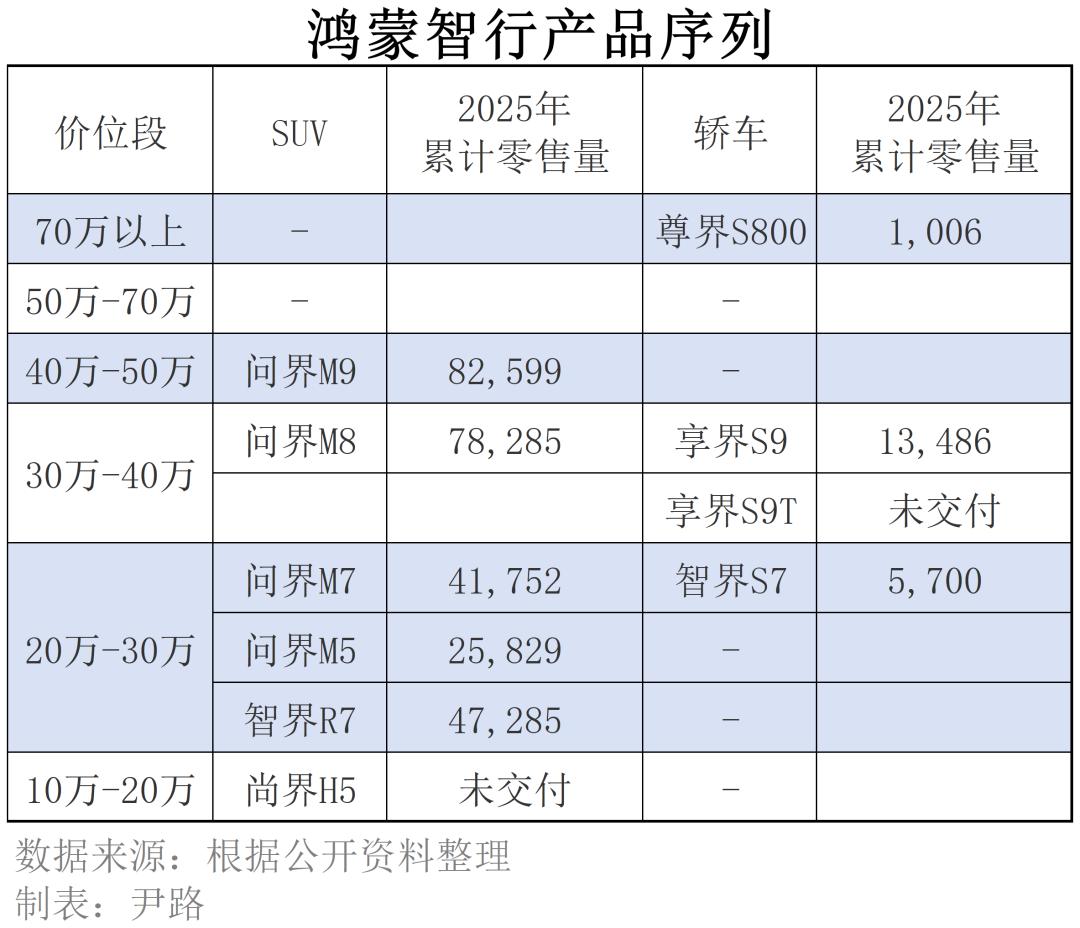
Core Viewpoint - The collaboration between Hongmeng Zhixing and BAIC Blue Valley has resulted in the launch of the "Xiangjie S9T," a travel car model that aims to diversify Hongmeng Zhixing's product line beyond SUVs, addressing the growing importance of non-SUV vehicles in the Chinese automotive market [1][2][10]. Group 1: Product Line Diversification - Hongmeng Zhixing has established a strong presence in the SUV market with a comprehensive product matrix, but its sedan offerings remain limited, with only four models including the newly launched Xiangjie S9T [2][3]. - The sales figures for 2025 show that Hongmeng Zhixing's SUV models have accumulated over 270,000 units, while sedan sales have just surpassed 20,000 units, highlighting the imbalance in their product structure [2][3]. Group 2: Market Trends and Importance of Sedans - Despite the rise of SUVs, sedans still hold a significant market share, with data indicating that from 2019 to July 2025, SUV market share increased from 44.3% to 49.2%, while sedans decreased from 49.0% to 46.1% [5][7]. - For automotive brands aiming for annual sales of one million units, having a strong sedan lineup is essential, as evidenced by successful models from leading brands [5][9]. Group 3: Rationale for Choosing Travel Cars - The decision to develop a travel car like the Xiangjie S9T is influenced by the structural advantages of electric platforms, which can better accommodate the design and functionality of travel cars compared to traditional sedans [10][12]. - Travel cars offer superior aerodynamics and lower energy consumption, making them a viable option in the electric vehicle era, while also providing ample storage space and flexibility similar to SUVs [12][13].


汽车行业9月17日资金流向日报
Zheng Quan Shi Bao Wang· 2025-09-17 11:44
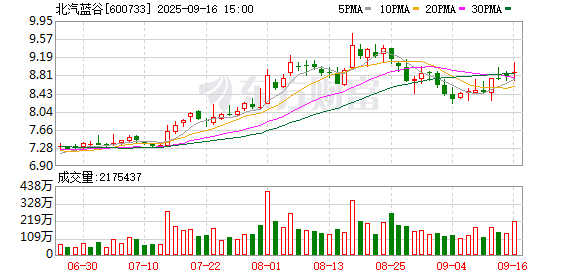
Market Overview - The Shanghai Composite Index rose by 0.37% on September 17, with 20 industries experiencing gains, led by the power equipment and automotive sectors, which increased by 2.55% and 2.05% respectively [1] - The main funds in the two markets saw a net outflow of 38.306 billion yuan, with five industries recording net inflows, primarily in the power equipment sector, which attracted 1.835 billion yuan [1] Automotive Industry - The automotive sector saw a 2.05% increase, with a net inflow of 1.142 billion yuan, comprising 277 stocks, of which 179 rose and 93 fell [2] - Notable stocks with significant net inflows included BYD, which attracted 1.297 billion yuan, followed by Haoneng Co. and Shanzigaoke, with inflows of 327 million yuan and 231 million yuan respectively [2] - The outflow of funds from the automotive sector was led by Beiqi Blue Valley, Weichai Power, and Seres, with net outflows of 317 million yuan, 307 million yuan, and 243 million yuan respectively [3] Fund Flow Analysis - The automotive industry had 124 stocks with net inflows, while 10 stocks experienced outflows exceeding 100 million yuan [2][3] - The top gainers in the automotive sector included BYD, Haoneng Co., and Shanzigaoke, with daily price increases of 2.96%, 10.03%, and 10.12% respectively [2] - Conversely, the top losers included Beiqi Blue Valley, Weichai Power, and Seres, with declines of 3.27%, 0.99%, and 0.21% respectively [3]


30.98万起,享界S9T上市!余承东:这个价格诚意满满!鸿蒙智行第一款旅行车,累计小订已突破4万台
Mei Ri Jing Ji Xin Wen· 2025-09-16 15:28
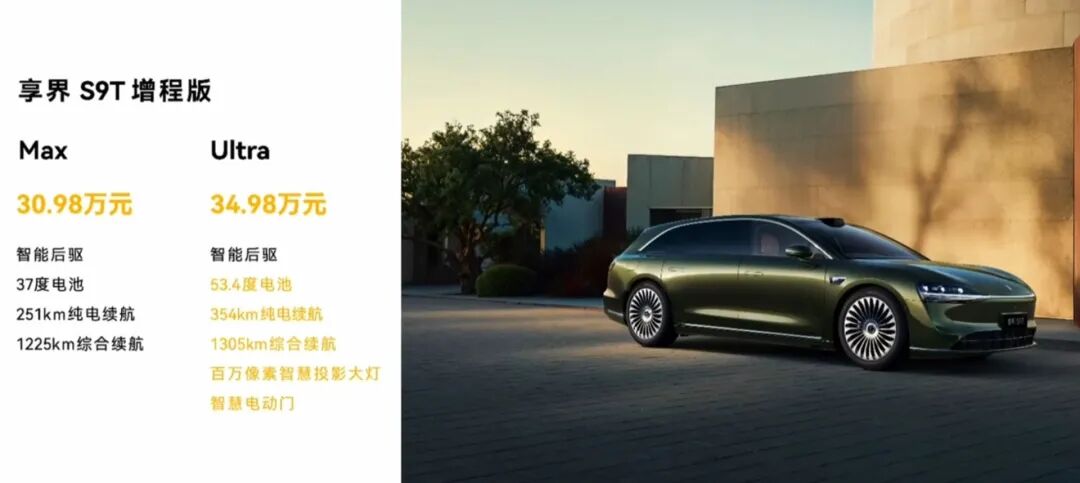
Core Viewpoint - The launch of the Xiangjie S9T marks a significant step for the Xiangjie brand, introducing a new travel car model that aims to capture a niche market in China's electric vehicle sector, with a competitive pricing strategy and advanced technology features [1][12][16]. Group 1: Product Details - The Xiangjie S9T is available in four models with both range-extended and pure electric powertrains, priced between 309,800 to 369,800 yuan, which is a reduction of 18,200 yuan from the pre-sale price [1]. - The vehicle features advanced technologies such as Huawei's ADS 4 driving assistance, air suspension, and the new "寰宇之星" logo [9][11]. - The S9T is designed to offer a different driving experience compared to the S9, focusing on driving dynamics and versatility rather than just passenger comfort [12]. Group 2: Market Strategy - The launch is seen as a strategic move to boost brand sales, especially after the S9's fluctuating sales performance, with hopes that the S9T will attract more consumers to the travel car segment [11][13]. - Despite the potential, the travel car market in China remains niche, with consumer preferences leaning towards sedans and SUVs, posing a challenge for the S9T's acceptance [15]. - The company aims to educate the market and improve consumer acceptance to enhance the S9T's sales potential [15]. Group 3: Partnership and Future Plans - Huawei and BAIC have deepened their collaboration, planning to invest 20 billion yuan over three years to enhance technology in design, intelligent driving, and quality safety [16]. - The next product from Xiangjie is expected to be a B+ class SUV, which may have better sales potential in the market [18]. - The company is focusing on increasing the sales proportion of high-margin models like Xiangjie to achieve economies of scale and improve profitability [18].
华为、北汽深化合作后推新车!鸿蒙智行首款旅行车享界S9T 30.98万元起售 余承东:这个价格诚意满满
Mei Ri Jing Ji Xin Wen· 2025-09-16 13:33
Core Insights - The launch of the Xiangjie S9T marks the second vehicle for the Xiangjie brand and the first travel car for Hongmeng Zhixing, with a price range of 309,800 to 369,800 yuan, reflecting a price reduction of 18,200 yuan from the pre-sale price [2] - The S9T aims to tap into the niche market of electric travel cars in China, which has not been fully explored, as the demand for SUVs and sedans remains dominant [4][6] - Huawei and BAIC have deepened their collaboration, planning to invest 20 billion yuan over three years to enhance technology in design, intelligent driving, and safety, indicating a strategic shift towards a more integrated approach in the automotive sector [7][8] Product Details - The S9T features advanced technologies such as Huawei's ADS 4, full air suspension, and the Tuling platform 3.0, maintaining the design specifications of the S9 [2][4] - The vehicle emphasizes a different product focus compared to the S9, prioritizing driving experience and versatility over rear passenger comfort [4] Market Performance - The sales performance of the Xiangjie brand has been inconsistent, with a significant increase in June but a drop in July and August, highlighting the need for the S9T to boost overall brand sales [5] - Despite the potential for increased sales from the S9T, the travel car segment in China remains small, and consumer preferences lean heavily towards sedans and SUVs [6] Strategic Collaboration - The partnership between Huawei and BAIC aims to create a dedicated team for the Xiangjie brand, focusing on a full-cycle collaboration from design to sales [7] - Future product plans include a B+ class SUV, which is expected to have better sales potential compared to the travel car segment [8]
华为、北汽深化合作后推新车!鸿蒙智行首款旅行车享界S9T 30.98万元起售,余承东:这个价格诚意满满
Mei Ri Jing Ji Xin Wen· 2025-09-16 13:20
Core Viewpoint - The launch of the Xiangjie S9T marks a significant step for the Xiangjie brand and Huawei's Hongmeng Zhixing, introducing a new luxury electric travel car to the Chinese market, aiming to capture a niche segment that has not been fully explored yet [1][2]. Group 1: Product Launch and Features - The Xiangjie S9T is available in four models with both range-extended and pure electric powertrains, priced between 309,800 to 369,800 yuan, which is a reduction of 18,200 yuan from the pre-sale price [1]. - The vehicle features advanced technologies such as Huawei's ADS 4, full air suspension, and the newly released Xiangjie brand logo, "Universe Star" [1]. - The S9T is designed to emphasize driving experience and versatility, contrasting with the S9's focus on rear passenger comfort and executive attributes [2]. Group 2: Market Strategy and Sales Performance - The launch of the S9T is seen as a strategy to boost brand sales, especially after the S9's sales performance fluctuated, with a significant increase in June but a drop in July and August [3]. - The travel car segment in China has historically struggled to gain traction, with consumer preferences leaning towards sedans and SUVs, making the S9T's success uncertain [3]. - Analysts suggest that while the S9T may provide a sales boost, the overall impact could be limited due to the niche nature of the travel car market [3]. Group 3: Strategic Partnerships and Future Plans - Huawei and BAIC have deepened their collaboration, planning to invest 20 billion yuan over three years to enhance technology in design, intelligent driving, and safety [4]. - The partnership aims to create a dedicated team for the Xiangjie brand, focusing on a full-chain collaboration from product design to sales [4]. - Future products, including a B+ class SUV, are expected to have better market potential, aligning with BAIC's strategy to increase the sales proportion of high-margin models [5].
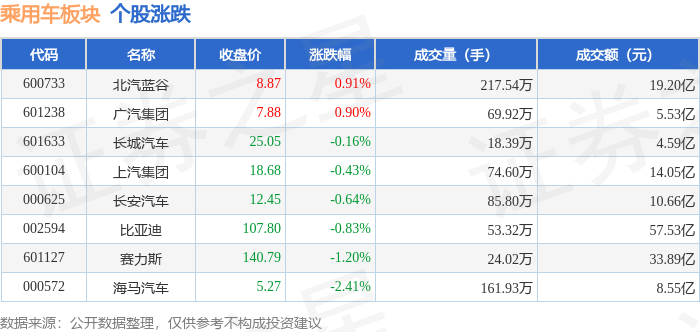
乘用车板块9月16日跌0.58%,海马汽车领跌,主力资金净流出8.43亿元
Zheng Xing Xing Ye Ri Bao· 2025-09-16 08:46
Core Viewpoint - The passenger car sector experienced a decline of 0.58% on September 16, with Haima Automobile leading the drop, while the Shanghai Composite Index rose by 0.04% and the Shenzhen Component Index increased by 0.45% [1] Group 1: Market Performance - The closing price for the passenger car sector showed mixed results, with notable declines in companies like BYD (-0.83%) and Seres (-1.20%), while Beiqi Blue Valley and GAC Group saw slight increases of 0.91% and 0.90% respectively [1] - The total net outflow of main funds in the passenger car sector was 843 million yuan, while retail investors contributed a net inflow of 566 million yuan [1] Group 2: Fund Flow Analysis - Beiqi Blue Valley had a main fund net inflow of 89.43 million yuan, while Haima Automobile saw a net outflow of 14.35 million yuan [2] - The main fund net outflow for Seres was significant at 310 million yuan, indicating a strong selling pressure [2] - Retail investors showed a positive net inflow in several companies, including BYD with 313 million yuan and GAC Group with 17.31 million yuan [2]





8月国内汽车销量同比+16%,八部门印发《汽车行业稳增长工作方案(2025-2026年)》 | 投研报告
Zhong Guo Neng Yuan Wang· 2025-09-16 07:51
Market Overview - The automotive sector experienced a weekly increase of +1.28%, with the auto parts sub-sector performing the best at +3.54% [1][2] - In comparison, the overall A-share market rose by +1.93%, placing the automotive sector at 17th among 31 primary industries [1][2] - The performance of various automotive sub-sectors included: automotive parts +3.54%, automotive services +3.38%, commercial vehicles +1.27%, motorcycles and others +0.27%, and passenger vehicles -1.99% [1][2] Company Performance - The top five companies in the automotive sector by weekly performance were: Zhongtai Automobile +39.70%, Haowu Shares +30.38%, Zhejiang Rongtai +22.48%, Tianpu Shares +21.00%, and Zhaomin Technology +19.85% [2] - Conversely, the bottom five performers included: Paiter -23.56%, Huayang Racing -20.28%, Huawei Technology -9.91%, Tianming Technology -9.82%, and Yishi Precision -9.73% [2] Sales Data - From September 1 to September 7, the average daily wholesale volume of domestic passenger car manufacturers was 43,900 units, a year-on-year decrease of 5.00%, while the average daily retail volume was 43,500 units, down 10.00% year-on-year [2] - In August, automotive sales reached 2.857 million units, reflecting a month-on-month increase of 10.1% and a year-on-year increase of 16.4% [3] - Cumulatively, from January to August, automotive sales totaled 21.128 million units, with a year-on-year increase of 12.6% [3] Export and Market Trends - In August, traditional fuel vehicle exports were 387,000 units, a month-on-month increase of 10.6% but a year-on-year decrease of 3.5%. In contrast, new energy vehicle exports reached 224,000 units, a year-on-year increase of 100% [4] - The market share of domestic brands in passenger vehicle sales rose to 69.5% in August, up 2.6 percentage points year-on-year [4] Future Outlook - The Ministry of Industry and Information Technology and seven other departments aim for total automotive sales of approximately 32.3 million units by 2025, representing a year-on-year growth of about 3% [5] - The target for new energy vehicle sales is around 15.5 million units, with a year-on-year growth of about 20% [5] Investment Recommendations - Companies involved in intelligent vehicle technology and those with potential for overseas sales are recommended for investment [6] - Suggested automotive manufacturers include Beiqi Blue Valley, Great Wall Motors, China National Heavy Duty Truck Group, and Foton Motor [6] - Recommended auto parts companies include Songyuan Safety, Zhejiang Xiantong, Lingyun Shares, and Yinhong Shares [6]


聚焦家庭用户群体,极狐T1上市并开启交付
Zheng Quan Shi Bao Wang· 2025-09-16 03:47
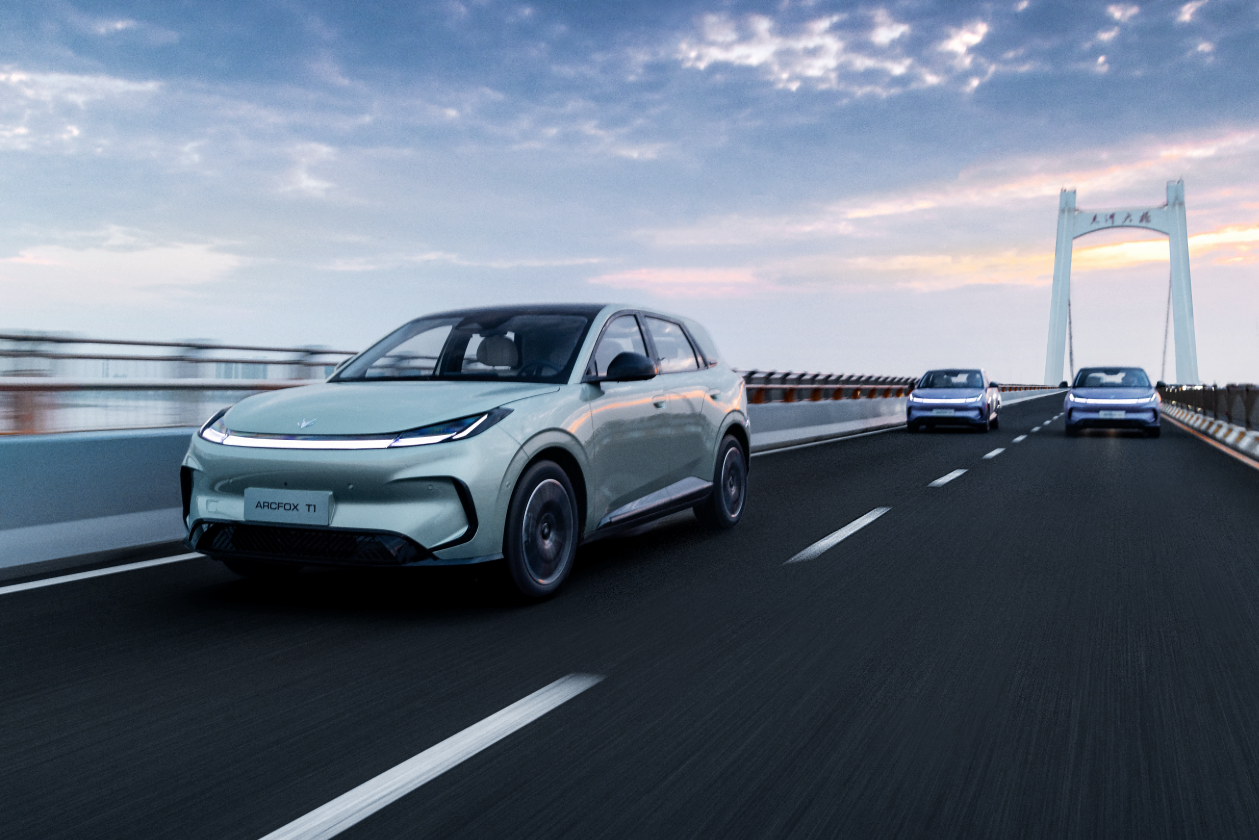
Core Insights - The official launch of the Arcfox T1 by BAIC Blue Valley includes five variants with prices ranging from 62,800 to 87,800 yuan [1] - The vehicle offers a lifetime warranty on the three electric components, compensation for battery fires, and a battery degradation guarantee of less than 70% within 8 years or 150,000 kilometers [3] - The T1 is positioned as a family-friendly electric vehicle with a spacious interior, featuring a class-leading wheelbase of 2,770 mm and a maximum cargo space of 1,352 liters [3][4] Product Features - The Arcfox T1 includes two versions with different ranges: a 425 km version that is already available for delivery and a 320 km version set to begin deliveries in mid-October [3] - The vehicle is equipped with advanced driving assistance features, including low-speed intelligent steering, a 540° panoramic view, and support for 58 types of automatic parking scenarios [3] Strategic Importance - The chairman of BAIC Group, Zhang Jianyong, emphasized the unlimited support for Arcfox, highlighting the T1 as a strategic model that will unlock more possibilities for users [3] - The chairman of BAIC New Energy, Zhang Guofu, described the Arcfox T1 as a benchmark for affordable, high-quality electric vehicles for families [4]
赛力斯、蔚来、东风、长安、上汽齐齐发声,汽车产业链多股暴涨
Mei Ri Jing Ji Xin Wen· 2025-09-15 12:17
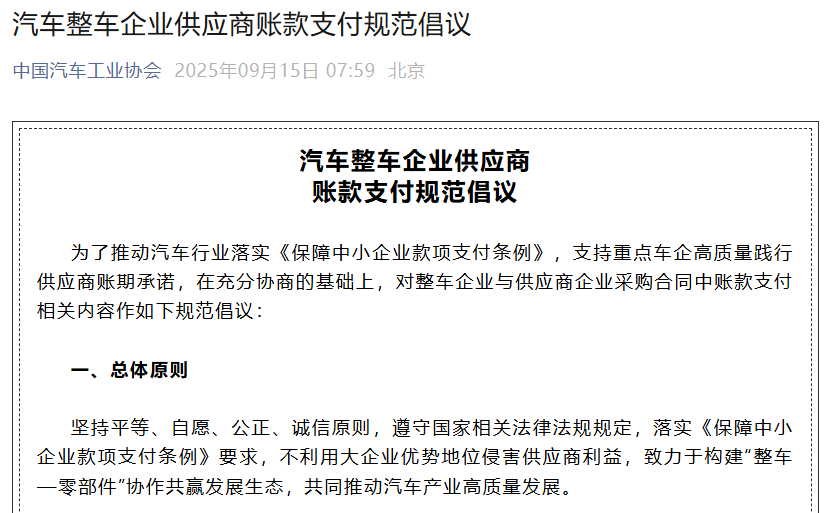
Core Viewpoint - The "60-day payment commitment" initiative among 17 automotive companies continues to evolve, with the China Automotive Industry Association releasing the "Payment Norms Initiative for Automotive OEMs and Suppliers" on September 15, which aims to standardize payment terms and enhance supplier rights [1][3]. Group 1: Initiative Details - The initiative specifies that payment terms should not exceed 60 calendar days from the date of delivery and acceptance by the OEM [3]. - It encourages cash payments or bank acceptance bills, especially for small and medium-sized enterprises, to alleviate financial pressure on suppliers [5][6]. - The initiative includes provisions for advance payments based on previous contract prices if pricing agreements are not reached [5]. Group 2: Industry Response - Major automotive companies such as Dongfeng, Changan, and SAIC have committed to implementing the initiative, ensuring supplier rights and stabilizing expectations within the supply chain [6][8]. - The Ministry of Industry and Information Technology emphasized the importance of this initiative for promoting healthy and sustainable development in the automotive industry [8]. Group 3: Market Impact - Following the announcement of the initiative, automotive stocks saw significant gains, with several companies reaching their daily price limits [3]. - In the Hong Kong market, shares of electric vehicle manufacturers like NIO and BYD also experienced notable increases [4]. Group 4: Historical Context and Future Outlook - Since the initial "60-day payment commitment" declaration in June, some companies have already begun to optimize their payment terms, with reports indicating that several firms have successfully implemented the 60-day payment policy [9]. - The Ministry of Industry and Information Technology has previously issued guidelines to regulate payment terms in the automotive sector, highlighting the ongoing challenges in achieving compliance across the industry [9][10].



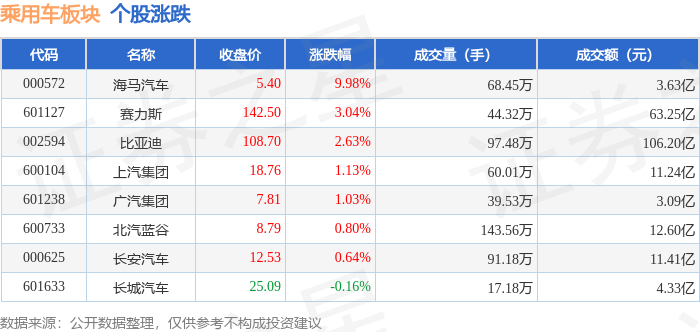
乘用车板块9月15日涨1.78%,海马汽车领涨,主力资金净流入14.34亿元
Zheng Xing Xing Ye Ri Bao· 2025-09-15 08:42
Core Insights - The passenger car sector experienced a rise of 1.78% on September 15, with Haima Automobile leading the gains [1] - The Shanghai Composite Index closed at 3860.5, down 0.26%, while the Shenzhen Component Index closed at 13005.77, up 0.63% [1] Passenger Car Sector Performance - The top-performing stocks included: - Haima Automobile (000572) with a closing price of 5.40, up 9.98% and a trading volume of 684,500 shares, totaling 363 million yuan in transaction value [1] - BYD (002594) closed at 108.70, up 2.63% with a trading volume of 974,800 shares, totaling 10.62 billion yuan [1] - The overall net inflow of main funds in the passenger car sector was 1.434 billion yuan, while retail investors saw a net outflow of 785 million yuan [1] Fund Flow Analysis - Major fund inflows were observed in: - BYD with a net inflow of 840 million yuan, accounting for 7.91% of the total [2] - Seres (601127) with a net inflow of 524 million yuan, representing 8.28% [2] - Notable outflows included: - Haima Automobile with a net outflow of 811.79 million yuan from retail investors, accounting for 22.34% [2] - Great Wall Motors (601633) with a net outflow of 250.27 million yuan, representing 5.77% [2]