
WINGTECH(600745)

Search documents
商务部回应安世半导体中荷磋商:中方对荷方主动暂停行政令表示欢迎
Xin Hua She· 2025-11-19 14:57
Core Points - The Chinese Ministry of Commerce welcomed the Netherlands' decision to suspend the administrative order issued by the Dutch Economic Minister under the "Goods Availability Act" as a positive step towards resolving the issues surrounding ASML [1][2] - China emphasized that the root cause of the current global semiconductor supply chain disruption lies with the Netherlands and urged the Dutch side to take concrete actions to resolve the ASML issue promptly [1][2] - The Chinese side pointed out that the erroneous ruling by the Dutch Economic Ministry's corporate court, which stripped Wingtech Technology of its control over ASML, remains a significant obstacle to resolving the issue [2] Summary by Sections Negotiation Status - Two rounds of face-to-face consultations were held between Chinese and Dutch government departments regarding ASML on November 18 and 19 [1] - The Dutch side proactively proposed to suspend the administrative order, which was welcomed by the Chinese side as a step in the right direction [2] Root Cause and Responsibility - China reiterated that the responsibility for the chaos in the global semiconductor supply chain lies with the Netherlands [1] - The Chinese side called for the Dutch government to take effective actions to restore the safety and stability of the global semiconductor supply chain [1][2] Future Cooperation - Both sides agreed to eliminate administrative interventions and support companies in resolving internal disputes through negotiation, which would protect investors' rights and create favorable conditions for restoring the global semiconductor supply chain [2]

闻泰科技:公司对安世的控制权仍处于受限状态
Di Yi Cai Jing Zi Xun· 2025-11-19 14:52
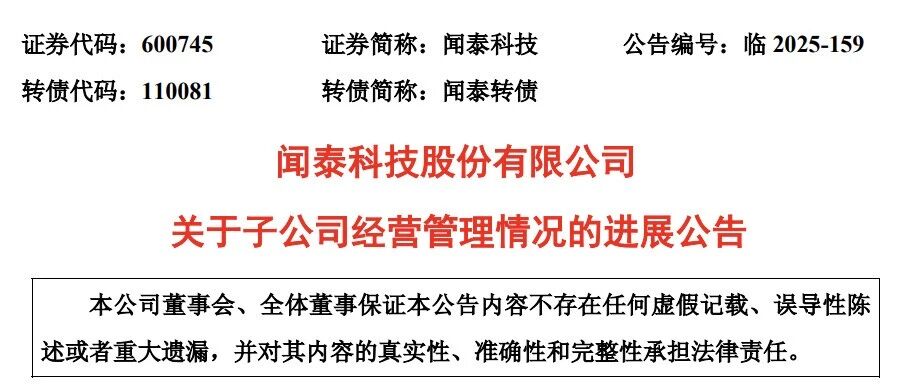
闻泰科技表示,公司将继续与国际律师事务所团队沟通法律救济方案及手段,采取一切行动,最大限度 维护公司及全体股东的合法权益。 11月19日晚间,闻泰科技公告,2025年11月19日,荷兰经济事务与气候政策部大臣Vincent Karremans在 社交媒体上公开发布声明,声明中称:"鉴于近期事态发展,我认为当前正是采取建设性举措的恰当时 机——在与欧洲及国际伙伴密切磋商后,暂停我根据《商品供应法》对安世所下达的部长令。" 虽然上述部长令(Order)被宣布暂停,但2025年10月7日(荷兰时间)企业法庭裁决依旧处于生效状 态,其效力并未受暂停的部长令任何影响,公司10月13日公告说明的企业法庭的所有紧急措施还在进行 中,公司对安世的控制权仍然处于受限状态,请广大投资者 注意投资风险。 编辑 | 钉钉 ...
A股晚间热点 | 万亿级证券航母来了!中金拟收购东兴与信达
智通财经网· 2025-11-19 14:49
Group 1: CICC Merger Plans - CICC plans to absorb Dongxing Securities and Xinda Securities through a share swap merger, with trading suspension starting from November 20, 2025, for up to 25 trading days [1] - The combined total assets of CICC, Dongxing Securities, and Xinda Securities amount to 1,009.58 billion yuan, with total net assets of 174.68 billion yuan as of Q3 2025 [1] - Industry insiders expect an increase in M&A cases in the brokerage sector, indicating a shift from simple scale expansion to capability enhancement [1] Group 2: Manufacturing Sector Insights - Vice Premier Zhang Guoqing emphasizes the need for accelerating the digital and intelligent transformation of the manufacturing sector during his recent research in Guizhou and Chongqing [2] - The focus is on optimizing traditional industries, nurturing emerging industries, and strategically planning for future industries [2] Group 3: Semiconductor Industry Developments - The Dutch government has suspended its intervention in Anshi Semiconductor, indicating a potential shift towards constructive engagement [3] - The Dutch delegation plans to visit China to address issues related to the semiconductor company [3] Group 4: AI and Technology Trends - Nvidia's upcoming earnings report is highly anticipated, as it may significantly influence AI trading and the overall market sentiment [4][5] - The AI toy market in China is projected to grow from 24.6 billion yuan in 2024 to 29 billion yuan in 2025, reflecting an 18% year-on-year increase [6] Group 5: Xiaomi's Market Performance - Xiaomi's market capitalization has dropped by over 53 billion HKD since September 25, 2025, exceeding the combined market value of several competitors [7] - The decline is attributed to quality issues and negative market sentiment regarding Xiaomi's automotive ventures [7] Group 6: Oil and Gas Sector Highlights - China National Petroleum Corporation's stock price has reached a nearly ten-year high, with a closing increase of approximately 4.05% [9] - Major large-cap stocks in the market have shown active performance, contributing to a positive index despite mixed investor sentiments [9] Group 7: AI Application Growth - Alibaba's AI application, Qianwen, has rapidly climbed to the third position in the Apple App Store's free applications chart shortly after its public launch [10] - The AI industry is experiencing a phase of policy, technology, and demand convergence, indicating a positive outlook for domestic chip and cloud computing leaders [10]




荷兰暂停行政令,闻泰科技合法权益仍有待恢复
2 1 Shi Ji Jing Ji Bao Dao· 2025-11-19 14:40
Core Points - The Dutch Ministry of Economic Affairs has suspended an administrative order against Nexperia, indicating a willingness to engage in constructive dialogue with China [2] - The Chinese Ministry of Commerce welcomed the suspension but emphasized that it is only a first step towards resolving the underlying issues in the global semiconductor supply chain [2] - The court ruling that stripped Wingtech of control over Nexperia remains a significant obstacle to resolving the situation [2] Group 1 - The Dutch government announced the suspension of the order that restricted Nexperia from making adjustments to its assets and operations globally, which was originally set to last for one year [3] - Despite the suspension, the court ruling from October 7, which appointed independent directors to manage Nexperia, is still in effect, limiting Wingtech's control over the company [3][4] - Wingtech has not yet regained its legal rights over Nexperia, and the restoration of control requires the removal of the appointed independent directors [3] Group 2 - The Dutch court's decision on October 7 to freeze Nexperia's shares and appoint independent directors has not been overturned, complicating the path to restoring control [4] - The ongoing legal and administrative challenges highlight the complexities in the semiconductor industry, particularly regarding international investments and control disputes [2][3]
闻泰科技或仍暂未获得荷兰安世合法权益
2 1 Shi Ji Jing Ji Bao Dao· 2025-11-19 14:37
南方财经11月19日电,闻泰科技公告安世半导体事件进展,称10月13日公告说明的企业法庭的所有紧急 措施还在进行中,公司对安世的控制权仍然处于受限状态。21世纪经济报道从接近闻泰人士处获悉,闻 泰科技或仍暂未获得荷兰安世合法权益,"如果保障闻泰科技恢复相关权益,必须要求去除目前替代行 使管理权限的指派独立董事,包括撤销非法管理团队等。"查看原文:荷兰暂停行政令,闻泰科技合法 权益仍有待恢复刚刚 ...
中国商务部介绍安世半导体问题中荷磋商情况
Zhong Guo Xin Wen Wang· 2025-11-19 14:36
Core Viewpoint - The Chinese Ministry of Commerce welcomes the Netherlands' decision to suspend the administrative order regarding ASML, but emphasizes that this is only a first step towards resolving the root causes of the global semiconductor supply chain turmoil [2] Group 1: Government Actions - The Chinese and Dutch governments held two rounds of face-to-face consultations on the ASML issue on November 18 and 19 [2] - The Netherlands proposed to suspend the administrative order issued by the Dutch Minister of Economic Affairs under the Goods Availability Act [2] Group 2: Responsibilities and Expectations - China asserts that the responsibility for the current chaos in the global semiconductor supply chain lies with the Netherlands and urges the Dutch side to take concrete actions to resolve the ASML issue [2] - The Chinese side hopes that the Netherlands will demonstrate a genuine willingness to cooperate and propose constructive solutions to the problem [2] Group 3: Future Directions - Both sides agree to eliminate administrative interventions and support companies in resolving internal disputes through negotiation, which will protect investors' legitimate rights and create favorable conditions for restoring the safety and stability of the global semiconductor supply chain [2]
荷兰政府暂停禁令,闻泰尚未完全重新掌控安世
Di Yi Cai Jing· 2025-11-19 14:30
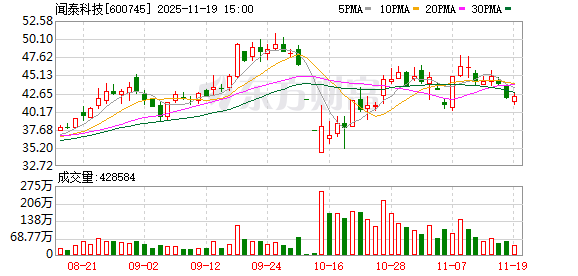
Core Viewpoint - The control of the company over its subsidiary, Anshi Semiconductor, remains restricted, prompting the company to alert investors about potential investment risks [1][4]. Group 1: Developments on Anshi Semiconductor - The Dutch Minister of Economic Affairs announced on November 19 that the administrative order against Anshi Semiconductor has been suspended [2]. - Despite the suspension of the ministerial order, a court ruling from October 7 remains in effect, and the emergency measures previously announced by the company are still ongoing [2][4]. - The suspended ministerial order prohibits Anshi and its global subsidiaries from making any adjustments to their assets, intellectual property, business, and personnel for one year [4]. Group 2: Emergency Measures and Legal Actions - The emergency measures initiated by Anshi Semiconductor include suspending the current executive director and placing the company's shares under independent third-party management [4]. - The company is in communication with an international law firm to explore legal remedies to protect its and its shareholders' rights [4]. Group 3: Financial Implications - Anshi Semiconductor reported revenue of approximately 14.7 billion yuan last year [4]. - The company indicated that if control over Anshi is not restored by the end of 2025, it may face risks of revenue, profit, and cash flow adjustments [4]. - Following the freezing of Anshi's assets, the company's stock price fell by 8.99% from October 13 to November 19, with a slight recovery of 0.88% on November 19, closing at 42.3 yuan per share [5].
闻泰科技:对安世半导体控制权仍受限
是说芯语· 2025-11-19 14:25
Core Viewpoint - The announcement by the Dutch Minister of Economic Affairs and Climate Policy, Vincent Karremans, to suspend the ministerial order affecting the subsidiary, Anshi Semiconductor, is a significant development, although the court ruling from October 7, 2025, remains in effect, limiting the company's control over Anshi [1][3][4]. Group 1: Announcement Details - On November 19, 2025, the Dutch Minister announced the suspension of the ministerial order that restricted Anshi Semiconductor and its global entities from making any adjustments to their assets, intellectual property, business, and personnel for one year [1][3]. - The minister's statement indicated that the suspension was a constructive measure in light of recent developments and followed consultations with European and international partners [3]. Group 2: Ongoing Legal Context - Despite the suspension of the ministerial order, the court ruling from October 7, 2025, remains valid and continues to impose restrictions on the company's control over Anshi [4]. - The company is actively communicating with international legal teams to explore legal remedies and is committed to protecting the rights of the company and its shareholders [1][4].
刚刚!荷兰向中国归还安世控制权。网友:赔偿呢?
程序员的那些事· 2025-11-19 14:14
Core Viewpoint - The Dutch government has decided to suspend its control over Nexperia, returning authority to Wingtech Technology, which alleviates tensions with China and addresses disruptions in global automotive production [3][4]. Group 1: Government Actions - The Dutch Minister of Economic Affairs, Vincent Karremans, announced the suspension of intervention regarding Nexperia on social media, indicating a significant de-escalation of the previous standoff [3][4]. - This decision follows constructive meetings between Dutch and Chinese officials, leading to a breakthrough that allowed for the suspension of export restrictions on components produced at Nexperia's Dongguan factory [6][10]. Group 2: Impact on the Industry - The dispute had previously disrupted production for several automotive companies, including Honda and Volkswagen, despite Nexperia's chips not being high-end products [4][6]. - The resolution of this issue highlights the global nature of supply chains and China's increasing influence in the semiconductor industry [4][6]. Group 3: Future Engagement - The Dutch government views this suspension as a goodwill gesture and plans to continue constructive dialogue with Chinese authorities moving forward [10][11].
闻泰科技:公司对安世的控制权仍然受限
Zhi Tong Cai Jing· 2025-11-19 14:07
Core Viewpoint - The announcement from the Dutch Minister of Economic Affairs and Climate Policy indicates a temporary suspension of the ministerial order against ASML, which had previously restricted the company's operations globally, although the court ruling remains in effect [1] Group 1 - The Dutch Minister Vincent Karremans stated that it is an appropriate time to take constructive measures in light of recent developments [1] - The ministerial order issued on September 30, 2025, prohibited ASML and its global subsidiaries from making any adjustments to their assets, intellectual property, business, and personnel for a duration of one year [1] - Despite the suspension of the ministerial order, the corporate court ruling from October 7, 2025, remains in effect, meaning that the company's control over ASML is still limited [1]