
WINGTECH(600745)

Search documents
半导体板块10月17日跌3.8%,灿芯股份领跌,主力资金净流出139.62亿元
Zheng Xing Xing Ye Ri Bao· 2025-10-17 08:28
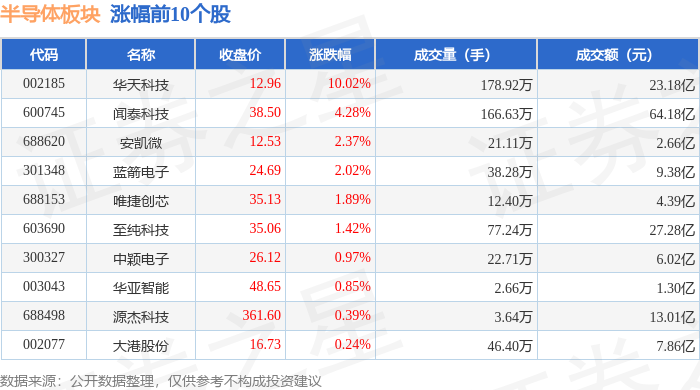
Core Insights - The semiconductor sector experienced a decline of 3.8% on October 17, with major losses led by CanSemi Technology, which fell by 11.72% [1][2] - The Shanghai Composite Index closed at 3839.76, down 1.95%, while the Shenzhen Component Index closed at 12688.94, down 3.04% [1] Market Performance - Notable gainers in the semiconductor sector included Huada Technology, which rose by 10.02% to a closing price of 12.96, and Wentai Technology, which increased by 4.28% to 38.50 [1] - Major losers included CanSemi Technology, which closed at 131.10, and Hongwei Technology, which fell to 25.71, marking declines of 11.72% and 10.76% respectively [2] Trading Volume and Capital Flow - The semiconductor sector saw a net outflow of 13.962 billion yuan from institutional investors, while retail investors contributed a net inflow of 8.443 billion yuan [2][3] - The trading volume for Huada Technology reached 1.7892 million shares, with a transaction value of 2.318 billion yuan, indicating strong investor interest despite the overall sector decline [1][3]


作妖自毙!车企警告:缺少中资芯片伤害美国
Guan Cha Zhe Wang· 2025-10-17 07:59
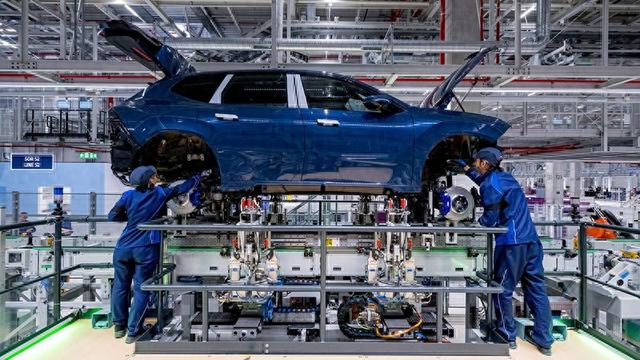
Core Viewpoint - The article discusses the escalating tensions between China and the Netherlands regarding the semiconductor industry, particularly focusing on the actions taken against Nexperia, a subsidiary of Chinese semiconductor company Wingtech Technology, which could disrupt the automotive supply chain in the U.S. [1][3][8] Group 1: Impact on Automotive Industry - Major automotive manufacturers in the U.S. have warned that the chip supply disruption due to the China-Netherlands dispute could significantly affect production [1][2] - The American Automotive Innovation Alliance (AAI) has urged for a swift resolution to the issue, indicating that U.S. automotive factories may face impacts as early as next month [2] Group 2: Actions by the Dutch Government - The Dutch government has frozen the assets and intellectual property of Nexperia for one year, citing national security concerns, which has been criticized as excessive interference based on geopolitical bias [3][4][8] - Nexperia's management has faced internal challenges, with foreign executives requesting court investigations and the appointment of a foreign director with decisive voting rights [3][7] Group 3: U.S. Involvement and Regulatory Actions - The U.S. government has been involved in expanding its entity list, which includes companies like Nexperia, and has pressured the Dutch government to take action against the company [7][8] - The timing of the Dutch government's actions closely followed new U.S. export control regulations, raising suspicions of coordinated efforts between the two countries [5][7] Group 4: Reactions from China - The Chinese semiconductor industry association has expressed strong support for Wingtech Technology, condemning the Dutch government's actions as discriminatory [8][9] - Chinese officials have reiterated their opposition to the broad application of national security concepts and emphasized the need for fair market practices [9]
中方调查高通后,中企147亿资产遭荷兰冻结,强行把CEO换成外国人
Sou Hu Cai Jing· 2025-10-17 06:50
Group 1 - The core issue revolves around China's antitrust investigation into Qualcomm, which has triggered a series of international repercussions, including asset freezes in the Netherlands against a Chinese company [1][2] - The Chinese market regulator initiated an investigation into Qualcomm for allegedly failing to report its acquisition of Autotalks, which is seen as a violation of the Anti-Monopoly Law of the People's Republic of China [2] Group 2 - Following the investigation announcement, the Dutch authorities quickly responded by freezing 14.7 billion in assets belonging to Anshi Semiconductor, a subsidiary of China's Wingtech Technology, and replacing the Chinese CEO with a foreign executive [1] - The rapid sequence of events raises questions about the connections between the actions taken by China against Qualcomm and the subsequent measures taken by the Netherlands against a Chinese enterprise [1]

商务部:坚决反对干预安世运营!
国芯网· 2025-10-17 04:39
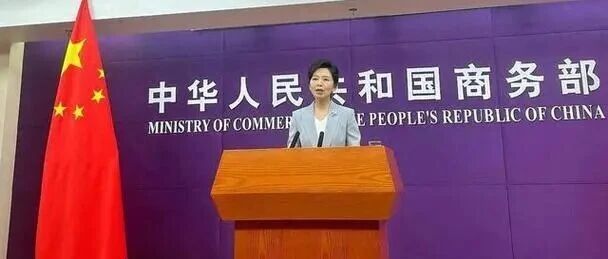
Core Viewpoint - The Chinese semiconductor industry is facing significant challenges due to foreign intervention, particularly from the Netherlands and the United States, which are perceived as undermining the rights of Chinese companies and disrupting global supply chains [1][3][4]. Group 1: Government Response - The Chinese Ministry of Commerce expressed strong opposition to the Dutch government's interference in Nexperia's operations, emphasizing that such actions violate market principles and harm the business environment [1][3]. - The spokesperson highlighted that the U.S. "penetration rules" are damaging to international trade order and are a clear example of harming the legitimate rights of Chinese enterprises [3][4]. Group 2: Company Position - Nexperia's parent company, Wingtech Technology, issued a statement opposing the Dutch government's actions, arguing that the use of "national security" as a justification for operational freezes is based on geopolitical bias rather than factual risk assessment [4]. - Wingtech Technology called for a return to rationality and the essence of business, criticizing the politicalization of commercial issues [4].
荷兰政府干预闻泰科技旗下安世半导体,欧洲汽车制造商协会:深感担忧,或威胁汽车生产
Ge Long Hui· 2025-10-17 01:39
格隆汇10月17日|欧洲汽车制造商协会(ACEA)当地时间10月16日发文表达深切担忧,称若安世半导体 的芯片供应中断问题无法立即得到解决,欧洲汽车制造业可能会受到严重影响,"我们迫切需要所有相 关国家迅速提出务实的解决方案"。声明称,当地时间10月10日,汽车制造商及供应商收到安世半导体 的通知,称一系列事件导致其无法再保证向汽车供应链交付芯片,"如果没有这些芯片,欧洲汽车供应 商将无法生产制造商所需的零部件,从而可能导致车企停产"。 ...
安世被禁,欧洲车厂预警
半导体行业观察· 2025-10-17 01:12
公众号记得加星标⭐️,第一时间看推送不会错过。 来 源: 内容来自半导体行业观察综合 。 一家鲜为人知的芯片供应商威胁要引发连锁反应,可能导致全球汽车生产线停止。 上周,汽车制造商及其供应商收到芯片制造商 Nexperia 的通知,由于中国和荷兰政府之间的争端, 该公司无法再保证芯片的交付。 代表通用汽车、丰田、大众、现代和几乎所有其他主要汽车制造商的汽车创新联盟警告称,芯片供应 中断可能会迅速扰乱美国汽车生产。 该组织首席执行官约翰·博泽拉表示:"如果汽车芯片的出货不能迅速恢复,美国和许多其他国家的汽 车生产将会受到干扰,并对其他行业产生溢出效应。" 与此同时,据知情人士透露,欧洲汽车制造商正在召开紧急会议,以应对可能在一个月内发生的潜在 停产。 德国电气和数字行业协会 ZVEI 主席沃尔夫冈·韦伯表示:"如果政治层面的局势不能迅速得到解决, 全球大部分汽车生产和许多其他工业部门都有可能陷入停滞。" 中国"坚决反对"荷兰接管 荷兰政府援引冷战时期的一项法律,以国家安全为由接管了这家总部位于荷兰的电子元件公司。 这一不同寻常的决定在半导体这一地缘政治敏感领域引发了质疑。 中国商务部发言人何咏前周四回应称:"中 ...
被荷兰接管核心资产的安世半导体,背后中国籍老板是谁?闻泰科技是一家什么公司?
Xin Lang Cai Jing· 2025-10-16 23:37
Core Viewpoint - The Dutch government has taken control of Nexperia, a semiconductor company owned by China's Wingtech Technology, highlighting the geopolitical tensions surrounding technology and national security [1][3]. Group 1: Company Background - Wingtech Technology, founded by Zhang Xuezheng in 2006, initially focused on mobile phone motherboard manufacturing before transitioning to ODM (Original Design Manufacturer) for smartphones, achieving significant growth with Xiaomi's Redmi brand [1][2]. - The acquisition of Nexperia in 2019 for over 33 billion yuan marked a significant milestone as it was the largest acquisition by a Chinese company in the European semiconductor sector [2]. Group 2: Recent Developments - Following the acquisition, Nexperia became a profitable asset for Wingtech, contributing 14.7 billion yuan in revenue and 2.3 billion yuan in net profit in 2024, while employing nearly 3,000 people in the Netherlands [2]. - The Dutch government froze Nexperia's operations and removed Zhang Xuezheng from his position, citing national security concerns, coinciding with heightened U.S. chip export controls [3]. Group 3: Industry Context - The incident reflects broader challenges faced by Chinese companies in overseas acquisitions, particularly in the semiconductor industry, where geopolitical pressures can lead to abrupt regulatory actions [4][5]. - Previous cases of failed acquisitions by Chinese firms in the U.S. and Europe illustrate the complexities and risks associated with cross-border transactions in sensitive sectors [4].
反击来了,荷兰被中国精准卡脖子了!它对中国依赖有多大?
Xin Lang Cai Jing· 2025-10-16 23:24
Core Viewpoint - China has retaliated against the Netherlands by banning ASML Semiconductor from importing chips from China, highlighting the significant production capacity of ASML's factory located in Dongguan, China, which accounts for 80% of its total output [1][3]. Group 1: Company Overview - ASML Semiconductor, while a Dutch company, has its largest chip manufacturing facility in Dongguan, China, which employs 4,000 people and spans over 100,000 square meters [1]. - The Dutch factory contributes only 20% of ASML's chip production capacity, meaning that the ban on imports from China effectively locks down the majority of its operations [3]. Group 2: Market Implications - Without the ability to export chips from its Chinese facility, ASML Semiconductor risks becoming a shell company, unable to fulfill orders for its global clients, including major companies like Apple, Samsung, Bosch, and Denso [3][4]. - The semiconductor technology produced by ASML is not considered advanced, primarily focusing on power semiconductors, which can be replaced by competitors such as Infineon, STMicroelectronics, and Texas Instruments [4][6]. Group 3: Strategic Context - The acquisition of ASML by Wingtech Technology aimed to leverage China's industrial advantages alongside Dutch chip technology, but the recent actions have led to a stalemate where the Netherlands retains ownership while China controls production capacity [4][6]. - The situation reflects a broader geopolitical struggle, with the Netherlands aligning with the U.S. to suppress China's semiconductor industry amid escalating tensions in the U.S.-China chip war [6][8].
闻泰科技:优质资产的内在价值不会因当前事件而消失
Shang Hai Zheng Quan Bao· 2025-10-16 14:44
Core Insights - Wentech Technology is facing significant market attention due to its subsidiary, Anshi Semiconductor, encountering asset restrictions [1][3] - The chairman of Wentech, Yang Mu, stated that the company is actively seeking legal avenues to resolve the control issues surrounding Anshi Semiconductor [1][3] - Yang emphasized that the intrinsic value of quality assets will not diminish due to current events, and the employee stock ownership plan reflects confidence in the company's business development [1] Financial Performance - Anshi Semiconductor has shown remarkable improvement in operational quality since its acquisition by Wentech, with a 60% increase in revenue and multiple-fold growth in net profit since 2019 [3] - The company is taking legal measures to protect shareholder rights and has communicated with relevant Chinese government departments for guidance and support [3] Legal and Regulatory Issues - Anshi Semiconductor's assets and intellectual property have been frozen by the Dutch government since September 30, following a directive, with a duration of one year [3] - Some foreign executives at Anshi Semiconductor have requested to transfer their shares, and the CEO appointed by Wentech has had their position suspended by the Dutch court [3] - The Dutch government's actions may stem from U.S. warnings regarding the necessity of replacing the Chinese CEO to avoid sanctions [3][4] Government and Management Response - The Dutch Trade Minister stated that the takeover of the semiconductor manufacturer was due to governance issues rather than U.S. pressure [4] - Yang Mu reassured investors that Anshi Semiconductor possesses top-tier technology and market position, urging patience as legal processes unfold [4]
闻泰科技回应!安世半导体资产受限新进展
Shang Hai Zheng Quan Bao· 2025-10-16 14:15
Core Viewpoint - Recently, Wentai Technology has faced significant market attention due to its subsidiary, Anshi Semiconductor, encountering asset restrictions imposed by the Dutch government, prompting the company to seek legal resolutions to control issues [1][2]. Group 1: Company Response and Actions - At the temporary shareholders' meeting on October 15, Wentai Technology's chairman emphasized the company's commitment to resolving the control issues of Anshi Semiconductor through various legal means [1]. - The company has engaged legal counsel to protect shareholder rights and has communicated with relevant Chinese government departments for guidance and support [3]. - The company is maintaining close communication with suppliers and customers to stabilize operations and mitigate external impacts [5]. Group 2: Financial Performance and Growth - Anshi Semiconductor has experienced a 60% increase in revenue and significant net profit growth since its acquisition in 2019 [5]. - The company’s CFO highlighted that Anshi's rapid development is attributed to the synergies gained from Wentai's acquisition, which has led to improvements in operational quality and market position [4]. Group 3: Employee Stock Ownership Plan - The shareholders' meeting approved the 2025 Employee Stock Ownership Plan, which reflects confidence in the company's future performance [6]. - The plan has a total funding limit of 57.158 million yuan and aims to align employee interests with company performance through specific profit and revenue growth targets for 2025 and 2026 [6].