
Haitong Securities(600837)

Search documents
机构行为周度跟踪 20260126:银行年初的“补仓”进行到哪一阶段了-20260126
GUOTAI HAITONG SECURITIES· 2026-01-26 01:01
Group 1 - The report indicates that at the end of 2025, the bond market was relatively weak, with banks showing overall limited allocation to interest rate bonds across various maturities. However, entering 2026, as banks' annual KPIs were gradually determined, the volatility of deposit replacement on the liability side stabilized, leading to a gradual recovery in interest rate bonds. In the first week of the year, bank buying power significantly increased, covering various maturities, and this buying power further expanded in the middle of the month. Nevertheless, bank participation remained more structural and selective rather than a comprehensive increase [7][8][15] Group 2 - Large banks have shown an expanding allocation to government bonds, with a notable increase in purchases of policy financial bonds starting in the third week of January. The buying focus has been on 1-3Y and 7-10Y maturities, while there has been a significant increase in selling of ultra-long local bonds [8][9][10] - The allocation behavior of large banks has evolved weekly, with a strong buying momentum in the first week primarily focused on various maturities of government bonds. In the second week, the buying continued for medium to long-term government bonds, but the marginal increase in ultra-long-term allocations slowed down. By the third week, large banks began to significantly increase their buying of 1-3Y and 20-30Y government bonds, indicating a simultaneous rise in demand for both short and ultra-long maturities [8][9][10] Group 3 - Small and medium-sized banks exhibited a "front-loading and back-selling" pattern in their trading behavior for secondary interest rate bonds. In the first week of the month, these banks concentrated their buying on medium to long-term bonds, but in the last two weeks, they shifted to net selling, indicating a phase-out of their allocation to medium to long-term bonds. For local bonds, there was strong buying activity in the first week, but the buying intensity has cooled in the past week, with marginal demand weakening and trading pace slowing down [15][16][17] Group 4 - In the funding market, there has been an expansion in borrowing while lending has contracted, leading to an increase in leverage ratios across institutions. The overnight trading proportion has risen, with interbank bond market leverage ratios showing slight declines overall, while banks and insurance companies have seen slight increases in their leverage ratios [7][8] Group 5 - In the primary market, the spread between the primary and secondary prices of policy financial bonds has widened. In the past week, two 10Y National Development Bonds and two 10Y Agricultural Development Bonds were issued, with both types seeing an increase in overall multiples, although the marginal multiples have decreased [7][8] Group 6 - In the secondary market, the borrowing volume of active bonds has continued to rise. The trading activity in the cash bond market has warmed up, with differentiated trading behaviors observed among various types of institutions. Large banks have significantly bought 1-3Y and 7-10Y maturities while showing net selling in other short to medium-term bonds and net buying in ultra-long maturities. Conversely, small and medium-sized banks have shown net selling across various maturities, particularly in the 7-10Y segment [7][8][9]

国泰海通|固收:人民币升值结汇如何影响银行间流动性
国泰海通证券研究· 2026-01-25 14:03
Core Viewpoint - The recent market perspective suggests that the appreciation of the RMB and increased foreign exchange settlement by enterprises could lead to bank balance sheet expansion, thereby aiding interbank liquidity. However, the reality is that while the RMB appreciates and enterprises increase settlement, the central bank does not purchase foreign exchange, which may tighten interbank liquidity instead [1][6]. Group 1: Impact of RMB Appreciation on Interbank Liquidity - The appreciation of the RMB and increased foreign exchange settlement does not automatically translate to an increase in base currency supply, as the central bank's foreign exchange reserves have not increased despite a significant surplus in bank foreign exchange settlements [2][8]. - In December 2025, the bank's foreign exchange settlement surplus reached a historical high of 999 billion USD, with the settlement rate rising by 7 percentage points to 69%, indicating strong market sentiment towards the RMB [7][9]. - The process of foreign exchange settlement involves converting domestic RMB assets into foreign currency assets, which consumes internal RMB reserves, thus not necessarily leading to liquidity expansion [10]. Group 2: Central Bank's Role in Liquidity Management - The key factor for whether interbank liquidity will tighten alongside RMB appreciation in 2026 lies in the central bank's willingness to increase base currency supply through various measures such as reverse repos, MLF, and bond purchases [4][11]. - The central bank's actions to maintain liquidity are crucial for stabilizing the RMB exchange rate and supporting economic growth, especially in light of government bond issuance [11][12]. - The central bank's ability to smooth out funding fluctuations has been enhanced, and it is expected to continue providing liquidity support, which may keep interbank rates low [12].


非银金融行业周报:偏股基金新发同比明显增长,公募强化基准约束-20260125
KAIYUAN SECURITIES· 2026-01-25 12:45
Investment Rating - The industry investment rating is "Overweight" (maintained) [1] Core Insights - The report indicates a significant improvement in market trading volume and new fund issuance at the beginning of 2026, which is favorable for the fundamentals of financial IT and brokerage sectors. Brokerage firms are expected to continue rapid growth in their brokerage business, while investment banking, asset management, and overseas expansion are likely to enhance the return on equity (ROE) of leading brokerage firms. The insurance sector has also seen a strong start in both individual and bank-insurance channels, with a continued trend of deposit migration, suggesting a positive outlook for the insurance sector in the spring market [4][6]. Summary by Sections Brokerage Sector - Daily average trading volume for stock funds reached 3.44 trillion, down 16% week-on-week; however, the average trading volume since the beginning of 2026 is 3.64 trillion, a 105% increase compared to Q1 2025 [4] - New stock and mixed fund issuance in January 2026 totaled 44.3 billion, a 56% year-on-year increase [4] - The "Public Fund Performance Benchmark Guidelines" was officially released on January 23, 2026, establishing stricter standards for benchmark selection and changes, enhancing performance evaluation and compensation management systems [4] Insurance Sector - The fourth quarter of 2025 saw a stable research value for ordinary life insurance products at 1.89%, slightly down from 1.90% in the previous quarter, indicating a trend towards stability [6] - The individual insurance channel is under pressure due to various factors, but the strong start in 2026 is expected to improve new policy growth, aided by favorable market conditions [6] - The stabilization of long-term interest rates and a favorable equity market are expected to enhance net assets and profitability for insurance companies, with a potential valuation recovery towards 1x PEV for leading firms [6] Recommended Stocks - Recommended stocks include Guangfa Securities, Guotai Junan, Huatai Securities, and China International Capital Corporation H, as well as China Life, China Pacific Insurance, and Ping An Insurance [7]





金融行业周报(2026、01、25):业绩比较基准新规正式落地,坚定保险中长期向好逻辑-20260125
Western Securities· 2026-01-25 10:30
Investment Rating - The report maintains a positive long-term outlook for the insurance sector, indicating a strong continuity in market performance despite recent fluctuations [2][12][16]. Core Insights - The financial sector experienced a mixed performance this week, with the non-bank financial index down by 1.45%, underperforming the CSI 300 index by 0.83 percentage points. The insurance sector saw a decline of 4.02%, while the brokerage sector decreased by 0.61% [1][10]. - The insurance sector's performance is driven by two main factors: policy support leading to economic recovery and liquidity easing combined with a strong stock market. The report suggests a shift from liquidity-driven growth to a focus on macro policy support and economic recovery expectations [2][13][16]. - The brokerage sector is expected to benefit from new regulations that enhance investment management quality, with a recommendation to focus on larger, undervalued firms and those involved in mergers and acquisitions [3][18]. - The banking sector is facing a slight decline, but there are signs of recovery in profitability for leading banks, with recommendations to focus on banks with high dividend yields and those expected to benefit from market conditions [19][21]. Summary by Sections Insurance Sector - The insurance sector's recent decline is attributed to short-term market sentiment and liquidity changes, but the long-term outlook remains positive due to strong support from both the liability and asset sides [2][12][16]. - Key recommendations include focusing on companies like China Pacific Insurance, China Ping An, China Life (H), and China Taiping, with a specific recommendation for New China Life [4][16]. Brokerage Sector - The brokerage sector's performance is slightly better than the overall market, with a focus on the new guidelines from the regulatory body that aim to improve fund management quality [3][17]. - Recommended firms include Guotai Junan, Huatai Securities, and others, particularly those with strong merger and acquisition prospects [4][18]. Banking Sector - The banking sector has shown a decline but is expected to stabilize, with recommendations to focus on banks with high earnings elasticity and strong dividend yields [19][21]. - Specific banks to watch include Hangzhou Bank, Ningbo Bank, and others, with a focus on those that have previously been undervalued [4][21].


非银金融行业周报:4Q25非银板块边际迎来显著增配,业绩快报释放高增长信号-20260125
Shenwan Hongyuan Securities· 2026-01-25 08:11
Investment Rating - The report indicates a positive outlook for the brokerage sector, suggesting that it is currently in a phase of fundamental and valuation mismatch, with expectations for improvement in the first half of the year [2][6]. Core Insights - The brokerage sector has seen a significant increase in allocation by active equity funds, with a quarter-over-quarter increase of 102 basis points, surpassing the three-year average [2]. - The report highlights strong earnings forecasts for 2025, with notable increases in net profits for several brokerages, including a projected 405.3% increase for Guolian Minsheng [2][16]. - The insurance sector is expected to stabilize, with a forecasted recovery in the predetermined interest rate for life insurance products, anticipated to rise to 1.96% in Q1 2026 [2][28]. Summary by Sections Market Review - The Shanghai Composite Index closed at 4,702.50 with a decline of 0.62%, while the non-bank index fell by 1.45% [6]. - The brokerage, insurance, and diversified financial indices reported changes of -0.61%, -4.02%, and +3.10%, respectively [6]. Non-Banking Sector Insights - The report notes that the China Securities Regulatory Commission has introduced new guidelines for performance benchmarks for publicly offered securities investment funds, aiming to enhance transparency and accountability [8][10]. - Key announcements from individual companies include China Pacific Insurance reporting an 8.1% increase in premium income for 2025, and Guolian Minsheng forecasting a significant profit increase due to business integration [12][16]. Investment Analysis Recommendations - For brokerages, the report recommends focusing on firms with strong competitive positions, such as Guotai Junan and Citic Securities, as well as those with high earnings elasticity like Huatai Securities [2]. - In the insurance sector, the report maintains a positive medium-term outlook, recommending companies like China Life and Ping An Insurance [2]. Key Data Tracking - As of January 23, 2026, the average daily trading volume was reported at 30,388.36 billion [32]. - The margin trading balance stood at 27,249.13 billion [38].




情绪与估值1月第3期:成交活跃度下降,中证1000估值领涨
GUOTAI HAITONG SECURITIES· 2026-01-25 05:34
Core Insights - The report indicates a decline in trading activity, with the CSI 1000 index leading in valuation gains [1] - Valuation changes are mixed across broad indices, with the CSI 1000 showing a notable increase [4] - The report highlights that the PE valuation in the textile and apparel sector and the PB valuation in the oil and petrochemical sector are leading [4] Index Valuation - The CSI 1000 index leads with a PE-TTM increase of 4.2 percentage points, while the PB-LF valuation increased by 2.0 percentage points [4] - Among style indices, the cyclical style leads with a PE-TTM increase of 1.8 percentage points, and the mid-cap style leads with a PB-LF increase of 4.5 percentage points [4] Industry Valuation - The textile and apparel sector shows a PE increase of 2.5 percentage points, leading among industries [4] - The oil and petrochemical sector leads in PB valuation with a 9.5 percentage point increase [4] Market Sentiment - Trading activity has decreased, with a mixed change in turnover rates; the CSI 1000 index saw the largest increase of 1.5% [4] - Total trading volume across indices has declined, with the CSI 1000 experiencing a 21.8% drop [4] - The margin trading balance as of January 22, 2026, is 2.70 trillion, down 0.24% from January 16, 2026 [4] Risk Premium - The report notes a slight decrease in the equity risk premium (ERP), which stands at 3.92%, down 0.03 percentage points from January 16, 2026 [4][7]
中科宇航完成IPO辅导,国泰海通证券担任辅导机构
Bei Ke Cai Jing· 2026-01-25 00:07
【#中科宇航IPO辅导完成#】据证监会网站,1月24日,商业航天企业中科宇航辅导状态再次更新, 从"辅导验收"变为"辅导工作完成",其IPO辅导机构为国泰海通证券。(每日经济新闻) ...

低频选股因子周报(2026.01.16-2026.01.23):1 月份沪深 300 指数增强组合累计超额收益 5.70%-20260124
GUOTAI HAITONG SECURITIES· 2026-01-24 13:12
- The report highlights the performance of the quantitative stock portfolios, including the CSI 300 enhanced portfolio, which achieved a weekly excess return of 2.16% and a cumulative excess return of 5.70% in 2026[1][15][14] - The CSI 500 enhanced portfolio recorded a weekly excess return of 0.38% and a cumulative excess return of -1.98% in 2026[15][14][17] - The CSI 1000 enhanced portfolio achieved a weekly excess return of 0.96% and a cumulative excess return of 1.56% in 2026[15][14][24] - The PB-Earnings optimized portfolio delivered a weekly excess return of 4.05% and a cumulative excess return of 3.64% in 2026[30][31][32] - The GARP portfolio achieved a weekly excess return of 5.85% and a cumulative excess return of 8.81% in 2026[33][34] - The Small-cap Value Optimized Portfolio 1 recorded a weekly excess return of -0.75% and a cumulative excess return of -1.42% in 2026[35][36] - The Small-cap Value Optimized Portfolio 2 achieved a weekly excess return of 0.70% and a cumulative excess return of 2.23% in 2026[37][38] - The Small-cap Growth Portfolio delivered a weekly excess return of -0.24% and a cumulative excess return of -0.57% in 2026[39][40] - Style factors showed that small-cap stocks outperformed large-cap stocks, and low valuation stocks outperformed high valuation stocks. The market capitalization factor achieved a weekly multi-long-short return of 2.83%, while the PB factor and PE_TTM factor achieved 1.05% and 0.71%, respectively[42][43][45] - Technical factors indicated positive contributions from turnover rate factors, while reversal and volatility factors showed negative returns. The turnover rate factor achieved a weekly multi-long-short return of 0.48%, while reversal and volatility factors recorded -2.05% and -0.98%, respectively[46][48][49] - Fundamental factors demonstrated positive returns from SUE and adjusted net profit expectation factors. The SUE factor achieved a weekly multi-long-short return of 0.82%, while adjusted net profit expectation factors recorded 0.47%. ROE factors showed a negative return of -0.67%[50][51][52]
浙江新中港热电股份有限公司 关于更换持续督导保荐代表人的公告
Zhong Guo Zheng Quan Bao· 2026-01-23 23:13
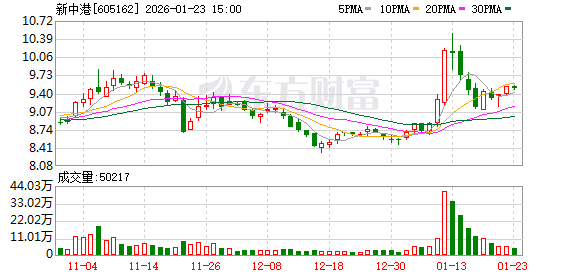
Group 1 - The company has received a letter from its continuous supervision sponsor, Guotai Junan Securities, regarding the replacement of the continuous supervision representative for its convertible bond issuance project [2] - The continuous supervision period is set to last until December 31, 2024, and the company has not yet fully utilized the raised funds nor completed the conversion of the convertible bonds [2] - Due to a work change, the previous representative, Xia Jingbo, will be replaced by Wang Pengcheng to ensure the orderly continuation of the supervision work [2] Group 2 - The company expresses sincere gratitude to Xia Jingbo for his contributions during the continuous supervision period [3] - Wang Pengcheng, the new representative, is an assistant director in the investment banking department at Guotai Junan Securities, holding multiple qualifications including a sponsor representative and a CPA [4] - Wang Pengcheng has participated in various projects, including the IPOs of Hengxing New Materials and New Point Software, and has a good compliance record in his sponsorship business [4]

浙江新中港热电股份有限公司关于更换持续督导保荐代表人的公告
Zhong Guo Zheng Quan Bao· 2026-01-23 21:02
Core Viewpoint - The company has announced a change in the representatives responsible for the continuous supervision of its publicly issued convertible bonds, ensuring compliance with regulatory requirements and maintaining oversight until the end of the supervision period in December 2024 [1]. Group 1: Change in Supervisory Representatives - The company received a letter from Guotai Junan Securities Co., Ltd. regarding the replacement of the continuous supervision representatives for its convertible bond project [1]. - Tian Xin and Xia Jingbo were initially appointed as the supervising representatives, but due to Xia Jingbo's job change, Wang Pengcheng has been appointed to take over his responsibilities [1]. - The continuous supervision period is set to last until December 31, 2024, and Guotai Junan will continue to fulfill its supervisory obligations until all funds raised are utilized and the convertible bonds are fully converted [1]. Group 2: Acknowledgment of Contributions - The company's board expressed gratitude for Xia Jingbo's contributions during the supervision period [1]. Group 3: Profile of New Representative - Wang Pengcheng, the newly appointed representative, is an Assistant Director in the Investment Banking Department of Guotai Junan, holding a master's degree and possessing qualifications as a sponsor representative, a non-practicing member of the Chinese Institute of Certified Public Accountants, and legal professional qualifications [1]. - He has participated in various projects, including the IPOs of Hengxing New Materials and New Point Software, and has a good record of compliance with relevant regulations [1].