
CHINA MOBILE(600941)

Search documents
频次高结构优 上市公司分红总额屡创新高
Zheng Quan Ri Bao· 2026-01-07 17:31
Core Insights - In 2025, A-share listed companies' total cash dividends reached 2.61 trillion yuan, marking an 8.75% year-on-year increase, continuing a trend of annual growth [1][2] - The increase in cash dividends reflects improvements in corporate governance, performance, and policy guidance, indicating a profound transformation in the A-share market ecosystem [2][3] Policy and Regulatory Environment - The new "National Nine Articles" emphasizes strengthening the regulation of cash dividends and encourages measures to increase dividend yields [2] - The China Securities Regulatory Commission released a draft regulation supporting companies in formulating reasonable and stable dividend policies [2] Financial Performance - In the first three quarters of 2025, A-share companies achieved a total operating revenue of 53.46 trillion yuan, a 1.36% increase, and a net profit of 4.70 trillion yuan, up 5.50% [3] - By the end of Q3 2025, listed companies had a total cash reserve of 18.36 trillion yuan, indicating strong dividend-paying capacity [3] Dividend Frequency and Structure - The frequency of dividends has increased, with multiple distributions per year becoming the norm; over 900 companies disclosed three-year dividend plans, enhancing transparency and predictability [4][3] - In 2025, 16 companies executed four cash dividends, 88 companies executed three, and 902 companies executed two [5] Sectoral Analysis - Traditional industries like finance and oil & gas continue to dominate high dividend payouts, while technology companies are also increasing their dividend distributions [6] - In 2025, 945 companies on the ChiNext board distributed 137.45 billion yuan in cash dividends, an 8.41% increase year-on-year [6] Market Dynamics - The rise in dividend amounts is seen as a shift in the capital market's focus from financing expansion to shareholder returns, establishing predictable cash returns as a new benchmark for asset pricing [3][7] - The number of ETFs linked to dividend indices has grown, with 42 new products launched in 2025, and the total scale of these ETFs reached 1520.18 billion yuan by the end of 2025, a 70.11% increase from the previous year [7]



移动联通重押雷鸟创新背后:智能眼镜发出“独立宣言”,欲告别“手机附属品”标签
Hua Xia Shi Bao· 2026-01-07 14:17
Core Viewpoint - The investment by Chinese telecom operators in Thunderbird Innovation marks a strategic move to position themselves in the next generation of personal communication terminals, particularly in the AR smart glasses market, which is expected to reach a significant milestone akin to the "iPhone moment" in the coming years [2][3][4]. Group 1: Investment and Financing - Thunderbird Innovation has completed a new financing round exceeding 1 billion yuan, led by China Mobile's Chain Long Fund and CITIC Jinshi, with participation from China Unicom's Lianchuang Innovation Fund [3]. - Since its establishment in 2021, Thunderbird Innovation has attracted significant capital, with its previous financing round occurring just two months prior, setting a record for the largest single financing amount in the domestic AI+AR glasses sector for 2025 [3]. - The strategic investment from China Mobile and China Unicom signifies the formal entry of AR terminals into the strategic vision of national communication infrastructure [3]. Group 2: Market Position and Growth - According to Counterpoint Research, Thunderbird Innovation held a 24% global market share in AR glasses by Q3 2025, achieving the highest shipment volume globally for two consecutive quarters [4]. - The company has established a strong presence in international retail channels, with its products available in over 25 countries and regions, and a cumulative user base exceeding 500,000, with overseas sales increasing by 3.8 times year-on-year [4]. Group 3: Strategic Collaboration - The partnership with telecom operators will facilitate comprehensive collaboration in market channel development, business model innovation, and core technology ecosystems, leveraging the operators' extensive offline service networks and user bases [5]. - The introduction of the first AR smart glasses with eSIM technology, "Thunderbird X3 Pro Project eSIM," exemplifies the collaborative efforts between Thunderbird Innovation and telecom operators, enabling independent communication capabilities [5][6]. Group 4: Future Outlook - The integration of eSIM technology is expected to transform AR smart glasses into a complete personal computing center, capable of independent communication, computation, display, and interaction [6]. - The operators' involvement is anticipated to catalyze the growth of AR glasses sales in China, potentially reaching millions in volume by 2026-2027, thus accelerating their adoption as mainstream consumer devices [7].



城地香江:扬州算力中心项目B04~B05机房楼由甲方自行投建 预计减少约10.92亿元收入
Zhi Tong Cai Jing· 2026-01-07 12:17
Core Viewpoint - The company announced a significant change in its contract with China Mobile regarding the construction of data center infrastructure, leading to a reduction in expected revenue due to changes in business conditions for certain buildings [1] Group 1: Project Overview - The company signed a contract with China Mobile for the construction of six data center buildings (B01 to B06) in the Yangtze River Delta region, with a total estimated contract value of 4.086 billion yuan [1] - Buildings B01 to B03 have been completed and are currently operational [1] Group 2: Revenue Impact - Due to significant changes in business conditions, the company will no longer be responsible for the construction of buildings B04 and B05, which will now be self-funded by the client [1] - The expected revenue reduction from this change is approximately 1.092 billion yuan [1] Group 3: Future Uncertainty - As of now, the company has not received any order plans for building B06 from the client, indicating a potential risk of not being able to undertake the investment and construction of B06 in the future [1]

年终奖真相:为什么总感觉像在补发工资?
Xin Lang Cai Jing· 2026-01-07 10:07
Core Viewpoint - The year-end bonus system in state-owned enterprises (SOEs) creates a perception of "back pay" due to the fixed salary cap established at the beginning of the year, which is linked to the company's economic performance and profit targets [2][4][20]. Salary Cap Management - The total salary budget is predetermined annually, encompassing all forms of employee compensation, including salaries, bonuses, and allowances [2][18]. - The salary budget is linked to the company's economic performance; if profits decline, the salary budget must also decrease [4][20]. - This budgetary constraint leads to conservative monthly payouts, with significant adjustments made at year-end based on confirmed performance metrics [5][20]. Performance Pressure in 2025 - The major telecom operators are facing significant performance pressures, with emerging business revenue growth slowing down from 22.2% in 2023 to 9.9% in 2024, and further stagnation expected in 2025 [6][22]. - EBITDA for China Mobile and China Unicom has shown rare negative growth, while China Telecom's growth rate has also declined, indicating reduced profitability [6][22]. - Management salaries have been cut, with China Mobile's key management compensation decreasing from 10.1 million yuan in 2022 to 9.29 million yuan in 2024, a reduction of approximately 8% [6][22]. Year-End Bonus Disparities - There is a significant disparity in year-end bonuses among employees, with reported bonuses ranging from 6,000 yuan to 150,000 yuan depending on position and location [7][23]. - For example, a graduate from Hunan Mobile received a total of 100,000 yuan, while a master's degree holder from Anhui received around 30,000 yuan [7][23]. - The differences reflect the complex internal distribution logic within the operators [9][25]. Hierarchical Influence on Compensation - The fixed salary cap means that higher-ranking employees receive a larger share of the total compensation pool, leading to substantial differences in bonuses based on job level [10][26]. - For instance, an employee in a lower position may receive only a fraction of what a higher-ranking colleague earns for similar contributions [10][26]. Departmental Impact on Bonuses - Not all departments within the telecom operators are equally valued; R&D departments are prioritized, with significant increases in R&D budgets for AI and cloud computing [12][28]. - Conversely, traditional communication roles are under pressure, with bonuses likely to decrease as these services decline [12][28]. Year-End Bonus as a Management Tool - Year-end bonuses serve as a management tool rather than just a reward, with a portion of the total salary budget allocated to performance-based bonuses linked to company performance metrics [29][34]. - This system allows for differentiated bonuses to incentivize and manage employee performance effectively [29][34]. Future Trends in Year-End Bonuses - The trend of bonus disparities is expected to continue, with traditional communication roles facing further reductions while positions in AI and computing may see increases [15][31]. - The success of the operators' transformation into digital service providers will directly influence the potential for year-end bonuses to become genuine incentives rather than mere compensatory payments [33].


中国移动(600941) - 中国移动:月报表
2026-01-07 09:30
股份發行人及根據《上市規則》第十九B章上市的香港預託證券發行人的證券變動月報表 | 截至月份: | 2025年12月31日 | 狀態: 新提交 | | --- | --- | --- | | 致:香港交易及結算所有限公司 | | | | 公司名稱: | 中國移動有限公司 | | | 呈交日期: | 2026年1月7日 | | | I. 法定/註冊股本變動 不適用 | | | FF301 第 1 頁 共 10 頁 v 1.1.1 FF301 II. 已發行股份及/或庫存股份變動 | 1. 股份分類 | 普通股 | | 股份類別 | 不適用 | | 於香港聯交所上市 (註1) | 是 | | | --- | --- | --- | --- | --- | --- | --- | --- | --- | | 證券代號 (如上市) | 00941 | | 說明 | | 於香港聯交所上市的股份(「香港股份」) | | | | | 多櫃檯證券代號 | 80941 | RMB | 說明 | 香港股份 | | | | | | | | | 已發行股份(不包括庫存股份)數目 | | 庫存股份數目 | | 已發行股份總數 | | ...
中国移动(00941) - 截至二零二五年十二月三十一日止股份发行人的证券变动月报表
2026-01-07 08:45
股份發行人及根據《上市規則》第十九B章上市的香港預託證券發行人的證券變動月報表 | 截至月份: | 2025年12月31日 | 狀態: 新提交 | | --- | --- | --- | | 致:香港交易及結算所有限公司 | | | | 公司名稱: | 中國移動有限公司 | | | 呈交日期: | 2026年1月7日 | | | I. 法定/註冊股本變動 不適用 | | | FF301 | 1. 股份分類 | 普通股 | | 股份類別 | 不適用 | | 於香港聯交所上市 (註1) | 是 | | | --- | --- | --- | --- | --- | --- | --- | --- | --- | | 證券代號 (如上市) | 00941 | | 說明 | | 於香港聯交所上市的股份(「香港股份」) | | | | | 多櫃檯證券代號 | 80941 | RMB | 說明 | 香港股份 | | | | | | | | | 已發行股份(不包括庫存股份)數目 | | 庫存股份數目 | | 已發行股份總數 | | | 上月底結存 | | | | 20,737,818,688 | | 0 | | 20,73 ...
内蒙古通辽落地首例反诈全额赔付
Zhong Guo Xin Wen Wang· 2026-01-07 08:37
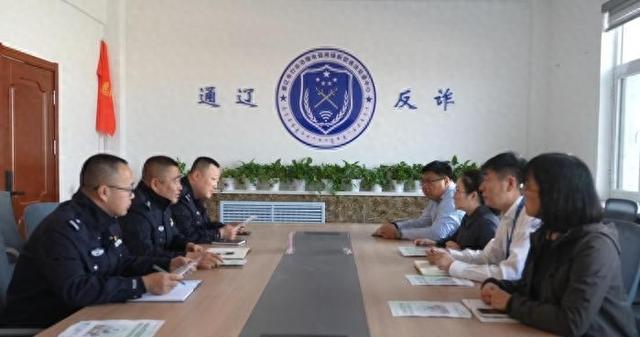
图为通辽 事发后,通辽移动通过通辽市打击治理电信网络新型违法犯罪中心(以下简称"通辽市反诈中心")联系 到寇先生,告知其符合理赔条件,并引导其拨打中移保险经纪客服电话提交立案证明等材料。寇先生这 才想起,自己此前在通辽移动营业厅办理业务时,花1元钱顺手订购了一款名为"羲和防诈卫士"的产 品。在工作人员协助下,理赔流程简洁高效,30天后全额赔付款顺利到账,寇先生连连致谢。 据了解,"羲和防诈卫士"融合网络防护、大数据分析、人工智能及防诈保险。该产品着力于将防护前 置,利用AI技术,在诈骗电话接入时就能进行风险识别,实现事前预警、事中提醒甚至主动干预。当 诈骗不幸发生时,通过保险赔付能为用户提供一份经济补偿,守住损失底线,为用户提供"安全防护 +诈骗赔付"双重保障。 一直以来,通辽移动始终将履行社会责任深度融入产品创新与服务升级中。"羲和防诈卫士"的推出与落 地,正是其发挥技术优势赋能安全防护的具体实践,更是主动融入社会治理、筑牢民生安全底线的生动 体现。通辽移动将继续深化与公安机关、社会各界的反诈协作,携手共筑安全可信的数字生活屏障。 (孟欣 张爱伟) 免责申明:本文为商业文章仅代表作者个人观点,与本网无关 移 ...
超聚变启动IPO,中国移动为第二大股东
Sou Hu Cai Jing· 2026-01-07 07:39
Group 1 - The core point of the article is that Chaohui Digital Technology Co., Ltd. has initiated its IPO process, with CITIC Securities as the advisory broker [2] - Chaohui was established on September 13, 2021, with a registered capital of 880.321 million yuan, and is located in Zhengzhou, Henan [3] - The controlling shareholder is Henan Chaohui Technology Co., Ltd., holding a 31.38% stake, with the ultimate controlling party being Henan State-owned Assets [3] Group 2 - In November 2025, Chaohui ranked first in the "Top 100 Strategic Emerging Industry Enterprises in Henan" with a revenue of 4.338246 billion yuan [4][5] - The company completed a new round of investment changes on November 7, 2025, with China Mobile's subsidiary, Zhongyi Capital, becoming the second-largest shareholder with a 15.1427% stake [5] - The company aims to exceed 50 billion yuan in revenue for the full year of 2025, following a doubling of revenue in the first quarter [7] Group 3 - The global server market is projected to reach $235.7 billion in 2024, while the Chinese server market is expected to grow by 70.1% year-on-year to approximately $52.6 billion [8][9] - The Chinese server shipment volume is estimated at 4.45 million units in 2024, with internet applications accounting for 51.8% of market demand [10] - Chaohui holds a 13.75% market share in the X86 server segment, ranking second with revenues of 38.5 billion yuan [11] Group 4 - The IPO of Chaohui is anticipated to significantly enhance its stock value and provide substantial returns for shareholders like China Mobile and China Telecom [13] - The listing is expected to bolster Chaohui's capital resources for R&D and market expansion, solidifying its leading position in the server sector [13] - The capital influx from the IPO is seen as a catalyst for innovation in AI server technology and overall industry growth [13]
南方周末:中国企业科创力研究报告(2025)
Sou Hu Cai Jing· 2026-01-07 06:10
Core Insights - The "2025 China Enterprise Innovation Capability Research Report" covers 7,065 enterprises, showcasing the development trends in technological innovation within Chinese companies, focusing on R&D investment, output, and enterprise growth [1][2]. R&D Investment - R&D investment among enterprises continues to grow, reaching a total of 2.71 trillion yuan in 2025, with Huawei leading at 179.7 billion yuan, the only company surpassing the 100 billion yuan mark [1][2]. - Private enterprises constitute 56% of the top 100 in innovation capability, while non-state-owned enterprises account for 60%, indicating their dominance in technological innovation [1][2]. - The information transmission, software, and IT services sectors lead in R&D investment, with the automotive manufacturing sector showing significant growth [1][2]. R&D Output - The quality of innovation is steadily improving, with the proportion of invention patent applications reaching 61.38%, a notable increase from previous years [2]. - A total of 878 enterprises contributed to 43.27% of the national PCT patent applications, with Xiaomi entering the global top 10 for the first time [2]. - 2,039 enterprises participated in 74.89% of national standard-setting activities, particularly in the electronic information and communication sectors [2]. Enterprise Development - The 7,048 enterprises that disclosed revenue achieved a combined total of 94.36 trillion yuan, showing a positive correlation between revenue and R&D investment, with nearly half of the billion-yuan enterprises achieving "double growth" [2]. - Despite operational pressures, 934 enterprises increased their R&D investment, with significant contributions from companies listed on the Sci-Tech Innovation Board and the Growth Enterprise Market [2]. - Over five years, the number of enterprises disclosing R&D investment and personnel has increased by 34.07% and 36.30%, respectively, indicating a rise in transparency regarding innovation capabilities [2]. Overall Trends - Chinese enterprises are transitioning from cost leadership to technology leadership, moving from technological catch-up to original innovation [2]. - Emerging fields such as artificial intelligence, biomedicine, and semiconductors are becoming hotspots for innovation, while traditional industries are revitalizing through technological upgrades [2]. - The continuous improvement of the innovation ecosystem is expected to further enhance the innovation capabilities of enterprises, providing sustained momentum for high-quality economic development [2].




启明星辰:公司坚信网络安全产业韧性强、潜力大,长期向好的基本面不变
Zheng Quan Ri Bao Wang· 2026-01-06 14:11
Core Viewpoint - The company believes that despite short-term challenges in the cybersecurity industry, the long-term potential remains strong due to the increasing demand for innovative security capabilities integrated with information technology applications and business scenarios [1] Group 1: Industry Outlook - The cybersecurity industry is currently facing limitations in traditional business growth and pressure on products and services [1] - There is a growing demand for high-quality innovative security capabilities as cybersecurity integrates more with information technology applications and business scenarios [1] Group 2: Company Strategy - The company is deepening its strategic collaboration with China Mobile, focusing on new areas such as "AI + security," cloud security, and 5G security [1] - The company aims to enhance the quality of related transactions with China Mobile, emphasizing the value of security products and improving overall gross margin levels, even if it means sacrificing some low-margin projects [1] - Following the appointment of a new chairman, the company is committed to advancing its strategic collaboration with China Mobile and proactively exploring new opportunities in the AI security sector [1]
