
BOB(601169)

Search documents
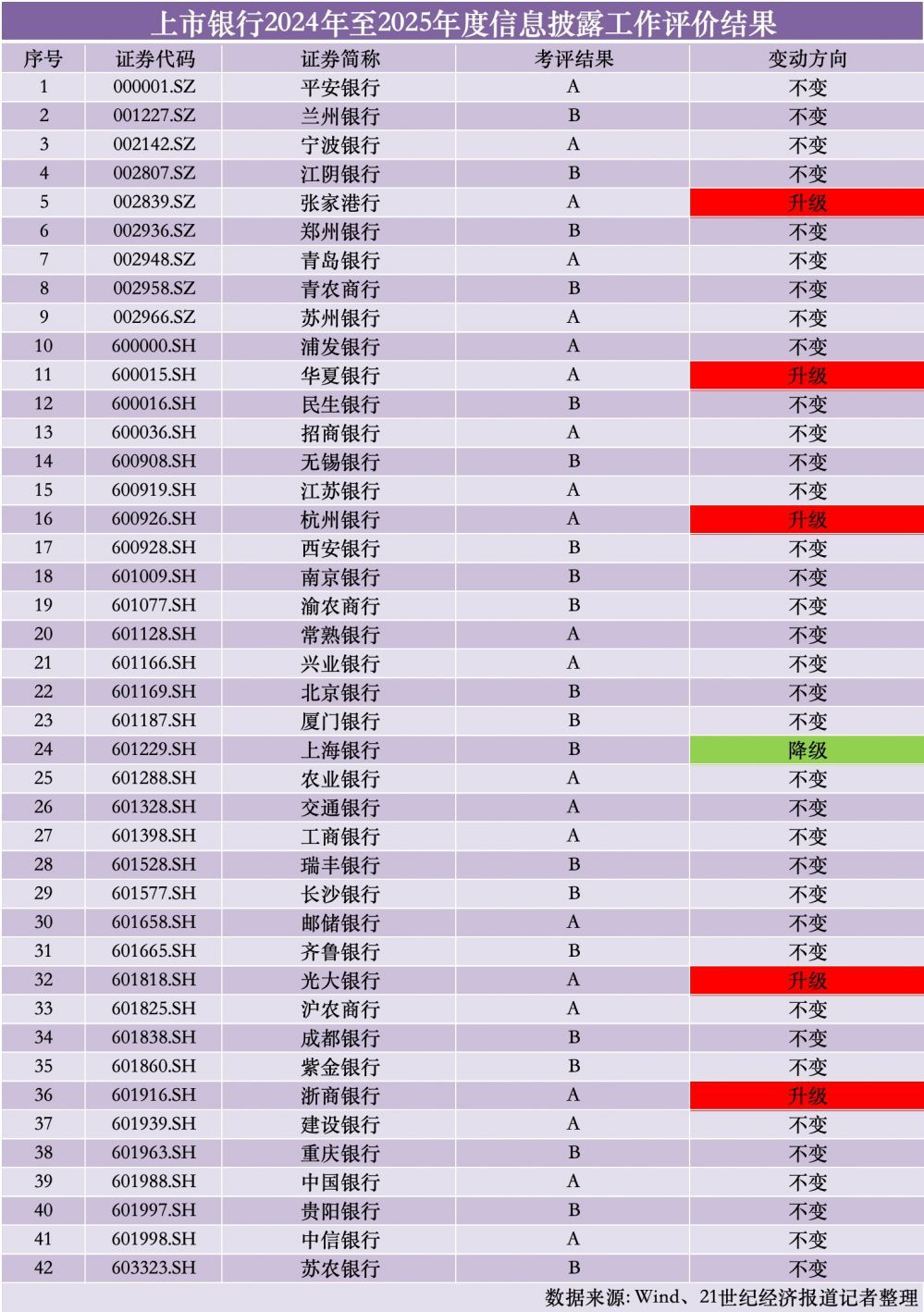
42家上市银行信披考评出炉:22家获A,光大、华夏和浙商银行提级
2 1 Shi Ji Jing Ji Bao Dao· 2025-11-03 08:21
Core Insights - The recent disclosure evaluation results for listed banks in China for the 2024-2025 period show that all listed banks received ratings of B or above, with 22 banks rated A, indicating a strong performance in information disclosure [1] Summary by Category Overall Ratings - All listed banks achieved a rating of B or higher, with 22 banks rated A, reflecting consistent performance compared to the previous year [1] - Only six banks experienced rating changes, with five banks improving their ratings and one bank, Shanghai Bank, experiencing a downgrade [1] Banks with Rating Changes - The following banks improved their ratings: - Zhangjiagang Bank - Hangzhou Bank - Huaxia Bank - Everbright Bank - Zhejiang Commercial Bank [1] - Shanghai Bank was the only bank to see a downgrade in its rating [1] Detailed Ratings - A selection of banks and their ratings includes: - Ping An Bank: A - Ningbo Bank: A - Agricultural Bank of China: A - Industrial and Commercial Bank of China: A - Shanghai Bank: B (downgraded) [2]





【Fintech 周报】世界黄金协会:市场尚未饱和;保险业前三季罚金超3亿禁业86人
Sou Hu Cai Jing· 2025-11-03 08:15
Regulatory Dynamics - Five banks were fined a total of over 200 million yuan for various violations, with China Bank fined 97.9 million yuan for issues in governance and loan management [1] - The Central Bank's Zhejiang branch imposed fines exceeding 16 million yuan on six banks, affecting 25 responsible individuals, with penalties ranging from 7,500 to 100,000 yuan [1] Insurance Industry - The total fines in the insurance industry exceeded 300 million yuan in the first three quarters of 2025, marking a year-on-year increase of 9.64%, with 86 individuals banned from the industry [2] - In Q3 2025, the insurance sector saw 632 penalties totaling 134 million yuan, with a significant rise in the number of penalties and institutions involved compared to the previous year [2] Industry Dynamics - The six major state-owned banks reported their Q3 results, with Industrial and Commercial Bank of China achieving a revenue of 610.97 billion yuan, a year-on-year increase of 1.98% [2] - Agricultural Bank of China reported a revenue of 550.77 billion yuan, up 1.87%, while Bank of China and China Construction Bank also showed modest growth in revenue and net profit [2] Corporate Developments - China Pacific Insurance reported a net profit of 45.7 billion yuan in the first three quarters of 2025, reflecting a year-on-year growth of 19.3% [9] - The appointment of Zhao Guid as vice president of Industrial and Commercial Bank of China was announced, highlighting his extensive experience in digital transformation and financial technology [6] - Yibin Bank announced a change in leadership, appointing Guo Hua as the new president after the resignation of Jiang Lin [7] - China Life and New China Life reported significant net profit growth rates of 91.5% and 88.2% respectively in Q3 2025, driven by substantial investment income [5]





北京银行(601169):对公贷款稳健增长,中收增速保持较高
Yin He Zheng Quan· 2025-11-03 06:11
Investment Rating - The report maintains a "Recommended" rating for Beijing Bank [1] Core Views - Beijing Bank's performance shows a short-term decline in revenue growth, with a year-on-year decrease of 1.08% for Q1-Q3 2025, while net profit attributable to shareholders increased by 0.26% [5] - The bank's interest income grew by 1.79% year-on-year, driven by scale expansion, although the annualized net interest margin decreased by 2 basis points to 1.26% [5] - The bank's total loans increased by 7.38% year-to-date, with corporate loans growing by 11.98%, particularly in technology finance and green finance [5] - Non-interest income decreased by 9.22% year-on-year, primarily due to fluctuations in investment income, while fee income from wealth management grew by over 10% [5] - The asset quality remains stable, with a non-performing loan ratio of 1.29% and a provision coverage ratio of 195.79% [5] - The bank's digital transformation strategy is expected to enhance its retail financial services and maintain strong deposit acquisition capabilities [5] Summary by Sections Financial Performance - Revenue for Q1-Q3 2025 decreased by 1.08% year-on-year, while net profit increased by 0.26% [5] - The annualized return on equity (ROE) was 9.86%, down by 0.79 percentage points [5] - Q3 revenue and net profit saw declines of 5.71% and 1.85% year-on-year, respectively [5] Loan and Deposit Growth - Total loans increased by 7.38% year-to-date, with corporate loans up by 11.98% [5] - Retail loans grew by 1.99%, with a focus on high-quality residential mortgage projects [5] - Deposits increased by 7.60% year-to-date, with personal deposits showing strong growth of 12.53% [5] Non-Interest Income and Wealth Management - Non-interest income fell by 9.22% year-on-year, while fee income from wealth management grew by 16.91% [5] - The bank's assets under management (AUM) increased by 9.44% year-to-date, with significant contributions from high-net-worth clients [5] Asset Quality and Capital Adequacy - The non-performing loan ratio stood at 1.29%, with a provision coverage ratio of 195.79% [5] - The core Tier 1 capital adequacy ratio was 8.44%, reflecting a slight decrease [5] Investment Outlook - The bank's focus on digital transformation and retail banking is expected to drive future growth [5] - The projected book value per share (BVPS) for 2025 is 13.30 yuan, with corresponding price-to-book (PB) ratios of 0.42X [5]
寻找绩优股:2026年银行业年度策略
GUOTAI HAITONG SECURITIES· 2025-11-03 05:20
Investment Rating - The report indicates a cautious outlook on the credit growth rate, suggesting a shift towards quality improvement, with expectations for a recovery in corporate loan increments by 2026 [5][9]. Core Insights - Credit growth is expected to slow significantly starting in 2024, but the decline in growth rate is anticipated to moderate by 2026, with corporate loans likely to see a year-on-year increase [7][9]. - The relationship between credit growth and economic growth is weakening, emphasizing the need to optimize credit structure and reduce idle financial resources [9]. - The report highlights that the banking sector's total asset growth will outpace loan growth in 2025, driven by government bond supply and fiscal policies [9]. Summary by Sections Credit Growth Forecast - New RMB loans are projected at 21.3 trillion, 23.6 trillion, and 18.9 trillion yuan for 2022, 2023, and 2024 respectively, with a further estimate of 14.7 trillion yuan for the first three quarters of 2025 [9]. - For 2026, new loans are expected to be between 17.2 trillion and 17.7 trillion yuan, corresponding to a growth rate of 6.3% to 6.5% [9]. Loan Composition - In 2023, the total RMB loans are expected to reach 237.59 trillion yuan, with a year-on-year growth rate of 10.6% [8]. - Retail loans are projected to grow from 80.10 trillion yuan in 2023 to 82.84 trillion yuan in 2024, reflecting a growth rate decline from 5.7% to 3.4% [8]. - Corporate loans are anticipated to increase from 157.07 trillion yuan in 2023 to 171.01 trillion yuan in 2024, with a growth rate of 12.7% [8]. Regional Performance - Regions such as Jiangsu, Zhejiang, Sichuan, and Shandong are expected to continue outperforming the national average in loan growth due to strong economic performance and support from new policy financial tools [12]. Banking Sector Dynamics - The report notes that state-owned banks are expected to maintain a competitive edge due to lower funding costs and capital injections from the Ministry of Finance [12]. - The net interest margin is in a downward trend, but the rate of decline is expected to slow starting in 2025, with some smaller banks potentially stabilizing their margins by 2026 [13][17]. Asset Quality - As of Q2 2025, the non-performing loan (NPL) ratio for listed banks is reported at 1.25%, indicating a stable asset quality despite pressures on retail credit [37]. - The report emphasizes that while retail loan NPLs have increased since 2021, corporate loan clearances have improved significantly, providing a buffer against retail risks [37].


银河基金管理有限公司关于以通讯方式召开银河景气行业混合型证券投资基金基金份额持有人大会的公告
Shang Hai Zheng Quan Bao· 2025-10-31 19:22
Meeting Overview - The meeting for the Galaxy Economic Industry Mixed Securities Investment Fund will be held via communication method, with voting from November 4, 2025, to December 9, 2025, at 17:00 [1][10]. Voting and Participation - The record date for fund holders to participate in the meeting is November 3, 2025, with specific voting rights outlined for purchases and redemptions on that date [5][10]. - Voting will be conducted through written paper ballots, which can be obtained from the fund management company's website or other specified sources [6][19]. Voting Procedures - Detailed instructions for filling out and submitting ballots are provided, including requirements for individual and institutional investors [7][8][9]. - Ballots must be submitted to the fund management company by the specified deadline, with clear guidelines on how to ensure valid submissions [10][24]. Meeting Agenda - The main agenda item is the proposal regarding the continuous operation of the Galaxy Economic Industry Mixed Securities Investment Fund [4][20]. Decision Validity - The meeting requires that at least half of the total fund shares held by participants be represented for the meeting to be valid, and decisions must be approved by a majority of the voting rights present [15][16]. Fund Management and Oversight - The fund management company, Galaxy Fund Management Co., Ltd., is responsible for organizing the meeting, with oversight from the fund custodian, Beijing Bank Co., Ltd., and a public notary [18][19].
北京银行(601169):不良额率双降,中收两位数增长
CMS· 2025-10-31 15:17
Investment Rating - The report maintains a strong buy recommendation for Beijing Bank (601169.SH) [4] Core Views - The bank's total assets grew by 21.48% year-on-year as of Q3 2025, with interest-earning assets increasing by 19.28%, supported by significant expansion in investment assets [2][3] - The non-performing loan (NPL) ratio decreased to 1.29%, with a corresponding increase in the provision coverage ratio to 195.79%, indicating stable asset quality [2][3] - Net fee and commission income grew by 16.92% year-on-year, reflecting strong performance in wealth management and personal financial products [2][3] Summary by Sections Performance - For the first three quarters of 2025, the bank reported a year-on-year revenue growth of -1.08%, PPOP decline of -1.88%, and a slight increase in net profit of 0.26% [1][13] - The bank's total assets reached approximately 4.89 trillion yuan, with total loans at 2.37 trillion yuan [13] Non-Interest Income - The bank's net fee income maintained a double-digit growth rate, with a year-on-year increase of 16.92% [2][31] - Other non-interest income saw a decline of 15.98% year-on-year, primarily due to market adjustments affecting the bank's trading portfolio [3][31] Interest Margin and Funding - The net interest margin narrowed by 4 basis points in Q3 2025, attributed to a decrease in the yield on interest-earning assets [3][12] - As of Q3 2025, deposits grew by 11.07% year-on-year, although there was a negative growth in the quarter, indicating a competitive funding environment [2][3] Asset Quality - The NPL generation rate for the first three quarters of 2025 was estimated at 0.87%, showing improvement compared to the previous half [2][3] - The bank's provision coverage ratio increased, providing a stronger buffer against potential loan losses [2][3] Capital and Shareholder Information - The bank's total market capitalization is approximately 118.2 billion yuan, with a current share price of 5.59 yuan and a dividend yield of 5.69% [4][8] - Major shareholder includes ING BANK N.V., holding a 13.03% stake [4]
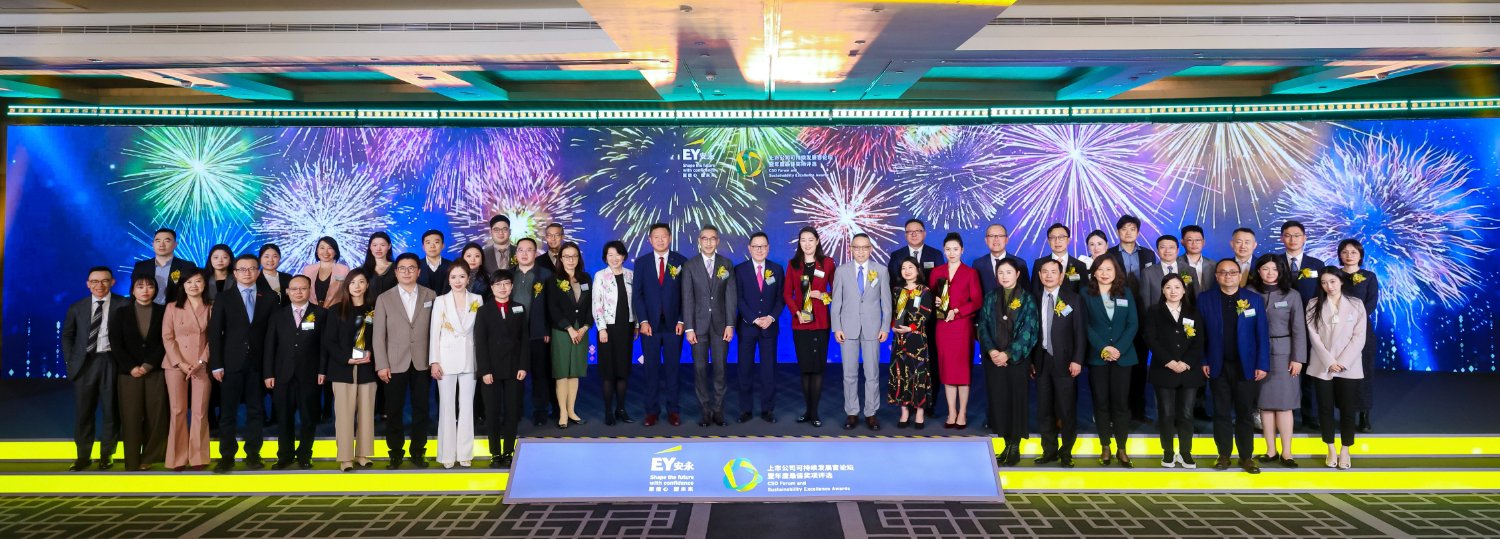
以数为擎,向绿而行,企业可持续发展迎“智”变——第四届上市公司可持续发展官论坛暨年度最佳奖项评选结果隆重揭晓
Zhong Guo Jin Rong Xin Xi Wang· 2025-10-31 14:58
Core Insights - The integration of "digital intelligence" and "green" initiatives is advancing corporate ESG (Environmental, Social, and Governance) practices from conceptual advocacy to systematic and intelligent implementation [1][3] - The fourth annual forum on sustainable development for listed companies, themed "Digital Intelligence and Green Movement Leading New Journey," was held in Beijing, revealing the winners of the "Ernst & Young Sustainable Development Annual Best Awards 2025" [1][3] - The awards highlighted the innovative practices of Chinese companies in the ESG and AI integration space, showcasing their contributions to building a modern industrial system and achieving high-quality development [1][3] Group 1: Event Overview - The forum featured 2 special awards, 12 outstanding companies, 2 distinguished individuals, 16 excellent cases, and 1 special contribution award for technological innovation in ESG development [1][3] - The focus of this year's awards was on the role of digitalization as an innovative driving force, emphasizing zero-carbon technology and AI's role in enhancing productivity [1][3] Group 2: Industry Trends - Ernst & Young's China Chairman noted that 2023 is a pivotal year for global sustainable development, marking the 10th anniversary of the Paris Agreement and the 20th anniversary of the "Green Mountains and Clear Water are Gold and Silver Mountains" concept [3] - The rapid advancement of AI technology is accelerating the digital and green transformation of Chinese enterprises, positioning them as key players in sustainable development [3][4] Group 3: AI and ESG Integration - Companies are encouraged to integrate ESG into their core strategies and leverage technology to transform sustainable development into a quantifiable and operational value system [4][5] - Ernst & Young has introduced AI-driven solutions, including the DeepSeek model and the METIS AI platform, to support enterprises in their green transformation efforts [4][5] Group 4: Award Evaluation and Criteria - The evaluation framework for the awards includes nine dimensions, focusing on technological innovation, low-carbon benefits, and social responsibility [5] - This year, an AI assessment component was introduced to enhance the evaluation process, utilizing a comprehensive ESG information database [5] Group 5: Future Outlook - Ernst & Young aims to deepen its professional service capabilities, helping companies embed sustainable development into their strategic core and operational processes [6]





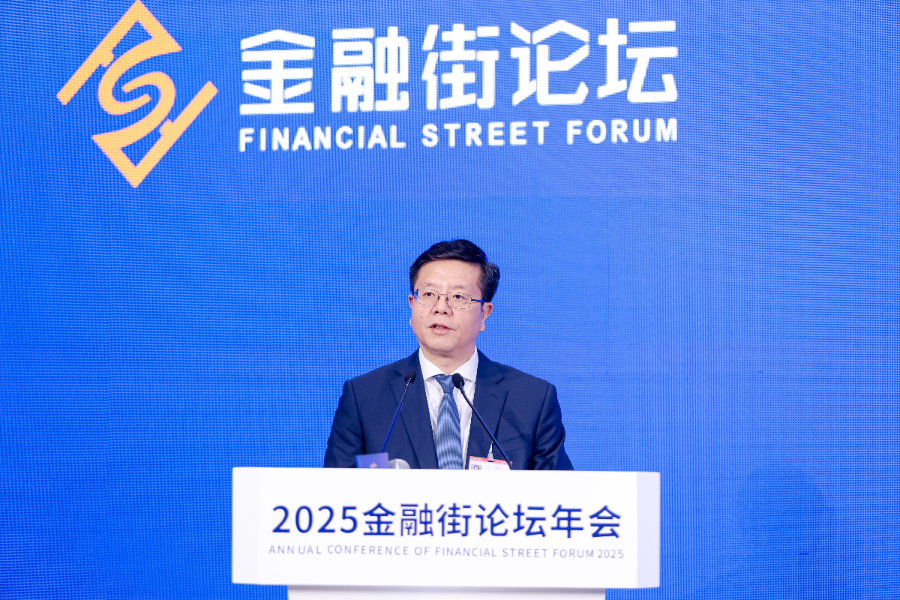
北京银行行长戴炜:全力打造“专精特新第一行”
2 1 Shi Ji Jing Ji Bao Dao· 2025-10-31 12:49
Group 1 - The core viewpoint of the article emphasizes the continuous optimization of the technology finance policy system by the state, which provides direction for empowering technology enterprises [1] - Beijing has cultivated a number of competitive technology enterprises, achieving significant results in technology innovation and finance, with three trillion-level and seven hundred billion-level industrial clusters formed [1] - Beijing Bank has positioned serving technological innovation as its strategic core, providing over 1.4 trillion yuan in credit to 58,000 technology SMEs and supporting a large number of specialized and innovative enterprises [1] Group 2 - Beijing has launched a comprehensive financial service plan for intellectual property, creating an internal evaluation model for patent value, which facilitates efficient financing for intangible assets [3]
北京银行(601169):息差边际企稳,资产质量保持稳健
Ping An Securities· 2025-10-31 09:32
Investment Rating - The report maintains a "Recommendation" rating for Beijing Bank, indicating an expectation of stock performance that is better than the market by 10% to 20% over the next six months [1][9][13]. Core Views - The report highlights that Beijing Bank's operating income for the first three quarters of 2025 was 51.6 billion yuan, a year-on-year decrease of 1.1%, while the net profit attributable to shareholders was 21.1 billion yuan, a slight increase of 0.3% year-on-year [4][7]. - The bank's total asset scale grew by 21.5% year-on-year, with loans increasing by 9.3% and deposits by 11.1% [4][7]. - The report emphasizes the stability of the bank's asset quality, with a non-performing loan (NPL) ratio of 1.29% at the end of the third quarter, down 1 basis point from the previous half-year [7][9]. Summary by Sections Financial Performance - For 2025, the projected operating income is 71.83 billion yuan, with a year-on-year growth of 2.7%, and net profit is expected to be 26.02 billion yuan, reflecting a growth of 0.7% [6][10]. - The report notes a decline in non-interest income, which fell by 9.2% year-on-year, primarily due to market fluctuations affecting the bond market [7][9]. Asset Quality - The bank's NPL ratio is projected to decrease slightly to 1.30% in 2025, with a stable provision coverage ratio of 202% [10][11]. - The report indicates that the bank's risk compensation ability remains stable, with a loan-to-deposit ratio of 89.29% [11]. Market Position and Outlook - The report suggests that the bank's deep-rooted presence in the Beijing region supports steady performance growth, with expectations for continued improvement in financial results due to recovering market demand [9][10]. - The bank's price-to-book (P/B) ratios for 2025-2027 are projected at 0.43x, 0.40x, and 0.38x, indicating a sufficient margin of safety in valuation [9][10].
服务实体经济再添新动能 北京银行科技、绿色贷款增速均超20%
Xin Lang Cai Jing· 2025-10-31 08:43
Core Insights - Beijing Bank's total loan principal reached 2,373.046 billion yuan by the end of Q3 2025, reflecting a growth of 7.38% since the beginning of the year, with loans accounting for 48.51% of total assets [1] - The bank's focus on technology finance, green finance, and inclusive micro-enterprise loans has resulted in double-digit growth in these segments, indicating strong market competitiveness [1] Loan Growth Segments - Technology finance loans amounted to 437.710 billion yuan, showing a significant increase of 20.16% from the start of the year [1] - Green finance loans reached 265.456 billion yuan, achieving a notable growth of 26.20% since the beginning of the year, contributing robustly to the green economy [1] - Inclusive micro-enterprise loans totaled 260.810 billion yuan, with a growth of 16.91% year-to-date, effectively supporting the healthy development of small and micro enterprises [1] Strategic Initiatives - The bank launched the "Artificial Intelligence+" service plan during the reporting period, accompanied by specially designed financial product solutions [1]