
Bank Of Shanghai(601229)

Search documents
你追我赶!长三角头部城商行业绩背后:新排序靠什么?
Nan Fang Du Shi Bao· 2025-09-02 12:59
Core Viewpoint - The performance of the five leading city commercial banks in the Yangtze River Delta region listed on A-shares showed growth in revenue and net profit for the first half of 2025, but the growth rate has generally slowed compared to the previous year, with significant differentiation among them [2][3]. Group 1: Financial Performance - Jiangsu Bank led with a revenue of 44.86 billion yuan and a net profit of 21.06 billion yuan, maintaining its top position [3][4]. - Nanjing Bank surpassed Shanghai Bank in revenue, dropping Shanghai Bank to fourth place, while net profit rankings remained consistent [2][3]. - All five banks reported year-on-year growth in net profit, with Hangzhou Bank achieving the highest growth rate of 16.7% due to a reduction in credit impairment losses [5][12]. Group 2: Revenue and Profit Growth Rates - Revenue growth rates for the five banks showed a decline compared to last year, with Hangzhou Bank experiencing the largest drop from 9.6% to 3.9% [4][5]. - Jiangsu Bank and Ningbo Bank had revenue growth rates around 8%, while Shanghai Bank and Hangzhou Bank lagged behind with growth rates around 4% [4][5]. Group 3: Interest Income and Non-Interest Income - All five banks saw an increase in net interest income, with Nanjing Bank achieving the highest growth rate of 22.13% [5][6]. - Non-interest income showed mixed results, with four banks reporting growth while Shanghai Bank experienced a decline of 6% [7][11]. Group 4: Asset Quality and Capital Adequacy - The non-performing loan (NPL) ratios remained low, with only Shanghai Bank exceeding 1% at 1.18% [12][13]. - Jiangsu Bank's core Tier 1 capital adequacy ratio fell below 9%, the lowest among the five banks, while Shanghai Bank led with a ratio of 10.78% [14]. Group 5: Financial Investment and Loan Composition - Financial investment assets accounted for a significant portion of total assets, with Hangzhou Bank having the highest ratio at 46.8% [8][9]. - Jiangsu Bank's financial investment assets grew at a rate nearly double that of its loan assets, indicating a shift in asset allocation strategy [10][11].






江苏银行晋升城商行“一哥” 长三角四小龙携手迈向3万亿
2 1 Shi Ji Jing Ji Bao Dao· 2025-09-02 11:01
Core Viewpoint - The major city commercial banks in the Yangtze River Delta region have reported strong performance in the first half of the year, achieving growth in both revenue and net profit despite challenges such as narrowing interest margins and weakened credit demand [1][2]. Group 1: Financial Performance - Jiangsu Bank has the highest total assets among city commercial banks, reaching 4.79 trillion yuan, with a year-on-year growth of 26.99% [2][6]. - Ningbo Bank and Shanghai Bank also reported total assets exceeding 3 trillion yuan, with figures of 3.47 trillion yuan and 3.29 trillion yuan respectively [2]. - The net profit growth for Jiangsu Bank was 7.78%, while Ningbo Bank, Nanjing Bank, and Shanghai Bank reported growth rates of 7.91%, 8.64%, and 4.18% respectively [2][4]. Group 2: Asset Quality - The non-performing loan (NPL) ratios for these banks are below 1%, with Ningbo Bank having the lowest at 0.76%, followed by Jiangsu and Nanjing Banks at 0.84%, and Shanghai Bank at 1.18% [3][2]. Group 3: Loan Growth - Jiangsu Bank's loan and advance scale reached 2.37 trillion yuan, with a year-on-year growth of 18.79% [6][7]. - Ningbo Bank's loans and advances totaled 1.67 trillion yuan, with a growth of 13.36% [8]. - Nanjing Bank's total loans reached 1.39 trillion yuan, with a growth of 10.41% [6]. Group 4: Market Performance - The stock prices of these banks have shown an upward trend in the first half of the year, with Ningbo Bank experiencing the highest increase of 23.18% [5]. Group 5: Retail Business Challenges - Retail banking performance has lagged behind corporate banking, with Jiangsu Bank's retail loan growth at only 3.07% compared to 23.30% for corporate loans [11][12]. - Nanjing Bank's personal loan balance increased by 3.67%, while Shanghai Bank's personal loan balance decreased by 4.86% [13][12]. Group 6: Capital Adequacy Concerns - Concerns regarding capital adequacy have arisen due to rapid asset expansion, prompting banks to focus on optimizing asset structures and maintaining stable profit accumulation [9][10].

城商行的二十年:展望“十五五”,谁是未来大赢家?
NORTHEAST SECURITIES· 2025-09-02 09:02
Investment Rating - The report rates the industry as "Outperforming the Market" [4] Core Insights - The report emphasizes that the evolution of local government financing behavior and regulatory adjustments over the past two decades have significantly influenced the financial sector. It predicts that the proportion of bank credit in local government debt will increase from 38% to 42% during the "14th Five-Year Plan" period, with an annual growth rate fluctuating between 10% and 17% [1][18][19] - City commercial banks (CCBs) have played a crucial role in supporting local government debt resolution, with their credit growth in government-related loans outpacing that of other banks. The report identifies a complementary relationship between CCBs' government-related loan growth and the issuance of urban investment bonds [1][2] - The report forecasts that CCBs will take on greater responsibilities in the future, driven by increasing state ownership, leadership changes reflecting regulatory attributes, and strong local government relationships. This will enhance local market competitiveness and provide growth opportunities for CCBs [2][18] Summary by Sections 1. Changes in Local Government Financing Structure - The report outlines the historical evolution of local government debt and financing needs, highlighting the significant role of regulatory and policy adjustments in shaping the financial sector [14][18] - It provides a detailed analysis of local government debt structure changes from 2008 to 2025, noting the shift from bank loans to urban investment bonds and shadow banking during various phases [19][24] 2. CCBs' Role in Debt Resolution - CCBs have shown proactive engagement in local government debt resolution, with their government-related loan growth significantly higher than that of other banks. The report indicates that CCBs have effectively supplied funds during periods of heightened repayment pressure [1][2][19] 3. Future Prospects for CCBs - The report identifies several CCBs, including Chongqing Bank, Xiamen Bank, and Shanghai Bank, as potential winners during the "14th Five-Year Plan" period, expecting them to achieve faster expansion and higher returns for investors [2][3] - It predicts that the overall valuation of CCBs will have substantial room for improvement, estimating a price-to-book (PB) ratio of 0.7x by the end of 2026 and 1.22x by the end of 2030 [2][3] 4. Investment Recommendations - The report recommends focusing on specific CCBs such as Chongqing Bank, Xiamen Bank, Shanghai Bank, Qilu Bank, and Chengdu Bank for potential investment opportunities [3][6]
城商行板块9月2日涨1.65%,齐鲁银行领涨,主力资金净流入3.41亿元
Zheng Xing Xing Ye Ri Bao· 2025-09-02 08:59
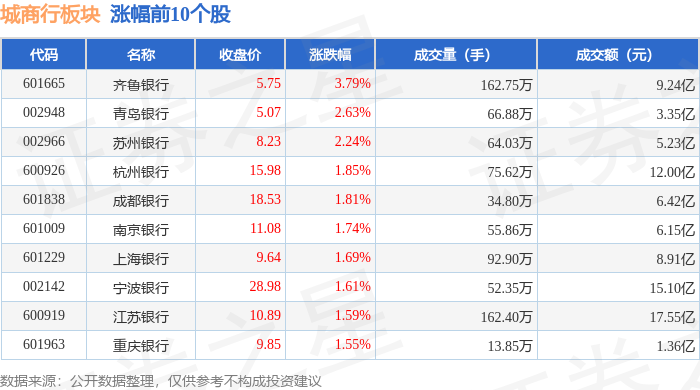
Group 1 - The city commercial bank sector increased by 1.65% on September 2, with Qilu Bank leading the gains [1] - The Shanghai Composite Index closed at 3858.13, down 0.45%, while the Shenzhen Component Index closed at 12553.84, down 2.14% [1] - Qilu Bank's closing price was 5.75, reflecting a 3.79% increase, with a trading volume of 1.6275 million shares and a transaction value of 924 million [1] Group 2 - The city commercial bank sector saw a net inflow of 341 million from main funds, while retail funds experienced a net outflow of 138 million [2] - Jiangsu Bank had a net inflow of 140 million from main funds, but a net outflow of 90.16 million from speculative funds [3] - The overall trading activity in the city commercial bank sector indicates a mixed sentiment among different types of investors, with main funds showing positive interest while retail and speculative funds withdrew [2][3]
交通银行上海市分行完成上海地区首笔2.5层货币桥跨境汇款业务
Sou Hu Cai Jing· 2025-09-02 07:56
Group 1 - The core viewpoint of the news is the successful implementation of the "currency bridge" cross-border remittance service by Bank of Communications Shanghai Branch in collaboration with Shanghai Bank, marking the first application of the mBridge in the Shanghai region [1] - The mBridge is a cross-border payment infrastructure initiated by multiple central banks, utilizing distributed ledger technology to facilitate real-time point-to-point transactions, significantly reducing settlement time and costs [1] - The collaboration between Bank of Communications and Shanghai Bank enhances the efficiency and cost-effectiveness of cross-border payment chains, contributing to the expansion of digital RMB applications in Shanghai [1] Group 2 - The future plans of Bank of Communications Shanghai Branch include further leveraging its role as a digital RMB operating institution to enrich interbank cooperation and optimize cross-border financial experiences [2] - The initiatives aim to inject new momentum into the construction of Shanghai as an international financial center and promote the internationalization of the RMB [2]

浦发银行零售业务总陈雷赴上海银行任副行长
2 1 Shi Ji Jing Ji Bao Dao· 2025-09-02 05:28
Core Viewpoint - Shanghai Bank has appointed Chen Lei as the new vice president, pending approval from the banking regulatory authority, which reflects the bank's strategic focus on enhancing its leadership team and governance structure [1] Group 1: Leadership Changes - The board of Shanghai Bank has approved the appointment of Chen Lei as vice president, which will establish a leadership structure of "one president and three vice presidents" [1] - The current leadership team includes President and CFO Shi Hongmin, CIO Hu Debin, and vice presidents Yu Minhua and Chen Lei [1] Group 2: Chen Lei's Background - Chen Lei has a long tenure at SPD Bank, with experience in branch management, inclusive finance, and financial technology [1] - He holds a master's degree in business administration from Shanghai Jiao Tong University and has held various leadership roles within SPD Bank, including positions focused on retail banking and inclusive finance [1][2] Group 3: Strategic Initiatives - During his time at SPD Bank, Chen Lei advocated for integrating inclusive finance into corporate governance, establishing committees and leadership groups to enhance management [2] - He introduced measures such as no-repayment loans, deferred repayment, and fee reductions to transition inclusive finance from "broad coverage" to "deep inclusivity" [2] - As the general manager of the retail business department, he emphasized a dual approach of "AI + human" to improve service delivery, leveraging AI for standardized products while ensuring human intervention for complex cases [2]

今天,A股再现“跷跷板
Zhong Guo Zheng Quan Bao· 2025-09-02 04:43
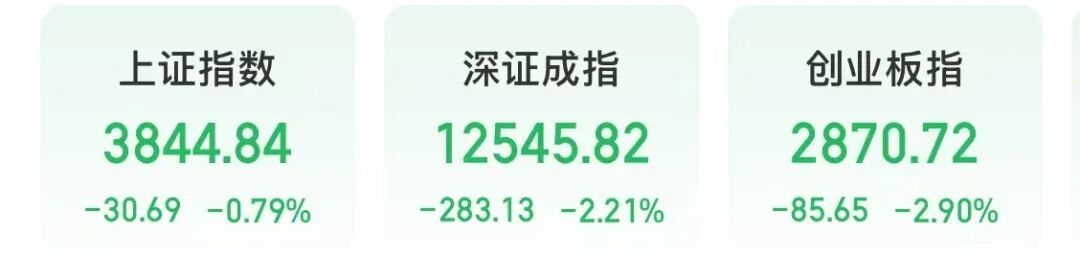
Market Overview - The market exhibited a "seesaw" effect with high dividend assets performing actively while technology stocks experienced a pullback [1] - The banking and electricity sectors saw gains, while the computing industry chain stocks, including Dekoli, Cambridge Technology, and others, faced significant declines [1] - The Shanghai Composite Index fell by 0.79%, the Shenzhen Component Index dropped by 2.21%, and the ChiNext Index decreased by 2.9% [2] Banking Sector - The banking sector rebounded with notable gains in stocks such as Chongqing Rural Commercial Bank and Shanghai Rural Commercial Bank [3] - The overall performance of the banking sector's mid-year reports showed improvement, with most banks experiencing revenue and profit growth, a stable non-performing loan ratio, and a steady provision coverage ratio [5] - Analysts suggest that the banking sector may see a rotation and rebound due to solid fundamentals and previous adjustments, with a focus on regional banks and high-dividend stocks [6] Electricity Sector - The electricity sector showed strong performance, with stocks like Jingyuntong and Huaguang New Energy experiencing significant increases [8] - In July, the total electricity consumption reached 10,226 billion kWh, marking an 8.6% year-on-year increase, indicating robust demand [9] - Analysts recommend focusing on leading companies in renewable energy, regional offshore wind power firms, and water power stocks with stable performance and growth potential [9]


2375亿!17家上市银行中期分红大手笔
Shen Zhen Shang Bao· 2025-09-01 16:41
Core Viewpoint - The listed banks in China have shown strong performance in the first half of the year and are preparing to reward investors with significant mid-term dividends, reflecting their profitability and commitment to shareholder returns [2][4]. Group 1: Dividend Distribution - Among the 42 listed banks in A-shares, nearly half will implement mid-term dividends for 2025, with 17 banks already disclosing their plans, totaling 237.54 billion yuan [2]. - The six major state-owned banks lead in dividend distribution, with Industrial and Commercial Bank of China (ICBC) at the forefront, distributing 50.396 billion yuan, followed by China Construction Bank and Agricultural Bank of China with 48.605 billion yuan and 41.823 billion yuan respectively [2]. - The total dividends from the six major state-owned banks account for 86% of the total dividends announced by the 17 banks [2]. Group 2: Specific Bank Plans - Among joint-stock banks, CITIC Bank, Minsheng Bank, Ping An Bank, and Huaxia Bank have announced their mid-term dividend plans, with CITIC Bank proposing a total of 10.461 billion yuan [3]. - In the city and rural commercial banks, seven banks have announced mid-term dividends, including Ningbo Bank and Shanghai Bank, with Shanghai Bank proposing a cash dividend of 3 yuan per 10 shares [3]. - Four banks have a dividend payout ratio exceeding 30%, including Shanghai Bank and Postal Savings Bank, indicating a strong commitment to returning value to shareholders [3]. Group 3: Market Implications - The expansion of banks implementing mid-term dividends and their willingness to distribute reflects the resilience of the banking sector's profitability and a positive response to shareholder return demands [4]. - This trend indicates improved cash flow and capital management capabilities among certain banks, which may help boost market confidence and attract long-term value investors [4].


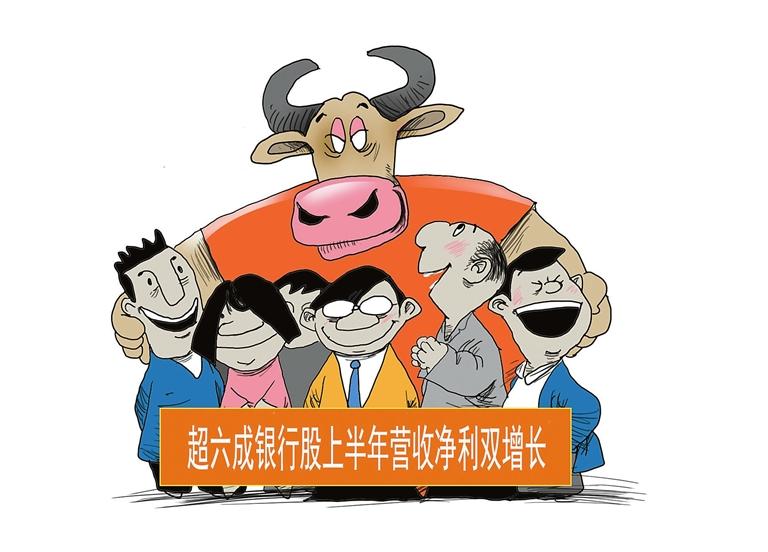
资金再度进场!红利低波ETF(512890)成交4.81亿领跑同类 机构建言掘金银行股机遇
Xin Lang Ji Jin· 2025-09-01 09:17
Core Viewpoint - The Hongli Low Volatility ETF (512890) experienced a slight decline of 0.25% on September 1, closing at 1.191 yuan, with a trading volume of 4.81 billion yuan, leading among similar ETFs [1][2]. Trading Performance - The ETF's trading performance included a turnover rate of 2.33% and a five-day decline of 2.30%, while it showed a 60-day increase of 1.88% [2][3]. - Recent trading data indicates a narrowing trend in fund outflows, with a net outflow of 66.43 million yuan over the last five trading days and a total net outflow of 1.04 billion yuan over the past 20 days, but a net inflow of 2.51 billion yuan over the last 60 days [2][3]. Fund Composition - The ETF's top holdings showed mixed performance, with notable declines in stocks such as Chengdu Bank (-1.46%) and Industrial Bank (-2.68%), while Sichuan Road and Bridge saw an increase of 2.89% [3][4]. - The ETF's total market value as of August 29, 2025, was 206.33 billion yuan, with a cumulative return rate of 138.34% since its inception in December 2018, ranking 54th among 502 similar products [5]. Investment Recommendations - Analysts suggest focusing on banks with high dividend yields and strong asset quality, particularly smaller regional banks like Chengdu Bank and Jiangsu Bank, as well as banks with potential for ROE improvement such as China Merchants Bank and Ningbo Bank [4].



超17家银行将派发2375亿“红包”,国有大行成绝对主力
Bei Jing Shang Bao· 2025-08-31 14:05
Core Viewpoint - The mid-term profit distribution plans of listed banks in A-shares for 2025 show a significant increase in total dividends, reaching 237.54 billion yuan, with state-owned banks being the primary contributors [2][3][4]. Group 1: Dividend Distribution Overview - Among 42 listed banks, 17 have announced their mid-term dividend plans for 2025, with a total dividend amount of 237.54 billion yuan [2][3]. - The six major state-owned banks contributed 204.66 billion yuan, accounting for 86% of the total dividends announced by the 17 banks [3][4]. - Industrial and Commercial Bank of China leads with a dividend of 50.40 billion yuan, followed by China Construction Bank and Agricultural Bank of China with 48.61 billion yuan and 41.82 billion yuan respectively [3][4]. Group 2: Factors Influencing Dividend Decisions - The ability of state-owned banks to distribute dividends is supported by their strong capital strength, stable profitability, and ample cash flow, allowing them to maintain high dividend payouts [4][9]. - The decision to distribute dividends is influenced by a balance of capital adequacy, business expansion needs, regulatory requirements, and shareholder return expectations [4][9][10]. - Some banks, such as Zhengzhou Bank and Qingdao Rural Commercial Bank, have explicitly stated they will not distribute dividends for the first half of 2025, citing performance pressures and capital replenishment needs [8][9]. Group 3: Trends in Dividend Distribution - The trend of increasing mid-term and quarterly dividends among listed banks has been noted since the introduction of the new "National Nine Articles" policy, which encourages multiple dividend distributions within a year [2][4]. - Several joint-stock banks, including CITIC Bank and Minsheng Bank, have announced their mid-term dividend plans, with CITIC Bank aiming for a dividend payout ratio of 30.7% [4][6]. - The distribution landscape shows a clear differentiation, with some banks actively pursuing dividends while others pause due to various operational challenges [8][9].