
360 Security Technology (601360)

Search documents
科蓝软件与360智领达成金融移动安全合作 完善服务生态
Zheng Quan Ri Bao Wang· 2025-09-26 09:13
Core Insights - Beijing Kelong Software Co., Ltd. (科蓝软件) and Beijing 360 Intelligent Technology Co., Ltd. (360智领) have signed a strategic cooperation agreement to collaborate in the mobile application security sector [1][2] - Kelong Software has maintained the number one market share in the mobile banking sector for nine consecutive years, and this partnership will allow them to promote and sell 13 core products from 360智领 [1] - The collaboration aims to enhance Kelong Software's service offerings from "digital solutions" to "security protection," leveraging 360智领's technical capabilities [2] Company Overview - Kelong Software will gain authorization for the promotion and sales of 360智领's 360 Tianyu series products, which include security enhancement for various operating systems and applications [1] - The products will support both localized and SaaS deployment models, catering to different scales of financial institutions [1] Market Context - The mobile application security market is experiencing a growth rate exceeding 30% annually amid the digital transformation in the financial sector [2] - The partnership is expected to positively impact Kelong Software's business expansion and customer maintenance efforts [2]


周鸿祎:有理由裁掉不用AI的员工
Sou Hu Cai Jing· 2025-09-26 02:51
Group 1 - The core viewpoint is that companies should integrate AI into their operations and that employees who resist this change may face job loss as a result of the AI era [1][3] - Zhou Hongyi emphasizes the importance of using AI to enhance individual capabilities rather than debating which industries or positions will be eliminated [3] - The current AI industry presents a stark contrast, with tech giants offering salaries exceeding $100 million for AI talent while basic positions are being replaced on a large scale [3]


周鸿祎对谈罗永浩:聊了雷军、智能体和行业定位
第一财经· 2025-09-24 11:47
Core Insights - The discussion between Luo Yonghao and Zhou Hongyi highlights the evolving role of entrepreneurs as influencers, differentiating them from traditional internet celebrities who primarily focus on direct monetization through sales [3][4] - Zhou Hongyi emphasizes the rapid evolution of AI, particularly the importance of intelligent agents over single large models, suggesting that multi-agent collaboration can achieve greater outcomes [3][5] - The conversation also touches on the changing dynamics between startups and major tech companies, with Zhou reflecting on past conflicts and the current need for collaboration in the AI space [5][6] Group 1: Entrepreneurial Influence - Zhou Hongyi describes the first generation of internet celebrities as providing alternative pathways for ordinary people, while entrepreneur influencers like Yu Minhong and Lei Jun focus on promoting their companies rather than selling consumer products [3][4] - The role of entrepreneur influencers is likened to a new form of marketing and public relations, leveraging their personal influence to communicate corporate values [3] Group 2: AI Development and Impact - Zhou Hongyi notes that the overall evolution of AI is surpassing expectations, but warns that AGI (Artificial General Intelligence) is not expected in the near term [3][6] - He argues that the future will see individuals who can effectively use AI outperforming those who cannot, with repetitive tasks being automated while new roles, such as AI trainers, will emerge [6] Group 3: Industry Dynamics and Collaboration - Zhou Hongyi shares insights on the positioning of 360 as an "industry supporting role," choosing to focus on vertical markets rather than competing with established giants in the general AI model space [5] - He reflects on past confrontations with major tech companies, acknowledging the need for a more collaborative approach in the current landscape, including partnerships with 16 major AI firms [5]

周鸿祎对谈罗永浩:聊了雷军、智能体和行业定位
Di Yi Cai Jing· 2025-09-24 10:36
Group 1 - The conversation between Zhou Hongyi and Luo Yonghao covers various topics including the perspectives on entrepreneur IP versus internet celebrities, the impact of AI on society, and the evolving relationships with major internet companies [3][4]. - Zhou Hongyi emphasizes that the first generation of internet celebrities provided alternative pathways for ordinary people, while entrepreneur celebrities like Yu Minhong and Lei Jun focus on promoting their companies rather than selling consumer products [3]. - Zhou Hongyi believes that the evolution of AI is progressing faster than expected, but general artificial intelligence (AGI) will not arrive in the short term. He highlights that intelligent agents are the core direction of AI evolution, enabling goal-driven tasks and collaborative efforts [3][4]. Group 2 - Zhou Hongyi discusses the success of Manus, stating that it has validated demand and secured funding, despite initial skepticism about its parent company Monica's focus on plugins [4]. - The company 360 positions itself as an "industry supporting role" and chooses not to develop general large models, focusing instead on vertical fields to avoid redundancy with existing giants [4][5]. - Zhou Hongyi has made efforts to improve relationships with major companies, including compliance with platform rules and establishing collaborations with 16 large model enterprises, integrating its intelligent agent technology with the computing power of industry leaders [5]. Group 3 - Zhou Hongyi predicts that the future will not see AI replacing humans, but rather those who utilize AI will outpace those who do not. He notes that while repetitive tasks may be automated, new job roles will emerge, such as AI trainers and parameter adjusters [5].

周鸿祎对谈罗永浩:拒绝用AI的人,裁掉他!
新浪财经· 2025-09-24 09:33
Core Viewpoint - The discussion between Luo Yonghao and Zhou Hongyi highlights the evolution of strategies in the tech industry, emphasizing the importance of adapting to AI and the changing landscape of competition and collaboration among major players in the market [3][4]. Group 1: AI and Workforce Management - Zhou Hongyi emphasizes the necessity of integrating AI into the workforce, stating that employees who refuse to use AI after being instructed to do so may face termination [11][12]. - The company is currently hosting an AI competition internally to encourage the adoption of AI technologies among employees [10][11]. - Zhou suggests that the focus should not be on which jobs will be eliminated by AI, but rather on how to enhance personal capabilities through AI [12] Group 2: Company Strategy and Positioning - Zhou Hongyi reflects on the past competitive dynamics with major tech giants, noting a shift towards a more collaborative approach rather than outright hostility [8][9]. - The company aims to redefine its strategy from "All in AI" to "All in Intelligent Entities," focusing on enhancing employee efficiency and transforming support departments into "super organizations" [15]. - Zhou acknowledges the need for the company to find its niche in AI and cybersecurity, moving away from blind expansion into unfamiliar areas [9][15]. Group 3: Industry Trends and Competition - Zhou discusses the trend of companies aggressively recruiting AI talent, describing it as a tactical move rather than a strategic one, aimed at acquiring experience and expertise [14]. - He highlights the importance of understanding the underlying engineering challenges in developing large-scale AI models, which necessitates experienced personnel [14]. Group 4: Ethical Considerations and Future Outlook - Zhou stresses the importance of addressing ethical issues in AI, advocating for the development of models to counteract potential risks posed by AI technologies [17][18]. - He expresses a cautious optimism about the future of AI, while also pointing out that the most pressing issue humanity faces is energy sustainability, which is crucial for the advancement of AI [19].

周鸿祎对谈罗永浩:拒绝用AI的人,裁掉他!
Xin Lang Ke Ji· 2025-09-24 08:42
Core Insights - The discussion between Luo Yonghao and Zhou Hongyi highlighted the evolution of strategies in the tech industry, particularly the shift from aggressive competition to collaboration and relationship-building [2][5] - Zhou emphasized the importance of AI in enhancing employee capabilities and indicated that refusal to adopt AI could lead to job losses [7][8] - The conversation also touched on the challenges of managing public perception and the necessity of establishing a personal brand in the digital age [3][4] Company Strategy - Zhou Hongyi stated that 360 is transitioning its strategy from "All in AI" to "All in Intelligent Agents," focusing on empowering employees to utilize AI effectively [9][10] - The company aims to redefine its position in the market by concentrating on AI and cybersecurity, moving away from past blind expansions into unfamiliar territories [6][9] Industry Trends - The tech industry is experiencing a tactical approach to talent acquisition, particularly in AI, where companies are willing to pay high salaries to attract experienced professionals [9] - Zhou pointed out that the rapid development of AI raises ethical concerns, necessitating a proactive approach to ensure that AI serves human interests [11] Future Outlook - Zhou expressed optimism about AI's potential to transform productivity but warned that energy issues could limit future advancements [12] - He highlighted the need for AI to assist in scientific breakthroughs, particularly in achieving energy independence through nuclear fusion [12]
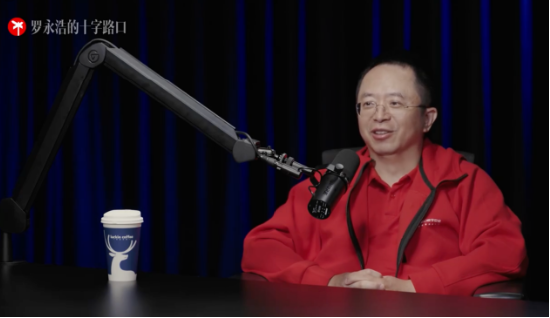
周鸿祎称有理由裁掉拒绝使用AI的员工:不是我裁掉你,是AI时代裁掉你
Xin Lang Ke Ji· 2025-09-24 07:54
Core Insights - The discussion between Luo Yonghao and Zhou Hongyi focused on the integration of AI in the workplace, emphasizing the necessity for employees to adapt to AI technologies [1] - Zhou Hongyi mentioned that 360 is currently hosting an AI competition, indicating a proactive approach to encourage AI adoption among employees [1] - He stated that refusal to use AI after being instructed could lead to potential layoffs, highlighting the trend of AI in the workforce [1] - Zhou emphasized the importance of leveraging AI to enhance personal capabilities rather than worrying about job displacement [1] Company Initiatives - 360 is organizing an internal AI competition to promote the use of AI among its employees [1] - The company is preparing for a future where AI plays a significant role in operations, indicating a strategic shift towards technology integration [1] Employee Expectations - Employees are expected to embrace AI tools; refusal to do so may result in job security concerns [1] - Zhou Hongyi's comments reflect a broader industry trend where adaptability to AI is becoming a critical factor for employment [1]
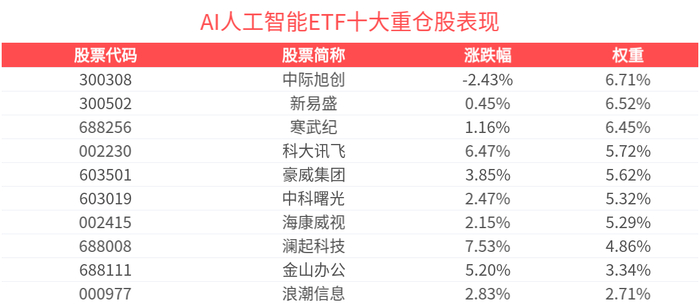
国内AI人工智能发展加速,AI人工智能ETF(512930)涨超1.7%盘中价格再创新高
Xin Lang Cai Jing· 2025-09-24 07:24
Group 1 - Alibaba is actively promoting the construction of AI infrastructure with an investment of 380 billion and plans for additional funding [1] - The IPO of Moore Threads on the Sci-Tech Innovation Board is scheduled for September 26, with several GPU companies expected to initiate listings within the year [1] - Huawei's rotating chairman shared plans for the Ascend chip series, with the Ascend 950PR chip expected to launch in Q1 2026 and the Ascend 960 chip in Q4 2027 [1] Group 2 - The domestic AI industry chain is accelerating, with expectations for a spiral growth in large models, computing power, and applications [2] - The CSI Artificial Intelligence Theme Index (930713) has seen a strong increase of 1.79%, with notable gains in constituent stocks such as Lianqi Technology (up 7.53%) and iFlytek (up 6.47%) [2] - The AI Artificial Intelligence ETF (512930) has risen by 1.73%, with a recent price of 2.18 yuan, and has a management fee of 0.15%, the lowest among comparable funds [2] Group 3 - As of August 29, 2025, the top ten weighted stocks in the CSI Artificial Intelligence Theme Index account for 60.82% of the index, including companies like Xinyi Technology and Cambricon [3] - The top ten stocks by weight include Zhongji Xuchuang, Xinyi Technology, and iFlytek, with varying performance and weight percentages [4]





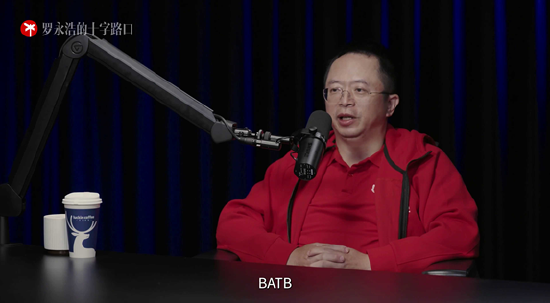
周鸿祎坦言与巨头关系转变:从“死磕”到合作,放下身段共建大模型“复仇者联盟”
Xin Lang Ke Ji· 2025-09-24 06:29
Core Insights - The relationship between tech giants and smaller innovative companies has evolved from being purely adversarial to incorporating elements of collaboration [1][3] Group 1: Collaboration with Giants - Companies must adapt to the platforms' rules to gain support, as exemplified by the need for cooperation with Douyin and WeChat [3] - The support from major platforms, such as WeChat's video account, is crucial for content creators, highlighting the importance of maintaining good relations with platform owners [3] Group 2: Strategic Reflections - Historical conflicts with tech giants were driven by their aggressive stance towards innovative companies, but a shift in strategy has led to a more cooperative approach [3] - The formation of alliances, such as the "Avengers Alliance" among Chinese AI model companies, demonstrates a collective effort to innovate and compete against larger entities [3]

周鸿祎回应360没有做基座模型言 称360不是在做套壳
Ge Long Hui A P P· 2025-09-24 06:15
Core Viewpoint - The discussion between Luo Yonghao and Zhou Hongyi highlights the challenges and considerations in developing large-scale AI models, emphasizing that 360 has not pursued a general-purpose large model due to the significant financial investment required [1] Group 1: Investment and Financial Considerations - Zhou Hongyi stated that developing a general-purpose large model requires an investment of at least 10 billion USD, and major foreign companies have invested nearly 400 billion USD over the past few years, which 360 cannot afford [1] Group 2: Technical Aspects of AI Development - Zhou Hongyi clarified that 360 is not merely creating a shell for AI agents; substantial engineering efforts are necessary to support a complete intelligence foundation [1] - He emphasized that building an intelligent agent requires more than just a distilled model; it necessitates various specialized models, including reasoning, programming, intent prediction, and routing models [1] - Zhou Hongyi reiterated the importance of having a foundational model, stating that 360 maintains the capability to train models with parameters around 100 billion [1]