ICBC(601398)

Search documents
商业银行“出海”验成色:中行领跑,谁在悄然发力?
2 1 Shi Ji Jing Ji Bao Dao· 2025-12-25 08:34
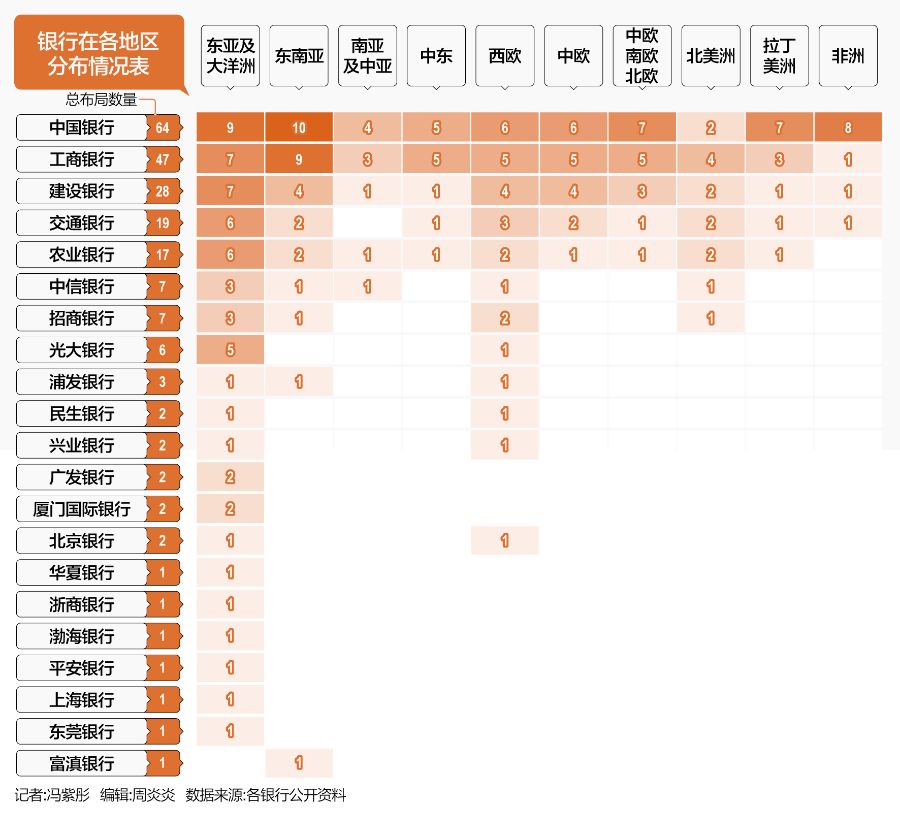
Core Insights - Chinese banks are expanding their overseas presence, establishing a comprehensive service network that covers major financial centers globally and key regions along the Belt and Road Initiative [1][4] - The internationalization strategy of Chinese banks has shifted from focusing primarily on traditional markets in Europe and the US to emerging markets in Southeast Asia, the Middle East, Latin America, and countries involved in the Belt and Road Initiative [1][9] Group 1: Overseas Expansion Strategies - Chinese banks utilize three main forms for overseas expansion: representative offices, branches, and subsidiaries, with larger banks often establishing branches or subsidiaries in mature markets and starting with representative offices in emerging markets [2][4] - The distribution of overseas institutions varies among banks, with a notable focus on new emerging markets and developing countries [2][4] Group 2: Performance of Major Banks - Bank of China leads in global presence with 539 overseas branches in 64 countries, including 45 countries involved in the Belt and Road Initiative, and has a strong focus on enhancing its competitive edge in Southeast Asia [4][12] - Industrial and Commercial Bank of China has 413 overseas institutions in 49 countries, with a significant presence in 30 Belt and Road countries, showcasing a flexible internationalization strategy [4][12] - Agricultural Bank of China has established 13 branches and 4 representative offices, focusing on supporting high-quality Belt and Road initiatives [4][12] Group 3: Revenue Growth and Performance Metrics - In the first half of 2025, Bank of China reported overseas revenue of 783.13 billion yuan, a 14.4% increase from the previous year, with overseas revenue accounting for 23.77% of total revenue [11][12] - Agricultural Bank of China achieved a 21.03% increase in overseas revenue, while Construction Bank's overseas revenue grew by 40.92%, indicating strong expansion momentum [12][14] - Shanghai Pudong Development Bank's overseas revenue surged by 119.37%, marking a significant growth and highlighting the effectiveness of its international strategy [14] Group 4: Challenges and Market Dynamics - Chinese banks face regulatory challenges in overseas markets, including compliance with both domestic and foreign regulations, which can lead to significant penalties [15][19] - The demand from Chinese enterprises for overseas financial services is evolving, with a shift towards more complex needs such as global treasury management and cross-border mergers and acquisitions [16][17] - Small and medium-sized enterprises are becoming a key growth driver for overseas financial services, emphasizing the need for lower financing thresholds and cost-effective payment solutions [16][17] Group 5: Future Directions and Strategic Focus - The future competitiveness of Chinese banks in international markets will depend on enhancing global collaboration, improving localization capabilities, and strengthening compliance risk management [18][19] - Emphasis on financial technology innovation and the development of cross-border digital infrastructure will be crucial for expanding their international footprint [19]







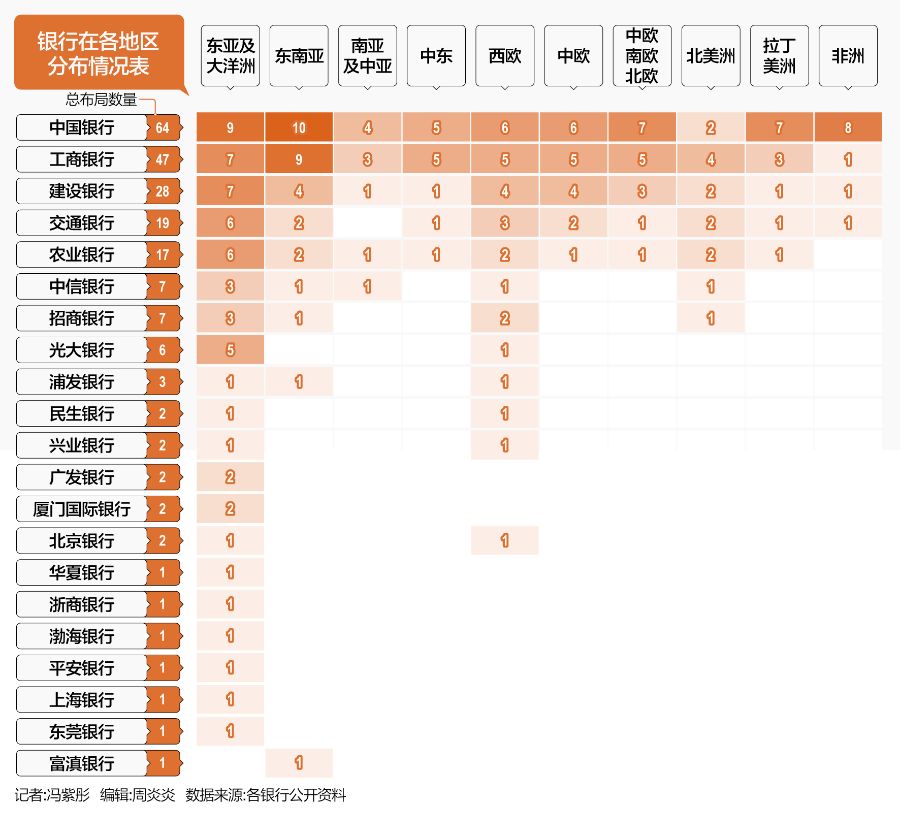
深度丨商业银行“出海”验成色:中行领跑,谁在悄然发力?
2 1 Shi Ji Jing Ji Bao Dao· 2025-12-25 08:32
Core Insights - Chinese banks are expanding their overseas presence, establishing a comprehensive service network that covers major financial centers globally and key regions along the Belt and Road Initiative [1][2] - The internationalization strategy of Chinese banks has shifted from traditional markets in Europe and the US to emerging markets in Southeast Asia, the Middle East, Latin America, and countries involved in the Belt and Road Initiative [1][2] Group 1: Global Expansion Strategy - Chinese banks are utilizing representative offices, branches, and subsidiaries for overseas expansion, with larger banks often establishing branches in mature markets and starting with representative offices in emerging markets [2] - The distribution of overseas institutions shows that major state-owned banks are leading the expansion, with a focus on both traditional and emerging markets [2][4] Group 2: Performance Metrics - As of June 2025, Bank of China leads with 539 overseas branches in 64 countries, including 45 Belt and Road countries, showcasing its extensive global network [4] - Industrial and Commercial Bank of China follows with 413 overseas institutions in 49 countries, including 250 in Belt and Road countries, demonstrating a flexible international strategy [4] - Agricultural Bank of China has established 13 branches and 4 representative offices, focusing on supporting high-quality Belt and Road initiatives [4] Group 3: Revenue Growth and Market Dynamics - In the first half of 2025, Bank of China reported overseas revenue of 783.13 billion yuan, a 14.4% increase from the previous year, with overseas revenue accounting for 23.77% of total revenue [12] - Industrial and Commercial Bank of China's overseas revenue was 562.52 billion yuan, showing a slight decline of 1.88%, while Agricultural Bank of China experienced a 21.03% increase [12][11] - The growth of overseas revenue among joint-stock banks, such as Shanghai Pudong Development Bank, which saw a 119.37% increase, highlights the varying performance across banks [14] Group 4: Challenges and Future Directions - Chinese banks face regulatory challenges in overseas markets, including compliance with both domestic and foreign regulations, which can lead to significant penalties [15] - The demand for diversified financial services is evolving, with a shift from traditional trade financing to more complex needs such as global treasury management and cross-border mergers [16] - Future competitiveness will depend on enhancing global collaboration, local operational capabilities, compliance risk management, and financial technology innovation [18][19]
工商银行阳泉分行被罚34.44万元:提供虚假的或隐瞒重要事实的统计资料等
Xin Lang Cai Jing· 2025-12-25 05:10
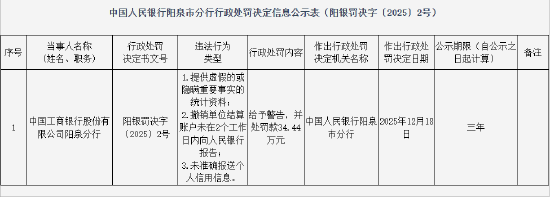
12月25日金融一线消息,中国人民银行阳泉市分行行政处罚决定信息公示表显示,中国工商银行股份有 限公司阳泉分行因提供虚假的或隐瞒重要事实的统计资料;撤销单位结算账户未在2个工作日内向人民 银行报告;未准确报送个人信用信息,被警告并处以罚款34.44万元。 | | | | | 中国人民银行阳泉市分行行政处罚决定信息公示表(阳银罚决字〔2025〕2号〕 | | | | | | --- | --- | --- | --- | --- | --- | --- | --- | --- | | 序号 | 当事人名称 | 行政处罚 | 击法行为 | 行政处罚内容 | 作出行政处罚 | 作出行政处 公示期限(自公示之 | | 各注 | | | (姓名、殿务) | 决定书文号 | જેન્ત | | 决定机关名称 | 罚决定日期 | 日起计算) | | | | | | 1.提供应侵的或 图片单位事实 | | | | | | | | | | 统计资料, | | | | | | | | 中国工商银行股份有 | 阳银河快字 | 账户未在2个工作 处罚款34,44 | | 2. 搬销单位结算 给予警告,并 张户未在2个工作 处罚款34 ...
工行青海分行绿金润泽生态 深耕产业四地
Jin Rong Shi Bao· 2025-12-25 04:18
Core Viewpoint - The Industrial and Commercial Bank of China (ICBC) Qinghai Branch is strategically focusing on green finance as a key development pillar, aligning with the province's goal of building an ecological civilization and promoting low-carbon development during the 14th Five-Year Plan period [1] Group 1: Green Finance Development - The balance of green loans increased from 25.2 billion to 43.3 billion, a growth rate of 72%, with the proportion of green loans in total loans rising from 29% to 38% [2] - Loans for the "Four Lands" industry rose from 23.9 billion to 41.1 billion, also reflecting a 72% growth [2] - The bank has actively supported major clean energy projects, providing approximately 18.3 billion in loans for hydropower, 2.3 billion for wind power, and 8 billion for solar power projects, significantly boosting the installed capacity of wind, solar, and hydropower in Qinghai [2] Group 2: Financial Innovation and Low-Carbon Transition - The bank is implementing carbon accounts as a core strategy for the dual carbon goals, facilitating the conversion of carbon sink resources into financial resources [3] - Innovative products include the first "Agricultural Transformation + Sustainable Link" loan in the province and preferential loans linked to carbon accounts, with total credit issuance reaching 84 million [3] - A differentiated pricing mechanism based on carbon emission performance has been introduced, effectively reducing financing costs for green transition enterprises [3] Group 3: Social Responsibility and Ecological Protection - The bank integrates economic and social responsibilities, actively participating in ecological protection and restoration efforts [4] - Strategic cooperation with the Sanjiangyuan Ecological Protection Foundation has led to the establishment of the "ICBC Yellow River Upper Reaches Economic Ecological Public Welfare Forest Project," with over 430 acres of afforestation completed from 2022 to 2024 [4] - The bank has launched the "Beautiful Qinghai: Sanjiangyuan" precious metal products to enhance cultural promotion and environmental awareness, merging public welfare and financial value [4]
银行业积极响应信用修复政策 支持个人和家庭重塑信用
Jin Rong Shi Bao· 2025-12-25 02:58
Core Viewpoint - The People's Bank of China has announced a one-time credit repair policy aimed at supporting individuals with damaged credit who actively repay their debts, in response to the ongoing impacts of the COVID-19 pandemic [1][3]. Group 1: Policy Implementation - The policy applies to personal overdue information for amounts not exceeding 10,000 RMB from January 1, 2020, to December 31, 2025, where individuals can have their overdue debts removed from the credit system if repaid by March 31, 2026 [2]. - Financial institutions have quickly responded to the policy, emphasizing the importance of promoting and implementing the credit repair measures [1][3]. Group 2: Benefits for Individuals and Financial Institutions - The policy is expected to provide a corrective opportunity for individuals with past credit issues, improving their credit status and stimulating economic activity [3]. - It will help financial institutions better identify individual credit situations, enhancing the quality and effectiveness of inclusive financial services [3][4]. - The policy is anticipated to activate a significant number of potential credit customers, positively impacting consumer credit growth [4]. Group 3: Relationship Between Banks and Customers - The implementation of the policy is likely to foster a better relationship between banks and customers, encouraging individuals to value and maintain their credit [5]. - Banks are expected to provide improved financial services based on the enhanced credit environment created by the policy [5]. Group 4: Challenges for Financial Institutions - Banks face the challenge of optimizing risk control capabilities while implementing the credit repair policy [6]. - There is pressure on banks to quickly adjust risk control models to incorporate the new repair rules and prevent secondary risks from historical record changes [7]. - Financial institutions need to ensure accurate reporting of repayment information to the credit system and may need to develop new assessment models for the repaired customer group [7][8].


播金种银三十年:一家国有大行在川的乡村振兴实践
Xin Lang Cai Jing· 2025-12-25 02:53
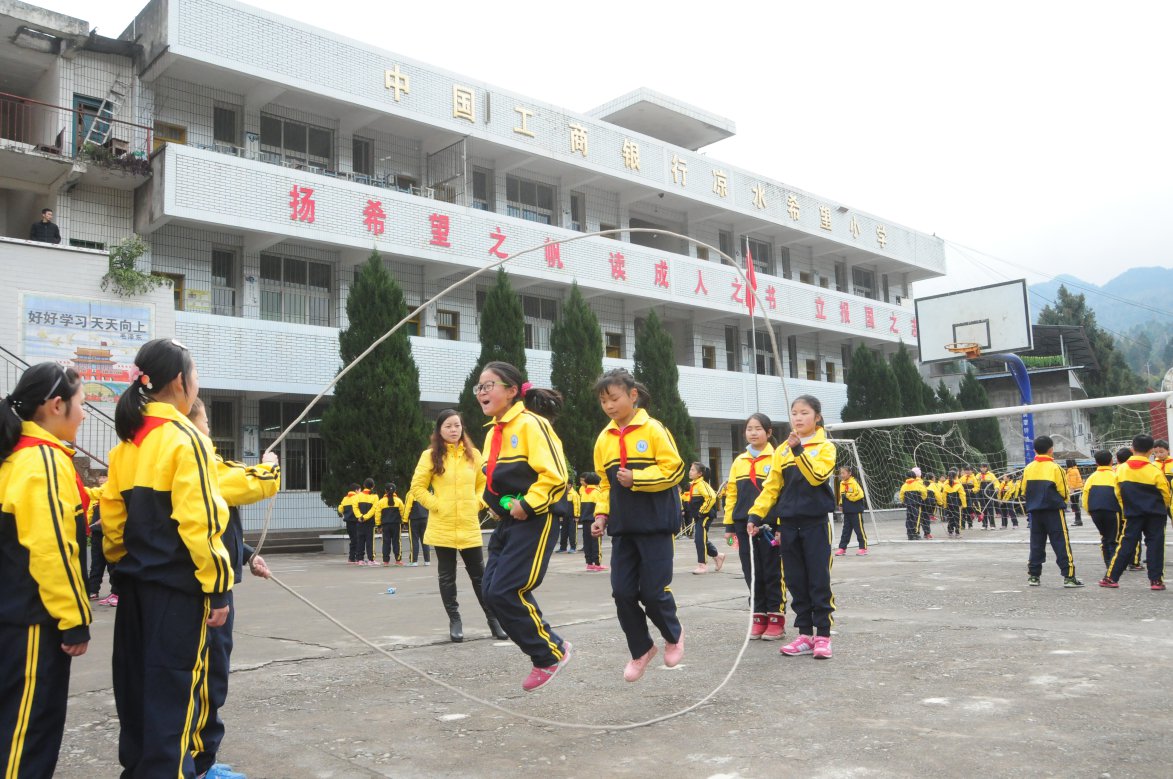
Core Viewpoint - The Industrial and Commercial Bank of China (ICBC) has played a significant role in poverty alleviation and rural revitalization in Sichuan Province over the past 30 years, investing over 9 billion yuan and providing more than 20 billion yuan in loans to support local development initiatives [1][7]. Group 1: Initial Support and Infrastructure Development - In the early stages of assistance, ICBC focused on basic needs, investing in essential areas such as education and healthcare to strengthen the foundation for development [2][3]. - ICBC's initiatives included the construction of schools and healthcare facilities, such as the Liangshui Hope Primary School and the support for the relocation of the Wanyuan City Central Hospital, significantly improving local educational and medical resources [2][3]. Group 2: Comprehensive Support and Poverty Alleviation - ICBC implemented a multi-faceted support strategy in areas like infrastructure, education, healthcare, and financial services, leading to the successful poverty alleviation of over 2,600 residents in Tikeluo Village [5][7]. - The bank's efforts have resulted in the establishment of a robust safety net in education, healthcare, and infrastructure, fulfilling its social responsibilities as a state-owned enterprise [7]. Group 3: Transition to Sustainable Development - As the assistance progressed, ICBC shifted its focus from mere donations to fostering sustainable economic growth through initiatives like the "Borrow Sheep, Return Sheep" program, which has helped nearly 700 impoverished households increase their annual income [8][9]. - The bank has also invested over 13 million yuan in the Tongjiang silver ear industry, facilitating the development of a complete support system that enhances local economic resilience [9][12]. Group 4: Market Integration and Consumption Support - ICBC has worked to connect local production with market demand, launching initiatives such as the "Qinghua Pepper Weather Index Insurance" and "Whole Village Credit" to support local farmers and enhance production capabilities [13][15]. - The bank has actively promoted consumption assistance through various campaigns, purchasing over 370 million yuan worth of agricultural products from poverty-stricken areas, thereby boosting local sales [15][17]. Group 5: Long-term Impact and Future Directions - Over three decades, ICBC has evolved from a resource provider to a catalyst for institutional innovation and local economic development, aiming to create a self-sustaining growth model for rural areas [17]. - The bank's comprehensive approach to poverty alleviation and rural revitalization serves as a replicable model for similar initiatives across the country, with a commitment to continue supporting local communities [17].
中国工商银行积极优化股权服务 赋能新质生产力发展
Zhong Guo Xin Wen Wang· 2025-12-25 02:44
Group 1 - The core viewpoint of the articles emphasizes the acceleration of building a financial powerhouse in China, focusing on the development of direct financing through equity and bonds, as highlighted in the 20th Central Committee's Fourth Plenary Session and the Central Economic Work Conference [1][2] - Industrial and Commercial Bank of China (ICBC) successfully hosted a roadshow for technology innovation enterprises, promoting nearly 20 profitable companies in strategic emerging industries such as integrated circuits, new materials, and biomedicine, attracting around 30 national-level funds and institutional investors [1] - The roadshow provided a comprehensive service from "showcasing to docking to landing," aiming to support the cultivation and growth of strategic emerging industries and future industries, thereby injecting financial momentum into the development of new productive forces [1] Group 2 - ICBC is leveraging its group advantages to provide high-quality development services for strategic emerging industries and future industries, introducing a comprehensive service product for private equity funds that covers all stages from establishment to exit [2] - The bank has established a customer management system for private equity funds, optimizing equity services and has served over 10,000 private equity funds and management institutions, benefiting more than 30,000 invested enterprises [2] - ICBC is committed to implementing the spirit of the 20th Central Committee's Fourth Plenary Session and the Central Economic Work Conference, continuously improving its diversified equity financing service system to enhance the service quality for technology innovation enterprises [2]
银行年末加码汽车消费金融
Jing Ji Wang· 2025-12-25 02:12
Core Viewpoint - Banks are intensifying support for automotive consumer finance to stimulate the automotive market and align with national consumption policies, utilizing various loan schemes to meet consumer needs [1][4]. Group 1: Bank Initiatives - Multiple banks are launching targeted year-end purchase incentives, such as Ping An Bank's "minimum 0% interest" campaign with loan amounts ranging from 30,000 to 5 million yuan, and Postal Savings Bank's financial plan offering up to 4,500 yuan in subsidies for specific new models [2][3]. - Credit card installment plans are becoming a key focus for banks in automotive consumer finance, with ICBC offering up to 60 months of financing at minimum 0% interest for specific models purchased with their credit card [2]. Group 2: Customer Experience Enhancements - Some banks are upgrading automotive benefits for credit card holders to enhance customer experience, such as Industrial Bank's "monthly rewards" program for cardholders, allowing them to save up to 1,800 yuan annually [3]. Group 3: Industry Trends - The increase in automotive consumer finance by banks is a response to policy directives and a proactive measure to address slowing retail credit growth and the scarcity of quality assets [4]. - Experts predict a shift towards refined operations in automotive consumer finance, moving away from high-interest models to compliance-based, demand-driven service models, with a focus on electric vehicles and used car transactions [4][5].

今日金价一夜异动:24日调整后,全国珠宝店黄金最新零售价更新
Sou Hu Cai Jing· 2025-12-24 19:39
Core Insights - The gold price has surged dramatically, reaching 1403 yuan per gram, reflecting a significant increase in consumer interest and urgency to purchase gold jewelry as the holiday season approaches [1][3][14] Price Variations - On December 24, 2025, major jewelry brands like Chow Tai Fook and Lao Feng Xiang listed their gold prices at around 1403 yuan per gram, while other brands like Cai Bai offered prices between 1342 and 1345 yuan, showing a price difference of nearly 60 yuan per gram for the same gold quality [3][5] - The price of investment gold bars varies significantly, with brand names like Chow Tai Fook pricing their gold bars at 1230 yuan per gram, while banks like ICBC offer prices as low as 990 to 1014 yuan per gram, which is closer to the raw material price [6][8] Market Dynamics - The gold market is experiencing a split, with high retail prices for jewelry supported by brand value, while investment gold prices reflect a more competitive landscape with significant price differences based on the sales channel [8][10] - In the Shenzhen Shui Bei market, the base price for gold is around 1165 yuan per gram, with additional costs for craftsmanship, indicating that consumers can access gold at much lower prices than retail [10] Consumer Behavior - For consumers purchasing gold for personal milestones, brand stores remain the preferred choice due to their reputation and after-sales service, while those focused on investment should consider bank offerings for lower costs [11][13] - Younger consumers interested in unique designs are turning to alternative channels like Shui Bei for lower-priced options, understanding that these purchases are more about personal enjoyment than investment [13][14] Market Sentiment - The current gold price surge is driven by both panic buying and investment strategies, reflecting a broader sentiment of uncertainty and the desire for tangible assets during volatile times [14]





国有大行火速响应信用修复新政
21世纪经济报道· 2025-12-24 14:10
Core Viewpoint - The article discusses the implementation of a new credit repair policy by the People's Bank of China, which allows for automatic credit repair for individuals with overdue debts, significantly lowering the barriers and costs associated with credit repair [1][3]. Group 1: Policy Overview - The new policy, effective from December 22, 2025, allows for the automatic removal of certain overdue information from credit reports without the need for individual applications, marking a shift towards a dual focus on both punishment and repair in the credit system [1][3]. - The policy covers various types of personal loans, including mortgages, consumer loans, and credit cards, and applies to all financial institutions connected to the central bank's credit system [6][3]. Group 2: Eligibility and Conditions - To qualify for the credit repair, overdue information must meet three criteria: it must have occurred between January 1, 2020, and December 31, 2025; the overdue amount must not exceed 10,000 RMB; and the debt must be fully repaid by March 31, 2026 [6][3]. - The automatic repair process is designed to be seamless, with the central bank's credit system identifying eligible overdue information without requiring any action from the individual [3][7]. Group 3: Implementation by Financial Institutions - Major banks, including Industrial and Commercial Bank of China, Agricultural Bank of China, and others, have quickly adapted to the new policy by enhancing their service channels and ensuring accurate data management to facilitate the policy's implementation [9][10]. - Banks have established various channels for customers to inquire about their credit status and have emphasized the importance of confirming repayment amounts to ensure eligibility for the credit repair [11][10]. Group 4: Balancing Rights and Risk Management - The new policy aims to balance individual rights protection with financial risk management, encouraging overdue borrowers to repay their debts while helping banks recover non-performing assets [14][15]. - The policy is expected to stimulate demand for personal loans, including consumer and mortgage loans, by releasing previously constrained financing needs, thus revitalizing the credit market [15][16].