
CNNP(601985)

Search documents
国家能源集团捐款2000万元支援甘肃榆中灾区​
Sou Hu Wang· 2025-08-19 09:15
来源:国家能源集团甘肃公司 8月7日以来,甘肃兰州市榆中县等地遭遇连续强降雨引发山洪灾害。灾害发生后,国家能源集团迅速行 动,紧急向甘肃榆中灾区捐款2000万元,全力支援当地的抢险救灾和灾后重建工作。捐款将专项用于灾 区的救援物资采购、受灾群众生活安置以及后续基础设施重建等,帮助受灾群众解决生活困难、尽快恢 复生产生活秩序。 "我们希望通过实际行动为甘肃榆中灾区群众送去温暖,助力他们渡过难关,重建美好家园。"国家能源 集团相关负责人表示。(李小红) ...
解密主力资金出逃股 连续5日净流出541股
Zheng Quan Shi Bao Wang· 2025-08-19 09:11
Core Insights - A total of 541 stocks in the Shanghai and Shenzhen markets have experienced net outflows of main funds for five consecutive days or more as of August 19 [1] - China Nuclear Power has seen the longest net outflow period at 26 days, followed by Anjie Technology at 21 days [1] - The largest total net outflow amount is from Shobead, with a cumulative outflow of 2.205 billion yuan over 8 days, closely followed by China Nuclear Power with 2.159 billion yuan over 26 days [1] Summary by Category Stocks with Longest Net Outflow - China Nuclear Power: 26 days, 2.159 billion yuan, 9.36% of trading volume, -2.77% cumulative change [1] - Anjie Technology: 21 days, details not specified [1] - Shobead: 8 days, 2.205 billion yuan, 7.97% of trading volume, -0.77% cumulative change [1] Stocks with Significant Net Outflow Amounts - Shobead: 2.205 billion yuan over 8 days [1] - China Nuclear Power: 2.159 billion yuan over 26 days [1] - Tianqi Lithium: 1.930 billion yuan over 6 days [1] Stocks with High Net Outflow Proportions - Guanghui Energy: 21.78% of trading volume over 7 days, with a 3.08% decline [1] - China Nuclear Power: 9.36% of trading volume over 26 days [1] - Tianqi Lithium: 8.50% of trading volume over 6 days [1]


沪深300电力指数报2572.78点,前十大权重包含华电国际等
Jin Rong Jie· 2025-08-19 08:06
Group 1 - The Shanghai Composite Index opened high and fluctuated, with the CSI 300 Power Index reported at 2572.78 points [1] - The CSI 300 Power Index has decreased by 3.70% in the past month, 5.87% in the past three months, and 6.77% year-to-date [1] - The CSI 300 Index is categorized into 11 primary industries, 35 secondary industries, over 90 tertiary industries, and more than 200 quaternary industries [1] Group 2 - The top ten weights in the CSI 300 Power Index are: Changjiang Electric (48.32%), China Nuclear Power (10.65%), Three Gorges Energy (8.79%), Guodian Power (5.75%), State Power Investment (5.02%), Huaneng International (4.56%), Chuanwei Energy (4.27%), China General Nuclear Power (4.15%), Zhejiang Energy (2.98%), and Huadian International (2.79%) [1] - The market segment of the CSI 300 Power Index is dominated by the Shanghai Stock Exchange at 95.49%, while the Shenzhen Stock Exchange accounts for 4.51% [1] Group 3 - In terms of industry composition within the CSI 300 Power Index, hydropower accounts for 59.96%, thermal power for 16.09%, nuclear power for 14.80%, and wind power for 9.15% [2] - The index sample is adjusted biannually, with adjustments implemented on the next trading day following the second Friday of June and December each year [2] - Weight factors are generally fixed until the next scheduled adjustment, with temporary adjustments made in response to changes in the CSI 300 Index [2]



公用事业行业跟踪周报:继续推荐长江电力在高股息资产中的配置价值-20250818
Soochow Securities· 2025-08-18 09:04
Investment Rating - The report maintains an "Overweight" rating for the utility sector, specifically recommending investment in Changjiang Electric for its high dividend asset allocation value [1]. Core Insights - Changjiang Electric has announced a shareholder dividend return plan for the next five years (2026-2030), committing to a minimum cash dividend of 70% of the annual net profit attributable to shareholders [3]. - The report highlights a decrease in electricity prices, with the average grid purchase price in July 2025 down 3% year-on-year and 1.4% month-on-month [36]. - The report tracks key industry data, including a 3.7% year-on-year increase in total electricity consumption in H1 2025, with total consumption reaching 4.84 trillion kWh [12]. Summary by Sections 1. Market Review - The SW Utility Index fell by 0.55% during the week of August 11-15, 2025, underperforming compared to the ChiNext Index [8]. - Notable stock performances included a 28.7% increase for Fuan Energy and a 9.4% decrease for Huayin Electric [11]. 2. Electricity Sector Tracking 2.1. Electricity Consumption - Total electricity consumption in H1 2025 was 4.84 trillion kWh, reflecting a 3.7% year-on-year increase, with growth in all sectors [12]. 2.2. Power Generation - Total power generation in H1 2025 reached 4.54 trillion kWh, a 0.8% year-on-year increase, with declines in thermal and hydro power generation [21]. 2.3. Electricity Prices - The average grid purchase price in July 2025 was 382 RMB/MWh, down 3% year-on-year [36]. 2.4. Thermal Power - As of August 15, 2025, the price of thermal coal at Qinhuangdao was 698 RMB/ton, down 16.51% year-on-year but up 16 RMB/ton week-on-week [45]. 2.5. Hydropower - The water level at the Three Gorges Reservoir was 160.34 meters as of August 15, 2025, with inflow and outflow rates showing a year-on-year decrease [57]. 2.6. Nuclear Power - In 2024, 11 new nuclear units were approved, indicating a continued positive trend in nuclear power development [72]. 3. Investment Recommendations - The report suggests focusing on high-dividend stocks like Changjiang Electric, as well as opportunities in green energy, photovoltaic assets, and thermal power investments [3].

解密主力资金出逃股 连续5日净流出618股
Zheng Quan Shi Bao Wang· 2025-08-18 09:01
Core Insights - As of August 18, a total of 618 stocks in the Shanghai and Shenzhen markets have experienced net outflows of main funds for five consecutive days or more [1] - China Nuclear Power leads with 25 consecutive days of net outflows, totaling 2.045 billion yuan [1] - BOE Technology Group follows with 14 days of net outflows amounting to 1.678 billion yuan [1] Summary by Category Stocks with Longest Net Outflows - China Nuclear Power: 25 days, net outflow of 2.045 billion yuan, 9.18% of trading volume, cumulative decline of 2.77% [1] - BOE Technology Group: 14 days, net outflow of 1.678 billion yuan, 7.19% of trading volume, cumulative decline of 3.89% [1] - Tianqi Lithium: 5 days, net outflow of 1.676 billion yuan, 8.27% of trading volume, cumulative decline of 1.00% [1] Stocks with Significant Net Outflows - Shoubei Technology: 7 days, net outflow of 1.541 billion yuan, 6.29% of trading volume, cumulative increase of 9.16% [1] - China Electric Construction: 7 days, net outflow of 1.006 billion yuan, 6.38% of trading volume, cumulative decline of 2.21% [1] - Shanghai Hanxin: 7 days, net outflow of 908 million yuan, 7.49% of trading volume, cumulative increase of 0.87% [1] Stocks with High Outflow Ratios - ST Zhongzhuang: Highest outflow ratio, with a 9.51% decline over the last 6 days [1] - Other notable stocks include: - Aobo Technology: 5 days, net outflow of 578 million yuan, 7.89% of trading volume, cumulative decline of 2.69% [2] - Fengzhang Assistant: 10 days, net outflow of 564 million yuan, 6.93% of trading volume, cumulative decline of 0.08% [2]

投资框架:红利资产投资框架:公路、港口、电力
2025-08-18 01:00
Summary of Conference Call Records Industry Overview - **Industry Focus**: The conference call primarily discusses the highway, port, and power industries, emphasizing their investment frameworks and dividend asset characteristics [1][20]. Key Points and Arguments Highway Industry - **Business Model**: The highway business model is robust, driven by passenger and freight traffic. Passenger traffic benefits from the increase in car ownership and self-driving tourism, while freight traffic remains dominant despite a slight decline due to the "road-to-rail" policy [1][4]. - **Revenue Growth**: From 2011 to 2019, the average revenue growth rate for the highway industry was 8.5%, outpacing the GDP growth rate of 7.4% during the same period, indicating strong resilience [5]. - **Investment Strategy**: High dividend strategies are favored in weak markets, highlighting the defensive nature of highway assets. Prioritizing high-dividend, high-yield highway assets is a crucial investment strategy [1][7][9]. - **Regulatory Environment**: The optimization of toll road policies at the national level presents systemic opportunities for valuation improvement in the highway sector [2]. Port Industry - **Cargo Throughput Growth**: The port industry has seen steady growth in cargo throughput, benefiting from supply-side integration and rational production management. The average growth rate of cargo throughput over the past decade is between 3% and 4% [12]. - **Pricing Flexibility**: Port charges are flexible and can be adjusted based on market demand, unlike highway tolls, which are more rigid [14]. - **Investment Characteristics**: Ports are characterized by perpetual operation and dynamic pricing capabilities, making them attractive stable growth assets [15]. Power Industry - **Profitability Framework**: The hydroelectric power industry has a stable profitability framework with a clear cost structure, ensuring steady net profit generation. Companies like Yangtze Power commit to maintaining high dividend rates [21]. - **Nuclear Power Growth**: The nuclear power sector is in a clear growth cycle, with plans for significant new installations, supporting long-term profitability and dividend potential [24][25]. - **Gas Industry Dynamics**: The gas industry is transitioning towards maturity, with decreasing capital expenditures expected to enhance dividend levels as projects mature [29][31]. Additional Important Insights - **Investment Recommendations**: Recommended investment targets include high-dividend companies such as China Merchants Highway, Shandong Highway, and Ninghu Highway, which have shown strong performance in shareholder returns [9][11]. - **Future Potential**: Potential investment opportunities in the highway sector include Sichuan Chengyu and Ganyue Highway, which are expected to replicate successful growth patterns seen in other companies [11]. - **Governance and Stability**: The water and nuclear power sectors exhibit strong governance and stable dividend levels, making them attractive for long-term investment [20][21]. Conclusion The conference call highlights the resilience and growth potential of the highway, port, and power industries, emphasizing the importance of dividend strategies and regulatory environments in shaping investment opportunities. The focus on high-dividend assets reflects a broader trend towards stable, income-generating investments in the current market landscape.



解密主力资金出逃股 连续5日净流出557股


Zheng Quan Shi Bao Wang· 2025-08-15 09:15
证券时报·数据宝统计,截至8月15日收盘,沪深两市共557只个股连续5日或5日以上主力资金净流出。 从净流出持续时间来看,中国核电连续24日主力资金净流出,排名第一;联建光电连续21日主力资金净 流出,位列第二。从主力资金净流出总规模来看,中国核电主力资金净流出金额最大,连续24天累计净 流出19.55亿元,京东方A紧随其后,13天累计净流出14.88亿元。从主力资金净流出占成交金额的比例 来看,广汇能源占比排名居首,该股近5日下跌2.17%。 连续5日或以上主力资金净流出个股排名 | 证券代 | 证券简 | 主力资金净流出 | 主力资金净流出金额 | 主力资金净流出比例 | 累计涨跌幅 | | --- | --- | --- | --- | --- | --- | | 码 | 称 | 天数 | (亿元) | (%) | (%) | | 601985 | 中国核 | 24 | 19.55 | 9.24 | -2.77 | | | 电 | | | | | | 000725 | 京东方 A | 13 | 14.88 | 7.15 | -3.65 | | 300322 | 硕贝德 | 6 | 14.04 | 6.7 ...
北交所专题报告:中国核电总规模首次升至世界第一,建议关注北交所核电相关标的
Soochow Securities· 2025-08-15 08:47
Group 1: Nuclear Power Overview - Nuclear power has become a significant energy choice globally, with its share in total global electricity generation projected to be 9% in 2024[1] - As of March 2025, there are 417 operational nuclear reactors worldwide, with a total installed capacity of 377 million kW[1] - China has 58 operational nuclear reactors and an installed capacity of 60.96 million kW, making it the world's largest nuclear power producer[1] Group 2: Nuclear Power Industry Chain - The nuclear power industry chain includes nuclear fuel supply, equipment manufacturing, construction, and operation[1] - The market share of nuclear power in China's electricity trading has increased from approximately 30% in 2020 to 46.1% in 2024[1] - The average on-grid electricity price for nuclear power in China is around 0.41 and 0.40 yuan per kWh for China National Nuclear Corporation and China General Nuclear Power Group, respectively[1] Group 3: Investment Recommendations - Recommended stocks related to nuclear power include Ruiqi Intelligent Manufacturing, Klate, Tianli Composite, and others, focusing on various aspects of the nuclear supply chain[3] - These companies are involved in high-end equipment manufacturing, cooling systems, composite materials, and safety monitoring solutions for nuclear power plants[3] Group 4: Risks and Challenges - Potential risks include industry policy adjustments, construction risks of nuclear projects, and nuclear safety concerns[3]
“两山”理念的核电实践:清洁能源绘就生态画卷
Zhong Guo Jin Rong Xin Xi Wang· 2025-08-15 06:21
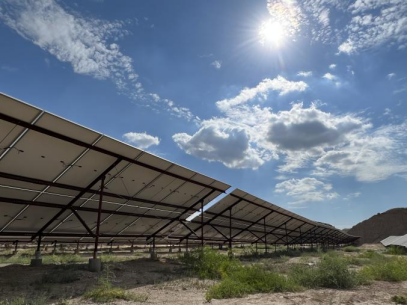
Core Viewpoint - China’s nuclear power industry is committed to sustainable development and environmental protection, integrating the "Two Mountains" concept into its operations and promoting a new public communication model focused on "co-governance, co-existence, and co-prosperity" [1] Group 1: Environmental Impact and Contributions - Nuclear energy is a strategic choice for achieving carbon neutrality, with a carbon footprint of only 6.5 grams CO₂/kWh, making it the lowest among energy sources [1] - Since the 21st century, global nuclear power has avoided 30 billion tons of greenhouse gas emissions, providing a quarter of the world's clean electricity [1] - China's operational nuclear power units have contributed over 19.5 trillion kWh of clean electricity, equivalent to reducing coal consumption by approximately 590 million tons and cutting CO₂ emissions by 1.55 billion tons [1] Group 2: Innovative Applications of Nuclear Energy - China’s nuclear power is exploring "nuclear energy +" applications, integrating nuclear energy with other industries for low-carbon development [2] - The first nuclear heating project in southern China, launched in 2021, provides zero-carbon heating to 4,000 households, reducing CO₂ emissions by 24,000 tons annually [2] - The Jiangsu nuclear steam supply project will provide 4.8 million tons of industrial steam annually, reducing coal consumption by 400,000 tons and cutting CO₂ emissions by 1.07 million tons [2] Group 3: Ecological Restoration and Biodiversity - The company integrates biodiversity protection into its development strategy, conducting long-term conservation efforts for aquatic and terrestrial species [6] - A photovoltaic project in Gansu has reduced coal consumption by 47,000 tons and CO₂ emissions by over 120,000 tons annually, while also aiding ecological restoration [4] - Innovative construction methods at nuclear projects have minimized environmental impact, ensuring the protection of local ecosystems [6] Group 4: Community Development and Economic Benefits - The partnership between the Sanmen Nuclear Power Plant and Sanhe Village has led to the development of a zero-carbon economy, significantly increasing the village's collective income [8] - The village's ecological aquaculture project generates surplus electricity, providing additional income and supporting local economic growth [9] - Investments in sustainable agriculture and renewable energy have transformed the village's economy, demonstrating the synergy between environmental sustainability and economic prosperity [9]

中国核电总规模首次升至世界第一,建议关注北交所核电相关标的
Soochow Securities· 2025-08-15 05:09
Group 1 - Nuclear power is an efficient and clean energy source, with global nuclear power capacity steadily increasing. As of June 2025, China's operational nuclear power units reached 58, with a total capacity of 60.96 million kilowatts, marking the first time it has become the world's largest nuclear power producer [2][8][32] - The nuclear power industry chain includes nuclear fuel cycle, equipment manufacturing, construction, and operation. The upstream involves core and auxiliary equipment manufacturing, engineering management, and nuclear fuel cycle industries. The midstream includes the construction and operation of nuclear power plants, while the downstream focuses on electricity sales to end users [2][8][25] - The market share of nuclear power in China's electricity trading has increased from approximately 30% in 2020 to 46.1% in 2024, indicating a trend towards market-oriented transactions [2][8][32] Group 2 - Recommended companies related to nuclear power on the Beijing Stock Exchange include: 1. Ruichi Intelligent Manufacturing, specializing in high-end process equipment and involved in nuclear energy for over 15 years 2. Klate, the only certified nuclear power fan manufacturer in Shandong Province 3. Tianli Composite, focusing on layered metal composite materials, a rare domestic supplier for nuclear projects 4. Jikang Technology, providing intelligent monitoring solutions for nuclear power plants with experience in major projects 5. Qiuguan Cable, specializing in high and low voltage power cables for nuclear projects 6. Litong Technology, which completed trials for 43 types of nuclear hoses in 2024 and plans project acceptance in 2025 7. Guangsha Environmental Energy, collaborating with Shanghai Nuclear Engineering Research and Design Institute on efficient heat exchangers 8. Changfu Co., a pioneer in domestic nuclear valve actuators, promoting the localization of nuclear valves 9. Gebijia, an innovative company in special functional glass, with some radiation-proof glass products applied in the nuclear industry 10. Qifeng Precision, a high-end fastener technology company working on the localization of nuclear-grade fasteners 11. Kunbo Precision, focusing on precision forming parts and vacuum furnace bodies, expanding nuclear maintenance equipment clients in 2024 [2][8][3] Group 3 - The global nuclear power generation accounted for 9% of total electricity generation in 2024, driven by increasing electricity demand and environmental awareness. Nuclear power is seen as a competitive energy choice, especially for rapidly developing countries lacking traditional fossil fuel resources [2][23][36] - The average utilization hours of nuclear power plants significantly exceed those of other power generation forms, with nuclear plants averaging 7,670 hours in 2023 compared to 3,592 hours for other types [2][24][31]