
CNNP(601985)

Search documents
申万公用环保周报:新能源贡献2025年发电量增量,寒潮季节性拉高气价-20260125
Shenwan Hongyuan Securities· 2026-01-25 13:42
Investment Rating - The report maintains a positive outlook on the power and gas sectors, indicating a favorable investment environment for renewable energy and gas companies [2][3]. Core Insights - The report highlights a slight increase in overall power generation in 2025, primarily driven by wind and solar energy contributions, while traditional coal power generation shows a decline [8][9]. - The extreme cold weather in the U.S. has led to a significant spike in natural gas prices due to increased demand and supply constraints [18][22]. - The report suggests various investment opportunities across different segments of the energy sector, including coal power, hydropower, nuclear power, renewable energy, and gas companies [18][43]. Summary by Sections 1. Power Generation - In December 2025, total power generation was 858.6 billion kWh, a year-on-year increase of 0.1%. Coal power generation decreased by 3.2%, while renewable sources like wind and solar saw significant growth [10][11]. - For the entire year of 2025, total power generation reached 9715.9 billion kWh, up 2.2% from the previous year, with coal power down by 1.0% and solar power up by 24.4% [15][19]. 2. Natural Gas - As of January 23, 2026, the Henry Hub spot price surged to $30.72/mmBtu, reflecting a week-on-week increase of 903.53%. European gas prices also rose significantly due to low inventory levels and increased demand [20][28]. - The report notes that the extreme cold weather has tightened supply and demand dynamics, leading to higher global gas prices, particularly in Europe and Northeast Asia [22][37]. 3. Investment Recommendations - For coal power, companies like Guodian Power and Inner Mongolia Huadian are recommended due to their integrated coal and power operations [18]. - Hydropower companies such as Yangtze Power and State Power Investment Corporation are favored due to favorable conditions for energy storage and reduced capital expenditures [19]. - Nuclear power companies like China National Nuclear Power and China General Nuclear Power are highlighted for their stable cost structures and growth potential [18]. - Renewable energy operators such as Xinte Energy and Longyuan Power are recommended as new market rules enhance the stability of returns [18]. - Gas companies like Kunlun Energy and New Hope Liuhe are suggested for their potential recovery in profitability due to cost reductions and improved pricing mechanisms [43].




超临界二氧化碳发电技术成功商运(探一线)
Ren Min Ri Bao· 2026-01-23 22:30
Core Insights - The world's first commercial supercritical carbon dioxide power generation unit successfully commenced operation in Liupanshui, Guizhou by Shougang Water Steel Group by the end of 2025, marking a significant advancement in supercritical carbon dioxide waste heat power generation technology [1] - The "Super Carbon No. 1" demonstration project, developed by China National Nuclear Corporation (CNNC) and partners, boasts an efficiency improvement of over 85% in power generation compared to existing sintering waste heat steam generation technology, with a net power output increase of over 50% [1][2] Group 1 - The traditional steam power generation technology faces limitations in system complexity, efficiency, compactness, and response speed due to the use of water as a medium [1] - The supercritical state of carbon dioxide, achieved at a pressure of 7.38 MPa and a temperature of 31 degrees Celsius, offers a dual advantage of high density and low viscosity, making it suitable for power generation [1] - The development of supercritical carbon dioxide power generation technology has been a "from 0 to 1" process, with significant technical challenges overcome by the team since 2009 [2] Group 2 - In 2023, CNNC and JISCO constructed two 15 MW supercritical carbon dioxide waste heat power generation units, utilizing high-temperature sintering flue gas waste heat, achieving a 50% reduction in space requirements and an 85% increase in power generation efficiency compared to traditional methods [2] - The establishment of a comprehensive industrial chain for supercritical carbon dioxide power generation technology in China has been achieved, with conditions for full engineering application now in place [2] - A molten salt energy storage supercritical carbon dioxide power generation demonstration project is set to be initiated by CNNC in 2024, with construction expected to begin in 2026 [2]
中国核电、阿里巴巴等成立核能公司,注册资本2.5亿
Jing Ji Guan Cha Wang· 2026-01-23 16:16
Core Insights - A new company, China Nuclear (Xiangshan) Nuclear Energy Co., Ltd., was established on January 20, with a registered capital of 250 million RMB [1] Company Overview - The legal representative of the new company is Zhong Hua [1] - The business scope includes power generation, transmission, distribution, radiation monitoring, inspection and testing services, heat production and supply, business training, and investment activities using its own funds [1] Shareholder Information - The company is jointly held by China Nuclear Power (601985), Zhongke Zheneng Energy Co., Ltd., Hongrun Construction (002062), Youngor Group Co., Ltd. (600177), and Alibaba's Shanghai Yiqi Network Technology Co., Ltd. [1]


中国核电20260122
2026-01-23 15:35
Summary of China Nuclear Power Conference Call Company Overview - **Company**: China Nuclear Power - **Industry**: Nuclear Energy and Renewable Energy Key Points 2025 Operational Performance - Planned electricity generation for 2025 was 1,954 billion kWh, but actual generation reached 2,444 billion kWh, a year-on-year increase of 12.98% [3] - Grid electricity volume was 2,307 billion kWh, up 13.15% year-on-year [3] - Nuclear power contributed 1,878 billion kWh, a 9.69% increase, while renewable energy contributed 490.29 billion kWh, a 31.34% increase [2][3] Future Generation Plans - For 2026, the planned total electricity generation is 2,592 billion kWh, with nuclear power at 2,100 billion kWh and renewable energy at 492 billion kWh [2][5] - The company plans to complete 15 nuclear unit overhauls in 2026, one less than in 2025 [5] Capacity and Construction - Total installed capacity is 46.887 million kW, with 27 operational units and 18 units under construction or awaiting startup [2][6] - By 2031, operational capacity is expected to increase by over 70% [2][6] Renewable Energy Strategy - The company is shifting its renewable energy strategy to focus on market-oriented operations, with internal return rates set at over 7% for self-built projects and 8% for acquisitions [2][8] - Emphasis is on offshore wind energy in Southeast China, with a halt on acquisition projects [2][8] Market Pricing and Policy Impact - Market-driven pricing policies in provinces like Zhejiang, Jiangsu, Fujian, and Hainan are exerting downward pressure on electricity prices [10][11] - The company is actively participating in industry associations to advocate for supportive policies [11] Tax Policy Changes - New VAT refund policies are expected to impact net profit by approximately 400 million yuan per unit over the operational lifespan of affected units [4][13] Industrial Gas Supply Business - The company is expanding its industrial gas supply business, with a total supply of 3.14 million tons in 2025 and plans for growth in 2026 [4][14] Dividend and Investment Plans - The company commits to a minimum annual dividend payout ratio of 30%, typically exceeding 35% [4][26] - Future investment spending is projected at 80 to 100 billion yuan annually, influenced by renewable project developments [26] Financial Performance and Accounts Receivable - In 2025, the renewable energy sector's national subsidy repayment was approximately 3 billion yuan, with accounts receivable around 15 billion yuan [27] Sales Expenses - Increased sales expenses are attributed to market demands and the establishment of multiple electricity sales companies [28] Aging Nuclear Units - Measures to enhance competitiveness of aging nuclear units include capacity expansion and lifespan extension, with no current retirement plans [28][29] Fourth Generation Nuclear Technology - Development of fourth-generation nuclear technology, including high-temperature gas-cooled reactors, is underway, with economic viability comparable to electricity generation [18] Collaboration with Alibaba - A partnership with Alibaba involves the investment in the Jinxingmen Phase II project, although the impact on the company is minimal [9] Conclusion - China Nuclear Power is positioned for growth in both nuclear and renewable energy sectors, with strategic adjustments to navigate market challenges and regulatory changes while maintaining a focus on profitability and operational efficiency.
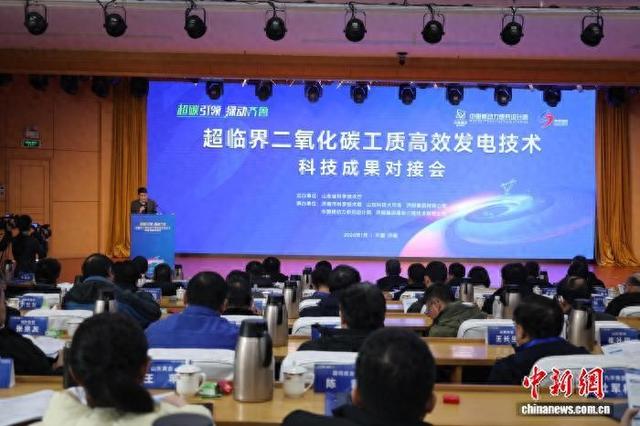
“超临界二氧化碳工质高效发电技术”科技成果对接会在济南举办
Zhong Guo Xin Wen Wang· 2026-01-23 12:37
Core Viewpoint - The "Supercritical Carbon Dioxide Working Medium Efficient Power Generation Technology" is a groundbreaking technology that has the potential to reshape industrial energy utilization, particularly in the steel, energy, chemical, and paper industries [1][3]. Group 1: Technology Overview - Supercritical carbon dioxide power generation technology is considered a key breakthrough in next-generation energy technology and a revolutionary advancement in waste heat utilization [3]. - This technology utilizes supercritical carbon dioxide as a working medium to construct a closed Brayton cycle system, offering advantages such as higher efficiency, smaller equipment size, faster response, and lower water consumption compared to existing steam power generation systems [3]. - The global first commercial supercritical carbon dioxide waste heat power generation unit, "Super Carbon No. 1," successfully connected to the grid by the end of 2025, marking a significant milestone in the commercialization of this technology [3][4]. Group 2: Performance Metrics - "Super Carbon No. 1" has achieved over 75% improvement in power generation efficiency and more than 30% increase in net power output compared to traditional systems, with a 50% reduction in equipment footprint and significantly lower operational complexity [3][4]. - Since its grid connection, the unit has operated safely for over 1500 hours without faults or abnormal shutdowns, achieving 113% over-generation at high loads and maintaining normal operations with minimal staffing [4]. Group 3: Environmental and Economic Impact - If this technology is adopted in China's steel industry for waste heat transformation, it is expected to save approximately 4.83 million tons of standard coal annually and reduce carbon dioxide emissions by 12.85 million tons, providing significant economic and environmental benefits [5]. - Supercritical carbon dioxide is recognized as a promising working medium for medium to high-temperature heat sources, with potential applications in solar thermal power generation, industrial waste heat recovery, and energy storage [5]. Group 4: Industry Collaboration and Future Prospects - Several cooperation agreements were signed between the China Nuclear Power Research and Design Institute, Jinan Steel Group, and other enterprises to promote the application of this technology in broader industrial scenarios [7]. - Shandong Province, with its strong industrial foundation and complete industrial chain, is positioned as an ideal testing and application site for the engineering verification and large-scale application of this innovative technology [7].


新能源ETF(516160)强势拉升涨超3%,政策+资本双轮驱动,新能源全产业链迎发展新机遇
Xin Lang Cai Jing· 2026-01-23 02:03
Core Viewpoint - The renewable energy sector is experiencing positive momentum driven by supportive government policies and increasing demand in electric vehicles and energy storage [1][2][3] Group 1: Market Performance - The New Energy ETF (516160) rose by 3.02%, with a trading volume of 906.94 million yuan [1] - Key stocks in the index, such as Maiwei Co., Ltd. and Laplace, saw significant gains of 20.00% and 19.62% respectively [1] Group 2: Government Policies - On January 20, the Ministry of Finance released five documents outlining a package of favorable policies to support small and medium enterprises, private investment, and equipment upgrades [1] - Key focus areas for support include energy power, new energy vehicles, energy conservation, and small hydropower [1] Group 3: Industry Trends - The electric vehicle and energy storage sectors are entering a new growth cycle, with several automakers announcing ambitious sales targets for 2026 [2] - Global lithium battery production is projected to reach 2,297 GWh by 2025, marking a 48.5% year-on-year increase, with power batteries being the main growth driver [2] - CATL and Changan Automobile signed a five-year strategic cooperation memorandum focusing on advanced fields such as battery swapping and smart vehicles [2] Group 4: Supply Chain Dynamics - The supply and demand for lithium carbonate are expected to remain favorable, with China's production projected to reach 976,300 tons by 2025, a 49% increase [2] - A recent investment of 3.688 billion yuan by a major mining company aims to produce approximately 80,000 tons of lithium carbonate annually [2] Group 5: Technological Advancements - The solid-state battery sector is entering a critical phase of engineering and industrialization, with recent tests being conducted in extreme cold conditions [2] - The State Grid announced a fixed asset investment of 4 trillion yuan for the 14th Five-Year Plan period (2026-2030), a 40% increase from the previous period, aimed at achieving carbon peak by 2030 [3] - The integration of AI in manufacturing is being promoted to enhance productivity and support new industrialization [3] Group 6: Index Composition - The New Energy Index includes companies involved in renewable energy production, application, storage, and interaction devices, with the top ten weighted stocks accounting for 43.23% of the index [3]




2026年中国核泵行业进入壁垒、产业链图谱、市场规模、竞争格局及发展趋势分析:行业准入门槛较高[图]
Chan Ye Xin Xi Wang· 2026-01-23 01:26
Core Viewpoint - The development of nuclear power in China is primarily focused on the application of third-generation nuclear technology, which enhances safety through passive safety concepts and upgrades in structure, materials, and manufacturing precision, leading to reduced maintenance costs and extended maintenance cycles [1][16]. Overview - Nuclear pumps are specialized equipment used in nuclear power plants to transport coolant and media under extreme conditions, ensuring nuclear safety and system circulation. They must withstand high temperatures, pressures, radiation, and corrosion, with capabilities for zero or low leakage and long-term stable operation [2][3]. Industry Barriers - The nuclear pump industry has high entry barriers due to the need for advanced technology and manufacturing precision, requiring strong R&D capabilities and long-term investment. New entrants face challenges in meeting industry standards quickly, creating significant technical barriers [9][10]. Industry Chain - The upstream of the nuclear pump industry includes suppliers of nuclear-grade materials and components, while the midstream involves R&D, design, manufacturing, and testing. The downstream market primarily targets nuclear power plants [11][12]. Current Development - As of November 2025, China's nuclear power installed capacity is projected to reach 62.48 million kilowatts, with a continuous increase in demand for nuclear pumps driven by new installations and maintenance needs of existing plants [13][14]. Competitive Landscape - The nuclear pump industry has high entry barriers, with only four companies qualified to design and manufacture nuclear main pumps. Competition is more intense for secondary and tertiary pumps, with several companies dominating the market [15][17]. Industry Trends - The nuclear pump sector is expected to evolve towards high-end, intelligent upgrades, focusing on performance and safety improvements. The industry will also see a shift towards domestic production to break the monopoly of foreign suppliers, enhancing the competitiveness of domestic products [20][21][22]. - The industry is transitioning from equipment manufacturing to a full lifecycle service model, integrating R&D, production, operation, and maintenance to provide comprehensive solutions for nuclear power operators [23].


阿里进军核电领域
新华网财经· 2026-01-22 10:58
Core Viewpoint - The establishment of China Nuclear (Xiangshan) Nuclear Energy Co., Ltd. signifies a strategic move in the energy sector, focusing on power generation and related services, with a registered capital of 250 million RMB [2]. Group 1: Company Formation and Shareholders - China Nuclear (Xiangshan) Nuclear Energy Co., Ltd. has a registered capital of 250 million RMB and its business scope includes power generation, transmission, distribution, radiation monitoring, inspection services, and investment activities [2]. - The company is jointly owned by several entities, including China Nuclear Zhejiang Energy Co., Ltd., China Nuclear Power Development (Beijing) Co., Ltd., Ningbo Riyue Group Co., Ltd., Minsheng Life Insurance Co., Ltd., Hongrun Construction Group Co., Ltd., Shanghai Yiqi Network Technology Co., Ltd., and Youngor Group Co., Ltd. [2][3]. - Notably, Shanghai Yiqi Network Technology Co., Ltd. is fully owned by Alibaba's cloud computing division, which reported a quarterly revenue of 39.824 billion RMB, marking a 34% year-on-year growth [3]. Group 2: Investment Insights - International investment bank CITIC Lyon reported that Alibaba's recent joint venture with China Nuclear involves a total investment of approximately 35.9 million USD, which, while small compared to Alibaba's planned 53 billion USD AI capital expenditure, indicates a proactive approach by Chinese tech giants to secure stable energy for their advanced AI models [4].


中国积极发展核电,服装企业雅戈尔也入局了
第一财经· 2026-01-22 06:36
Core Viewpoint - The article discusses the entry of the domestic clothing giant, Youngor Group, into the nuclear power sector, driven by favorable nuclear energy policies in China [3]. Group 1: Company Involvement - Youngor Group has become a significant shareholder in China Nuclear (Xiangshan) Nuclear Energy Co., Ltd., which was officially registered on January 20, 2026, with a registered capital of 250 million yuan [3][5]. - Youngor is the third-largest shareholder in the new nuclear company, with a subscribed capital of 21.425 million yuan, alongside other major shareholders including Ningbo Riyue Group and Minsheng Life Insurance [5][6]. Group 2: Industry Context - The nuclear power sector in China has traditionally been dominated by state-owned enterprises like China National Nuclear Corporation (CNNC) and China General Nuclear Power Group, with limited participation from private enterprises [6]. - Recent government policies have encouraged private capital to enter the nuclear power sector, aiming to enhance industry vitality and support the development of nuclear energy as a key component of China's clean energy strategy [6][7]. - The global nuclear power generation is expected to reach a ten-year high in 2024, with projections indicating that the installed capacity of nuclear power worldwide will exceed 900 million kilowatts by 2050, effectively doubling current levels [6][7]. Group 3: Future Outlook - The Chinese government plans to approve 10 nuclear reactor units annually from 2022 to 2025, with 11 units approved for 2024 alone, indicating a robust investment trend in the nuclear sector [7]. - Each nuclear reactor unit requires an investment of approximately 20 billion yuan, with a total investment exceeding 800 billion yuan for the planned 41 units [7]. - Experts suggest that while companies like Youngor are optimistic about the nuclear industry's prospects, they may face challenges due to a lack of expertise and financial capacity to engage in core industry activities [7].
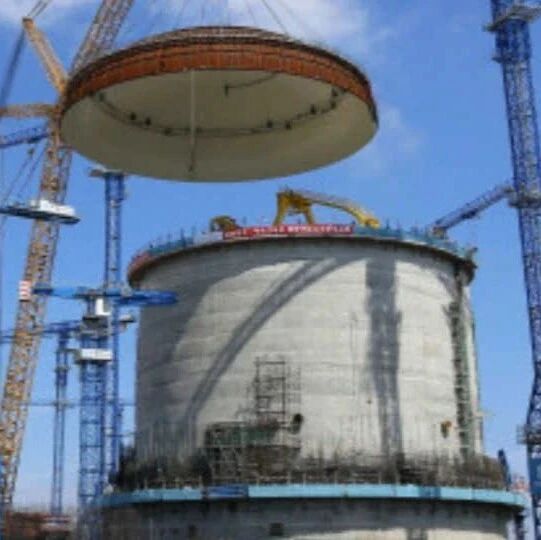
全球首个双堆耦合核能综合利用项目开工 打造低碳转型“中国方案”
Zhong Guo Zhi Liang Xin Wen Wang· 2026-01-22 03:59
推进碳达峰、碳中和是我国对国际社会的庄严承诺,也是实现可持续发展的内在要求。2025年,我国公 布的《碳达峰碳中和的中国行动》白皮书中指出,核电是优质高效的清洁能源,中国始终坚持在确保安 全的前提下有序发展核电,推动核能在清洁供暖、工业供热、海水淡化等领域的利用。 能源结构的绿色低碳转型是实现碳达峰、碳中和的关键。一直以来,中核集团牢固树立绿色发展理念, 持续发挥清洁能源主力军作用。旗下中国核电已拥有控股在运核电机组27台,控股核电在建及核准待建 机组18台,总装机容量4685.9万千瓦,2025年年度累计清洁能源上网电量2307.47亿千瓦时,为实现"双 碳"目标提供稳定可靠支撑。除此以外,中核集团还积极推动区域供暖、工业供汽/供冷、海水淡化、核 能制氢、同位素生产等核能综合利用。 据了解,江苏徐圩核能供热发电厂是全球首个压水堆与高温气冷堆耦合项目、全球首个高温气冷堆商业 化推广项目,也是全球首个在核电总承包模式下全厂一体化建造的核电工程。该项目是以工业供热为 主、兼顾电力供应的核动力厂,采用我国具有完全自主知识产权的三代核电技术华龙一号和四代核电技 术高温气冷堆组合,通过华龙一号主蒸汽加热除盐水制备饱和蒸 ...