BANK OF CHINA(601988)

Search documents
资本界金控股东将股票由粤商国际证券转入中国银行(香港) 转仓市值9937.2万港元
Zhi Tong Cai Jing· 2025-12-04 00:34
香港联交所最新资料显示,12月3日,资本界金控(00204)股东将股票由粤商国际证券转入中国银行(香 港),转仓市值9937.2万港元,占比36.83%。 资本界金控截至2025年9月30日止6个月的中期业绩显示,该集团取得其他收入520.2万港元,同比减少 31.81%;公司拥有人应占亏损5013.4万港元,同比增加373.1%;每股亏损0.57港仙。公告称,亏损主要由 于按公平值计入在损益处理的财务资产的已变现亏损净额。 ...

国有行五年期大额存单集体“隐身”
Nan Fang Du Shi Bao· 2025-12-03 23:07
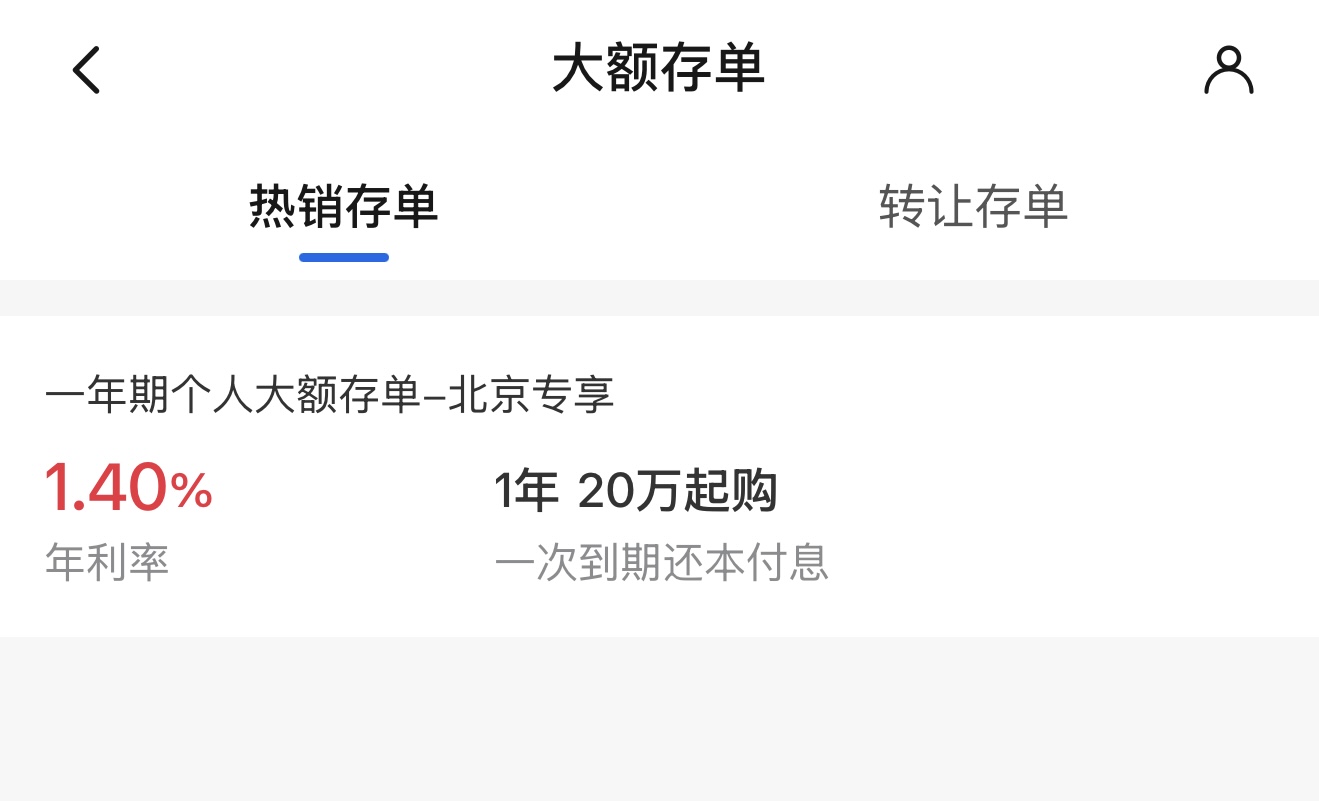
Core Viewpoint - The five-year large denomination certificates of deposit (CDs) have been collectively removed from the offerings of major state-owned banks in China, leaving only three-year products available, reflecting ongoing pressure on the banking sector's net interest margins [2][3][4]. Group 1: Market Changes - Major state-owned banks, including ICBC, ABC, and BOC, have removed five-year large denomination CDs from their online platforms, with the focus now on three-year and shorter-term products [3][4]. - The interest rate for three-year large denomination CDs has decreased to approximately 1.55%, while one-year and two-year products have been reduced to 1.20% [3][4]. - The removal of five-year products is part of a broader trend in the banking industry, which has been experiencing a tightening of available quotas for large denomination CDs since last year [4]. Group 2: Interest Rate Trends - The interest rates for large denomination CDs have been on a downward trajectory, with the three-year rate dropping from 2.15% to 1.55% over the past year, a decline of 60 basis points [4]. - The net interest margin for commercial banks was reported at 1.42% as of the end of Q3 this year, showing a year-on-year decrease of 11 basis points, indicating ongoing pressure on profitability [7]. Group 3: Product Differentiation - There is a common misconception among depositors that the removal of five-year large denomination CDs means the closure of all five-year deposit options; however, regular five-year fixed deposits remain available with a lower entry threshold [5][6]. - The minimum deposit for five-year fixed deposits is only 50 yuan, contrasting sharply with the 200,000 yuan minimum for large denomination CDs, providing a stable option for those with limited funds [6]. Group 4: Strategic Adjustments - The adjustments in the offerings of large denomination CDs reflect banks' strategies to manage liabilities and control costs in a low-interest-rate environment [7][8]. - Analysts suggest that banks are responding to the pressures of maintaining net interest margins by reducing the availability of high-cost large denomination CDs and increasing entry barriers for these products [7][8].







万场活动暖民心 多元解纷护消费——广东中行打造消保实践新样板
Nan Fang Du Shi Bao· 2025-12-03 23:07
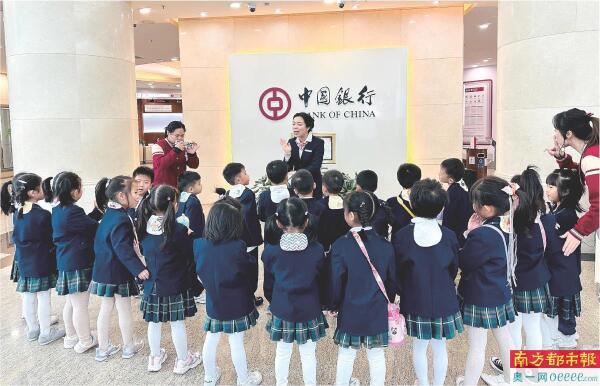
11月12日,中国银行清远分行与清城区红缨圣贤宝贝幼儿园联合举办"小小银行家,成就大梦想"金融知 识启蒙宣传活动。 3月12日,中国银行东莞分行组织走进东正社区开展"保障金融权益 助力美好生活"3·15主题金融教育 活动。 广东中行将消保工作纳入党委会、行办会等重要安排,党委明确提出"要做市民的首选银行"理念,要求 在产品设计、流程优化、网点布局等各个领域始终以客户需求为先,并带头深入基层,开展消保专题授 课、体验网点服务;针对群众反映强烈的排队时间长、业务办理流程繁等痛点,对标同业构建标准化服 务流程,切实为民办实事。 多元解纷 打通服务"便民道" 9月20日,中国银行珠海分行、横琴分行联合澳门分行举办"千家·万户——广东中行消保文化节"珠海·横 琴站活动。 金融为民,消保先行。中国银行广东省分行(下称"广东中行")始终坚守"以人民为中心"的发展理念,将 消费者权益保护融入业务发展全链条、服务客户全过程,通过机制创新、场景延伸、科技赋能和多方合 作,构建起全方位、多层次、立体化的消保工作体系。 2025年以来,广东中行围绕"投资看准'三适当',守住钱袋要稳当""智慧用卡,安全支付"等主题,联动 公安、学校、 ...
《2025中国银行业竞争力研究报告》 解码行业未来
2 1 Shi Ji Jing Ji Bao Dao· 2025-12-03 23:04
Core Insights - The report highlights 2025 as a pivotal year for China's banking industry, emphasizing the historical achievements during the "14th Five-Year Plan" and the high-quality development of the financial sector amidst internal and external challenges [1] - The report, guided by the Southern Finance and Economics Media Group and published by the 21st Century Economic Report, aims to analyze the opportunities and challenges faced by the banking industry at the intersection of macroeconomic transformation and global financial changes [1] Section Summaries Section 1: Overall Situation of High-Quality Development - The first part focuses on the overall state of high-quality development in China's banking industry, addressing uncertainties and showcasing the resilience of banks in navigating complex environments [2] Section 2: Competitiveness Ranking of Chinese Banks - The core content of the report presents the "Top 100 Competitiveness Rankings of Chinese Banks (2025)," based on four key indicators: scale, profitability, stability, and growth, derived from the 2024 annual reports of commercial banks [2] - The main ranking is complemented by three sub-rankings: "Top 100 Banks by Scale," "Top 100 Banks by Profitability," and "Top 100 Banks by Growth," focusing on total assets, total liabilities, operating income, ROA, revenue growth rate, and other critical metrics [2] Section 3: Five Major Areas of Development - The report covers five key areas: technology finance, digital finance, pension finance, green finance, and inclusive finance, detailing advancements such as the upgrade of technology finance structures in major banks and the rapid growth of technology loans in small and medium-sized banks [3] - It also discusses the impact of AI on digital competitiveness, the maturation of pension finance, the entry of five banks into the "trillion club" for green credit, and the differentiated services in inclusive finance, providing a comprehensive view of future development pathways for the industry [3]
六大国有银行全面停售5年期大额存单
Mei Ri Shang Bao· 2025-12-03 22:55
Core Insights - The long-term large-denomination certificates of deposit (CDs) are gradually disappearing, with major state-owned banks ceasing to offer 5-year CDs, reflecting a shift in banks' liability management strategies in a low-interest-rate environment [1][2][4] Group 1: Changes in Product Offerings - Six major state-owned banks, including ICBC, ABC, BOC, CCB, BOCOM, and PSBC, have completely removed 5-year large-denomination CDs from their offerings [2][3] - The remaining products from these banks have shifted towards shorter terms, with ICBC offering rates of 1.55% for 3-year CDs and 1.20% for 1-year and 2-year CDs [2][3] - The absence of 5-year CDs has been noted across other banks, with Agricultural Bank of China also not listing any 5-year products in its catalog from 2018 to 2025 [3] Group 2: Impact on Interest Margins - The reduction of long-term high-cost CDs is seen as a direct method for banks to optimize their liability structure and stabilize net interest margins [4] - As of Q3 2025, the net interest margin for commercial banks in China was reported at 1.42%, remaining at a historical low [4] - Since the establishment of the market-oriented deposit rate adjustment mechanism in April 2022, major banks have reduced deposit rates in seven rounds, with the latest cuts occurring in May 2025 [4] Group 3: Shifts in Investment Behavior - With declining interest rates, there is a growing need for depositors to adopt rational expectations and consider diversified asset allocations, such as government bonds and low-risk investment products [5] - A survey indicated that 62.3% of urban residents preferred "more savings," a decrease of 1.5 percentage points from the previous quarter, while 18.5% favored "more investments," an increase of 5.6 percentage points [5] - The scale of the banking wealth management market reached 32.13 trillion yuan by the end of Q3 2025, reflecting a year-on-year increase of 9.42% [5]
中国银行:以金融之力服务实体经济,助力现代化产业体系建设
Ren Min Ri Bao· 2025-12-03 21:52
Core Viewpoint - The 20th Central Committee of the Communist Party of China emphasizes the construction of a modern industrial system and the strengthening of the real economy, with China Bank aligning its services to support these national development goals [1] Group 1: Support for Traditional Industries - China Bank is increasing resource investment and optimizing financial services to promote the transformation and upgrading of traditional industries towards high-end, intelligent, and green development [2] - As of Q3 2025, the loan balance for advanced manufacturing in traditional industries is nearly 600 billion, while high-tech manufacturing loans amount to nearly 700 billion [2] - The bank has signed over 350 billion in equipment renewal projects, with loan disbursements exceeding 130 billion, supporting traditional industries' transformation [2] - China Bank is actively supporting the petrochemical industry's upgrade projects and has successfully provided fixed asset loans for equipment renewal to a major industrial enterprise in Jiangxi [2][3] Group 2: Support for Emerging Industries - China Bank is focusing on the development of strategic emerging industries, with loans for these sectors exceeding 3 trillion, reflecting a continuous increase in their proportion of total loans [4] - The bank supports the aerospace sector through a "loan-equity linkage" model, aiding Blue Arrow Aerospace in achieving key technological breakthroughs [4] - In the semiconductor sector, China Bank has tailored financial service plans for Jiangxi Zhao Chi Semiconductor Co., providing comprehensive support for their R&D and project construction [5] Group 3: Infrastructure Development - China Bank is deeply involved in major cross-regional infrastructure projects, particularly in the Guangdong-Hong Kong-Macao Greater Bay Area and the Yangtze River Delta [6] - The bank's loan balance for infrastructure exceeds 4.5 trillion, with over 1.8 trillion allocated to major transportation infrastructure [6] - China Bank has provided significant financial support for key projects like the Hong Kong-Zhuhai-Macao Bridge and the Shenzhen-Zhongshan Channel [6] Group 4: Cross-Border Financial Services - China Bank is leveraging its cross-border financial capabilities to support Chinese enterprises in undertaking significant overseas infrastructure projects, including financing for a light rail project in Mexico [7] - The bank is committed to integrating its development with the construction of a modern industrial system, aiming to provide high-quality financial services and innovative products [7]
首批3家全国性股份制银行AIC获准开业—— 促进我国投融资体系多元发展
Jing Ji Ri Bao· 2025-12-03 21:51
Core Insights - The recent approval of three financial asset investment companies (AICs) marks the establishment of the first batch of national joint-stock bank AICs in China, expanding the total number of bank-affiliated AICs to nine [1][2] Group 1: AIC Establishment and Function - The newly approved AICs include Xinyin Financial Asset Investment Co., Xinyin Financial Asset Investment Co., and Zhaoyin Financial Asset Investment Co., with registered capitals of 150 billion yuan and 100 billion yuan respectively [1] - AICs were initially designed for market-oriented debt-to-equity swaps, serving as a "risk isolation wall" and "asset restructuring expert" within the banking system, aimed at reducing corporate leverage and mitigating financial risks [1][3] - The role of AICs has evolved to become a major player in equity investment, particularly following recent policy expansions that have increased their investment scope and intensity [1] Group 2: Comparison Between AICs - The newly established AICs share common features with state-owned bank AICs, including core functions, regulatory frameworks, policy guidance, and operational models [2] - Differences exist in shareholder backgrounds, resource endowments, capital scales, and regional layouts, with state-owned AICs benefiting from larger asset scales and nationwide networks, focusing on large state-owned enterprises [2] - In contrast, joint-stock bank AICs have a slightly lower capital scale and are more concentrated in their initial focus, primarily serving private and innovative small and medium-sized enterprises [2] Group 3: Impact on the Economy - The entry of AICs is expected to significantly promote enterprise transformation and high-quality development by alleviating corporate debt burdens through debt-to-equity swaps, thereby facilitating technological research and product innovation [3] - AICs are positioned to support specialized and innovative enterprises, as well as technology-driven small and medium-sized enterprises, while also restructuring and revitalizing companies in debt distress through market-oriented and legal means [3]


广东中行打造消保实践新样板
Jing Ji Ri Bao· 2025-12-03 21:44
Core Viewpoint - The Bank of China Guangdong Branch is committed to consumer rights protection and financial education, implementing various initiatives to enhance customer experience and safeguard financial interests [5][6][10]. Group 1: Financial Education Initiatives - The Guangdong Branch has organized over 10,000 financial education activities since 2025, reaching nearly 100 million consumers [5]. - Events such as "Little Bankers, Big Dreams" aim to educate children about banking through interactive experiences [9]. - The bank integrates financial knowledge into various community activities, making learning engaging and accessible [9]. Group 2: Consumer Rights Protection Mechanisms - The bank employs a matrix management system to ensure consumer rights protection is a priority across all levels [6]. - Consumer protection work is included in key meetings, emphasizing the importance of customer needs in product design and service processes [6]. - A "Five Twos" complaint management system has been established to address consumer grievances effectively [8]. Group 3: Technology and Innovation - The bank is leveraging digital tools to enhance consumer rights protection, transitioning from manual to data-driven governance [10]. - A specialized consumer protection platform has been developed to streamline complaint handling and improve service efficiency [10]. Group 4: Collaborative Efforts - The bank collaborates with law enforcement, schools, and businesses to create a comprehensive consumer protection ecosystem [11]. - Joint initiatives include public events that combine cultural elements with financial education, enhancing community engagement [11]. - The bank actively participates in local outreach to educate various demographics about financial safety and fraud prevention [11].

百万门槛!六大行五年期大额存单消失,三年期也高不可攀?
Sou Hu Cai Jing· 2025-12-03 17:13
Core Viewpoint - The disappearance of long-term deposit products, particularly five-year large certificates of deposit (CDs), reflects the ongoing pressure on banks' net interest margins, leading to a reevaluation of their liability structures and product offerings [1][3][9] Group 1: Changes in Deposit Products - Major state-owned banks, including Industrial and Commercial Bank of China, Agricultural Bank of China, and others, have completely discontinued five-year large CDs, with some also reducing the availability of three-year products [3][5] - The current interest rate for a three-year large CD at Industrial and Commercial Bank is only 1.55%, with a minimum deposit requirement of 1 million yuan, contrasting sharply with the 50 yuan minimum for regular fixed deposits [5][17] - The trend of reducing long-term deposit products is not limited to large banks; some joint-stock banks and city commercial banks are also following suit, indicating a broader industry shift [3][7] Group 2: Impact on Customers - The increasing minimum deposit requirements for three-year products mean that large CDs are becoming exclusive to high-net-worth clients, moving away from their original target demographic of middle-class savers [5][11] - Ordinary depositors are facing challenges in asset allocation due to the scarcity of long-term deposit options, leading to a shift in savings behavior, with a notable decrease in the percentage of savers preferring to save more [13][17] - The current environment has prompted some depositors to seek higher returns or more diversified investment channels, reflecting a change in asset allocation strategies [13][15] Group 3: Industry Response - Banks are adjusting their product offerings in response to the pressure on net interest margins, with state-owned banks discontinuing five-year large CDs while smaller banks focus on shorter-term products [7][9] - The ongoing decline in loan rates and intense competition for deposits are squeezing banks' profit margins, necessitating a reevaluation of high-interest long-term deposit products [9][11] - Banks are increasingly using large CDs to attract high-quality new clients and as a stable asset for private banking clients, indicating a strategic shift in how these products are utilized [11][15]

六大行集体下架五年期大额存单 低利率时代储户寻路多元配置
2 1 Shi Ji Jing Ji Bao Dao· 2025-12-03 13:31
Core Viewpoint - The recent collective removal of 5-year large denomination certificates of deposit (CDs) by major Chinese banks indicates a shift in banks' strategies towards more cautious interest margin management and a potential reduction in the supply of long-term fixed-rate deposits [1][11]. Group 1: Market Changes - Major state-owned banks have collectively removed 5-year large denomination CDs from their mobile banking platforms, with current offerings limited to terms of 3 years or less, and interest rates ranging from 1.20% to 1.55% [1][2]. - The trend of discontinuing 5-year large denomination CDs is not new, as some institutions had already begun this practice last year [1]. - The interest rates for 3-year large denomination CDs are approximately 1.55%, with minimum purchase amounts typically set at 200,000 yuan [2]. Group 2: Historical Context - The development of large denomination CDs spans nearly 40 years, with their initial issuance by the Bank of Communications in 1986, followed by a long hiatus until their reintroduction in 2015 [5][6]. - The popularity of large denomination CDs surged around 2018 due to changes in the banking landscape, including the relaxation of interest rate caps and increased demand for fixed-term deposits [6]. Group 3: Financial Implications - The discontinuation of long-term high-interest deposits is primarily driven by banks' need to manage net interest margins more effectively, as the current environment of low loan rates and high deposit costs creates pressure on profitability [11]. - As of the end of Q3, the net interest margin for commercial banks was reported at 1.42%, indicating a challenging environment for maintaining high-interest deposit products [11]. Group 4: Customer Behavior - The removal of 5-year large denomination CDs has prompted customers to reconsider their investment strategies, shifting from a focus on high-interest deposits to a more diversified asset allocation approach [12][15]. - A survey indicated that 18.5% of residents are inclined to invest more, with non-principal guaranteed bank wealth management products becoming increasingly popular [14].