BANK OF CHINA(601988)

Search documents
中国银行间30年国债收益率上行3bp
Jin Rong Jie· 2026-03-09 02:34
Group 1 - The core point of the article is that the Chinese interbank 30-year government bond yield increased by 3 basis points due to the unexpected rise in the Consumer Price Index (CPI) in February [1]

银行投资观察20260308:风偏逐渐企稳,输入型通胀对长期利率影响加大
GF SECURITIES· 2026-03-08 14:28
Core Insights - The report indicates that the banking sector is showing signs of stabilization in risk appetite, with increasing input inflation impacting long-term interest rates [4][15] - The A-share banking sector has rebounded, outperforming H-shares, which have lagged behind [13][37] Section Summaries 1. Current Observation - During the observation period from March 2 to March 6, 2026, the banking sector (CITIC first-level industry) rose by 1.6%, ranking 6th among all industries and outperforming the Wind All A index, which fell by 2.3% [13] - The performance of state-owned banks, joint-stock banks, city commercial banks, and rural commercial banks varied, with changes of 3.30%, 0.98%, 1.17%, and 0.49% respectively [13] - H-shares of banks fell by 4.4%, underperforming the Hang Seng Composite Index, which dropped by 3.8% [13] 2. Investment Recommendations - The report emphasizes the importance of monitoring inflation recovery and its effects on long-term interest rates in the second quarter of 2026 [15] - It suggests that if inflation accelerates, the valuation of high-dividend and debt-like assets may be pressured, necessitating a downward adjustment of target returns for the banking sector [15] - Key recommended stocks include Ningbo Bank, China Merchants Bank, Qingdao Bank, and large state-owned banks [15] 3. Sector Performance - The banking sector's average price of convertible bonds increased by 0.11%, outperforming the China Securities Convertible Bond Index by 2.18 percentage points [14] - The report notes that the net profit growth rate and revenue growth rate expectations for A-share banks in 2025 have slightly decreased by 0.14 percentage points and 0.06 percentage points respectively compared to the previous period [14] 4. Individual Stock Performance - Among A-share banks, Chongqing Bank saw the highest increase at 12.46%, while Changsha Bank experienced the largest decline at 2.35% [13] - In H-shares, Chongqing Bank and Chongqing Rural Commercial Bank led the gains, while Zhengzhou Bank and Bank of China faced significant declines [13] 5. Valuation and Financial Analysis - As of March 6, 2026, the banking sector's latest price-to-earnings (P/E) ratio is 6.7x, and the price-to-book (P/B) ratio is 0.66x, indicating that valuations are at historical average levels [37] - The report highlights that the relative P/E and P/B ratios of the banking sector compared to the Wind All A index are 0.16 and 0.23 respectively, also aligning with historical averages [37]


金融风向标2026-W09:“两会”释放的金融信号
CMS· 2026-03-08 12:38
Investment Rating - The report maintains a recommendation for the banking sector, indicating a defensive value amidst external uncertainties affecting the A-share market [2][5]. Core Insights - The "Two Sessions" have provided financial signals, focusing on monetary policy, financial risk prevention, and institutional reforms. The monetary policy is expected to remain moderately loose, prioritizing stable economic growth and reasonable price recovery [5][11]. - The report anticipates that the frequency of reserve requirement ratio (RRR) and interest rate cuts will remain consistent with the previous year, with a lower probability of implementation in the first half of the year. The growth rate of social financing (社融) and M2 may fall below 8% [5][11]. - Structural monetary policy tools will be emphasized, with an expected net investment scale exceeding 540.5 billion in 2025, focusing on supporting domestic demand, technological innovation, and small and micro enterprises [6][11]. Summary by Sections Regulatory Dynamics - The report highlights the successful convening of the "Two Sessions" and the focus on monetary policy and financial risk prevention by the People's Bank of China [3][14]. Market Dynamics - The report notes a decline of 2.30% in the Wind All A Index, while the Shenwan banking sector increased by 1.64% [17]. Data Overview - The central bank's net withdrawal this week was 1.56 trillion, with a decrease in various interest rates, including the Shibor rates [4][25]. - The report provides detailed data on the performance of various banking stocks, including their dividend rates and price-to-earnings ratios [22]. Banking Sector Trends - The report indicates that the net interest margin decline is stabilizing, suggesting that revenue challenges for commercial banks may be easing. It recommends focusing on city commercial banks in key development areas and national banks with lower non-performing asset pressures [11].




4 张表看信用债涨跌:4张表看信用债涨跌(3/2-3/6)
SINOLINK SECURITIES· 2026-03-08 06:55
Report Summary 1. Core View - Among the top 50 AA-rated urban investment bonds (by issuer rating) with the highest discount margins, "25 Tengchong 01" has the largest deviation in valuation price. Among the top 50 individual bonds with the largest net price declines, "23 Development 01" has the largest deviation in valuation price. Among the top 50 individual bonds with the largest net price increases, "23 Vanke MTN001" has the largest deviation in valuation price. Among the top 50 Tier 2 and perpetual bonds with the largest net price increases, "24 Bank of Communications Tier 2 Capital Bond 02B" has the largest deviation in valuation price [3]. 2. Summary by Directory 2.1 Chart 1: Top 50 AA-rated Urban Investment Bonds with the Highest Discount Margins - The table shows detailed information of 25 AA-rated urban investment bonds, including bond name, remaining term, valuation price deviation, valuation net price, valuation yield, daily valuation, coupon rate, implied rating, issuer rating, and transaction date. "25 Tengchong 01" has a remaining term of 4.31 years, a valuation price deviation of -0.17%, a valuation net price of 103.83 yuan, and a valuation yield of 3.81% [5]. 2.2 Chart 2: Top 50 Individual Bonds with the Largest Net Price Declines - The table presents information on 50 individual bonds with large net price declines, including bond name, remaining term, valuation price deviation, valuation net price, valuation yield, daily valuation, coupon rate, implied rating, issuer rating, and transaction date. "23 Development 01" has a remaining term of 0.00 years, a valuation price deviation of -19.73%, a valuation net price of 80.27 yuan, and a valuation yield of 1.94% [6][9]. 2.3 Chart 3: Top 50 Individual Bonds with the Largest Net Price Increases - The table lists 50 individual bonds with significant net price increases, including bond name, remaining term, valuation price deviation, valuation net price, valuation yield, daily valuation, coupon rate, implied rating, issuer rating, and transaction date. "23 Vanke MTN001" has a remaining term of 0.14 years, a valuation price deviation of 6.23%, a valuation net price of 48.23 yuan, and a valuation yield of 719.99% [11][13]. 2.4 Chart 4: Top 50 Tier 2 and Perpetual Bonds with the Largest Net Price Increases - The table shows information on 50 Tier 2 and perpetual bonds with large net price increases, including bond name, remaining term, valuation price deviation, valuation net price, valuation yield, daily valuation, coupon rate, implied rating, issuer rating, and transaction date. "24 Bank of Communications Tier 2 Capital Bond 02B" has a remaining term of 8.41 years, a valuation price deviation of 0.35%, a valuation net price of 100.54 yuan, and a valuation yield of 2.30% [14][17].



二级资本债周度数据跟踪-20260307
Soochow Securities· 2026-03-07 09:33
Report Industry Investment Rating - Not provided in the report Core Viewpoints - This week (20260302 - 20260306), there were no new issuances of secondary capital bonds in the inter - bank and exchange markets [1] - The weekly trading volume of secondary capital bonds this week totaled approximately 211.4 billion yuan, an increase of 98.2 billion yuan from last week [2] - This week, the overall deviation of the weekly average trading price valuation of secondary capital bonds was not large, with the proportion and amplitude of discount transactions greater than those of premium transactions [3] Summary by Directory Primary Market Issuance - This week (20260302 - 20260306), there were no new issuances of secondary capital bonds in the inter - bank and exchange markets [1] Secondary Market Transactions - **Trading Volume**: The weekly trading volume of secondary capital bonds this week totaled approximately 211.4 billion yuan, an increase of 98.2 billion yuan from last week. The top three bonds in terms of trading volume were 25 Bank of China Secondary Capital Bond 03A(BC) (14.493 billion yuan), 25 Bank of China Secondary Capital Bond 02BC (11.006 billion yuan), and 25 Agricultural Bank of China Secondary Capital Bond 04A(BC) (8.16 billion yuan). By issuer region, the top three in trading volume were Guangdong Province (158.6 billion yuan), Guizhou Province (17.8 billion yuan), and Heilongjiang Province (8.7 billion yuan) [2] - **Yield to Maturity**: As of March 6, for 5Y secondary capital bonds, the yield - to - maturity changes compared to last week for ratings AAA -, AA +, and AA were - 1.82BP, - 2.57BP, and - 3.57BP respectively; for 7Y secondary capital bonds, they were - 1.15BP, - 1.16BP, and - 1.16BP respectively; for 10Y secondary capital bonds, they were - 1.16BP, - 1.83BP, and - 1.83BP respectively [2] Top Thirty Bonds by Valuation Deviation - **Discount Bonds**: The top three discount bonds were 25 Guangdong Huaxing Bank Secondary Capital Bond 01 (- 1.1331%), 24 Yinzhou Rural Commercial Bank Secondary Capital Bond 01 (- 0.9793%), and 21 Huishang Bank Secondary 01 (- 0.4872%). The Zhongzhai implicit ratings were mainly AAA -, AA -, and AA +, and the regional distribution was concentrated in Beijing, Shanghai, and Guangdong [3] - **Premium Bonds**: The top three premium bonds were 24 Lanzhou Bank Secondary Capital Bond 01 (0.1904%), 25 Chouzhou Commercial Bank Secondary Capital Bond (0.1844%), and 25 Shanghai Pufa Bank Secondary Capital Bond 01B (0.0859%). The Zhongzhai implicit ratings were mainly AAA -, AA, and AA +, and the regional distribution was concentrated in Beijing, Shanghai, and Shandong [3]
银行业周报:“ 十五五”规划引领银行高质量发展
ZHESHANG SECURITIES· 2026-03-07 08:24
Investment Rating - The industry investment rating is "Positive" (maintained) [3] Core Insights - The banking sector outperformed the market, with the banking index rising by 1.64% while the overall market (Wande All A Index) fell by 2.30%, indicating a strong defensive position amid geopolitical tensions [1][2] - State-owned banks showed stronger performance compared to other types of banks, with state-owned banks increasing by 3.30% [1] - The government work report supports the high-quality development of banks, reinforcing the logic of improving bank fundamentals [1][2] - The macro policy remains neutral to slightly accommodative, with a focus on promoting economic growth and maintaining low financing costs [2] - The issuance of special government bonds worth 300 billion yuan aims to support the capital replenishment of large state-owned commercial banks [2] - Risks in key areas are expected to continue to decrease, particularly in the corporate sector, while retail sector risks remain a concern [3] Summary by Sections Industry Performance - The banking sector ranked 5th among 31 primary industries, with a notable performance driven by a shift in market risk appetite towards defensive assets [1][7] - The top-performing banks included Chongqing Bank (+12.46%), Chengdu Bank (+4.76%), and Agricultural Bank (+4.69%) [1][8] Government Policies - The government plans to extend the personal consumption loan subsidy policy until the end of 2026, which is expected to boost demand for personal loans [2] - The report emphasizes the need for flexible and efficient use of monetary policy tools, including interest rate cuts, to stabilize net interest margins for banks [2] Risk Management - The report highlights a significant reduction in the number and scale of financing platforms, with declines exceeding 70% compared to early 2023, indicating improved risk management in the banking sector [3] - Future self-regulatory mechanisms are expected to be adjusted to enhance the execution and supervision of interest rate policies [3] Investment Recommendations - The report suggests focusing on state-owned banks and certain high-dividend small and medium-sized banks for investment opportunities [6] - It anticipates a recovery in revenue and profit for banks in 2026, with core revenue expected to grow by 5% [5] - The average dividend yield for the banking sector is projected to be 4.45%, making it an attractive asset class for investors [12]
广期所:核准中国银行等三家银行为境外客户期货保证金指定存管银行
Sou Hu Cai Jing· 2026-03-06 13:13
Core Viewpoint - The Guangzhou Futures Exchange has approved three banks as designated custodians for margin deposits from overseas clients, enhancing the infrastructure for international participation in the futures market [2] Group 1: Regulatory Developments - The Guangzhou Futures Exchange has issued a notice on March 6 regarding the management of designated custodial banks for margin deposits [2] - The approved banks include Bank of China, Bank of Communications, and China Minsheng Bank, which will serve overseas clients [2]


中国银行保险报 | 中国东方旗下中华人寿前端基础服务平台破局数字化转型
Xin Lang Cai Jing· 2026-03-05 12:23
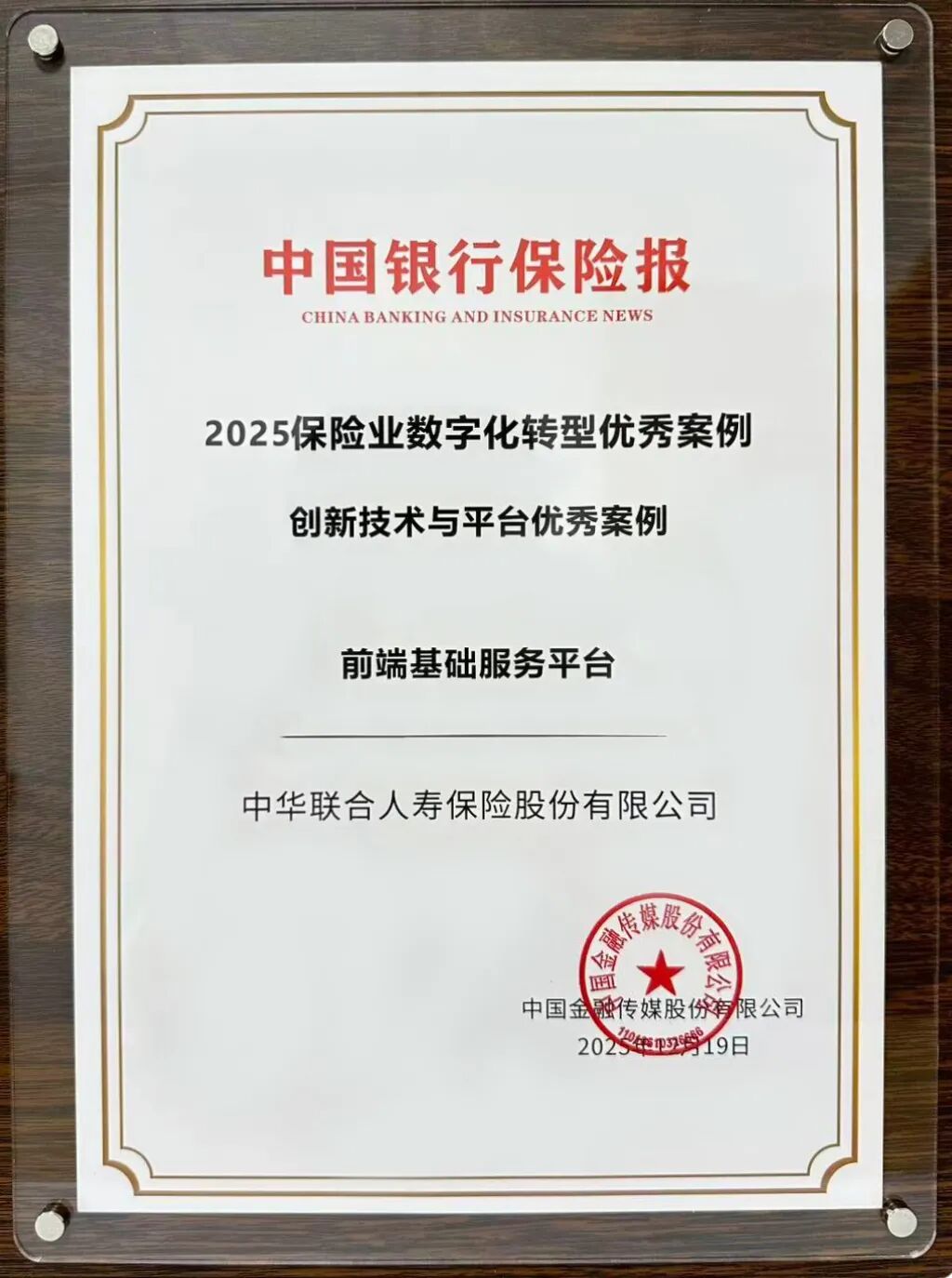
Core Insights - The core achievement of China United Life Insurance Co., Ltd. is the successful development of its "Front-End Basic Service Platform," which has earned two industry awards for innovation in digital transformation [1][10]. Industry Context - The insurance industry is undergoing a deep transformation driven by data and technology, with AI, large models, and big data increasingly integrated into product design, marketing, underwriting, and claims management [3][12]. - Despite advancements, insurance companies face challenges in data governance, system integration, and customer experience optimization [3][12]. Challenges Faced - The motivation behind the development of the Front-End Basic Service Platform stems from the widespread issue of "digital debt" within the insurance sector, particularly for companies that have been established for some time [4][13]. - As business scales transition from startup to growth phases, the complexity of front-end services such as sales, underwriting, and claims increases significantly, while outdated systems hinder efficiency and data sharing [4][13]. - The existing "siloed" system architecture leads to high operational costs, prolonged development cycles, and difficulties in launching innovative products that require cross-system collaboration [4][13]. Strategic Response - In response to these challenges, the company opted to build a new, unified "Front-End Basic Service Platform" rather than patching existing systems, aiming to resolve core issues of system fragmentation and data inaccessibility [5][14]. - The platform's development began in 2023, focusing on upgrading front-end sales and service systems to enhance business support capabilities and eliminate service barriers [5][14]. Platform Architecture - The platform employs a three-layer design philosophy centered on "business decomposition and architectural layering," standardizing widely used capabilities across various business scenarios [6][15]. - It integrates 51 tool capabilities into 13 categories, providing standardized APIs and components, which significantly reduces development pressure across business lines [6][15]. - The platform utilizes a SpringCloud microservices architecture, establishing a unified technical stack and interface standards, which enhances overall efficiency and security [6][15]. Service Integration - The platform supports diverse service integration methods, facilitating smooth connections between new and legacy systems and easing collaboration with third-party channels [7][16]. - This flexibility reduces technical barriers and costs for channel expansion, transforming the technical foundation into a competitive advantage for business ecosystem growth [7][16]. Value Realization - The establishment of the Front-End Basic Service Platform signifies a successful transformation approach, emphasizing the importance of solidifying foundational capabilities before pursuing application innovations [8][17]. - The platform has led to reduced development costs and delivery cycles for various business systems, enabling rapid upgrades of critical systems such as online policy maintenance and unified underwriting platforms [8][17]. - The case of China United Life illustrates the challenge of transitioning from isolated technology applications to systematic capability building in the insurance industry's digital transformation [8][17]. Industry Recognition - The awards received by China United Life are seen as a validation of a pragmatic and rational transformation path within the insurance industry, highlighting the need for both innovative exploration and the dismantling of outdated systems [9][18].
3000亿特别国债,即将启动
21世纪经济报道· 2026-03-05 10:21
Group 1 - The core point of the article is the announcement of a new round of capital injection for state-owned commercial banks in China, with a plan to issue 300 billion yuan in special government bonds to support capital replenishment [1] - The first round of capital injection in 2025 involved 500 billion yuan for four major banks, and the current focus is on Industrial and Agricultural Banks, which are expected to receive priority in this round of funding [1][2] - As of the end of Q3 2025, the core Tier 1 capital adequacy ratios for Industrial Bank and Agricultural Bank were 13.57% and 11.16%, respectively, both meeting regulatory requirements despite year-on-year declines [1] Group 2 - The need for continuous capital replenishment for state-controlled large banks arises from the pressure on net interest margins and profitability, limiting their ability to accumulate internal capital [2] - The issuance of special government bonds is part of a strategic deployment to enhance the stability of large commercial banks and their role in supporting the real economy [3]

5000亿后又有3000亿!今年拟发特别国债注资国有大行
第一财经· 2026-03-05 03:58
Core Viewpoint - The Chinese government plans to issue 300 billion yuan in special bonds to support the capital replenishment of state-owned commercial banks, following a previous issuance of 500 billion yuan in 2025 for four major banks [3][4]. Group 1: Capital Replenishment Plans - The second batch of capital replenishment for state-owned banks is underway, with the first batch having successfully injected 500 billion yuan into four major banks, including China Bank, Postal Savings Bank, Transportation Bank, and Construction Bank, totaling 520 billion yuan [3][4]. - The issuance of special bonds is aimed at enhancing the asset allocation capacity and service capabilities of these banks to support the real economy and ensure sustainable development [4][5]. Group 2: Regulatory and Market Context - The six major state-owned banks are classified as systemically important banks, facing higher capital adequacy requirements. The government’s move to inject capital is seen as a proactive measure to alleviate pressures from narrowing net interest margins and slowing profits [4][5]. - The capital adequacy ratios required for these banks are set at 9.5% for Industrial and Commercial Bank of China, 9% for Agricultural Bank of China, China Bank, and Construction Bank, and 8.5% for Transportation Bank [5][6]. Group 3: Current Capital Adequacy Status - As of the end of Q3 2025, the core Tier 1 capital adequacy ratios for Industrial and Commercial Bank of China and Agricultural Bank of China were 13.57% and 11.16%, respectively, showing a decline from the end of 2024 [6].