
Ronbay Technology(688005)

Search documents
固态电池供应商备战2027:目标定好了,路线还在争
Jing Ji Guan Cha Wang· 2026-01-09 12:33
Core Insights - The solid-state battery industry is experiencing renewed interest from investors due to clear profitability and order visibility in the supply chain, with a significant focus on achieving mass production by 2027 [2][3][6] - Major automotive companies are targeting 2027 for the application of solid-state batteries in vehicles, with many planning to complete product development or testing by 2026 [4][5] Industry Developments - Companies like Tian Shi Ke Feng have begun to engage with potential investors after overcoming initial funding challenges, with plans to expand production capacity significantly in 2026 [2] - The Ministry of Industry and Information Technology has identified solid-state batteries as a key area for development, aiming to establish 3-5 leading companies by 2027 [3] Technical Challenges - The path to mass production of solid-state batteries is fraught with challenges, including material technology discrepancies and shortages in core equipment [6][8] - The industry is divided on material technology routes, with significant competition between oxide and sulfide electrolytes, each having distinct advantages and challenges [10][12] Material Innovations - Solid-state batteries are recognized for their high energy density and intrinsic safety, making them suitable for various applications, although their cost-effectiveness in electric vehicles remains a concern [7][8] - The development of silicon-carbon and lithium metal anodes is ongoing, with companies reporting progress in small-scale trials [9][10] Equipment and Production - The lack of mature mass production equipment poses a significant barrier, with many companies resorting to self-developed solutions to meet production demands [14][19] - The production process for solid-state batteries requires high precision and specialized equipment, which increases costs and complicates the manufacturing process [20][21] Market Dynamics - The solid-state battery supply chain is characterized by a collaborative approach among suppliers and manufacturers, with a focus on meeting evolving technical requirements from cell manufacturers [23][24] - The competitive landscape is marked by a "race" among cell manufacturers to explore various material suppliers, emphasizing the need for continuous innovation and adaptation [24]





1月8日科创板主力资金净流出15.00亿元
Zheng Quan Shi Bao Wang· 2026-01-08 09:32
Group 1 - The main point of the news is that the net outflow of major funds in the Shanghai and Shenzhen markets reached 45.304 billion yuan, with the Sci-Tech Innovation Board experiencing a net outflow of 1.5 billion yuan [1] - A total of 406 stocks on the Sci-Tech Innovation Board rose, while 186 stocks fell, indicating a mixed performance in the market [1] - Among the stocks with net inflows, 251 stocks saw major fund inflows, with 17 stocks receiving over 100 million yuan, led by Cambrian Technologies with a net inflow of 699 million yuan [1] Group 2 - There are 54 stocks that have seen continuous net inflows for more than three trading days, with Aiko Photonics leading at 12 consecutive days of inflow [2] - Conversely, 131 stocks have experienced continuous net outflows, with Dameng Data facing the longest streak at 22 consecutive days of outflow [2] - The top three stocks by net inflow include Cambrian Technologies (699.49 million yuan), Haiguang Information (561.42 million yuan), and Moore Threads (311.93 million yuan) [2][3]



金属钴概念下跌1.62%,主力资金净流出29股
Zheng Quan Shi Bao Wang· 2026-01-08 08:59
Group 1 - The metal cobalt sector experienced a decline of 1.62%, ranking among the top losers in the concept sector, with companies like Greeenmei, Zhongwei Co., and Rongbai Technology showing significant drops [1][2] - Among the concept stocks, Zhejiang Fu Holdings, China Power Construction, and China Baowu Steel Group were the top gainers, with increases of 2.51%, 0.94%, and 0.59% respectively [1][2] - The metal cobalt sector saw a net outflow of 5.286 billion yuan, with 29 stocks experiencing net outflows, and 12 stocks seeing outflows exceeding 100 million yuan [2] Group 2 - Zijin Mining led the outflow with a net withdrawal of 950.13 million yuan, followed by Greeenmei and Huayou Cobalt with outflows of 750.28 million yuan and 676.95 million yuan respectively [2][3] - The stocks with the highest net inflows included Zhejiang Fu Holdings, Zhongwei Co., and China Baowu Steel Group, with inflows of 52.42 million yuan, 22.11 million yuan, and 17.38 million yuan respectively [2][3] - The trading volume for the metal cobalt sector showed significant turnover rates, with Greeenmei at 12.20% and Zhongwei Co. at 3.68% [3]



电池板块1月8日跌0.75%,格林美领跌,主力资金净流出43.69亿元
Zheng Xing Xing Ye Ri Bao· 2026-01-08 08:56
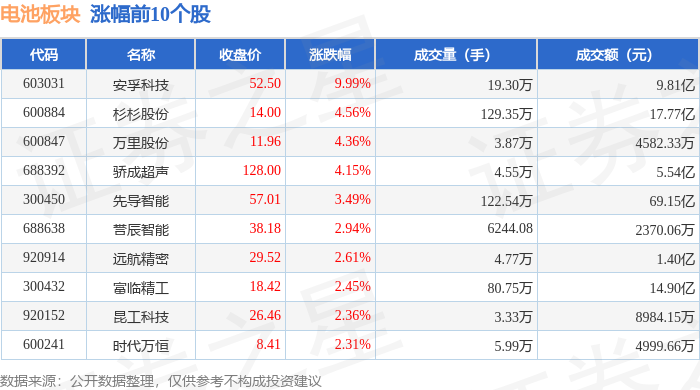
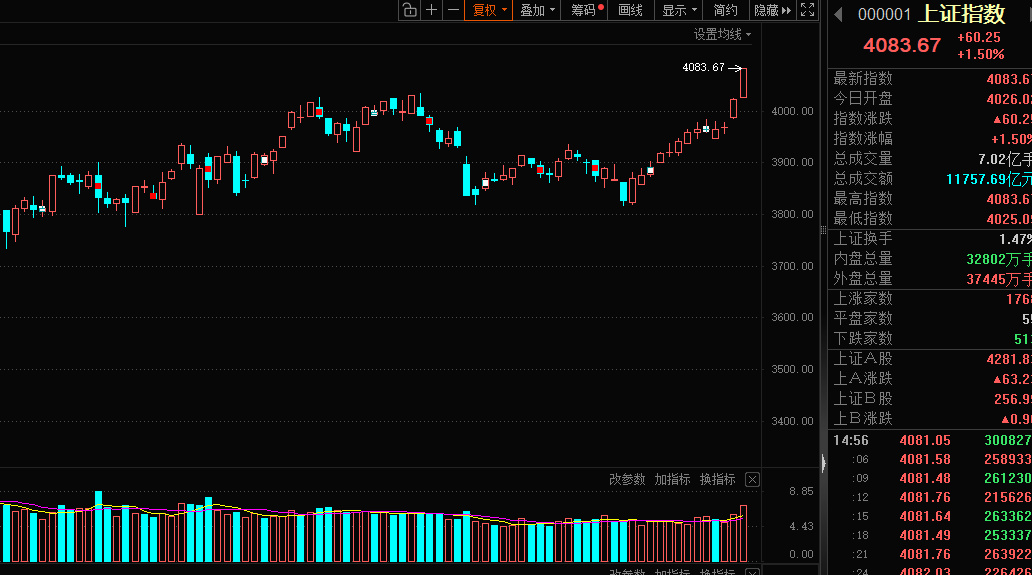
Market Overview - The battery sector experienced a decline of 0.75% on the previous trading day, with Greeenme leading the drop [1] - The Shanghai Composite Index closed at 4082.98, down 0.07%, while the Shenzhen Component Index closed at 13959.48, down 0.51% [1] Stock Performance - Anfu Technology (603031) saw a significant increase of 9.99%, closing at 52.50 with a trading volume of 193,000 shares and a turnover of 981 million [1] - Shanshan Co., Ltd. (600884) rose by 4.56%, closing at 14.00 with a trading volume of 1,293,500 shares and a turnover of 1.777 billion [1] - In contrast, Greeenme (002340) fell by 5.89%, closing at 8.78 with a trading volume of 6,204,100 shares and a turnover of 553.6 million [2] - Zhongwei Co., Ltd. (300919) decreased by 5.69%, closing at 53.90 with a trading volume of 336,100 shares and a turnover of 1.826 billion [2] Capital Flow - The battery sector saw a net outflow of 4.369 billion from institutional investors, while retail investors contributed a net inflow of 3.603 billion [2] - The main capital inflow and outflow for specific stocks included: - Xian Dao Intelligent (300450) had a net inflow of 5.90 billion from main capital [3] - Fulin Precision (300432) experienced a net outflow of 96.438 million from main capital [3] - Shanshan Co., Ltd. (600884) had a net inflow of 16.3 million from main capital [3]


3月19-20日 常州 2026锂电关键材料及应用市场高峰论坛
鑫椤锂电· 2026-01-08 08:28
Core Viewpoint - The lithium battery industry is poised for a significant growth cycle in 2026, characterized by strong demand recovery, accelerated global expansion, and disruptive technological advancements, leading to a "spiral rise" in both volume and price [3]. Group 1: Market Outlook - Global lithium battery production is expected to reach 2250 GWh by 2025, with a growth rate of 30% in 2026, particularly in the energy storage sector, which may see a remarkable growth rate of 48.3% [5]. - The demand surge will significantly impact the supply of battery cells and four key upstream materials, highlighting a potential supply gap that needs to be addressed for stable and efficient supply chains [5]. Group 2: Conference Details - The 2026 Lithium Key Materials and Application Market Summit will be held on March 19-20, 2026, in Changzhou, Jiangsu, organized by Xinluo Information [4]. - The summit will focus on three core topics: in-depth discussions on cutting-edge technologies and market supply-demand dynamics, the release of the authoritative 2025 lithium battery brand rankings, and B2B procurement matchmaking [5][6][7]. Group 3: Key Topics and Speakers - The main forum will cover topics such as the outlook for lithium ore resource supply, operational strategies for lithium carbonate in the current market environment, and advancements in high-energy-density power battery technology [9]. - Sub-forums will address critical materials for power batteries and energy storage, including market trends, solid-state battery technology, and the impact of policies on energy storage projects [10][11]. Group 4: Participation and Costs - The participation fee for the conference is set at 2800 yuan per person, with a limited-time free attendance option available for the first 200 registrants [17].


年度榜单丨2025年中国锂电四大主材TOP10发布
起点锂电· 2026-01-08 06:46
Market Size and Forecast - The global lithium battery cathode material shipment is expected to reach 4.798 million tons by 2025, a year-on-year increase of 48.5%, with lithium iron phosphate (LFP) shipments at 3.654 million tons, growing by 67.2%, accounting for 78% of the total [2] - The shipment of ternary materials is projected to be 880,000 tons, with a slight increase of 4.3%, making up 16% of the total [2] - The main growth driver for lithium battery cathode materials is LFP, benefiting from the growth of the electric vehicle and energy storage markets [2] - The global lithium battery anode material shipment is expected to reach 2.723 million tons by 2025, a year-on-year increase of 48%, with artificial graphite accounting for 89.3% of the total [4] - The global lithium battery electrolyte shipment is projected to be 2.396 million tons by 2025, with a year-on-year growth of 53% [8] - The global lithium battery separator shipment is expected to reach 38.49 billion square meters by 2025, a year-on-year increase of 48.6% [10] Price Trends and Forecasts - The price of lithium battery cathode materials is expected to enter an upward cycle between 2026 and 2027 due to significant increases in raw material prices and improved supply-demand relationships [13] - The price of lithium battery anode materials is projected to rise in 2026-2027, driven by a rebound in upstream raw material prices and a concentration of orders among leading companies [14] - The price of lithium battery electrolytes is expected to rise in 2026-2027, primarily due to strong demand for lithium hexafluorophosphate and limited production capacity [17] - The price of separators is anticipated to increase in 2026-2027 due to growing demand from the power and energy storage markets, despite having reached cost price levels [18] Top 10 Companies in 2025 - The top 10 companies for lithium battery ternary cathode materials in China include Nantong Ruixiang, Rongbai Technology, and Bamo Technology [21] - The top 10 companies for lithium battery lithium iron phosphate cathode materials in China include Hunan Youneng, Defang Nano, and Wanrun New Energy [23] - The top 10 companies for lithium battery anode materials in China include BTR, Sanyuan Technology, and Zhongke Xingcheng [25] - The top 10 companies for lithium battery electrolyte in China include Tianci Materials, New Zobon, and Ruifeng New Materials [26] - The top 10 companies for lithium battery separators in China include Enjie, Xingyuan Materials, and Jinli Technology [28]


容百科技股价跌5.03%,方正富邦基金旗下1只基金重仓,持有4.92万股浮亏损失8.62万元
Xin Lang Cai Jing· 2026-01-08 06:33
Group 1 - The core point of the news is that Rongbai Technology's stock price dropped by 5.03% to 33.05 CNY per share, with a trading volume of 1.059 billion CNY and a turnover rate of 4.36%, resulting in a total market capitalization of 23.622 billion CNY [1] - Rongbai Technology, established on September 18, 2014, and listed on July 22, 2019, is primarily engaged in the research, production, and sales of lithium battery ternary cathode materials and their precursors [1] - The company's main business revenue composition includes cathode materials at 96.62%, material sales at 2.66%, other at 0.46%, and precursors at 0.26% [1] Group 2 - From the perspective of fund holdings, one fund under Fangzheng Fubang has a significant position in Rongbai Technology, with 49,200 shares held, accounting for 4.64% of the fund's net value, making it the sixth-largest holding [2] - The Fangzheng Fubang Zhisheng Mixed A fund (020424) has a current scale of 2.6342 million CNY and has achieved a year-to-date return of 2.22%, ranking 5702 out of 8825 in its category [2] - The fund manager, Tang Ge, has been in position for 4 years and 157 days, with the best fund return during his tenure being 63.09% and the worst being 3.33% [2]
固态电池产业化加速,这些公司已布局
Zheng Quan Shi Bao Wang· 2026-01-07 09:09
Group 1 - The solid-state battery industry is accelerating towards commercialization, with significant advancements expected in the near future [6][8] - A Finnish startup, Donut Lab, has announced the world's first commercially viable solid-state battery, set to be showcased at CES 2026, which promises to surpass traditional lithium battery technology in energy density, charging speed, and lifespan [8] - The industry consensus is moving towards reducing liquid electrolyte content and increasing solid electrolyte usage, which is seen as a disruptive technology that will drive innovation and competition among global companies [8][9] Group 2 - Companies involved in solid-state battery technology, such as Tianqi Lithium (002460), Enjie (002812), and others, are expected to see significant profit growth, with some projected to double their net profits this year [11][12] - Research indicates that solid-state battery manufacturers will benefit first from the industry's acceleration, with new equipment opening up additional growth opportunities [9] - Key players like Tianqi Materials (002709) and Xiamen Tungsten (厦钨新能) are making strides in solid-state battery materials, with advancements in sulfide electrolytes and oxide-based materials [10][12]



钠离子电池:行则将至,未来可期
Changjiang Securities· 2026-01-06 09:07
Investment Rating - The report maintains a "Positive" investment rating for the sodium-ion battery industry [9] Core Insights - The sodium-ion battery technology has regained attention due to fluctuations in lithium prices and strategic moves by leading manufacturers, transitioning from a "technology reserve" to "scale commercialization" [5][17] - The sodium-ion battery benefits from low cost, abundant resources, and compatibility with industrialization factors, making it a promising new technology route [6][39] - The industry consensus has shifted from viewing sodium-ion batteries as substitutes for lithium-ion batteries to recognizing them as important complements [8] Summary by Sections Cost Drivers - Current cost estimates for sodium-ion battery materials are as follows: copper-iron-manganese system at 296.6 CNY/kWh, nickel-iron-manganese system at 398.1 CNY/kWh, and sodium iron phosphate system at 379.3 CNY/kWh, which are near the cost balance point of lithium iron phosphate [6][40] - The economic viability of sodium-ion batteries is enhanced by not using high-cost metals like lithium carbonate and copper, with estimated economic balance points depending on copper prices [41] Scene Expansion - Sodium-ion batteries are entering a phase of deep industrialization, expanding from niche applications to widespread market penetration, particularly in low-temperature and high-power scenarios [7][45] - They are positioned as cost-effective alternatives in applications where energy density is less critical, such as battery swapping and low-speed electric vehicles [7][45] - The technology is expected to play a significant role in the electric two-wheeler market and energy storage systems due to its cost advantages and resource endowment [7][45] Investment Recommendations - The report suggests focusing on the material segments of the sodium-ion battery supply chain, such as sodium-ion cathodes and aluminum foils, which are expected to see incremental expansion [8]



《关于26年实施大规模设备更新和消费品以旧换新政策的通知》点评:电动车补贴延续,26年电动车渗透率有望再提升
Shenwan Hongyuan Securities· 2025-12-31 07:12
Investment Rating - The industry investment rating is "Overweight" indicating a positive outlook for the sector compared to the overall market performance [2]. Core Insights - The report highlights the continuation of electric vehicle (EV) subsidies in 2026, which is expected to enhance the penetration rate of EVs and boost sales, particularly for mid to high-priced models [2]. - The implementation of a large-scale equipment renewal and consumer goods replacement policy reflects the government's commitment to supporting the consumption of new energy vehicles [2]. - The report anticipates a strong demand for lithium batteries in 2026, driven by the sustained growth in electric vehicle sales and the continuation of the old-for-new policy [2]. Summary by Sections Policy Impact - The 2026 policy includes subsidies for scrapping and replacing old vehicles, with personal consumers receiving up to 20,000 yuan for qualifying new energy vehicles [2]. - The policy aims to support the transition to low-emission vehicles, including electric trucks and city buses, thereby alleviating concerns about subsidy reductions for electric heavy trucks [2]. Market Performance - In 2025, the old-for-new policy significantly boosted the sales of new energy vehicles, with production and sales reaching 14.91 million and 14.78 million units respectively, marking a year-on-year growth of 31.4% and 31.2% [2]. - The report notes that the domestic power battery sales reached 1,044.3 GWh in 2025, reflecting a 50.3% year-on-year increase, indicating a robust market for battery manufacturers [2]. Investment Recommendations - The report suggests focusing on leading battery companies such as CATL, Zhongxin Innovation, and Yiwei Lithium Energy, as well as material suppliers like Hunan Youneng and Tianwei Technology, due to their strong market positions and growth potential [2]. - The anticipated increase in electric vehicle penetration and battery demand presents a favorable investment landscape for stakeholders in the new energy sector [2].

