
Autowell(688516)

Search documents
中国光伏估值,因马斯克重塑?
2 1 Shi Ji Jing Ji Bao Dao· 2026-02-06 12:10
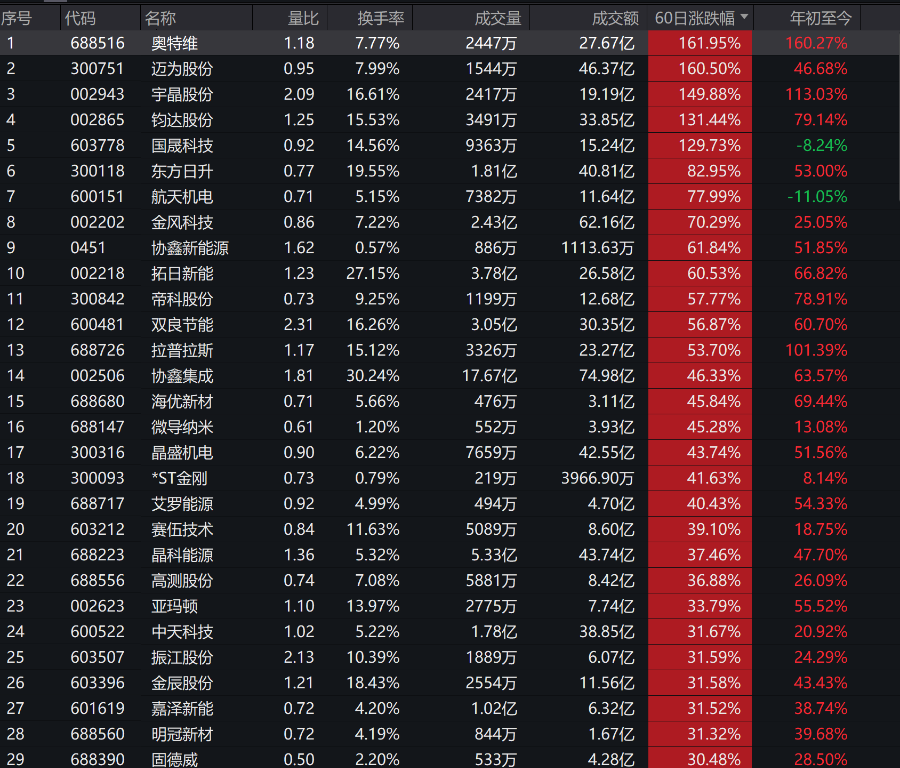
Core Viewpoint - Elon Musk's recent statements and activities have significantly influenced the A-share photovoltaic sector, leading to a surge in stock prices for various companies in this industry [2][3][5]. Group 1: Market Reaction - On January 23, 2026, 24 photovoltaic stocks reached their daily limit up, with the photovoltaic index rising by 7.46%, outperforming the overall market [2]. - Following Musk's remarks about the potential of solar energy in China, several companies, including JinkoSolar and TCL Zhonghuan, saw their stock prices rapidly increase [3][6]. - The A-share photovoltaic sector experienced a collective surge, with stocks like Aotaiwei and Maiwei doubling in price over a two-month period [6]. Group 2: Industry Fundamentals - Despite the recent stock price increases, many photovoltaic companies are still facing financial difficulties, with nearly 70% of 75 companies reporting losses for 2025 [4]. - The photovoltaic industry is currently at a low point, and while some companies are seeing a narrowing of losses, this has not translated into positive market sentiment [4][12]. - The concept of "space photovoltaics" has emerged as a potential new growth area for the industry, driven by the need for new market opportunities amid intense competition in ground-based solar energy [10][13]. Group 3: Future Prospects - Analysts predict that the space photovoltaic market could reach significant sizes, with estimates suggesting a potential market space of 200 billion yuan if 10,000 satellites are launched annually [10]. - Musk's exploration of Chinese photovoltaic companies signals a demand for support from the Chinese supply chain for his space energy ambitions [10][12]. - The push for space photovoltaics may compel companies to focus on new technologies and product quality, potentially leading to a return to value development in the industry [14].





利好来了!刚刚,工信部重磅发布!
券商中国· 2026-02-06 11:49
Core Viewpoint - The Ministry of Industry and Information Technology (MIIT) has announced the construction of a national computing power interconnection node system, which is expected to enhance the efficiency and service level of public computing resources and promote high-quality development in the computing power industry [2][3]. Group 1: National Computing Power Interconnection Node System - The MIIT's notification outlines a "1+M+N" system for national computing power interconnection nodes, aiming to standardize and facilitate the efficient flow of computing resources across different regions and sectors [2][3]. - The construction goals include establishing a supply-demand matching system for computing power in regions and key industries, enhancing overall computing power levels [2][3]. - Regional nodes will provide a unified service platform for interconnection, including services such as resource aggregation, selection, and monitoring [2][3]. Group 2: Industry Trends and Demand - The domestic computing power demand is expected to accelerate, driven by rapid iterations of domestic AI models and the evolving interaction methods that are shaping the demand for inference-side computing power [4][5]. - Major AI models from companies like Alibaba and Baidu are being released, which will further drive the commercialization of these models and increase the demand for computing power [5][6]. - The infrastructure for AI computing power is undergoing systematic upgrades to support the explosive demand for training and inference, transitioning from vertical scaling to distributed cluster expansion and cross-domain collaboration [6][7]. Group 3: Hardware Innovations - Key hardware components such as optical modules and switches are innovating around high speed, low power consumption, and low cost, with a focus on co-packaged optics (CPO) and linear drive pluggable optics (LPO) [7]. - Domestic optical module manufacturers are gaining a leading position in the global market, which positions them to benefit significantly from the expansion of AI computing infrastructure [7].




【VIP机会日报】化工板块集体走强 栏目精选染料行业研报并解读 相关公司收获涨停
Xin Lang Cai Jing· 2026-02-06 08:16
Group 1: Chemical Industry - The prices of various chemical products are on the rise, and the cancellation of export tax rebates is accelerating exports, leading to an improved supply-demand balance in the industry. Leading companies and products at price bottoms have strong profit recovery potential [6] - China, as the world's largest dye producer, is experiencing a concentration increase due to high pollution causing small and medium enterprises to exit the market. The price of disperse dyes has risen for the first time since October 2025, with a production gap of over 10% for intermediates like H acid, potentially benefiting leading companies [6] - Runhua Co. announced a price increase for disperse dyes starting February 5, 2026, due to significant increases in raw material prices. The company has strategically extended its industrial chain to secure raw material supply [6] Group 2: Robotics Industry - Tesla plans to convert its Fremont factory production line, originally for Model S and Model X, to manufacture Optimus humanoid robots. The company is entering the technical finalization and capacity construction phase for its robots, with China having a complete supply chain and large-scale manufacturing capabilities [10] - Wuzhou Xinchun, involved in the robotics sector, saw its stock price surge on February 6, reflecting positive market sentiment towards the robotics industry [11] Group 3: Photovoltaic Industry - Musk's team is reportedly assessing the Chinese photovoltaic supply chain. GCL-Poly announced a significant breakthrough in its perovskite tandem solar cell technology, achieving a certified photoelectric conversion efficiency of 33.31%, leading to a stock price increase [14] - Analysts are optimistic about the demand for space photovoltaics, which is expected to grow significantly, and they are particularly bullish on photovoltaic equipment suppliers like Aotewei, which saw a maximum stock price increase of 15.5% [16]


深市规模最大的光伏ETF(159857)标的指数涨超2%,机构:白银价格高位回落有助于缓解电池片环节的成本压力
Mei Ri Jing Ji Xin Wen· 2026-02-06 07:08
Group 1 - The photovoltaic sector showed strong performance with the photovoltaic ETF (159857) rising over 2% during trading, with a transaction volume of 268 million yuan [1] - The ETF has seen a net inflow of 260 million yuan over the last ten trading days, with a current fund size of 2.322 billion yuan, making it the largest in its category in the Shenzhen market [1] - The ETF closely tracks the photovoltaic industry index, with major allocations in photovoltaic equipment (61.53%), grid equipment (13.3%), and electricity (8.57%) [1] Group 2 - Recent discussions by the Ministry of Industry and Information Technology emphasized guiding the photovoltaic industry towards healthy competition and avoiding "involution" [1] - The Ministry of Finance announced that it will phase out the export tax rebate for photovoltaic products starting April 1, 2026 [1] - The space photovoltaic concept is gaining attention, with Elon Musk's space energy plan bringing new momentum to the industry [1] Group 3 - High silver prices are pushing the photovoltaic metallization sector towards a technological revolution, with copper alternatives like silver-coated copper and electroplated copper becoming key cost-reduction strategies [2] - Successful large-scale application of these alternatives could significantly enhance the performance of related materials and equipment companies [2]




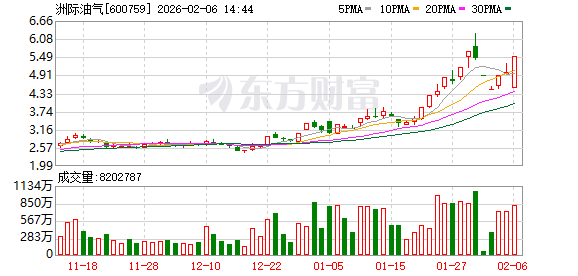
午后异动!600759,“地天板”
Shang Hai Zheng Quan Bao· 2026-02-06 06:43
Group 1 - Intercontinental Oil and Gas (600759) experienced a significant price surge, closing at the daily limit after opening with a drop limit, with a trading volume exceeding 4 billion yuan [2] - The CPO concept stocks continued to rise, with Zhilifang hitting a historical high with a 20% limit increase; Keri Technology and Huanxu Electronics also reached their daily limit [2] - Other stocks such as Yitian Co. and Aotwei increased by over 10%, while Changyingtong and Zhongfu Circuit also saw notable gains [2] Group 2 - Changyingtong rose by 7.26% to 58.53, with an increase of 11.12% [4] - Zhongfu Circuit increased by 7.16% to 78.40, with a rise of 5.67% [4] - Fenghuo Communication saw a rise of 7.14% to 41.86, with an increase of 5.63% [4]


光伏设备板块震荡走高,正泰电源涨停
Mei Ri Jing Ji Xin Wen· 2026-02-06 05:39
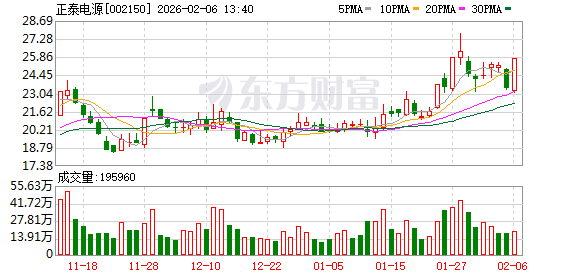
Group 1 - The photovoltaic equipment sector experienced a significant upward trend on February 6, with notable stocks such as Zhejiang Chint Power reaching the daily limit increase, and ZERUN New Energy rising over 10% [2] - Other companies in the sector, including GCL-Poly Energy, Aotai Technology, Yamaton, JinkoSolar, Maiwei Co., and Laplace, also saw increases in their stock prices [2]


光伏设备板块回调
Di Yi Cai Jing· 2026-02-05 12:28
奥特维跌超10%,钧达股份、金辰股份双双跌超9%,迈为股份、拉普拉斯、东方日升、晶盛机电、晶 科能源等个股跟跌。 (本文来自第一财经) ...



一夜喧嚣后,太空光伏概念股进入“冷静期”
Xin Jing Bao· 2026-02-05 05:01
Group 1 - The recent market fluctuations in the space photovoltaic sector were triggered by Elon Musk's visit, leading to significant declines in several stocks, including JunDa Co., Ltd. and others [1] - Companies like GCL-Poly Energy Holdings and GCL-Integrated are experiencing stock price increases following Musk's team's interest in collaboration on silicon and perovskite technologies [1] - Multiple companies, rumored to be visited by Musk, issued announcements regarding their space photovoltaic business operations [1] Group 2 - JinkoSolar stated that space photovoltaic technology is still in the early exploration phase, with no impact on its current business performance as it focuses on terrestrial photovoltaic products [2] - Jingcheng Machinery expressed that the application scenarios for space photovoltaics are still being explored, and the industrialization process faces uncertainties [2] - The China Photovoltaic Industry Association emphasized that space photovoltaic technology is in the initial exploration and verification stage, making it premature to determine a clear technical direction [2] Group 3 - During a seminar held by the China Photovoltaic Industry Association, regulatory authorities reiterated the importance of addressing "involution" within the industry as a key focus for the year [3] - The Ministry of Industry and Information Technology highlighted that the photovoltaic industry is undergoing a significant adjustment period, with unresolved supply-demand mismatches posing challenges for companies [3] - The governance of industry involution is prioritized as a critical task for the current year [3]

光伏早盘收跌近5%,多家公司公告澄清与马斯克合作
第一财经· 2026-02-05 04:28
Core Viewpoint - The recent interest in space photovoltaic technology has led to significant stock price fluctuations in the solar industry, but many companies have clarified that they have not engaged in any concrete projects with Elon Musk's team, highlighting the uncertainty surrounding the commercialization of space photovoltaic technology [2][4][9]. Group 1: Market Reactions - As of February 5, the Wind Photovoltaic Index fell by 4.56%, with several stocks, including Aotwei and Maiwei, dropping over 10% [2]. - In contrast, the space photovoltaic sector saw a temporary surge, with Jinko Solar hitting a 20% limit-up, alongside TCL Zhonghuan and others [3]. Group 2: Company Announcements - Multiple companies, including Jinko Solar, have issued announcements denying any collaboration with Musk's team, stating that they have not signed any agreements or received orders related to space photovoltaic projects [4][6]. - Dual Energy and Guosheng Technology also clarified that they have not engaged in any space photovoltaic business and that their current operations remain unaffected [5][6]. Group 3: Industry Insights - The space photovoltaic technology is still in the exploratory and verification stages, with significant uncertainties regarding its commercialization [9][10]. - The China Photovoltaic Industry Association emphasized that the development of any technology requires mature manufacturing capabilities and long-term reliability verification [9]. - Current space photovoltaic technologies, such as gallium arsenide (GaAs) and perovskite, face challenges in terms of cost and stability, with GaAs being the mainstream material but prohibitively expensive for large-scale deployment [10]. Group 4: Economic Considerations - The cost of electricity generated from space photovoltaic systems is currently estimated to be 2-3 USD per kilowatt-hour, significantly higher than the 0.03-0.05 USD per kilowatt-hour for ground-based photovoltaic systems [10]. - Without a drastic reduction in launch costs and a doubling of photovoltaic efficiency, the economic viability of space photovoltaic technology remains questionable [10].



光伏早盘收跌近5%,多家公司公告澄清与马斯克合作!协会:太空光伏仍处验证初期
Di Yi Cai Jing· 2026-02-05 03:59
Core Viewpoint - Multiple companies have denied the existence of executable projects in collaboration with Elon Musk's team, indicating significant uncertainty in the industrialization process of "space photovoltaics" [1][2][3][4][5][6] Company Responses - JinkoSolar (688223.SH) announced that it has not engaged in any cooperation with Musk's team and has no existing orders related to "space photovoltaics," emphasizing that the technology is still in the preliminary exploration stage [2] - Shuangliang Energy (600481.SH) stated that it has not confirmed any revenue related to commercial space projects in the past two years and that the development of related business faces uncertainty [2] - Guosheng Technology (603778.SH) clarified that it does not provide "space photovoltaic" systems and that its products are primarily used in terrestrial power plants [2] - High Measurement Technology (688556.SH) confirmed it has not engaged in any "space photovoltaic" business or collaborations [3] - Jingcheng Machinery (300316.SZ) reiterated that the application scenarios for "space photovoltaics" are still in the exploratory phase, with significant uncertainty in the industrialization process [4] Industry Insights - The "space photovoltaic" technology is still in the early stages of exploration and verification, according to industry experts [5][6] - The mainstream material for space photovoltaics remains gallium arsenide (GaAs), which, despite its high cost, has undergone long-term in-orbit verification [5][6] - Current cost estimates for space photovoltaics are significantly higher than terrestrial photovoltaics, with estimates of $2-3 per kilowatt-hour compared to $0.03-0.05 for ground-based systems [6]