
Qi An Xin Technology (688561)

Search documents
第七届北京网络安全大会智慧能源安全论坛召开:行业共话能化安全建设新路径
Zhong Guo Hua Gong Bao· 2025-06-18 06:30
Group 1 - The seventh Smart Energy Security Forum was held in Beijing, focusing on cybersecurity challenges and strategies in the digital transformation of the energy and chemical industries [1] - Experts emphasized the need for a resilient defense system, trustworthy data circulation, cross-domain collaborative governance, and industrial control system security to support the new energy and chemical system [1] - The current complex international situation and rapid proliferation of AI applications necessitate a breakthrough in cybersecurity, with a focus on establishing a deep defense system for large models and protecting core data security [1][2] Group 2 - The rapid development of digital intelligence during the "14th Five-Year Plan" period requires new considerations for security systems in the upcoming "15th Five-Year Plan" [2] - A comprehensive defense system covering operational technology (OT) environments and enhanced security operations through AI are highlighted as key focus areas [2] - The China National Offshore Oil Corporation shared its experience in building a cybersecurity framework for marine energy digitalization, emphasizing a systematic approach to unify architecture, standards, and processes [2][3] Group 3 - A classification system for data into five levels (core, important, internal, sensitive, public) was established to match protection strategies accurately [3] - The forum was co-hosted by the China Electrotechnical Society and the China Energy Research Society, with over 200 representatives from government and academia in attendance [3]

科创板今日大宗交易成交1.75亿元
Zheng Quan Shi Bao Wang· 2025-06-16 13:20
Summary of Key Points Core Viewpoint - On June 16, a total of 12 stocks on the Sci-Tech Innovation Board (STAR Market) experienced block trading, with a cumulative transaction amount of 175 million yuan [1]. Group 1: Trading Overview - There were 22 block trades executed, totaling 5.4936 million shares and an aggregate transaction value of 175 million yuan [1]. - The stock with the highest transaction amount was Qi Anxin, with 2 block trades totaling 880,000 shares and a transaction value of 28.7232 million yuan [1]. - Other notable stocks in terms of transaction value included Jiao Cheng Ultrasound and Siwei Technology, with transaction amounts of 26.9882 million yuan and 20.4719 million yuan, respectively [1]. Group 2: Price and Performance Analysis - The average discount rates for block trades relative to the closing prices were highest for Aotewei, Jingyuan Environmental Protection, and Jiao Cheng Ultrasound, with discount rates of 19.67%, 16.62%, and 11.01% respectively [1]. - The STAR 50 Index fell by 0.21% on the same day, while 399 stocks (67.86%) on the STAR Market saw an increase, with an average increase of 2.07% for stocks involved in block trading [1]. - The top gainers among the stocks with block trades included Jiao Cheng Ultrasound, Aike Saibo, and Delong Laser, with increases of 11.37%, 8.62%, and 6.30% respectively [1]. Group 3: Institutional Participation - Among the block trades, 10 transactions involved institutional buyers or sellers, covering 8 stocks [2]. - The stocks with the highest institutional buying amounts were Siwei Technology, Huitong Co., and Changguang Huaxin, with buying amounts of 20.4719 million yuan, 19.14 million yuan, and 10.524 million yuan respectively [2]. - The stocks with the highest institutional selling amounts included Buke Co., with a selling amount of 9.9384 million yuan [2]. Group 4: Fund Flow Analysis - Five stocks experienced net inflows of main funds, with the highest net inflow recorded for Aike Saibo at 17.0268 million yuan [2]. - The stocks with the highest net outflows included Siwei Technology, Jiao Cheng Ultrasound, and Huitong Co., with net outflows of 14.9344 million yuan, 14.2761 million yuan, and 9.6260 million yuan respectively [2].


Agent有望定义万亿劳动力市场




Tianfeng Securities· 2025-06-11 08:42
Industry Rating - The industry rating is maintained at "Outperform" [1] Core Insights - The report suggests that the years 2025-2026 are expected to mark the commercialization of AI Agents, driven by advancements in large model capabilities and the introduction of key players like OpenAI, Anthropic, Microsoft, and Google [2][3] - The total addressable market (TAM) for AI Agents is estimated at approximately 3.61 trillion yuan, with significant opportunities in vertical industries such as IT and finance [2][3] - AI Agents are projected to replace specific standardized roles in various sectors, with a focus on enhancing productivity and ROI for businesses [3][48] Summary by Sections Investment Rating - The report maintains a rating of "Outperform" for the industry [1] Market Potential - The total addressable market (TAM) for AI Agents is estimated at 3.61 trillion yuan, calculated based on total salary levels, replacement rates, and efficiency optimization [50][54] - The report highlights six core scenarios where AI Agents are expected to penetrate first, including coding, banking, human resources, legal, cybersecurity, and customer service [61][62] Key Industry Insights - AI Agents are anticipated to significantly impact the banking sector, with 54% of jobs having a high potential for automation, leading to an estimated TAM of 1774.32 billion yuan in this field [71][77] - In the coding sector, AI is expected to automate up to 99% of coding tasks by the end of 2025, with a TAM of approximately 4357.84 billion yuan [63][68] - The report emphasizes that AI Agents will first replace roles in high-salary, white-collar industries such as finance, IT, and law, where the ROI for AI implementation is more favorable [55][57] Company Recommendations - The report suggests monitoring companies involved in general office applications and enterprise SaaS, as well as those in vertical markets like banking, human resources, and cybersecurity [3][4]
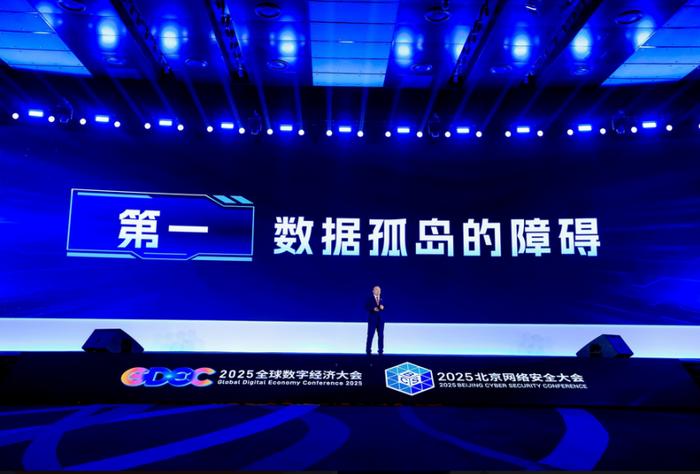
2025BCS大会开幕,齐向东:“万家造”和“两张皮”催生数据孤岛
Chang Sha Wan Bao· 2025-06-09 15:32
Core Insights - The importance of data for security has increased exponentially over the past decade, but the lack of a unified system has led to the creation of "data islands," severely hindering the implementation of security systems [3][4] - The phenomenon of "two skins" in business and security is prevalent, where security departments are not synchronized with business operations, leading to vulnerabilities and data breaches [4] Group 1: Data Isolation Issues - Many enterprises face challenges in implementing network security systems, with the data island problem being particularly prominent due to the fragmented nature of security devices and operations [3] - A case study of a leading financial institution revealed that the deployment of multiple firewall models from various brands resulted in inconsistent data formats and incompatible interfaces, complicating data collection and analysis [3] Group 2: Operational Challenges - The "manufactured by many" situation in security equipment was highlighted during the recent India-Pakistan conflict, where India's diverse equipment failed to perform effectively due to lack of standardization and poor data flow, contrasting with Pakistan's more integrated system [3] - Insufficient security investment and compatibility issues between new and old products are significant barriers to the effectiveness of overall security system construction [4]

齐向东:重塑内生安全体系 实现安全突围
Jing Ji Wang· 2025-06-09 10:06
Core Insights - The 2025 Global Digital Economy Conference emphasizes the importance of a systematic approach to cybersecurity, with the theme "Breaking Through Security: Reshaping the Endogenous Security System" [1] - Qi Xiangdong, a key speaker, highlights that the current cybersecurity industry is at a critical juncture where systematic construction is essential for overcoming existing challenges [1] Group 1: Current Challenges in Cybersecurity - The cybersecurity industry is facing three major dilemmas: ineffective implementation of systematic thinking, integration bottlenecks between large and small systems, and operational obstacles within small systems [2] - Over 90% of large government and enterprise institutions purchase security equipment from more than 10 vendors, leading to a fragmented "big platter" state in cybersecurity [2] - The lack of integration between large and small systems results in disjointed security capabilities and difficulties in unified strategic implementation [2] Group 2: Barriers to Effective Security Systems - Qi identifies three significant barriers to achieving the emergent effect in endogenous security systems: data silos, insufficient investment, and compatibility issues between old and new systems [2] - Data silos continue to hinder the implementation of security systems, despite the increasing importance of data in security over the past decade [2] - The phenomenon of "many manufacturers" and "two skins" contributes to data fragmentation, making it difficult for organizations to recognize external attacks [3] Group 3: Pathways for Systematic Construction - Systematic construction in cybersecurity requires adopting a system integration mindset, applying systematic thinking to the development of security protection frameworks [3] - Qi proposes three pathways for reshaping the security industry: reconfiguring data aggregation models, enhancing security operation models, and fostering ecological cooperation models [3]
王自如感谢董明珠和雷军|首席资讯日报
首席商业评论· 2025-06-07 03:51
Group 1 - Qi Xiangdong, chairman of Qi Anxin, highlighted the severe internal competition in the cybersecurity industry, stating that software development can take years and cost billions, yet the costs remain invisible during bidding processes, leading to destructive price wars [1][2] - Qi called for government intervention to improve the business environment for the software industry and promote healthy development [1] Group 2 - Wang Ziru expressed gratitude towards Dong Mingzhu and Lei Jun for their encouragement and support at different times, which helped him maintain his ideals [3] Group 3 - Xizi Elevator announced the passing of its chairman and general manager, Liu Wenchao, who died at the age of 54 [4] Group 4 - Amazon announced layoffs in its book department, affecting fewer than 100 employees, as part of efforts to improve efficiency and streamline operations [5] Group 5 - Indonesia is evaluating the feasibility of purchasing Chinese-made J-10 fighter jets to enhance its air force's modernization while considering cost-effectiveness [6] - The performance of the J-10 in the India-Pakistan conflict is a significant factor in Indonesia's consideration [6] Group 6 - XPeng Motors launched the "Chasing Light Panorama" AR-HUD system, developed in collaboration with Huawei, featuring an 87-inch display and supporting multiple driving scenarios [7] - The system aims to enhance driving safety and user experience through advanced imaging technology [7] Group 7 - Elon Musk announced that Tesla's next-generation AI chip, Dojo 2, will be launched later this year, indicating progress in AI training technology [8] Group 8 - Trump Media & Technology Group submitted an application for a Bitcoin ETF, aiming to list it on the New York Stock Exchange, which will directly hold Bitcoin and reflect its price performance [9] - The ETF's approval process is expected to conclude by early next year [9] Group 9 - Semiconductor Manufacturing International Corporation (SMIC) announced plans to sell a 14.832% stake in its Ningbo subsidiary to Hunan Guoke Microelectronics [10] Group 10 - The National Health Commission of China announced plans to promote painless childbirth services across medical institutions, aiming for comprehensive availability by 2027 [12][13]




专家热议AI时代网络安全:重塑内生安全体系是“突围之钥”
Huan Qiu Wang· 2025-06-06 08:22
Core Insights - The 2025 Global Digital Economy Conference highlighted the theme "Breaking Through Security: Reshaping the Endogenous Security System," focusing on the challenges in cybersecurity during the AI era [1][3] Group 1: AI and Cybersecurity Challenges - AI presents both opportunities and systemic challenges for the cybersecurity industry, necessitating a breakthrough in current security frameworks [3] - The complexity of the international situation and the rapid proliferation of AI applications have rendered traditional security measures ineffective [3] - The Chinese government has initiated regulatory measures, including the "Interim Measures for the Management of Generative AI Services," with over 400 large models registered as of now [3][4] Group 2: Systemic Solutions and Recommendations - Experts emphasize the need for a systematic approach to address the multifaceted risks posed by AI in cybersecurity [4] - Recommendations include accelerating the construction of AI-enabled security systems, promoting innovation in AI security products, and enhancing protective measures through practical applications [4][5] - Key obstacles to building an endogenous security system include data silos, insufficient resource investment, and compatibility issues between old and new systems [5] Group 3: International Expansion and Collaboration - Companies like Qi Anxin are focusing on international business growth, aiming for a significant proportion of their operations to be overseas in the next decade [5][6] - The Chinese cybersecurity industry is positioned to compete globally, with innovations and product quality comparable to developed countries [6] - The collaborative ecosystem is deemed essential for overcoming challenges in core technology development and industry cooperation [6]
AI时代如何应对网络安全问题?“体系”成关键词
Zhong Guo Xin Wen Wang· 2025-06-06 01:48
Core Insights - The conference emphasized the need for a collaborative defense system in the face of new types of cyber threats in the AI era [1][2] - Experts highlighted that a single-point defense is no longer sufficient, and a unified security framework is essential for effective protection against national-level cyber attacks [1][2] Group 1: Industry Perspectives - The Vice Chairman of the All-China Federation of Industry and Commerce, An Lijia, stated that cybersecurity threats are a global challenge, necessitating deep integration of industry chains, innovation chains, and value chains [1] - An Lijia also called for increased R&D investment in key areas such as core algorithms, underlying architecture, and computing resources to expand application scenarios [1] - Sun Weimin, Chief Engineer of the National Internet Information Office, emphasized the need for a systematic approach to cybersecurity, advocating for a national joint defense system [1] Group 2: Technological Developments - Qi Xiangdong, Chairman of Qi Anxin Group, noted that over 90% of large government and enterprise institutions procure security devices from more than 10 vendors, leading to a fragmented security system [1] - Qi Xiangdong argued for the necessity of building a cohesive and effective unified security system to replace the current disjointed approach [1] - Zhao Zhiguo, Executive Deputy Director of the Expert Advisory Committee of the China Internet Association, highlighted that AI is a key technology in global cybersecurity competition and must be addressed with a systematic approach [2]
奇安信:“一块钱中标”对软件行业有破坏性杀伤力
Bei Jing Shang Bao· 2025-06-05 14:47
Core Viewpoint - The cybersecurity industry is experiencing severe internal competition, primarily driven by software, which is often perceived as having zero cost but requires significant investment and time for development [2][3] Industry Analysis - The software industry has a lower competitive threshold compared to other sectors, leading to a phenomenon known as "involution," where excessive competition results in resource wastage and decreased efficiency [3] - Involution in the software industry is characterized by a focus on price rather than quality, with companies attempting to gain market share through lower prices [3] - The cost of software development is often hidden, as exemplified by the significant investment required by companies like Qi Anxin, which may spend several years and hundreds of millions on software development [3][4] Market Trends - The global cybersecurity market is projected to grow from nearly $220 billion in 2023 to over $240 billion in 2024, indicating a robust demand for cybersecurity solutions [4] - The complexity of cyber threats is increasing, necessitating a shift in the cybersecurity industry to address these challenges effectively [4] Challenges in Cybersecurity - The cybersecurity industry faces three main obstacles: data silos, insufficient resource investment, and compatibility issues between old and new systems [4] - The current approach to security is often reactive and inadequate, leading to a patchwork of solutions that lack effectiveness [4] Recommendations for Improvement - To combat internal competition and enhance cybersecurity, the industry should focus on three pathways: 1. Eliminate silos and improve data aggregation 2. Innovate security operations through feedback and intelligence 3. Establish a comprehensive security framework to ensure a robust ecosystem [5]
“小数据”决定企业生死?齐向东:AI时代必须重构防护体系,防“一锅端”风险
2 1 Shi Ji Jing Ji Bao Dao· 2025-06-05 14:19
Core Viewpoint - The cybersecurity industry is facing significant challenges due to a fragmented system, where the procurement of security devices from multiple vendors leads to dispersed responsibilities and ineffective security capabilities [1][2] Group 1: Systemic Challenges - Over 90% of large government and enterprise organizations procure security devices from more than 10 vendors, resulting in a "big platter" of fragmented security systems [2] - There is a disconnect between the macro-level "big system" and the micro-level "small systems," leading to difficulties in integrating security capabilities and implementing unified strategies [2][3] - The operational bottleneck arises from the lack of data sharing and communication between different "small systems," which exacerbates the security risks [2] Group 2: Impact of AI - The traditional strategy of protecting core "small data" through compartmentalization has become ineffective in the age of AI [3][4] - Small data, which includes trade secrets and proprietary information, is now at risk of being easily accessed and replicated by competitors using AI technologies [4] Group 3: Proposed Solutions - To address these challenges, the industry must focus on three key paths: reshaping data aggregation models, constructing feedback loops for security operations, and redefining ecological cooperation models [5] - A comprehensive security data set that covers a wide range of dimensions and has high contextual relevance is essential for effective threat detection [5] - Establishing a "security system chief designer" to unify disparate security efforts and create a cohesive defense strategy is crucial for effective implementation [6]