
PAB(000001)

Search documents
八家银行率先落地Visa支持Apple Pay绑卡,加码跨境支付场景布局
Bei Jing Shang Bao· 2026-01-15 08:14
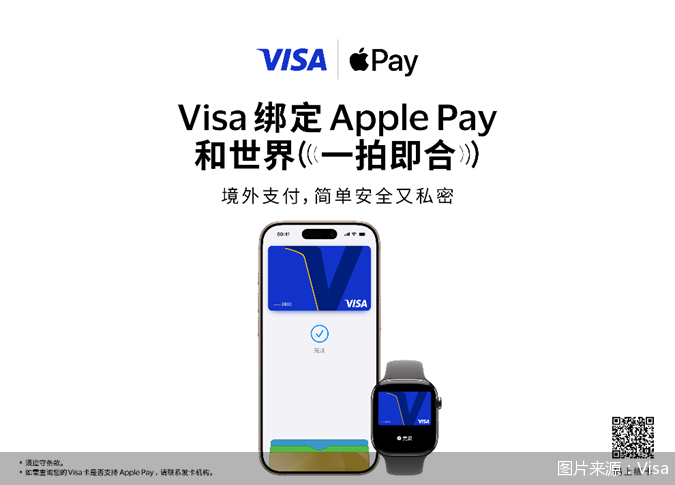
Core Insights - Visa and Apple Pay have launched a collaboration to allow Chinese cardholders to link their Visa cards to Apple Pay for seamless cross-border payments, enhancing the efficiency and experience of international transactions [1][3][6] Group 1: Collaboration Details - The partnership enables Chinese cardholders to use Apple Pay for payments at overseas merchants, mobile apps, and online platforms, facilitating contactless transactions [3][4] - The initial participating banks include Industrial and Commercial Bank of China, Bank of China, Agricultural Bank of China, and others, with more banks expected to join in the future [4][6] Group 2: Consumer Benefits - The integration of Visa and Apple Pay allows for a streamlined payment process, reducing the need for repeated entry of card information, thus enhancing user convenience [5][6] - Apple Pay's standardized interface is designed to lower the usage threshold for consumers, making it easier to conduct transactions abroad [5][6] Group 3: Security Features - The collaboration incorporates advanced security measures, such as the use of a unique device account number generated by Visa's tokenization technology, which helps mitigate fraud risks [6][7] - Sensitive payment information is not stored on devices or Apple servers, ensuring a higher level of security for users [6][7] Group 4: Bank Strategy - This partnership represents a strategic move for banks to deepen their cross-border financial services and enhance customer engagement by embedding their card products into global mobile payment scenarios [6] - Banks are also launching promotional activities to encourage users to link their Visa cards to Apple Pay, enhancing the overall value proposition for consumers [5][6]





2025中国企业ESG“金责奖”责任投资最佳银行奖揭晓
Xin Lang Cai Jing· 2026-01-15 07:37
Core Viewpoint - The 2025 China Enterprise ESG "Golden Responsibility Award" aims to recognize companies that have made significant contributions to ESG (Environmental, Social, and Governance) practices, with over 5,000 enterprises participating in the evaluation process [1][4]. Group 1: ESG Award Overview - The award was launched in November 2025 by Sina Finance ESG Rating Center, focusing on promoting sustainable development and responsible investment [1][4]. - The evaluation process included comprehensive performance assessments, professional scoring, and online voting, culminating in the announcement of the award winners after three months of competition [1][4]. Group 2: Award Winners - The "Best Responsible Investment Bank" award was given to six banks: Agricultural Bank of China, Industrial and Commercial Bank of China, China Construction Bank, China Merchants Bank, Industrial Bank, and Bank of China [2][5]. - The award committee expressed hopes that these leading enterprises will inspire others to enhance their ESG capabilities and contribute to high-quality development in China [2][5]. Group 3: ESG Rating Center Introduction - The Sina Finance ESG Rating Center is the first Chinese platform dedicated to ESG information and ratings, promoting sustainable development and responsible investment [3][6]. - The center aims to establish ESG evaluation standards suitable for China's characteristics and enhance corporate ratings through collaboration with leading ESG enterprises [3][6].




2025中国企业ESG“金责奖”优秀奖评选结果揭晓


Xin Lang Cai Jing· 2026-01-15 03:45
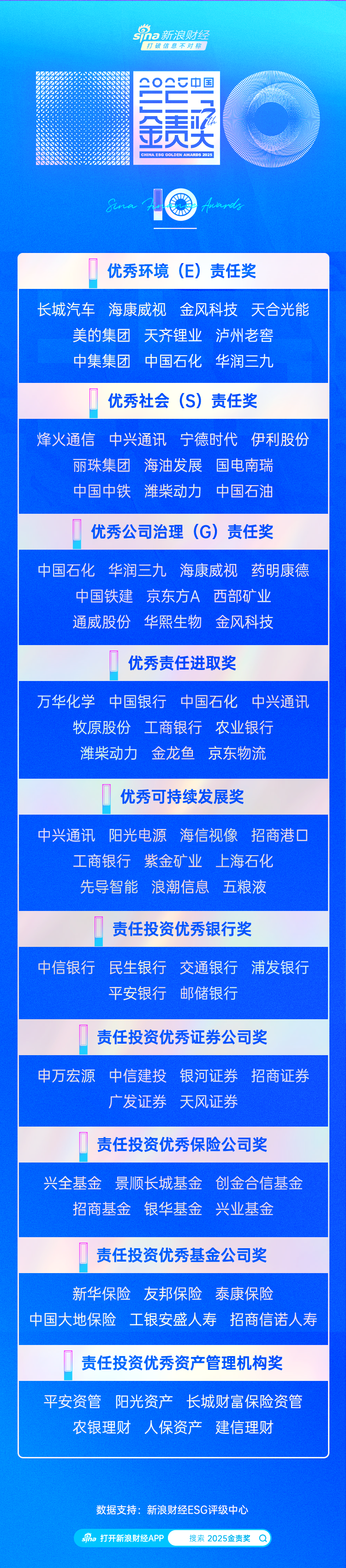
Core Viewpoint - The 2025 China Enterprise ESG "Golden Responsibility Award" aims to recognize companies and institutions that have made significant contributions to ESG initiatives in China, reflecting a shift from voluntary practices to compliance requirements in ESG performance [1][12]. Group 1: ESG Development and Awards Overview - By 2025, China's ESG development has transitioned from "setting standards" to "strengthening regulations," with a comprehensive disclosure standard system being established [1][12]. - The award selection attracted over 5,000 companies, with results based on ESG performance, online voting, and professional evaluations [2][12]. Group 2: Award Categories and Winners - The award categories include Excellent Environmental Responsibility Award, Excellent Social Responsibility Award, Excellent Corporate Governance Responsibility Award, Excellent Responsibility Initiative Award, Excellent Sustainable Development Award, and various responsibility investment awards [1][12]. - Notable winners of the Excellent Environmental Responsibility Award include Great Wall Motors, Hikvision, and China Petroleum [7][24]. - The Excellent Social Responsibility Award was awarded to companies such as YF Communication, ZTE, and Ningde Times [7][24]. - Winners of the Excellent Corporate Governance Responsibility Award include China Petroleum, Hikvision, and WuXi AppTec [7][24]. - The Excellent Responsibility Initiative Award was given to companies like ZTE, Sunlight Power, and Industrial and Commercial Bank of China [7][24]. - The Excellent Sustainable Development Award included companies such as WanHua Chemical, China Bank, and China Petroleum [7][24]. Group 3: Responsibility Investment Awards - The Responsibility Investment Excellent Bank Award was given to institutions like CITIC Bank and Minsheng Bank [5][21]. - The Responsibility Investment Excellent Securities Company Award included firms such as Shenwan Hongyuan and CITIC Securities [5][22]. - The Responsibility Investment Excellent Insurance Company Award recognized companies like New China Life and AIA [5][26]. - The Responsibility Investment Excellent Fund Company Award included firms such as Xinhua Fund and Harvest Fund [5][27]. - The Responsibility Investment Excellent Asset Management Institution Award recognized institutions like Ping An Asset Management and Sunshine Asset Management [5][28]. Group 4: Call to Action and Future Directions - The award committee encourages more Chinese enterprises to integrate ESG principles into their operations and strategic planning, emphasizing the importance of balancing commercial and social values [10][29].
今日水贝金价及各大银行金条报价【2026.1.15】
Xin Lang Cai Jing· 2026-01-15 03:17
Group 1 - The price of gold bars from various banks and institutions has shown an increase, with specific examples including the Construction Bank and Industrial and Commercial Bank both reporting a rise of 3.40 yuan per gram [1][2] - The Shanghai Gold Exchange reported a gold bar price of 1035 yuan per gram, reflecting an increase of 3.00 yuan per gram [2] - The silver prices have also seen increases, with the average price for silver bars from different sources showing rises, such as the Baoquan Coin's silver bar increasing by 1.86 yuan per gram [2][3] Group 2 - The current market for gold and silver bars is dynamic, with prices subject to real-time changes, indicating a volatile investment environment [3]
Visa支持中国消费者Apple Pay绑卡
Xin Lang Cai Jing· 2026-01-15 02:55
1月15日金融一线消息,Visa今日宣布支持中国持卡人 ApplePay绑卡。Visa将与Apple一起,支持中国持 卡人将Visa卡绑定至ApplePay,并在境外的线下商户、移动app或线上网站等多种场景进行支付。目 前,全球79%的线下交易来自"一拍即付"。 Visa中国区总裁尹小龙表示:"全球数字支付飞速发展的同时,消费者对基于手机的、互联互通的移动 支付方式的需求也与日俱增。一直以来,Visa致力于为中国持卡人提供多元的支付选择,让他们无论身 处何地,都能安心自在地畅享支付之旅。此次,Visa秉持着对中国市场和持卡人长期不变的承诺,在数 据安全与支付安全领域加大投入,推出支付标记化服务并率先实现其在跨境场景的应用。我们很高兴与 Apple及金融机构携手,率先为中国持卡人带来更安全、更便捷的移动支付新体验。" 首批支持的发卡银行包括:中国工商银行、中国银行、中国农业银行、交通银行、招商银行、中信银 行、平安银行及兴业银行。Visa和Apple正在与包括上海浦东发展银行、中国建设银行、中国民生银 行、中国光大银行在内的更多银行伙伴紧密合作,相关功能将于未来陆续上线。 责任编辑:王馨茹 Visa中国区总裁 ...



金价飙升后,银行里的“一尺铁柜”成了抢手货
Xin Lang Cai Jing· 2026-01-15 00:02
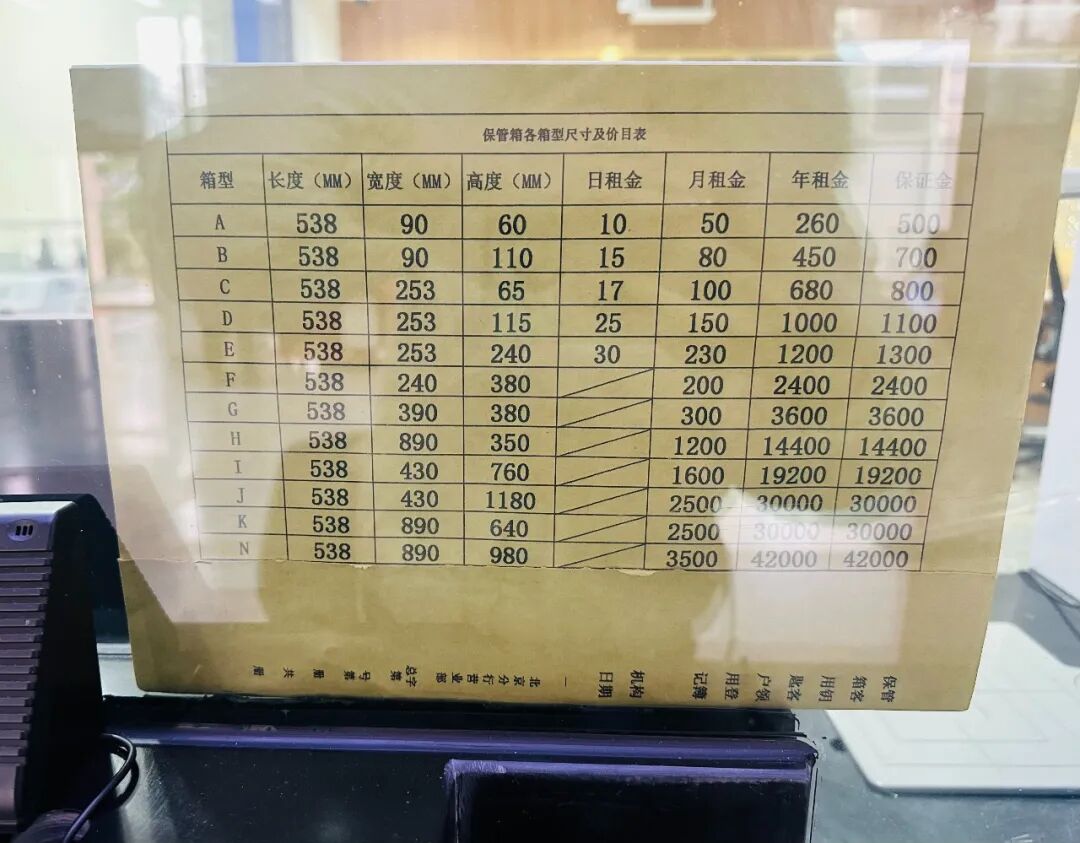
Core Insights - The rising gold prices have sparked a surge in demand for bank safe deposit boxes, leading to a situation where they are in high demand but low supply [1][4][12] - Many banks in Beijing report that all safe deposit boxes are currently rented out, with waiting lists exceeding 100 customers at some locations [2][10] - The demand for safe deposit boxes is driven by increased interest in gold investments, as geopolitical risks continue to elevate the appeal of gold as a safe-haven asset [4][12] Demand and Supply Dynamics - The demand for safe deposit boxes has significantly increased, with banks reporting a notable rise in inquiries since last year [4][12] - Banks are struggling to keep up with the demand, as the supply of safe deposit boxes has not increased in tandem, leading to a shortage [6][15] - Some banks have ceased offering safe deposit box services altogether due to high maintenance costs and low profitability [15][16] Pricing and Features - Different banks offer various sizes and pricing structures for safe deposit boxes, with significant variations in rental fees [3][11] - For example, at China Merchants Bank, the smallest box has a monthly rental fee of 50 yuan, while larger boxes can cost up to 42,000 yuan annually [11] - Postal Savings Bank offers a fully automated safe deposit box with advanced security features, including 24-hour monitoring and multiple verification methods for access [5][13] Market Trends - The ongoing geopolitical tensions and expectations of continued low interest rates are expected to sustain the demand for gold and, consequently, safe deposit boxes [4][12] - Investors are increasingly looking for secure storage options for their gold investments, as concerns about home security grow [4][12] - Some banks are innovating their services, such as offering promotional deals for customers purchasing gold products, to attract more clients [16]



金价飙升后 银行里的“一尺铁柜”成了抢手货
Zhong Guo Zheng Quan Bao· 2026-01-14 21:10
Core Viewpoint - The surge in gold prices has led to a significant increase in demand for bank safe deposit boxes, resulting in a shortage of available boxes in Beijing banks [1][4]. Group 1: Demand for Safe Deposit Boxes - There is a booming demand for safe deposit boxes as residents are increasingly investing in gold, with reports indicating that many banks are fully booked and customers are facing long waiting lists [1][2]. - Some banks have reported waiting lists exceeding 100 people, with estimates suggesting that new customers may not be able to rent boxes until 2026 [2][4]. Group 2: Supply Constraints - The supply of safe deposit boxes has not kept pace with the rising demand, as only larger bank branches typically offer this service, and many smaller branches do not have safe deposit box facilities [1][6]. - Factors such as space limitations and high maintenance costs have prevented banks from expanding their safe deposit box offerings, leading to a decline in the availability of this service [6]. Group 3: Pricing and Variability - Different banks offer various sizes and pricing structures for safe deposit boxes, with significant differences in rental fees based on box dimensions [3][4]. - For example, at China Merchants Bank, the smallest box has a monthly rental fee of 50 yuan, while larger boxes can cost up to 42,000 yuan annually [3]. Group 4: Investor Sentiment and Alternatives - Investors express concerns about the safety of storing physical gold at home, leading many to prefer bank safe deposit boxes for their perceived security [5]. - Some investors are considering alternatives such as home safes due to the high rental costs and long wait times associated with bank safe deposit boxes [7]. Group 5: Innovations and Promotions - To address the supply-demand imbalance, some banks are exploring smart upgrades and promotional offers to attract customers, such as free rental periods for new clients purchasing gold products [7]. - For instance, Qingdao Rural Commercial Bank has offered promotional incentives for customers purchasing gold products, including free usage of safe deposit boxes for a limited time [7].
多家银行短期大额存单利率进入“0字头”
Zheng Quan Ri Bao· 2026-01-14 15:42
Core Viewpoint - The deposit market is undergoing a significant adjustment in 2026, with a notable decline in interest rates for large time deposits, leading to a shift in asset allocation strategies among depositors [1][3]. Group 1: Market Trends - Medium and small banks are adjusting their large time deposit products, with short-term and low-interest rates becoming the market norm [2]. - New large time deposits are generally issued with interest rates below 2%, narrowing the gap with regular fixed-term deposits, and some rural commercial banks have rates entering the "0" range [2]. - Major state-owned banks have already reduced short-term large time deposit rates to 0.9% for terms of three months or less [2]. Group 2: Changes in Asset Allocation - The continuous decline in interest rates is prompting ordinary depositors to fundamentally change their investment strategies, moving from reliance on high-interest deposits to diversified asset allocation [4][5]. - Financial products and dividend insurance have become popular choices among depositors, with recommendations for structured deposits linked to gold for short-term needs and dividend insurance for long-term stability [4]. - Depositors are advised to manage funds based on their intended use and risk tolerance, including maintaining emergency funds in liquid assets and considering government bonds or low-risk bank products for medium-term investments [4]. Group 3: Future Outlook - There is an expectation of further room for interest rate cuts and reserve requirement ratio reductions in 2026, indicating that large time deposit rates may continue to decline [5]. - The competition among banks is likely to shift from interest rate comparisons to service optimization and product innovation, necessitating a faster transition away from reliance on interest rate spreads [5].
实探 | “租箱子比买金子难多了!”
Zhong Guo Zheng Quan Bao - Zhong Zheng Wang· 2026-01-14 14:57
Core Insights - The demand for bank safe deposit boxes has surged due to rising gold prices and geopolitical risks, leading to a situation where many banks are fully booked and customers are facing long wait times to rent a box [1][5]. Group 1: Market Demand - Since 2025, the continuous rise in gold prices has fueled investor interest in acquiring gold, resulting in a significant increase in demand for bank safe deposit boxes [5]. - Many investors prefer to store their physical gold in bank safe deposit boxes for security reasons, as they feel safer compared to keeping it at home [6]. Group 2: Supply Constraints - Banks are experiencing a shortage of available safe deposit boxes, with reports indicating that all models are currently rented out and customers are waiting in line, sometimes with over a hundred people ahead [2][5]. - The supply of safe deposit boxes has not kept pace with the growing demand, leading to a situation where potential renters are advised to wait for existing customers to vacate their boxes [6]. Group 3: Pricing Structure - Different banks have varying pricing structures for their safe deposit boxes, with fees based on the size and type of the box. For example, the smallest box at China Merchants Bank has a monthly rental fee of 50 yuan, while the largest can cost up to 42,000 yuan annually [3][4]. - The pricing for safe deposit boxes at Ping An Bank also varies significantly, with the smallest box costing 100 yuan per month and the largest reaching 15,000 yuan annually [4].
4.65亿元主力资金今日抢筹银行板块
Zheng Quan Shi Bao Wang· 2026-01-13 08:59
Market Overview - The Shanghai Composite Index fell by 0.64% on January 13, with six industries experiencing gains, led by the oil and petrochemical sector at 1.62% and the pharmaceutical and biotechnology sector at 1.21% [1] - The banking sector rose by 0.65% [1] - The defense and military industry and electronics sector saw the largest declines, at 5.50% and 3.30% respectively [1] Capital Flow - The net outflow of capital from the two markets was 162.743 billion yuan, with only four industries seeing net inflows [1] - The pharmaceutical and biotechnology sector had the highest net inflow of 4.348 billion yuan, followed by the oil and petrochemical sector with a net inflow of 586 million yuan [1] - The electronics sector experienced the largest net outflow, totaling 37.010 billion yuan, followed by the computer industry with a net outflow of 23.107 billion yuan [1] Banking Sector Performance - The banking sector had a net inflow of 465 million yuan, with 32 out of 42 stocks rising [2] - Agricultural Bank led the net inflow with 203 million yuan, followed by Industrial and Commercial Bank with 177 million yuan and Ping An Bank with 135 million yuan [2] - Major stocks with significant net outflows included China Merchants Bank, Nanjing Bank, and Bank of China, with outflows of 598 million yuan, 43.3815 million yuan, and 36.6624 million yuan respectively [2] Individual Bank Performance - Agricultural Bank increased by 1.20% with a turnover rate of 0.15% and a main capital flow of 202.928 million yuan [3] - Industrial and Commercial Bank rose by 0.90% with a turnover rate of 0.14% and a main capital flow of 176.699 million yuan [3] - Ping An Bank saw a slight decrease of 0.09% with a main capital flow of 134.859 million yuan [3] - Other notable performers included Ningbo Bank with a 4.24% increase and a main capital flow of 102.158 million yuan [3] Additional Banking Data - Jiangsu Bank increased by 0.95% with a main capital flow of 115.957 million yuan [4] - Xiamen Bank experienced a decrease of 0.69% with a negative capital flow of -146.21 thousand yuan [4] - China Merchants Bank had a minimal increase of 0.02% but a significant negative capital flow of -59.814 million yuan [4]
