
PAB(000001)

Search documents
25Q3银行持仓点评:主动基金降配不改中长期资金增持趋势
Ping An Securities· 2025-11-04 07:43
Investment Rating - The report maintains an "Outperform" rating for the banking sector [1] Core Insights - The banking sector has seen a decline in active fund holdings, reaching the lowest level since 2021, with a decrease of 1.58 percentage points to 1.03% in the third quarter of 2025 [3][4] - Passive funds have increased significantly, with a total scale of 5.23 trillion, up approximately 992.5 billion from the second quarter, making them the main source of incremental funds for the banking sector [3][10] - Despite the overall decline in holdings, certain banks like Minsheng Bank and Ningbo Bank have seen an increase in their holdings [3][12] Summary by Sections Fund Holdings Situation - Active fund holdings in the banking sector have decreased to a low of 1.03%, down 1.58 percentage points from the previous quarter, indicating a significant underweight compared to the sector's market capitalization [4][5] - Passive funds have grown to 5.23 trillion, with a 1.1 percentage point increase in their share to 56%, highlighting their role as a key source of new capital for the sector [4][10] Stock Performance of Major Banks - Major state-owned banks have experienced a decline in holdings, with specific reductions noted in Industrial and Commercial Bank, Agricultural Bank, and others, reflecting a broader trend of reduced preference for bank stocks [7][12] - Smaller banks have also seen notable declines, with banks like China Merchants Bank and Jiangsu Bank showing significant reductions in their holdings [7][12] Shareholder Dynamics - Insurance companies have continued to increase their stakes in banks, indicating a sustained interest from long-term investors in the banking sector's dividend attributes [16][18] - The report notes that several banks have seen new entries into their top ten shareholders, further emphasizing the interest from institutional investors [16][17] Market Trends and Recommendations - The report suggests that the changing structure of fund flows is a critical factor in the valuation recovery of the banking sector, with passive index expansion providing stable inflows [3][10] - It recommends focusing on banks with high dividend yields and potential for long-term capital inflows, particularly in the A-share and Hong Kong markets [3][10]





银行ETF指数(512730)涨超1%,上市银行营收开始企稳
Xin Lang Cai Jing· 2025-11-04 02:28
Core Insights - The banking sector in China shows signs of stabilization in operating income after two years of decline, with a slight increase of 0.9% year-on-year in the first three quarters of 2023, totaling 4.32 trillion yuan [1] - Net profit for the 42 listed banks in China reached 1.68 trillion yuan in the same period, reflecting a growth of 1.5% compared to the previous year, outpacing revenue growth by 0.6 percentage points [1] - The current low valuation of the banking sector, combined with attractive dividend yields compared to bonds and wealth management products, suggests potential for increased investment in the sector [1] Banking Index Performance - The China Securities Banking Index (399986) rose by 1.14%, with significant gains from constituent stocks such as Shanghai Bank (up 2.48%) and CITIC Bank (up 1.91%) [1] - The Banking ETF Index (512730) also increased by 1.01%, closing at 1.7 yuan [1] Dividend and Market Sentiment - The concentrated dividend distribution period for banks has largely concluded since July, leading to a shift in market sentiment and increased risk appetite among investors [1] - The ongoing dividend distribution from banks remains robust, enhancing the attractiveness of bank stocks as a viable investment option [1] Index Composition - As of October 31, 2025, the top ten weighted stocks in the China Securities Banking Index account for 64.87% of the index, with major players including China Merchants Bank and Industrial and Commercial Bank of China [2]



平安银行实现营业收入1006.68亿元
Jin Rong Shi Bao· 2025-11-04 01:17
Core Insights - Ping An Bank reported a decline in operating income and net profit for the first three quarters of 2025, with operating income at 100.67 billion yuan, down 9.8% year-on-year, and net profit attributable to shareholders at 38.34 billion yuan, down 3.5% [1] Financial Performance - For the first three quarters of 2025, Ping An Bank achieved operating income of 1006.68 billion yuan, a year-on-year decrease of 9.8% [1] - The net profit attributable to shareholders was 383.39 billion yuan, reflecting a year-on-year decline of 3.5% [1] Asset and Liability Overview - As of the end of September, the total assets of Ping An Bank amounted to 57,667.64 billion yuan [1] - The total amount of loans and advances was 34,177.53 billion yuan, representing a year-on-year growth of 1.3% [1] - Total liabilities reached 52,488.34 billion yuan, with the balance of deposits at 35,549.55 billion yuan, which is a 0.6% increase from the end of the previous year [1] Asset Quality - The non-performing loan ratio stood at 1.05% as of the end of September, a slight decrease of 0.01 percentage points from the end of the previous year [1] - The provision coverage ratio was reported at 229.60%, indicating a strong risk compensation capability [1]
零售贷款增速显著跑输对公,民生兴业平安个贷增速为负!哪家对公强?
Xin Lang Cai Jing· 2025-11-04 01:00
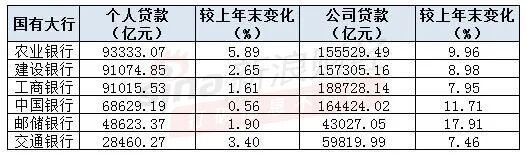
Core Viewpoint - The report highlights that corporate loans continue to drive the growth of bank credit, significantly outpacing retail loans in the first three quarters of 2025, with state-owned banks showing a notable increase in corporate lending compared to retail lending [1][5][11]. Group 1: State-Owned Banks Performance - Among state-owned banks, Agricultural Bank of China leads in personal loan size at 93,333.07 million yuan, with a growth of 5.89% compared to the end of the previous year [3][5]. - Postal Savings Bank shows a remarkable increase in corporate loans, with a growth rate of 17.91%, while its personal loans grew by only 1.90% [5][7]. - The overall trend indicates that personal loan growth is lagging behind corporate loan growth, with only Agricultural Bank exceeding a 5% increase in personal loans among the major banks [5][11]. Group 2: Joint-Stock Banks Performance - Several joint-stock banks, including Minsheng Bank, Industrial Bank, and Ping An Bank, reported negative growth in retail loans, while their corporate loans continued to grow positively [1][11]. - For instance, Ping An Bank's personal loans decreased by 2.10% to 17,291.92 million yuan, while its corporate loans saw a decline in bad debt rates [11][12]. - In contrast, China Merchants Bank reported a retail loan balance of 36,966.19 million yuan, with a modest growth of 1.43%, but its corporate loans grew significantly [9][13]. Group 3: Retail Asset Under Management (AUM) - Despite the challenges in retail loan growth, several banks reported strong growth in retail AUM. For example, China Merchants Bank's retail AUM reached 16.6 trillion yuan, growing by 11.19% [1][15]. - Shanghai Pudong Development Bank also reported a significant increase in personal financial assets, with a growth of 19.07% to 4.62 trillion yuan [15]. - Management teams from various banks emphasized their commitment to enhancing retail market share, indicating a long-term strategic focus on retail banking despite current market conditions [15][16].





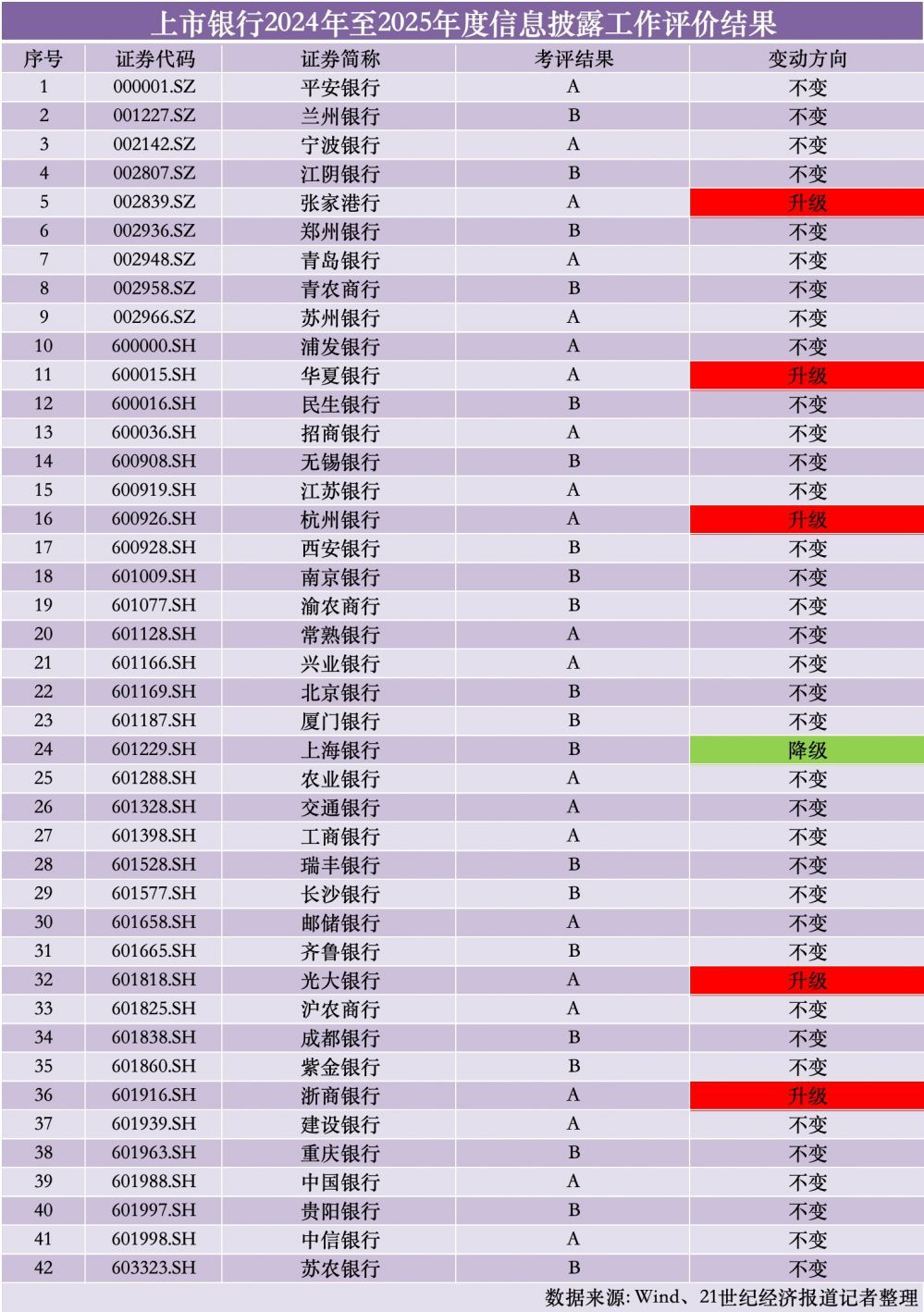
上市银行信披考评出炉:光大、华夏、浙商提级,上海银行降级
2 1 Shi Ji Jing Ji Bao Dao· 2025-11-03 10:57
Core Viewpoint - The quality of information disclosure is a crucial indicator of the quality of listed companies and serves as an important basis for investors' decision-making. The Shanghai and Shenzhen Stock Exchanges have emphasized the importance of information disclosure quality and have implemented comprehensive evaluations of listed companies' disclosure practices [1][3]. Group 1: Regulatory Framework - In March, the Shanghai and Shenzhen Stock Exchanges released guidelines focusing on enhancing information disclosure regulation, punishing financial fraud, strengthening cash dividend supervision, and promoting the enhancement of investment value for listed companies [1][3]. - The evaluation criteria for information disclosure quality include eight aspects: normative disclosure, effective disclosure, investor relations management, return to investors, social responsibility disclosure, penalties and regulatory measures, support for exchange work, and other factors recognized by the exchange [3][5]. Group 2: Evaluation Results - Among the 42 A-share listed banks, all received ratings of B or above, with 22 banks rated A. Most banks maintained their ratings from the previous year, with only six experiencing changes [3][6]. - The banks rated A include major state-owned banks such as Industrial and Commercial Bank of China, Agricultural Bank of China, and China Bank, as well as several joint-stock and city commercial banks [6][7]. Group 3: Impact on Capital Activities - The evaluation results of information disclosure will influence the review of refinancing and mergers and acquisitions for listed banks, establishing a strong market incentive and constraint mechanism [5][8]. - Both the Shanghai and Shenzhen Stock Exchanges provide various supports and conveniences for companies rated A, such as exemptions from post-review for temporary reports and reduced inquiry rounds for restructuring audits [8][9]. Group 4: Commitment to Improvement - Several banks, including Hangzhou Bank and China CITIC Bank, have publicly committed to further enhancing their information disclosure quality following their A ratings, emphasizing transparency, effective communication, and governance [10][11]. - China CITIC Bank has highlighted its commitment to investor rights protection, having distributed over RMB 170 billion in cash dividends and planning to increase its mid-term dividend payout ratio [11].


行业首单 “数字资产质押” 贷款落地 平安银行为科技企业注入发展动能
Zheng Quan Ri Bao Wang· 2025-11-03 10:18
Core Insights - Ping An Bank's Guangzhou branch has successfully implemented the first "data asset pledge + digital RMB loan" in the highway industry, marking a significant milestone in transforming data resources into capital [1][2] - The collaboration with Guangdong United Electronic Services Co., Ltd. demonstrates Ping An Bank's innovative approach to financing technology enterprises by utilizing data assets as collateral, addressing the financing bottleneck faced by many tech companies [2][3] Group 1: Data Asset Transformation - Traditional credit systems rely on tangible assets for collateral, but many tech companies possess core value in intangible assets like patents and data, which are often overlooked [2] - Ping An Bank has identified this gap and pioneered a new model that allows data assets to be included in the bank's credit asset pool, validating the future value of data assets [2] Group 2: Financial Services Innovation - The use of digital RMB as a loan disbursement method provides clients with an unprecedented "payment upon settlement" experience, enabling instant fund availability [3] - Timely access to funds allows tech companies to seamlessly connect R&D investments and technology upgrades, enhancing their market competitiveness [3] Group 3: Tailored Financial Solutions - Ping An Bank has established long-term partnerships with various tech companies, providing continuous financing support throughout their growth stages, from initial credit loans to comprehensive financing products [4][5] - A customized credit solution of 100 million yuan was developed for a leading fintech company, addressing its unique needs through a combination of working capital loans and performance guarantees [5] Group 4: Comprehensive Financial Ecosystem - Ping An Bank has created a "full lifecycle companion" service model that adapts to the different stages of a tech company's development, ensuring that financial services align with their specific needs [6] - The bank has also introduced tailored supply chain financing solutions to address challenges faced by tech companies, enhancing their operational stability and growth [7] Group 5: Future Outlook - By supporting various tech enterprises, Ping An Bank is building a complete ecosystem for technology financial services, positioning itself to leverage opportunities in the evolving tech finance landscape [7]
股份制银行板块11月3日涨1.41%,招商银行领涨,主力资金净流入6.63亿元
Zheng Xing Xing Ye Ri Bao· 2025-11-03 08:43
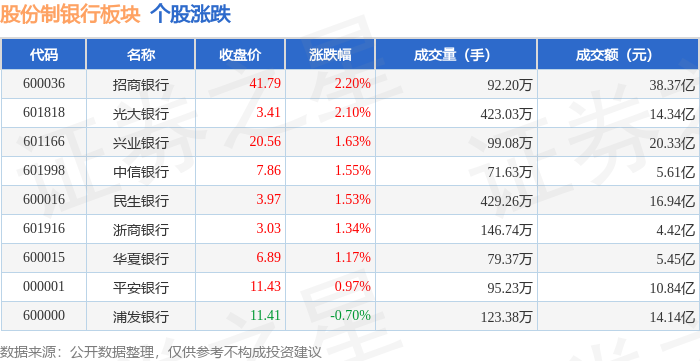
Group 1 - The banking sector saw an increase of 1.41% on November 3, with China Merchants Bank leading the gains [1] - The Shanghai Composite Index closed at 3976.52, up 0.55%, while the Shenzhen Component Index closed at 13404.06, up 0.19% [1] - Major banks such as China Merchants Bank and Everbright Bank reported significant price increases of 2.20% and 2.10% respectively [1] Group 2 - The banking sector experienced a net inflow of 663 million yuan from institutional investors, while retail investors saw a net outflow of 222 million yuan [1] - China Merchants Bank had a net inflow of 2.41 billion yuan from institutional investors, indicating strong institutional interest [1] - Everbright Bank and Minsheng Bank also attracted significant institutional inflows of 1.47 billion yuan and 1.10 billion yuan respectively [1]
42家上市银行信披考评出炉:22家获A,光大、华夏和浙商银行提级
2 1 Shi Ji Jing Ji Bao Dao· 2025-11-03 08:21
Core Insights - The recent disclosure evaluation results for listed banks in China for the 2024-2025 period show that all listed banks received ratings of B or above, with 22 banks rated A, indicating a strong performance in information disclosure [1] Summary by Category Overall Ratings - All listed banks achieved a rating of B or higher, with 22 banks rated A, reflecting consistent performance compared to the previous year [1] - Only six banks experienced rating changes, with five banks improving their ratings and one bank, Shanghai Bank, experiencing a downgrade [1] Banks with Rating Changes - The following banks improved their ratings: - Zhangjiagang Bank - Hangzhou Bank - Huaxia Bank - Everbright Bank - Zhejiang Commercial Bank [1] - Shanghai Bank was the only bank to see a downgrade in its rating [1] Detailed Ratings - A selection of banks and their ratings includes: - Ping An Bank: A - Ningbo Bank: A - Agricultural Bank of China: A - Industrial and Commercial Bank of China: A - Shanghai Bank: B (downgraded) [2]

寻找绩优股:2026年银行业年度策略
GUOTAI HAITONG SECURITIES· 2025-11-03 05:20
Investment Rating - The report indicates a cautious outlook on the credit growth rate, suggesting a shift towards quality improvement, with expectations for a recovery in corporate loan increments by 2026 [5][9]. Core Insights - Credit growth is expected to slow significantly starting in 2024, but the decline in growth rate is anticipated to moderate by 2026, with corporate loans likely to see a year-on-year increase [7][9]. - The relationship between credit growth and economic growth is weakening, emphasizing the need to optimize credit structure and reduce idle financial resources [9]. - The report highlights that the banking sector's total asset growth will outpace loan growth in 2025, driven by government bond supply and fiscal policies [9]. Summary by Sections Credit Growth Forecast - New RMB loans are projected at 21.3 trillion, 23.6 trillion, and 18.9 trillion yuan for 2022, 2023, and 2024 respectively, with a further estimate of 14.7 trillion yuan for the first three quarters of 2025 [9]. - For 2026, new loans are expected to be between 17.2 trillion and 17.7 trillion yuan, corresponding to a growth rate of 6.3% to 6.5% [9]. Loan Composition - In 2023, the total RMB loans are expected to reach 237.59 trillion yuan, with a year-on-year growth rate of 10.6% [8]. - Retail loans are projected to grow from 80.10 trillion yuan in 2023 to 82.84 trillion yuan in 2024, reflecting a growth rate decline from 5.7% to 3.4% [8]. - Corporate loans are anticipated to increase from 157.07 trillion yuan in 2023 to 171.01 trillion yuan in 2024, with a growth rate of 12.7% [8]. Regional Performance - Regions such as Jiangsu, Zhejiang, Sichuan, and Shandong are expected to continue outperforming the national average in loan growth due to strong economic performance and support from new policy financial tools [12]. Banking Sector Dynamics - The report notes that state-owned banks are expected to maintain a competitive edge due to lower funding costs and capital injections from the Ministry of Finance [12]. - The net interest margin is in a downward trend, but the rate of decline is expected to slow starting in 2025, with some smaller banks potentially stabilizing their margins by 2026 [13][17]. Asset Quality - As of Q2 2025, the non-performing loan (NPL) ratio for listed banks is reported at 1.25%, indicating a stable asset quality despite pressures on retail credit [37]. - The report emphasizes that while retail loan NPLs have increased since 2021, corporate loan clearances have improved significantly, providing a buffer against retail risks [37].



平安银行将在11月21日至11月23日进行核心业务系统升级
Jin Tou Wang· 2025-11-02 23:53
Core Viewpoint - Ping An Bank will upgrade its core business system from November 21, 2025, 20:00 to November 23, 2025, 20:00, during which various services will be suspended to enhance service quality [1]. Service Suspension Details - Physical branches will be closed on November 22 and 23, 2025, and will resume normal operations on November 24, 2025 [2]. - Online services including corporate and personal online banking, mobile banking, and ATM services will begin suspending operations from November 21, 2025, 20:00 and will resume on November 23, 2025, 20:00 [2]. - Personal account services such as payments, loans, and investment products will be unavailable during the upgrade, including services linked to third-party platforms like Alipay and WeChat [2]. Services Available During Upgrade - Emergency loss reporting can still be processed through telephone banking [3]. - Credit card repayments can be made through automatic deductions from Ping An debit cards or third-party platforms using non-Ping An debit cards [3]. - Credit card transactions, inquiries, and withdrawals can still occur through non-Ping An POS/ATMs and third-party channels, although some services may be affected [3]. Additional Information - Retail loan repayments via automatic deduction will continue, but timing may vary based on system progress [4]. - Transactions made by Ping An Bank's merchants on November 21 will be settled on November 23 [4]. - Customers are encouraged to contact the 24-hour customer service hotline for assistance during this period [4].